TL;DR:
- Japanese Knotweed is legally complex and requires formal treatment plans for property transactions.
- Chemical-free methods like excavation, root barriers, and thermo-electric treatment are effective and environmentally safe.
- Integrated treatment approaches with proper documentation are the best for legal compliance and property sale success.
Japanese Knotweed is one of the most legally and financially consequential invasive plants a homeowner in England, Wales, or Ireland can encounter. Under the Wildlife and Countryside Act 1981, allowing it to spread is a criminal offence, and mortgage lenders routinely refuse applications where no formal treatment plan exists. Yet many homeowners still reach for chemical herbicides as a first response, unaware that sustainable, chemical-free alternatives are not only viable but increasingly preferred by lenders and environmental bodies alike. This guide walks you through how to evaluate your options, what the leading chemical-free methods involve, and how to select the right strategy for your specific property circumstances.
Table of Contents
- How to evaluate Japanese Knotweed eradication methods
- Top sustainable and chemical-free knotweed eradication methods
- Comparison of sustainable knotweed eradication methods
- Selecting the right solution for your home and property plans
- Why sustainable eradication means thinking beyond ‘quick fixes’
- Next steps: Secure your home with expert sustainable solutions
- Frequently asked questions
Key Takeaways
| Point | Details |
|---|---|
| Mortgage and legal compliance | Formal, sustainable knotweed plans are essential for property sales and remortgaging. |
| Integrated approaches | Combining methods improves eradication success and mortgage approval prospects. |
| Avoid DIY risks | Improper chemical-free removal may lead to legal issues and further spread. |
| Professional support matters | Expert plans and aftercare protect your home’s value and the environment. |
How to evaluate Japanese Knotweed eradication methods
Choosing the right eradication method is not simply a matter of convenience or cost. For homeowners facing a property sale, remortgage, or boundary dispute, the stakes are considerably higher. Before comparing any methods, it is essential to understand the legal and financial framework within which your decision sits.
The legal responsibilities surrounding Japanese Knotweed are clear and enforceable. Spreading Japanese Knotweed is a legal offence, and any excavated material containing rhizome fragments is classified as controlled waste under the Environmental Protection Act 1990. This means disposal must follow strict protocols, and informal DIY approaches carry real legal risk.
Mortgage providers add another layer of urgency. Understanding the mortgage requirements for knotweed is critical before committing to any eradication route, as lenders will typically require documented evidence of a formal treatment or management plan before proceeding with an application.
When evaluating methods, consider the following key criteria:
- Efficacy: Does the method fully address the rhizome network, not just visible above-ground growth?
- Environmental safety: Is the approach free from chemical contamination of soil, water, or neighbouring land?
- Speed: How quickly can the method deliver results that satisfy lender or buyer requirements?
- Legal compliance: Does the approach include formal documentation suitable for property transactions?
- Cost: Does the investment reflect the long-term value protected, including your property’s market value?
Pro Tip: Always request written confirmation from your chosen specialist that their method produces documentation acceptable to mortgage lenders. Verbal assurances are not sufficient for property transactions.
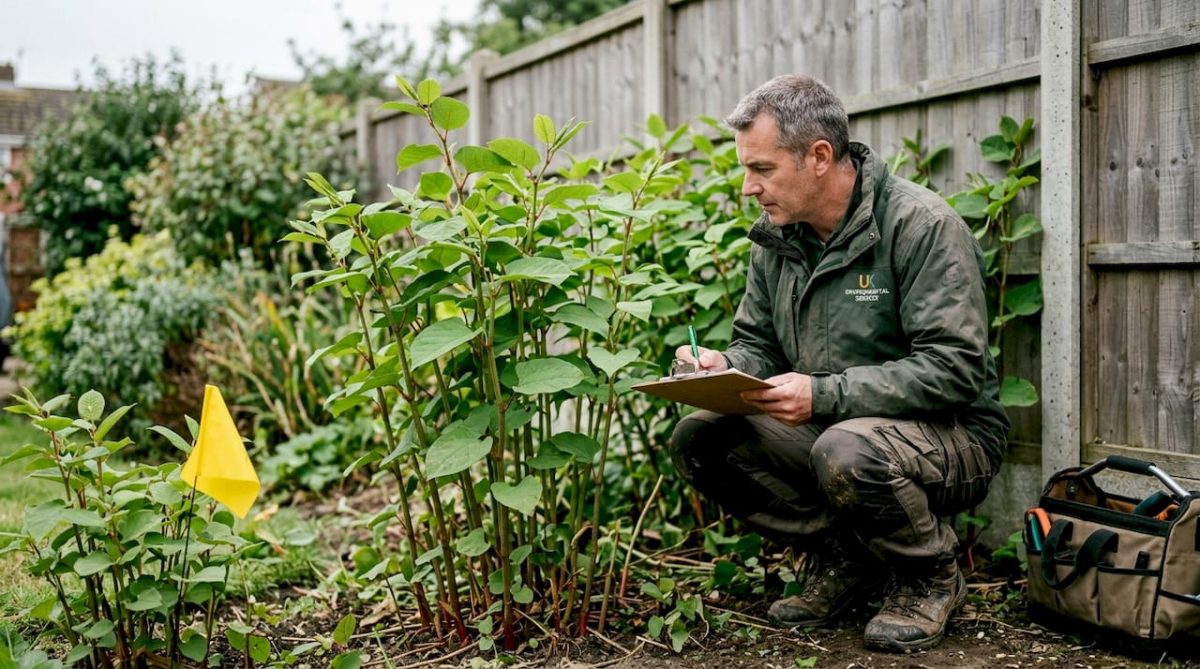
It is also worth noting that knotweed rhizomes can extend up to three metres deep and seven metres laterally from visible growth. Any method that addresses only surface stems will fail to resolve the infestation and may give a false sense of progress that delays proper treatment.
Top sustainable and chemical-free knotweed eradication methods
Now that you know what to prioritise, here are the methods that best meet those criteria without recourse to chemicals. Each approach has distinct strengths, and the most effective outcomes are typically achieved when methods are combined intelligently.
1. Excavation and removal
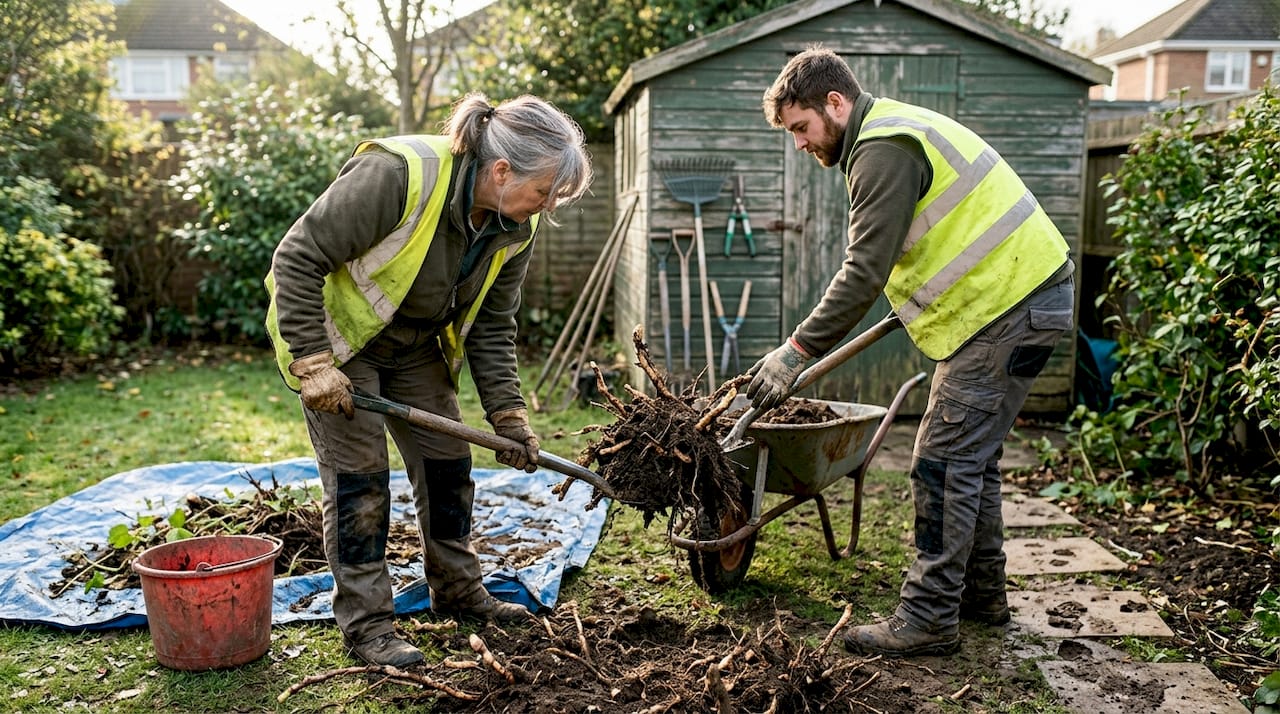
Excavation involves physically removing contaminated soil and rhizome material from the site. When carried out professionally, it includes a formal risk assessment, controlled waste disposal, and documentation. It is one of the fastest routes to compliance, though it is disruptive and can be costly for larger infestations.
2. Root barrier installation
Physical root barriers are installed in the ground to contain and redirect rhizome growth. This method is particularly effective as a preventive measure or as part of a wider management strategy. Barriers do not eradicate the plant but control its spread, making them valuable alongside other techniques.
3. Soil sifting and rhizome screening
This labour-intensive process involves screening excavated soil to remove rhizome fragments before reuse or disposal. It is often used in conjunction with excavation on sites where soil retention is a priority.
4. Thermo-electric treatment
This is the most innovative chemical-free method currently available. Direct electrical energy of up to 5,000 volts is delivered into the plant and its rhizome network, causing internal cell damage and progressively depleting the plant’s energy reserves with each treatment. It leaves no chemical residue and is safe for surrounding biodiversity.
5. Integrated approaches
Integrated approaches combining thermo-electric treatment with barriers consistently outperform single methods and significantly reduce the risk of accidental spread. For homeowners with complex infestations or time-sensitive property needs, this is the most robust route.
For a full overview of how these techniques are sequenced in practice, the chemical-free eradication workflow provides detailed guidance on each stage.
Pro Tip: Never attempt to cut, strim, or dig up knotweed without specialist guidance. Even small rhizome fragments left in soil can regenerate into a new infestation, and contaminated material moved off-site without proper disposal is a criminal offence.
If you are uncertain which method applies to your situation, specialist advice tailored to your property type and timeline is the most reliable starting point.
Comparison of sustainable knotweed eradication methods
To see the relative strengths at a glance, compare these options directly in the following table. This comparison focuses on the factors most relevant to homeowners managing property transactions or long-term residence.
| Method | Efficacy | Speed | Compliance documentation | Disruption | Best suited for |
|---|---|---|---|---|---|
| Excavation | High | Fast | Yes | High | Urgent sales, severe infestations |
| Root barriers | Medium | Medium | Partial | Low | Boundary management, prevention |
| Soil sifting | Medium | Slow | Partial | High | Sites retaining original soil |
| Thermo-electric treatment | High | Medium | Yes | Low | Residential gardens, sensitive sites |
| Integrated approach | Very high | Medium to fast | Yes | Medium | Remortgages, complex infestations |
As lenders require proof of treatment by a formal plan, methods that do not produce compliance documentation are unlikely to satisfy mortgage or buyer requirements on their own. Root barriers and soil sifting, while valuable components of an integrated plan, rarely stand alone as sufficient evidence for lenders.
The impact on property sales from unmanaged or poorly documented knotweed can be severe, including reduced valuations, failed mortgage applications, and protracted legal disputes. Understanding the role of specialists in producing and certifying formal plans is therefore central to protecting your investment.
For properties with gardens adjacent to watercourses, woodland, or neighbouring land, integrated approaches that combine thermo-electric treatment with physical barriers offer the strongest environmental and legal protection. They address both the immediate infestation and the risk of future spread, satisfying the dual requirements of ecological responsibility and property compliance.
Selecting the right solution for your home and property plans
With the main options compared, it is time to personalise your choice based on your property plans. The right method depends heavily on your timeline, the severity of the infestation, and whether you are buying, selling, or remortgaging.
For homeowners selling a property:
Speed and documentation are paramount. An integrated approach combining thermo-electric treatment with formal certification offers the strongest position. Explore the guide to selling a property with Japanese Knotweed for a step-by-step breakdown of what buyers and their lenders will expect.
For remortgaging:
Mortgage lenders may refuse applications without a formal treatment plan, making professional engagement non-negotiable. Knotweed certification for mortgage success details exactly what documentation is required and how to obtain it.
For long-term residents with no immediate transaction:
A phased integrated programme combining thermo-electric treatment and root barriers allows for thorough eradication over time, with lower upfront disruption.
Key pitfalls to avoid:
- Attempting partial DIY removal, which risks spreading rhizome fragments and creating legal liability
- Using a method that does not produce formal documentation, leaving you exposed during any future property transaction
- Delaying treatment, as established infestations are significantly more costly and complex to resolve
- Assuming a single treatment is sufficient; most professional programmes involve multiple visits to fully deplete the rhizome network
Ongoing monitoring after treatment is as important as the eradication itself. Rhizomes can remain dormant in soil for extended periods, and a structured aftercare programme ensures any regrowth is identified and addressed before it re-establishes.
Pro Tip: Ask your specialist for a site-specific aftercare plan as part of any formal treatment agreement. This demonstrates due diligence to future buyers or lenders and protects your position if regrowth occurs.
| Homeowner scenario | Recommended approach | Documentation needed |
|---|---|---|
| Selling within 12 months | Integrated treatment + excavation | Full formal plan + certification |
| Remortgaging | Thermo-electric + formal plan | Lender-accepted management plan |
| Long-term residence | Phased integrated programme | Ongoing monitoring records |
| Boundary dispute | Root barriers + specialist report | Legal compliance documentation |
Why sustainable eradication means thinking beyond ‘quick fixes’
In our experience working with homeowners across England, Wales, and Ireland, the most common and costly mistake is treating Japanese Knotweed as a problem that can be resolved quickly and cheaply. A single herbicide application or an informal dig-out may appear to address the visible plant, but the rhizome network can extend far beyond what is visible, and partial treatment frequently leads to more aggressive regrowth.
Mortgage providers and property buyers are increasingly sophisticated in their requirements. They do not simply want evidence that something was done; they want integrated methods and formal plans that demonstrate legal compliance and long-term environmental responsibility. A robust, documented programme protects your property value, satisfies lender requirements, and avoids the legal exposure that informal approaches carry.
Sustainable eradication is not a compromise. It is the most strategically sound choice available, and specialist advice from the outset ensures your approach is both legally defensible and genuinely effective.
Next steps: Secure your home with expert sustainable solutions
If Japanese Knotweed is affecting your property, the right support makes all the difference between a stalled transaction and a confident resolution. Japanese Knotweed Agency specialises in chemical-free eradication across England, Wales, and Ireland, delivering thermo-electric treatment, root barrier installation, excavation, and formal property surveys.
Explore the chemical-free treatment process to understand exactly how our approach works from first survey to final certification. For a structured overview of what a compliant programme involves, the eradication plan guide is an essential resource. Homeowners ready to take action can also browse our full range of chemical-free invasive plant solutions tailored specifically to residential properties.
Frequently asked questions
Can Japanese Knotweed be removed without chemicals?
Yes, methods such as excavation, thermo-electric treatment, root barriers, and integrated approaches allow for effective eradication without chemical use, provided they are carried out by qualified specialists with formal documentation.
What formal proof do mortgage lenders require for knotweed?
Lenders typically require a formal treatment or management plan prepared by a recognised specialist, confirming that the infestation is being managed in accordance with legal requirements for knotweed.
Are there risks to DIY knotweed removal?
Significant risks exist, as improper removal can spread rhizome fragments to new areas and may constitute a legal offence; DIY risks spread and legal liability make professional guidance strongly advisable.
Which method is best for selling a property quickly?
An integrated sustainable approach with formal certification offers the strongest position for meeting mortgage and buyer requirements, giving both parties confidence and reducing delays in the sale process.