

TL;DR:
- Chemical-free eradication methods include thermo-electric treatment, physical excavation, and root barriers.
- Proper site surveys, legal compliance, and controlled waste disposal are essential for effective management.
- Ongoing monitoring and landscaping prevent future Japanese Knotweed outbreaks.
Invasive weeds such as Japanese Knotweed present homeowners across England, Wales, and Ireland with a serious and often stressful challenge. Under the Wildlife & Countryside Act, it is a criminal offence to allow Japanese Knotweed to spread onto neighbouring land, and its waste must be treated as controlled material. Many homeowners are now actively seeking chemical-free alternatives, driven by concerns over herbicide safety, environmental responsibility, and evolving legislation. This guide walks you through every stage of non-chemical eradication, from initial site preparation and legal checks through to treatment, compliant disposal, and long-term monitoring, so you can act with confidence and stay on the right side of the law.
Table of Contents
- What you need before starting: tools, surveys and legal basics
- Step-by-step chemical-free weed eradication process
- Compliant waste removal and safe site management
- Monitoring success and avoiding future outbreaks
- Why chemical-free eradication is now the smart homeowner’s choice
- Take your next step: Professional weed eradication support
- Frequently asked questions
Key Takeaways
| Point | Details |
|---|---|
| Understand legal duties | You must handle Japanese Knotweed and waste carefully to avoid breaking the law. |
| Choose the right method | Thermo-electric, barriers, or manual removal can work, but each suits different situations. |
| Dispose of waste correctly | Always use approved disposal or on-site methods to stay compliant and stop spread. |
| Monitor your results | Check your site regularly after removal to prevent a recurrence and ensure lasting success. |
| Expert help is available | Professional services provide peace of mind and guaranteed results if DIY is not right for you. |
What you need before starting: tools, surveys and legal basics
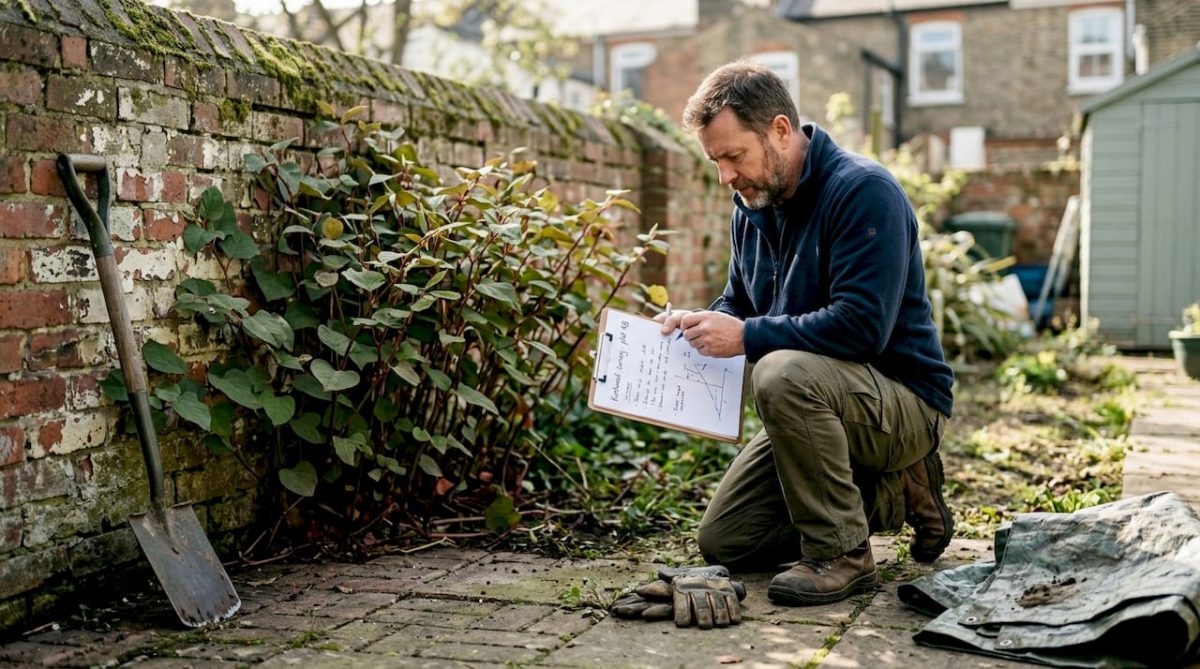
Before you lift a spade or commission any treatment, preparation is everything. Japanese Knotweed can push through tarmac, concrete, and cavity walls, so the visible growth above ground rarely reflects the true scale of the problem below. Rhizomes, the underground root-like stems that store the plant’s energy, can extend up to three metres deep and seven metres laterally from the visible stem. Underestimating the spread is one of the most common and costly mistakes homeowners make.
The first step is to commission a professional survey to map the full extent of the infestation. RHS guidance recommends that homeowners commission a survey to map the infestation before selecting a method, whether thermo-electric treatment, excavation, or root barriers. A thorough survey gives you an accurate baseline, which is essential for monitoring progress and satisfying mortgage lenders or insurers who may require documented evidence of a management plan.
For those undertaking any manual work on site, appropriate personal protective equipment (PPE) is non-negotiable. You will need:
- Heavy-duty gloves to prevent skin contact with plant material
- Disposable overalls or dedicated work clothing to avoid transporting fragments off site
- Sealed bags or lined skips rated for controlled waste
- Stiff boots with no deep treads that could carry rhizome fragments
- A site log or notebook to record dates, observations, and actions taken
Understanding your legal responsibilities is equally important. Under UK legislation, Japanese Knotweed is classified as controlled waste, meaning it cannot be disposed of in general household bins or taken to standard recycling centres. Near watercourses, you must not disturb the ground without the appropriate permissions, as fragments entering waterways can establish new colonies rapidly.
Always check whether your site falls within or adjacent to a designated watercourse or protected habitat before beginning any physical work. Failure to do so may result in prosecution under environmental protection legislation.
Deciding between a DIY approach and professional assistance depends on the size and location of the infestation. Reviewing manual removal steps and removal safety tips will help you assess whether the scope of your infestation is manageable without specialist equipment. For larger or structurally sensitive sites, professional intervention is strongly advised.
| Site factor | DIY feasible? | Professional recommended? |
|---|---|---|
| Small garden patch, no structures | Yes | Optional |
| Near walls, drains, or foundations | No | Yes |
| Adjacent to watercourse | No | Yes |
| Mortgage or sale pending | No | Yes |
| Infestation over 10 sq metres | No | Yes |
Step-by-step chemical-free weed eradication process
With your tools, plan, and permissions ready, it is time to choose and execute your eradication method. Chemical-free options have advanced considerably, and each has distinct advantages depending on your site conditions, timeline, and budget.
- Commission a full site survey. Establish the precise boundaries of the infestation, including underground rhizome spread. This informs every subsequent decision.
- Select your primary method. The three main chemical-free approaches are thermo-electric treatment, physical excavation, and root barrier installation.
- Apply treatment systematically. Work from the outer edges of the infestation inward to avoid spreading fragments further across the site.
- Manage and dispose of all arisings immediately. Do not leave cut stems or disturbed rhizomes exposed on the surface.
- Schedule follow-up treatments. No single application is sufficient. Repeat visits are built into every credible management plan.
- Monitor and document. Record every visit, observation, and action for legal and practical purposes.
The detailed process guide on our website outlines each stage in full. For those exploring natural removal steps, there is further guidance on garden-specific scenarios.
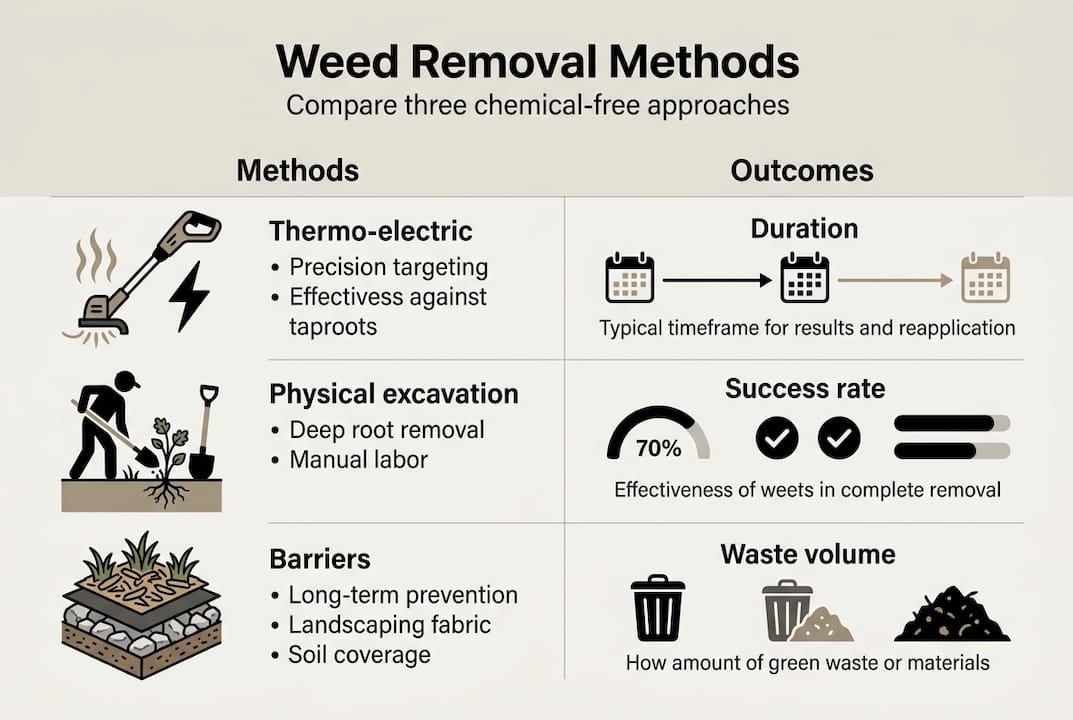
Here is how the main methods compare in practice, based on chemical-free method performance:
| Method | Typical duration | Success rate | Waste generated | Best suited for |
|---|---|---|---|---|
| Thermo-electric treatment | 1 to 2 years | Up to 95% | Minimal | Most residential sites |
| Physical excavation | Immediate | High if thorough | Very high | Small, accessible areas |
| Root barrier installation | 2 to 4 years | Good with monitoring | Low | Boundary containment |
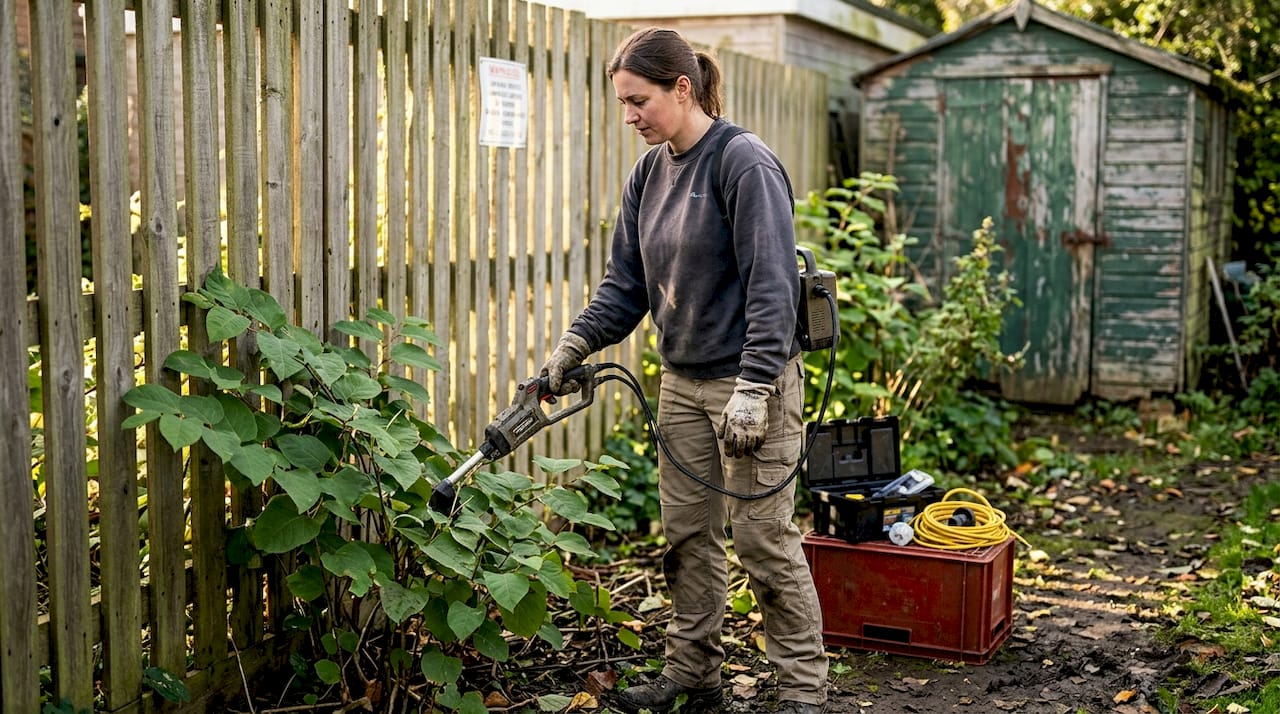
Thermo-electric treatment is the most innovative of the three. It delivers direct electrical energy into the plant’s stem and rhizome network, causing internal cell damage and progressively depleting the energy reserves that allow regrowth. Each treatment session weakens the plant further, and because no chemicals are introduced to the soil, there is no risk of contamination to surrounding vegetation, groundwater, or soil biology.
Physical excavation offers the most immediate visual result but generates significant volumes of controlled waste and carries a high risk of spreading fragments if not executed precisely. Root barriers work by physically preventing rhizome spread, making them particularly effective along property boundaries.
Pro Tip: On complex sites with both structural proximity and open garden areas, combining thermo-electric treatment near buildings with root barriers along boundaries delivers the most reliable long-term outcome.
Compliant waste removal and safe site management
Having treated your infestation, correct and legal waste disposal is essential to conclude the eradication safely. Japanese Knotweed waste is not ordinary garden waste, and handling it incorrectly can result in criminal prosecution and significant fines.
The plant regenerates from small fragments, meaning even a thumbnail-sized piece of rhizome left in soil or transported off site can establish a new colony. Burning or drying material on site is the preferred option where conditions and local regulations permit, as it eliminates the risk of off-site spread entirely.
Where on-site treatment is not possible, follow these steps:
- Do not bag and bin. Knotweed waste placed in standard bins will be transported to general waste facilities, where it can spread.
- Use only licensed waste carriers. Any contractor removing Knotweed from your property must hold a valid waste carrier licence.
- Ensure waste goes to a permitted landfill site. Not all landfill sites accept controlled biological waste; confirm acceptance before arranging collection.
- Keep all waste transfer documentation. Retain copies of waste transfer notes as evidence of compliant disposal.
- Avoid composting. Domestic composting does not reach temperatures sufficient to kill rhizome material.
Near watercourses or drainage features, do not disturb soil or cut stems without first consulting the relevant environmental authority. Spreading Japanese Knotweed is a criminal offence under legislation, and the consequences extend beyond fines to civil liability if spread affects a neighbour’s property.
Reviewing best removal practices before beginning any physical work will help you avoid the most common compliance errors.
Pro Tip: Keep a dated photographic site log from the very first day of treatment. This record is invaluable if you later need to demonstrate compliance to a local authority, mortgage lender, or prospective buyer.
Monitoring success and avoiding future outbreaks
Once waste is managed, ongoing vigilance is required to ensure eradication is permanent. Repeated monitoring is essential, as cultural controls alone are viable but genuinely challenging without a structured approach. Regrowth can emerge from fragments you did not know existed, sometimes years after the main infestation appeared to be resolved.
Knowing what to look for is the first step. Signs of regrowth include:
- Red or purple shoots emerging from bare soil in spring, typically March to April
- Hollow, bamboo-like stems with distinctive raised nodes appearing through summer
- Heart-shaped leaves with a flat base, growing in a zigzag pattern along the stem
- Cream-coloured flowers in late summer, which indicate an established and actively growing plant
- Disturbed or cracked surfaces near previous treatment areas, suggesting underground rhizome activity
Monitoring should be carried out at a minimum of three times per year: in early spring when new growth first emerges, in midsummer when the plant is at peak growth, and in autumn before dieback. Each visit should be documented with photographs and written notes, including the date, weather conditions, and any observations.
If regrowth is detected, act immediately rather than waiting for the next scheduled treatment cycle. Early intervention prevents the plant from rebuilding its rhizome energy reserves, which is precisely the mechanism that makes eradication so protracted without consistent follow-up.
For post-removal landscaping, avoid leaving bare soil exposed for extended periods. Establish dense ground cover or turf promptly after treatment, as bare ground creates ideal conditions for reinfestation from wind-blown seed or fragment movement. Our eradication workflow and guidance on sustainable methods provide further detail on long-term site management strategies.
When in doubt, consult a professional. A brief site visit from a qualified surveyor costs far less than allowing an infestation to re-establish.
Why chemical-free eradication is now the smart homeowner’s choice
With ongoing monitoring in place, it is worth considering why the chemical-free approach is rapidly outpacing traditional herbicide-based options. For years, glyphosate-based treatments were the default recommendation for Knotweed management, largely because they were fast and relatively inexpensive. That picture has changed significantly.
Growing concerns over glyphosate’s long-term environmental impact, combined with regulatory pressure and the industry shift toward thermo-electric and non-chemical methods post-2025, mean that herbicide reliance is no longer considered best practice. Mortgage lenders and insurers are increasingly scrutinising treatment warranties, and chemical-based plans are attracting greater scepticism.
Chemical-free methods are not without their challenges. They require patience, consistent follow-up, and a higher initial investment in some cases. But the long-term benefits are substantial: no soil contamination, no risk to pollinators or surrounding biodiversity, no dependency on chemicals that may face future restrictions, and a treatment record that holds genuine weight with professional bodies.
For homeowners who want to understand why non-chemical methods are the more resilient long-term choice, the evidence is now compelling and growing.
Take your next step: Professional weed eradication support
If you are facing a Japanese Knotweed infestation or suspect another invasive species on your property, acting early makes every stage of eradication more manageable and cost-effective.
Japanese Knotweed Agency offers fully compliant, chemical-free solutions across England, Wales, and Ireland, from initial property surveys through to thermo-electric treatment, root barrier installation, and excavation works. Our step-by-step eradication service is designed to give homeowners a clear, guaranteed pathway to a Knotweed-free property. Explore our full range of invasive plant solutions or visit our frequently asked questions for immediate answers. We are here to support you at every stage.
Frequently asked questions
How long does chemical-free Japanese Knotweed eradication take?
Thermo-electric treatment takes 1 to 2 years with up to 95% success, physical barriers typically require 2 to 4 years, and manual excavation can achieve immediate results where the infestation is fully accessible and contained.
Is it illegal to remove Japanese Knotweed myself?
You may carry out removal yourself, but spreading it is a criminal offence under the Wildlife & Countryside Act, and all waste must be disposed of as controlled material through a licensed carrier.
What is the safest way to dispose of Knotweed roots and stems?
Burning or drying on site is the safest option where permitted; if off-site disposal is necessary, use a licensed carrier and ensure the waste goes to an approved landfill facility.
Do I really need to monitor after removal?
Yes, repeated monitoring is essential because regrowth can emerge from tiny rhizome fragments that remain in the soil long after the visible plant has been treated.
Recommended
- Chemical Free Invasive Plant Solutions for Homeowners
- Knotweed Eradication Workflow: Effective Chemical-Free Solutions
- Invasive species eradication plan: guide for UK homeowners
- Best Practices for Weed Eradication Without Chemicals
- How to Steam Clean Your Carpet Naturally Step by Step – Yarra Valley Carpet Cleaning