
Japanese Knotweed is one of the most legally and financially consequential plants a homeowner in England, Wales, or Ireland can encounter. Manual removal is strongly discouraged due to the high risk of spreading the plant through rhizome fragments, strict controlled waste disposal requirements, and persistently low long-term success rates. Yet for genuinely tiny, isolated outbreaks, careful manual intervention may be the only immediate option available. This guide sets out the risks, legal obligations, correct procedures, and modern alternatives so you can make an informed decision and protect your property, your neighbours, and your legal standing.
Table of Contents
- Understanding the risks of manual removal
- What you need for safe, legal manual removal
- Manual removal steps for tiny outbreaks
- Modern alternatives: Thermo-electric and cultural methods
- Monitoring and maintenance steps after manual removal
- Why most homeowners should avoid true DIY removal
- How we can help with safe, chemical-free Japanese Knotweed removal
- Frequently asked questions
Key Takeaways
| Point | Details |
|---|---|
| DIY only for tiny patches | Manual removal should be attempted only for very small, isolated outbreaks of Japanese Knotweed. |
| Legal compliance critical | Always use licensed waste carriers and follow Environmental Protection Act regulations when disposing knotweed. |
| Monitoring prevents regrowth | Regular monitoring for at least 12-24 months is needed to catch and address any recurrence. |
| Consider professional help | Professional, chemical-free treatments offer higher success and safeguard property value and legal compliance. |
Understanding the risks of manual removal
Japanese Knotweed spreads with alarming efficiency. A rhizome fragment as small as 0.7 grams can establish a new plant, which means a single careless cut or an improperly sealed bag can transform a contained problem into a widespread infestation across your garden or your neighbour’s boundary. This is not a plant that tolerates half-measures.
The legal risks of manual removal are equally serious. Under the Environmental Protection Act 1990, Japanese Knotweed is classified as controlled waste. Disposing of it incorrectly, whether in a green bin, a skip, or through composting, can result in significant fines. Causing the plant to spread to neighbouring land is an offence under the Wildlife and Countryside Act 1981, and civil disputes between neighbours over knotweed encroachment are increasingly common in UK courts.
The impact on property values is another critical concern. DIY mistakes risk fines, spread, and devalued property by as much as 5 to 15%, and mortgage lenders frequently decline applications on properties with unmanaged infestations.
“Japanese Knotweed is not simply a gardening nuisance. It is a legally regulated invasive species with the capacity to push through tarmac, damage foundations, and fundamentally affect a property’s saleability.”
Manual removal should only be considered when:
- The infestation is genuinely small (under 1m²)
- The area is not near watercourses or neighbouring boundaries
- You have access to licensed waste disposal
- You have sought RHS guidance on Japanese Knotweed and professional confirmation of the plant’s identity
Now that you understand why this is a challenging issue, let’s identify what you’ll need before even attempting any manual intervention.
What you need for safe, legal manual removal
With the risks and legal framework understood, it’s vital to gather the proper tools and prepare for safe, compliant action. Attempting removal without the correct equipment not only increases personal risk but can also compromise legal compliance.
Essential equipment checklist:
- Full PPE: gloves, eye protection, disposable coveralls, and sturdy footwear
- Sharp cutting tools (secateurs or loppers) cleaned before and after use
- Heavy-duty, sealable bags rated for controlled waste
- A dedicated container for soil contaminated with rhizome fragments
- Contact details for a licensed waste carrier approved for controlled waste
Preparation steps before cutting any stems:
- Map the full extent of the infestation with photographs and measurements
- Document the date, location, and plant growth stage
- Contact a professional to confirm identification via the property survey process
- Notify your local authority if the infestation is near a watercourse
- Confirm your waste carrier is licensed under the Environmental Protection Act
| Method | PPE required | Licensed disposal | Professional involvement | Legal compliance |
|---|---|---|---|---|
| DIY manual removal | Yes | Yes | Recommended | High risk if done incorrectly |
| Professional manual removal | Yes (by contractor) | Yes | Full | Ensured |
| Thermo-electric treatment | Yes (by contractor) | Minimal waste | Full | Ensured |
As RHS guidance confirms, a formal treatment plan should begin with a professional survey to map the infestation, followed by a bespoke management plan with monitoring over a minimum of 12 months, root barrier installation near structures or boundaries where appropriate, and strictly compliant disposal of all plant material.
Pro Tip: Only attempt manual removal for areas genuinely smaller than 1m². Anything larger requires professional intervention to remain legally compliant and to protect your property’s value and saleability.
Manual removal steps for tiny outbreaks
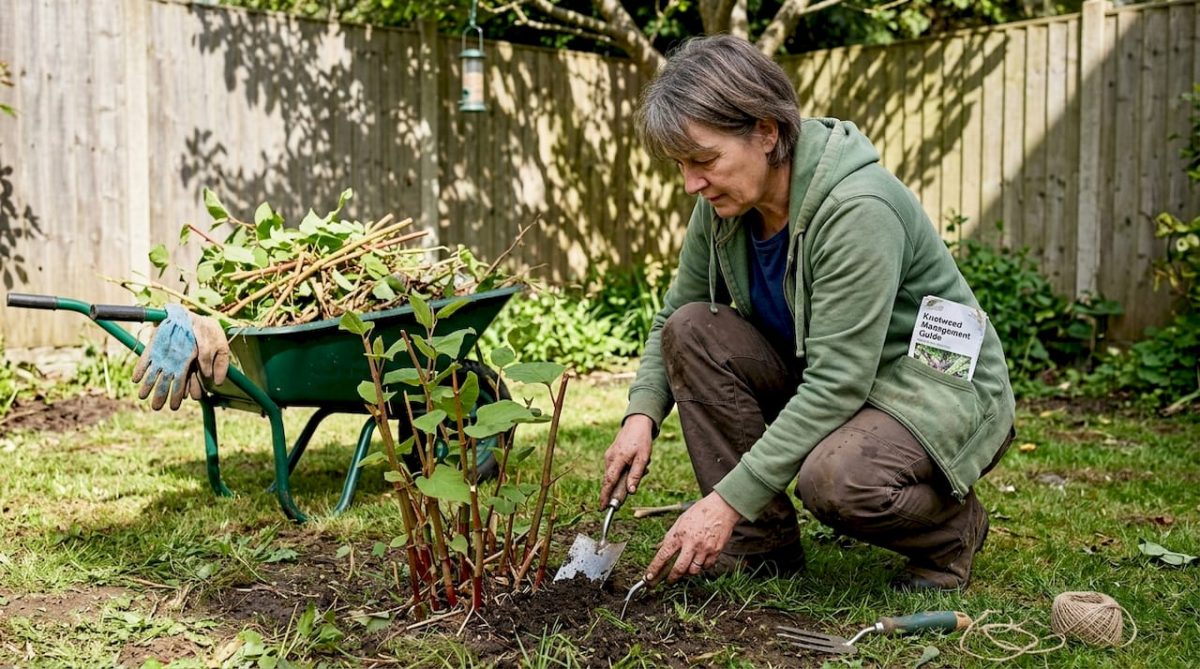
Once you’re properly equipped, here’s a breakdown of how to proceed safely if your infestation is truly minimal. These steps apply only to outbreaks under 1m² that are not near water or property boundaries.
- Photograph and record the full area before touching anything. Date-stamp every image.
- Put on all PPE before making any contact with the plant.
- Cut stems at the base using clean secateurs. Do not pull or dig at this stage.
- Place all cut material immediately into heavy-duty sealable bags. Never leave cuttings on the ground.
- Carefully remove any visible rhizome from the topsoil using a hand trowel. Bag all soil containing fragments separately.
- Seal all bags securely and label them as controlled waste.
- Arrange collection by a licensed carrier. Never place knotweed in a household bin, compost heap, or skip.
- Clean all tools thoroughly with disinfectant before storing or using elsewhere.
If the infestation is near a watercourse, do not disturb the soil at all. Avoid any disturbance near water and contact a professional who specialises in riparian invasive species management. Fragments entering a watercourse can spread the plant across entire catchment areas.
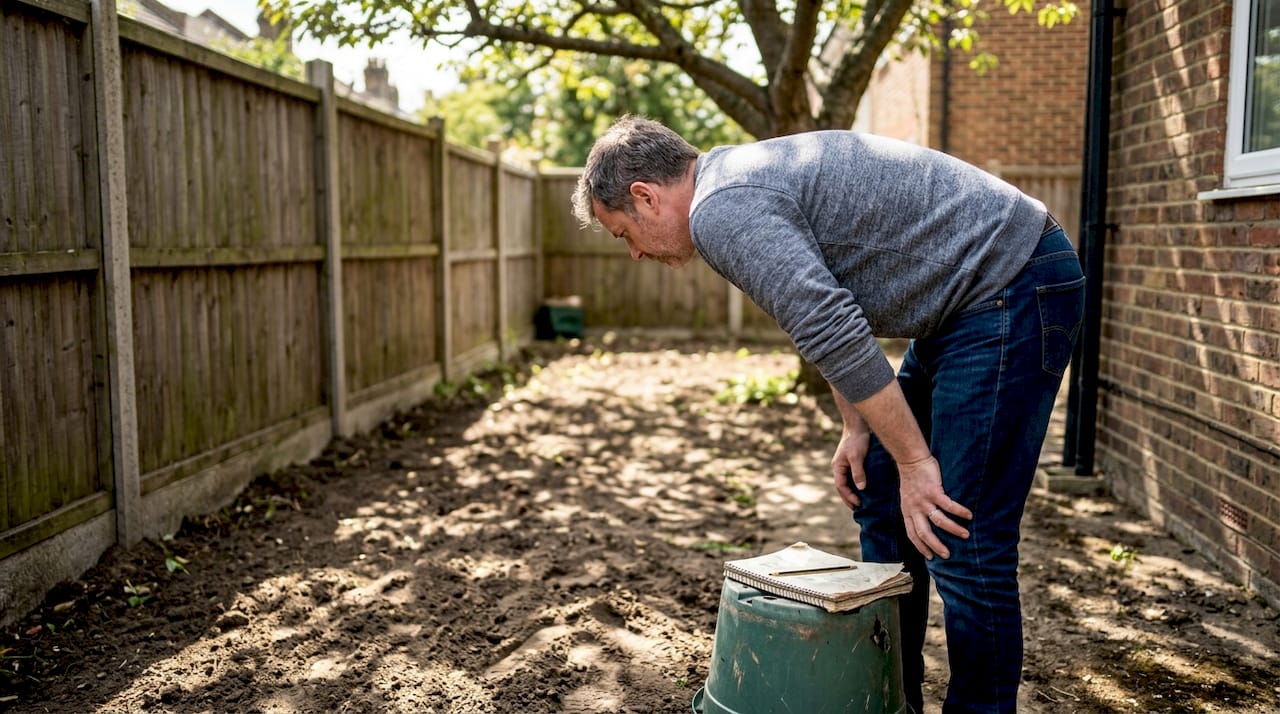
For managing small outbreaks, repeat checks every four to six weeks are essential. Even after careful removal, regrowth from missed fragments is common. Following best practices on Japanese Knotweed means treating every subsequent check with the same rigour as the initial removal.
Pro Tip: Keep a written log of every check, noting whether regrowth is present. This record will be invaluable if you ever need to sell your property or satisfy a mortgage lender.
Modern alternatives: Thermo-electric and cultural methods
If manual removal isn’t appropriate or you’re interested in more robust, innovative solutions, here’s a look at chemical-free methods that professionals now offer. These approaches are increasingly preferred by lenders, surveyors, and environmental regulators.
Thermo-electric treatment delivers direct electrical energy of up to 5,000 volts into the plant’s tissue and rhizome network. This causes internal cell damage and progressively depletes the energy reserves stored within the root system. Unlike manual removal, it does not fragment the rhizome or generate large volumes of controlled waste. Eradication success rates of 95% are claimed for thermo-electric treatment, making it one of the most effective non-chemical options currently available.
| Method | Chemical use | Typical duration | Success rate | Lender compliant |
|---|---|---|---|---|
| Manual removal (DIY) | None | Ongoing, 12+ months | Low to moderate | Rarely |
| Thermo-electric treatment | None | Multiple treatments | Up to 95% (claimed) | Yes |
| Cultural controls (cutting/smothering) | None | 3+ seasons | Moderate | Varies |
RHS advice on cultural methods confirms that cultural approaches such as repeated cutting and light exclusion can suppress growth but rarely achieve full eradication. Monitoring remains essential regardless of method chosen, as rhizomes can remain dormant for several years before re-emerging.
For a closer look at how thermo-electric technology is applied in practice, the work carried out on thermo-electric solutions in Glastonbury illustrates the method’s effectiveness in a real-world residential setting.
Pro Tip: Always request verifiable credentials and case studies from any provider offering thermo-electric or other emerging non-chemical treatments. Established accreditation and documented outcomes are the clearest indicators of a trustworthy contractor.
Monitoring and maintenance steps after manual removal
After any form of removal, staying vigilant about regrowth is your best defence against costly setbacks. The rhizome network of Japanese Knotweed can extend up to three metres in depth and seven metres laterally, meaning that what appears to be a resolved problem may simply be a dormant one.
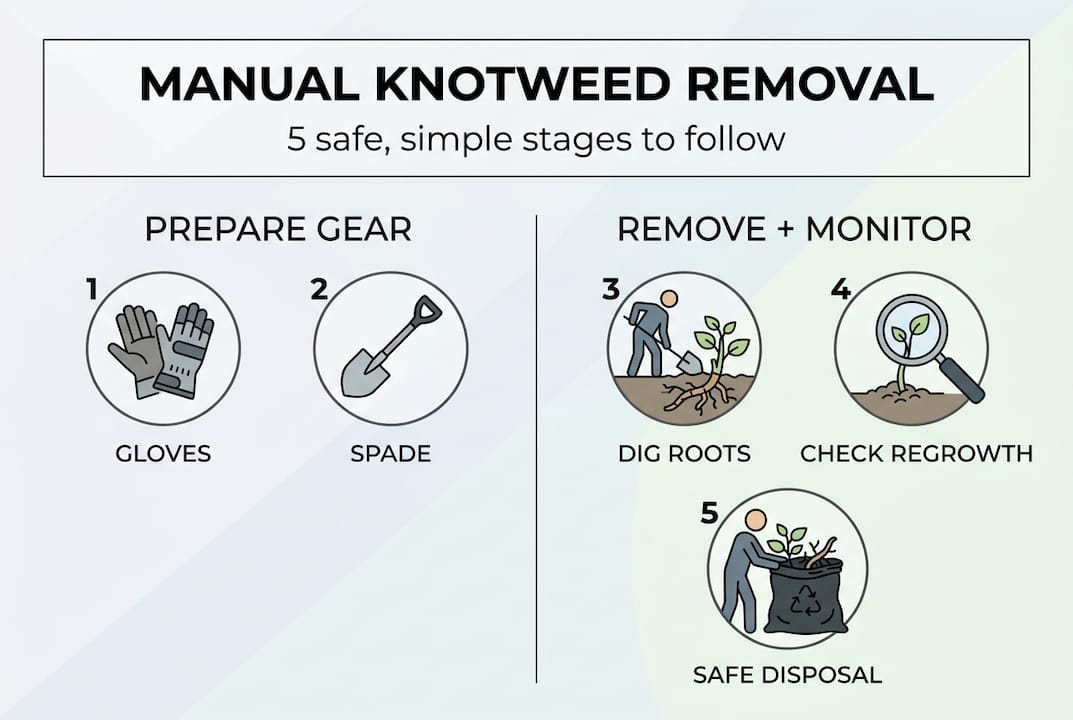
Rhizomes can remain dormant for years before producing new growth, which is why ongoing monitoring over a minimum of 12 to 24 months is considered the professional standard. This is not optional if you intend to sell your property or satisfy a mortgage lender’s requirements.
Key monitoring and documentation steps:
- Photograph the treated area every four to six weeks throughout the growing season (April to October)
- Record dates, observations, and any signs of regrowth in a written log
- Retain all disposal certificates from your licensed waste carrier
- Note any changes to neighbouring land that could indicate cross-boundary spread
- Revisit the area in early spring, when new shoots are easiest to identify
“Incomplete removal records are one of the most common reasons property sales stall or fall through when Japanese Knotweed is involved. Documentation is not bureaucracy; it is protection.”
Understanding your legal obligations after removal is equally important. If you plan to sell your property, you are legally required to disclose the presence of Japanese Knotweed on the TA6 property information form. A well-maintained treatment record and a formal management plan can make the difference between a successful sale and a collapsed transaction. For those seeking documentation for mortgage purposes, lenders typically require evidence of a professional management plan from an accredited contractor, not simply a record of DIY activity.
Why most homeowners should avoid true DIY removal
With ongoing diligence required, it’s worth reflecting on why professional help often outweighs attempted DIY. In our experience, manual homeowner removal almost never succeeds on established stands of Japanese Knotweed. The rhizome network is simply too extensive, too resilient, and too legally sensitive for unassisted intervention to be reliable.
Homeowners should prioritise professional accredited contractors for chemical-free plans to ensure lender compliance, legal safety, and genuine efficacy. True manual DIY should be limited to tiny, isolated patches approached with extreme caution and full legal compliance.
Accredited professionals bring more than equipment. They provide formal management plans that satisfy mortgage lenders, insurance companies, and solicitors. They carry liability insurance. They understand the nuances of riparian boundaries, party wall considerations, and cross-boundary spread. Thermo-electric treatment, in particular, is a promising and highly effective innovation, but only when delivered by verified providers with documented outcomes.
For homeowners seeking professional chemical-free plans, the investment in accredited expertise consistently outperforms the short-term appeal of DIY, both in eradication outcomes and in protecting long-term property value.
How we can help with safe, chemical-free Japanese Knotweed removal
If you’re considering next steps, here are expert-backed options that keep your property safe and compliant.
At Japanese Knotweed Agency, we specialise in chemical-free removal steps that protect your property, satisfy lenders, and meet all legal requirements across England, Wales, and Ireland. Our thermo-electric treatment delivers up to 5,000 volts directly into the rhizome network, causing cell damage without chemicals or excessive waste. We also install root barriers, carry out excavation works, and conduct formal property surveys for invasive weeds. Explore our eradication plan guide or visit our Japanese Knotweed FAQs to understand your options in full.
Frequently asked questions
Is it ever safe for homeowners to manually remove Japanese Knotweed?
Manual removal is only safe for genuinely tiny, isolated patches under 1m² and must be carried out with strict legal compliance, including licensed waste disposal and thorough monitoring.
What are the legal requirements for disposing of Japanese Knotweed waste?
All plant material must be treated as controlled waste under the Environmental Protection Act, meaning you must never compost it and must use only a licensed waste carrier for collection and disposal.
How long does monitoring need to continue after removal?
You should monitor your property for a minimum of 12 to 24 months, as rhizomes remain dormant for extended periods before any visible regrowth appears.
Are there faster chemical-free methods than manual removal?
Thermo-electric treatment claims 95% success and delivers results significantly faster than manual methods, though it must always be professionally delivered by a verified and accredited contractor.