

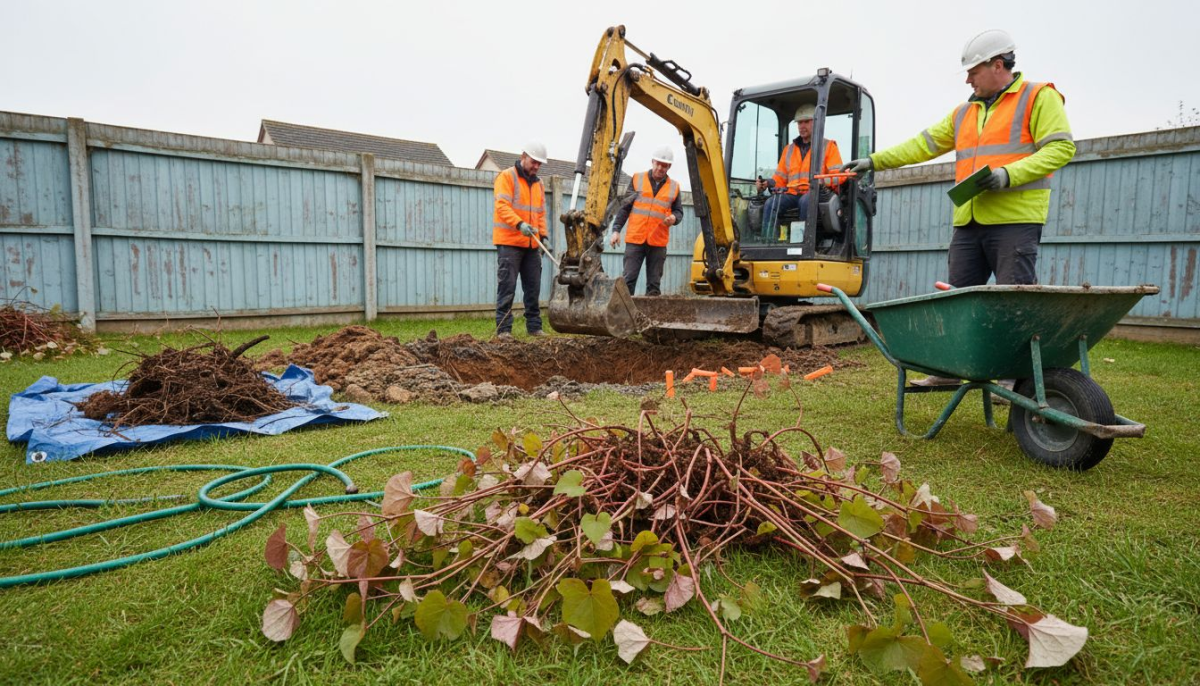
Excavation is critical for removing Japanese Knotweed without chemicals, yet many UK homeowners mistakenly believe digging alone guarantees success. In reality, excavation works best when integrated with root barriers and energy treatments, forming a complete chemical-free strategy. This guide reveals how proper excavation depth, soil management, and combined methods deliver lasting knotweed eradication while avoiding herbicide risks.
Table of Contents
- Understanding Japanese Knotweed Rhizomes: Why Excavation Matters
- How Excavation Physically Disrupts Knotweed Growth Without Chemicals
- Techniques And Machinery For Effective Excavation In UK Properties
- Integrating Root Barriers And Electrical Energy Treatments Post-Excavation
- Common Excavation Mistakes And Misconceptions Homeowners Should Avoid
- Bringing It All Together: How Homeowners Can Successfully Use Excavation For Knotweed Removal
- Explore Expert Chemical-Free Knotweed Solutions
- Frequently Asked Questions
Key takeaways
| Point | Details |
|---|---|
| Excavation removes rhizomes physically | Proper excavation extracts over 90% of underground biomass, cutting energy supply without chemicals. |
| Depth matters critically | Excavation must reach 1.5 to 3 metres to access the full rhizome network and prevent regrowth. |
| Combined methods work best | Integrating root barriers and electrical energy treatments reduces regrowth risk by approximately 30% compared to excavation alone. |
| Common mistakes cause failure | Shallow digging and neglecting soil containment lead to 70% regrowth rates and legal issues. |
| Professional planning is essential | Coordination with experienced contractors ensures compliance, proper technique, and sustainable results. |
Understanding Japanese knotweed rhizomes: why excavation matters
Japanese Knotweed spreads aggressively through underground rhizomes that extend far beyond visible surface growth. These rhizomes can reach up to 7 metres horizontally and penetrate 3 metres deep into soil, creating a vast subterranean network. This extensive system stores vital energy reserves enabling the plant to regenerate even after surface removal.
Excavation disrupts rhizome integrity physically, preventing regeneration by removing critical energy reserves stored in the rhizomes without use of herbicides. Chemical-free removal depends entirely on complete physical extraction of this underground biomass. Partial approaches leave viable fragments that quickly regrow, wasting time and resources.
Homeowners pursuing root excavation for Japanese knotweed must understand the biological reality:
- Rhizomes store carbohydrate reserves that fuel regrowth for years
- Even small fragments containing nodes can regenerate entire colonies
- Surface cutting without underground removal achieves nothing permanent
- Deep excavation breaks the energy cycle by physically removing storage organs
- Incomplete removal guarantees costly reinfestation within months
Understanding rhizome biology explains why excavation forms the foundation of effective chemical-free treatment strategies.
How excavation physically disrupts knotweed growth without chemicals
Excavation removes over 90% of rhizome biomass when correctly applied, physically depriving the plant of energy without chemical contamination risks. This mechanical approach eliminates the underground structures that would otherwise regenerate surface growth repeatedly.
Physical removal prevents rhizomes from accessing stored carbohydrates and nutrients essential for sprouting. By extracting the bulk of underground biomass, excavation starves remaining fragments of the critical mass needed for vigorous regrowth. Chemical contamination and associated environmental risks are completely avoided.
This method aligns with sustainable property management principles:
- No herbicide residues entering soil or groundwater
- Safe for properties near watercourses and sensitive ecosystems
- Complies with environmental protection regulations across the UK
- Protects beneficial soil organisms and native plant communities
- Eliminates long-term chemical persistence concerns
Excavation disrupts the rhizome system effectively when undertaken to sufficient depth and combined with proper soil management. Homeowners seeking chemical-free knotweed excavation gain environmental benefits alongside effective control.
The physical mechanism is straightforward: removing biomass prevents regeneration. However, execution requires precision, appropriate equipment, and thorough planning to achieve the promised results without spreading the infestation.
Techniques and machinery for effective excavation in UK properties
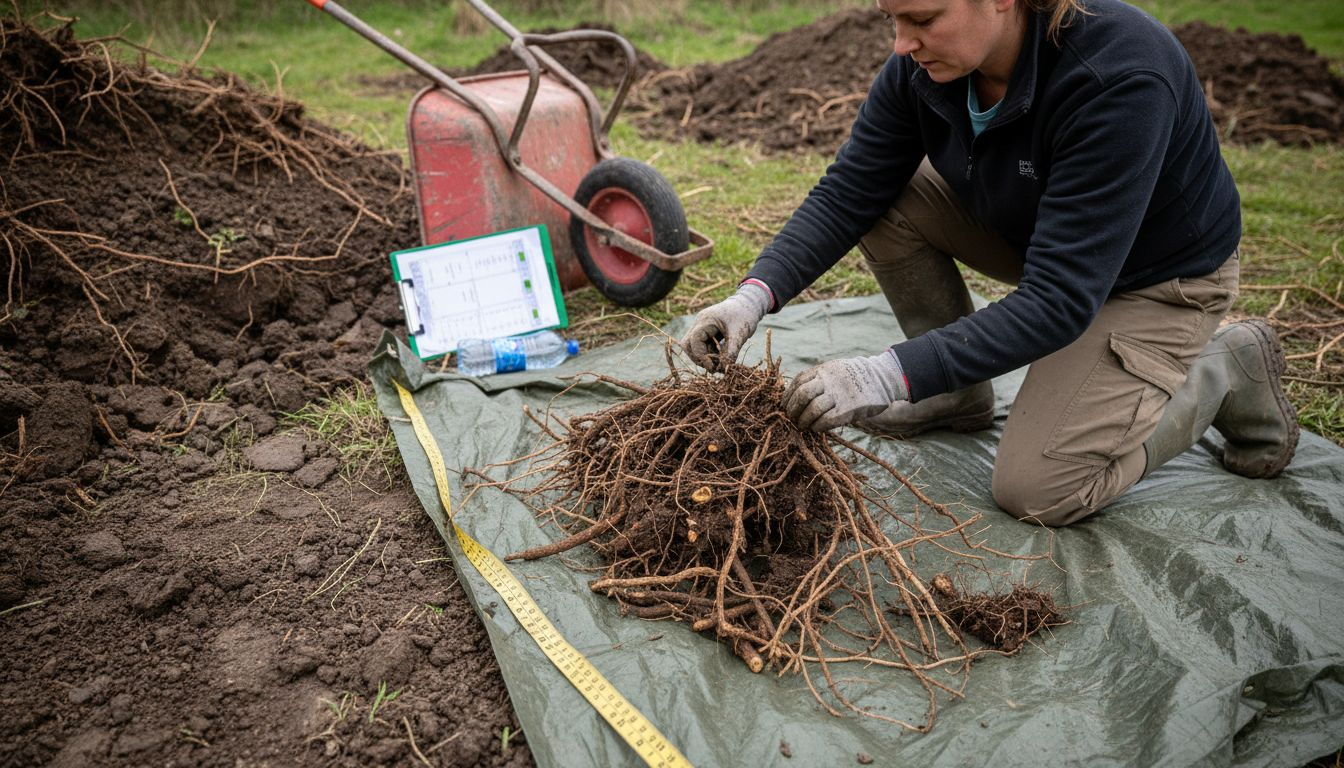
Recommended excavation depth ranges from 1.5 to 3 metres to target the full rhizome extent beneath most residential properties. Shallow excavation leaving rhizomes intact guarantees regrowth. Professional surveys determine exact depth requirements based on infestation age and soil conditions.
Specialised excavation machinery delivers the precision needed:
- Mini-excavators with GPS depth tracking ensure consistent excavation depth
- Long-reach attachments access difficult areas without excessive surface disturbance
- Screening buckets separate rhizome fragments from clean soil during excavation
- Tracked machinery minimises ground pressure on residential lawns and gardens
Excavated soil requires careful containment to prevent spreading viable knotweed fragments. Soil containment protocols include lining excavation areas with heavy-duty membranes and secure bagging consistent with UK regulations. Fragment spread during excavation represents a key risk that proper technique mitigates through controlled handling.
Pro Tip: Mark excavation boundaries clearly before starting work to ensure complete coverage of the infestation zone plus a 2-metre buffer around visible growth.
Homeowners preparing for knotweed excavation should coordinate with professionals experienced in chemical-free removal. The table below summarises key excavation parameters:
| Parameter | Specification | Purpose |
|---|---|---|
| Minimum depth | 1.5 metres | Reach majority of rhizome network |
| Recommended depth | 2 to 3 metres | Ensure complete biomass removal |
| Lateral buffer | 2 metres beyond visible growth | Capture horizontal rhizome spread |
| Soil handling | Double-bagging in sealed containers | Prevent fragment dispersal |
| Equipment type | Mini-excavator with precision controls | Enable accurate depth and containment |
Integrating root barriers during knotweed control adds another layer of protection against reinvasion. Proper excavation technique combined with barriers creates a comprehensive physical defence system.
Integrating root barriers and electrical energy treatments post-excavation
Root barriers act as physical obstacles preventing rhizome reinvasion into treated soil after excavation. These vertical barriers installed around excavation perimeters block underground spread from any remaining fragments. Root barriers improve control success by approximately 30% over excavation alone.
Electrical energy treatments deliver up to 5000 volts internally to rhizomes, inhibiting regrowth by damaging cellular structures and depleting stored energy. This non-chemical approach targets remaining fragments missed during excavation. Combining these methods with excavation reduces regrowth risks drastically compared to any single approach.
The comparison below illustrates why integrated treatment represents best practice:
| Approach | Effectiveness | Regrowth Risk | Environmental Impact | Cost |
|---|---|---|---|---|
| Excavation only | 60-70% | High (30-40%) | Low | Moderate |
| Excavation + root barriers | 80-85% | Moderate (15-20%) | Very low | Higher |
| Excavation + energy treatment | 85-90% | Low (10-15%) | Very low | Higher |
| Full integration (all three) | 95%+ | Very low (<5%) | Very low | Highest |
Pro Tip: Schedule energy treatments 2 to 4 weeks after excavation when remaining rhizome fragments begin active regrowth, maximising treatment uptake.
Integrated treatment is considered the best-practice chemical-free solution for UK homeowners facing persistent knotweed problems. This approach is sustainable, compliant with environmental standards, and highly effective across diverse property types. Homeowners exploring knotweed root barriers benefit from understanding how barriers complement excavation.
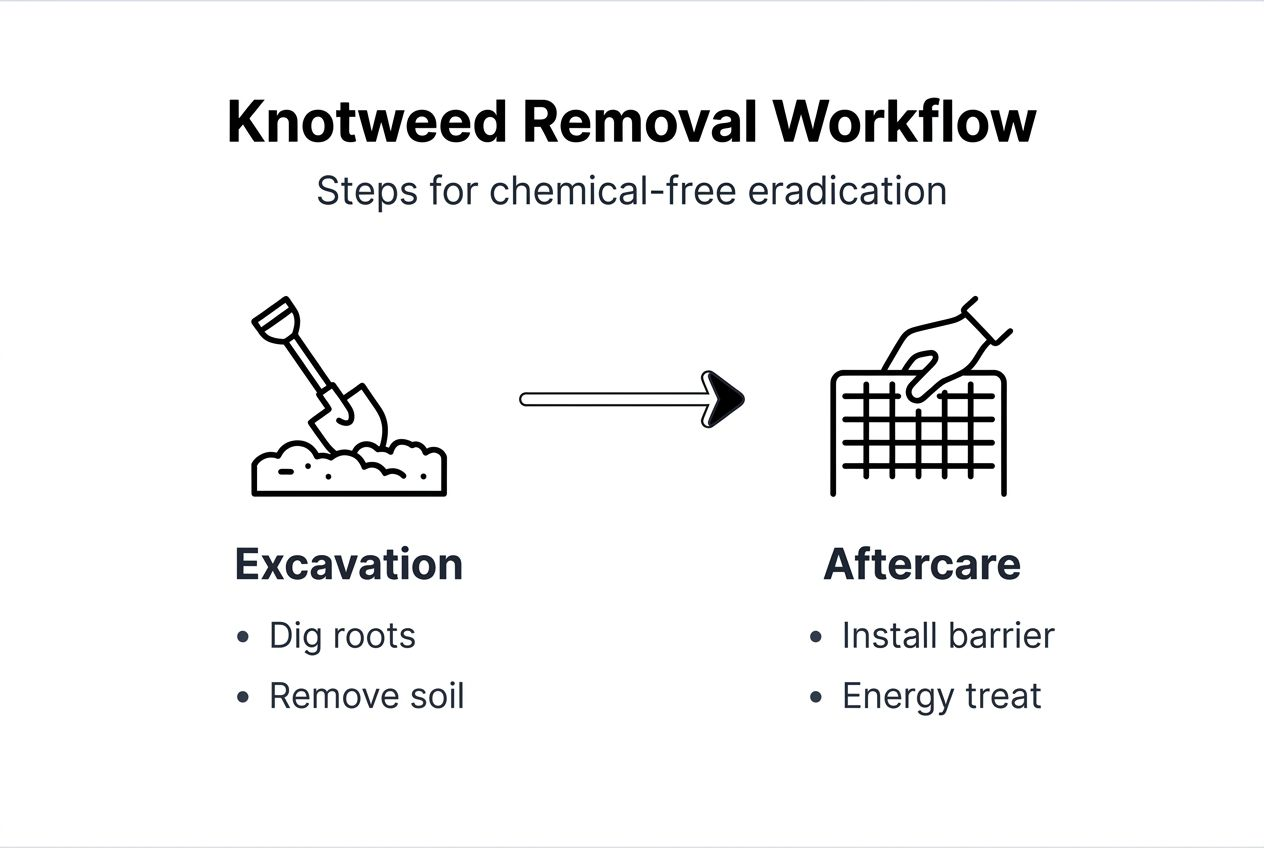
The chemical-free knotweed eradication workflow combines physical removal, barrier installation, and energy treatments into a coordinated strategy. Each element addresses different aspects of rhizome control, creating redundancy that prevents failure.
Common excavation mistakes and misconceptions homeowners should avoid
Incomplete excavation leaving shallow rhizomes leads to 70% regrowth rates within the first growing season. Many homeowners underestimate rhizome depth, stopping excavation at 1 metre when viable biomass extends to 2 or 3 metres. This single mistake wastes the entire investment.
Excavation alone increases failure risk by 50% compared to combined treatments integrating barriers and energy applications. Yet misbelief that excavation automatically means chemical-free and fully effective remains common among property owners. Physical removal is necessary but insufficient on its own.
Key mistakes to avoid:
- Assuming visible surface growth indicates full underground extent
- Skipping professional surveys that map rhizome distribution accurately
- Using standard landscaping contractors unfamiliar with knotweed biology
- Neglecting soil containment protocols that prevent offsite fragment spread
- Stopping excavation before reaching confirmed rhizome-free soil
- Failing to install root barriers around excavation perimeters
Pro Tip: Request soil sampling at excavation depth to verify rhizome-free conditions before backfilling, preventing costly rework later.
Improper soil management causes offsite spread and potential legal issues under UK environmental legislation. Excavated soil containing viable fragments requires licensed disposal or onsite burial beneath impermeable barriers. Homeowners following Japanese knotweed removal best practices avoid these pitfalls through proper planning.
Understanding the benefits of chemical-free weed control helps homeowners appreciate why integrated approaches outperform excavation alone. Knowing these mistakes helps property owners plan better interventions and set realistic expectations for treatment duration and success rates.
Bringing it all together: how homeowners can successfully use excavation for knotweed removal
Successful chemical-free knotweed removal through excavation requires systematic planning and execution. Follow this integrated workflow:
- Commission a professional underground survey to map rhizome extent and determine required excavation depth
- Plan excavation to at least 1.5 metres depth, extending to 3 metres where surveys indicate deeper rhizome penetration
- Engage licensed contractors experienced in knotweed-specific excavation techniques and soil management
- Install root barriers around excavation perimeters immediately after soil removal
- Schedule electrical energy treatments targeting any remaining rhizome fragments within 4 weeks of excavation
- Implement strict soil containment using double-bagging and membrane liners during all excavation activities
Adapt this approach depending on property size, infestation extent, and environmental restrictions. Small residential infestations may require only 1.5-metre excavation with barrier installation. Extensive mature stands need deeper excavation plus multiple energy treatment cycles.
Pro Tip: Document excavation depth with photographs and GPS coordinates at multiple points, creating evidence for mortgage lenders and future property transactions.
Coordinate with professionals who understand the chemical-free knotweed treatment process from initial survey through final monitoring. Monitor treated areas regularly for regrowth over multiple seasons, typically 2 to 5 years depending on infestation severity.
Key monitoring activities include:
- Monthly visual inspections during growing season (April through October)
- Prompt treatment of any regrowth shoots using targeted energy applications
- Soil testing around barrier perimeters to detect rhizome breaches early
- Annual professional assessments to verify eradication success
Homeowners preparing for excavation should budget for integrated treatment from the outset rather than attempting excavation alone and facing regrowth. The upfront investment in combined methods proves more cost-effective than repeated failed attempts.
Explore expert chemical-free knotweed solutions
Achieving lasting knotweed control requires expertise that combines excavation precision with barrier technology and energy treatments. Japanese Knotweed Agency pioneered chemical-free approaches that deliver direct energy up to 5000 volts onsite, causing internal cell damage and depleting rhizome energy reserves with each treatment.

Professional services ensure compliance with UK environmental standards and legal requirements whilst tailoring solutions to your property type and infestation level. Access comprehensive resources including the detailed chemical-free treatment process, practical knotweed root barrier guidance, and extensive frequently asked questions covering every aspect of sustainable knotweed management.
Expert coordination ensures excavation depth matches rhizome distribution, barriers install correctly, and energy treatments target viable regrowth effectively. This integrated approach protects your property investment whilst supporting environmental stewardship.
Frequently asked questions
How deep should excavation go to remove Japanese knotweed rhizomes effectively?
Recommended excavation depth is at least 1.5 to 3 metres to reach the full rhizome network, with exact depth determined by professional survey assessing infestation extent. Incomplete or shallow excavation often results in rapid regrowth within months.
Can excavation alone guarantee complete chemical-free knotweed removal?
Excavation alone carries significantly higher regrowth risk, about 50% higher than when combined with root barriers and energy treatments. Complete eradication usually requires integrated approaches combining physical removal with barriers and targeted energy applications for reliable long-term results.
How can root barriers improve the success of excavation treatments for Japanese knotweed?
Root barriers improve control success by approximately 30% over excavation alone by acting as physical blocks preventing rhizome reinvasion into treated areas. They are essential for long-term chemical-free knotweed control on residential properties.
What are the best practices homeowners should follow when planning excavation for knotweed removal?
Plan excavation depth carefully based on professional surveys mapping underground rhizome distribution. Ensure soil containment and licensed disposal to prevent spreading viable fragments. Combine excavation with root barriers and energy treatments for optimal success, working with experienced contractors aware of UK environmental regulations throughout the process.
Recommended
- Root Excavation Cuts Japanese Knotweed in UK Homes by 95%
- Knotweed Eradication Workflow: Effective Chemical-Free Solutions
- Step-by-Step Process for Chemical Free Knotweed Treatment
- How to Prepare for Knotweed Excavation: Step-by-Step Guide
- Soil Doctors: Mycoremediation for Cleaner Farmland – LongevityBotanicals