


Many homeowners believe herbicide resistance means Japanese Knotweed becomes completely untreatable with chemicals. The reality is more nuanced. Resistance does complicate chemical control, but integrated approaches combining chemical-free methods with mechanical removal can still effectively reduce infestations. Understanding herbicide resistance helps you choose safer, more effective eradication strategies that protect both property value and health.
Table of Contents
- Introduction To Herbicide Resistance
- How Herbicide Resistance Develops In Japanese Knotweed
- Common Misconceptions About Herbicide Resistance
- Impacts Of Herbicide Resistance On Property Value And Health
- Chemical-Free Alternatives To Combat Herbicide Resistance
- Realistic Timelines And Expectations For Effective Eradication
- Practical Steps For Homeowners Managing Resistant Japanese Knotweed
- Discover Our Chemical-Free Japanese Knotweed Solutions
- Frequently Asked Questions
Key takeaways
| Point | Details |
|---|---|
| Herbicide resistance definition | Plants evolve tolerance to chemicals through repeated exposure over years |
| Impact on homeowners | Resistant knotweed reduces property values by up to 15% and complicates removal |
| Chemical-free alternatives | Electrical treatments delivering up to 5000 volts bypass resistance mechanisms entirely |
| Realistic timescales | Eradication requires 3 to 7 years using integrated management approaches |
| Practical solutions | Combine electrical treatments, root barriers, and monitoring for lasting control |
Introduction to herbicide resistance
Herbicide resistance occurs when plants develop genetic traits allowing survival despite chemical applications. This evolutionary response emerges from selection pressure created by repeated herbicide use. Resistant individuals survive treatment, reproduce, and gradually dominate the population.
The process typically unfolds over several growing seasons. Herbicide resistance typically develops over 5-10 years of consistent chemical applications. This timeframe varies based on herbicide type, application frequency, and plant species characteristics.
For homeowners managing invasive plants, resistance fundamentally undermines traditional control methods. What once worked reliably becomes progressively less effective. Property owners face mounting frustration as treatments fail repeatedly.
Understanding resistance helps you recognise why chemical-only approaches often disappoint. Key factors driving resistance include:
- Overreliance on single herbicide types without rotation
- Inadequate application rates allowing partial survival
- Failure to combine chemical with mechanical removal methods
- Genetic diversity within knotweed populations enabling adaptation
Recognising these common knotweed misconceptions prevents wasted time and money on ineffective treatments. Resistance does not appear suddenly. It builds gradually through selection pressure favouring tolerant individuals.
How herbicide resistance develops in Japanese Knotweed
Japanese Knotweed populations develop resistance through predictable biological mechanisms. Each herbicide application eliminates susceptible plants whilst inadvertently favouring tolerant individuals. These survivors carry genetic variations conferring partial resistance.
Over multiple treatment cycles, the proportion of resistant plants increases dramatically. What begins as a small percentage of tolerant individuals eventually dominates the entire infestation. This process accelerates when homeowners rely exclusively on glyphosate-based products.
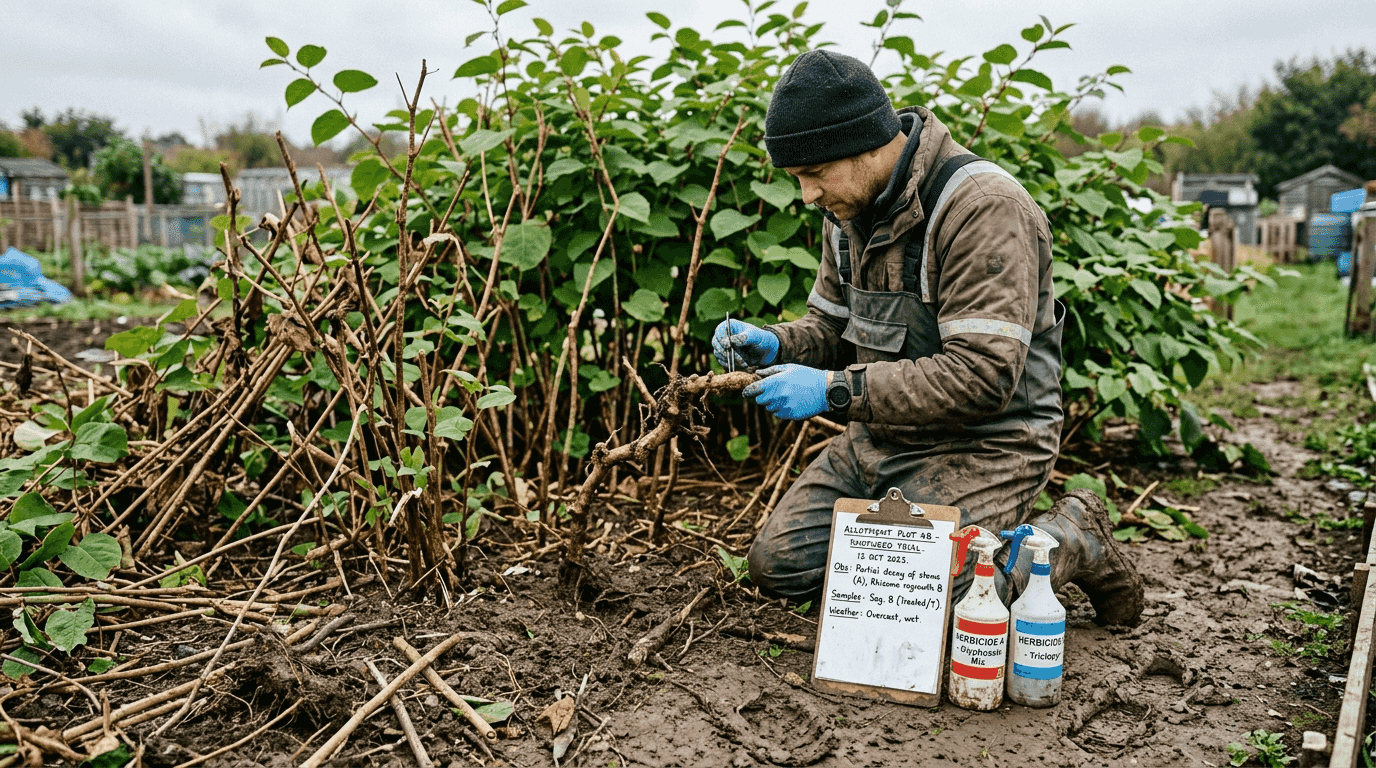
The UK faces particularly severe challenges with resistant knotweed. Up to 20-30% glyphosate treatment failure rates occur across affected regions. These failures leave homeowners struggling with persistent infestations despite costly, repeated applications.
Understanding the resistance development process helps identify better control strategies:
- Initial susceptible population responds well to herbicide treatments
- Small percentage of plants possess genetic tolerance traits
- Repeated applications eliminate susceptible individuals preferentially
- Tolerant plants survive, reproduce through rhizome fragments
- Resistant population expands with each subsequent treatment cycle
- Eventually, herbicide effectiveness drops below acceptable thresholds
This progression explains why chemical treatments that worked initially later fail completely. Genetic variation within Japanese Knotweed resistance details provides raw material for evolutionary adaptation.
The extensive rhizome network complicates matters further. Underground stems spread resistance traits across wide areas. A single resistant fragment can establish new populations sharing tolerance characteristics.
Common misconceptions about herbicide resistance
Homeowners often misunderstand herbicide resistance, leading to poor management decisions. Clearing these misconceptions empowers better choices for effective control.
First, resistance does not mean complete chemical untreatability. Resistant plants show reduced susceptibility, not total immunity. Integrated approaches combining multiple control methods remain effective even against resistant populations.
Second, resistance traits do not transfer between unrelated plant species. Japanese Knotweed resistance develops independently through its own genetic variations. Treating other garden plants does not influence knotweed resistance levels.
Third, immediate eradication rarely occurs regardless of resistance status. Knotweed’s extensive rhizome system requires persistent, multi-year treatment programmes. Expecting quick results from any single method sets unrealistic expectations.
Common false beliefs about resistance include:
- One failed treatment means complete herbicide resistance
- Resistant knotweed cannot be controlled at all
- Chemical resistance makes the infestation more aggressive
- Switching herbicide brands automatically overcomes resistance
Understanding these knotweed misconceptions corrected prevents abandoning viable control strategies prematurely. Resistance complicates management but does not render infestations uncontrollable.
Pro Tip: Document your treatment history including products used, application dates, and observed responses. This record helps professionals design effective integrated programmes accounting for potential resistance patterns.
Impacts of herbicide resistance on property value and health
Herbicide-resistant knotweed infestations create serious financial and health consequences for homeowners. These impacts motivate many to seek safer, more effective alternatives.
Property value reductions of 10-15% occur when mortgage lenders discover resistant knotweed. Banks view resistance as evidence of failed control attempts, increasing perceived risk. Buyers negotiate lower prices or withdraw offers entirely upon learning about resistant infestations.
Health concerns compound financial losses. Repeated herbicide applications contaminate soil and potentially leach into groundwater. Families growing vegetables or allowing children to play in treated areas face exposure to chemical residues.
Key impacts of resistant knotweed include:
- Mortgage approval difficulties as lenders demand professional management plans
- Higher insurance premiums reflecting increased structural damage risk
- Ongoing treatment costs escalating as chemical methods fail
- Stress and anxiety from persistent, seemingly uncontrollable infestations
- Environmental degradation from excessive herbicide applications
These combined effects drive growing interest in chemical-free alternatives. Homeowners increasingly prioritise methods eliminating herbicide exposure whilst effectively controlling resistant populations.
Resistant infestations reduce market value by up to 15%, costing the average UK homeowner £30,000 to £50,000 in lost equity.
Understanding property value impact studies helps homeowners appreciate the urgency of effective management. Early intervention using integrated approaches prevents resistance development and protects property investments.
Chemical-free alternatives to combat herbicide resistance
Chemical-free methods offer powerful alternatives for controlling herbicide-resistant Japanese Knotweed. These approaches bypass resistance mechanisms entirely whilst eliminating environmental and health concerns.
Electrical methods use up to 5000 volts to damage knotweed rhizomes internally. High-voltage energy disrupts cellular structures and depletes stored energy reserves throughout the underground network. This physical damage occurs regardless of any chemical resistance traits.
Electrical treatments provide several advantages over herbicides. They work immediately at the cellular level without relying on plant metabolism. Resistance cannot develop because the mechanism is purely physical rather than biochemical.
Comparing chemical and chemical-free approaches:
| Method | Effectiveness Against Resistance | Environmental Impact | Treatment Duration | Health Concerns |
|---|---|---|---|---|
| Herbicides | Decreasing over time | Soil/water contamination | 5+ years | Chemical exposure risk |
| Electrical | Consistent effectiveness | Minimal impact | 3-7 years | None |
| Mechanical | Moderate | Low if done properly | Ongoing | Physical labour strain |
Integrated programmes typically combine electrical treatments with mechanical controls. This multi-pronged approach attacks knotweed through different mechanisms simultaneously. The chemical-free weed control benefits include avoiding resistance development entirely.
Pro Tip: Schedule electrical treatments during active growth periods when rhizomes contain maximum stored energy. Depleting these reserves at peak times maximises long-term control effectiveness.
The chemical-free eradication workflow integrates surveying, targeted electrical application, and ongoing monitoring. This systematic approach ensures comprehensive rhizome destruction without environmental harm.
Realistic timelines and expectations for effective eradication
Successful Japanese Knotweed eradication requires patience and realistic expectations. Understanding typical timescales prevents premature abandonment of effective treatment programmes.
Eradication typically requires 3 to 7 years of multi-faceted treatment for resistant knotweed. This duration reflects the extensive underground rhizome network requiring systematic depletion. Quick fixes simply do not exist for well-established infestations.
Integrated approaches combining chemical-free and mechanical methods improve success rates significantly. Single-method strategies, particularly chemical-only programmes, often fail against resistant populations. Diversified control attacks knotweed through multiple mechanisms simultaneously.
Key timeline considerations include:
- Initial visible reduction appears within first growing season
- Underground rhizome depletion requires multiple years
- Regrowth monitoring continues for 2-3 years post-treatment
- Professional verification ensures complete eradication before declaring success
Repeated chemical application alone frequently fails with resistant populations. Homeowners waste years and thousands of pounds on ineffective herbicide programmes. Switching to integrated approaches earlier saves both time and money.
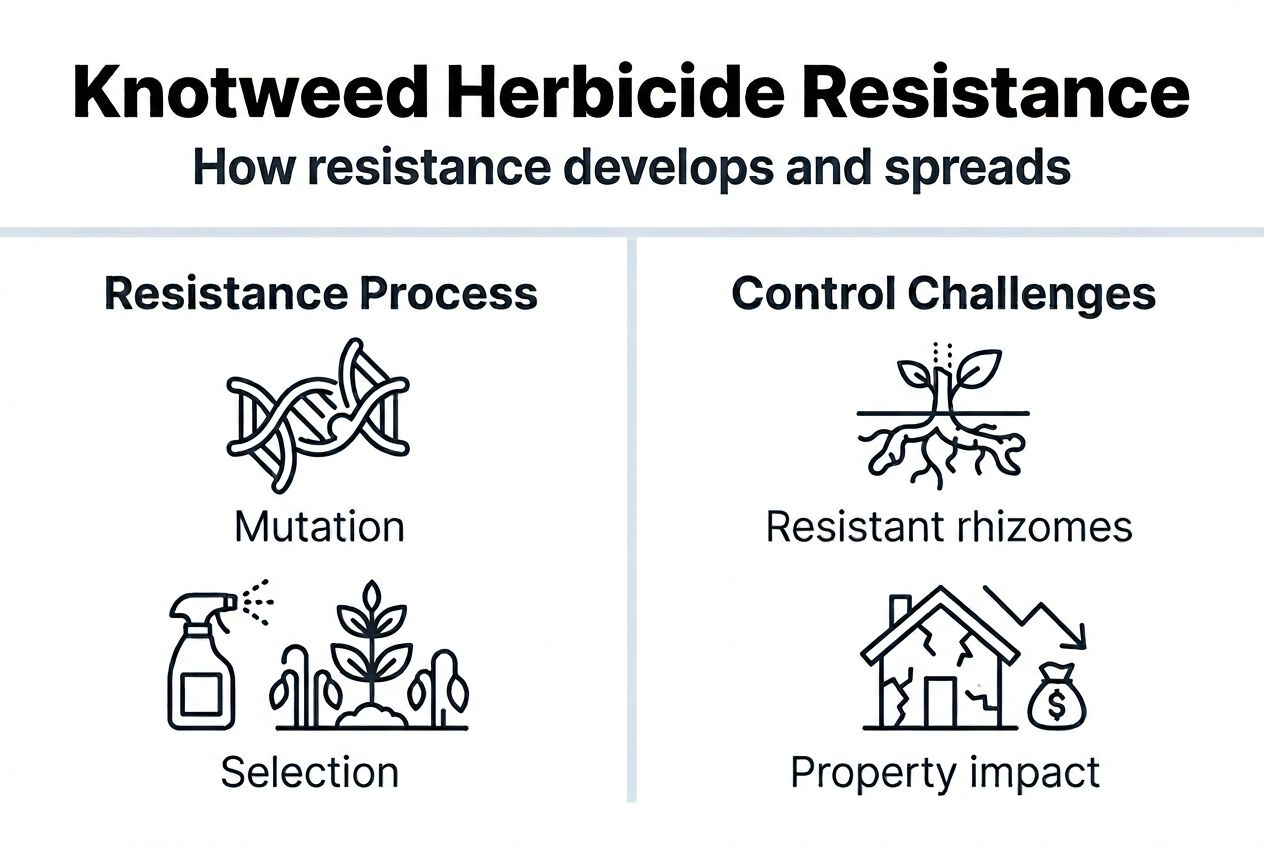
Professional guidance proves critical for lasting control. Experts design treatment schedules accounting for seasonal growth patterns and site-specific conditions. They adjust strategies based on ongoing monitoring results rather than following rigid protocols.
Homeowners should set expectations realistically to avoid premature abandonment. Understanding knotweed eradication timelines prevents disappointment when visible progress takes months to manifest. Underground rhizome depletion precedes above-ground elimination.
Practical steps for homeowners managing resistant Japanese Knotweed
Homeowners facing herbicide-resistant knotweed need actionable strategies combining modern chemical-free methods with traditional mechanical controls. These integrated approaches deliver results where chemical-only programmes fail.
Avoid sole reliance on chemicals to prevent worsening resistance. Diversifying control methods attacks knotweed through multiple mechanisms simultaneously. This redundancy ensures progress even if one method proves less effective.
Implementing an effective management programme:
- Arrange professional survey mapping complete infestation extent including rhizome spread
- Establish root barriers preventing further spread into unaffected areas
- Schedule electrical treatments targeting rhizome networks during peak growth
- Combine treatments with careful mechanical removal of above-ground growth
- Monitor progress through regular professional inspections adjusting strategy as needed
- Maintain detailed records documenting all interventions and observed responses
- Continue monitoring for 2-3 years after visible growth disappears
Electrical treatments targeting rhizomes provide the foundation for modern control programmes. These methods bypass resistance whilst eliminating chemical exposure concerns. Root barriers contain existing infestations preventing lateral spread during the eradication process.
Regular professional surveys track underground rhizome health and treatment effectiveness. Thermal imaging and careful excavation reveal progress invisible from surface observations. This monitoring informs treatment schedule adjustments maximising efficiency.
Pro Tip: Photograph your property from consistent positions every month during growing season. This visual record helps identify regrowth patterns and documents progress for mortgage lenders or buyers.
Integrated programmes combining these elements deliver superior results. The protect property from knotweed approach emphasises prevention alongside active treatment. Learning natural knotweed removal steps and how to prevent knotweed regrowth naturally completes your knowledge base for long-term success.
Discover our chemical-free Japanese Knotweed solutions
Resistant Japanese Knotweed demands innovative approaches combining cutting-edge technology with proven integrated management principles. Professional chemical-free treatments specifically target resistant populations using electrical methods that bypass resistance mechanisms entirely.

Our comprehensive management programmes include electrical rhizome treatments, root barrier installations, and ongoing monitoring tailored to your property’s specific needs. We protect your property value and family health through sustainable, effective solutions designed for 2026’s environmental standards.
Expert guidance helps navigate the complexities of resistant knotweed management. Our chemical-free invasive plant solutions combine multiple control methods in coordinated programmes. Detailed step by step invasive weed management ensures nothing gets overlooked during your eradication journey.
Visit our Japanese Knotweed FAQs for answers addressing common concerns about resistance, treatment options, and property protection strategies.
Frequently asked questions
What is herbicide resistance and how does it affect Japanese Knotweed?
Herbicide resistance occurs when Japanese Knotweed develops genetic tolerance to chemical treatments through repeated exposure. This evolved survival mechanism reduces herbicide effectiveness progressively, requiring alternative control approaches. Resistant populations survive applications that previously eliminated susceptible plants, making chemical-only programmes increasingly ineffective.
Are chemical-free methods effective against resistant Japanese Knotweed?
Electrical methods prove highly effective against resistant knotweed by disrupting rhizomes through physical energy rather than biochemical pathways. These treatments deliver up to 5000 volts causing internal cell damage and energy depletion throughout the underground network. Because the mechanism is purely physical, resistance cannot develop, providing consistent effectiveness regardless of chemical tolerance traits.
How long does it usually take to control resistant Japanese Knotweed?
Eradication typically requires 3 to 7 years using integrated approaches combining electrical treatments, mechanical removal, and ongoing monitoring. This duration reflects the extensive rhizome system requiring systematic depletion through persistent, coordinated efforts. Single-method strategies, particularly chemical-only programmes, often extend timelines significantly or fail completely against resistant populations.
Can herbicide resistance affect my property’s value and health?
Resistant knotweed infestations reduce property values by 10 to 15% as mortgage lenders view failed chemical treatments as evidence of serious control challenges. Repeated herbicide applications attempting to overcome resistance may contaminate soil and groundwater, raising health concerns for families. These combined financial and health impacts drive increasing homeowner interest in chemical-free alternatives eliminating exposure risks whilst effectively controlling resistant populations.