Over £1.9 billion is spent every year tackling invasive species across Great Britain, yet many council teams still struggle to manage disruptive plants like Japanese Knotweed without chemicals. For British local authority environmental officers, the challenge is finding solutions that protect public spaces and biodiversity while avoiding harmful treatments. This guide explores practical definitions, identification tips, legal obligations, and proven chemical-free methods so you can take eco-friendly action on council land.
Table of Contents
- Defining Invasive Plants on Council Land
- Common Species and Key Identification Features
- Legal Obligations and Council Responsibilities
- Non-Chemical Eradication Methods and Innovations
- Risks of Inaction and Best Practice Compliance
Key Takeaways
| Point | Details |
|---|---|
| Recognition of Invasive Species | Councils must identify invasive plant species early to implement effective management strategies and prevent their spread. |
| Legal Responsibilities | Local authorities are legally obligated to manage invasive plants, including preventing their reproduction and spread. |
| Non-Chemical Control Methods | Implementing non-chemical eradication strategies, like mechanical removal and Integrated Pest Management, reduces environmental disruption. |
| Consequences of Inaction | Failing to manage invasive plants can lead to significant biodiversity loss and economic costs, highlighting the need for proactive measures. |
Defining Invasive Plants on Council Land
Invasive plants represent a significant ecological challenge for local authorities, particularly those managing public spaces and council land. These are non-native plant species that have been introduced outside their natural habitat and demonstrate aggressive spreading characteristics that can fundamentally disrupt local ecosystems. Invasive non-native plants are specifically defined as species that naturalise rapidly, outcompeting native vegetation through extraordinary reproductive capabilities.
The critical distinguishing features of invasive plants include their ability to propagate quickly, lack natural predators or control mechanisms in the new environment, and potential to cause substantial environmental damage. These plants can fundamentally alter habitat structures, reduce biodiversity, and create significant management challenges for council environmental teams. Some invasive species can modify soil conditions, alter water flow patterns, and compromise the survival of indigenous plant populations.
Council land managers must understand that invasiveness is not solely determined by a plant’s origin, but by its behavioural characteristics in a specific ecosystem. Injurious plant management requires comprehensive recognition of how these species interact with local environments. Plants become problematic when they demonstrate rapid spread, aggressive root systems, and capabilities to colonise areas rapidly, effectively displacing native species and disrupting established ecological balance.
Pro tip: Conduct regular site surveys to identify potential invasive plant species early, enabling more cost-effective and environmentally sensitive management strategies before extensive spread occurs.
Common Species and Key Identification Features
Local councils encounter several highly problematic invasive plant species that require immediate recognition and management. Invasive plant species in the United Kingdom predominantly include Japanese Knotweed, Himalayan Balsam, Giant Hogweed, and Floating Pennywort, each presenting unique identification challenges for environmental management teams.
Japanese Knotweed stands out as particularly notorious, characterised by distinctive purple-speckled bamboo-like stems and heart-shaped leaves. This aggressive species can grow up to 10 centimetres per day, penetrating concrete foundations and causing substantial structural damage. Himalayan Balsam features delicate pink, slipper-shaped flowers and can rapidly colonise riverbanks and damp locations, outcompeting native riverside vegetation through its explosive seed dispersal mechanism.
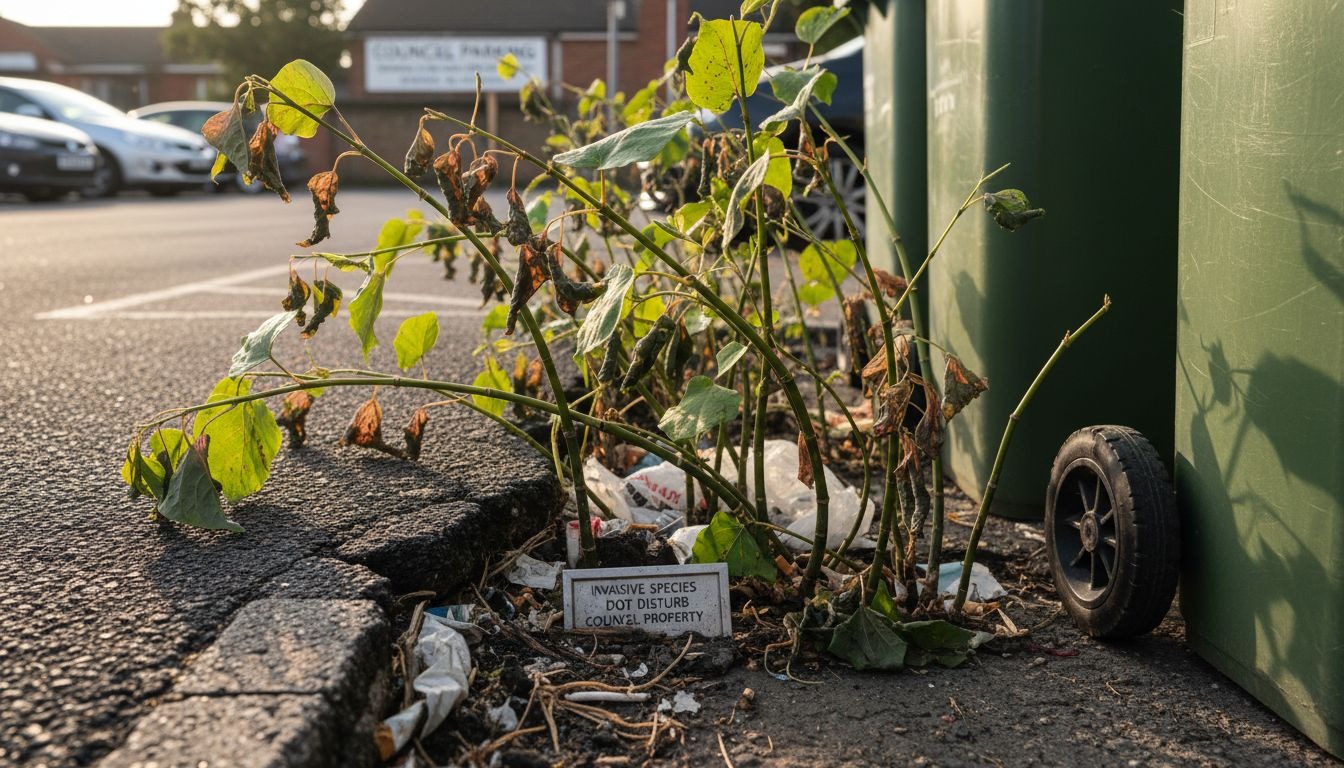
Gardener identification efforts have also highlighted additional problematic species like Mexican fleabane and Himalayan honeysuckle. These plants often possess rapid growth patterns, extensive root systems, and remarkable reproductive capabilities that enable them to spread quickly across council landscapes. Giant Hogweed presents significant risks, with its substantial height reaching up to 5 metres and phototoxic sap that can cause severe skin burns, making professional identification crucial for public safety.
Pro tip: Photograph suspected invasive plant specimens and consult local botanical experts or council environmental teams for precise identification before attempting any removal strategies.
Here is a summary of high-impact invasive plant species and their primary threats:
| Species | Key Threats | Common Locations |
|---|---|---|
| Japanese Knotweed | Structural damage, rapid spread | Roadsides, urban spaces |
| Himalayan Balsam | Biodiversity loss, riverbank erosion | Waterways, damp areas |
| Giant Hogweed | Skin burns, outcompetes natives | Woodland edges, riverbanks |
| Floating Pennywort | Water flow obstruction, habitat change | Ponds, slow rivers |
| Mexican fleabane | Space competition, fast growth | Parks, council gardens |
| Himalayan honeysuckle | Displaces shrubs, dense thickets | Hedgerows, parkland |
Legal Obligations and Council Responsibilities
Local authorities face significant legal responsibilities when managing invasive plant species on public and council-owned land. Invasive non-native plant regulations in the United Kingdom impose strict legal frameworks that councils must navigate carefully. The Wildlife and Countryside Act 1981 establishes comprehensive guidelines preventing the deliberate or negligent spread of invasive plant species, making council environmental teams directly accountable for comprehensive management strategies.
Under current legislation, councils are legally obligated to prevent invasive plants from reproducing or spreading to neighbouring properties or wild environments. This includes implementing proactive control measures, documenting invasive plant occurrences, and developing strategic removal plans. While there is no explicit statutory duty requiring immediate eradication, councils can face potential legal challenges if they fail to demonstrate responsible management and containment of known invasive plant populations.
Municipal invasive plant management typically involves a combination of chemical treatments, mechanical removal, and coordinated approaches with adjacent landowners. Councils must maintain detailed records of identification, treatment methods, and ongoing monitoring efforts. Special attention must be given to high-risk species like Japanese Knotweed, which can cause substantial environmental and structural damage if left uncontrolled. Potential legal consequences include enforcement actions, substantial remediation costs, and potential liability for damage caused by unchecked invasive plant spread.
Pro tip: Develop a comprehensive invasive plant management protocol that includes regular site surveys, documented treatment plans, and clear communication strategies with neighbouring landowners to ensure legal compliance.
Non-Chemical Eradication Methods and Innovations
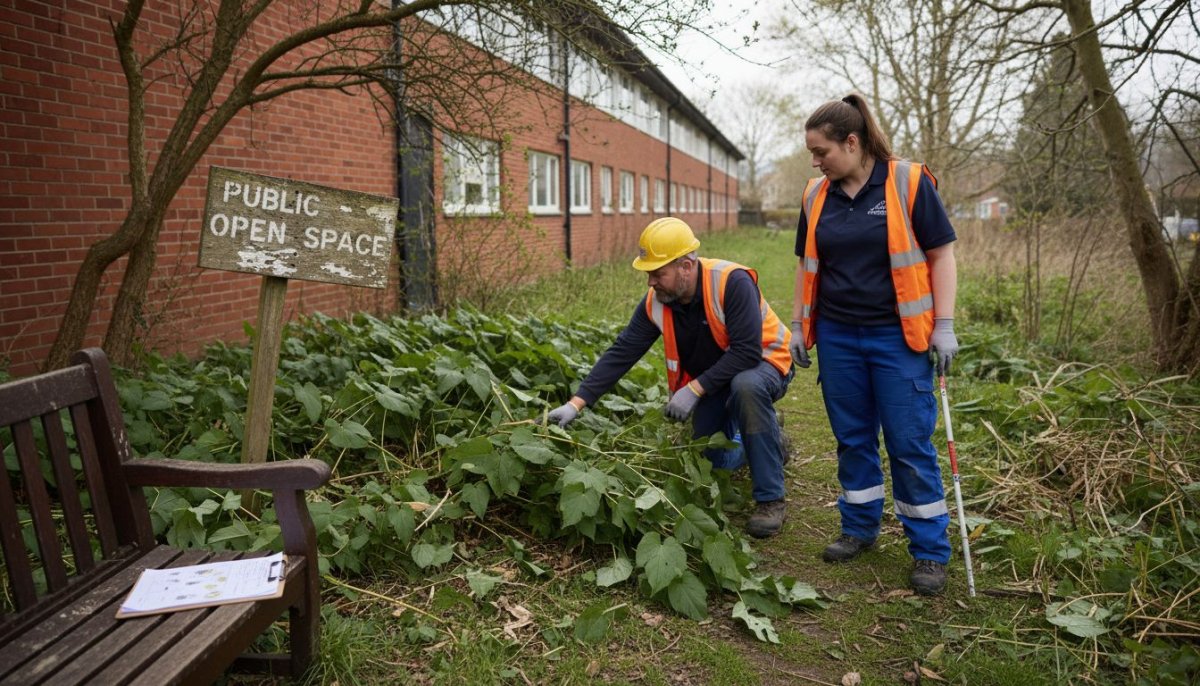
Council environmental teams are increasingly adopting sophisticated non-chemical weed control techniques that minimise environmental disruption while effectively managing invasive plant populations. Mechanical removal strategies represent a cornerstone of these innovative approaches, encompassing methods such as precise hand-pulling, systematic cutting, targeted smothering, and strategic repeated trimming to progressively reduce plant biomass and reproductive capabilities.
Integrated Pest Management (IPM) provides a comprehensive framework for sustainable invasive plant control, emphasising proactive prevention and minimal chemical intervention. Sustainable invasive plant management involves implementing resistant plant varieties, practising careful crop rotation, maintaining strict site sanitation protocols, and conducting regular comprehensive monitoring. These approaches enable councils to develop nuanced, environmentally sensitive strategies that address invasive species without relying on potentially harmful chemical treatments.
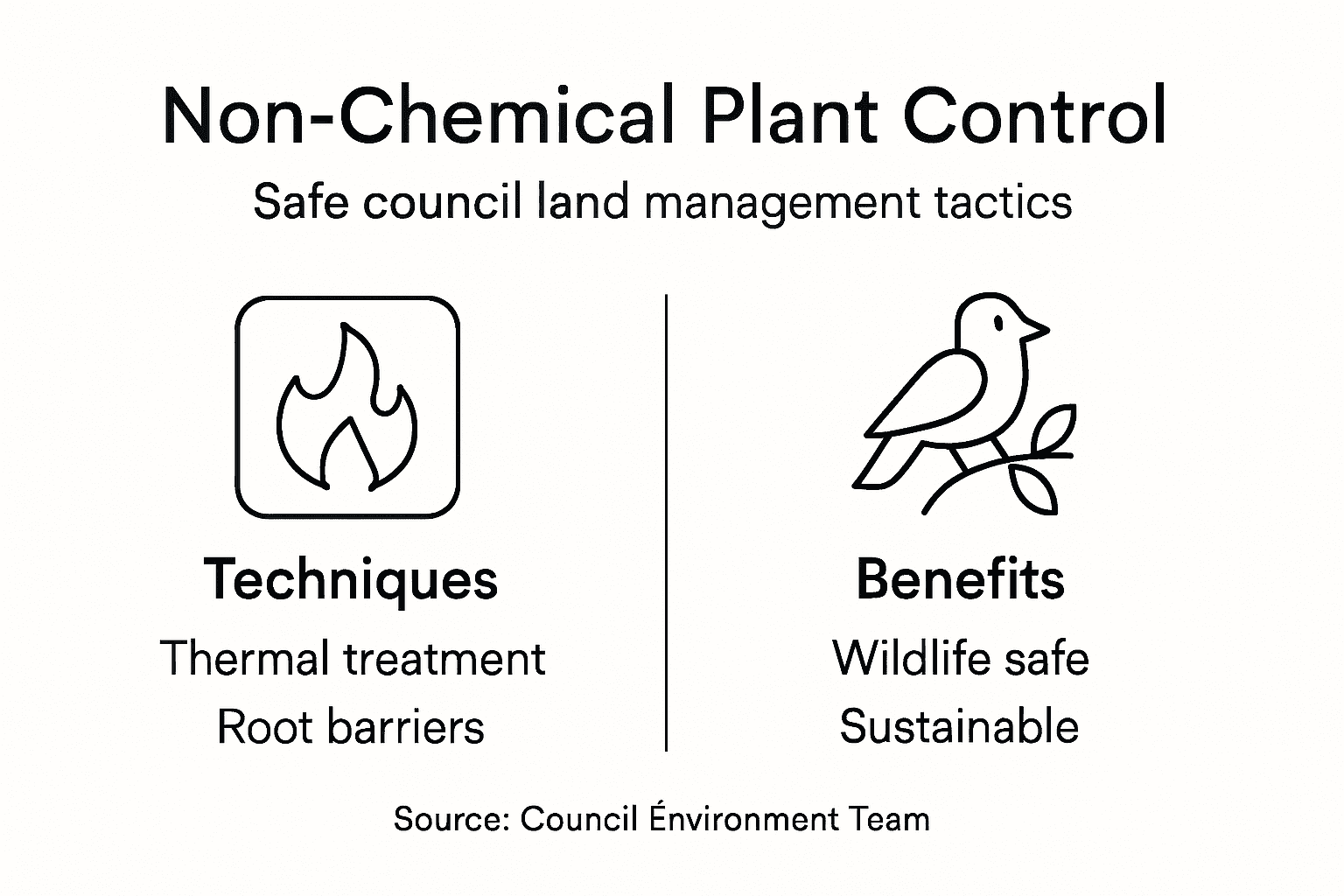
Advanced non-chemical techniques now include thermal treatment methods, physical root barrier installations, and targeted energy intervention strategies. These innovative approaches focus on disrupting plant energy systems, preventing regeneration, and comprehensively eliminating invasive plant networks without introducing potentially harmful chemical agents. Successful implementation requires precise timing, typically targeting early spring and summer periods when plant metabolic activities are most vulnerable, and maintaining persistent, systematic removal efforts across multiple growing seasons.
Pro tip: Document each non-chemical intervention meticulously, recording treatment dates, methods used, and observable plant response to develop increasingly refined management strategies over time.
The following table compares non-chemical and chemical eradication strategies for council land:
| Control Approach | Environmental Impact | Management Complexity | Typical Cost |
|---|---|---|---|
| Mechanical Removal | Low impact, preserves diversity | Labour-intensive, needs repeat action | Moderate |
| Chemical Treatments | Risk of soil/water contamination | Fast, needs trained operatives | High |
| Integrated Pest Management (IPM) | Balances prevention and minimal disruption | Requires planning and regular monitoring | Variable |
| Thermal Methods | No chemicals, energy usage | Specialist equipment needed | Moderate to high |
Risks of Inaction and Best Practice Compliance
Invasive species management represents a critical environmental protection strategy with substantial ecological and economic implications. Councils failing to address invasive plant populations risk exponential biodiversity loss, with economic costs that have quadrupled since 1970. These non-native species systematically outcompete indigenous flora, disrupt natural ecosystems, and create cascading environmental challenges that extend far beyond initial site contamination.
Great Britain’s Invasive Non-Native Species Strategy highlights the staggering national economic impact, estimating that unchecked invasive plant spread costs nearly £1.9 billion annually. Beyond financial considerations, inaction undermines critical environmental targets and compromises climate emergency response capabilities. Invasive plants threaten native wildlife by spreading diseases, degrading habitat structures, and fundamentally altering ecosystem dynamics through aggressive colonisation strategies.
Comprehensive best practice compliance requires a multifaceted approach involving coordinated prevention, early detection, systematic control, continuous monitoring, and proactive public awareness initiatives. Council environmental teams must develop robust intervention protocols that prioritise rapid identification, implement targeted removal strategies, and maintain meticulous documentation of invasive plant management efforts. This approach not only mitigates immediate ecological risks but also establishes long-term sustainable management frameworks that protect native biodiversity and preserve ecosystem integrity.
Pro tip: Develop a standardised invasive plant tracking system that records species distribution, treatment interventions, and ecological recovery metrics to enable data-driven management strategies.
Take Control of Invasive Plants on Council Land Today
Managing invasive species like Japanese Knotweed and Giant Hogweed on council land demands expertise, persistence, and environmentally sensitive solutions. If you are struggling with rapid spread, difficult removal, or legal compliance challenges discussed in the article, you are not alone. These species threaten biodiversity and cause costly damage, requiring an approach that goes beyond traditional chemical treatments.

Japanese Knotweed Agency specialises in pioneering chemical free treatments that deliver targeted high-voltage energy directly into the rhizome network. This proven method weakens invasive plants internally without harming surrounding ecosystems. We also provide property surveys, root barrier installations, and excavation works across England, Wales, and Ireland — addressing key concerns raised in the article about early detection and integrated management strategies. Act now to protect your council land with a service built on innovation and compliance. Find out how our expert team can support your invasive plant challenges by visiting Japanese Knotweed Agency. For detailed information on eradication methods see Non-chemical eradication methods, and to schedule a survey or treatment, contact us today.
Frequently Asked Questions
What are invasive plants, and why are they a problem on council land?
Invasive plants are non-native species that spread aggressively, disrupting local ecosystems. They can outcompete native plants, reduce biodiversity, and cause significant environmental damage, creating management challenges for councils.
How can councils identify invasive plant species?
Councils can identify invasive species by their unique characteristics, such as rapid growth, extensive root systems, and distinctive features like flowers or leaves. Consulting local botanical experts and conducting regular site surveys can aid in precise identification.
What non-chemical methods exist for controlling invasive plants?
Non-chemical methods include mechanical removal, targeted smothering, and Integrated Pest Management (IPM). These strategies emphasise minimal disruption to the environment while effectively managing invasive populations through proactive prevention and monitoring.
What legal responsibilities do councils have regarding invasive plants?
Councils are legally obligated to prevent the spread of invasive plants on public land. This includes implementing control measures, documenting occurrences, and developing management strategies to avoid potential legal challenges and environmental damage.
Recommended
- Invasive Plants: Impact on UK Homes and Land
- Invasive Weed Management: Protecting UK Homes Safely
- 7 Steps to Create an Effective Invasive Plant Checklist
- Blog masonry – Japanese Knot Weed
- Integrate Ottawa – Botanical Medicine | Newintegratebeta
- Botany Bay Plantation Wildlife Management Area | Shutter World