Selling your home only to discover Japanese Knotweed on the property can feel like watching years of hard work put at risk. For many homeowners across England and Wales, concerns about invasive species go beyond the garden, threatening building foundations and delaying property transactions. By learning the difference between benign introduced plants and truly invasive species, you gain the power to protect your investment with sustainable, chemical-free solutions that satisfy both mortgage lenders and environmental standards.
Table of Contents
- Defining Invasive Species And Common Misconceptions
- Key Invasive Plant Types In England And Wales
- How Chemical-Free Knotweed Management Works
- Legal Responsibilities And 2025 Compliance Rules
- Property Survey Protocols And Documentation
- Risks To Infrastructure And Property Value
Key Takeaways
| Point | Details |
|---|---|
| Understanding Invasive Species | Not all non-native species are invasive; only those that cause significant harm are classified as such. Knowledge of this distinction is essential for effective management. |
| Legal Obligations | Property owners in England and Wales must comply with legal responsibilities regarding invasive species, especially Japanese Knotweed, to avoid penalties. |
| Professional Surveys Are Crucial | Engaging qualified surveyors for invasive species assessments ensures accurate identification, compliance, and successful property transactions. |
| Effective Treatment Strategies | Chemical-free management methods, like thermo-electric treatment, offer sustainable alternatives to traditional approaches, minimising ecological harm while effectively controlling invasive species. |
Defining Invasive Species and Common Misconceptions
When you hear “invasive species,” you might picture aggressive plants taking over gardens or exotic animals wreaking havoc on farms. The reality is more nuanced. An invasive species is not simply any non-native organism—rather, it’s a non-native species that causes demonstrable harm. The UK Environment Agency and scientific bodies define these organisms as those that produce negative social, economic, or environmental impacts and spread widely throughout an area. This distinction matters because not every foreign species becomes invasive. Out of over 2,000 introduced species recorded in the UK, only approximately 10-15% actually establish themselves and spread in ways that cause significant damage. Invasive non-native species pose substantial threats to biodiversity and cost the UK economy nearly £2 billion annually through environmental degradation and native wildlife harm.
The confusion around invasive species stems partly from how they’re introduced and how they behave once established. Species arrive through intentional human import—someone brings an ornamental plant to their garden—or through accidental means like seeds in shipping containers or organisms clinging to cargo vessels. Once here, most adapt poorly to British conditions and fade away. Others persist without causing problems. The genuinely invasive ones, however, compete with native plants and animals for resources, introduce diseases, or hybridise with native populations, fundamentally altering local ecosystems. Japanese Knotweed exemplifies this perfectly. This plant wasn’t deliberately malicious; it was introduced as an ornamental decades ago. Its deep rhizome network, however, damages building foundations, roads, and flood defences. The scale of its impact transformed it from a garden curiosity into a genuine infrastructure threat.
Common misconceptions about invasive species often lead to ineffective management strategies or unnecessary alarm. Many people assume that all introduced species are inherently problematic, which isn’t true. Others believe that invasive species are merely aesthetic problems rather than serious ecological or economic concerns. Perhaps most dangerously, some think that traditional control methods are the only viable approach. The reality is that coordinated prevention, early detection, and rapid intervention represent cost-effective strategies grounded in scientific evidence. For property owners in England and Wales, this means understanding that invasive plant species like Japanese Knotweed require professional assessment and treatment planning, particularly during property sales where mortgages depend on proof of management. Chemical-free treatment approaches, including thermo-electric methods that damage internal plant cells and deplete rhizome energy reserves, offer sustainable alternatives to traditional pesticide applications.
Understanding the distinction between benign introduced species and genuinely invasive ones helps you respond appropriately to potential threats on your property. If you’re concerned about plants or species on your land, particularly if you’re preparing for a property transaction, professional survey work becomes essential. A qualified surveyor can identify whether you’re dealing with a genuinely invasive species requiring intervention or simply an unusual plant that poses no real threat.
Professional tip If you suspect invasive species on your property, arrange a professional survey before listing your home, as mortgage lenders increasingly require documented management plans for invasive plants before approving mortgages.
Key Invasive Plant Types in England and Wales
England and Wales face a genuine problem with invasive plant species that threaten native ecosystems, infrastructure, and property values. Over 2,000 established non-native species now inhabit Britain, yet the ones causing the most significant damage are surprisingly familiar to homeowners and land managers. Japanese Knotweed remains the most infamous offender. This aggressive plant, introduced decades ago as an ornamental, produces dense stands that exclude native flora entirely. Its rhizome network penetrates concrete, tarmac, and building foundations, causing structural damage that can affect property mortgageability. Himalayan balsam presents another serious threat, thriving in riparian environments and creating monocultures that devastate native riverside plants. Rhododendron forms impenetrable thickets in woodland settings, particularly across upland areas, fundamentally altering forest structure and preventing regeneration of native species. These three represent the tier-one concerns for environmental managers and property owners alike.

Beyond the headline species, research has identified numerous ornamental plants now posing invasive risks across English and Welsh gardens. Comprehensive data tracking invasive plant threats reveals that Mexican fleabane, cypress spurge, chameleon plant, Himalayan honeysuckle, and purple top are increasingly problematic. What makes this particularly concerning is how these plants entered the UK ecosystem. Most arrived as intentionally imported garden ornamentals. A recent study involving 558 gardeners identified 251 potentially invasive ornamental plants, many of which had been deliberately cultivated for their aesthetic appeal. This discovery highlights a critical gap between gardening culture and ecological awareness. A homeowner might purchase an attractive climbing plant or shrub without realising its invasive potential. Once established, these species spread beyond garden boundaries through seed dispersal, rhizome fragments, or root segments, making containment extraordinarily difficult.
For property owners in England and Wales, understanding which invasive species threaten your specific region matters significantly. Japanese Knotweed clusters concentrate in certain areas, particularly around urban centres and historic industrial sites where the plant was originally propagated. Himalayan balsam thrives wherever moisture levels remain high, making stream valleys and flood plains particularly vulnerable. If you’re selling a property or obtaining a mortgage, mortgage lenders increasingly demand evidence that invasive species have been professionally assessed and managed. This is where professional survey work becomes essential. A qualified surveyor can identify invasive plants on your land, assess their spread, and recommend appropriate chemical-free treatment approaches. Early detection by property owners significantly improves management outcomes and prevents expensive remediation costs down the line.
The control options available to you depend largely on the species present and the extent of infestation. Traditional chemical treatments remain common, yet chemical-free alternatives such as thermo-electric treatment offer sustainable long-term solutions. This method delivers targeted energy to plant cells, disrupting internal structures and depleting energy reserves within rhizome networks. Unlike herbicides, this approach leaves no chemical residue and poses no toxicity risk to surrounding soil or water systems. Understanding your invasive species burden represents the first step toward effective management.
Here is a quick comparison of the three most problematic invasive plant species in England and Wales:
| Plant Species | Typical Habitat | Principal Impact | Key Reason for Spread |
|---|---|---|---|
| Japanese Knotweed | Urban areas, riversides | Infrastructure and property damage | Historic planting and waste transfer |
| Himalayan Balsam | Riversides, moist soils | Displacement of native flora | Waterborne seed dispersal |
| Rhododendron | Woodlands, uplands | Forest structure alteration | Intentional garden planting |
Professional tip Contact a specialist survey provider before listing your property, as early identification of invasive species allows time for treatment planning and significantly improves mortgage approval prospects.
How Chemical-Free Knotweed Management Works
Chemical-free knotweed management represents a fundamental shift in how we approach this invasive species problem. Rather than relying solely on herbicides, modern treatment strategies use targeted energy delivery to damage plant cells internally whilst leaving the surrounding soil and water systems completely untouched. The most effective chemical-free approach utilises thermo-electric treatment, which delivers high-voltage energy directly to the plant’s rhizome network. This energy penetrates the extensive underground root system, causing internal cellular damage and depleting the energy reserves that allow the plant to regenerate. The beauty of this method lies in its precision. Energy targets only the plant tissue itself, never affecting beneficial soil organisms or nearby vegetation. Unlike chemical treatments that persist in the soil for months or years, thermo-electric intervention leaves no residue whatsoever.
Understanding the mechanics of how this works requires knowing Japanese Knotweed’s fundamental weakness. The plant’s strength comes from its incredibly deep and extensive rhizome network, which can extend several metres underground and store massive energy reserves. Traditional herbicide applications struggle because they only affect above-ground growth; the rhizomes simply regrow from their stored reserves. Thermo-electric treatment bypasses this problem entirely by targeting the energy storage system itself. When up to 5,000 volts of electrical energy is delivered into the rhizome network, it causes immediate cellular disruption. The plant cannot regenerate from damaged rhizomes because the energy it had stored is depleted. Research into integrated management approaches demonstrates that combining physical control methods with sustainable treatment strategies produces superior long-term outcomes compared to chemical-only interventions. The key advantage is that chemical-free treatment can be repeated multiple times if needed, with no environmental accumulation or soil degradation.
For property owners in England and Wales facing knotweed infestations, chemical-free methods offer genuine peace of mind. When you’re preparing a property for sale or mortgage approval, lenders increasingly prefer documented chemical-free treatment plans because they eliminate liability concerns around soil contamination and future chemical residue issues. The treatment process typically involves several staged interventions. First, a professional survey identifies the extent and location of the rhizome network using ground-penetrating radar or excavation analysis. Then treatment begins, with energy delivery sessions spaced to allow the plant to exhaust its remaining reserves between applications. Lifecycle assessments of various knotweed management methods reveal that sustainable, low-chemical interventions minimise ecological harm whilst successfully controlling reinvasion. After treatment concludes, monitoring continues to verify eradication and prevent any residual growth.
Root barrier installation complements chemical-free treatment approaches, particularly on properties bordering neighbours’ land or near infrastructure requiring protection. These physical barriers prevent any remaining rhizome fragments from spreading whilst the plant slowly depletes its reserves. The combination creates a comprehensive management strategy tailored to your specific site conditions. What makes this approach particularly valuable for property transactions is documentation. Your surveyor provides detailed records showing what was found, what treatment was applied, and the outcome. Mortgage lenders receive concrete proof that knotweed has been professionally managed using sustainable methods, dramatically improving approval prospects without the long-term environmental concerns associated with chemical treatments.
Professional tip Request a detailed treatment protocol and monitoring schedule from your surveyor before commencing work, as lenders require documented evidence of chemical-free treatment completion before mortgage release.
Legal Responsibilities and 2025 Compliance Rules
You might think that invasive species management is purely an environmental concern, but the law tells a different story. In England and Wales, property owners face genuine legal obligations regarding invasive plants, particularly Japanese Knotweed. Under the Wildlife and Countryside Act 1981, you cannot intentionally plant, allow to grow, sell, or transfer certain invasive non-native species without breaching the law. Japanese Knotweed tops this restricted list. What makes this especially important for property owners is that the legal responsibility extends beyond active cultivation. If knotweed is present on your land and you knowingly allow it to spread onto neighbouring properties or public land, you can be held liable. Penalties for non-compliance are serious, ranging from substantial fines to criminal prosecution in aggravated cases. This means that if you discover knotweed on your property, taking no action is not a neutral position legally. Inaction can constitute an offence.
The regulatory landscape has tightened considerably as we move into 2025. Statutory targets under the Environment Act 2021 require England to reduce invasive species establishment rates by 50 per cent by 2030, creating coordinated inspection and enforcement regimes across government agencies and local authorities. This translates into more rigorous monitoring of properties, stricter enforcement of compliance, and higher expectations for documented management plans. Local councils and environmental agencies now possess enhanced powers to inspect properties suspected of harbouring invasive species. They can require property owners to take remedial action within specified timeframes. If you fail to comply with a council notice, you face further penalties. These changing regulations reflect growing recognition that invasive species pose real threats to infrastructure, biodiversity, and property values.
For homeowners selling property or obtaining mortgages, compliance has become non-negotiable. Mortgage lenders now routinely require invasive species surveys before advancing funds. If knotweed is discovered, lenders typically demand documented evidence of professional treatment or a binding management plan before they will complete the mortgage. This creates a practical squeeze. If you don’t address knotweed early, you face potential sale delays, mortgage complications, and possible legal enforcement action from local authorities. Current guidance clearly specifies that individuals and businesses must control infestations on their property and report occurrences to authorities to meet 2025 compliance requirements. The good news is that professional chemical-free treatment and comprehensive surveys provide a clear path to compliance. Once documented treatment is complete, you have tangible evidence to present to lenders, councils, or potential property buyers.
The practical implications for 2025 are straightforward. If you own property in England or Wales, you should obtain a professional survey to establish baseline status. If invasive species are present, engage specialist treatment providers immediately. Document everything. Keep records of survey findings, treatment protocols, and completion certificates. When selling property or applying for mortgages, provide these records proactively. This demonstrates due diligence and responsible management. The investment in professional surveying and treatment now prevents far more expensive legal complications, sale delays, or enforcement action later. Compliance is not optional, and delaying action only increases your legal exposure.
Professional tip Obtain a professional invasive species survey before listing your property for sale, as early detection and documented treatment completion significantly improves mortgage approval prospects and eliminates potential legal liability.
Property Survey Protocols and Documentation
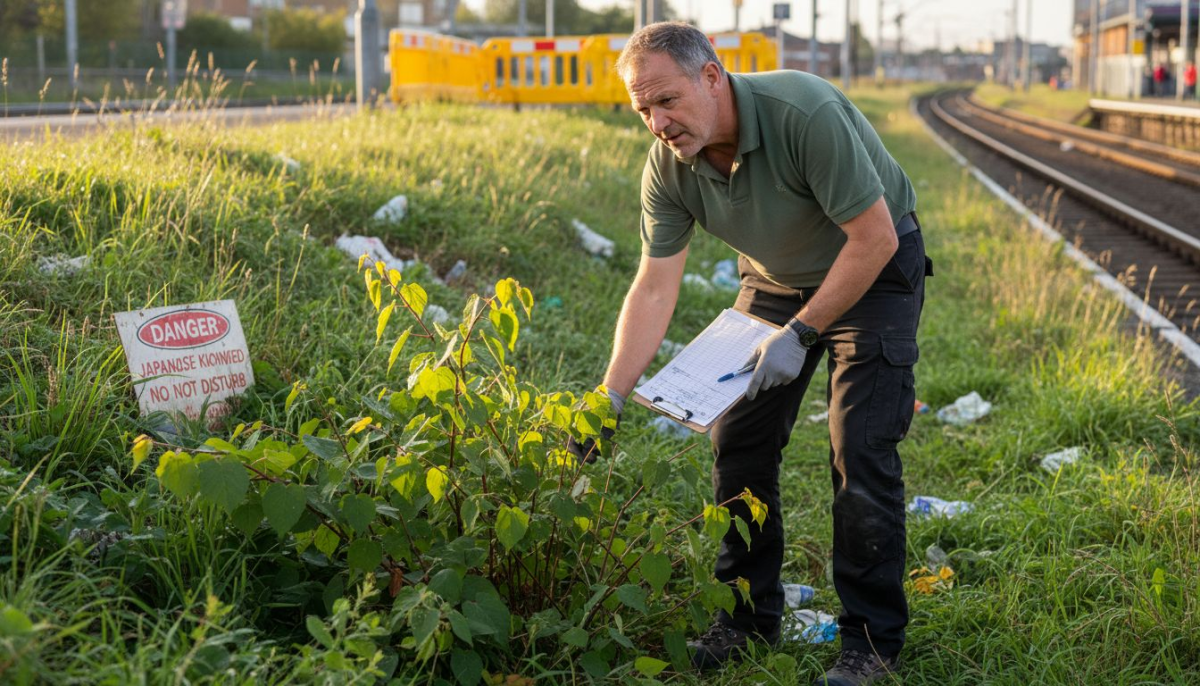
When you commission a professional invasive species survey, you’re not simply paying for someone to walk around your property and declare whether knotweed is present. A proper survey follows rigorous protocols designed to detect invasive species accurately, document findings comprehensively, and create evidence that satisfies mortgage lenders, councils, and conveyancing solicitors. The survey process begins with desk-based research. Your surveyor examines historical records, aerial imagery, and local authority databases to identify whether invasive species have previously been reported in your area or on neighbouring properties. This contextual information shapes where the surveyor focuses ground-level investigation. Visual inspection follows, with the surveyor examining all accessible areas of your property, particularly damp zones, water courses, and disturbed ground where invasive plants typically establish. For Japanese Knotweed specifically, surveyors look for the distinctive heart-shaped leaves, hollow stems, and dense growth patterns. During winter months when above-ground growth has died back, surveyors may use ground-penetrating radar or trial excavation to detect underground rhizome networks.
Documentation forms the backbone of everything that follows. Your survey report must contain precise details. Location maps showing exactly where invasive species occur, mapped using GPS coordinates or scaled drawings. Photographs from multiple angles documenting the extent and condition of infestation. Density assessments quantifying coverage area and rhizome depth where accessible. A risk assessment evaluating potential spread pathways, proximity to property boundaries, and threat to infrastructure. This level of detail matters because mortgage lenders scrutinise survey reports carefully. They’re not just checking whether knotweed exists; they’re assessing whether it poses ongoing risk to the property’s structural integrity and value. Vague surveys containing general observations rather than specific measurements create lender uncertainty, which typically results in mortgage denial or substantial rate premiums. Comprehensive management plans must include surveyed areas, control measures, ongoing monitoring protocols, and compliance documentation to meet statutory requirements and secure lender approval. Professional surveyors structure their reports to include all this information systematically, making approval processes straightforward.
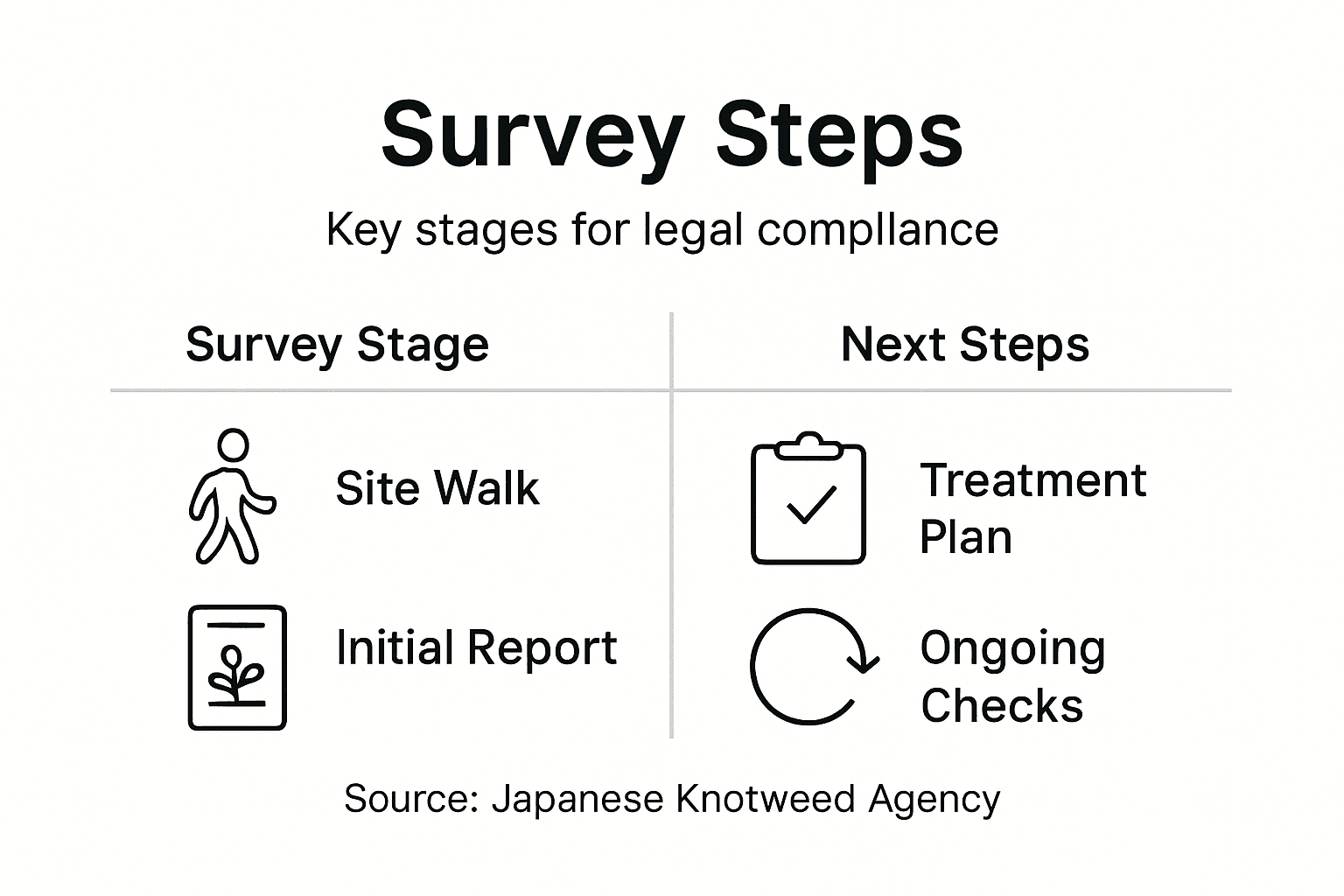
Once baseline surveying is complete, the next stage involves treatment planning and ongoing documentation. If invasive species are found, your surveyor or treatment provider develops a management plan outlining proposed interventions, expected timelines, and monitoring arrangements. For chemical-free treatment using thermo-electric methods, this plan specifies the number of treatment sessions anticipated, spacing intervals between applications, and anticipated completion timeframes. The plan also describes post-treatment monitoring frequency and duration. Crucially, every treatment session must be documented. Treatment records should capture the date of intervention, energy parameters delivered, areas treated, observable responses from the plant, and any challenges encountered. This documentation creates a complete audit trail demonstrating that professional management has occurred. When treatment concludes, a completion certificate from your treatment provider confirms that work has finished and verifies results. You then provide this entire documentation package to your mortgage lender, conveyancing solicitor, and property buyer.
For property transactions specifically, timing of survey documentation becomes critical. Ideally, obtain your survey at least two to three months before listing your property. This timeline allows adequate opportunity to complete treatment if invasive species are discovered. Treatment outcomes then become part of your property’s documented history, which you present to potential buyers and their lenders upfront. This transparency actually builds buyer confidence rather than creating concern. Conversely, if you wait to commission surveys until after receiving an offer, you risk discovery of invasive species delaying or derailing the sale entirely. Detailed risk assessment and mitigation documentation ensures that both ecological impacts and legal compliance requirements are properly addressed throughout the property transaction process. Professional surveyors understand these timing pressures and can work efficiently to complete thorough investigations within compressed schedules when necessary.
The following table summarises the main roles of professional invasive species surveys in the property transaction process:
| Survey Stage | Surveyor’s Role | Importance for Property Sale |
|---|---|---|
| Initial desk research | Examine local records, imagery | Directs precise ground investigations |
| Site inspection | Identify and quantify infestation | Determines legal and lender exposure |
| Documentation | Provide maps and photos | Satisfies disclosure and compliance |
| Treatment planning | Outline actions and monitoring | Accelerates sale and mortgage process |
| Completion reporting | Certify and record outcomes | Enables confident sale and insurance |
Professional tip Commission your invasive species survey at least twelve weeks before listing your property, allowing sufficient time for treatment completion and documentation before engaging with potential buyers or mortgage lenders.
Risks to Infrastructure and Property Value
Japanese Knotweed doesn’t simply sit politely in a corner of your garden. This plant actively damages property and infrastructure in ways that most homeowners don’t fully appreciate until the damage becomes severe. The rhizome network operates like an underground battering ram, exploiting microscopic cracks in concrete, tarmac, brick mortar, and building foundations. As the plant grows, these cracks expand progressively. What starts as a hairline fracture develops into structural movement. Driveways crack and buckle. Patios heave unevenly. Building foundations shift, causing walls to crack internally. Worse still, the plant disrupts utility services. Water pipes crack when rhizomes apply pressure or penetrate damaged sections. Drainage systems become blocked by root infiltration. Electrical conduits fracture, creating safety hazards. Flood defence systems weaken as knotweed undermines their structural integrity. These aren’t hypothetical scenarios. They’re documented repeatedly across England and Wales where homeowners have faced repair bills ranging from thousands to tens of thousands of pounds. A cracked foundation requires underpinning work costing £10,000 to £50,000 depending on severity. A compromised drainage system demands excavation and replacement, often exceeding £15,000.
The financial impact extends far beyond immediate repair costs. Invasive plant infestations significantly reduce property marketability and value, complicating mortgage approval and delaying sales when lenders demand evidence of professional management before advancing funds. Consider the practical scenario facing a homeowner who discovers knotweed during property preparation. If untreated, the property becomes essentially unmortgageable. Most lenders simply refuse to advance funds on properties with active invasive species infestations. The property cannot sell until treatment occurs. Treatment takes months to complete. Your sale timeline extends by six months or longer. Meanwhile, you’re carrying two mortgages if you’ve already committed to purchasing another property. Estate agents struggle to market properties with known invasive species issues. Buyer uncertainty increases. Offers drop. Properties sit on market longer. Some properties never sell because buyers and lenders refuse to engage with the risk. The financial cascade from discovery of knotweed to eventual resolution can consume tens of thousands of pounds in lost value, delayed timelines, and treatment costs combined.
Beyond the visible infrastructure damage, invasive species create hidden liabilities that affect property insurability and planning permissions. Insurance companies increasingly scrutinise properties with invasive species present. Some insurers exclude coverage for damage caused by or related to invasive plants. Others demand premium increases of 20 to 50 per cent. Property with unmanaged invasive species becomes difficult to insure comprehensively. If you attempt future extensions, conservatories, or major renovations, planning permissions become complicated. Local authorities require evidence that invasive species won’t spread during construction work. They demand management plans and monitoring protocols. Projects stall awaiting approval. Construction timelines extend. Costs inflate. The presence of invasive species effectively creates a long-term constraint on what you can do with your property, limiting your freedom to improve or extend your home without first resolving the invasive species issue.
The good news is that professional management directly protects your investment. Early detection and chemical-free treatment eliminate these escalating risks before structural damage occurs. A property that has been surveyed, treated, and documented becomes genuinely attractive to buyers and lenders. You’re not hiding a problem. You’re demonstrating responsible ownership and environmental stewardship. Treatment costs, typically ranging from £3,000 to £8,000 depending on infestation extent, represent a fraction of the costs you’d face from structural damage alone. More importantly, documented treatment creates a clear path to mortgage approval and successful sale. Your property regains marketability. Buyer confidence increases. Lending decisions proceed normally. The investment in early professional intervention essentially prevents the financial catastrophe that untreated invasive species creates.
Professional tip Address any suspected invasive species immediately rather than delaying, as early treatment costs significantly less than structural repairs and prevents substantial property value depreciation and sale complications.
Take Control of Invasive Species with Chemical-Free Expertise
Managing invasive species like Japanese Knotweed is a challenging legal and financial responsibility for property owners in England and Wales. The article explains the urgent need for early detection, professional surveying, and chemical-free treatment to comply with 2025 regulations and protect your property from costly damage and mortgage complications. If you face invasive plants on your land, relying on traditional control methods alone may not meet lender requirements or legal standards.
Japanese Knotweed Agency specialises in pioneering chemical-free solutions that target invasive species at their root. Using high-voltage energy delivered directly onsite, we disrupt the rhizome network safely and sustainably without harmful chemicals. Our comprehensive services include detailed property surveys, root barrier installations, and excavation work to ensure full management and documented proof of treatment. These proven methods improve mortgage approval prospects and demonstrate your compliance with the latest legal obligations.
Discover how our chemical-free treatment works to safeguard your property and avoid the hidden risks of invasive species.
Don’t let invasive plants delay your property sale or damage your investment. Contact Japanese Knotweed Agency today for a professional survey and tailored eradication plan. Begin your 2025 compliance journey with confidence and protect your home now.
Frequently Asked Questions
What are chemical-free solutions for managing invasive species?
Chemical-free solutions, such as thermo-electric treatment, target the internal structures of invasive plants like Japanese Knotweed using high-voltage energy. This method damages the plant’s rhizome network without using harmful chemicals, ensuring that surrounding soil and water systems remain unaffected.
How does thermo-electric treatment work for invasive species?
Thermo-electric treatment delivers targeted electrical energy to the rhizome network of invasive plants. This energy causes internal cellular damage and depletes the energy reserves, preventing the plant from regenerating effectively, unlike traditional chemical treatments that only affect above-ground growth.
Why is it important to address invasive species before selling a property?
Addressing invasive species prior to selling a property is crucial because most mortgage lenders require documented evidence of professional management. Without proper treatment, properties may become unmortgageable, complicating or delaying the sale process.
What legal responsibilities do property owners have regarding invasive species?
Property owners are legally obligated to manage invasive species, such as Japanese Knotweed, under the Wildlife and Countryside Act 1981. Allowing these species to spread onto neighbouring properties can result in penalties, including substantial fines or prosecution. Early intervention and professional management are essential to avoid legal repercussions.