

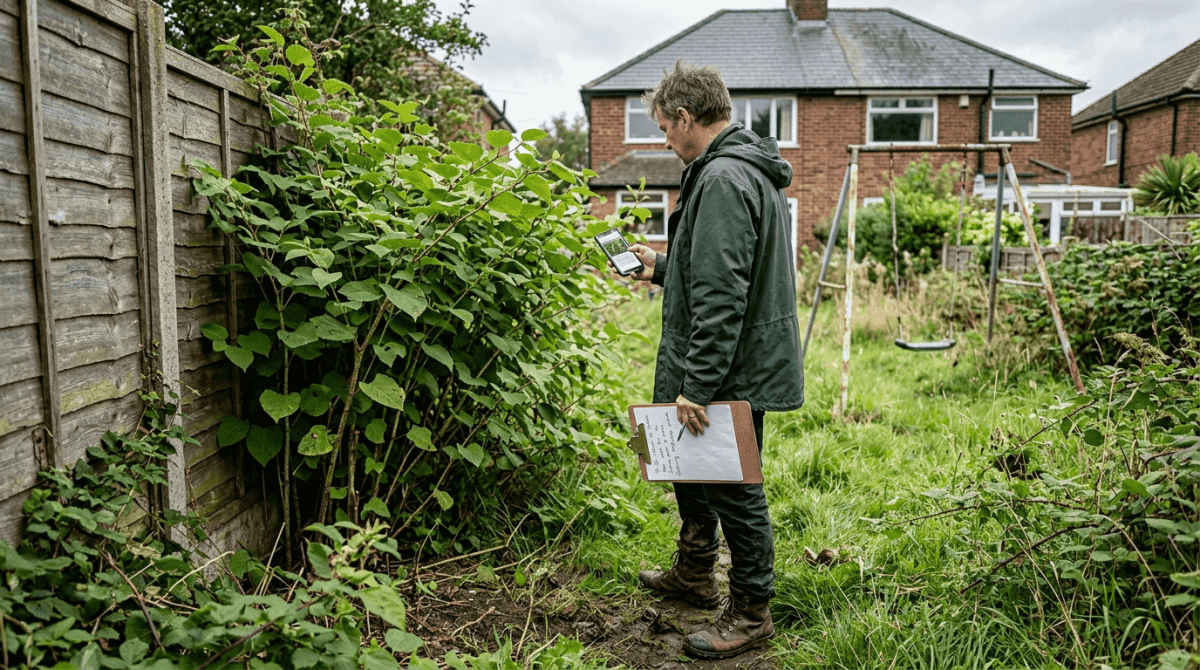
Japanese knotweed affects over 1% of UK residential properties, creating serious legal complications during property sales and potentially sparking costly disputes with neighbours. The 2026 legislation introduces stricter control measures, tighter disclosure requirements, and robust enforcement powers for local councils. This guide clarifies your legal responsibilities, explains how new rules impact property transactions, and provides practical steps to manage Japanese knotweed compliantly while protecting your home’s value.
Table of Contents
- Overview Of Japanese Knotweed And Its Legal Classification
- How UK Weed Legislation 2026 Affects Property Transactions
- Legal Responsibilities And Enforcement Under New Legislation
- Practical Steps For Homeowners To Comply With 2026 UK Weed Legislation
- Find Expert Support For Your Japanese Knotweed Challenges
Key takeaways
| Point | Details |
|---|---|
| Legal classification | Japanese knotweed is controlled waste requiring licensed disposal methods under Environmental Protection Act 1990. |
| Property impact | Over 1.25% of residential properties are affected, reducing values and complicating mortgage approvals. |
| Criminal offence | Allowing knotweed to spread onto neighbouring land violates the Wildlife and Countryside Act 1981. |
| 2026 enforcement | Local councils can issue Community Protection Notices compelling homeowners to control invasive plants. |
| Compliance duty | Homeowners must follow strict disposal protocols and disclose knotweed presence during property transactions. |
Overview of Japanese knotweed and its legal classification
Japanese knotweed is a highly invasive plant species introduced to the UK in the 19th century. Its aggressive root system can damage building foundations, drains, and patios whilst spreading rapidly across garden boundaries. The plant’s ability to regenerate from tiny fragments makes casual disposal dangerous and legally problematic.
Under UK environmental law, Japanese knotweed is classified as controlled waste requiring specific handling procedures. This classification means you cannot simply bag it with household rubbish or dump soil containing knotweed fragments at standard waste facilities. You must transport contaminated material to licensed sites equipped to handle invasive species.
The legal framework creates several duties for homeowners:
- Use Environment Agency licensed waste carriers for transport and disposal
- Keep transfer notes documenting waste movement for two years minimum
- Never burn knotweed material or compost it in domestic bins
- Prevent any spread during removal or treatment activities
This controlled waste status reflects the plant’s potential to cause environmental harm if fragments escape into new areas. Even microscopic pieces of rhizome can establish new infestations, making proper containment critical during any disturbance.
“The classification as controlled waste places Japanese knotweed in the same legal category as asbestos and chemical contaminants, reflecting its serious threat to property and natural ecosystems.”
Homeowners who fail to follow laws regarding Japanese knotweed face prosecution for illegal waste disposal and potential civil claims from affected neighbours. Understanding your obligations under this classification forms the foundation for compliant property management.
How UK weed legislation 2026 affects property transactions
The presence of Japanese knotweed creates immediate complications when selling or buying property. Estate agents must now disclose known infestations during marketing, and solicitors include specific questions about invasive plants in standard conveyancing forms. Failing to answer truthfully can void sales contracts and trigger legal action.

Property values typically drop 5-15% when knotweed is present, depending on infestation severity and proximity to buildings. Mortgage lenders increasingly demand professional surveys and certified treatment plans before approving loans on affected properties. Some lenders refuse financing entirely until homeowners provide guarantees covering eradication costs.
The 2026 legislation strengthens disclosure requirements in several ways:
- Sellers must declare any historical knotweed presence, even if previously treated
- Conveyancing forms now require evidence of professional surveys and management plans
- Buyers can request indemnity insurance to cover future treatment costs
- Failure to disclose can result in post-sale legal claims for misrepresentation
Neighbours who discover knotweed spreading from your property can pursue claims under common law for nuisance or trespass. Courts have awarded damages exceeding £100,000 in cases where rhizomes crossed boundaries and damaged adjacent structures. The Wildlife and Countryside Act 1981 makes allowing such spread a criminal offence carrying unlimited fines.
Pro Tip: Commission a professional survey before listing your property for sale. Documentation showing active management or successful eradication significantly improves buyer confidence and helps secure mortgage and Japanese knotweed approval faster.
Some buyers use knotweed presence to negotiate substantial price reductions, sometimes exceeding actual treatment costs. Having certified documentation and guaranteed treatment plans in place before marketing helps you maintain asking prices and prevents unnecessary delays during conveyancing. The upfront investment in proper management typically saves thousands compared to emergency remediation or lost sale value.
Legal responsibilities and enforcement under new legislation
The 2026 regulatory framework establishes clear duties for homeowners managing Japanese knotweed on their land. Understanding these obligations helps you avoid penalties whilst protecting your property interests and neighbour relations.
Your primary legal responsibilities include:
- Prevent knotweed from spreading beyond your property boundaries through proper containment
- Arrange disposal only through Environment Agency licensed waste carriers and facilities
- Maintain records of all treatment, disposal, and management activities for inspection
- Respond promptly to any Community Protection Notices issued by local authorities
- Disclose knotweed presence honestly during property sales and mortgage applications
Under the Wildlife and Countryside Act 1981, allowing Japanese knotweed to spread onto neighbouring property constitutes a criminal offence. Prosecutors can pursue unlimited fines against homeowners who knowingly permit rhizomes to cross boundaries. Civil courts also award damages for property devaluation and treatment costs when spread causes financial harm.
Local councils possess enforcement powers under the Anti-Social Behaviour, Crime and Policing Act to serve Community Protection Notices compelling knotweed control. These notices can require specific actions within set timeframes, such as commissioning professional surveys, implementing treatment plans, or removing infestations entirely.
“Community Protection Notices give councils robust tools to compel homeowners into managing invasive plants that threaten neighbourhood property values and environmental health. Failure to comply can result in fixed penalty notices up to £2,500 for individuals.”
Prosecution for non-compliance with CPNs can lead to criminal convictions and fines exceeding £20,000. Councils may also undertake work in default and recover costs directly from homeowners, adding administrative charges that substantially increase total expenses.
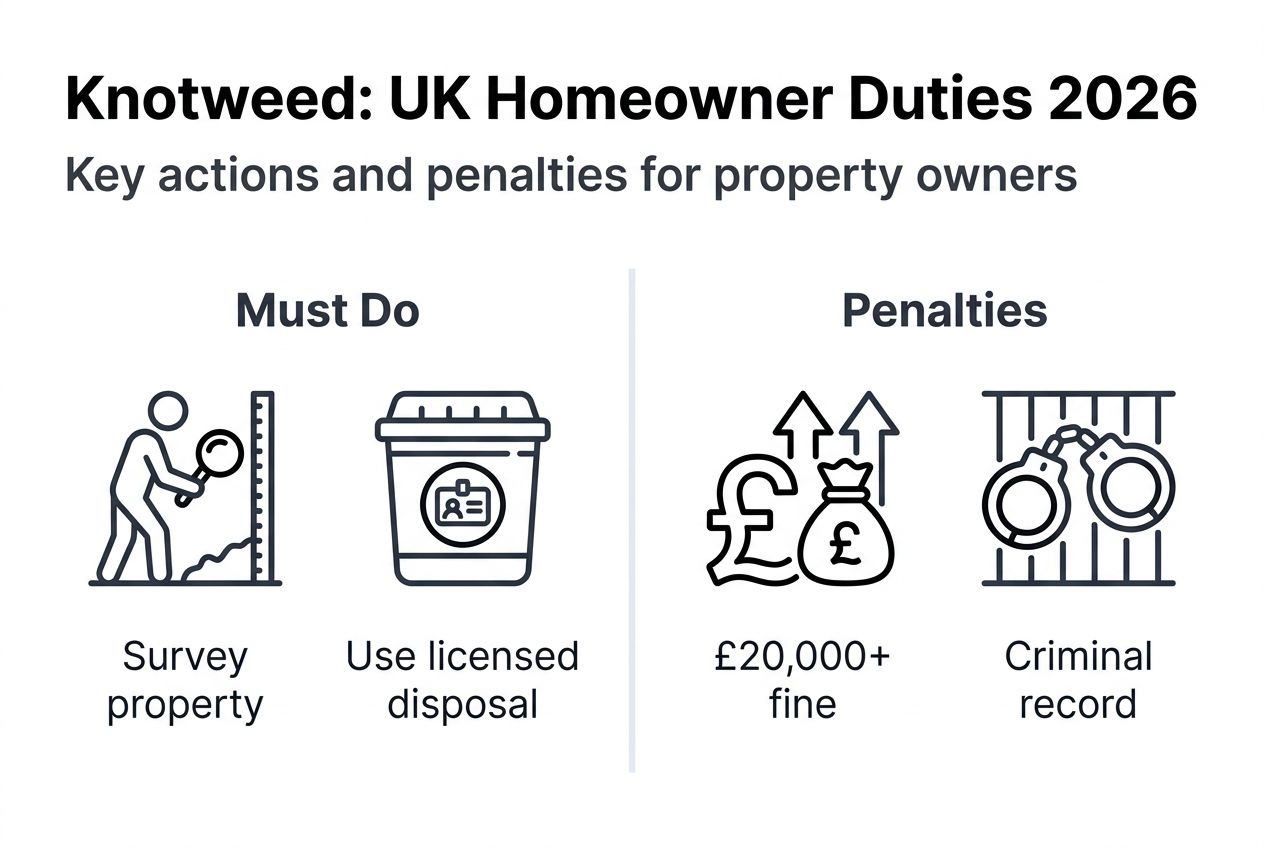
The enforcement landscape reflects government recognition that voluntary compliance alone cannot control Japanese knotweed spread. Homeowners who ignore their knotweed legal requirements UK duties now face coordinated pressure from multiple regulatory bodies, mortgage lenders, and potentially aggrieved neighbours pursuing compensation.
Practical steps for homeowners to comply with 2026 UK weed legislation
Successful Japanese knotweed management requires systematic planning, proper disposal protocols, and choosing treatment methods appropriate for your circumstances. Following these steps ensures legal compliance whilst protecting your property value.
Proper disposal protocols demand strict adherence to waste regulations. You must follow Environmental Protection Act 1990 requirements treating knotweed as controlled waste. This means hiring licensed carriers who transport material to authorised landfill sites equipped for invasive species. Never attempt disposal through household bins, garden waste collections, or burning.
Choosing between treatment approaches depends on your timeline, budget, and property plans:
| Treatment Method | Advantages | Disadvantages |
|---|---|---|
| Chemical herbicide | Lower upfront costs, established track record | Requires 3-5 years, uses glyphosate, limited seasonal windows |
| Chemical-free energy | Faster results possible, environmentally friendly, no toxic residue | Higher initial investment, specialist equipment needed |
| Excavation | Immediate physical removal, suitable for development sites | Most expensive option, requires extensive earthworks and licensed disposal |
| Root barrier | Prevents spread without full eradication | Ongoing monitoring needed, doesn’t eliminate plant |
Implement these essential steps for compliance:
- Commission a professional survey from a Property Care Association qualified specialist to document infestation extent
- Obtain a detailed management plan outlining treatment methods, timelines, and guarantees
- Keep comprehensive records including photographs, survey reports, and contractor invoices
- Inform neighbours if knotweed is within seven metres of shared boundaries
- Schedule treatments during appropriate growing seasons for maximum effectiveness
- Monitor treated areas quarterly to detect any regrowth requiring additional intervention
Pro Tip: Request insurance-backed guarantees from treatment providers covering at least 10 years. These guarantees satisfy mortgage lender requirements and provide valuable reassurance to future property buyers, significantly easing selling property with Japanese knotweed transactions.
Many homeowners benefit from phased treatment approaches combining initial intensive intervention with ongoing monitoring. This strategy balances cost management against compliance needs whilst building the documentation trail essential for property transactions. Professional providers typically offer customised invasive weed management steps addressing your specific infestation and property circumstances.
Consistent monitoring remains critical even after apparent eradication. Japanese knotweed can lie dormant for extended periods before resurfacing, making ongoing vigilance essential for sustained compliance and protecting your property investment.
Find expert support for your Japanese knotweed challenges
Navigating Japanese knotweed legislation whilst protecting your property value requires specialist knowledge and proven treatment methods. Professional knotweed survey and removal services simplify compliance with 2026 disposal laws, disclosure obligations, and mortgage lender requirements.

Expert providers handle the complexities of paperwork compliance, ensuring you meet all legal duties without risking penalties or transaction delays. Chemical-free treatment options using direct energy delivery offer environmentally responsible alternatives whilst achieving faster results than traditional herbicide programmes. Comprehensive management plans with insurance-backed guarantees provide the documentation buyers and lenders demand.
Whether you’re preparing for a property sale, responding to neighbour concerns, or addressing mortgage complications, accessing trusted professional resources reduces legal risks and preserves your home’s value. Explore Japanese knotweed FAQ answers or review step-by-step invasive weed management guidance to understand your options. Contact specialist providers to secure compliant solutions tailored to your circumstances and protect your property interests.
Frequently asked questions
What is the legal definition of Japanese knotweed under UK law?
Japanese knotweed is classified as controlled waste under the Environmental Protection Act 1990, requiring licensed disposal methods. It is also designated an invasive non-native species under environmental legislation, making its introduction into the wild a criminal offence. This dual classification reflects both waste management concerns and ecological threat.
What happens if I allow Japanese knotweed to spread onto a neighbour’s property?
Allowing knotweed to spread is a criminal offence under the Wildlife and Countryside Act 1981, carrying unlimited fines. Affected neighbours can pursue civil claims for nuisance, trespass, and property devaluation, with courts awarding damages exceeding £100,000 in severe cases. Local councils can also issue Community Protection Notices compelling you to control the infestation at your expense.
How do the 2026 legislation changes affect property buyers and sellers?
New rules heighten disclosure obligations, requiring sellers to declare any historical knotweed presence and provide evidence of professional management. Given that over 1.25% of residential properties are affected, mortgage approvals increasingly demand certified treatment plans and insurance-backed guarantees before completion. Buyers can request price reductions or indemnity insurance to cover potential future treatment costs.
Can I treat Japanese knotweed myself or must I hire professionals?
Whilst no law prohibits DIY treatment, proper management requires specialist knowledge to avoid spreading fragments and ensure legal compliance. Professional treatment provides insurance-backed guarantees essential for mortgage approvals and property sales. Licensed contractors also handle controlled waste disposal legally, preventing prosecution risks associated with improper handling. Most lenders and buyers reject properties relying solely on unguaranteed DIY efforts.
How long does Japanese knotweed treatment typically take?
Chemical herbicide programmes typically require three to five growing seasons for complete eradication, with quarterly monitoring afterwards. Chemical-free energy-based treatments can achieve faster results, sometimes within 18-24 months depending on infestation severity. Excavation provides immediate physical removal but costs significantly more. Treatment duration affects property transaction timelines, making early intervention crucial for homeowners planning to sell.
Recommended
- Invasive Weed Legislation 2025 – Impact on UK Homeowners
- Weed Management Plans: Protecting Homes Safely
- Property Weed Risk – Impact on UK Homeowners
- Hazardous Weed Waste – Impact on UK Property
- Residential Lock Upgrade Guide for Enhanced Home Security – A To Z Locksmith Inc
- Plumbing Trends 2025: Boosting Home Efficiency and Value