

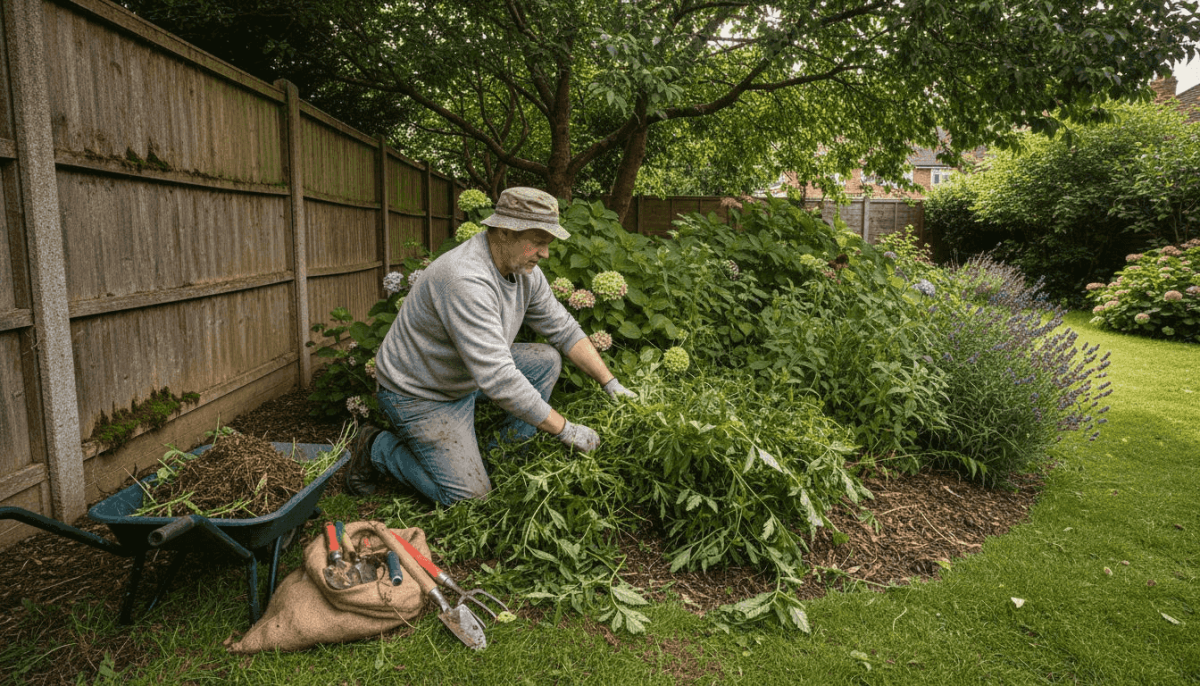
Spotting invasive weeds early can make all the difference when it comes to protecting your garden or property. These aggressive plants grow quickly, form dense clusters, and often outcompete native species before you realise what is happening. Some, like Japanese Knotweed, can even spread from the tiniest root fragment and cause serious damage to walls, paths, and local ecosystems.
Understanding the most telling signs of invasive weeds helps you act before problems spiral out of control. This guide reveals the key features to watch for so you can confidently identify and manage these troublesome invaders. Get ready to discover the warning signs that every homeowner should know.
Table of Contents
- 1. Unusual Rapid Growth Patterns
- 2. Distinct Leaf and Stem Shapes
- 3. Dense Clusters or Thickets
- 4. Damage to Walls and Paths
- 5. Roots Extending Underground
- 6. Seasonal Flowering and Seeding
- 7. Resistance to Common Removal Methods
Quick Summary
| Takeaway | Explanation |
|---|---|
| 1. Monitor for rapid growth | Regularly check your landscape for surprising and aggressive growth patterns that could indicate invasive weeds. |
| 2. Identify unique leaf and stem features | Learn the specific shapes and textures of invasive weeds to help quickly identify potential threats in your garden. |
| 3. Document dense clusters immediately | Take photographs of any dense weed clusters and seek professional advice to mitigate ecological damage effectively. |
| 4. Inspect for structural damage | Regularly check for weeds that penetrate hard surfaces and foundations, which can create significant repair costs. |
| 5. Use multiple removal techniques | Combine various methods, including non-chemical strategies, to effectively combat herbicide-resistant invasive weeds in your garden. |
1. Unusual Rapid Growth Patterns
Invasive weeds possess an extraordinary capacity for rapid and aggressive expansion that can catch unsuspecting homeowners completely off guard. These botanical bullies can transform landscapes with startling speed, creating dense populations that overwhelm native plant ecosystems.
Understanding the growth dynamics of invasive species is crucial for effective management. Some invasive plants like Japanese knotweed can generate dense growth from minuscule root fragments, demonstrating remarkable regenerative capabilities.
Key characteristics of rapid invasive weed growth include:
- Ability to spread from tiny plant fragments
- Accelerated growth rates compared to native species
- Exceptional resilience in diverse environmental conditions
- Capacity to penetrate infrastructure like concrete and tarmac
Rapid growth isn’t just about speed – it’s about ecological domination.
These plants exploit multiple reproduction strategies including underground rhizome networks and seed dispersal mechanisms. The Encyclopaedia of Arable Weeds highlights that tracking growth across different stages helps homeowners identify potential invasive threats early.
Homeowners must remain vigilant and monitor landscape changes systematically. Early detection can prevent extensive ecological and structural damage caused by these aggressive plant species.
Expert Tip: Monitor your property quarterly and photograph any unusual plant growth to track potential invasive weed developments.
2. Distinct Leaf and Stem Shapes
Invasive weeds reveal their true nature through distinctive leaf and stem characteristics that set them apart from ordinary garden plants. Understanding these unique botanical signatures can help homeowners identify potential threats before they spread uncontrollably.
Identification of broad-leaved weeds requires careful observation of specific morphological features that distinguish invasive species from native plants.
Key distinguishing characteristics include:
- Unusual leaf shape and arrangement
- Distinctive stem texture and colour
- Irregular growth patterns
- Unique leaf edge or surface markings
Not all plants are created equal – some are ecological invaders waiting to be recognised.
For instance, Japanese knotweed displays heart-shaped leaves arranged alternately on distinctive zig-zag stems. Giant hogweed presents large spotted leaf stalks with hollow spiny stems.
Homeowners should pay close attention to:
- Leaf shape and symmetry
- Stem colour and texture
- Growth pattern and node arrangement
- Leaf edge characteristics
Documenting these features through photographs can help gardening experts accurately diagnose potential invasive weed species.
Expert Tip: Take clear, well-lit photographs of suspicious plant growth from multiple angles to assist professional identification.
3. Dense Clusters or Thickets
Invasive weeds possess a remarkable ability to form dense, impenetrable clusters that can rapidly overwhelm entire landscapes and ecosystems. These botanical colonisers create thick stands that choke out native plant life and disrupt local biodiversity.
Invasive weeds in the UK frequently produce dense population structures that require targeted management strategies. These clusters are more than just a visual nuisance they represent a serious ecological threat.
Characteristics of invasive weed clusters include:
- Rapid horizontal and vertical growth
- Ability to dominate large areas quickly
- Suppression of surrounding plant species
- Complex root systems that support dense growth
A single invasive weed cluster can transform an entire ecosystem.
Some species like Japanese knotweed form thick bamboo-like stands, while Himalayan balsam creates extensive colonies along riverbanks. These dense thickets can:
- Reduce local plant diversity
- Destabilise soil structures
- Block sunlight for native vegetation
- Impede water flow in riparian environments
Homeowners and land managers must develop proactive identification and removal strategies to prevent these invasive clusters from establishing permanent footholds.
Expert Tip: Photograph and document dense weed clusters immediately and consult professional ecological management services for targeted removal techniques.
4. Damage to Walls and Paths
Invasive weeds are not merely unsightly garden inhabitants they can become destructive forces capable of undermining entire structural foundations. Structural damage potential represents one of the most concerning aspects of aggressive plant species.
Weeds growing on hard surfaces can create significant problems for homeowners by penetrating cracks and displacing paving materials. These botanical invaders transform seemingly stable surfaces into uneven and potentially dangerous terrains.
Key structural damage mechanisms include:
- Penetration of underground infrastructure
- Expansion through tiny surface cracks
- Displacement of paving materials
- Destabilisation of foundational structures
Some weeds can transform solid surfaces into botanical battlegrounds.
Japanese knotweed represents a particularly dangerous invasive species capable of causing extensive structural damage. Its underground rhizomes can:
- Grow through concrete foundations
- Disrupt wall structures
- Create significant repair expenses
- Compromise property integrity
Homeowners should remain vigilant and address potential weed intrusions quickly to prevent costly structural repairs.
Expert Tip: Conduct regular property inspections and seal small surface cracks immediately to prevent invasive weed penetration.
5. Roots Extending Underground
Beneath the surface lurks an often unseen yet remarkably aggressive network of invasive weed roots that can transform your garden into a botanical battleground. Underground root systems represent the hidden warfare of persistent plant invaders.
Invasive weeds like Japanese knotweed spread extensively through robust underground rhizomes that make complete eradication extraordinarily challenging.
Underground root characteristics include:
- Ability to regenerate from tiny root fragments
- Extensive horizontal and vertical spread
- Capacity to penetrate deep soil layers
- Remarkable resilience against traditional removal methods
One small root fragment can become an entire invasive ecosystem.
Garden weeds such as ground elder and bindweed demonstrate remarkable regenerative capabilities through their underground networks. Their root systems can:
- Survive harsh environmental conditions
- Spread rapidly beneath soil surfaces
- Regenerate from microscopic root segments
- Outcompete native plant species
Homeowners must understand that superficial removal offers only temporary relief. Comprehensive root management requires strategic and persistent intervention.
Expert Tip: Consult professional invasive species management experts who can deploy specialised techniques for complete underground root system elimination.
6. Seasonal Flowering and Seeding
Invasive weeds are master strategists of reproduction using sophisticated seasonal cycles to spread and dominate landscapes. Seasonal flowering patterns represent a critical window of vulnerability for plant management strategies.
The Encyclopaedia of Arable Weeds highlights the importance of understanding precise flowering and seeding times for effective weed control.
Key seasonal reproductive characteristics include:
- Prolific seed production during specific periods
- Ability to create dormant seed banks in soil
- Strategic timing of flowering and seed dispersal
- Multiple reproductive mechanisms
One season of unchecked flowering can create years of future infestations.
Weed seeds demonstrate remarkable survival strategies by remaining viable in soil and emerging during optimal conditions. Their seasonal cycles typically involve:
- Flowering in spring or autumn
- Producing extensive seed quantities
- Creating underground seed reservoirs
- Waiting for perfect germination conditions
Homeowners must remain vigilant during peak flowering seasons to interrupt these reproductive cycles and prevent widespread propagation.
Expert Tip: Photograph and document weed flowering periods in your garden to track and anticipate future growth patterns.
7. Resistance to Common Removal Methods
Invasive weeds are not passive botanical passengers they are sophisticated survival experts that have evolved remarkable resistance mechanisms against traditional eradication techniques. Herbicide resistance strategies represent a significant challenge for gardeners and land managers.
Herbicide resistance in broad-leaved weeds has become an increasingly complex problem requiring sophisticated management approaches.
Key resistance characteristics include:
- Genetic adaptations to chemical treatments
- Rapid mutation of herbicide-vulnerable traits
- Multiple reproduction and survival mechanisms
- Capacity to regenerate from minimal plant fragments
Nature’s most resilient plants laugh in the face of conventional removal methods.
Non-chemical control methods are increasingly recommended to combat resistant species. These methods typically involve:
- Mechanical disruption of root systems
- Physical removal techniques
- Smothering and light exclusion strategies
- Repeated intervention approaches
Homeowners must adopt multi-faceted strategies that combine different removal techniques to effectively combat these persistent botanical invaders.
Expert Tip: Document and photograph your weed removal attempts to track the effectiveness of different intervention strategies.
Below is a comprehensive table summarising the main strategies and guidance discussed regarding identifying and managing invasive weed species.
| Aspect | Key Features | Recommended Actions |
|---|---|---|
| Rapid Growth | Fast propagation, utilisation of rhizomes for spread, and ecological dominance | Regular monitoring and early intervention |
| Distinctive Morphology | Unique leaf shapes and stem textures aiding in visual identification | Closely observe and document unusual botanical features |
| Formation of Dense Clusters | Creates thick structures that overwhelm native flora | Remove identified clusters with professional assistance if necessary |
| Structural Damage Risks | Capable of penetrating and destabilising foundations and paths | Address small surface cracks and eliminate newly spawned growth |
| Extensive Underground Root Systems | Regrowth from minimal fragments; roots spread horizontally and vertically | Apply targeted eradication measures, consult experts |
| Seasonal Reproductive Strategies | Prolific flowering and seeding providing future propagation opportunities | Monitor during flowering seasons and prevent seed dispersal |
| Resistance to Common Eradication | Adaptation to conventional herbicides and traditional removal methods | Employ combined eradication approaches and track method efficacy |
Take Control of Invasive Weeds with Expert Help
Recognising the 7 Signs of Invasive Weeds can be overwhelming for any homeowner. Rapid growth, underground roots spreading silently, and damage to property foundations are serious challenges that require more than just traditional removal methods. If you have spotted dense clusters or noticed structural damage to walls and paths it is crucial to act quickly before the problem worsens. Japanese Knotweed Agency specialises in chemical free treatment and eradication of Japanese Knotweed and other invasive species using innovative direct energy technology that disrupts root networks deep underground.

Protect your home and garden from ecological invasion by choosing professional support. With comprehensive property surveys across England Wales and Ireland and expert root barrier installations your investment is safe from future damage. Explore the complete range of services at Japanese Knotweed Agency and discover how our effective techniques overcome resistance to common removal methods and prevent relentless regrowth. Don’t wait until the weeds take over contact us today to secure your property for years to come with chemical free knotweed treatment and tailored eradication plans.
Frequently Asked Questions
What are the signs of invasive weeds I should look for?
Invasive weeds often display unusual rapid growth patterns, distinctive leaf and stem shapes, and form dense clusters. Pay attention to changes in your garden, such as unexpected growth or thickets, to catch these plants early.
How can I identify invasive weeds on my property?
Look for unique characteristics such as irregular leaf shape, distinctive stem textures, and dense growth patterns. Document these features with photographs to assist in identification and management strategies.
What damage can invasive weeds cause to my property?
Invasive weeds can penetrate structural foundations, displace paving materials, and destabilise soil. Regularly inspect for signs of damage, and address any invasive growth immediately to avoid costly repairs.
How can I effectively remove invasive weeds from my garden?
Combine physical removal methods with regular monitoring and strategic interventions to effectively eradicate invasive weeds. Start by uprooting the plants entirely and follow up with quarterly inspections to prevent regrowth.
What should I do if I notice invasive weeds spreading seasonally?
Act quickly by documenting the flowering and seeding periods of any invasive weeds. Interrupt their reproduction cycle by removing them during peak flowering times to decrease future infestations.
How can I manage resistant invasive weeds that won’t respond to traditional methods?
Adopt a multi-faceted approach that includes mechanical disruption and physical removal techniques. Successfully manage these resilient plants by varying your methods, and seek to perform interventions routinely to keep them at bay.