

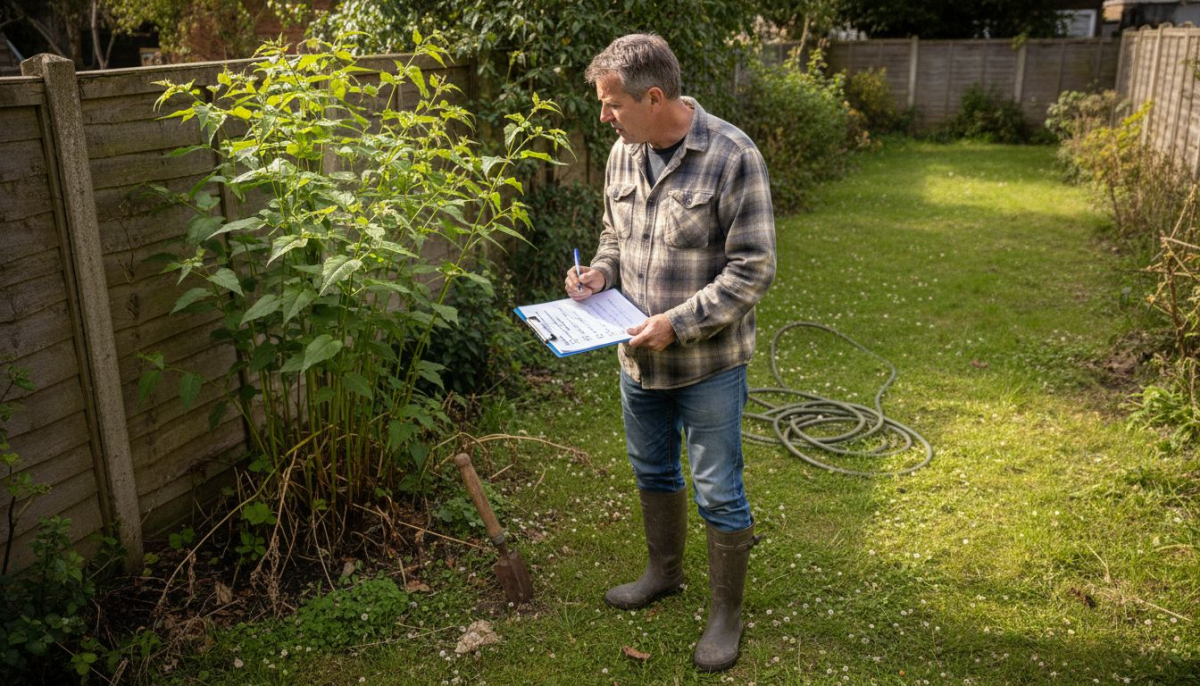
Finding unexpected weeds in your garden can quickly turn into a bigger worry when you realise they might threaten your property’s value and even your legal standing. Many invasive plants spread with ease, and just one small root fragment left behind can lead to difficult and costly problems. Recognising these risks early can save you time, money, and stress.
You will discover practical ways to spot warning signs and protect your property from further harm. Each step is backed by real guidance so you can act confidently and avoid being caught out by aggressive species like Japanese Knotweed.
Get ready to learn clear strategies that put you in control. These practical checks and expert tips could make all the difference for your home and your peace of mind.
Table of Contents
- Understand Why Invasive Weeds Are A Property Risk
- Check Common Signs Of Japanese Knotweed Growth
- Inspect Garden Boundaries And Hidden Spots
- Assess Neighbouring Properties For Weed Spread
- Look For Past Treatment Evidence Or Root Barriers
- Evaluate Options For Chemical-Free Weed Control
- Prepare Next Steps If Invasive Weeds Are Found
Quick Summary
| Takeaway | Explanation |
|---|---|
| 1. Invasive weeds harm property value. | They can cause structural damage and legal troubles, potentially costing homeowners thousands in remediation. |
| 2. Conduct regular property inspections. | Regular checks help identify invasive weeds early, preventing severe damage and financial loss. |
| 3. Understand legal responsibilities. | Property owners must manage invasive plants to avoid legal penalties and protect their assets. |
| 4. Collaborate with neighbours on assessment. | Assessing neighbouring properties helps prevent the spread of invasive plants and supports responsible management. |
| 5. Use non-chemical control methods. | Explore sustainable alternatives to chemical treatments for managing invasive species while preserving local ecosystems. |
1. Understand Why Invasive Weeds Are a Property Risk
Invasive weeds represent a significant hidden threat to property value and structural integrity that many homeowners overlook. These non-native plant species can cause extensive damage and create legal complications that potentially cost thousands in remediation and property devaluation.
The risks of invasive weeds extend far beyond aesthetic concerns. Invasive species cause serious economic damage to properties across the United Kingdom, with annual economic impacts estimated at approximately £1.7 billion.
Key risks of invasive weeds include:
- Structural damage to foundations and building infrastructure
- Potential legal liability for spread to neighbouring properties
- Significant reduction in property market value
- Costly professional removal and treatment requirements
- Environmental disruption to local ecosystems
Property owners must understand that under current UK regulations, they are legally responsible for preventing the spread of invasive species from their land. Failure to manage these plants could result in prosecution and substantial financial penalties.
Some of the most problematic invasive weeds in the UK include Japanese Knotweed, Giant Hogweed, and Himalayan Balsam. These plants can grow rapidly, penetrate concrete structures, and cause significant structural damage if left unchecked.
Invasive weeds are not just a gardening problem – they are a serious property management issue that can dramatically impact your most significant financial asset.
Expert recommendation: Conduct regular property surveys to detect and address invasive weed infestations before they become unmanageable and financially devastating.
2. Check Common Signs of Japanese Knotweed Growth
Identifying Japanese knotweed early can save homeowners significant financial and structural headaches. Recognising the distinctive characteristics of this invasive plant is crucial for preventing potential property damage.
Japanese knotweed has several unique visual indicators that distinguish it from other garden plants. Clear identification signs help prevent spread and minimise potential property risks.
Key identification characteristics include:
- Red or purple shoots emerging in early spring
- Bamboo-like hollow stems with distinctive purple speckles
- Shovel-shaped green leaves with alternating growth patterns
- Creamy-white flower clusters appearing in late summer
- Dense stands growing up to 3 metres tall
The plant’s remarkable regenerative capacity means that even tiny root fragments can trigger new growth. A fragment as small as 0.7 grams can potentially regrow into a full plant, making precise identification critically important.
Japanese knotweed is not just a plant – it’s a potential threat to your property’s structural integrity and market value.
Property owners should conduct regular visual inspections, especially during spring and summer when the plant’s distinctive characteristics are most visible. Taking photographs and seeking professional confirmation can help prevent misidentification.
Expert recommendation: If you suspect Japanese knotweed, photograph the plant and consult a professional invasive species specialist immediately to prevent potential spread and property damage.
3. Inspect Garden Boundaries and Hidden Spots
Invasive weeds are masters of concealment, often establishing themselves in the least expected areas of your property. Understanding where to look is crucial for early detection and preventing potentially devastating ecological and structural damage.
Gardeners must carefully investigate vulnerable areas where invasive species commonly establish their foothold.
Key areas to thoroughly examine include:
- Garden fence lines and boundaries
- Gaps between fencing panels
- Underneath decking and patios
- Around water features or drainage areas
- Shaded corners of the garden
- Areas with recently disturbed soil
- Waste ground or neglected garden sections
Specific inspection techniques involve more than a casual glance. You need to get close to ground level and look carefully in areas that receive less regular maintenance. Pay special attention to spots with moisture and limited sunlight, as these create ideal conditions for invasive plant species.
Invasive weeds are opportunistic colonisers that can spread rapidly if left unchecked.
Professional surveyors recommend conducting these detailed inspections at least twice per year – ideally during early spring and late summer when plant growth is most active. Documenting your findings through photographs can help track potential changes and provide evidence if professional intervention becomes necessary.
Expert recommendation: Use a systematic approach when investigating garden boundaries, moving methodically and documenting any suspicious plant growth with clear, dated photographs.
4. Assess Neighbouring Properties for Weed Spread
Invasive weeds do not respect property boundaries and can easily migrate from one garden to another through underground root systems or wind-dispersed seeds. Understanding how these plants spread is crucial for comprehensive property management and legal compliance.
Biosecurity plans require thorough neighbouring property assessments to prevent potential ecological contamination.
Key aspects of neighbouring property assessment include:
- Observe adjacent garden landscapes
- Look for signs of invasive plant growth
- Check fence lines and shared boundary areas
- Communicate with neighbours about potential risks
- Document any visible invasive plant presence
- Request historical landscaping information
- Consider professional survey assistance
UK legal implications are significant. Property owners can be held legally responsible for allowing invasive species to spread beyond their boundaries, whether deliberately or accidentally. This means proactive monitoring is not just recommended but potentially mandatory.
Invasive weeds do not recognise property lines and can migrate silently and rapidly between neighbouring spaces.
Professional surveyors suggest creating a collaborative approach with neighbours. Sharing information about potential invasive plant risks can help prevent widespread ecological damage and potential legal disputes.
Expert recommendation: Approach neighbouring property assessments diplomatically, offering to share information and resources to collectively manage potential invasive species risks.
5. Look for Past Treatment Evidence or Root Barriers
Discovering previous invasive weed management strategies is crucial for understanding the long-term ecological history of a property. Past treatment evidence provides critical insights into potential ongoing risks and the effectiveness of previous intervention attempts.
Treatment documentation helps assess invasive plant management and potential future risks.
Key aspects to investigate include:
- Chemical treatment records
- Professional survey certificates
- Root barrier installation documentation
- Historical landscaping maintenance reports
- Evidence of cutting or excavation works
- Professional treatment provider details
- Photographic documentation of previous interventions
Root barrier technologies represent a sophisticated approach to preventing invasive plant spread. These physical membranes are strategically installed to block underground rhizome networks from expanding beyond designated boundaries.
Not all treatment methods are equally effective; professional documentation provides the most reliable evidence of successful intervention.
Property buyers and owners should request comprehensive documentation from previous landowners. These records can reveal the extent of past invasive plant challenges and demonstrate proactive management strategies.
Some treatment methods require specific follow-up protocols. Chemical treatments might need multiple applications, while physical root barriers demand precise installation techniques to ensure complete containment.
Expert recommendation: Always request and carefully review historical treatment documentation before purchasing a property with known invasive plant histories.
6. Evaluate Options for Chemical-Free Weed Control
Chemical-free weed control represents an environmentally responsible approach to managing invasive plant species without risking ecosystem health or human exposure to harmful substances. Innovative non-chemical techniques offer sustainable alternatives that protect both property and surrounding biodiversity.
Non-chemical control methods require strategic approaches to effectively manage invasive species.
Key non-chemical weed control strategies include:
- Manual pulling and root extraction
- Mechanical cutting and mowing
- Thermal treatment techniques
- Encouraging native plant competition
- Targeted landscape design
- Physical root barrier installation
- Biological control methods
Mechanical intervention techniques focus on physically removing invasive plants without chemical treatments. These methods require precision and repeated applications to prevent regrowth and ensure complete eradication.
Chemical-free weed control is not just an environmental choice but a long-term sustainable management strategy.
Different invasive species demand specific non-chemical approaches. Understanding the particular characteristics of the target plant helps select the most effective intervention method. Some techniques work better for surface-level weeds while others target deep-rooted invasive species.
Expert recommendation: Combine multiple non-chemical strategies and be patient with the process, as mechanical and ecological interventions often require consistent and persistent effort.
7. Prepare Next Steps if Invasive Weeds Are Found
Discovering invasive weeds on your property can feel overwhelming, but swift and strategic action is crucial to prevent potential ecological and legal complications. Landowners have specific responsibilities when managing these persistent plant species.
Prompt intervention prevents potential legal issues and minimises environmental damage.
Critical next steps include:
- Document the invasive plant species
- Take clear photographs for identification
- Measure the extent of the infestation
- Contact professional invasive species specialists
- Discuss treatment and eradication options
- Understand legal obligations and potential consequences
- Develop a comprehensive management plan
Legal implications are significant for property owners. Failure to control invasive species can result in prosecution under the Anti-Social Behaviour Act and potential financial penalties.
Invasive weeds do not simply disappear; they require systematic and professional intervention.
Professional surveyors recommend a comprehensive approach that combines immediate containment with long-term management strategies. This might involve specialised treatment techniques, root barrier installation, or complete excavation depending on the specific invasive plant species.
Expert recommendation: Never attempt to manage invasive plants without professional guidance, as improper handling can inadvertently spread the infestation and increase potential legal risks.
Below is a comprehensive table summarising the key strategies, risks, and approaches for managing invasive weeds discussed in the article.
| Aspect | Details | Recommendations |
|---|---|---|
| Invasive Weeds as Property Risks | Non-native plants causing structural damage, legal liability, and property devaluation. | Conduct regular inspections and adhere to legal regulations to prevent spread. |
| Identifying Japanese Knotweed | Recognisable by red shoots, bamboo-like stems, green leaves, creamy flowers, and regeneration risks. | Detect early and confirm identification through professional assessment. |
| Inspection Areas | Common hiding spots include garden boundaries, decking spaces, water features, and shaded corners. | Perform detailed, methodical inspections twice yearly. |
| Neighbourhood Assessments | Invasive plants may migrate; collaboration with neighbours is crucial. | Address spread diplomatically through shared monitoring efforts. |
| Historical Evidence | Root barrier documentation and past treatments inform management strategies. | Request and evaluate historical treatment records when purchasing property. |
| Chemical-Free Control | Environmentally responsible control methods such as manual removal and native plant competition. | Implement non-chemical strategies with consistent application. |
| Response to Infestation | Accurate documentation, professional consultation, and development of a management plan. | Avoid attempting eradication without specialist guidance. |
Take Control of Invasive Weeds with Expert Help
Invasive weeds like Japanese Knotweed pose a serious threat to your property’s value and structural integrity as detailed in the survey checklist. The challenges of early identification, boundary inspections and legal responsibility are complex but can be managed effectively with professional support. Our chemical-free treatment uses targeted energy pulses to eradicate invasive plants without harming your environment while root barrier installations prevent regrowth and spread.

Don’t wait until invasive weeds cause costly damage or legal issues. Trust the pioneers at Japanese Knotweed Agency to carry out thorough property surveys and deliver safe, proven eradication across England, Wales and Ireland. Act now to protect your investment by learning more about our chemical-free treatment solutions and root barrier installations. Your property deserves expert protection from invasive weed risks.
Frequently Asked Questions
What should I inspect during a property survey for invasive weeds?
To effectively survey your property for invasive weeds, thoroughly examine areas such as garden boundaries, gaps in fencing, and spots with moist soil. Conduct inspections at least twice per year, documenting any suspicious growth for further action.
How can I identify Japanese Knotweed when conducting a property survey?
Look for unique characteristics of Japanese Knotweed, such as red or purple shoots, bamboo-like stems, and shovel-shaped leaves. Take photographs of any suspected plants to compare and confirm their identity with professional advice.
What steps should I take if I find invasive weeds on my property?
If you discover invasive weeds, document the species with clear photographs and measure the infestation’s extent. Immediately contact a professional invasive species specialist to discuss eradication options and develop a management plan.
How often should I conduct inspections for invasive weeds?
You should conduct property inspections for invasive weeds at least twice a year, ideally in early spring and late summer. Regular checks enable you to address potential issues promptly before they escalate.
What legal responsibilities do I have regarding invasive weeds on my property?
As a property owner, you are legally responsible for preventing the spread of invasive species from your land. Familiarise yourself with potential legal implications, including possible financial penalties for non-compliance with management regulations.
What are effective non-chemical methods for controlling invasive weeds?
Non-chemical control methods include manual pulling, mechanical cutting, and thermal treatments. Combining these approaches may yield better results, so consider implementing multiple strategies and be patient with the long-term management process.