

Stubborn weeds can quickly turn your carefully planned garden or outdoor space into a frustrating battleground. Chemical weedkillers often raise concerns about safety for children, pets and the environment, leaving you searching for better alternatives. The good news? UK gardeners and homeowners have a range of proven non-chemical solutions that are both effective and environmentally friendly.
In the next steps you will discover practical methods used by trusted organisations like the Royal Horticultural Society and Garden Organic. Each strategy is designed to tackle weeds with simple tools, careful technique or innovative technology, so you can reclaim your garden without compromising on safety. Get ready to find out which approaches work best and how to put them into action for lasting results.
Table of Contents
- 1. Manual Removal for Small Infestations
- 2. Excavation for Deep Rooted Weeds
- 3. Electrothermal Treatment for Japanese Knotweed
- 4. Installing Root Barriers to Prevent Spread
- 5. Using Mulch and Ground Cover for Prevention
- 6. Boiling Water Application for Persistent Patches
- 7. Ongoing Maintenance and Regular Surveys
Quick Summary
| Key Insight | Explanation |
|---|---|
| 1. Manual removal is crucial for small weed infestations | Hand pulling and cutting can effectively eliminate shallow-rooted weeds before they spread, promoting a healthy garden. |
| 2. Excavation is essential for deep-rooted weeds | Proper digging techniques ensure complete removal of deep-rooted weeds, preventing regrowth and future infestations. |
| 3. Electrothermal treatment effectively tackles Japanese knotweed | This innovative method uses electricity to destroy the plant’s roots without chemical contamination, protecting the environment. |
| 4. Install root barriers to prevent weed migration | Physical barriers stop invasive weeds from spreading, offering a long-term solution without disrupting your landscape. |
| 5. Regular maintenance ensures long-term weed management | Consistent monitoring and assessment allow for early weed detection and targeted interventions, reducing future landscaping issues. |
1. Manual Removal for Small Infestations
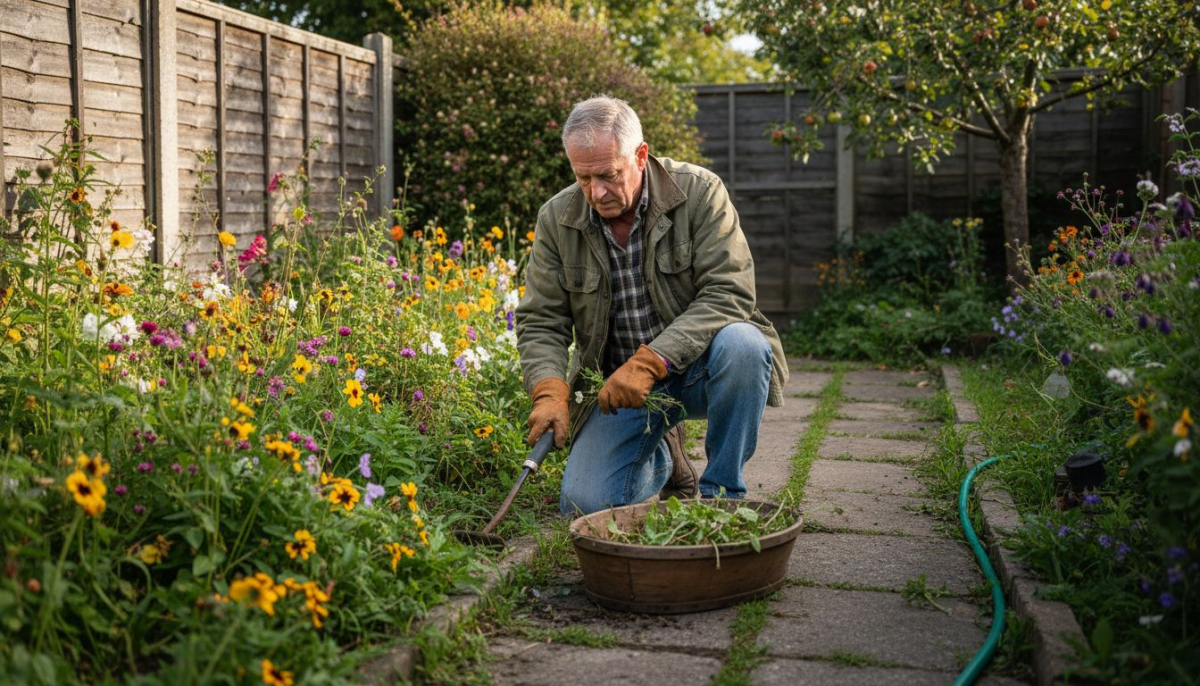
Manual removal is the first line of defence against small weed infestations in your garden. By understanding how to effectively tackle weeds without chemical interventions, homeowners can maintain a healthy outdoor space.
The Royal Horticultural Society recommends non-chemical weed control techniques that are safe and environmentally friendly. This approach is particularly effective for managing small patches of unwanted vegetation before they spread.
Key manual removal techniques include:
- Hand pulling for shallow-rooted weeds
- Repeated cutting to deplete plant energy reserves
- Using hand tools to extract entire root systems
- Targeting weeds when soil is moist for easier removal
Why Manual Removal Works
When you manually remove weeds, you interrupt their growth cycle and prevent seed production. For shallow-rooted weeds like chickweed or annual meadow grass, gentle pulling can completely eliminate the plant.
Consistent manual removal is more effective than sporadic chemical treatments.
For deeper-rooted perennials, Garden Organic suggests thorough digging to extract the entire root network. This prevents regrowth and stops weeds from re-establishing themselves.
Best Practices for Manual Weed Removal
- Remove weeds when soil is slightly damp
- Pull slowly to extract the entire root system
- Dispose of weeds in garden waste or compost bin
- Monitor the area for potential regrowth
Pro tip: Invest in a quality hand weeder tool with a forked end to make root extraction easier and more precise.
2. Excavation for Deep Rooted Weeds
Deep rooted weeds like dandelions and bindweed can quickly transform from minor nuisances to major garden challenges. Excavation provides a comprehensive solution for removing persistent perennial weeds with extensive underground root networks.
The Royal Horticultural Society recommends careful hand-forking to extract deep rooted weeds completely. This method requires precision and patience to ensure complete removal.
Key considerations for successful weed excavation include:
- Digging when soil is slightly moist
- Using sharp gardening tools
- Removing entire root systems
- Minimising surrounding soil disruption
Why Root Extraction Matters
Effective excavation interrupts the weed’s regeneration cycle. Many perennial weeds can regrow from tiny root fragments left in the soil.
Complete root removal prevents future weed reproduction and garden reinfestation.
How to Prepare for Knotweed Excavation: Step-by-Step Guide highlights the importance of systematic approach in weed management.
Practical excavation techniques:
- Identify the weed species
- Dig around the root zone carefully
- Extract roots with minimal soil disturbance
- Dispose of roots thoroughly
Pro tip: Invest in ergonomic garden tools with long handles to reduce back strain during extensive root excavation.
3. Electrothermal Treatment for Japanese Knotweed
Japanese knotweed represents a persistent nightmare for UK homeowners. Electrothermal treatment emerges as a groundbreaking solution that tackles this invasive plant without traditional chemical interventions.
Thermo-electric treatment delivers a powerful electrical charge directly into the plant’s root system. This innovative approach applies up to 5000 volts of electricity precisely targeting the knotweed’s internal structure.
Key benefits of electrothermal treatment include:
- No chemical contamination of soil
- Rapid plant destruction
- Environmentally friendly approach
- Safe for surrounding vegetation
- Prevents future plant regeneration
How Electrothermal Treatment Works
The process effectively boils the plant from within its internal cellular structure. By delivering concentrated electrical energy, the treatment depletes the plant’s energy reserves and prevents regeneration.
Electrical treatment disrupts the knotweed’s ability to reproduce and spread.
Scientific trials across Wales demonstrate that chemical-free eradication methods can successfully eliminate Japanese knotweed within a year.
Step-by-step electrothermal process:
- Identify precise knotweed location
- Apply targeted electrical treatment
- Monitor treatment effectiveness
- Confirm complete root system destruction
Pro tip: Schedule professional electrothermal treatments during the plant’s peak growing season for maximum effectiveness.
4. Installing Root Barriers to Prevent Spread
Invasive weeds can rapidly colonise gardens and disrupt landscape integrity. Root barriers offer a strategic defence against underground plant migration and protect your property from unwanted botanical invaders.
Root barriers for knotweed control provide a physical blockade that prevents rhizome expansion and contains aggressive plant species within designated areas. This method is particularly crucial for managing persistent weeds with extensive underground networks.
Key advantages of root barrier installation:
- Prevents weed spread across property boundaries
- Protects adjacent landscapes and garden spaces
- Offers long-term containment solution
- Environmentally friendly alternative to chemical treatments
- Minimal landscape disruption during installation
How Root Barriers Function
The barrier acts like an underground wall. Constructed from robust materials like high-density polyethylene, these barriers create an impenetrable boundary that redirects or stops root growth.
Underground barriers interrupt invasive plant migration effectively.
Non-chemical weed management strategies recommend root barriers as part of an integrated approach to landscape maintenance.
Step-by-step root barrier installation:
- Survey and mark targeted area
- Excavate narrow trench around weed zone
- Install barrier material vertically
- Ensure complete perimeter coverage
- Backfill and compact surrounding soil
Pro tip: Choose root barriers with minimum depth of 65 centimetres to ensure comprehensive underground protection.
5. Using Mulch and Ground Cover for Prevention
Weeds can quickly transform a pristine garden into an unruly landscape. Mulch and ground cover techniques offer strategic solutions for preventing weed proliferation while enhancing garden health.
Mulching techniques for weed prevention provide gardeners with an environmentally friendly approach to suppressing unwanted plant growth. By creating a protective layer over soil surfaces gardeners can effectively limit weed germination.
Key benefits of mulch and ground cover strategies:
- Blocks sunlight from reaching weed seeds
- Retains essential soil moisture
- Improves overall soil structure
- Reduces manual weeding requirements
- Enhances garden aesthetic appeal
How Mulching Works
The process involves spreading organic materials like bark chippings garden compost or leaf mould across soil surfaces. These materials create a physical barrier that prevents weed seeds from accessing necessary light and nutrients.
Dense ground cover acts as a natural weed prevention system.
Selecting ground cover plants can create living mulch that competes effectively with potential weeds.
Step-by-step mulching process:
- Clear existing weeds thoroughly
- Apply 5-7 centimetres thick mulch layer
- Avoid placing mulch directly against plant stems
- Replenish mulch annually
- Monitor and maintain ground cover density
Pro tip: Choose native ground cover plants that spread quickly to maximise weed suppression and enhance garden biodiversity.
6. Boiling Water Application for Persistent Patches
Some garden weeds demand more aggressive intervention than traditional removal methods. Boiling water offers a chemical-free solution for targeting stubborn weed patches in hard-to-manage areas.
Non-chemical weed control techniques recommend thermal treatments as an environmentally friendly approach to weed management. Boiling water provides a direct and immediate method of destroying unwanted vegetation.
Key advantages of boiling water application:
- Zero chemical contamination
- Immediate plant tissue destruction
- Cost-effective solution
- Safe for surrounding environment
- No residual soil impact
How Boiling Water Eliminates Weeds
The extreme heat penetrates plant cells causing instantaneous physiological damage. When applied directly to weed foliage and roots the boiling water disrupts cellular structures preventing potential regrowth.
Thermal weed control targets plant vulnerabilities effectively.
Integrated weed management strategies emphasise the importance of targeted treatment approaches.
Step-by-step boiling water application:
- Boil water in large kettle
- Identify precise weed location
- Pour water directly onto weed base
- Cover entire plant and root zone
- Monitor area for potential regrowth
Pro tip: Wear protective clothing and use a long-spouted kettle to maintain safe distance when applying boiling water to prevent potential burns.
7. Ongoing Maintenance and Regular Surveys
Weeds are persistent organisms that require continuous strategic management. Proactive monitoring prevents widespread infestations and ensures long-term landscape health for UK homeowners.
Integrated weed management strategies emphasise the critical importance of systematic surveying and adaptive control techniques.
Key benefits of ongoing maintenance:
- Early detection of potential weed problems
- Minimise extensive property damage
- Reduce long-term control expenses
- Track treatment effectiveness
- Prevent ecological disruption
Why Regular Surveys Matter
Frequent landscape inspections enable homeowners to identify and address weed challenges before they become unmanageable. Understanding weed population dynamics helps develop targeted intervention strategies.
Consistent monitoring transforms reactive weed control into preventative management.
Weed control research demonstrates the effectiveness of systematic observation and intervention.
Comprehensive survey process:
- Schedule quarterly landscape assessments
- Document weed types and locations
- Photograph problem areas
- Implement targeted treatment
- Review and adjust strategies
Pro tip: Create a digital spreadsheet to track weed locations and treatment outcomes for more systematic landscape management.
Below is a comprehensive table summarising the primary techniques, benefits, and best practices for weed management as discussed in the article.
| Method | Description | Key Benefits |
|---|---|---|
| Manual Removal | Employ hand tools to physically extract weeds, focusing on removing root systems completely. | Environmentally friendly; prevents regrowth; suitable for shallow-rooted weeds. |
| Excavation for Deep Rooted Weeds | Use precision digging to remove perennials with extensive underground roots. | Ensures thorough removal; stops regeneration effectively. |
| Electrothermal Treatment | Apply electrical charges to the plant’s roots to destroy internal structures. | Chemical-free option; rapid destruction; suitable for invasive species. |
| Root Barrier Installation | Secure barriers in soil to prevent invasive root proliferation. | Long-term containment; protects adjacent gardens; no chemical usage. |
| Mulch and Ground Cover Usage | Spread organic layers over soil or plant ground covers to suppress weeds. | Blocks weed growth; conserves moisture; improves soil quality. |
| Boiling Water Application | Directly pour boiling water onto weeds to destroy cells. | Immediate effect; environmentally safe; no residual impact on soil. |
This table encapsulates the article’s summaries and insights for easy reference.
Take Control of Invasive Weeds with Expert Chemical-Free Solutions
The challenge of managing persistent invasive weeds such as Japanese Knotweed can be overwhelming for UK homeowners. Manual removal, excavation, and root barriers all play important roles but require precision and expertise to be truly effective. At Japanese Knotweed Agency, we understand these critical pain points — the need for safe, environmentally friendly methods that stop even the most stubborn weeds from regrowing and spreading.
Our innovative electrothermal treatment delivers up to 5000 volts of direct energy onsite, destroying invasive plants from the inside out without any chemical contamination. Combined with professional root barrier installations and thorough excavation services, we provide a comprehensive approach designed to protect your garden and property long term. Don’t let invasive species take over your outdoor space — rely on proven methods supported by expert surveys and treatment plans.

Explore how our chemical-free treatments can safeguard your home against invasive weeds today. Visit Japanese Knotweed Agency to learn more and schedule your property survey. Start your journey to a healthier, weed-free garden now with trusted UK specialists.
Discover our full range of services including root barrier installs and excavation works tailored to your property’s needs.
Frequently Asked Questions
What is the best method for small weed infestations?
Manual removal is highly effective for small weed infestations. To tackle weeds like chickweed, hand pull them when the soil is moist to ensure complete root extraction.
How can I effectively excavate deep-rooted weeds?
Use careful hand-forking to excavate deep-rooted weeds such as dandelions. Aim to dig around the root zone when the soil is slightly moist to minimise disruption and extract the entire root system.
What is electrothermal treatment for Japanese knotweed?
Electrothermal treatment involves applying an electrical charge to the root system of Japanese knotweed, effectively destroying the plant from within. Schedule this treatment during the peak growing season to maximise its effectiveness.
How do root barriers help in weed control?
Root barriers create a physical barrier to prevent weeds from spreading. To install, excavate a trench around the weed zone and place the barrier vertically to effectively contain aggressive plant species.
Can mulch and ground cover prevent weeds?
Yes, applying mulch and using ground cover plants can block sunlight from reaching weed seeds. Spread a 5-7 centimetre layer of organic mulch to significantly reduce weed germination in your garden.
How often should I conduct maintenance and surveys on my garden?
Conduct regular surveys at least once every three months to monitor for weeds. This proactive approach helps in early detection and can reduce long-term control expenses by addressing issues before they escalate.