Finding Japanese Knotweed growing near your home can turn buying, selling, or remortgaging a property in the United Kingdom into a real worry. The spread of this invasive plant is more than a garden nuisance—it threatens building foundations and can cause legal headaches if left untreated. Homeowners now seek chemical-free solutions that safeguard their family and local biodiversity without risking harmful pesticide exposure. Here you will discover how expert, environmentally conscious removal services and professional property surveys can provide peace of mind when dealing with persistent weeds in the UK.
Table of Contents
- Defining Expert Weed Removal Services
- Chemical-Free Methods Versus Traditional Treatment
- Qualifications Required For Professional Assessments
- Legal Framework For Invasive Weed Control UK
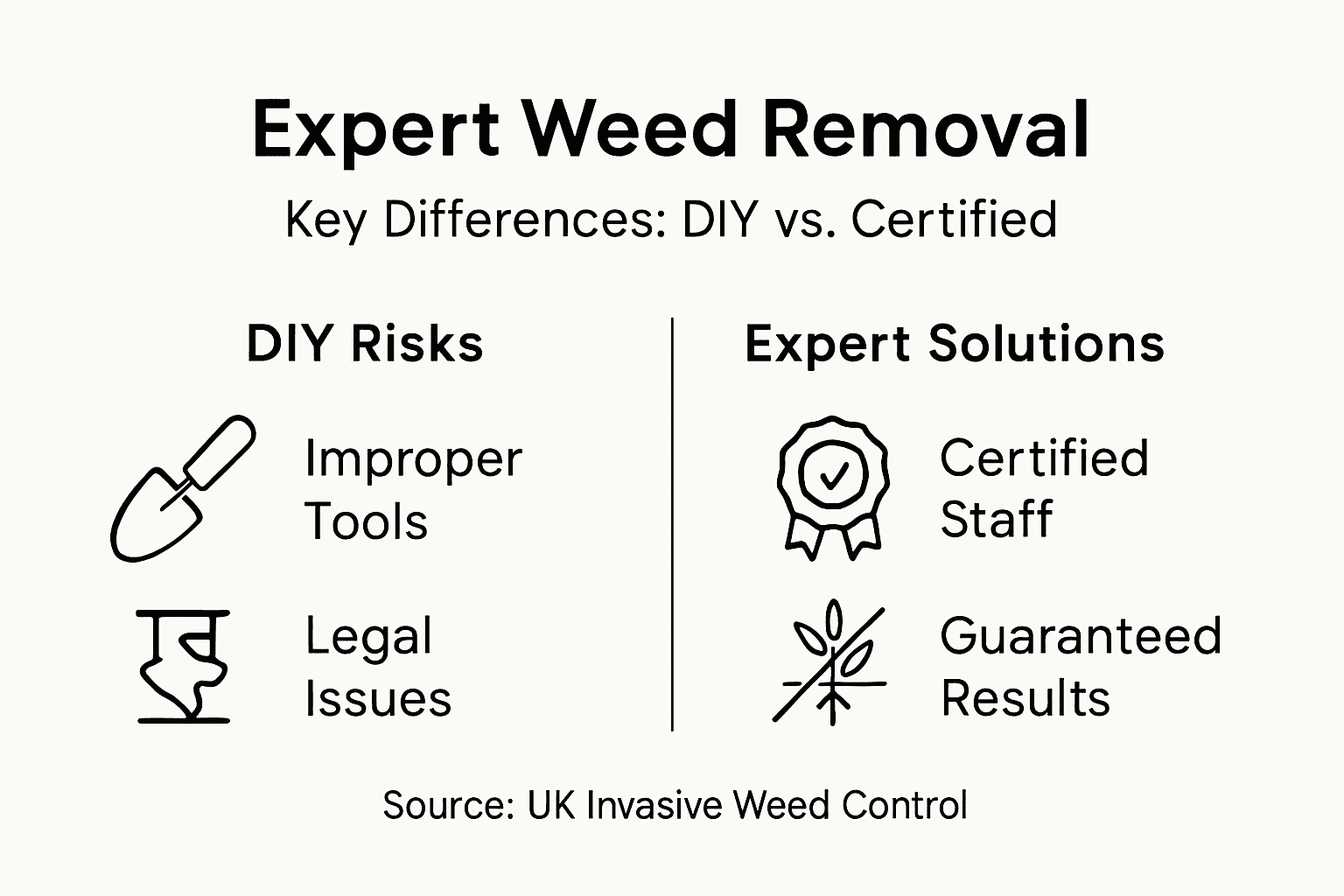
- Risks Of DIY Versus Hiring Certified Experts
Key Takeaways
| Point | Details |
|---|---|
| Professional Weed Removal Services | Engage certified experts for comprehensive and legally compliant invasive weed management to protect property and ecosystems. |
| Chemical-Free Methods | Consider sustainable weed control strategies that minimise environmental impact and health risks, such as mechanical or ecological approaches. |
| Legal Compliance | Understand the legal responsibilities for invasive weed management to avoid potential fines and ensure proper plant disposal. |
| Risks of DIY Approaches | DIY weed removal can lead to significant legal, environmental, and financial consequences; hiring professionals mitigates these risks effectively. |
Defining Expert Weed Removal Services
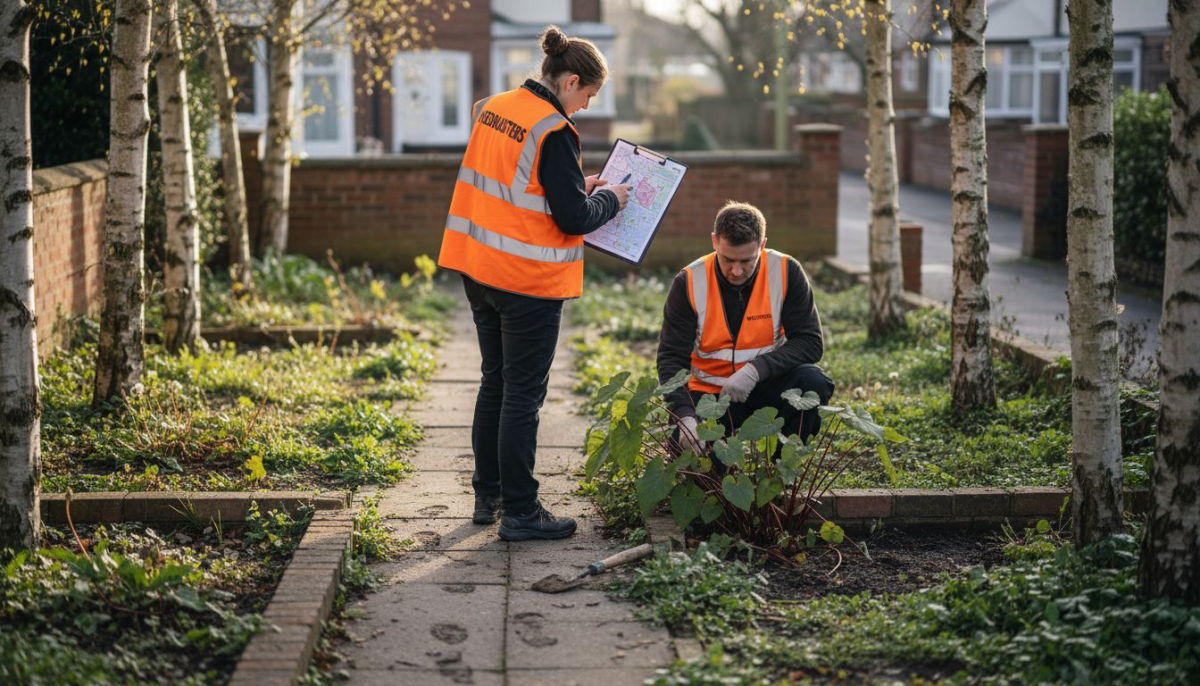
Weed removal services have evolved into sophisticated ecological management practices that go far beyond simple garden maintenance. Professional weed removal experts provide comprehensive solutions for managing invasive plant species across UK properties, addressing complex environmental challenges with precision and legal compliance.
These specialised services encompass a range of critical activities designed to protect property and ecosystem integrity. According to government guidelines, expert weed removal involves strategic treatment and disposal methods that prevent plant spread and environmental contamination.
Key characteristics of expert weed removal services include:
- Comprehensive site surveys and detailed plant identification
- Tailored treatment plans specific to invasive species
- Legal compliance with Environment Agency regulations
- Advanced removal techniques including chemical and physical interventions
- Ongoing monitoring and prevention strategies
- Professional documentation and management reporting
Professional weed management teams utilise sophisticated approaches to tackle high-risk invasive species like Japanese Knotweed. These specialist invasive weed management services integrate scientific expertise with practical environmental protection techniques.
Pro tip: Always request comprehensive documentation and a detailed management plan when engaging weed removal professionals to ensure thorough and legally compliant treatment.
Chemical-Free Methods Versus Traditional Treatment
The landscape of weed management is rapidly evolving, with increasing emphasis on sustainable and environmentally friendly approaches. Traditional chemical treatments, while historically prevalent, are now being critically re-examined for their long-term ecological impact and potential health risks.
The UK government is actively promoting alternative weed management strategies that reduce chemical dependency and protect biodiversity. Chemical-free methods have gained significant traction as property owners and environmental professionals seek more responsible weed control techniques.
Key differences between chemical and chemical-free weed removal methods include:
- Environmental Impact
- Chemical methods: Potential soil and water contamination
- Chemical-free methods: Minimal ecological disruption
- Health Considerations
- Chemical methods: Potential exposure to harmful pesticides
- Chemical-free methods: Reduced health risks
- Long-Term Effectiveness
- Chemical methods: Quick initial results
- Chemical-free methods: Sustainable prevention and management
Alternative approaches such as mechanical and ecological weed control have emerged, including techniques like hot water treatment, flame weeding, manual extraction, and targeted biological interventions. These methods offer precise, environmentally conscious solutions that address invasive plant species without compromising ecosystem health.
To help clarify the practical options for weed removal, here is a comparison of common chemical-free methods:
| Method | Principle | Best Use Case |
|---|---|---|
| Hot Water Treatment | Thermal shock to roots | Pathways, paving cracks |
| Flame Weeding | Direct heat application | Large open ground, non-flammable areas |
| Manual Extraction | Physical removal | Small gardens, targeted plants |
| Biological Control | Use of natural enemies | Sites with specific invasive species |
Pro tip: Consult professional ecological experts who can design a customised, chemical-free weed management strategy tailored to your specific property and environmental conditions.
Qualifications Required For Professional Assessments
Professional weed removal assessments demand rigorous training and specific professional certifications to ensure comprehensive and legally compliant invasive species management. These qualifications represent a critical benchmark for environmental professionals working in weed control and ecological management.
In the United Kingdom, professionals must obtain specific pesticide operator qualifications that demonstrate competency in safe herbicide handling and application. These certifications are essential for conducting thorough and legally compliant property assessments.
Key professional qualifications include:
- City & Guilds PA1 Certificate
- Covers principles of safe pesticide handling
- Fundamental qualification for weed control professionals
- City & Guilds PA2 Certificate
- Focuses on pesticide application methods
- City & Guilds PA6 Certificate
- Specialized training for specific application environments
- Professional Certificate in Invasive Species Management
- Comprehensive understanding of ecological impact
- Advanced identification and treatment strategies
Additional expertise is gained through professional training programmes that provide in-depth knowledge of invasive species identification, legal frameworks, mechanical control techniques, and safety protocols. These comprehensive courses equip professionals with the skills necessary to conduct thorough and effective weed removal assessments.
Pro tip: Always verify a professional’s current certifications and ask about their ongoing training to ensure the most up-to-date expertise in invasive species management.
Legal Framework For Invasive Weed Control UK
The legal landscape surrounding invasive weed management in the United Kingdom is complex and multifaceted, designed to protect ecological systems and property interests. Regulatory frameworks have been carefully constructed to ensure comprehensive management of potentially destructive plant species across different jurisdictions.
The UK government has established comprehensive national action plans that provide strategic guidance for invasive species control. These plans create statutory obligations for property owners, local authorities, and environmental professionals to prevent and manage the spread of potentially harmful plant species.
Key legislative instruments governing invasive weed control include:
- Wildlife and Countryside Act 1981
- Prohibits intentional release of non-native species
- Establishes legal framework for species management
- Environmental Protection Act 1990
- Regulates waste disposal of invasive plant materials
- Defines responsibilities for environmental protection
- Anti-Social Behaviour, Crime and Policing Act 2014
- Enables local authorities to issue Community Protection Notices
- Provides legal mechanisms to enforce weed management
Local authorities play a critical role in implementing invasive weed control regulations. They are empowered to take enforcement actions, issue compliance notices, and ensure that property owners manage potentially destructive plant species effectively and responsibly.
Pro tip: Maintain detailed documentation of any invasive weed management activities to demonstrate legal compliance and protect yourself from potential regulatory penalties.
Risks Of DIY Versus Hiring Certified Experts
Homeowners often underestimate the complexity of invasive weed management, particularly when dealing with persistent species like Japanese Knotweed. DIY weed removal can seem cost-effective initially, but frequently leads to significant long-term risks and potential legal complications.
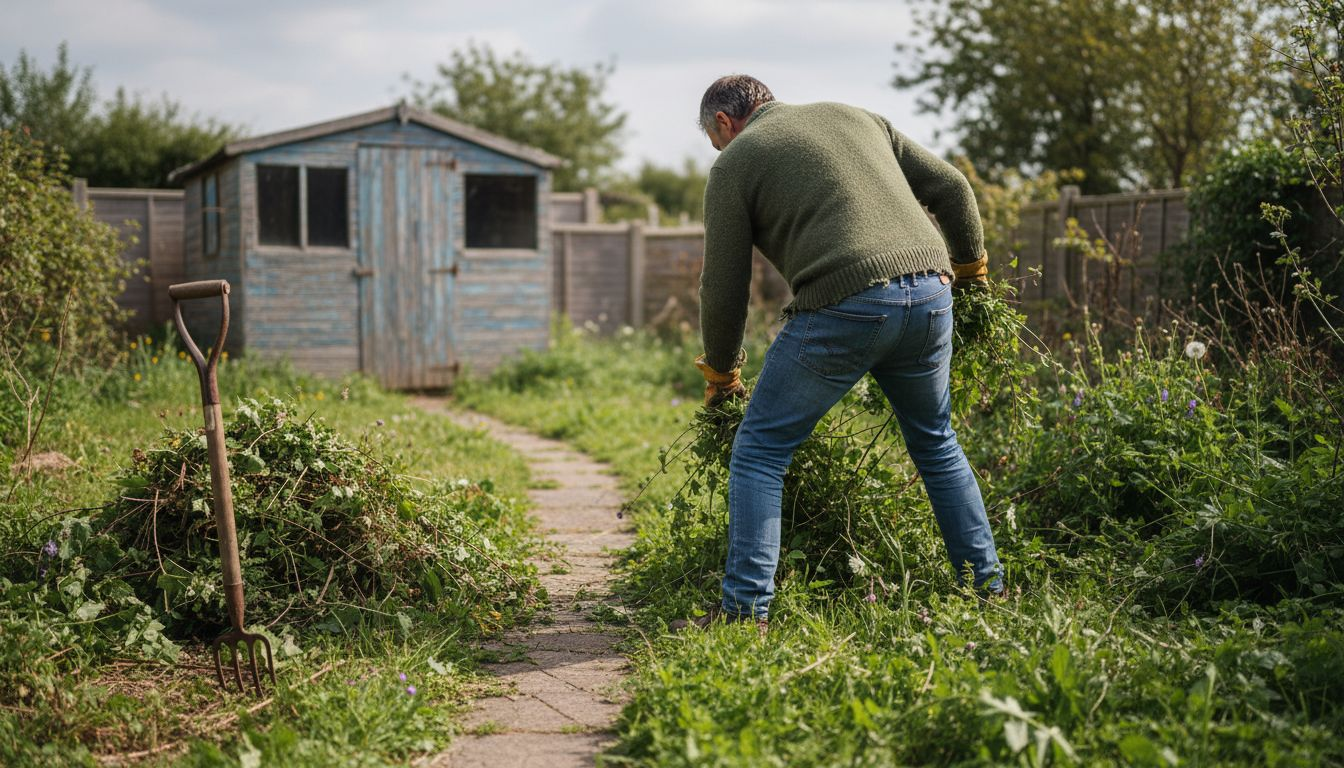
Government guidance strongly warns against amateur attempts at invasive species management. Preventing harmful plant spread requires specialist knowledge and professional intervention to ensure legal compliance and environmental protection.
Key risks of DIY weed removal include:
- Legal Risks
- Potential violation of environmental regulations
- Possible prosecution for improper plant disposal
- Non-compliance with waste management laws
- Environmental Risks
- Unintentional plant spread during removal
- Potential ecosystem damage
- Incomplete root system elimination
- Financial Risks
- Increased property devaluation
- Potential mortgage complications
- Expensive remediation if initial removal fails
Certified experts bring comprehensive understanding of invasive species management, employing scientifically validated techniques that address the entire plant ecosystem. They provide detailed documentation, legal compliance, and guarantee comprehensive removal, significantly reducing the risks associated with amateur intervention.
Below is a summary of the potential consequences and protections related to DIY versus professional weed removal:
| Aspect | DIY Removal Risks | Professional Expert Protections |
|---|---|---|
| Legal Issues | Possible fines, improper compliance | Adheres to regulations, full documentation |
| Environmental | Potential plant spread, habitat harm | Controlled removal, ecosystem safeguarding |
| Financial | Increased future costs, property value | Remediation guarantees, value preservation |
| Documentation | Unlikely or insufficient | Detailed reports and treatment proof |
Pro tip: Request comprehensive documentation and treatment guarantees from professional weed removal experts to protect your property’s legal and environmental status.
Expert Solutions For Effective Weed Removal Protecting Your UK Home
Dealing with invasive weeds like Japanese Knotweed requires more than DIY efforts it demands specialised knowledge and proven techniques to ensure complete eradication and legal compliance. The article highlights critical risks such as plant spread, legal penalties and environmental damage caused by amateur removal attempts. If you want to safeguard your property’s value and avoid costly remediation expert services are essential.
At Japanese Knotweed Agency, we are pioneers in chemical free treatment that uses powerful direct energy pulses to eliminate invasive plants safely and effectively. Our services include detailed property surveys, root barrier installations and excavation work to fully protect your land from recurring infestations across England Wales and Ireland. Discover how our advanced approaches align with the professional standards and legal frameworks outlined in the article.

Take control of invasive weed problems today by consulting the leading experts in sustainable and compliant removal methods. Visit Japanese Knotweed Agency to arrange your survey and explore tailored solutions designed to protect your home now and for the future.
Frequently Asked Questions
What are the key characteristics of expert weed removal services?
Professional weed removal services include comprehensive site surveys, tailored treatment plans, legal compliance, advanced removal techniques, ongoing monitoring, and thorough documentation.
What are the benefits of chemical-free weed removal methods compared to traditional treatments?
Chemical-free methods minimise ecological disruption, reduce health risks, and promote sustainable prevention and management compared to traditional chemical treatments that may contaminate soil and water.
What qualifications should I look for when hiring professional weed removal experts?
Look for certifications such as the City & Guilds PA1, PA2, and PA6 certificates, as well as a Professional Certificate in Invasive Species Management to ensure expertise in safe herbicide handling and invasive species control.
What are the legal obligations surrounding invasive weed management?
Property owners must comply with regulations such as the Wildlife and Countryside Act 1981, which prohibits the intentional release of non-native species, as well as the Environmental Protection Act 1990 for waste disposal of invasive plants.