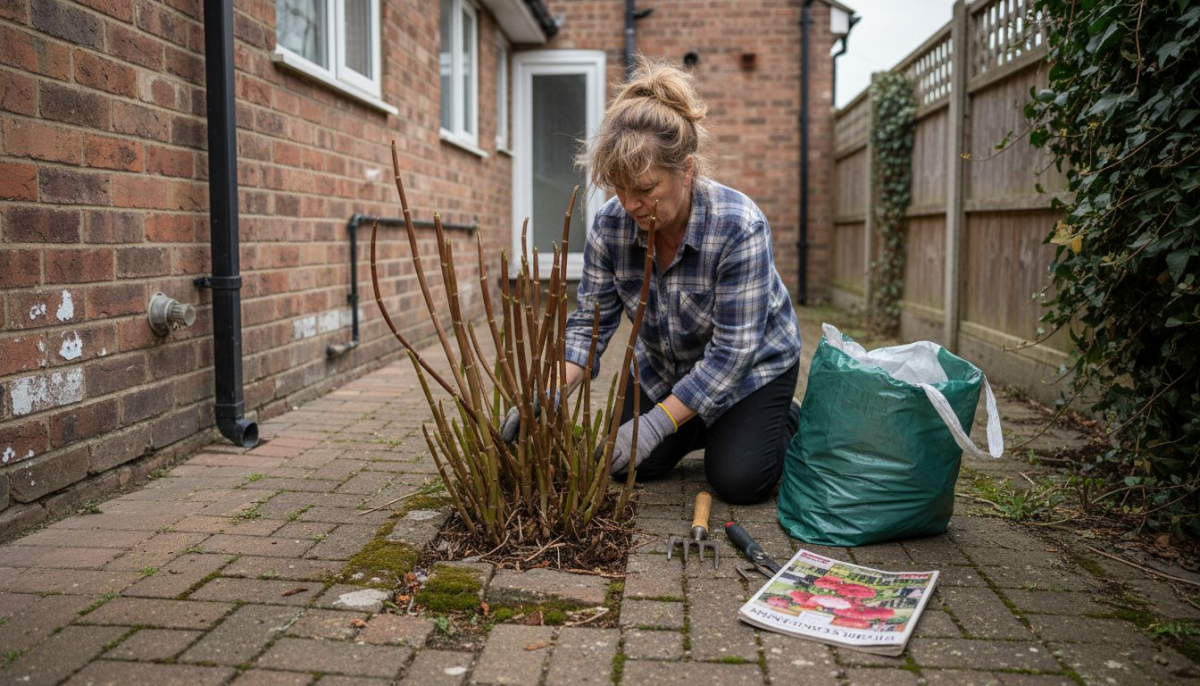
Most british homeowners are surprised to learn that invasive species like Japanese Knotweed account for about 60 percent of plant and animal extinctions worldwide. This growing threat can quietly lower property values and disrupt family health, especially across England, Wales, and Ireland. Discover what actually makes some species so destructive, why common myths lead to costly mistakes, and how chemical-free eradication can protect both your investment and wellbeing.
Table of Contents
- Defining Invasive Species And Common Myths
- Major Invasive Plants Threatening UK Homes
- How Invasive Species Damage Property And Health
- Legal Responsibilities For Homeowners
- Chemical-Free Eradication And Best Practices
Key Takeaways
| Point | Details |
|---|---|
| Invasive Non-Native Species (INNS) pose significant ecological threats | INNS can disrupt local biodiversity, lacking natural predators, and are implicated in around 60% of global extinctions. |
| Japanese Knotweed is a primary concern for homeowners | This invasive plant can cause substantial structural damage, making removal extremely challenging and property devaluation likely. |
| Legal responsibilities for homeowners are strict | Homeowners must manage invasive species to prevent their spread, or face significant fines and legal repercussions. |
| Chemical-free eradication methods are essential | Sustainable, targeted approaches to managing invasive species can effectively mitigate their impact without harming local ecosystems. |
Defining Invasive Species and Common Myths
Invasive non-native species represent a significant ecological challenge in the United Kingdom. These organisms are introduced beyond their natural habitats through human activities, often arriving deliberately or accidentally. According to research from Plantlife, these species can range from seemingly harmless to highly destructive ecosystem disruptors.
While not all non-native species become problematic, invasive non-native species (INNS) possess unique characteristics that enable them to thrive uncontrollably. Scientific evidence from the RSPB suggests these organisms typically lack natural predators in their new environments, allowing them to outcompete native species rapidly. This unchecked growth can lead to significant biodiversity threats, with INNS being implicated in approximately 60% of plant and animal extinctions worldwide.
Common myths surrounding invasive species often minimise their potential impact. Many people mistakenly believe that non-native species are harmless or will naturally balance within existing ecosystems. However, research demonstrates that certain invasive organisms can fundamentally alter habitat structures, spread diseases, and cause substantial economic damage. Japanese Knotweed, for instance, represents a prime example of an invasive species capable of pushing through concrete and compromising building foundations.
Pro tip: Always consult professional ecological surveyors when you suspect invasive species presence on your property to prevent potential long-term environmental and structural damage.
Major Invasive Plants Threatening UK Homes
Invasive plant species pose significant challenges for UK homeowners, with several aggressive plant varieties capable of causing substantial property damage and ecological disruption. The most notorious invasive plants in the United Kingdom include Japanese Knotweed, Himalayan Balsam, Giant Hogweed, and Water Primrose, each presenting unique risks to residential environments.
Japanese Knotweed remains the most notorious invasive species, capable of growing through concrete foundations, damaging building structures, and causing significant property devaluation. Its underground rhizome network can extend up to three metres deep and seven metres horizontally, making eradication extremely challenging. Invasive plant research from community conservation groups highlights how these plants can rapidly colonise areas, suppressing native vegetation and altering local ecosystems.
Other problematic invasive plants include Giant Hogweed, which presents serious health risks due to its phototoxic sap that can cause severe skin burns, and Himalayan Balsam, known for its rapid seed dispersal and ability to dominate riverbank environments. These plants not only threaten residential landscapes but can also compromise local biodiversity, water management systems, and create significant maintenance challenges for property owners.
Here is a summary of major invasive plant threats to residential properties in the UK:
| Plant Species | Main Risks | Typical Habitats | Removal Difficulty |
|---|---|---|---|
| Japanese Knotweed | Structural damage, rapid spread | Foundations, gardens | Extremely high |
| Giant Hogweed | Severe skin burns, riverbank instability | Riverbanks, open land | Moderate |
| Himalayan Balsam | Biodiversity loss, rapid colonisation | Woodlands, riverbanks | Moderate |
| Water Primrose | Waterway obstruction, ecosystem disruption | Ponds, slow rivers | Very high |
Pro tip: Conduct annual property surveys and immediately consult professional ecological experts if you suspect any invasive plant species on your land to prevent potential long-term structural and environmental damage.
How Invasive Species Damage Property and Health
Invasive species present substantial risks to property and human health across the United Kingdom, with potentially devastating economic and physiological consequences. These non-native organisms can cause structural damage, compromise building foundations, and create significant environmental hazards that extend far beyond simple aesthetic concerns.
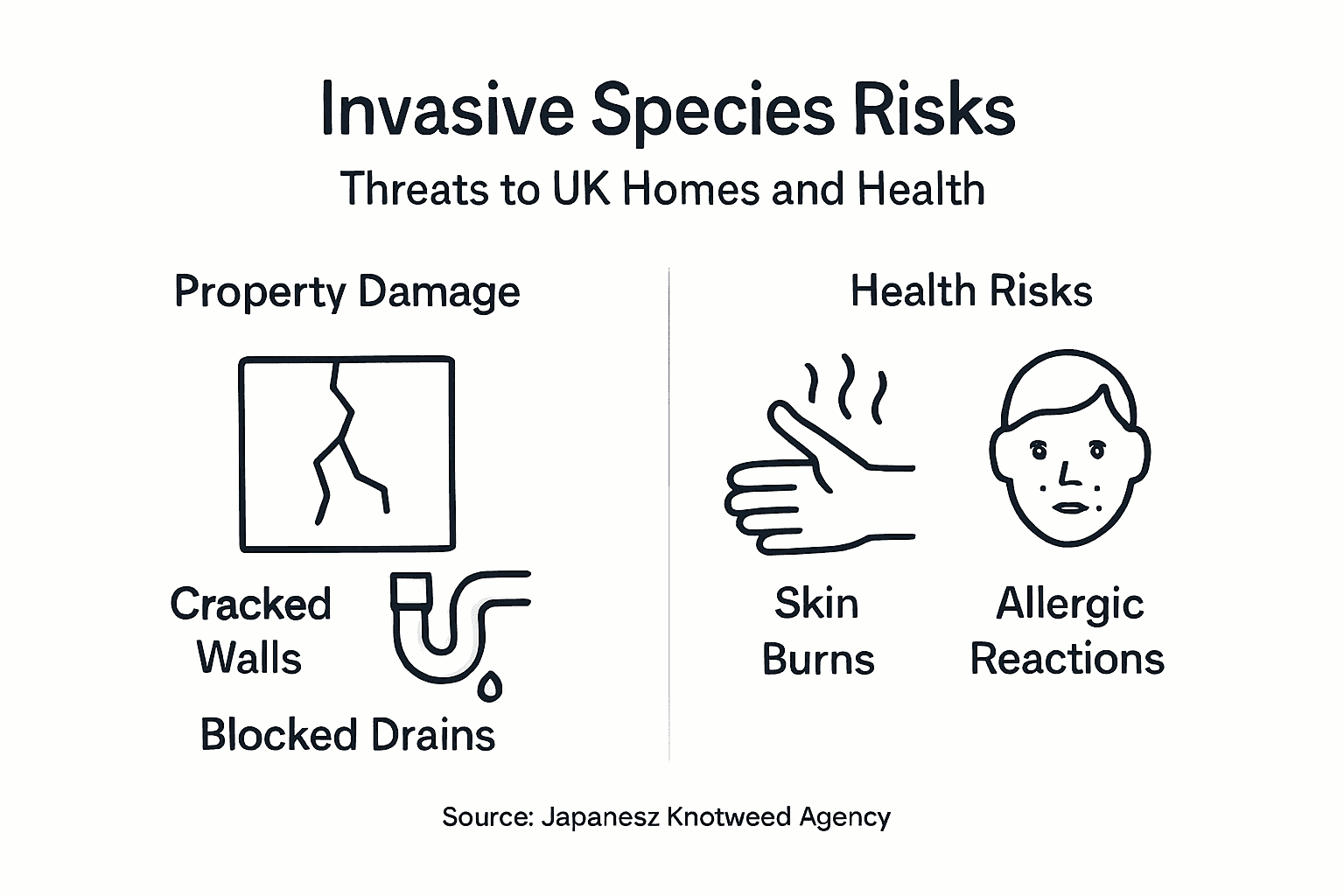
Structural Damage represents the most immediate threat to residential properties. Invasive plant species like Japanese Knotweed can penetrate concrete foundations, compromise building structures, and destabilise ground conditions. Research from woodland conservation experts indicates these species can significantly increase flood risks by clogging waterways and undermining riverbank stability, potentially rendering entire properties vulnerable to environmental damage.
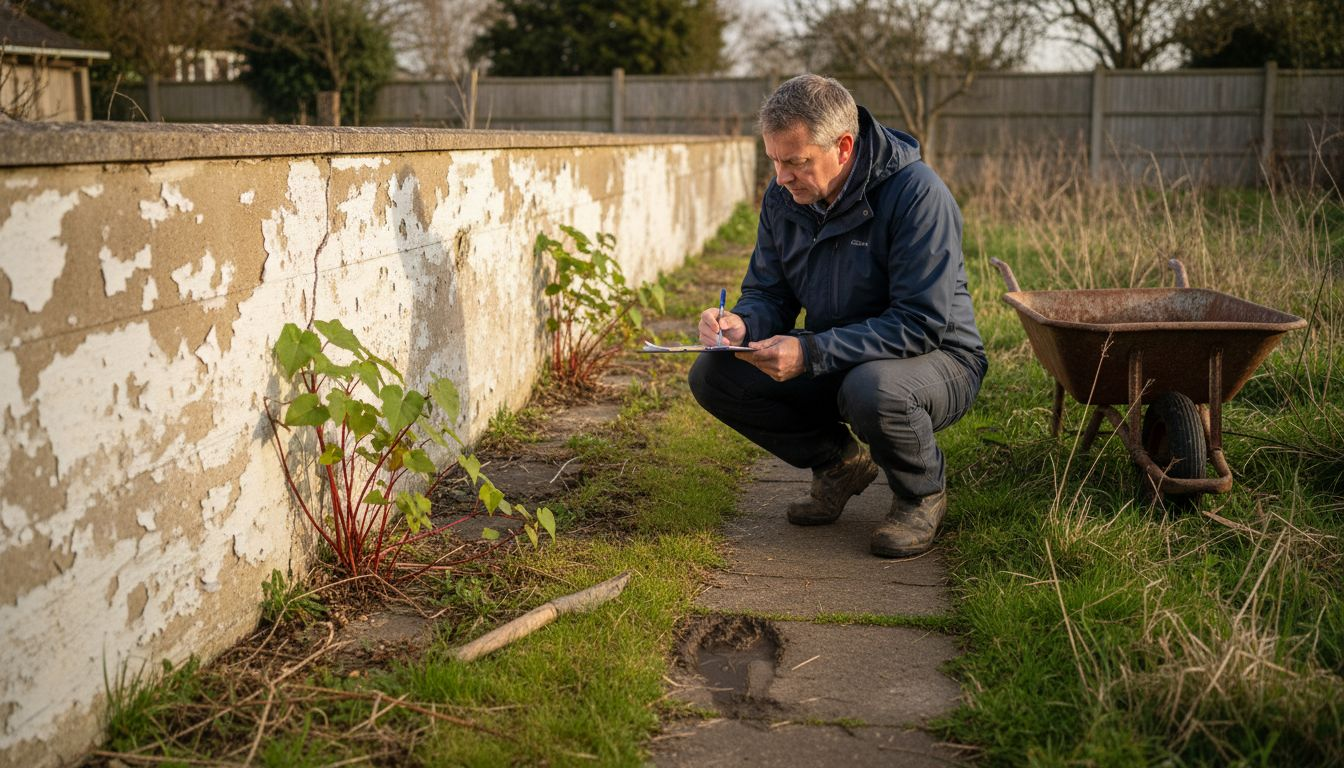
Health risks from invasive species are equally alarming. Certain invasive plants like Giant Hogweed produce phototoxic sap capable of causing severe skin burns and allergic reactions. Some invasive animal species can also transmit diseases, creating additional health complications for residents. The economic impact is substantial, with estimated annual costs to Great Britain approaching £1.9 billion, reflecting both direct damages and extensive control efforts required to manage these aggressive non-native species.
Pro tip: Arrange professional ecological surveys annually to identify potential invasive species early, preventing extensive property damage and mitigating significant health risks.
Legal Responsibilities for Homeowners
The Invasive Species (Enforcement and Permitting) Order 2019 establishes critical legal obligations for UK homeowners regarding invasive species management. Homeowners are legally required to prevent the spread of non-native invasive organisms from their property, with potential consequences including substantial fines and potential legal prosecution for non-compliance.
Legal Obligations extend beyond simple property maintenance. Under current UK legislation, property owners must take proactive steps to identify, control, and prevent the spread of invasive species. Scottish environmental regulations specifically prohibit releasing or allowing invasive species to escape into surrounding environments, making homeowners directly responsible for implementing comprehensive biosecurity measures.
The legal framework surrounding invasive species is particularly stringent for high-risk plants like Japanese Knotweed. Homeowners can be held liable for damages caused by invasive species spreading from their property to neighbouring lands, potentially facing significant financial and legal repercussions. Species Control Orders can be issued by local authorities, compelling property owners to take immediate and effective action to manage and eradicate invasive plant populations.
Pro tip: Maintain detailed documentation of any invasive species management efforts and professional surveys to demonstrate proactive compliance with legal requirements.
Chemical-Free Eradication and Best Practices
Chemical-free eradication methods represent a sophisticated approach to managing invasive species while minimising environmental disruption. These techniques focus on sustainable, targeted interventions that eliminate invasive organisms without relying on broad-spectrum chemical treatments that can harm surrounding ecosystems.
Precision Removal Techniques are critical in chemical-free eradication strategies. Methods such as manual extraction, biological control agents, and targeted energy treatments can effectively manage invasive plant populations. The approach requires comprehensive understanding of each species’ lifecycle, growth patterns, and specific vulnerabilities. UK biosecurity best practices emphasise the importance of careful planning, community engagement, and ongoing monitoring to prevent reinvasion and restore native habitat structures.
Thermo-electric treatment stands out as an innovative chemical-free solution for invasive species like Japanese Knotweed. By delivering direct energy to target plants, this method causes internal cell damage and depletes energy resources within the extensive rhizome network. Unlike traditional chemical treatments, this approach provides a precise, environmentally responsible mechanism for complete plant eradication without introducing harmful substances into the surrounding ecosystem.
The following table compares chemical-based and chemical-free eradication methods for invasive species control:
| Method Type | Environmental Impact | Effectiveness | Typical Use Cases |
|---|---|---|---|
| Chemical-Based | High pollution risk | Reliable | Large infestations, urgent removal |
| Chemical-Free | Minimal disruption | Targeted | Sensitive areas, sustainable management |
| Thermo-Electric | No chemical residue | Very precise | Japanese Knotweed, urban sites |
Pro tip: Develop a comprehensive site-specific management plan that combines multiple removal techniques, ensuring a holistic and sustainable approach to invasive species control.
Protect Your Home From Invasive Species With Expert Chemical-Free Solutions
Invasive species like Japanese Knotweed pose serious risks to your property and health, from structural damage to costly legal consequences. The article clearly highlights how unchecked growth can cause significant property devaluation and health hazards through sap toxicity or flooding. If you are worried about these threats or want to stay ahead with early detection, professional help is essential.
Japanese Knotweed Agency specialises in pioneering chemical-free treatment methods using powerful direct energy up to 5000 volts, precisely targeting the invasive plants’ rhizomes without harming your surrounding environment. We also offer root barrier installations and excavation works that align perfectly with the article’s emphasis on sustainable and effective eradication strategies. To safeguard your home confidently, arrange a detailed property survey for invasive weeds covering England, Wales, and Ireland.
Don’t wait until invasive species cause irreversible damage or legal issues. Act now to protect your home with our expert support at Japanese Knotweed Agency. Book your property survey today and start your journey towards a safe, invasive-free environment.
Frequently Asked Questions
What are invasive species and why are they a problem?
Invasive species are non-native organisms introduced to new environments, often through human activity. They can disrupt ecosystems, outcompete native species, and cause significant ecological and economic damage.
What is the impact of invasive plants on property values?
Invasive plants like Japanese Knotweed can cause structural damage to buildings, leading to reduced property values. These plants can penetrate concrete foundations, making eradication difficult and costly.
How can homeowners identify invasive species in their gardens?
Homeowners can identify invasive species by looking for certain characteristics such as aggressive growth, rapid seed dispersal, and the ability to outcompete native plants. Consulting local ecological experts is also recommended for accurate identification.
What are the legal responsibilities of homeowners regarding invasive species?
Homeowners are legally required to prevent the spread of invasive species from their properties. This includes taking proactive measures to manage and eradicate invasive species to avoid potential legal repercussions and fines.