
Many homeowners assume chemical treatments are the safest way to tackle Japanese Knotweed, but growing health concerns and regulatory restrictions tell a different story. Glyphosate herbicides can take years to work, pose potential risks to families and pets, and may complicate property transactions. This guide explores why non-chemical knotweed controls offer faster, safer alternatives that protect both your health and property value, helping you navigate mortgage requirements and future-proof your treatment approach.
Table of Contents
- Key takeaways
- Understanding Japanese Knotweed and chemical treatment concerns
- Benefits of non-chemical knotweed eradication methods
- Choosing the right non-chemical method for your property
- How non-chemical methods protect your property value and mortgage prospects
- Explore professional chemical-free knotweed solutions
- Frequently asked questions
Key Takeaways
| Point | Details |
|---|---|
| Faster non chemical eradication | Non chemical methods remove Japanese Knotweed in about one to two years, far quicker than typical herbicide programmes. |
| Health safety for families | They eliminate exposure to glyphosate and other herbicides, protecting children, pets and garden ecosystems. |
| Regulatory compliance edge | As glyphosate restrictions tighten by 2026, non chemical approaches align with upcoming rules and avoid disruption mid programme. |
| Protects property value | Non chemical eradication enables immediate replanting after eradication, reducing mortgage concerns and helping maintain property value. |
Understanding Japanese Knotweed and chemical treatment concerns
Japanese Knotweed is an aggressive invasive plant that causes structural damage to buildings, drains, and patios whilst reducing property values by 5-15% across England, Wales, and Ireland. Its extensive rhizome network spreads underground up to seven metres horizontally and three metres deep, making eradication challenging. The plant’s ability to exploit tiny cracks in foundations and tarmac creates costly repair bills that alarm mortgage lenders.
Chemical herbicides containing glyphosate have been the traditional treatment approach for decades, requiring repeated applications over multiple growing seasons. However, energy-based eradication methods avoid health risks from glyphosate, which has been linked to cancers and neurological issues in some studies. Whilst regulatory bodies continue debating glyphosate’s safety profile, many homeowners feel uncomfortable exposing their families, pets, and garden ecosystems to repeated herbicide applications.
The regulatory landscape is shifting rapidly. Anticipated restrictions or bans on glyphosate use in the UK and Ireland by 2026 reflect growing precautionary principles in environmental policy. Some European countries have already implemented strict limitations, creating uncertainty for homeowners who begin lengthy chemical treatment programmes.
Common concerns with chemical treatments include:
- Treatment duration extending 3-5 years with multiple seasonal applications
- Potential health risks from herbicide exposure, especially for children and pets
- Soil contamination requiring expensive waste disposal if excavation becomes necessary
- Mortgage complications when lenders demand proof of complete eradication
- Delayed garden use and replanting restrictions during active treatment periods
These challenges explain why homeowners increasingly seek alternatives that deliver results without the drawbacks of chemical approaches.
Benefits of non-chemical knotweed eradication methods
Non-chemical methods achieve complete Japanese Knotweed removal in 1-2 years versus the 3-5 year timeline typical for herbicide programmes. This accelerated eradication timeline directly benefits homeowners facing property transactions, remortgaging needs, or simply wanting to reclaim their gardens sooner. The speed advantage stems from targeting the plant’s energy reserves and cellular structure rather than relying on slow herbicide absorption.
Health and safety benefits represent perhaps the most compelling advantage for families. Non-chemical treatments eliminate exposure to glyphosate and other herbicides, protecting children who play in gardens, pets that explore outdoor spaces, and beneficial insects that support garden ecosystems. You can use your outdoor space throughout the treatment process without worrying about chemical residues on surfaces or in soil.
Regulatory compliance offers future-proofing that chemical methods cannot match. Glyphosate restrictions anticipated in the UK and Ireland by 2026 mean chemical treatment programmes started today may face interruption or require switching mid-course. Non-chemical approaches align with evolving environmental standards, ensuring your investment remains valid regardless of regulatory changes.
Environmental advantages extend beyond avoiding herbicide contamination. Non-chemical treatments allow immediate replanting after eradication, enabling garden restoration without waiting for chemical residues to break down. Soil remains uncontaminated, preserving its natural biology and supporting healthy plant growth. If excavation becomes necessary for construction, treated soil can be managed as standard waste rather than expensive contaminated material.
Key benefits for homeowners:
- Documented eradication within 1-2 years speeds mortgage approvals and property sales
- Zero herbicide exposure protects family health and garden ecosystems
- Compliance with current and future environmental regulations
- Immediate site reuse without waiting for chemical breakdown periods
- Reduced total treatment costs through shorter programme duration
Pro tip: Request detailed treatment documentation from your provider, including site plans, treatment dates, and photographic evidence. Mortgage lenders increasingly demand comprehensive records, and thorough documentation from chemical-free eradication workflows strengthens your position during property transactions.
| Treatment aspect | Chemical methods | Non-chemical methods |
|---|---|---|
| Typical duration | 3-5 years | 1-2 years |
| Health risks | Glyphosate exposure concerns | None |
| Soil contamination | Possible residues | None |
| Regulatory compliance | Uncertain with pending restrictions | Future-proof |
| Site reuse timing | Delayed for chemical breakdown | Immediate |
Choosing the right non-chemical method for your property
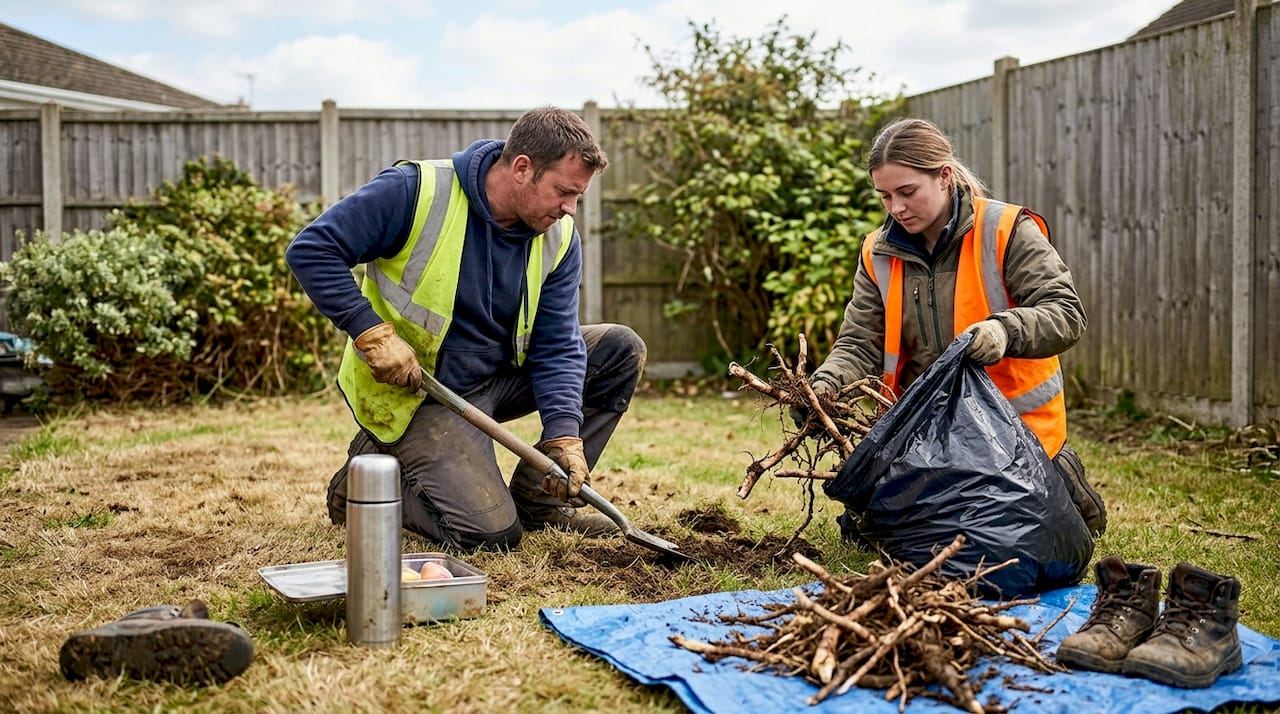
Mechanical removal suits small infestations covering less than 10 square metres where complete excavation is practical. This approach works best for contained spread but requires removing all rhizome material to prevent regrowth from tiny fragments. The labour intensity and disposal costs make mechanical removal impractical for larger infestations, though it delivers immediate results when executed properly by experienced contractors.
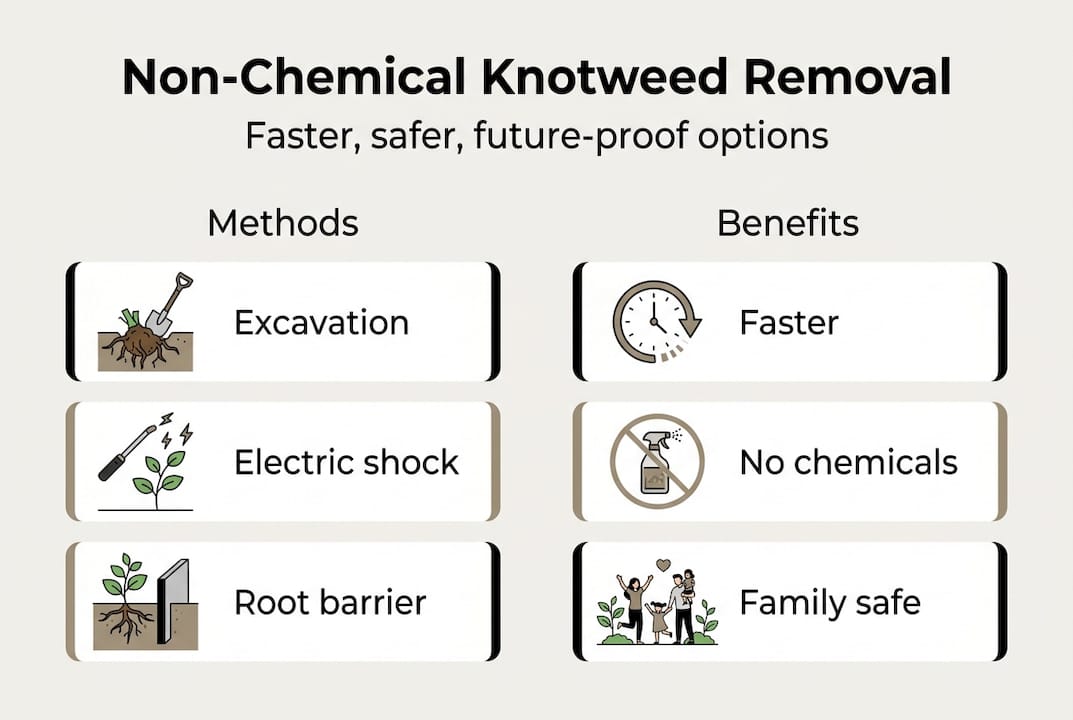
Thermo-electric treatment uses precisely controlled 5000-volt electricity to destroy plant cells throughout the rhizome network. This method excels in sensitive locations near water courses, conservation areas, or protected species habitats where herbicide use faces restrictions. The electrical energy causes internal cell damage and depletes the plant’s energy reserves with each treatment session, systematically weakening the infestation without chemical residues or soil disturbance.
Roots Reset employs a plant-based granulate that seals rhizomes and prevents regeneration, offering rapid site preparation for construction or landscaping projects. This biological approach allows immediate replanting and site development whilst the sealed rhizomes decompose naturally underground. The method particularly suits homeowners needing quick turnaround for property improvements or sales.
Professional application remains critical regardless of method choice. Japanese Knotweed’s remarkable regenerative ability means even rice grain-sized rhizome fragments can spawn new growth. Experienced contractors understand growth patterns, seasonal vulnerabilities, and treatment timing that maximises effectiveness whilst minimising sessions required.
Steps to select and implement the right treatment:
- Commission a professional survey to map infestation extent, identify rhizome spread patterns, and assess site-specific constraints
- Evaluate treatment options based on infestation size, proximity to sensitive features, required completion timeline, and budget parameters
- Verify contractor credentials including professional indemnity insurance, treatment guarantees, and documented success rates with your chosen method
- Request a detailed treatment plan specifying session frequency, monitoring protocols, and documentation procedures for mortgage lender requirements
- Establish a monitoring schedule with your contractor to track progress, adjust treatment intensity if needed, and document eradication milestones
- Obtain completion certification with comprehensive photographic evidence and site plans showing treated areas for future property transactions
Pro tip: Consult specialists who offer multiple non-chemical methods rather than contractors committed to a single approach. Different site conditions favour different techniques, and experienced providers can recommend the optimal solution for your specific circumstances. Comprehensive documentation from the chemical-free treatment process satisfies even the strictest mortgage lender requirements.
How non-chemical methods protect your property value and mortgage prospects
Japanese Knotweed reduces property values by 5-15% and creates significant mortgage complications across England, Wales, and Ireland. Lenders view infestations as structural risks and potential legal liabilities, often refusing mortgages outright or demanding substantial retention amounts until eradication is proven. This financial impact extends beyond the immediate property, as neighbouring homes may experience value suppression from perceived spread risks.
Mortgage lenders require comprehensive evidence of complete eradication before approving loans or remortgaging applications. Non-chemical methods provide this documentation faster than chemical programmes, reducing the holding period that delays property transactions. The 1-2 year treatment timeline means buyers can secure financing sooner, and sellers face shorter marketing periods with reduced negotiation leverage lost to knotweed concerns.
Documented compliance with non-chemical treatments carries particular weight with risk-averse lenders. Treatment records showing systematic progress, professional contractor credentials, and guarantee-backed completion certificates demonstrate responsible property stewardship. These comprehensive records address lender concerns more effectively than ongoing chemical programmes with uncertain completion dates.
| Factor | Chemical treatment impact | Non-chemical treatment impact |
|---|---|---|
| Average value reduction | 5-15% during 3-5 year treatment | 5-15% during 1-2 year treatment |
| Mortgage approval timeline | Delayed until completion proof after 3-5 years | Faster approval with completion proof after 1-2 years |
| Lender confidence | Moderate due to lengthy timeline and regulatory uncertainty | Higher due to faster completion and compliance |
| Transaction delays | Extended due to ongoing treatment status | Reduced through quicker documented eradication |
Benefits for homeowners managing property value:
- Shorter treatment duration minimises the period of value suppression and mortgage complications
- Comprehensive documentation from professional providers satisfies lender due diligence requirements
- Eliminated herbicide concerns remove an additional negotiation point that buyers exploit
- Faster site restoration allows property improvements that enhance value and marketability
- Regulatory compliance protects against future treatment invalidation that could restart the value impact clock
The financial advantages extend beyond immediate property value protection. Quicker eradication enables garden improvements, extensions, or landscaping projects that enhance overall property appeal. Homeowners can market properties confidently, knowing treatment completion certificates provide the evidence buyers and their lenders demand. Understanding the connection between treatment choice and property value impact helps you make informed decisions that protect your largest financial asset.
Explore professional chemical-free knotweed solutions
Protecting your property investment and family health requires proven expertise in non-chemical Japanese Knotweed eradication. Professional services deliver safe, effective treatments using advanced thermo-electric and biological methods that achieve documented results within 1-2 years. These approaches eliminate herbicide risks whilst providing the comprehensive treatment records mortgage lenders demand.
Experienced contractors understand how different site conditions, infestation patterns, and property constraints influence treatment success. They provide detailed documentation throughout the eradication process, creating the evidence trail essential for property transactions and remortgaging applications. Professional guarantees backed by insurance protect your investment and provide peace of mind that treatment will achieve complete eradication.
Explore detailed guidance on the chemical-free knotweed treatment process to understand what professional services deliver. Access comprehensive Japanese Knotweed FAQs addressing common homeowner concerns about treatment methods, timelines, costs, and mortgage implications. Making informed decisions about knotweed removal protects both your property value and your family’s wellbeing.
Frequently asked questions
What are the non-chemical methods available for Japanese Knotweed?
Thermo-electric treatment uses 5000-volt electricity to destroy plant cells throughout the rhizome network, causing internal damage and depleting energy reserves. Roots Reset employs plant-based granulates that seal rhizomes and prevent regeneration whilst allowing immediate site reuse. Mechanical removal excavates all plant material and rhizomes, suitable for small contained infestations under 10 square metres. Each method offers distinct advantages depending on site conditions, infestation size, and required completion timeline.
How long do non-chemical treatments take compared to chemicals?
Non-chemical methods typically achieve complete eradication within 1-2 years through targeted approaches that attack the plant’s cellular structure and energy systems. Chemical herbicide programmes require 3-5 years of repeated seasonal applications as glyphosate slowly weakens the extensive rhizome network. The faster timeline with non-chemical approaches reduces the period of property value suppression and speeds mortgage approvals. Treatment duration varies based on infestation severity, but non-chemical methods consistently outpace herbicide programmes.
Are non-chemical treatments safe for my family and pets?
Non-chemical methods eliminate all herbicide exposure risks, allowing children and pets to use garden spaces throughout treatment without health concerns. Thermo-electric approaches use contained electrical energy that poses no residual risks once treatment sessions conclude. Biological methods like Roots Reset use plant-based materials that integrate safely into soil ecosystems. These approaches protect beneficial insects, soil biology, and garden plants whilst effectively targeting Japanese Knotweed, making them ideal for family homes prioritising health and environmental safety.
Can non-chemical removal enhance property sale and mortgage approval?
Quicker documented eradication within 1-2 years provides the completion evidence mortgage lenders require sooner than chemical programmes. Professional treatment records demonstrating systematic progress and guaranteed results build lender confidence and reduce transaction delays. The shorter value suppression period minimises negotiation leverage buyers gain from knotweed presence. Comprehensive documentation from non-chemical treatments satisfies even strict lender requirements, smoothing property sales and remortgaging applications whilst protecting your investment value throughout the process.