TL;DR:
- Weed management is most effective when using integrated weed management (IWM), a multi-method, sustainable approach. IWM focuses on controlling weed density below damaging levels rather than complete eradication, combining biological, cultural, physical, and chemical controls. Proper identification, early intervention, and professional support are essential for long-term land health and environmental protection.
Weeds are not simply an aesthetic nuisance. Understanding what are weeds in practical terms means recognising them as highly competitive plants capable of establishing, spreading, and depleting resources far faster than most cultivated species. Unchecked weed pressure can reduce yields and plant health by 30 to 70 percent, yet the instinct for most homeowners and land managers is to reach for a herbicide and hope for the best. That approach rarely holds. Integrated weed management offers a more considered, multi-method strategy that addresses weed problems at their root rather than treating symptoms season after season.
Table of Contents
- Key takeaways
- The definition of integrated weed management
- IWM methods: what works and when
- Why IWM matters for land and environmental health
- Implementing IWM on your property
- My perspective on IWM and realistic expectations
- How Japaneseknotweedagency supports your IWM plan
- FAQ
Key takeaways
| Point | Details |
|---|---|
| IWM is a multi-method approach | It combines biological, cultural, physical, and chemical controls to manage weeds sustainably. |
| Eradication is not the goal | IWM aims to keep weed density below damaging thresholds, not achieve total elimination. |
| Timing and identification matter | Correct species identification and early intervention are the foundations of effective IWM planning. |
| Chemical use is a last resort | Herbicides remain part of the toolkit but should be rotated and minimised to prevent resistance. |
| Professional support is available | For invasive species such as Japanese Knotweed, specialist surveys and chemical-free treatments deliver reliable results. |
The definition of integrated weed management
The definition of integrated weed management is a science-based, decision-making framework that combines multiple control methods to manage weed populations in a way that is economically sound, ecologically responsible, and practically sustainable. It draws directly from the broader principles of integrated pest management, applying that same layered philosophy specifically to weed control.
IWM combines biological, cultural, physical, and chemical tools to minimise economic, health, and environmental risks. No single method works in isolation. The power of the approach lies in how these combined weed control methods reinforce each other, reducing the pressure placed on any one tactic and slowing the development of resistance or weed species shifts.
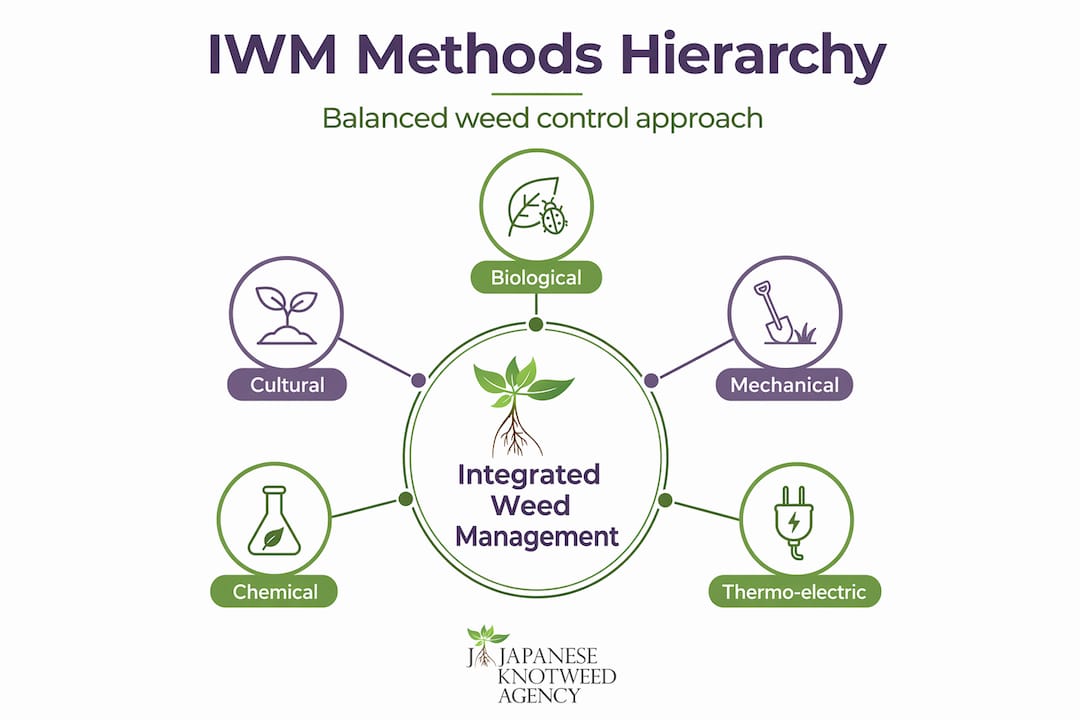
A defining feature of IWM is its goal. Rather than pursuing total eradication, the aim is to keep weed density below crop-damaging levels, prevent shifts toward harder-to-control species, and protect long-term productivity and environmental quality. This represents a fundamental shift in mindset for many property owners who are accustomed to treating weed problems as something to be eliminated rather than managed.
The approach also depends on a thorough understanding of weed biology and ecology. Correct identification of weed species and life cycle is the first step toward efficient management. Knowing whether you are dealing with an annual, biennial, or perennial species, and understanding how it reproduces, determines which control methods are most likely to succeed and when they should be applied.
“Integrated weed management is not a single action. It is a long-term commitment to monitoring, adapting, and combining methods intelligently across multiple growing seasons.”
IWM methods: what works and when
Understanding the main categories of IWM methods helps you match the right tool to the specific weed challenge you face. Each approach has genuine strengths, and each has limitations that make combining them so important.
| Method | How it works | Best suited for | Limitations |
|---|---|---|---|
| Biological | Natural enemies, bioherbicides | Large-scale land management | Requires permits; limited homeowner access |
| Cultural | Mulching, soil solarisation, rotation | Gardens, managed land | Requires planning and consistency |
| Mechanical/Physical | Hand removal, root barriers | Small infestations, boundary control | Labour-intensive; regrowth risk if incomplete |
| Chemical | Targeted herbicide application | Established or resistant weeds | Resistance risk; environmental impact |
Biological controls include introducing natural predators or applying bioherbicides that target specific weed species. While these tools offer precision, biological weed control options need regulatory permits and are generally less accessible to homeowners. They are most relevant for large-scale land managers with the resources and regulatory support to deploy them safely.
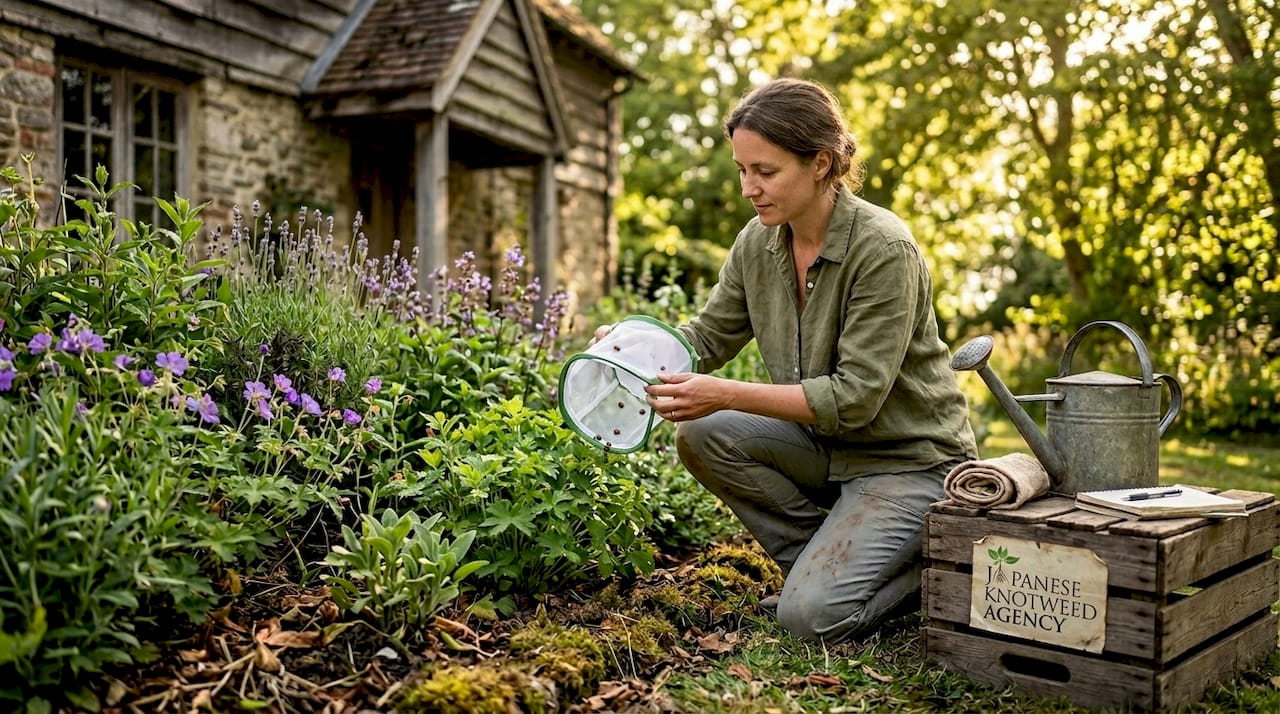
Cultural controls are arguably the most underused category in domestic settings. Mulching suppresses germination by blocking light. Soil solarisation uses heat from the sun beneath clear polythene sheeting to kill weed seeds and pathogens in the top layer of soil. Adjusting irrigation to favour desirable plants over weeds is another practical tool. These methods require planning and consistency, but they reduce the weed seed bank gradually and without chemical input. You can explore practical non-chemical weed techniques in detail if you want to build these approaches into your management plan.
Mechanical and physical controls suit small to medium infestations. Manual removal is most effective when plants have not yet flowered. Any flowering material must be bagged immediately and removed from site to prevent seeding. Root barriers are a valuable physical option for invasive species with extensive underground rhizome systems, where surface removal alone is insufficient. For a broader perspective on garden-level control strategies, the pest control guidance from Sprout Lab offers useful context.
Chemical controls have a clear role but should not be the first response. Heavy reliance on a single herbicide leads to resistance and shifts in weed species composition over time. Rotating modes of action and integrating non-chemical suppression methods reduces this risk considerably.
Pro Tip: When timing herbicide applications, target weeds in their active growth phase before they set seed. A single plant allowed to seed can introduce thousands of viable seeds into the soil bank, undoing several seasons of management work.
Why IWM matters for land and environmental health
The environmental case for integrated weed management goes well beyond avoiding a few litres of herbicide. Sustained chemical use affects soil microbiology, surface water quality, and non-target species in ways that often take years to manifest. By reducing chemical reliance, IWM actively protects the broader ecosystem services that healthy land provides, including pollination, natural pest regulation, and soil structure.
Preserving agrobiodiversity is one of the less discussed benefits of this approach. When weed communities are managed through diverse methods rather than blanket chemical application, the overall plant and soil ecosystem remains more resilient. That resilience has direct practical value for homeowners managing gardens or meadow areas where native species, pollinators, and soil health are priorities.
The risk of herbicide resistance is a genuine long-term concern. Coordinated integration of various control tools prevents the rise of resistant weed biotypes that become significantly more costly and complex to manage over time. Once resistance establishes in a weed population, options narrow considerably.
For homeowners dealing with invasive species such as Japanese Knotweed, the environmental stakes are particularly high. Japanese Knotweed’s rhizome network can extend several metres in every direction underground, and surface-level treatment without addressing the root system simply delays the problem. Chemical-free and precision-based weed management approaches within IWM frameworks offer both ecological and practical advantages in these situations.
“Reducing chemical dependency in weed management is not idealism. It is sound land stewardship that produces measurably better outcomes for soil, water, and biodiversity over the long term.”
You can read more about how local authorities are approaching this through council chemical-free control strategies, which reflect the direction that responsible land management is heading.
Implementing IWM on your property
Putting integrated weed management into practice on a domestic or managed property does not require specialist equipment or a degree in ecology. It does require a structured, patient approach that you revisit and adapt across multiple seasons.
-
Identify and map your weeds. Walk your property and record where weeds are growing, which species are present, and how dense the infestations are. Mapping weed distribution allows targeted treatments rather than uniform application, reducing both cost and chemical use significantly.
-
Prioritise early intervention. Early weed pressure in sensitive planting areas can cause severe damage within 30 to 75 days of establishment. Acting before flowering and seeding reduces the burden on future management considerably.
-
Combine methods deliberately. Use mulching and soil solarisation alongside manual removal. If chemical treatment is necessary, apply it selectively and rotate the active ingredient. Do not treat every weed the same way. Tailor your response to the biology of the species in front of you.
-
Monitor consistently and adjust. IWM is a multi-year effort aimed at shifting the soil seed bank gradually rather than achieving immediate eradication. Set a seasonal schedule to walk the site, assess what has changed, and update your plan accordingly.
-
Seek professional assessment for invasive species. Where Japanese Knotweed or other notifiable invasive plants are present, the complexity and legal implications of management increase significantly. A professional survey provides accurate species identification, infestation mapping, and a tailored treatment plan that is legally and environmentally defensible. For step-by-step invasive weed management guidance specific to residential properties, specialist resources can help you navigate the process correctly.
Pro Tip: Always comply with relevant legislation when managing invasive species. In England and Wales, Japanese Knotweed is listed under Schedule 9 of the Wildlife and Countryside Act 1981, meaning it is an offence to allow it to spread into the wild. Disposal must follow Environment Agency guidelines.
My perspective on IWM and realistic expectations
I have worked with property owners who are genuinely surprised to learn that what they thought was a solved weed problem is still very much alive underground. The seed bank and rhizome networks that weeds build up over years are stubborn, and they do not respond to a single treatment season.
What I have found is that most people underestimate how long genuine progress takes. IWM is not a product you buy. It is a process you commit to. The homeowners who see lasting results are the ones who approach it with that understanding, who map their infestations properly in year one, who monitor closely in year two, and who resist the temptation to declare victory too soon.
The chemical-free methods available today, including thermo-electric treatment for species like Japanese Knotweed, represent a genuine step forward. They allow sustained, targeted action without the resistance risks and environmental costs of herbicide-dependent approaches. When these tools are embedded within a broader IWM framework, the results are more durable and more defensible from both a property and environmental perspective.
My view is that IWM is not the harder option. It is the more honest one. It reflects what the science actually shows about how weed populations behave and what it genuinely takes to manage them well.
— Alan
How Japaneseknotweedagency supports your IWM plan
If your property has a suspected or confirmed Japanese Knotweed infestation, or if you are managing land with persistent invasive species, professional support can make a significant difference to both your outcomes and your legal position. Japaneseknotweedagency carries out thorough plant eradication surveys across England, Wales, and Ireland, providing precise identification, infestation mapping, and treatment planning grounded in IWM principles.
Their chemical-free thermo-electric treatment delivers up to 5,000 volts directly into the plant’s root system, causing internal cell damage and depleting the rhizome network with each treatment cycle. Combined with root barrier installation and excavation services where required, Japaneseknotweedagency provides an integrated, sustainable response that aligns with responsible land stewardship. Book a survey to take the first step.
FAQ
What is integrated weed management?
Integrated weed management is a science-based approach that combines biological, cultural, physical, and chemical control methods to manage weed populations sustainably. The goal is to keep weed density below damaging thresholds rather than achieve total eradication.
How does IWM differ from standard weed control?
Standard weed control typically relies on a single method, most often herbicides. IWM deliberately combines multiple methods across seasons to reduce resistance risks, protect environmental quality, and achieve more durable results.
Can homeowners apply integrated weed management?
Yes. Homeowners can apply IWM by identifying weed species, combining physical removal with mulching and targeted treatments, monitoring progress seasonally, and seeking professional support for invasive or legally regulated species.
Why is herbicide rotation important in IWM?
Relying on a single herbicide leads to resistance in weed populations over time. Rotating active ingredients and integrating non-chemical methods reduces this risk and maintains the effectiveness of chemical controls when they are genuinely needed.
When should I call a professional for weed management?
Professional support is advisable when invasive species such as Japanese Knotweed are present, when infestations are extensive, or when legal compliance is a concern. A professional survey provides accurate assessment and a legally sound treatment plan.