

Many homeowners believe that repeated chemical spraying is enough to defeat Japanese knotweed, yet repeated chemical spraying often fails due to the plant’s underground resilience, leaving frustrated property owners with wasted money and a problem that keeps returning. The reality is that knotweed’s persistence is rooted in biology, not bad luck. This article explains why treatments so frequently fall short, what is actually happening beneath your garden, and how chemical-free eradication methods are proving far more effective for homeowners across England, Wales, and Ireland.
Table of Contents
- The biology behind knotweed’s resistance
- Why traditional chemical treatments often fail
- How chemical-free treatments overcome knotweed resistance
- Integrated strategies and key considerations for homeowners
- Next steps: expert help and innovative solutions
- Frequently asked questions
Key Takeaways
| Point | Details |
|---|---|
| Rhizome resilience | Japanese knotweed persists because its deep rhizome network rapidly regenerates from tiny fragments. |
| Herbicide limitations | Chemical sprays often fail, with 20-30% resistance rates and regrowth after surface die-off. |
| Effective chemical-free options | Thermo-electric, root barriers, and nutrient depletion can deliver up to 95% eradication within two years. |
| Legal responsibilities | Homeowners must prevent knotweed spread; integrated, professional treatment is often needed for compliance. |
| Tailored strategies win | Combining methods and expert help provides the best chance of long-term, eco-friendly eradication. |
The biology behind knotweed’s resistance
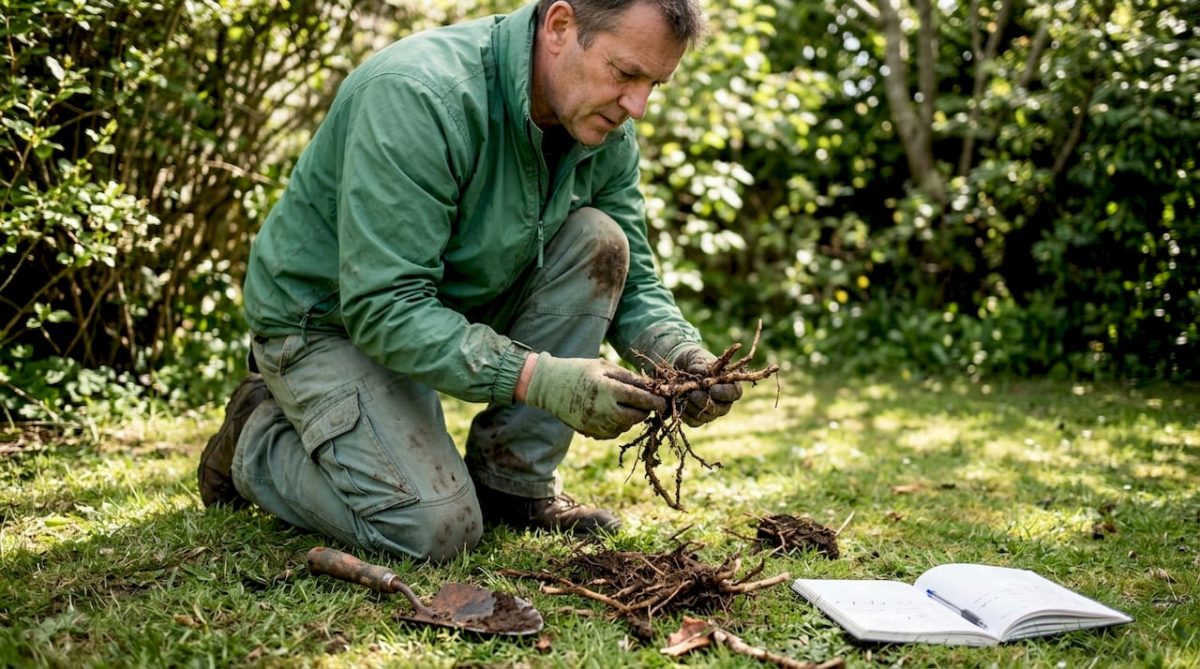
To understand why knotweed defeats so many treatment attempts, you need to look below the surface. The plant’s true strength lies not in its towering stems or broad leaves, but in its extensive underground rhizome network. Rhizomes are thick, root-like structures that store energy, spread laterally, and regenerate the plant even when everything above ground has been destroyed.
According to the Royal Horticultural Society, rhizome fragments as small as 1cm or 0.7g can regenerate entirely new plants, and the underground network spreads up to 3 metres deep and 7 metres laterally, storing energy reserves for years. This means that even a single missed fragment during excavation or treatment can restart the entire infestation.
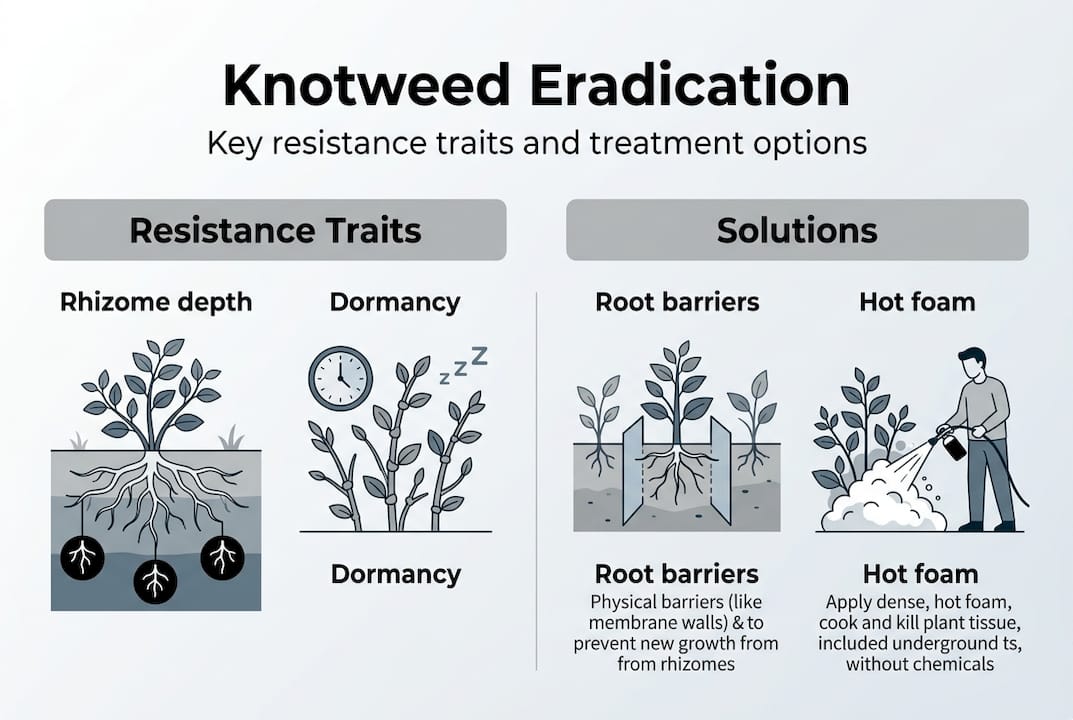
The rhizome network also has the ability to lie dormant. Surface plants may disappear after treatment, giving the impression of success, yet the rhizomes remain viable underground, waiting for conditions to improve before re-sprouting. This dormancy is one of the most deceptive aspects of knotweed and a key reason why homeowners believe they have solved the problem, only to see regrowth months or even years later.
The impact on property value is significant when knotweed persists, and understanding your legal obligations for knotweed is equally important before deciding on a course of action.
| Rhizome characteristic | Detail |
|---|---|
| Minimum regenerative fragment size | 1cm / 0.7g |
| Maximum lateral spread | Up to 7 metres |
| Maximum depth | Up to 3 metres |
| Dormancy period | Several years |
| Energy storage | Extensive, resists surface-only treatment |
Key biological factors that make knotweed so persistent:
- Rhizomes store large reserves of carbohydrates, fuelling regrowth after surface removal
- Fragments spread easily via soil movement, flooding, or poorly managed excavation
- The network actively resists surface-only interventions by redirecting energy underground
- Dormant rhizomes can survive years without producing visible growth
“The underground rhizome network is the true engine of Japanese knotweed. Targeting only what you can see above ground is like cutting the branches of a tree and expecting it not to grow back.”
Why traditional chemical treatments often fail
With the biology explained, it becomes clear why conventional herbicide programmes come up short for so many homeowners. Surface sprays, even when applied correctly, only top-kill the visible plant. The rhizomes survive, draw on their stored energy, and re-sprout, often more vigorously than before.
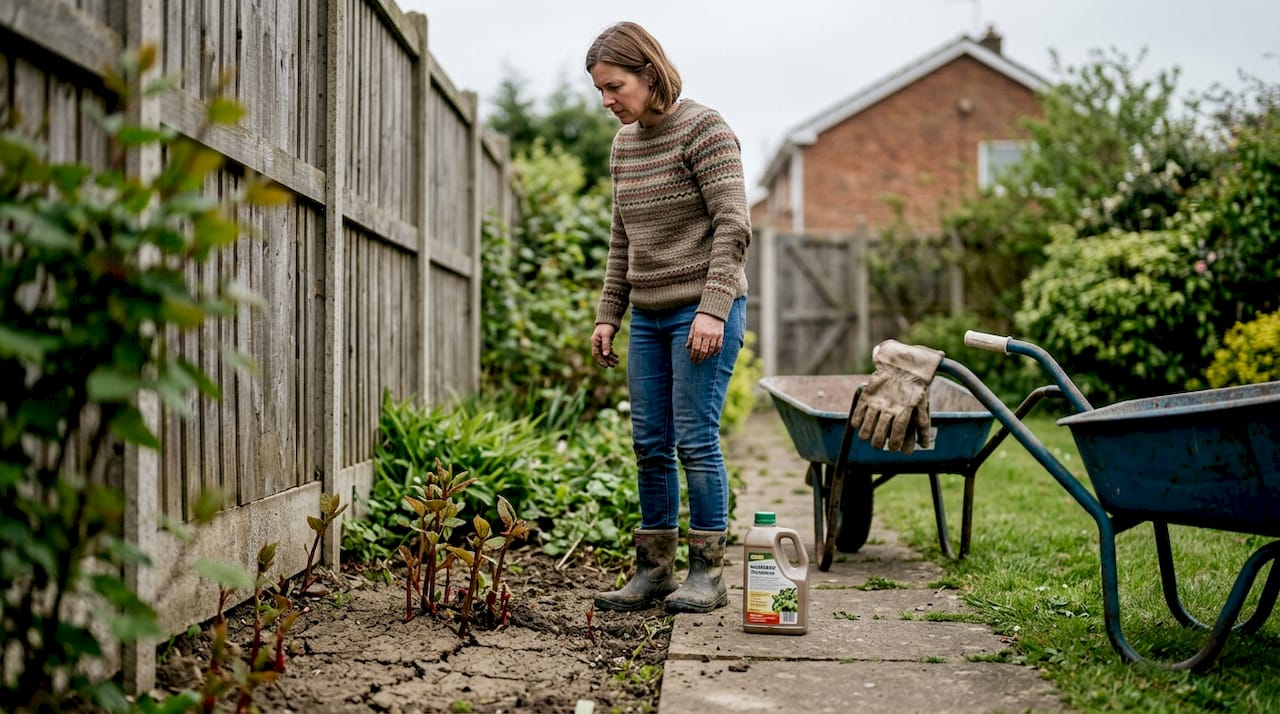
Repeated chemical exposure compounds the problem. Glyphosate failure rates reach 20 to 30% after repeated exposures over 5 to 10 years, with resistant rhizomes often persisting long after treatment programmes conclude. The plant adapts, and the herbicide resistance in knotweed becomes a genuine obstacle to eradication rather than a manageable setback.
Even the most diligent herbicide programme, following official guidance, typically requires three or more years of consistent application and still achieves full success in fewer than 80% of cases. Late summer spraying, when the plant is translocating nutrients back to the rhizomes, is more effective than spring treatment, but it is rarely sufficient when used in isolation.
Common mistakes that make chemical treatment less effective:
- Spraying in spring when the plant is actively growing upward rather than storing energy downward
- Cutting stems before or immediately after spraying, which reduces herbicide uptake
- Treating only the visible boundary of the infestation rather than the full rhizome extent
- Failing to follow up in subsequent seasons, allowing partial recovery
- Using domestic herbicide products rather than professional-grade formulations
| Treatment approach | Typical timeframe | Success rate | Lender compliance |
|---|---|---|---|
| Glyphosate herbicide alone | 3 to 5 years | Under 80% | Variable |
| Cutting and removal only | Ongoing | Low | Rarely accepted |
| Professional chemical-free methods | 12 to 24 months | Up to 95% | Generally accepted |
Pro Tip: Cutting knotweed stems without a follow-up treatment plan can actually stimulate rhizome activity. The plant interprets stem removal as damage and redirects energy to produce new shoots. Always consult a specialist before attempting any physical removal.
For homeowners concerned about mortgage issues with knotweed, it is worth noting that lenders are increasingly scrutinising the type of treatment plan in place, not just whether treatment has started.
How chemical-free treatments overcome knotweed resistance
Given the limitations of traditional herbicides, many homeowners and professionals are now turning to chemical-free methods, and the results are compelling. These approaches work by targeting the rhizome network directly, bypassing the biological resistance mechanisms that make chemical treatments so unreliable.
Thermo-electric treatment is the most innovative of these methods. By delivering direct electrical energy of up to 5,000 volts into the plant and its rhizome network, the treatment causes internal cell damage and depletes the energy reserves that the rhizomes depend on for regrowth. Crucially, there is no resistance buildup. The plant cannot adapt to electrical cell destruction in the way it can to repeated chemical exposure. Electrical treatments up to 5000V destroy rhizome cells and are up to 95% effective within one to two years.
Other effective chemical-free approaches include:
- Root barrier installation: Physical membranes installed underground to contain and redirect rhizome spread, protecting structures, boundaries, and neighbouring properties
- Mechanical excavation: Removal of contaminated soil and rhizome material, most practical for smaller, well-defined infestations
- Nutrient depletion: Repeated cutting on a strict schedule to exhaust rhizome energy reserves over one to two growing seasons, as detailed in nutrient depletion techniques
Pro Tip: Root barriers are most effective when installed to a minimum depth of 1.5 metres and extend at least 0.5 metres beyond the known rhizome boundary. Consult our root barrier guidance for specification details relevant to your property type.
For homeowners seeking non-chemical control methods, these approaches also carry significant environmental advantages. There is no risk of herbicide runoff into watercourses, no soil contamination, and no impact on surrounding biodiversity. This makes them the preferred choice for properties near rivers, streams, or ecologically sensitive areas.
Key statistic: Professional chemical-free treatment programmes achieve up to 95% effectiveness within 12 to 18 months, compared to a minimum of three years for herbicide-based programmes with lower overall success rates.
Integrated strategies and key considerations for homeowners
All of this points to one clear conclusion: a single treatment method, applied in isolation, is rarely sufficient for reliable knotweed eradication. The most effective outcomes come from integrating two or three complementary approaches, tailored to the specific characteristics of the infestation and the property.
Before acting, homeowners must also understand their legal position. Under the Wildlife and Countryside Act 1981, you have a legal duty not to cause knotweed to spread to neighbouring land or the wider environment. Excavated knotweed material is classified as controlled waste under Schedule 9 and must be disposed of at a licensed facility. Using chemicals near watercourses requires prior permission from the Environment Agency in England and Wales, or the relevant authority in Ireland. The RHS Japanese Knotweed Guidance confirms that integrated methods combining barriers and electrical treatment deliver the best outcomes.
Key considerations before starting any eradication programme:
- Professional survey first: A specialist survey identifies the full extent of the rhizome network, which is rarely visible from the surface
- Proximity to water: Chemical options are restricted near watercourses; electrical and barrier methods are the appropriate choice
- Boundary proximity: Knotweed spreading to a neighbour’s land creates legal liability; act before the infestation reaches the boundary
- Lender requirements: If you are selling or remortgaging, confirm that your chosen treatment plan meets lender requirements and includes a professional guarantee
- DIY risks: Disturbing rhizomes without a containment plan can spread fragments across the site, significantly worsening the infestation
The effect on property value is directly linked to the quality and compliance of the treatment plan in place. A professionally documented, guarantee-backed programme provides far stronger reassurance to buyers and lenders than a DIY approach.
Pro Tip: Always request a written management plan and treatment guarantee from your specialist. This documentation is often required by mortgage lenders and significantly strengthens your position when selling the property.
For properties near water or in ecologically sensitive locations, protecting homes from knotweed without chemicals is not just preferable, it is often the only legally compliant option available.
Next steps: expert help and innovative solutions
With the science and strategies clearly set out, the next step is to put this knowledge into action with the right professional support. Japanese Knotweed Agency are pioneers of chemical-free eradication across England, Wales, and Ireland, delivering thermo-electric treatment, root barrier installation, and excavation works tailored to each property’s specific needs.

If you are ready to move forward, our chemical-free treatment process provides a clear, step-by-step guide designed specifically for UK and Ireland homeowners. Not sure whether your knotweed is active or dormant? Our guidance on dealing with dormant knotweed will help you identify the signs and plan accordingly. For a complete overview of your options, our full eradication plan covers every stage from initial survey through to long-term monitoring, giving you a compliance-friendly, lender-accepted route to a knotweed-free property.
Frequently asked questions
How long does it take to eradicate knotweed with chemical-free methods?
Professional electrical treatments can achieve eradication in 12 to 24 months, significantly faster than the three or more years typically required for herbicide-based programmes.
What makes Japanese knotweed so hard to remove completely?
Its underground rhizome system is the core challenge. Fragments as small as 1cm can regenerate a full plant, and the network spreads up to 3 metres deep and 7 metres laterally, making complete removal without specialist equipment extremely difficult.
Is it safe to treat knotweed near water without chemicals?
Yes. Non-chemical options such as electrical treatment and root barriers are ideal near watercourses. Using herbicides near water requires Environment Agency permission and carries significant environmental risk if applied incorrectly.
Will lenders accept chemical-free treatments for mortgages?
Many UK lenders now accept professionally documented chemical-free eradication plans provided they include a treatment guarantee and, where appropriate, root barrier installation as part of the programme.