

TL;DR:
- Japanese Knotweed rarely causes structural damage but can impact property value and legal obligations.
- The plant primarily exploits existing weaknesses rather than demolishing sound foundations.
- Early professional inspection, treatment, and transparent disclosure effectively manage risks.
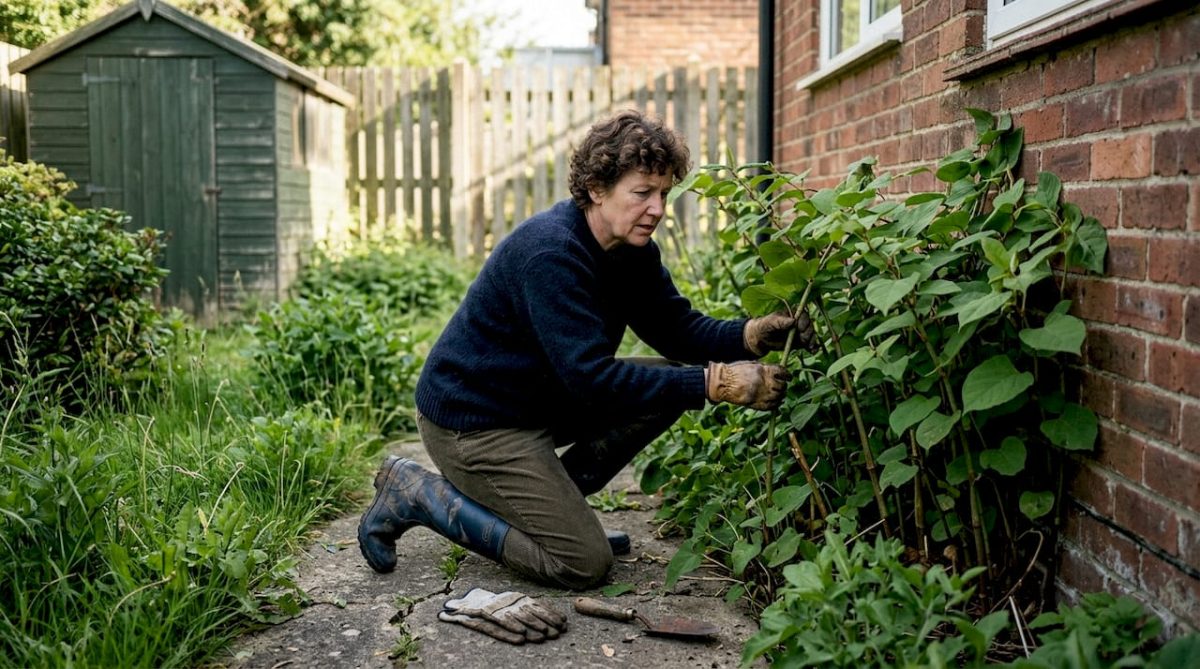
Many homeowners believe that Japanese Knotweed and similar invasive plants will tear through concrete and bring down their house. In reality, this is rarely the case. The true risks are subtler but still serious: reduced property value, complications with mortgage lenders, legal obligations, and the financial cost of specialist treatment. Understanding what these plants actually do to your property, and what they do not do, puts you in a far stronger position to protect your home and your investment.
Table of Contents
- What are invasive plants and why should homeowners care?
- How invasive plants affect foundations and structures
- Do invasive plants affect property value, insurance, or mortgage access?
- Practical steps for homeowners: inspection, treatment, and prevention
- Why the real risk of invasive plants to foundations isn’t what you think
- Get expert help for invasive plants and foundation concerns
- Frequently asked questions
Key Takeaways
| Point | Details |
|---|---|
| Severe damage is rare | Japanese Knotweed and similar plants rarely destroy sound foundations but can worsen existing cracks or weaknesses. |
| Value and legal risks matter most | Property value loss, lender caution, and legal duties often matter more to homeowners than physical structural harm. |
| Expert assessment is essential | Accurate identification and specialist surveys are the safest way to manage invasive plant risks. |
| Timely action prevents problems | Early detection and appropriate management stop small issues from becoming major costs or legal headaches. |
What are invasive plants and why should homeowners care?
With the misconceptions clarified, it is important to understand exactly what invasive plants are and why they attract such attention from property owners and legal bodies alike.
Invasive plants are non-native species that establish themselves aggressively, outcompeting local vegetation and causing ecological and structural disruption. In England, Wales, and Ireland, the most significant offenders for property owners include:
- Japanese Knotweed (Fallopia japonica): The most widely publicised invasive species in the UK and Ireland, capable of pushing through tarmac, paving, and drainage systems. Its extensive rhizome network can extend several metres from the visible plant.
- Giant Hogweed (Heracleum mantegazzianum): A significant health hazard due to its toxic sap, and a regulated species under UK and Irish law.
- Himalayan Balsam (Impatiens glandulifera): Spreads rapidly along watercourses and can destabilise riverbanks, increasing flood risk to nearby properties.
These species spread with remarkable speed. Japanese Knotweed, for example, can grow up to 10 centimetres per day during peak growing season. Invasive species like Japanese Knotweed are a regulated concern for property owners across Ireland and the UK, with legal obligations attached to their management.
Under UK and Irish legislation, homeowners have a legal duty not to allow invasive species to spread beyond their boundaries. Failure to act can result in enforcement notices, civil liability, and complications during property transactions. This is not simply an environmental concern; it is a legal and financial one.
Knowing what Japanese Knotweed looks like at different stages of growth is a practical first step. The RHS guidance on invasive plants provides useful identification information for homeowners who suspect a problem.
Pro Tip: Early identification dramatically reduces treatment costs and legal exposure. If you spot hollow, bamboo-like stems with distinctive shovel-shaped leaves, seek a specialist survey without delay.
How invasive plants affect foundations and structures
Now we know which plants to watch for, it is essential to separate myth from reality about how they actually impact structures.
The media narrative around Japanese Knotweed often portrays it as a plant capable of demolishing homes. The evidence tells a more measured story. Damage mainly occurs where weaknesses like cracks exist, with total structural destruction being rare. Rhizomes exploit pre-existing vulnerabilities rather than creating them in sound, modern construction.
“Recent scientific reviews find that Japanese Knotweed does not cause more serious damage than other common garden plants when structural conditions are sound.”
The following comparison illustrates how different plants compare in terms of foundation risk:
| Plant | Root/rhizome depth | Foundation risk | Most affected structures |
|---|---|---|---|
| Japanese Knotweed | Up to 3 metres | Moderate (exploits cracks) | Shallow foundations, walls, drains |
| Mature tree (e.g. oak) | 6 metres or more | High (moisture extraction) | Deep foundations, clay soils |
| Ivy | Shallow, surface | Low to moderate | Mortar, pointing, render |
The property areas most commonly affected by invasive plant rhizomes include:
- Garden walls and boundary structures
- Paved driveways and patio slabs
- Drainage channels and inspection chambers
- Outbuildings and garages with shallow footings
- Extensions built with older, shallower foundations
Modern deep-pour concrete foundations are generally resilient. Older properties, particularly those built before the 1960s with shallow strip foundations, carry greater risk. Poor drainage around foundations compounds vulnerability, as saturated ground softens the substrate that roots and rhizomes exploit.

For a detailed assessment of knotweed and property damage, including case examples, and to understand property industry impacts more broadly, specialist guidance is always the most reliable source.
Do invasive plants affect property value, insurance, or mortgage access?
Beyond the physical structure, invasive plants can affect your financial security and your ability to sell or insure your home.
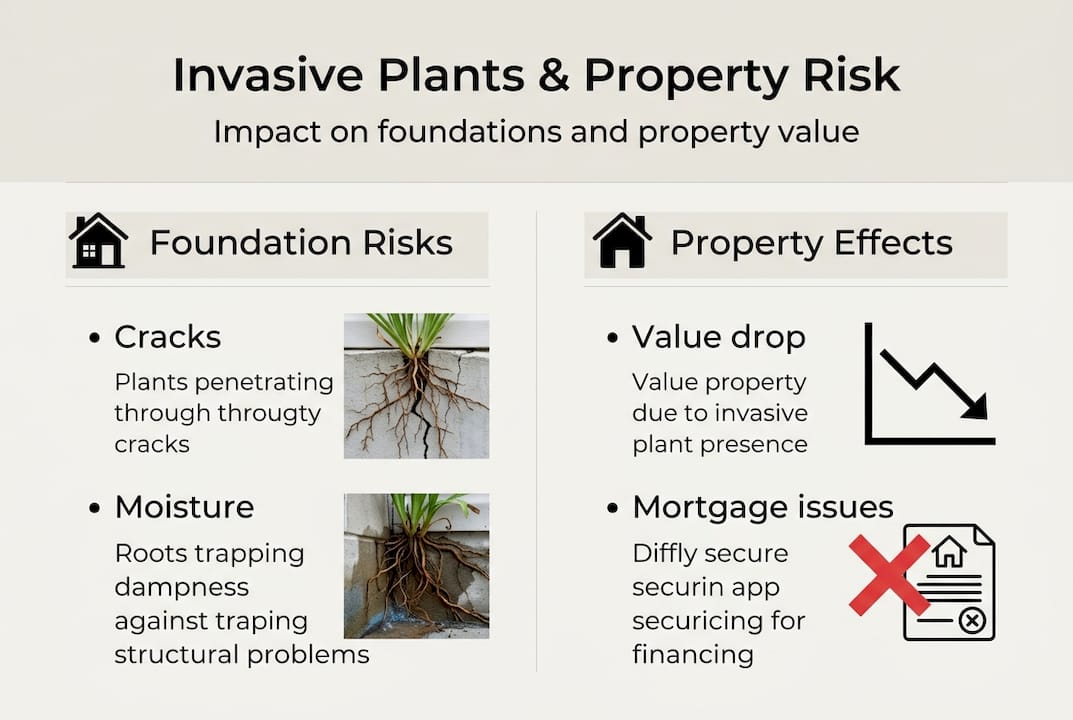
This is where the practical consequences for homeowners become most tangible. Properties with Japanese Knotweed can lose up to 20% of their value and may require a specialist survey and treatment plan before a mortgage lender will proceed.
| Issue | Typical impact |
|---|---|
| Property value reduction | Up to 20% in affected cases |
| Mortgage approval | Many lenders require a management plan |
| Buildings insurance | Some insurers exclude knotweed-related damage |
| Sale conveyancing | Sellers must disclose known invasive plant presence |
Key callout: A 20% reduction in property value is not hypothetical. Lenders and surveyors treat invasive plant presence as a material risk, and buyers are increasingly aware of the implications.
For mortgage purposes, most high-street lenders now require evidence of a professional survey and, in many cases, an active treatment programme with an insurance-backed guarantee. The steps typically required include:
- A site survey by a qualified invasive species specialist
- A written management and treatment plan
- Evidence of treatment commencement or completion
- An insurance-backed guarantee (IBG) from the treatment provider
- Ongoing monitoring documentation where required by the lender
Legal disclosure obligations also apply. Sellers in England, Wales, and Ireland are required to declare known invasive plant issues during conveyancing. Failing to do so can expose sellers to legal action post-completion.
Understanding the impact on property values and the specific mortgage issues with knotweed is essential reading before listing a property or making an offer on one where invasive plants are present or suspected.
Practical steps for homeowners: inspection, treatment, and prevention
If invasive plants are found or suspected, there are clear steps homeowners should take for peace of mind and legal compliance.
Acting early and methodically is the most cost-effective approach. The following sequence applies whether you are buying, selling, or simply managing your existing property:
- Visual inspection: Check for hollow, bamboo-like stems, distinctive heart-shaped leaves, and creamy white flowers in late summer. Look along boundaries, near drainage channels, and around outbuildings.
- Professional survey: Commission a survey from a qualified invasive species specialist. A thorough invasive weed survey will confirm species, extent, and proximity to structures.
- Treatment programme: Select a treatment method appropriate to your property and circumstances. Chemical-free knotweed treatment using thermo-electric technology is an increasingly favoured option, particularly where herbicide use is restricted or undesirable.
- Prevention and root barriers: Following treatment, physical root barriers can be installed to prevent rhizome re-entry from neighbouring land.
- Legal reporting and compliance: The Wildlife Act places a legal duty on homeowners to prevent spread. Keep records of all surveys, treatments, and correspondence.
Pro Tip: Always use a specialist with recognised qualifications and experience in invasive species management. A management plan from an unqualified contractor may not satisfy mortgage lenders or insurers.
Common mistakes to avoid include:
- Attempting DIY removal by cutting or strimming, which spreads rhizome fragments and worsens the problem
- Disposing of knotweed material in general waste, which is illegal under UK and Irish legislation
- Ignoring the issue during a property transaction and hoping it goes unnoticed
- Relying on a single treatment without follow-up monitoring
Understanding foundation inspection costs alongside treatment costs helps homeowners budget realistically and avoid unpleasant surprises during a sale or remortgage.
Why the real risk of invasive plants to foundations isn’t what you think
With practical steps understood, it is worth considering why expert voices and industry perspectives on foundation risk so often clash.
There is a persistent tension between how invasive plants are portrayed commercially and what independent researchers actually find. Industry players highlight severe risks to justify services, but leading experts and researchers consistently find the structural risk overstated. This does not mean the risk is zero. It means the risk is frequently mischaracterised.
From our experience working across England, Wales, and Ireland, the homeowners who face the most serious consequences are rarely those whose foundations have been physically damaged. They are the ones who discovered knotweed during a sale, failed to disclose it, or attempted amateur removal that made the problem worse. The perception of risk, and the legal and financial obligations attached to it, cause far more disruption than the plant itself in most cases.
What actually matters is proactive surveying, transparent disclosure, and calm, methodical management. Understanding how to manage property value risks with expert support is the most rational response to a problem that the media routinely overstates.
Get expert help for invasive plants and foundation concerns
Having clarified both the risks and the reality, the most important step is to act with the support of trusted specialists.

Japanese Knotweed Agency provides professional property surveys for invasive weeds across England, Wales, and Ireland, alongside our pioneering chemical-free thermo-electric treatment programme. Whether you are preparing for a sale, responding to a mortgage requirement, or simply want certainty about your property, we are here to help. Explore our invasive plant FAQs, review our property survey process, or find out more about our chemical-free knotweed solutions. Early action protects your property, your finances, and your peace of mind.
Frequently asked questions
Can Japanese Knotweed actually break through concrete foundations?
Japanese Knotweed rarely breaks through sound concrete; it exploits existing cracks or weaknesses but does not demolish solid, well-constructed foundations. Older properties with shallow strip footings carry the greatest structural risk.
How far can Japanese Knotweed rhizomes spread underground?
Rhizomes spread 2.5 metres horizontally and 1.5 metres deep on average, though exceptional cases have recorded spread up to 7 metres wide and 3 metres deep. This is why professional survey is essential before assuming a plant is contained.
Does Japanese Knotweed always lower property values?
Not always, but property value can drop up to 20% due to lender caution and buyer perception. A documented treatment plan with an insurance-backed guarantee can significantly reduce this impact.
Do I have to report invasive plants or Japanese Knotweed on my property?
You are not required to report to a government body, but the Wildlife Act places a legal duty on you to prevent spread to neighbouring land. During a property sale, you must disclose known invasive plant presence or face potential legal liability.