TL;DR:
- Invasive plant certification refers to professional qualifications, not homeowner-issued certificates.
- Lenders and insurers require documented evidence from accredited specialists for property transactions.
- The certification process includes survey, management plan, treatment, monitoring, and insurance-backed guarantee.
When mortgage lenders or solicitors ask for ‘invasive plant certification’, most homeowners assume there is a straightforward document to obtain. There is not. The reality is considerably more involved, and misunderstanding this process can stall or even collapse a property transaction. UK invasive plant issues affect far more properties than most people realise, and the documentation lenders demand goes well beyond a simple certificate. This guide cuts through the confusion, explaining precisely what invasive plant certification means, why it matters for buyers and sellers across England, Wales, and Ireland, and what steps you need to take to protect your property and your sale.
Table of Contents
- What invasive plant certification really means
- Why invasive plant certification matters for property transactions
- How the certification process works
- The law and invasive plant certification: Homeowner responsibilities
- What most guides miss about invasive plant certification
- Take the next step: Get expert help with invasive plant certification
- Frequently asked questions
Key Takeaways
| Point | Details |
|---|---|
| No single certificate | Lenders require a management plan and guarantee from accredited professionals, not a homeowner-issued document. |
| Protect property value | Proper certification prevents lost value, smooths transactions, and satisfies insurance needs. |
| Follow legal obligations | Homeowners must use accredited experts and prevent the spread of invasive plants by law. |
| Choose trusted specialists | The competence of your provider matters more than simply getting a certificate. |
What invasive plant certification really means
The term ‘invasive plant certification’ is widely used but frequently misunderstood. It does not refer to a certificate issued to a homeowner confirming their garden is clear. Rather, invasive plant certification refers to professional qualifications, accreditations, and certifications provided by bodies like the Property Care Association (PCA) for technicians and surveyors managing invasive plants such as Japanese Knotweed. In short, the certification belongs to the specialist, not the homeowner.
Several recognised bodies and qualifications form the backbone of this professional framework:
- PCA CSJK (Certificate of Competence in the Management of Japanese Knotweed): The leading industry qualification for surveyors and treatment technicians.
- INNSA (Invasive Non-Native Specialists Association) membership: A professional body whose members adhere to strict codes of practice for invasive species management.
- RICS-recognised surveys: Surveys conducted in line with Royal Institution of Chartered Surveyors guidance, particularly relevant to mortgage valuations.
- Accredited management plans: Formal documents produced by qualified specialists that outline treatment, monitoring, and long-term control strategies.
Lenders and solicitors do not accept DIY removal efforts or reports from unqualified individuals. They require documented evidence from accredited specialists whose professional credentials can be independently verified. Anything less is likely to be rejected outright.
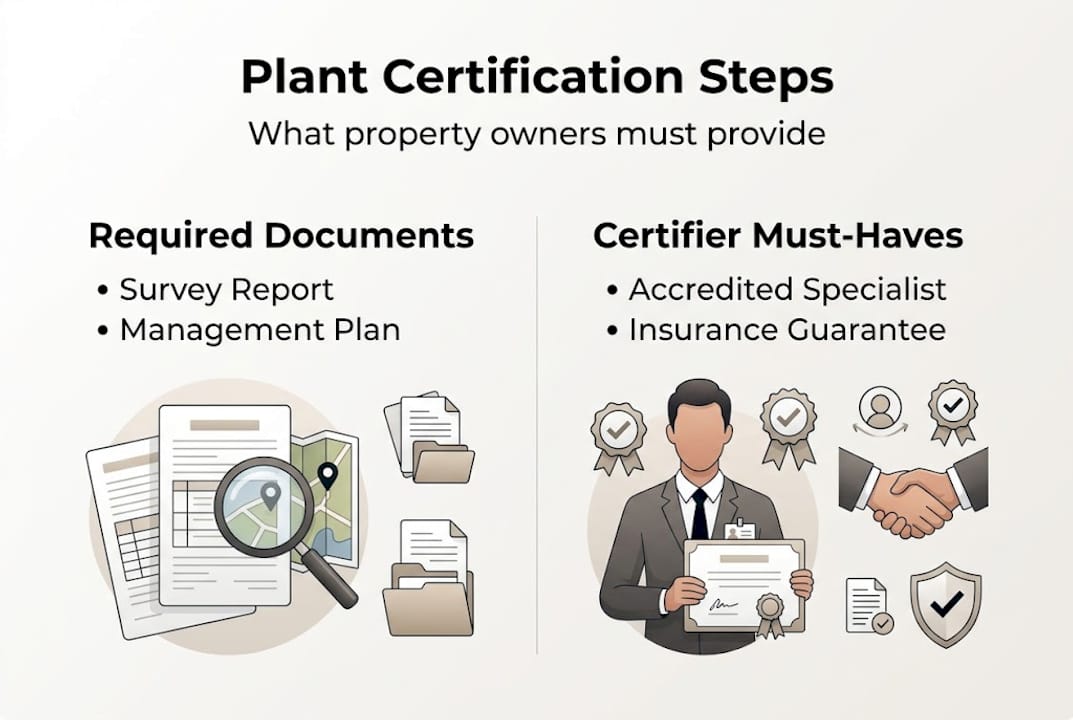
This distinction matters enormously when you are trying to sell or remortgage. The Japanese Knotweed property impact on transactions is well-documented, and lenders have tightened their requirements accordingly. What satisfies legal and financial compliance is a combination of an accredited survey, a professionally produced management plan, and in most cases an Insurance-Backed Guarantee. There is no single certificate for homeowners; instead, you rely entirely on the credentials and documentation produced by accredited professionals working on your behalf.
Why invasive plant certification matters for property transactions
Understanding ‘certification’ is one thing. Realising why it is crucial when buying or selling a property is another entirely. Mortgage lenders view Japanese Knotweed as a structural and financial risk. Its rhizomes can push through tarmac, compromise drainage systems, and undermine foundations. Insurers share similar concerns, and both will scrutinise any evidence of invasive plant presence before proceeding.
The scale of the problem is significant. Japanese Knotweed affects over 1.2 million UK properties, reducing property values by 5 to 15 per cent, with treatment costs ranging from £2,500 to over £15,000. Rhizomes extend up to 7 metres horizontally and 3 metres deep, meaning even a small visible patch can signal a much larger underground network.
For property transactions, the key document is a Japanese Knotweed Management Plan from a PCA or INNSA accredited specialist, typically accompanied by a 5 to 10 year Insurance-Backed Guarantee (IBG). This combination is what lenders across England, Wales, and Ireland recognise as satisfactory evidence of control.
| Requirement | England | Wales | Ireland |
|---|---|---|---|
| Management plan required | Yes | Yes | Yes |
| Insurance-Backed Guarantee | Usually required | Usually required | Recommended |
| Accredited specialist survey | Mandatory | Mandatory | Strongly advised |
| RICS-aligned assessment | Common for mortgage | Common for mortgage | Less standardised |
Addressing mortgage challenges early in a transaction is always preferable to discovering problems during conveyancing. The property value risks are real, and house insurance guidance confirms that undisclosed invasive plant issues can also affect policy validity.
Pro Tip: Always verify that your documentation comes from a PCA or INNSA accredited provider. Most lenders will only accept evidence from specialists holding these credentials, so confirm accreditation before commissioning any survey or treatment.
How the certification process works
Now that the importance and documents are clear, here is exactly what you can expect from start to finish. The process is structured and sequential. Skipping stages or cutting corners will almost certainly result in documentation that lenders and solicitors refuse to accept.
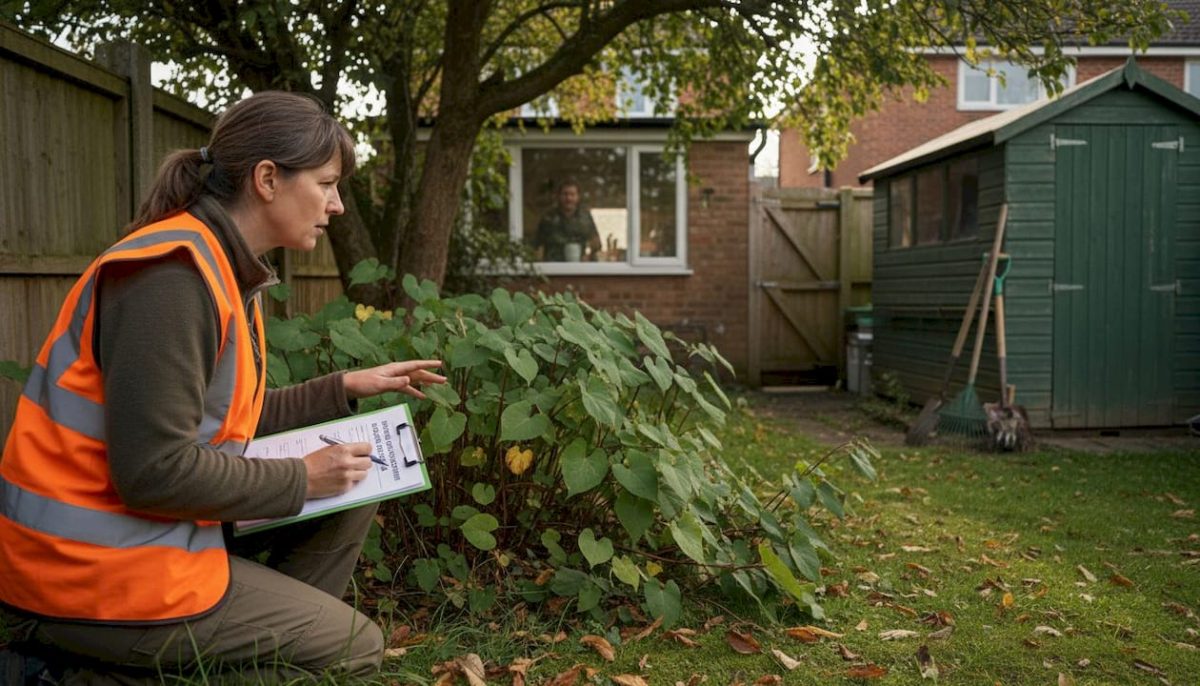
- Initial contact and site assessment: A qualified specialist visits the property to assess visible growth and gather information about the extent of the infestation.
- Formal survey and RICS categorisation: The weed survey process assigns a RICS category (A through D) based on proximity to the property and severity of risk. Category A represents the highest risk; Category D indicates low risk with no structural threat.
- Management plan production: The specialist produces a formal management plan detailing the agreed treatment method, schedule, and monitoring requirements.
- Treatment delivery: Options include herbicide application (typically glyphosate-based), thermo-electric treatment, and excavation. A specialist survey will identify the most appropriate method based on site conditions and client preference.
- Monitoring visits: Regular monitoring confirms that treatment is effective and that regrowth is being addressed. This stage is essential for IBG issuance.
- Insurance-Backed Guarantee issued: Once treatment and monitoring milestones are met, the IBG is issued by the specialist’s insurer, providing long-term protection for both the current and future owners.
For those seeking chemical-free solutions, thermo-electric treatment delivers direct energy up to 5,000 volts into the plant, causing internal cell damage and depleting energy reserves within the rhizome network without the use of herbicides. It is a genuinely innovative alternative that satisfies accreditation requirements. Use the survey checklist to prepare before your specialist visits, and familiarise yourself with your obligations around reporting knotweed on or near your land.
Pro Tip: Retain every survey report, treatment record, and monitoring visit note. Future buyers, lenders, or insurers may request this documentation, and having a complete paper trail significantly smooths subsequent transactions.
The law and invasive plant certification: Homeowner responsibilities
At every step, legal compliance is essential. The legislative framework governing invasive plant management in England, Wales, and Ireland is clear, and ignorance of it is not a defence.
The primary legal basis rests on three instruments: the Wildlife and Countryside Act 1981, which prohibits causing Japanese Knotweed to spread to wild land; the Environmental Protection Act 1990, which classifies knotweed as controlled waste requiring specialist disposal; and in Ireland, S.I. No. 477/2011, which mirrors these obligations under Irish environmental law.
As a homeowner, your responsibilities include:
- Preventing spread: You must not allow Japanese Knotweed to spread beyond your property boundary, whether through garden waste, soil movement, or inadequate treatment.
- Correct disposal: Knotweed material is classified as controlled waste and cannot be placed in domestic bins or composted. It must be disposed of by licensed contractors.
- Using accredited professionals: Engaging unqualified individuals for treatment or disposal can expose you to prosecution if the infestation spreads or waste is handled incorrectly.
- Disclosure obligations: Sellers in England and Wales must disclose known invasive plant issues on the TA6 property information form. Failure to do so can result in legal claims from buyers.
The most significant legal risk for homeowners is liability for spread onto neighbouring land. If knotweed from your property colonises a neighbour’s garden or a public space, you may face civil claims or regulatory action. Professional, accredited management is your most effective protection.
Engaging with compliance guidance early ensures you understand your obligations fully and act within the law throughout the management process.
What most guides miss about invasive plant certification
Most articles on this subject focus on process and paperwork, and while those elements matter, they miss the more important point. The real value in invasive plant certification lies not in any single document, but in the credibility and track record of the specialist you choose to work with.
Treating certification as a tick-box exercise is a genuine risk. A low-cost provider who produces a management plan without rigorous survey methodology or proper monitoring will issue documentation that lenders may still reject, or that fails to hold up if a future buyer challenges the work. The paper exists, but the substance behind it does not.
A robust, accredited management plan backed by a credible IBG holds far more weight than any shortcut. When mortgage pitfalls arise mid-transaction, it is almost always because the original documentation was inadequate, not because certification was unavailable.
Pro Tip: If a provider offers to skip the survey stage, or if their pricing seems unusually low, treat this as a serious warning sign. Lenders and solicitors will scrutinise the methodology behind any documentation, and gaps will surface at the worst possible moment.
Professional documentation from a genuinely accredited specialist can mean the difference between a smooth, confident sale and years of legal and financial difficulty.
Take the next step: Get expert help with invasive plant certification
Navigating invasive plant certification does not have to be overwhelming. The key is starting with a qualified survey from an accredited specialist who understands what lenders, solicitors, and insurers actually require.

Japanese Knotweed Agency carries out professional property surveys for invasive weeds across England, Wales, and Ireland, offering both chemical-free thermo-electric treatment and traditional options including excavation and root barrier installation. Whether you are preparing for a sale, responding to a lender’s request, or simply want certainty about your property, we are here to help. Explore our additional FAQs, review the eradication plan guide, or learn more about our pioneering chemical-free treatment process to take your first confident step forward.
Frequently asked questions
Is invasive plant certification required by law for homeowners?
No, but you are legally required under the Wildlife and Countryside Act 1981 to prevent spread and to use accredited professionals for compliant disposal and treatment.
What documents do lenders or buyers usually ask for?
Lenders typically require a management plan and an Insurance-Backed Guarantee issued by a PCA or INNSA accredited specialist, as these are the documents recognised across England, Wales, and Ireland.
Can I get invasive plant certification if I remove Japanese Knotweed myself?
No. Only accredited specialists can produce the surveys and guarantees that lenders and insurers recognise. DIY removal, however thorough, does not satisfy these requirements.
How long does the certification process take?
From initial survey to IBG issuance, the full process typically takes several weeks to several months, depending on the severity of the infestation and the treatment method selected.