

TL;DR:
- Excavation provides a chemical-free, definitive method for removing Japanese Knotweed’s underground rhizomes, ensuring faster and more certain results. It is legally compliant, addresses the root of the infestation, and offers a clear timeline, making it ideal for urgent projects or property transactions. However, professional assessment and adherence to regulations are essential to prevent spread and guarantee long-term success.
Japanese Knotweed is one of the most persistently destructive invasive plants in England, Wales, and Ireland. Its rhizome network can extend several metres underground and push through tarmac, concrete, and structural foundations. For homeowners confronting an infestation, the choice of removal method carries real consequences: legal, financial, and ecological. Excavation stands out as a proven, chemical-free route that removes viable plant material directly from the ground, offering speed, certainty, and compliance with UK and Irish regulations. This article covers every key advantage you need to make an informed decision.
Table of Contents
- Setting your criteria: what matters when removing invasive plants
- Direct removal: the main advantage of excavation methods
- Project certainty and speedy results: timing as a core benefit
- Regulatory compliance: a hidden but vital advantage
- When excavation is right — and when it isn’t
- The real-world lesson: why expertise beats shortcuts in knotweed removal
- Take the next step: trusted help for chemical-free knotweed control
- Frequently asked questions
Key Takeaways
| Point | Details |
|---|---|
| Excavation enables direct removal | Physically removing knotweed roots and rhizomes gives the best shot at stopping regrowth. |
| Speed and project control | Excavation delivers rapid, certain results compared to slow chemical or covering approaches. |
| Legal compliance matters | The full benefits of excavation depend on meeting strict disposal laws—ignoring them risks re-infestation. |
| Professional expertise is essential | DIY attempts can backfire; specialist teams minimise risk and ensure effective containment. |
Setting your criteria: what matters when removing invasive plants
Before selecting any removal method, it is essential to establish your priorities clearly. Invasive plant removal is not a simple gardening task. It involves legal obligations, environmental risk, and often significant ground disturbance. Getting your criteria right at the outset saves time, money, and considerable stress.
The core factors every homeowner should weigh include:
- Health and safety: Disturbing knotweed rhizomes carelessly can accelerate spread, endangering your property and your neighbours’.
- Legal compliance: Both England and Wales operate under strict rules covering how knotweed material must be handled, transported, and disposed of.
- Project timescale: Some methods take months or even years, while others can be completed within days.
- Budget and access: Ground conditions, site access, and infestation size all influence cost and feasibility.
- Expected outcome: Some approaches suppress growth; excavation physically eliminates the source.
Understanding your knotweed legal obligations is particularly important before work begins. RPS 178 requires a management plan that sets out how you will dig up, treat, or bury material to prevent further growth or spread beyond the site. It also specifies disposal and containment requirements for Japanese Knotweed materials. This is not optional. It is a legal framework that shapes every credible removal project.
For homeowners in England, Wales, and Ireland, understanding regulations before engaging a contractor ensures you ask the right questions and avoid costly non-compliance later.
Pro Tip: Before requesting any contractor quote, ask specifically whether they will produce a management plan compliant with RPS 178 and what their licensed waste disposal route is. A reputable specialist will answer both questions confidently.
Direct removal: the main advantage of excavation methods
Having set the decision criteria, let us examine why excavation stands out for direct removal. The fundamental problem with knotweed is not what you can see above ground. It is the extensive underground rhizome network, which can regenerate from a fragment as small as a one-centimetre piece of root. Surface-level cutting, covering, or even some spraying programmes address the visible shoots, yet leave viable material below ground ready to return the following growing season.
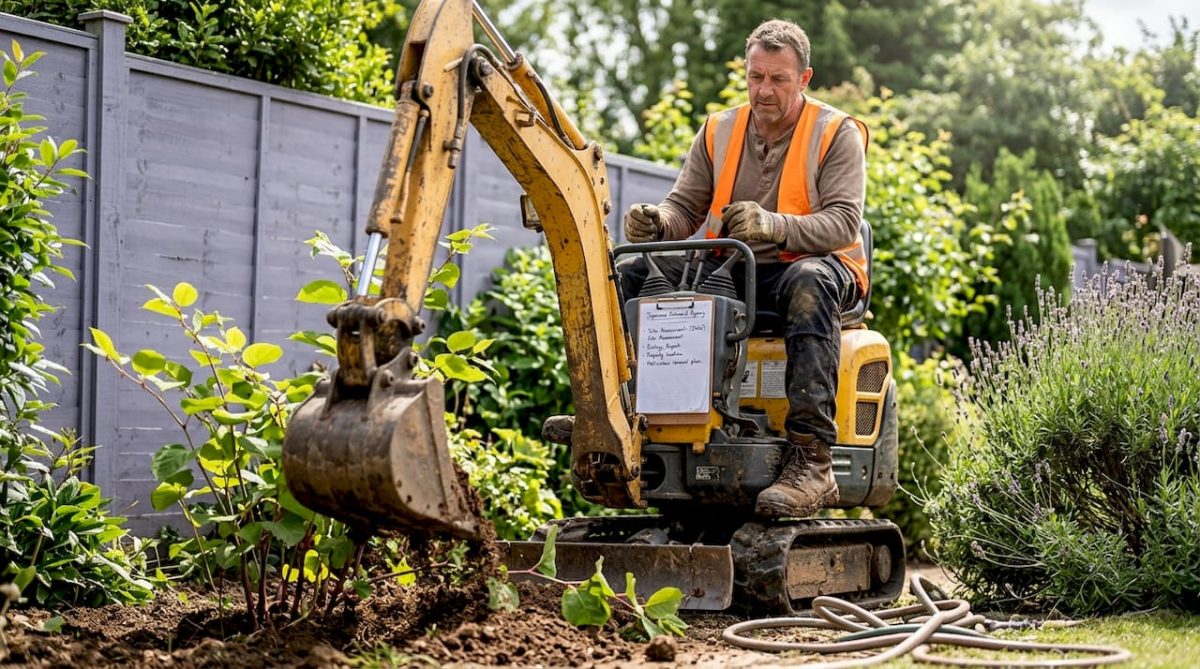
Excavation removes this underground material physically and permanently, provided the work is scoped correctly. The primary advantages of this direct approach include:
- Elimination at source: The rhizome mass is physically extracted, removing the energy reserves the plant relies on for regeneration.
- Reduced repeat treatments: Rather than suppressing growth cycle after cycle, excavation reduces or removes the need for long-term management programmes.
- Underground reach: Professional excavation works to the depths where viable material resides, typically beyond what any surface treatment can access.
- Auditability: Excavated material can be quantified and disposed of via licensed routes, providing a documented record of remediation.
As noted in guidance for practitioners, properly scoped excavation offers a direct, mechanical route to remove viable underground material rather than suppress growth. This is a significant distinction. Suppression requires ongoing intervention; removal addresses the issue at its root, quite literally.
For a detailed account of the excavation process and what to expect on site, the guidance on excavation for knotweed removal provides a thorough breakdown. It is also worth noting that root barrier installations can complement excavation by preventing lateral spread during and after works, making weed barrier solutions a useful supporting measure for specific boundary situations.
“Excavation physically addresses the rhizome network below the surface, offering a degree of certainty that surface treatments and suppression methods simply cannot match. It is the approach most suited to urgent clearance and construction-sensitive situations.”
Project certainty and speedy results: timing as a core benefit
Beyond removal effectiveness, time is often crucial. Here is how excavation influences project certainty. If you are preparing a site for construction, securing a mortgage valuation, or simply need the problem resolved before the growing season accelerates, excavation offers something that chemical and covering methods cannot: a defined endpoint.
Chemical management programmes typically require three to five growing seasons to produce a manageable result. Covering or burying without professional oversight delays rather than resolves the problem. In contrast, professionally scoped excavation can be completed within days for residential properties, with clearance certificates issued on completion. The strongest evidenced advantages of excavation are direct removal of contaminated rhizome material and programme-time certainty when ground disturbance or clearing is needed urgently.
| Method | Typical completion time | Programme certainty | Chemical use |
|---|---|---|---|
| Professional excavation | Days to weeks | High | None |
| Chemical treatment programme | 3 to 5 seasons | Moderate | Yes |
| Root barrier installation | Days (ongoing monitoring) | Moderate to high | None |
| Covering or burying (unmanaged) | Indefinite | Low | None |
| Thermo-electric treatment | Multiple sessions over seasons | High | None |
This comparison illustrates clearly that when speed and certainty are priorities, excavation is the only method that delivers a defined timeline. For homeowners facing legal deadlines or property sales, this distinction is critical. You can find practical guidance on preparing for excavation to ensure the site is ready and works proceed without delay.
There is also real merit in reviewing the excavation versus treatment comparison in detail, particularly if your property has a mix of infested zones with differing access conditions.
Pro Tip: Schedule excavation works for late autumn or early winter when knotweed is in dormancy. The rhizomes are easier to identify and trace at this time, which can improve extraction thoroughness and reduce the risk of leaving viable fragments. Adopting time-saving strategies for site preparation beforehand also reduces overall project duration.
Regulatory compliance: a hidden but vital advantage
Speed and efficacy are crucial, but the legal side cannot be ignored. Here is why compliance matters as much as the physical removal itself. In England and Wales, Japanese Knotweed is listed under Schedule 9 of the Wildlife and Countryside Act 1981. In Ireland, it falls under the European Communities (Birds and Natural Habitats) Regulations 2011. Both frameworks impose strict obligations on landowners.
Excavation, when carried out by qualified specialists, provides a structured compliance pathway that informal methods do not. The key legal steps involved are:
- Management plan preparation: Before any soil is moved, a written plan must set out the scope of works, containment approach, and disposal route.
- Licensed waste contractors: All knotweed material must be transported and disposed of via licensed waste management routes. It cannot be taken to a standard household waste facility.
- Documentation and record keeping: Records of excavation, material quantities, disposal certificates, and contractor credentials must be maintained.
- Post-works monitoring: A documented monitoring schedule provides evidence that regrowth is being managed and that the site remains compliant.
- Notification where required: In some cases, neighbouring landowners or local authorities may need to be informed, particularly where spread risk exists.
Chemical-free excavation approaches for knotweed are strongly linked to strict handling and waste-control steps, and the advantage of this method depends entirely on compliance with these legal disposal and containment requirements. Furthermore, incorrect disposal can restart infestations and carries legal liability.
Understanding your full legal duties for homeowners before works commence is one of the most protective steps you can take. Non-compliance is not merely a procedural issue; it can result in enforcement action, civil liability if spread reaches a neighbour’s property, and complications during property sale.
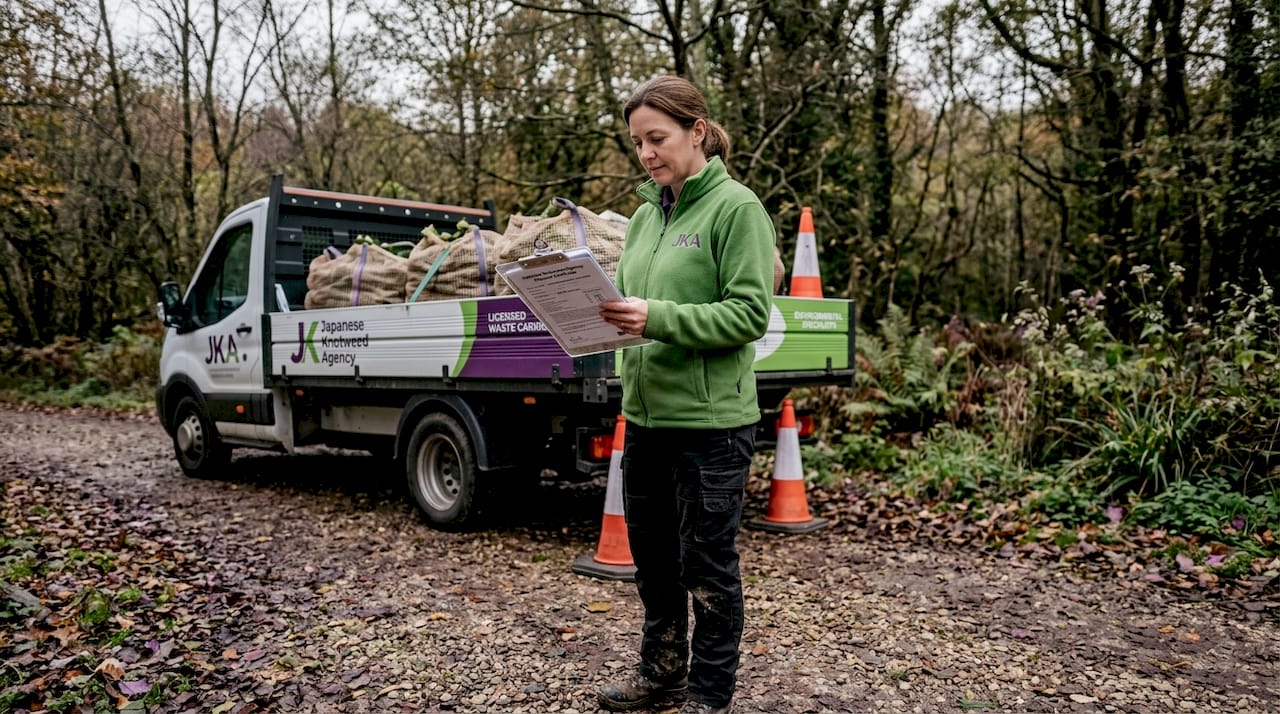
Pro Tip: Request a copy of your contractor’s waste carrier licence and disposal certificates on completion. These documents are proof of compliant removal and are increasingly requested by mortgage lenders and solicitors during property transactions.
When excavation is right — and when it isn’t
With compliance and speed addressed, let us clarify in which scenarios excavation excels and where caution is warranted. Excavation is not universally appropriate. Site conditions, infestation depth, and access constraints all influence whether it is the correct primary approach.
Excavation is particularly well suited when:
- The infestation is moderate to large and established over multiple growing seasons.
- The property is subject to a construction programme, planning application, or imminent sale.
- The site offers adequate access for machinery and spoil removal.
- Underground utilities have been surveyed and cleared.
- A qualified contractor can undertake controlled, deep excavation with full compliance oversight.
Excavation carries risk when:
- Attempted without professional supervision, as fragmenting rhizomes without full extraction can significantly worsen spread.
- Undertaken where underground services have not been identified.
- Carried out in environmentally sensitive areas without appropriate ecological checks.
- Used as the sole method where access prevents complete extraction, leaving viable rhizome material behind.
In Ireland, homeowners are specifically advised not to dig out or break up the rhizome system unless it is part of controlled deep excavation works, reflecting the expert understanding that DIY excavation can increase spread rather than reduce it. This is a particularly important caution for those considering self-managed removal.
The detailed comparison available in the excavation versus other methods guide helps clarify which approach best suits your property’s specific conditions. For more demanding or confined site conditions, specialist tools such as professional digging tools can support precision extraction in smaller areas under qualified supervision.
| Scenario | Recommended approach |
|---|---|
| Pre-construction clearance with full access | Professional excavation |
| Residential garden, partial access | Excavation plus root barrier |
| Small infestation, no immediate deadline | Thermo-electric treatment programme |
| Large infestation near watercourse | Professional excavation with ecological survey |
| DIY without expert oversight | Not recommended |
The real-world lesson: why expertise beats shortcuts in knotweed removal
Based on considerable hands-on experience working with homeowners across England, Wales, and Ireland, the pattern is consistent. Homeowners who attempt partial excavation, or who engage contractors without adequate knotweed-specific credentials, regularly find themselves facing a more entrenched problem six to twelve months later. The plant is extraordinarily resilient. A single fragment of rhizome, left in disturbed soil, can generate a new plant. Disturbed ground also accelerates germination from fragments that might otherwise have remained dormant.
The uncomfortable reality is that knotweed does not respond proportionally to effort. You can invest significant time and money in a partial solution and achieve a worse outcome than if you had left the plant undisturbed while arranging professional assessment. This is not a theoretical risk; it is a documented pattern seen repeatedly in remediation projects where earlier, informal attempts at removal made the subsequent professional works more complex and costly.
Expertise matters at every stage. Accurate surveying identifies the true extent of the rhizome network before a single spade enters the ground. Properly scoped excavation ensures all viable material is removed within the works. Compliant disposal prevents legal liability and prevents reinfestation from inadequately contained waste. Post-works monitoring catches any regrowth before it re-establishes.
The guidance on chemical-free excavation insights outlines how a structured, professional approach differs fundamentally from informal attempts. The difference is not merely one of scale or equipment. It is one of knowledge: understanding where the rhizome network extends, how deep viable material persists, and what the law requires at every stage of removal and disposal. Shortcuts in knotweed management do not save money. They defer and amplify the problem.
Take the next step: trusted help for chemical-free knotweed control
Understanding the advantages and limitations of excavation is an important first step, but knowledge alone does not remove the plant from your land. Japanese Knotweed Agency are specialists in chemical-free management, offering thermo-electric treatment, root barrier installation, and fully scoped excavation across England, Wales, and Ireland.
Our chemical-free solutions achieve a 95% success rate, supported by property surveys, management plans, and full regulatory compliance at every stage. Whether you need a rapid pre-sale clearance or a long-term management programme, we provide clear, actionable guidance and documented outcomes that satisfy mortgage lenders and solicitors alike. Follow our step-by-step guidance to understand what a professional programme involves and how to prepare your property for effective, lasting results.
Pro Tip: Keep a detailed photographic record of your knotweed infestation from the outset, including before and after each treatment or excavation stage. This documentation supports any future property valuation and demonstrates compliance to lenders or legal advisers.
Frequently asked questions
Do I need a licence to excavate Japanese Knotweed from my property?
You do not need a personal licence to excavate on your own land, but RPS 178 requires a formal management plan covering how material will be dug, contained, and disposed of, with records maintained throughout.
How deep do I need to excavate to fully remove knotweed?
Controlled deep excavation is typically required to depths of two to three metres to extract all viable rhizomes, though site-specific conditions and professional assessment will determine the precise scope.
Can I dispose of knotweed waste with household rubbish?
No. Knotweed waste must be transported and disposed of at a licensed landfill site, as incorrect disposal can restart infestations and carries legal liability for the landowner.
Is excavation always the safest method for invasive plant removal?
Excavation is only safe and effective when professionally controlled. As DIY excavation can increase spread unless carried out as part of controlled deep works, unmanaged attempts frequently worsen infestations.
Will excavation guarantee knotweed never returns?
Excavation substantially reduces regrowth risk, but long-term success depends on thorough extraction, compliant disposal, and professional post-works monitoring to catch any residual regrowth promptly.