TL;DR:
- Environmental weed risk assessment scores plants based on invasiveness, ecological impact, and potential distribution, guiding legal management actions. Accurate identification and professional surveys are essential to prevent ecological harm and property devaluation caused by invasive species like Japanese Knotweed. Integrated management combining cultural, mechanical, biological, and chemical controls provides the most sustainable long-term weed control outcomes.
Not every unwanted plant in your garden poses the same threat. Understanding what is environmental weed risk matters because the consequences of misidentifying a truly invasive species — or failing to act on one — can extend far beyond your boundary fence. Environmental weed risk affects native biodiversity, land usability, property values, and in some cases your legal obligations as a landowner. This article covers how risk is formally assessed, how to identify environmental weeds accurately, what the real ecological and economic impacts look like, and which management strategies actually work over the long term.
Table of Contents
- Key takeaways
- Defining environmental weed risk
- How to identify environmental weeds
- Impacts on ecosystems and property
- Environmental weed management strategies
- My perspective on weed risk
- How Japaneseknotweedagency can help
- FAQ
Key takeaways
| Point | Details |
|---|---|
| Not all weeds are equal threats | Environmental weed risk is formally scored across invasiveness, ecological impact, and potential spread before any designation is made. |
| Identification accuracy is critical | Misidentifying plants leads to unnecessary removal of native species or, worse, leaving a genuinely harmful invader untreated. |
| Ecosystem disruption is measurable | Invasive weeds displace native species, reduce biodiversity, lower land usability, and can affect property valuations. |
| Integrated management outperforms chemicals alone | Combining cultural, mechanical, and targeted treatments delivers more sustainable results than reactive spraying. |
| Professional surveys save time and money | A specialist survey confirms weed presence, legal status, and the most appropriate management pathway for your specific site. |
Defining environmental weed risk
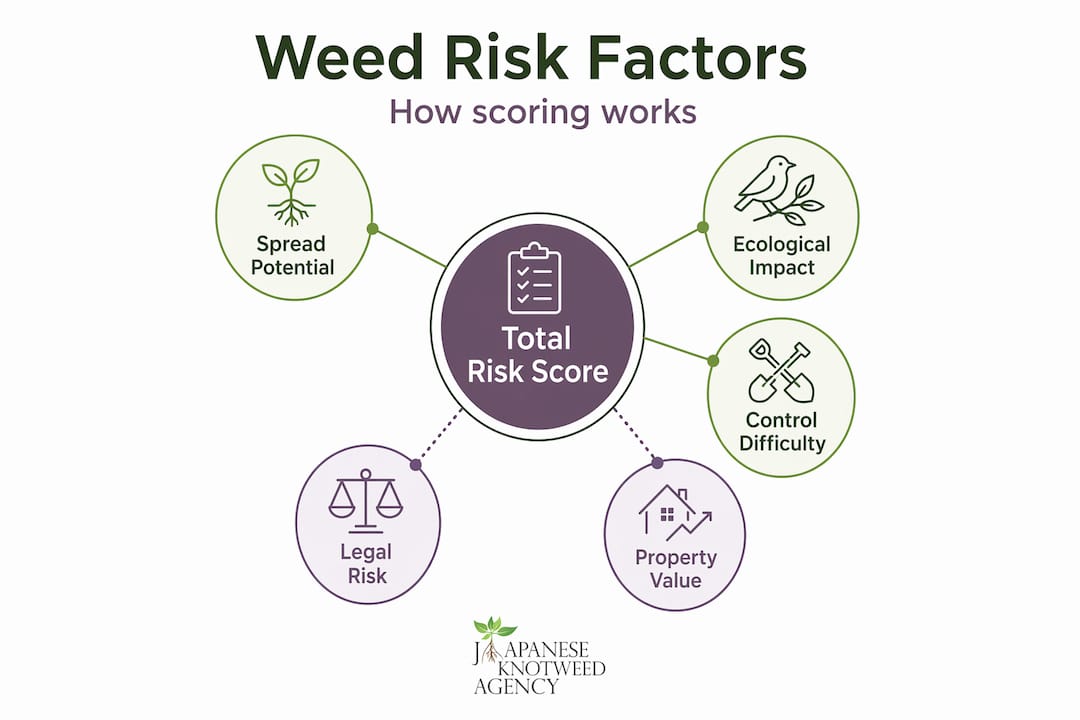
Environmental weed risk is not a simple yes-or-no judgement. It is a structured, multi-factor assessment that scores a plant species across three core criteria: invasiveness, ecological impact, and potential distribution. Each factor is weighted and scored, and the combined result determines how a species is classified and managed under legislation.
In formal assessment frameworks, weed risk is scored with each factor potentially reaching up to 10 points. A high combined score triggers a priority designation, which may result in a species being listed as restricted, noxious, or prohibited. Sicklebush (Dichrostachys cinerea), for example, receives a high-priority designation in northern Western Australia because of its capacity to colonise vast areas of native rangeland rapidly.
These legal categories carry real obligations. A restricted weed may not be sold or traded. A noxious weed may require mandatory control on private land. Understanding where a plant sits within these classifications is not academic. It directly determines what a landowner is required to do.
Here is how the core assessment criteria typically break down:
- Invasiveness: How readily does the species establish, spread, and persist in new environments?
- Ecological impact: Does it displace native vegetation, alter soil chemistry, or outcompete food sources for native fauna?
- Potential distribution: Could the species colonise a wide range of habitats beyond its current range given existing climate and soil conditions?
For UK landowners, the invasive weed risk assessment process mirrors this approach. Japanese Knotweed, for instance, scores highly across all three criteria, which is why it carries specific legal obligations under the Wildlife and Countryside Act 1981 and the Infrastructure Act 2015. Understanding the formal framework behind these designations helps you respond proportionately rather than reactively.
How to identify environmental weeds
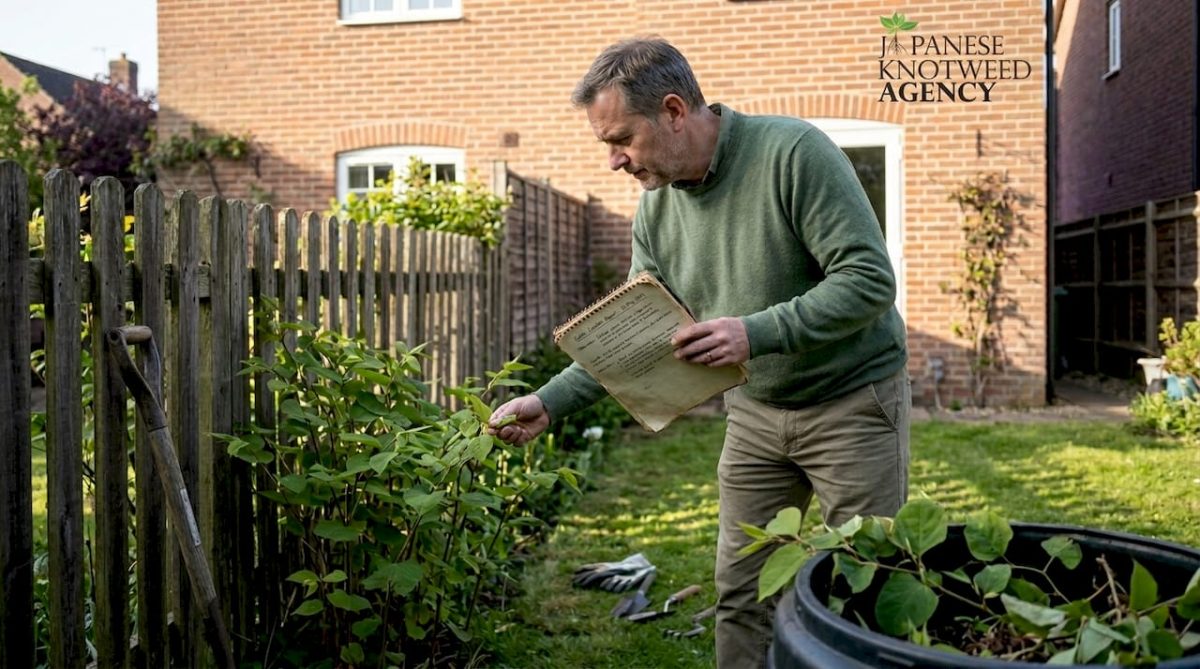
Accurate identification is where environmental weed management either succeeds or fails. The most common mistake landowners make is acting on appearance alone. A plant that looks untidy or unfamiliar is not automatically an environmental threat, and removing it without proper identification can cause as much ecological harm as leaving a genuine invader in place.

The look-alike problem is well documented. In New Zealand, pampas grass (Cortaderia selloana) is a regulated environmental weed, while native Toetoe (Austroderia spp.) is a protected species. They look remarkably similar to the untrained eye, yet removing Toetoe is environmentally harmful and potentially unlawful. The same principle applies throughout the UK and Ireland, where several invasive species closely resemble native or ornamental plants.
A reliable identification process involves these steps:
- Photograph clearly. Take images of leaves, stems, flowers, seed heads, and the root system if accessible.
- Cross-reference a verified database. Use regional government weed lists or tools such as iNaturalist to compare your findings against confirmed records.
- Check legal status. Verify whether the species appears on local authority or national invasive species registers before taking any action.
- Consult a specialist. When identification is uncertain, invasive weed monitoring by a qualified surveyor is the most reliable route to a correct diagnosis.
- Report sightings. Many local authorities and national agencies request that confirmed sightings of designated species are reported to help track spread.
Structured identification methods are not bureaucratic formalities. They protect you legally, protect native species ecologically, and give you a solid foundation for any management decisions that follow.
Pro Tip: Before using any identification app, cross-reference its output against your local authority’s confirmed weed register. Apps are excellent tools for narrowing down candidates, but local legal designations vary and are not always reflected in national databases.
Impacts on ecosystems and property
The environmental weed effects that concern specialists go far beyond what a plant looks like. Ecosystem disruption by weeds operates on several levels simultaneously, and each has tangible consequences for landowners.
Consider the following impacts:
- Biodiversity loss: Invasive species compete aggressively for light, water, and nutrients. Dense stands of Japanese Knotweed or Himalayan Balsam can eliminate understory vegetation entirely, reducing habitat for insects, birds, and small mammals. Biodiversity and invasive species management are directly linked. Where one declines, the other increases in urgency.
- Soil and waterway degradation: Certain invasive species alter soil structure and chemistry, making it harder for native plants to re-establish even after the weed is removed. Species along riverbanks can destabilise soil and increase erosion, widening flood risk.
- Property value and mortgageability: The presence of Japanese Knotweed within seven metres of a habitable structure is a material consideration for mortgage lenders. Surveyors are required to report it. Left unmanaged, it can render a property unmortgageable and directly affect sale prospects.
- Human health risks: Some invasive species present direct physical or toxic hazards. Giant Hogweed (Heracleum mantegazzianum) produces sap that causes severe phototoxic burns on skin contact. Himalayan Balsam seeds can cause irritation. These are not theoretical risks.
“The economic cost of invasive non-native species to Great Britain has been estimated at over £1.8 billion per year, with environmental weeds accounting for a substantial proportion of that figure.” — GB Non-native Species Secretariat
Why weeds are harmful is rarely reducible to a single factor. The cumulative effect of ecosystem disruption, reduced land usability, property devaluation, and health risk makes proactive management a sound investment rather than an optional extra.
Environmental weed management strategies
The most effective approach to environmental weed management is not reaching immediately for a herbicide. Integrated Weed Management (IWM) combines multiple control methods in sequence, reducing herbicide dependence and producing better long-term results.
IWM works by layering four types of control:
- Cultural controls: Establishing and maintaining healthy native plant communities that outcompete invasive species naturally. Dense, diverse planting leaves fewer gaps for opportunistic weeds to exploit. This is the foundation of sustainable weed control and should always be the starting point.
- Mechanical controls: Physical removal through cutting, digging, or excavation. Timing matters considerably here. Cutting Himalayan Balsam before it sets seed prevents the next generation entirely.
- Biological controls: Using natural predators, pathogens, or competing plant communities to suppress weed populations. This approach is slow but produces durable results without chemical inputs.
- Chemical controls: Targeted herbicide application used as a final measure for species that cannot be adequately controlled by other means. Chemical control alone often fosters herbicide resistance when used without the other layers, reducing its effectiveness over time.
Monitoring is not a supplementary task. It is central to IWM success. Effective weed management requires monitoring at every stage, timed to each plant’s phenological cycle. Applying a herbicide after a plant has already set seed is expensive and largely ineffective, regardless of the product used. The timing of intervention determines its outcome.
Pro Tip: Record every treatment, observation, and plant response in a simple site log. This record is invaluable if you need to demonstrate compliance to a local authority, mortgage lender, or prospective buyer.
Preventing weed invasions is considerably easier than controlling an established population. Monitoring boundary areas, checking incoming soil or plant material, and acting promptly on early sightings are all measures that pay dividends over time. More invasive weeds are coming under regulation in the UK, which means the list of plants requiring active management is expanding.
My perspective on weed risk
In my experience working with invasive species across England, Wales, and Ireland, the most persistent problem is not the weeds themselves. It is the tendency to underestimate the time commitment that genuine environmental weed management requires.
I’ve seen properties where a single treatment of Japanese Knotweed was assumed to be the end of the matter. It rarely is. The rhizome network extends far deeper than surface growth suggests, and climate-driven changes in weed physiology mean that management plans written five years ago may no longer reflect current conditions. Elevated CO2 levels and warmer winters are enabling some species to establish in regions where they previously could not survive, which means risk assessments need to be revisited periodically, not treated as a one-off exercise.
What I’ve learned is that patience and sustained monitoring produce outcomes that no single treatment can. The landowners who achieve lasting control are those who document their observations, adjust their approach based on what the plant is actually doing, and seek professional guidance at the point where the work exceeds their expertise.
Quick chemical fixes are appealing precisely because they feel decisive. In practice, misidentification and reactive spraying frequently result in the destruction of native plants and the survival of the target species. Taking the time to understand what you are managing before you act is not caution. It is competence.
— Alan
How Japaneseknotweedagency can help
If you suspect an invasive species on your property or have recently received a weed-related concern from a surveyor or solicitor, the most productive first step is a professional survey. Japaneseknotweedagency carries out property weed surveys across England, Wales, and Ireland, providing accurate identification, risk assessment, and a clear management pathway tailored to your site.

Where Japanese Knotweed is confirmed, Japaneseknotweedagency’s thermo-electric treatment delivers up to 5,000 volts directly into the plant, causing internal cell damage and depleting the rhizome network without the use of chemicals. Root barrier installation and excavation services are also available where the situation demands a more immediate structural response. For straightforward guidance on your specific circumstances, you can also browse the invasive species FAQs or book a survey directly.
FAQ
What is environmental weed risk in simple terms?
Environmental weed risk is a formal assessment of how likely a plant species is to spread, damage native ecosystems, and colonise new areas. It combines scores for invasiveness, ecological impact, and potential distribution to determine whether a species requires legal control.
How do I identify environmental weeds on my property?
Photograph the plant clearly, cross-reference it against a verified regional database or tool such as iNaturalist, and confirm its legal designation with your local authority or a professional surveyor before taking any action.
Why are invasive weeds harmful to ecosystems?
Invasive weeds displace native species, reduce biodiversity, degrade soil and waterways, and can alter entire habitat structures. The roles of weeds in ecosystems, when those weeds are non-native invaders, are almost universally destructive to native ecological balance.
Does Japanese Knotweed affect my ability to sell or mortgage a property?
Yes. Mortgage lenders treat Japanese Knotweed within seven metres of a habitable structure as a material risk. An unmanaged infestation can affect mortgageability and sale prospects directly, making professional management and documented treatment records critically important.
Can I manage environmental weeds without using chemicals?
Yes, and for many species it is the preferred approach. Japaneseknotweedagency’s thermo-electric treatment is a documented chemical-free method for Japanese Knotweed. For other species, cultural and mechanical controls within an integrated management plan often deliver effective, lasting results without herbicide use.