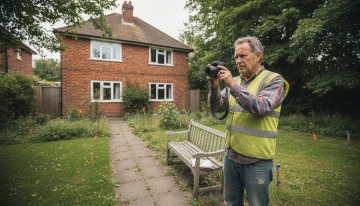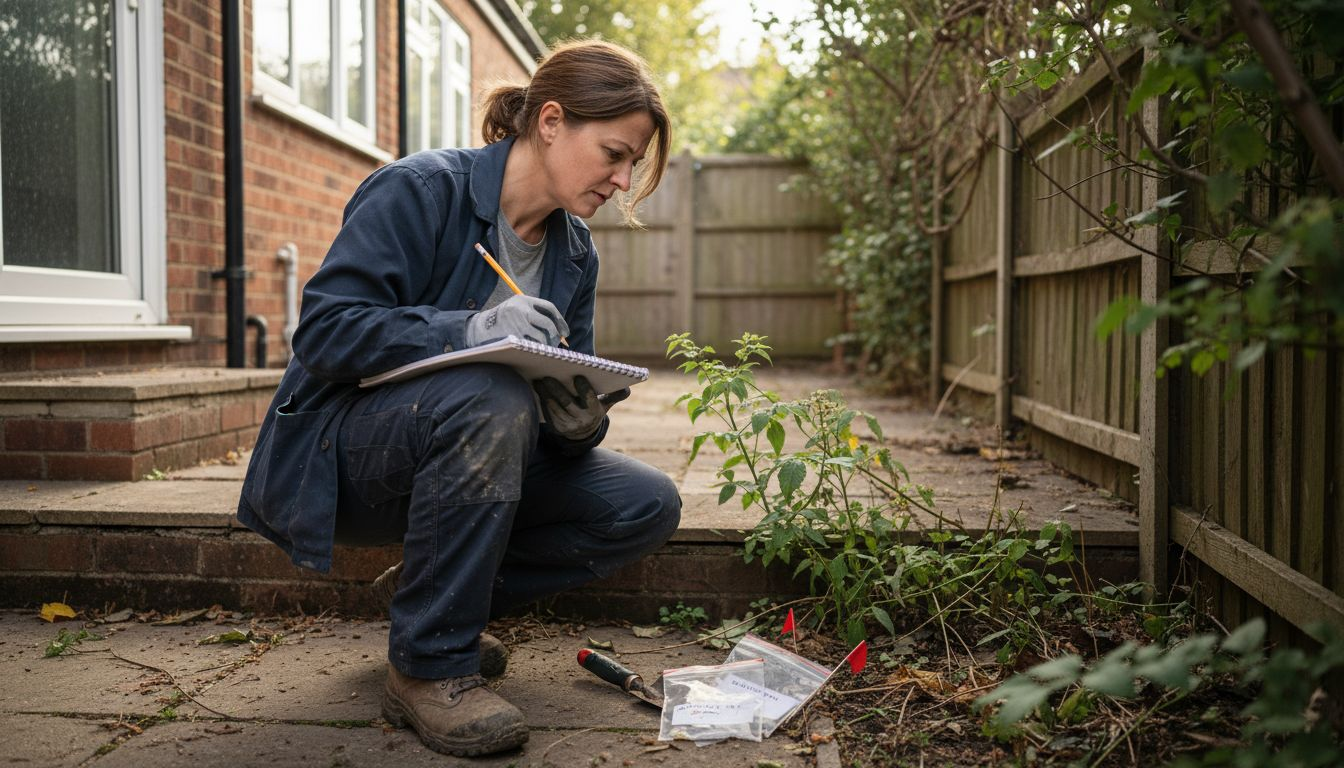

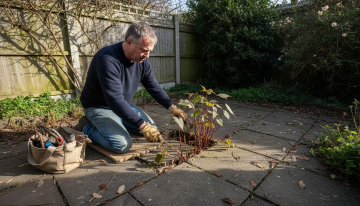
Selling your home in the United Kingdom can turn stressful when Japanese Knotweed lurks beneath the surface. This invasive plant’s underground rhizome network can threaten foundations and derail property sales, requiring urgent attention from homeowners. Chemical-free eradication options such as thermo-electric treatment promise faster results while preserving soil health and biodiversity, offering a safer alternative to traditional herbicides. Understanding how these methods support survey requirements and mortgage approval is essential to protecting your property and peace of mind.
Table of Contents
- Understanding Rhizomes and Plant Invasion
- Japanese Knotweed Rhizomes: Spread and Structure
- How Rhizomes Enable Property Damage
- Chemical-Free Eradication Methods Explained
- Legal Obligations and Survey Requirements in the UK
Key Takeaways
| Point | Details |
|---|---|
| Understanding of Rhizomes | Rhizomes enable invasive plants such as Japanese Knotweed to spread aggressively, making eradication difficult. |
| Property Risks | These underground networks can damage property foundations, utilities, and neighbouring land, leading to significant repair costs. |
| Importance of Professional Treatment | Specialist interventions are required for effective management, as traditional methods often fail to eliminate the entire rhizome network. |
| Legal and Financial Implications | Property owners must comply with legal obligations regarding Knotweed, impacting mortgage approvals and potential liabilities. |
Understanding Rhizomes and Plant Invasion
Rhizomes are underground stems that allow invasive plants to spread rapidly and establish themselves in new areas. Unlike traditional roots, rhizomes store nutrients and can produce new shoots at multiple points along their length, making them extraordinarily efficient at colonising territory.
For UK homeowners, understanding how rhizomes function is critical. Japanese Knotweed and similar invasive species use their rhizome networks to bypass surface barriers, penetrate foundations, and resurface in unexpected locations across your property. This underground architecture explains why these plants are so difficult to eradicate using conventional methods.
How Rhizomes Enable Plant Invasion
Rhizomes work as a distributed resource system. Instead of relying on a single root system, invasive plants can draw energy and nutrients from multiple points simultaneously, making them remarkably resilient to damage.
When you cut down Japanese Knotweed above ground, the rhizome network beneath remains intact and active. Each fragment of a severed rhizome can regenerate into a new plant, allowing the invasion to continue unchecked. Rhizosphere microbes mediate plant nitrogen uptake and support the competitive advantages these invasive species exploit during establishment and spread.
Key characteristics of invasive plant rhizomes include:
- Storing energy reserves across an extensive underground network
- Producing new growth points along their entire length
- Adapting their growth patterns based on soil conditions and competition
- Persisting for years even when the above-ground plant is destroyed
- Spreading horizontally through soil, often reaching depths of 1.5 metres or more
Rhizomes and UK Property Risk
The rhizome-based survival strategy poses direct threats to UK homes. These underground networks can:
- Push through concrete paths, driveways, and patios with remarkable force
- Penetrate brick and mortar in property foundations
- Damage underground utilities including water pipes and drainage systems
- Spread across property boundaries to neighbouring land
- Establish multiple satellite infestations from a single parent plant
Rhizome fragmentation is the primary reason Japanese Knotweed spreads so aggressively; even tiny rhizome pieces can develop into mature plants capable of reinfestation.
Rhizome production and competitiveness vary depending on environmental conditions, meaning established infestations become progressively more entrenched over time as the network expands and deepens into your soil.
Mortgage lenders recognise this threat. When Japanese Knotweed is present on a property, lenders typically require both a professional survey and a treatment plan before approving any mortgage. The rhizome network’s persistence and ability to regrow from fragments means standard removal methods rarely succeed without specialist intervention.
Why Traditional Methods Fail
Digging out rhizomes requires removing every fragment from your soil—an extraordinarily challenging task given how extensively they spread. Even professional excavation can miss sections, leading to regrowth months or years later.
Chemical treatments struggle because they must reach the entire rhizome network, which extends across significant depths and distances. Topical applications cannot adequately penetrate dense, established root systems.
This is where specialist treatment becomes essential. Japanese Knotweed Agency utilises direct energy delivery systems that reach throughout the rhizome network, causing internal cell damage and depleting the energy reserves these plants depend upon for survival and regrowth.
Pro tip: If you suspect Japanese Knotweed on your property, arrange a professional survey immediately—early detection and treatment prevent the rhizome network from expanding further and becoming exponentially more difficult to manage.
Japanese Knotweed Rhizomes: Spread and Structure
Japanese Knotweed rhizomes are the true threat lurking beneath your property. These underground stems are far more expansive and resilient than most homeowners realise, extending deep into soil and spreading aggressively in all directions.
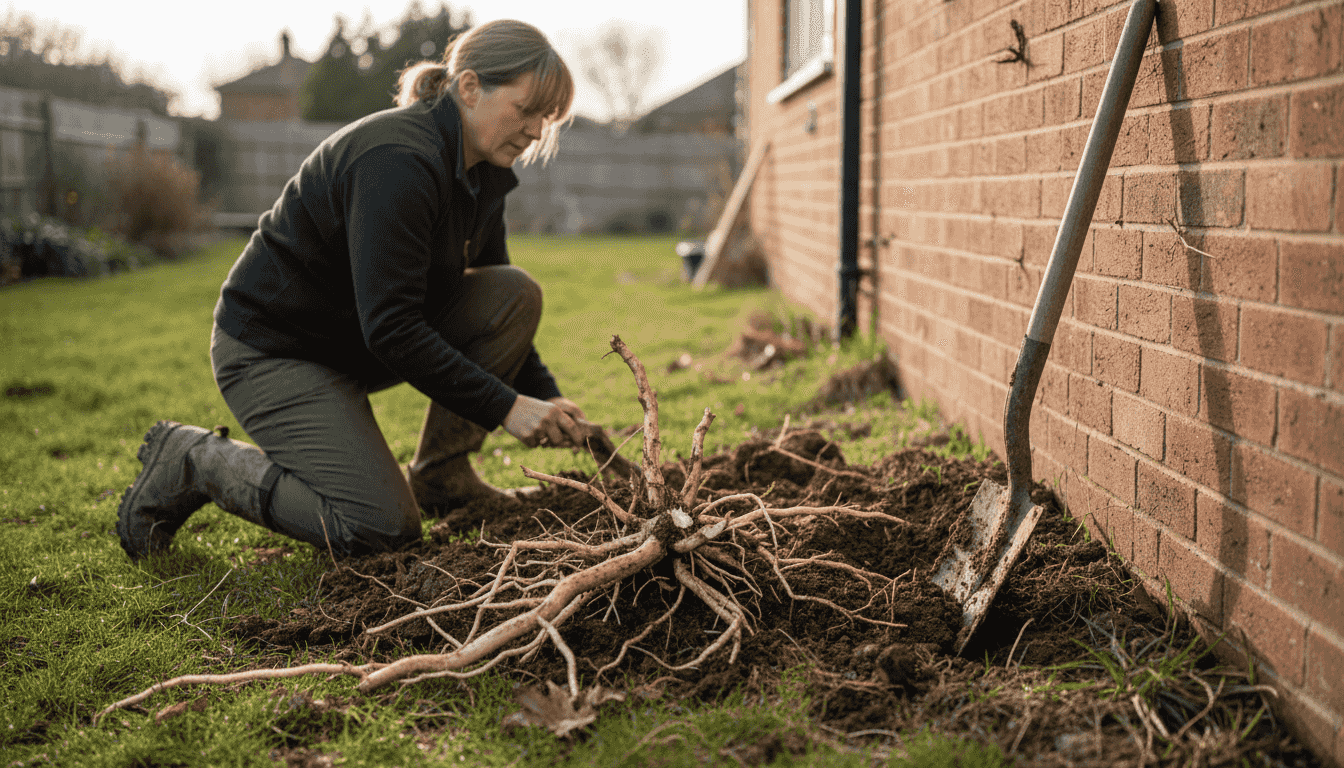
Unlike conventional plant roots, Japanese Knotweed rhizomes function as a distributed energy network. They store massive reserves of carbohydrates and nutrients, allowing the plant to survive winter dormancy and regenerate from even tiny fragments left behind after attempted removal.
The Architecture of Japanese Knotweed Rhizomes
Japanese Knotweed rhizomes grow horizontally through soil, often reaching depths of 1.5 to 3 metres. A single parent plant can establish a rhizome network covering hundreds of square metres, with individual rhizomes extending 7 metres or more from the main stem.
The structure resembles an underground web of nodes and connections:
- Node points where new shoots emerge and develop into surface plants
- Connective tissue that links different sections of the network together
- Energy storage cells concentrated along the rhizome length
- Growth buds capable of initiating plant regeneration at any point
- Dense root hairs that absorb moisture and nutrients from surrounding soil
When you damage one section of the rhizome network, the plant simply redirects nutrients through alternative pathways. This redundancy is why cutting or even digging rarely succeeds without specialist intervention.
How Knotweed Rhizomes Spread Across UK Properties
Rhizomes spread through two primary mechanisms. First, they expand naturally year on year, pushing through soil, cracks in foundations, and beneath tarmac. Second, how Japanese Knotweed spreads through fragmentation means even construction work, garden maintenance, or soil movement can transport tiny rhizome pieces to new locations on your property.
Fragmentation poses particular risks during property development or landscaping projects. A single rhizome fragment measuring just 20 millimetres can regenerate into a fully mature plant within a single growing season.
Japanese Knotweed rhizomes can penetrate concrete up to 15 centimetres thick, making them capable of damaging foundations, patios, driveways, and underground services simultaneously.
The spread rate accelerates as the rhizome network ages. Younger infestations expand relatively slowly, whilst established networks spanning several years become exponentially more aggressive and difficult to contain.
Why Depth Matters for Treatment
The depth of Japanese Knotweed rhizomes determines treatment complexity and success rates. Shallow infestations reaching 1 metre are easier to address than deep networks extending 2 to 3 metres below ground level.
Standard chemical treatments struggle with depth penetration. Systemic herbicides applied to foliage cannot reliably reach rhizomes at significant depths, leaving sections of the network untouched and capable of regenerating.
This is where specialist energy-based treatment becomes essential. Direct energy systems can be applied at depth, reaching throughout the entire rhizome network and causing internal cellular damage that conventional methods cannot achieve.
Pro tip: Obtain a property survey before purchasing if Japanese Knotweed is suspected—identifying rhizome depth early allows mortgage lenders to assess treatment feasibility and set realistic timescales for eradication.
How Rhizomes Enable Property Damage
Rhizomes cause property damage through persistent physical force and strategic expansion. Unlike surface weeds that merely block light or compete for nutrients, Japanese Knotweed rhizomes actively destabilise structures by pushing through concrete, brick, and mortar with relentless pressure.
The damage accumulates gradually but relentlessly. You might notice small cracks in patios or foundation movement that seem minor at first. Within months or years, these small failures cascade into serious structural problems requiring expensive repairs.
Physical Damage Mechanisms
Rhizomes cause property damage through three primary mechanisms. First, they apply sustained pressure against hard surfaces, exploiting tiny weaknesses and gradually widening them into substantial fractures.
Second, rhizomes penetrate foundations and drainage systems, creating pathways for water infiltration and subsidence. Water entering cracks accelerates deterioration, freezes in winter, and weakens structural integrity further.
Third, the continuous growth redirects pressure laterally and vertically, affecting multiple areas simultaneously. A single rhizome network can damage patios, walls, drains, and foundations across your entire property.
Common damage patterns include:
- Cracks radiating outward from patios and driveways
- Sunken or buckled sections of hardstanding
- Internal subsidence causing uneven floors or wall cracks
- Fractured drainage pipes and sewage backups
- Foundation movement and structural misalignment
- Water damage in basements and cellars
Why Rhizomes Cause More Damage Than Shallow-Rooted Plants
Deep-rooted systems provide leverage and force that shallow root networks cannot. Japanese Knotweed rhizomes extending 2 to 3 metres underground create hydraulic pressure that pushes upward with tremendous force throughout multiple seasons.
The plant doesn’t stop when it encounters an obstacle. Instead, it detours around barriers or concentrates pressure on weak points, eventually breaching even reinforced concrete. The damage accelerates after initial breaches occur because water and air penetration further weakens the affected structure.
Japanese Knotweed rhizomes have breached brick walls 23 centimetres thick and fractured reinforced concrete 15 centimetres thick, demonstrating forces far exceeding what surface damage could cause.
Established infestations spanning multiple decades cause exponentially worse damage because the rhizome network has had years to exploit weaknesses and expand into new structural areas.
Mortgage and Insurance Implications
Property damage from Japanese Knotweed creates immediate problems for homeowners attempting to sell or refinance. Mortgage lenders require proof that the infestation is contained and treatment is underway before advancing funds.
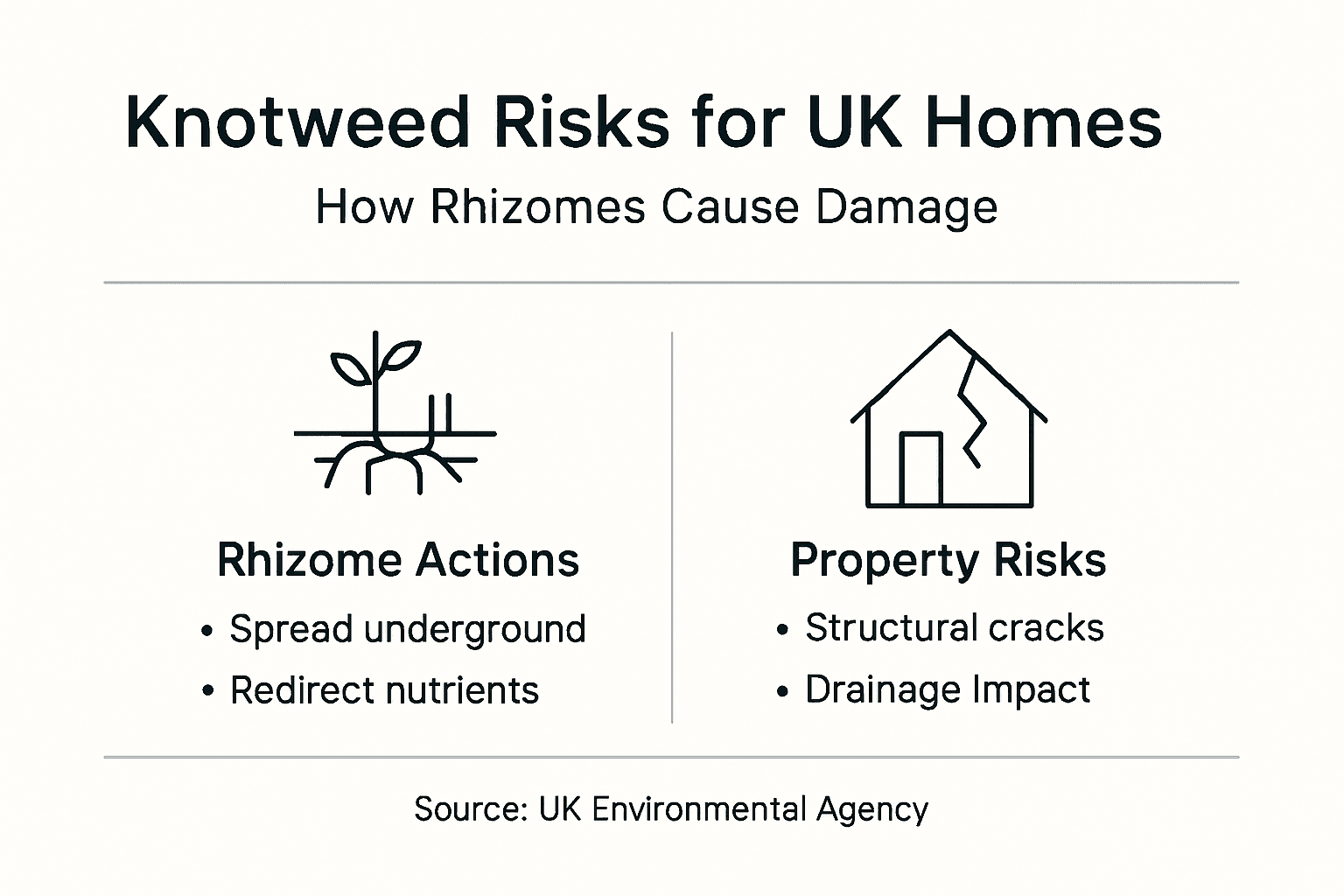
Insurance companies often exclude knotweed-related damage from coverage, treating it as a pre-existing condition rather than an insurable event. This leaves homeowners personally liable for repair costs, which can reach £5,000 to £20,000 depending on damage severity.
Pro tip: Document any visible property damage with photographs and measurements before arranging your professional Japanese Knotweed Agency survey—this evidence supports mortgage lender assessments and treatment feasibility discussions.
Chemical-Free Eradication Methods Explained
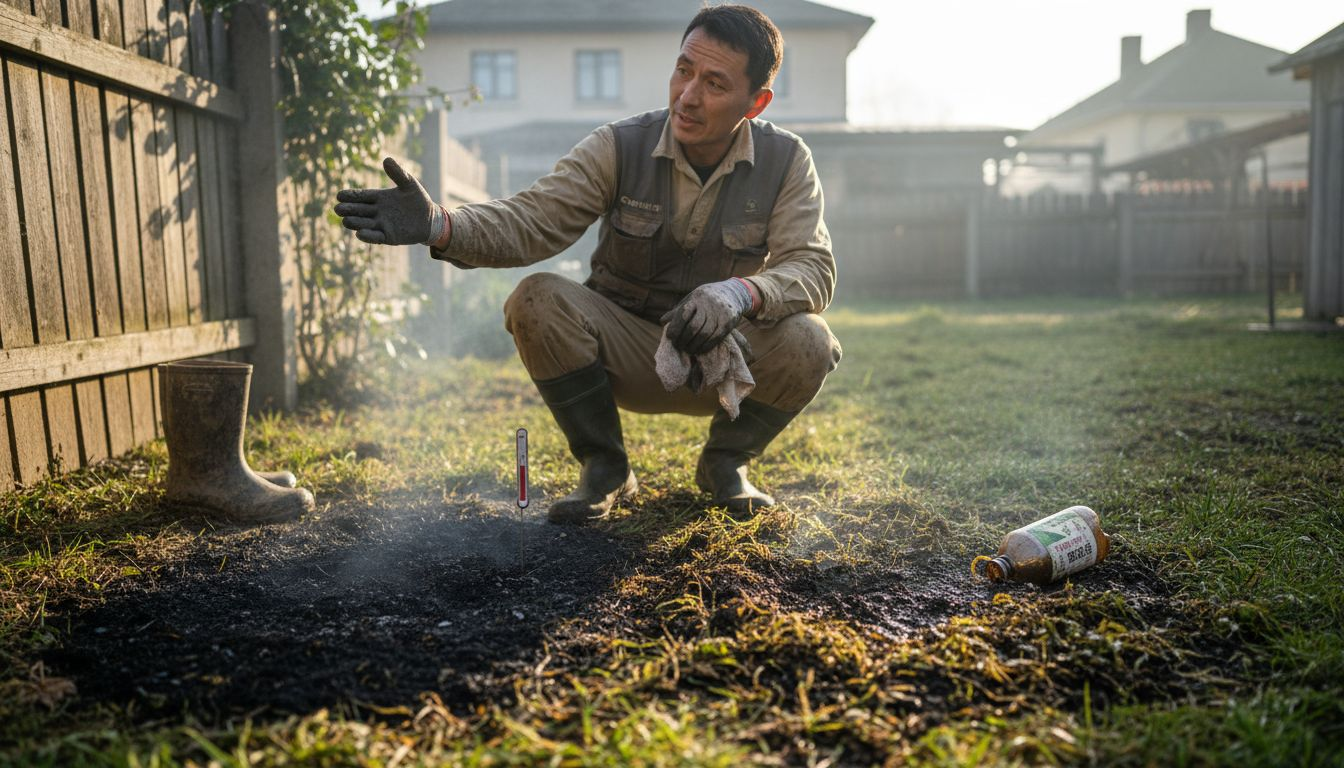
Chemical herbicides have dominated Japanese Knotweed treatment for decades, yet they remain ineffective against deep rhizome networks and create environmental risks. Modern alternatives now offer faster results without compromising ecosystem health or leaving chemical residues in your soil.
Chemical-free methods work by attacking the plant’s fundamental biological processes rather than relying on toxins. This approach proves particularly effective against established infestations where traditional chemicals have already failed.
Thermo-Electric Treatment Systems
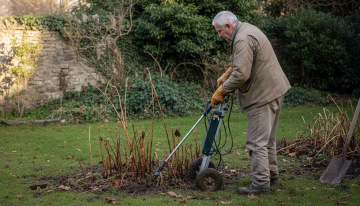
Thermo-electric treatment represents a breakthrough in knotweed eradication. Thermo-electric eradication uses high voltage electricity to destroy the plant’s cellular structure, effectively killing rhizomes without harming surrounding soil or native species.
The process works by delivering direct energy into the rhizome network. This causes internal cell damage and depletes the energy reserves that enable regrowth. Japanese Knotweed Agency utilises systems capable of delivering up to 5000 volts directly onsite, reaching throughout extensive rhizome networks.
Key advantages of thermo-electric systems include:
- No chemical residues left in soil
- Treatment effective at significant depths
- Rapid energy deployment to multiple areas simultaneously
- No damage to surrounding native plants or microorganisms
- Ability to treat infestations chemical methods have failed to address
- Results visible within weeks rather than months
Natural Regeneration Methods
Chemical-free approaches also support natural ecosystem recovery. The North Wales Wildlife Trust trialled methodology avoiding pesticides, allowing quicker natural regeneration and native species replanting within days.
This approach removes the invasive plant whilst preserving soil health and enabling rapid biodiversity recovery. Areas treated using chemical-free methods support native species replanting significantly faster than chemically-treated areas, which require extended soil recovery periods.
Natural regeneration methods offer:
- Faster biodiversity recovery post-treatment
- Ability to replant native species immediately
- No chemical persistence in soil ecosystems
- Support for long-term environmental health
- Lower liability for environmental damage
Why Chemical-Free Methods Outperform Traditional Herbicides
Chemical herbicides fail at depth because they cannot reliably penetrate extensive rhizome networks. Topical applications reach only surface-level tissues whilst deep rhizomes remain untouched and capable of regeneration.
Chemical-free systems overcome this limitation by addressing the entire network simultaneously. Energy-based treatment reaches depths conventional methods cannot access, destroying cellular structures throughout the rhizome system.
Chemical-free eradication promises completion within one year—significantly faster than traditional chemical treatments requiring multiple seasons of repeated applications and monitoring.
Mortgage lenders increasingly favour chemical-free methods because they eliminate soil contamination risks and enable faster property remediation. This accelerates the lending approval process and reduces timeline uncertainty.
Root Barrier Installation and Excavation
Chemical-free strategies also include physical containment through root barrier installation and selective excavation. Root barriers prevent rhizome spread to adjacent areas whilst excavation removes infestations where structural access permits.
These complementary methods work alongside energy-based treatment to ensure comprehensive eradication and prevent reinfestation from overlooked fragments.
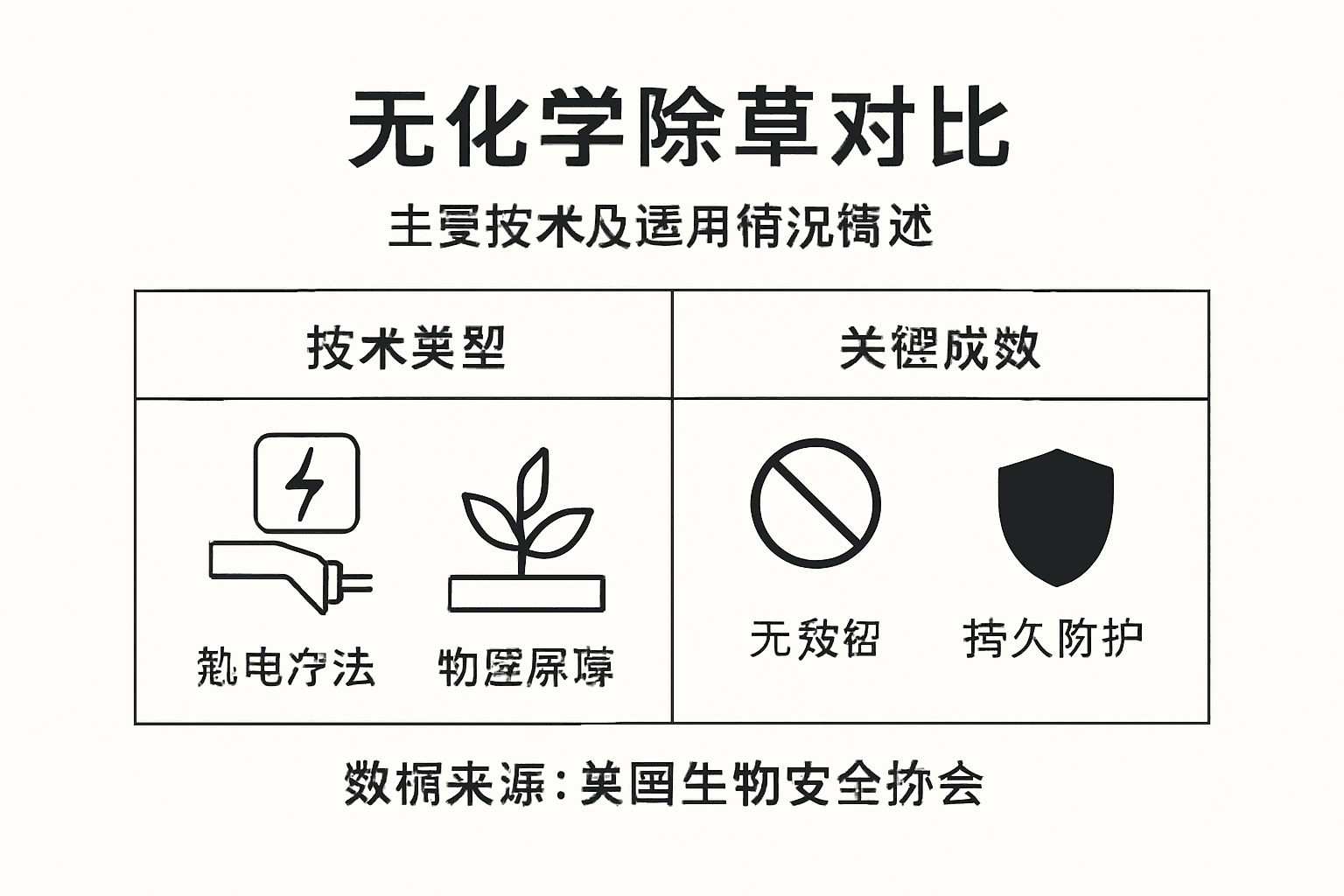
Here is a comparison of Japanese Knotweed treatment approaches and their effects:
| Treatment Approach | Depth Reached Effectively | Environmental Impact | Time to See Results |
|---|---|---|---|
| Chemical Herbicides | Surface to shallow soils | Potential soil pollution | Months to years |
| Thermo-Electric Systems | Deep rhizome penetration | No soil contamination | Weeks |
| Physical Excavation | Variable, often shallow | Soil disruption possible | Immediate regrowth |
| Natural Regeneration | Surface only | Supports native species | Days to weeks |
Pro tip: Request a detailed treatment plan specifying chemical-free methods before committing to eradication—chemical-free approaches cost similarly to traditional methods but deliver faster results and stronger mortgage lender approval odds.
Legal Obligations and Survey Requirements in the UK
Japanese Knotweed presents specific legal challenges for UK homeowners that extend beyond simple garden management. The law imposes genuine obligations on property owners, whilst lenders impose practical requirements that can block property transactions entirely.
Understanding these obligations protects you from costly fines, legal action from neighbours, and mortgage complications during property sales. Most homeowners discover these requirements too late, after purchasing a property or facing lending delays.
Legal Obligations for Property Owners
Japanese Knotweed is not a criminal matter by default. However, allowing it to spread onto neighbouring property creates legal liability under environmental and nuisance law. Your Japanese Knotweed legal obligations include preventing spread and taking reasonable steps towards eradication.
Neighbours can pursue civil action if Japanese Knotweed spreads from your property onto theirs. Courts have awarded damages exceeding £20,000 for property damage and treatment costs caused by knotweed invasion from adjoining land.
Key legal obligations include:
- Preventing spread to neighbouring properties
- Taking reasonable steps towards eradication
- Disclosing its presence during property sales
- Notifying mortgage lenders and insurers
- Following treatment recommendations from specialists
- Maintaining records of survey and treatment work
Mortgage Lender Requirements
Mortgage lenders treat Japanese Knotweed as a material risk. Most lenders will not advance funds on properties with known infestations unless a professional survey and treatment plan are in place.
Lenders typically require:
- A professional survey identifying infestation extent and rhizome depth
- A detailed treatment plan from qualified specialists
- Evidence of treatment commencement or completion
- Post-treatment monitoring to confirm eradication success
- Insurance or guarantees covering potential reinfestation
These requirements exist because lenders recognise Japanese Knotweed as a serious property defect affecting both structural integrity and resale value.
Property Survey Requirements
Professional invasive plant surveys protect your property interests by establishing whether knotweed is present and determining treatment feasibility. Surveys identify rhizome networks’ extent, depth, and proximity to structures.
A comprehensive survey includes:
- Ground-penetrating radar or specialist imaging
- Rhizome depth assessment
- Identification of affected structures
- Treatment recommendations
- Cost and timeline estimates
- Post-treatment monitoring protocols
Lenders typically require surveys conducted by independent, qualified specialists—surveys performed by treatment providers must meet rigorous independence standards or lenders may reject them as biased.
Survey costs range from £300 to £1,500 depending on property size and infestation complexity. This investment provides clarity that protects both your purchase decision and mortgage approval prospects.
Disclosure and Insurance Implications
Disclosure is legally mandatory. When selling a property with known Japanese Knotweed, you must inform potential buyers during conveyancing. Failure to disclose creates liability for misrepresentation and grounds for post-sale legal action.
Insurance companies typically exclude knotweed-related damage from standard policies. Some insurers offer specific knotweed coverage if treatment is underway or completed, but exclusions remain common.
The following table summarises key legal and financial risks related to Japanese Knotweed on UK properties:
| Risk Area | Consequence | Potential Cost |
|---|---|---|
| Legal Liability | Neighbour claims, court-awarded damages | £20,000+ |
| Property Resale | Mortgage refusal or delays | Sale collapse |
| Insurance Coverage | Exclusions for knotweed damage | Full repair cost paid |
| Treatment/Survey | Mandatory for mortgage approval | £300–£20,000+ |
Pro tip: Arrange a professional survey immediately if you suspect Japanese Knotweed—early detection simplifies treatment, accelerates mortgage approval, and prevents neighbour disputes that could cost significantly more than professional eradication.
Take Control of Rhizome Risks with Expert Chemical-Free Solutions
The underground rhizome networks discussed in this article reveal why Japanese Knotweed and similar invasive plants are a serious threat to your UK property. Their ability to regenerate from tiny fragments and penetrate deep into foundations makes conventional removal methods ineffective and risky. If you want to protect your home from structural damage and ensure compliance with legal and mortgage requirements, understanding and tackling these rhizomes is essential.

At Japanese Knotweed Agency, we specialise in chemical-free eradication that directly targets the rhizome network. Using advanced direct energy treatment delivering up to 5000 volts onsite, we cause internal cell destruction and deplete the plant’s energy stores to halt regrowth effectively. Our services also include professional property surveys and root barrier installations to prevent future spread—giving you peace of mind and confidence when managing invasive plants. Don’t let hidden rhizomes put your home and mortgage at risk. Act today by visiting our chemical-free treatment page and booking a survey to secure your property’s long-term health.
Frequently Asked Questions
What are rhizomes, and how do they contribute to plant invasion?
Rhizomes are underground stems that store nutrients and produce new shoots, allowing invasive plants like Japanese Knotweed to spread rapidly and establish themselves in new areas.
How does Japanese Knotweed spread through its rhizomes?
Japanese Knotweed rhizomes spread by extending horizontally through soil and can regenerate from even small fragments, creating new plants capable of further infestation.
Why do traditional removal methods fail against rhizome networks?
Traditional methods often fail because they cannot remove every fragment of the extensive rhizome network, and even minor pieces left untreated can regenerate into new plants.
What are the risks of Japanese Knotweed rhizomes to UK homes?
Japanese Knotweed rhizomes pose risks to homes by penetrating foundations, damaging underground utilities, and causing structural damage by exerting pressure against hard surfaces.
Recommended
- How Invasive Plants Spread: Risks For UK Homes
- Invasive Plants: Impact on UK Homes and Land
- Invasive Plant Species UK: What Homeowners Face
- Why Invasive Species Matter for UK Property Owners
- Property Law Explained: What UK Owners Must Know | Ali Legal
- Why Choose French Doors for UK Homes
- Residential Real Estate Explained: Key Types and Risks | Bold Street AI