Choosing the right removal strategy for Japanese Knotweed can feel overwhelming when you realize a tiny root fragment can spawn a new infestation. Homeowners across England and Wales face legal, environmental, and technical challenges when tackling this aggressive invader. You need to understand effective removal criteria to protect your property value and avoid costly mistakes. This article reveals essential safety tips, approved methods, and legal requirements to guide your decision, helping you select the most effective approach for your situation.
Table of Contents
- How to Choose the Right Removal Approach: Key Selection Criteria
- Chemical Treatment Methods: Safe Application and Effectiveness
- Non-Chemical Treatment Options: Energy-Based and Mechanical Solutions
- Excavation and Root Barrier Installation: Protecting Property Foundations
- Disposal Protocols: Handling Japanese Knotweed Waste Safely and Legally
- Legal Requirements and Compliance: What Homeowners Must Know
- Treatment Duration and Long-Term Management: Expectations and Monitoring
- Summary Comparison: Choosing the Best Removal Method for Your Situation
- Situational Recommendations: Which Removal Strategy to Choose
- Protect Your Home with Expert Japanese Knotweed Removal Services
Key Takeaways
| Point | Details |
|---|---|
| Legal Compliance | Japanese Knotweed can regrow from rhizome fragments as small as 1cm, making legal prevention of spread mandatory under UK law. |
| Treatment Duration | Most removal methods require at least 3 years of repeated applications and monitoring to achieve full eradication. |
| Disposal Requirements | Knotweed waste is controlled waste requiring licensed carriers and authorized landfill or incineration to avoid penalties. |
| Method Selection | Choose between chemical herbicides, energy-based treatments, or excavation based on infestation size, budget, and environmental sensitivity. |
| Professional Involvement | Certified professionals ensure compliance with regulations, proper waste handling, and effective long-term management. |
How to Choose the Right Removal Approach: Key Selection Criteria
Selecting the right removal method starts with understanding five critical criteria that determine safety, effectiveness, and legal compliance. Each factor shapes which approach works best for your property.
First, legal requirements under the Wildlife and Countryside Act 1981 demand that you prevent spread to neighbouring land. You face potential fines and legal action if your infestation crosses boundaries due to negligence. Permits may be required for treatments near protected sites or watercourses.
Second, effectiveness and duration vary dramatically. Chemical treatments typically require at least 3 years with repeated monitoring and retreatment cycles. Energy-based methods can show faster symptom reduction but may need integration with other approaches.
Third, environmental impact considerations become crucial near sensitive habitats. Chemical herbicides pose contamination risks to watercourses and protected species, making chemical-free alternatives preferable in these zones.
Fourth, cost factors include treatment fees, waste disposal charges, and potential property devaluation. Small garden infestations cost significantly less than large-scale development site clearances. Accessibility to certified professionals in your area affects both price and timeline.
Fifth, waste disposal protocols require strict adherence to UK regulations. You must use licensed carriers and authorized facilities, adding complexity and cost to any removal project.
Pro Tip: Always obtain at least three quotes from certified professionals who can assess your specific infestation and recommend the most cost-effective approach for your property size and constraints.
Key selection criteria to evaluate:
- Legal compliance with your Japanese Knotweed legal obligations
- Treatment duration and frequency of applications
- Environmental sensitivity of your site location
- Budget for multi-year treatment and disposal costs
- Availability of certified contractors in your region
Understanding these criteria helps you compare chemical versus eco treatments effectively. You can then match your property’s specific needs with the most appropriate removal strategy. Review plant spread prevention guidelines before making your final decision to ensure full regulatory compliance.
Chemical Treatment Methods: Safe Application and Effectiveness
Chemical herbicide treatments remain the most common removal approach in England and Wales, but they demand careful execution and realistic timeline expectations. Approved herbicides applied by certified personnel over at least 3 years form the standard protocol for this method.
Only licensed applicators can legally administer herbicides for Japanese Knotweed control. These professionals hold certification demonstrating their knowledge of safe handling, application techniques, and environmental protection measures. You cannot simply purchase industrial-strength herbicides and apply them yourself without violating regulations.
The typical treatment cycle involves annual or biannual applications for a minimum of three years, often extending to five years for established infestations. Late summer injection directly into stems proves most effective, as the plant actively transports nutrients to its rhizomes during this period. The herbicide travels down to underground storage organs, gradually depleting the plant’s energy reserves.
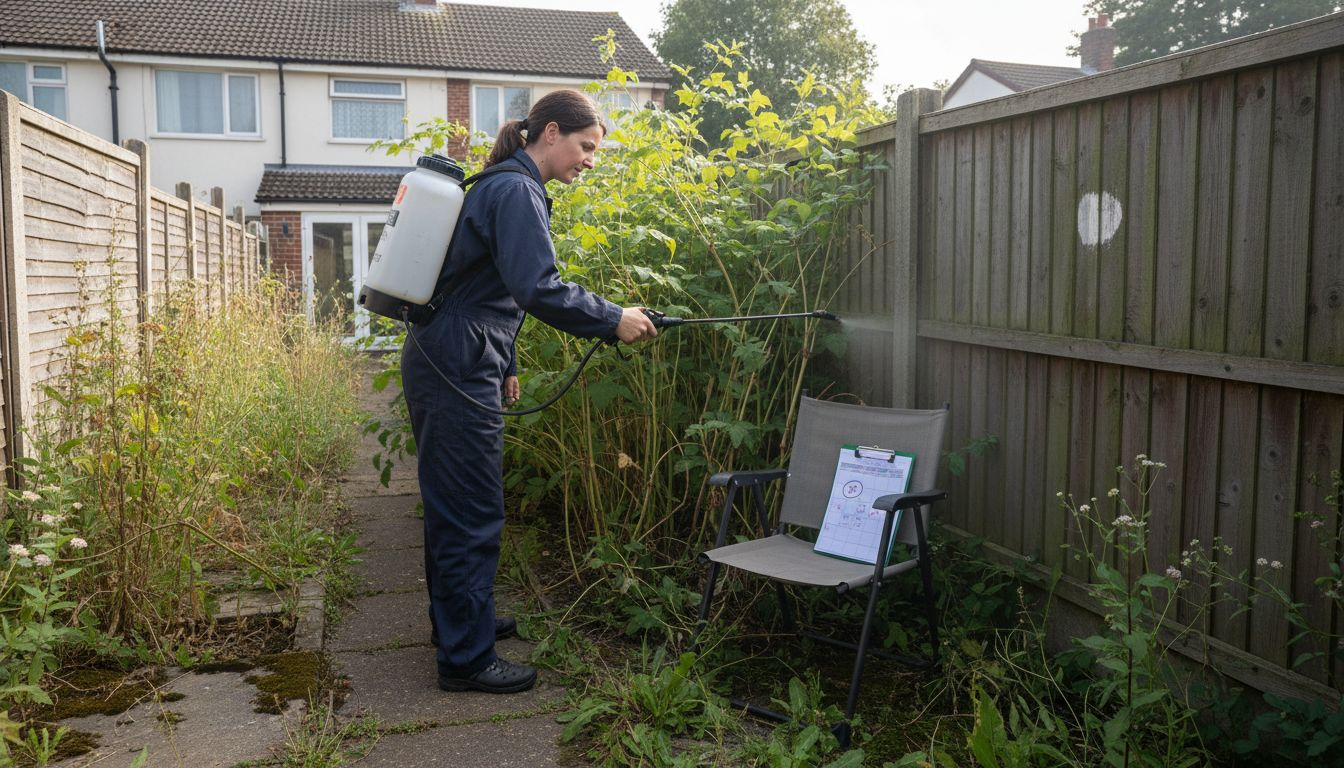
Risks of chemical application become significant near protected environments. Watercourses, wetlands, and Sites of Special Scientific Interest require special permits and modified protocols. Drift from spray applications can damage non-target vegetation and contaminate water sources, leading to environmental penalties.
Follow-up monitoring forms a critical component of chemical treatment success. Your contractor should schedule regular inspections to identify new growth and assess treatment effectiveness. Retreatment plans must be flexible, adjusting to the infestation’s response and site conditions.
Pro Tip: Schedule chemical treatments for late August through early October when the plant actively transports nutrients downward, maximizing herbicide delivery to the rhizome system.
Chemical treatment considerations:
- Contractor must hold valid certification for herbicide application
- Minimum 3-year commitment with multiple site visits annually
- Higher costs near protected sites due to permit requirements
- Risk of environmental damage if improperly applied
- Requires patience as visible results develop slowly
For homeowners concerned about chemical exposure or environmental impact, explore chemical-free treatment alternatives that eliminate herbicide risks. Compare different approaches through official guidance on herbicide use to understand regulatory requirements. A thorough comparison of chemical and eco methods helps you weigh safety against effectiveness for your specific situation.
Non-Chemical Treatment Options: Energy-Based and Mechanical Solutions
Chemical-free removal methods offer environmentally sensitive alternatives that avoid herbicide risks while still achieving effective control. These approaches suit properties near watercourses, organic gardens, or areas where chemical use is restricted or undesirable.
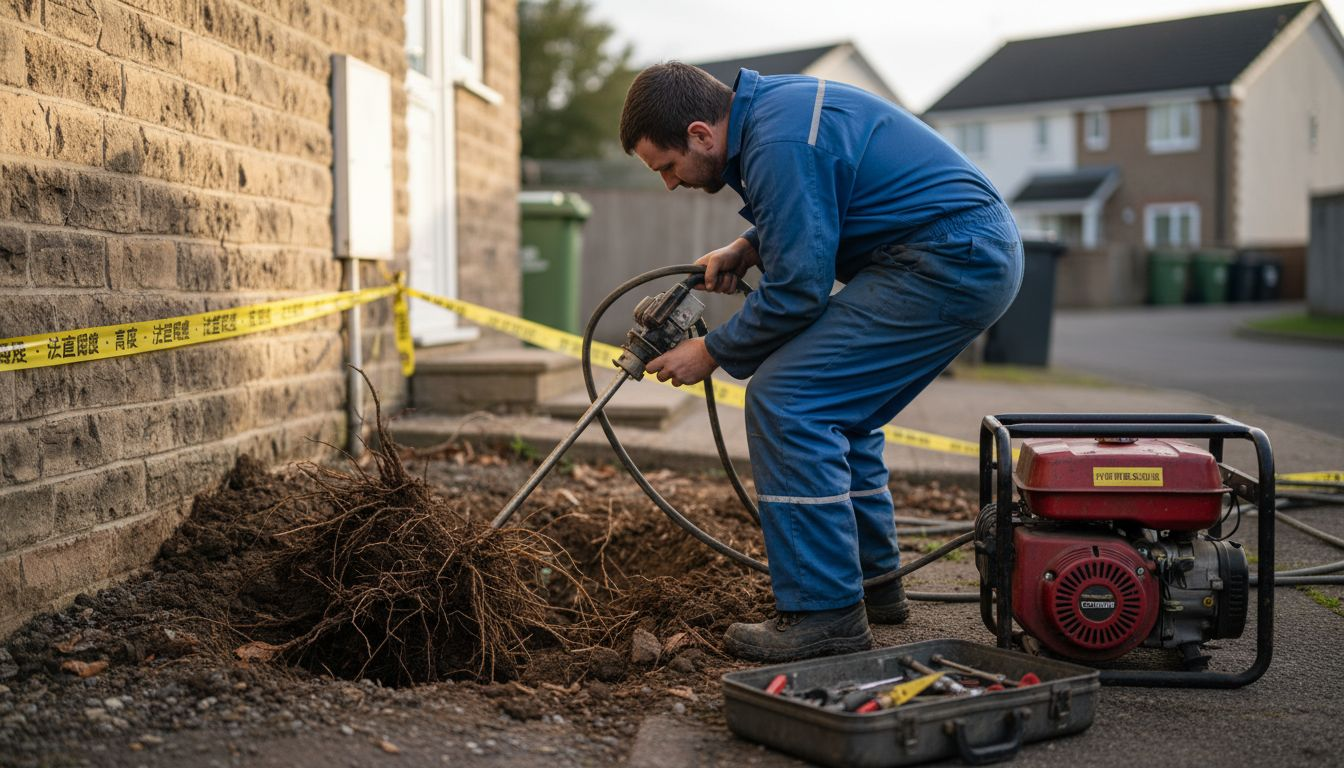
High-voltage energy treatments represent an innovative approach to Japanese Knotweed control. This method delivers direct electrical energy up to 5000 volts to plant tissue, causing internal cell damage and depleting energy resources within the extensive rhizome network. Each treatment session progressively weakens the plant without introducing chemicals into the soil or groundwater.
Mechanical solutions include two main strategies: root barrier installation and controlled excavation. Root barriers create physical shields that prevent horizontal rhizome spread, protecting foundations and neighbouring properties. Excavation physically removes contaminated soil, eliminating the infestation source but requiring careful waste management.
Chemical-free approaches comply with the strictest environmental regulations, making them ideal for sensitive sites. You avoid waiting periods before replanting, reduce risks to pets and wildlife, and eliminate concerns about herbicide residues in soil.
Limitations exist for non-chemical methods. Equipment availability for energy treatments remains limited compared to chemical contractors. Excavation proves impractical for very large infestations due to soil removal costs. Some chemical-free approaches work best when integrated with other methods for comprehensive control.
Non-chemical treatment benefits:
- No herbicide residues in soil or groundwater
- Suitable for environmentally sensitive locations
- Faster symptom reduction in some cases
- Compliance with organic gardening standards
- Reduced risk to pets, children, and wildlife
Explore chemical-free plant removal options to understand how these methods work in practice. Review effective chemical-free solutions for knotweed to see case studies and success rates. These alternatives provide viable paths forward for homeowners prioritizing environmental safety and rapid action.
Excavation and Root Barrier Installation: Protecting Property Foundations
Excavation and root barriers provide physical solutions that directly address underground rhizome networks threatening your property’s structural integrity. These methods require careful planning, regulatory compliance, and professional execution to achieve lasting results.
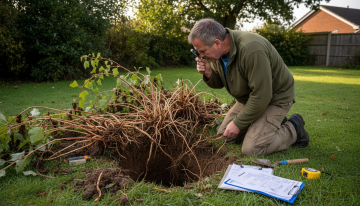
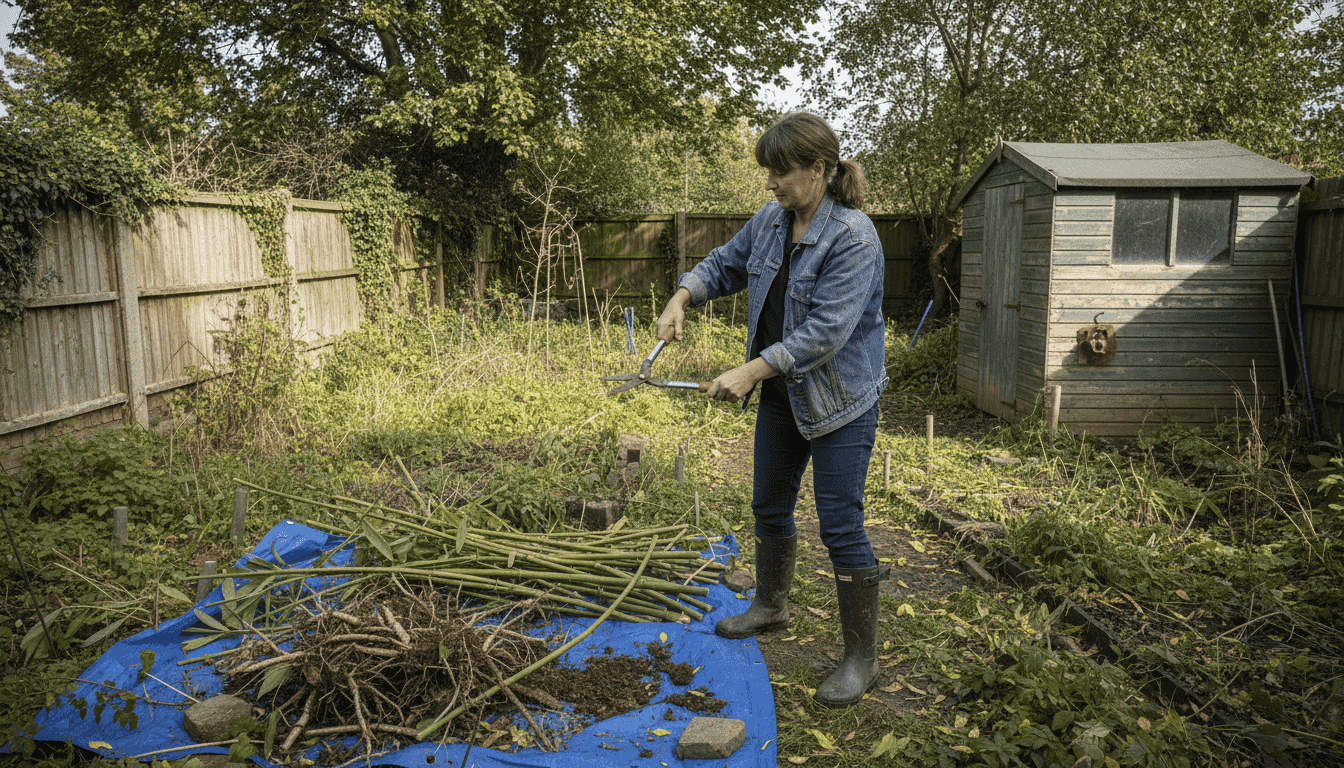
The excavation process involves layered soil removal, typically extending at least 3 meters horizontally and 2 meters vertically from visible growth. Contractors must avoid overfilling wagons to 90% capacity to prevent spillage during transport. Risk assessments identify potential contamination spread risks before work begins.
Legal permit requirements and risk assessments precede any excavation project. Your contractor must demonstrate proper waste handling protocols, equipment decontamination procedures, and emergency response plans. Local authorities may require site-specific management plans for larger projects.
Root barriers installed per UK standards prevent horizontal rhizome spread without removing soil. These barriers must extend to sufficient depth (typically 2 meters) and project above ground level to prevent rhizomes from growing over the top. Proper installation creates a protective zone around foundations, driveways, and utility lines.
Pro Tip: Request documentation of barrier placement depth and material specifications from your contractor, as this information proves valuable for future property sales and mortgage applications.
Excavation and barrier installation steps:
- Conduct thorough site survey mapping infestation boundaries
- Obtain necessary permits and complete risk assessments
- Establish exclusion zones and decontamination stations
- Remove soil in layers, maintaining strict segregation protocols
- Clean all equipment before leaving site to prevent spread
- Install barriers or dispose of excavated material at licensed facilities
- Backfill with clean certified soil and monitor for regrowth
| Excavation Stage | Primary Risk | Mitigation Measure |
|---|---|---|
| Site preparation | Contamination spread | Establish decontamination zones for equipment |
| Soil removal | Fragment dispersal | Layer removal with 90% wagon capacity limits |
| Transportation | Material spillage | Use covered vehicles with secured loads |
| Disposal | Illegal dumping | Verify facility licenses and obtain disposal certificates |
| Backfilling | Reintroduction | Use only certified clean soil from verified sources |
Learn more about knotweed root barrier guide specifications and installation requirements. Understand the benefits of root barrier installation for long-term property protection. Review excavation safety procedures and root barrier installation standards to ensure your contractor follows best practices.
Disposal Protocols: Handling Japanese Knotweed Waste Safely and Legally
Proper waste disposal forms a critical component of any Japanese Knotweed removal project, with strict legal requirements governing every step from collection to final disposition. Violations carry significant penalties and environmental consequences.
Japanese Knotweed waste is classified as controlled waste under UK environmental law, requiring specialized handling protocols. You must use licensed waste carriers registered with the Environment Agency to transport material from your property. These carriers provide waste transfer notes documenting the chain of custody.
Authorized landfills and incineration facilities represent the only legal final disposal options for most Japanese Knotweed waste. Landfills accepting this material maintain dedicated cells designed to prevent spread. Incineration destroys plant material completely, eliminating regrowth risks.
On-site burning is legal only under registered D7 exemption, which requires advance registration with environmental authorities. Even with exemption, you must follow strict ash disposal requirements, as viable rhizome fragments can survive incomplete burning.
Prohibited disposal methods include composting, garden waste bins, regular household trash, and fly-tipping. These methods guarantee spread and carry prosecution risks. Composting fails to generate sufficient heat to kill rhizomes. Garden waste collection services are not equipped to handle controlled waste.
You must maintain records of all waste movements, including carrier licenses, facility permits, and disposal certificates. These documents prove compliance during property sales and protect you from liability if material is later found improperly disposed.
Legal disposal requirements:
- Use only licensed waste carriers with valid registrations
- Obtain waste transfer notes for every load removed
- Verify disposal facility permits before delivery
- Keep all documentation for at least 2 years
- Register D7 exemption before any on-site burning
- Never use composting, garden bins, or household trash
Find answers to common questions in our knotweed disposal FAQs section. Review comprehensive disposal prohibitions and guidance to understand all regulated methods. Proper disposal protects your property value and prevents legal complications down the road.
Legal Requirements and Compliance: What Homeowners Must Know
Understanding your legal obligations prevents costly mistakes and protects you from liability when managing Japanese Knotweed on your property. UK law places clear responsibilities on homeowners regarding invasive species control.
Your duty of care to prevent spread forms the foundation of these legal obligations. Allowing Japanese Knotweed to spread onto neighbouring properties is an offence under the Wildlife and Countryside Act 1981. This means you must take reasonable steps to contain and manage any infestation on your land.
Neighbours can pursue legal action if your failure to control Japanese Knotweed causes property damage or devaluation. Court cases have resulted in substantial compensation awards and mandatory removal orders. Insurance companies increasingly scrutinize properties for invasive species before issuing mortgages or coverage.
Permit requirements apply when treatments occur near protected sites, watercourses, or designated conservation areas. Your contractor must obtain necessary authorizations before applying herbicides in these sensitive zones. Working without permits constitutes an environmental offence carrying fines and prosecution.
Compliance reduces disputes, maintains property marketability, and demonstrates responsible land management. When you eventually sell your property, you must disclose any history of Japanese Knotweed and provide documentation of professional treatment.
“Homeowners face potential fines and legal action if Japanese Knotweed spreads from their property due to negligence. Understanding and following UK regulations protects both your finances and your neighbours’ property values.”
Key legal compliance points:
- Prevent spread to neighbouring properties through active management
- Disclose Japanese Knotweed presence during property sales
- Obtain permits for treatments near protected areas
- Use only licensed contractors and waste carriers
- Maintain records of all treatment and disposal activities
- Respond promptly to neighbour complaints or concerns
Learn how knotweed legislation impacts homeowners in practical terms. Review comprehensive information about laws around Japanese Knotweed removal to ensure full compliance. Understanding legal risks of knotweed spread helps you take appropriate preventive action before problems escalate.
Treatment Duration and Long-Term Management: Expectations and Monitoring
Realistic expectations about treatment timelines prevent frustration and ensure you commit adequate resources for successful eradication. Japanese Knotweed removal is a marathon, not a sprint.
Japanese Knotweed treatments commonly take 3+ years with repeated monitoring and retreatment. This extended duration reflects the plant’s extensive underground rhizome network, which can survive dormant in soil for years. A single treatment rarely achieves complete eradication.
Repeated site inspections identify new growth emerging from surviving rhizome fragments. Your contractor should visit at minimum twice annually during the growing season, with additional visits if regrowth appears. Each inspection assesses treatment effectiveness and determines whether additional applications are necessary.
Dormant rhizomes present ongoing challenges even after above-ground growth disappears. These underground storage organs can remain viable for extended periods, sprouting new growth when conditions improve. Management plans must account for this persistence.
Neighbour communication and joint efforts significantly improve control outcomes. Japanese Knotweed rarely respects property boundaries. Coordinating treatment with adjacent landowners creates a unified management zone, preventing reinfection from untreated neighbouring stands.
Ongoing vigilance remains essential even after apparent eradication. Many homeowners relax monitoring too early, only to discover new growth years later. Establish a long-term inspection schedule and maintain treatment records for future reference.
Long-term management essentials:
- Commit to minimum 3-year treatment programs
- Schedule biannual professional inspections during growing season
- Monitor for new growth around treated areas
- Coordinate with neighbours on adjacent infestations
- Maintain detailed records of all treatments and inspections
- Plan for potential retreatment even after initial success
Discover strategies for managing dormant knotweed rhizomes that persist underground. Follow our long-term invasive weed management steps for comprehensive control. Review official knotweed management timeline guidance to understand realistic expectations for your property.
Summary Comparison: Choosing the Best Removal Method for Your Situation
Comparing removal methods side by side clarifies which approach best matches your property’s needs, constraints, and priorities. This comparison weighs effectiveness, cost, duration, environmental impact, and legal compliance for the three primary methods.
| Removal Method | Effectiveness | Typical Duration | Cost Range | Environmental Impact | Legal Compliance |
|---|---|---|---|---|---|
| Chemical Herbicides | High with proper application | 3-5 years | £1,500-£5,000+ | Moderate; risks near water | Requires certified applicator; permits near protected sites |
| Energy-Based Treatment | Good; faster symptom reduction | 2-4 years | £2,000-£6,000+ | Low; no chemical residues | Minimal restrictions; suitable for sensitive sites |
| Excavation + Barriers | Very high; immediate removal | 1-3 months | £5,000-£20,000+ | High; soil disturbance and transport | Requires permits, risk assessments, licensed waste disposal |
Chemical herbicides offer proven effectiveness at moderate cost but require patience and ongoing applications. They work well for garden-scale infestations where long-term treatment fits your timeline. Environmental risks limit use near watercourses and organic gardens.
Energy-based methods eliminate chemical concerns while achieving good control rates. They suit environmentally sensitive properties and homeowners seeking eco-friendly solutions. Equipment availability remains more limited than chemical contractors, potentially affecting scheduling.
Excavation combined with root barriers provides the fastest definitive solution but at the highest cost. This approach makes sense for development sites, severe infestations threatening structures, or situations requiring immediate clearance for property sales.
Key decision factors:
- Infestation size and proximity to structures
- Budget for initial treatment and ongoing management
- Timeline urgency and tolerance for multi-year programs
- Environmental sensitivity of site location
- Availability of certified contractors in your area
Explore a detailed comparison of invasive weed treatments with additional methods and case studies. This comparison helps you evaluate pros and cons systematically, leading to informed decisions that balance effectiveness, cost, and environmental responsibility for your specific situation.
Situational Recommendations: Which Removal Strategy to Choose
Tailoring your removal strategy to your specific circumstances maximizes effectiveness while controlling costs. Different situations call for different approaches based on infestation characteristics and property constraints.
Small garden infestations covering less than 10 square meters suit certified chemical or energy treatments most effectively. These methods provide cost-effective control without the expense and disruption of excavation. Budget-conscious homeowners can opt for phased chemical treatments spread across multiple years, paying for each application cycle separately.
Large-scale or development sites benefit from excavation combined with root barriers. The upfront investment delivers immediate clearance, enabling construction or sale to proceed without delay. Development timelines often cannot accommodate multi-year treatment programs, making physical removal the practical choice despite higher costs.
Environmentally sensitive or protected habitats require chemical-free solutions to avoid contamination and regulatory violations. Energy-based treatments, careful excavation with enhanced controls, or integrated management combining multiple non-chemical approaches work best in these contexts. Organic certification standards and proximity to watercourses push you toward these methods.
Properties with foundation threats demand immediate defensive action. Root barrier installation provides structural protection while you pursue longer-term eradication through other methods. This two-pronged approach secures your building investment while addressing the biological challenge.
Combining methods often produces superior results compared to single-approach strategies. Initial excavation of the densest growth areas followed by chemical or energy treatment of surrounding zones leverages the strengths of each method.
Situational strategy recommendations:
- Small residential gardens: Certified chemical or energy treatment with 3-5 year commitment
- Large development sites: Full excavation with root barriers for immediate clearance
- Near watercourses or organic gardens: Energy-based or mechanical methods only
- Foundation protection needed: Priority root barrier install plus chosen eradication method
- Budget constraints: Phased chemical treatment with annual applications as funds allow
Consult professionals for site assessments before committing to any method. Expert evaluation identifies factors you might overlook, such as hidden rhizome spread or site-specific regulatory requirements. Follow our step by step invasive weed management guide for comprehensive planning. Compare chemical versus eco methods for invasive weeds to understand trade-offs. Professional guidance ensures your chosen strategy matches your property’s unique needs and constraints.
Protect Your Home with Expert Japanese Knotweed Removal Services
You have learned the criteria, methods, and compliance requirements for safe Japanese Knotweed removal. Now it is time to take action with professionals who understand these complexities.
We offer certified, legal removal options including both chemical and chemical-free methods tailored to your property’s needs. Our professional teams ensure safe disposal, full regulatory compliance, and long-term management support. Visit our Japanese Knotweed FAQs for answers to common questions, or explore our chemical free treatment process to see how energy-based solutions work. Contact Japanese Knotweed Agency today to schedule your consultation and protect your property investment.
Frequently Asked Questions
How long does Japanese Knotweed removal usually take?
Treatment typically requires a minimum of three years for full eradication using chemical or energy-based methods. The process involves repeated applications and monitoring to prevent regrowth from surviving rhizome fragments. This timeline varies based on infestation size, treatment method used, and site-specific factors affecting plant vigor.
Can I legally dispose of Japanese Knotweed in my garden compost or trash bin?
Garden composting or regular bins are illegal disposal methods for Japanese Knotweed waste. Homeowners must use licensed waste carriers and authorized landfill or incineration sites to comply with controlled waste regulations. Composting fails to generate sufficient heat to kill rhizomes, and improper disposal can lead to prosecution and fines.
What are the legal risks if Japanese Knotweed spreads from my property?
Homeowners can face legal penalties if Japanese Knotweed spreads to neighbours due to negligence. The Wildlife and Countryside Act 1981 mandates control to prevent such spread. Courts have awarded substantial compensation to affected neighbours, and you may receive mandatory removal orders compelling immediate action at your expense.
Should I choose chemical or chemical-free removal methods?
Your decision depends on site sensitivity, budget, and timeline urgency. Chemical methods offer proven effectiveness at moderate cost but require 3-5 years and cannot be used near watercourses. Energy-based chemical-free treatments eliminate environmental concerns and work well in sensitive locations. Excavation provides immediate results at the highest cost, ideal when time constraints demand rapid clearance.