

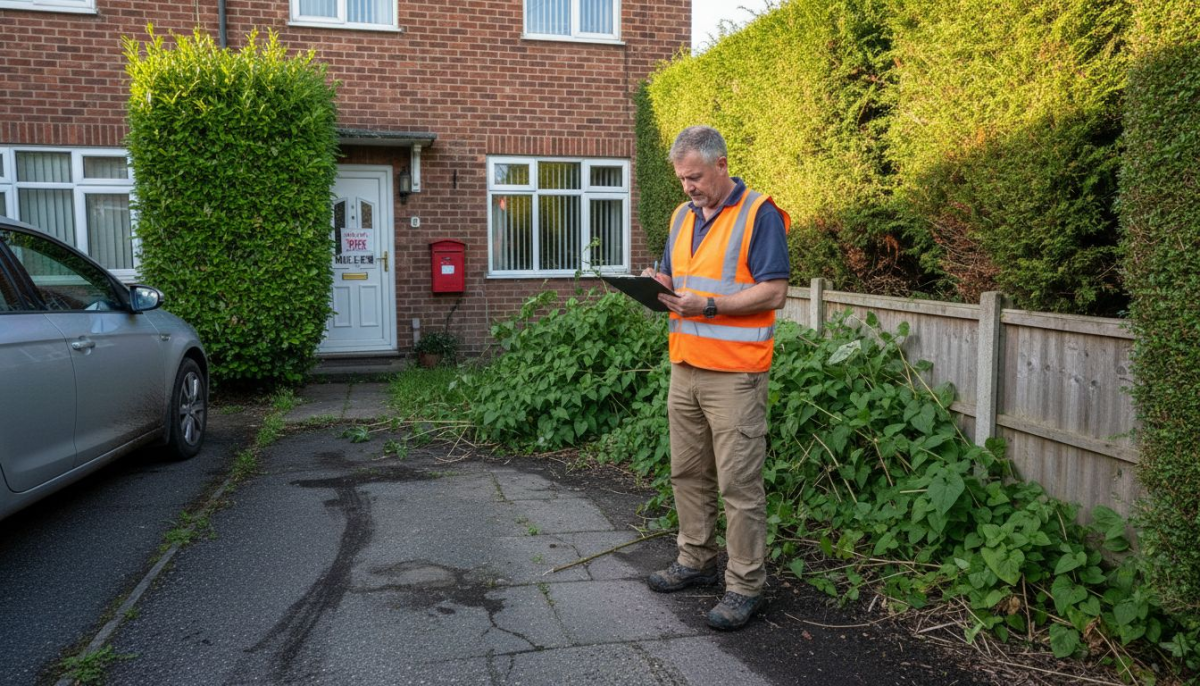
Many homeowners believe chemical herbicides offer a quick, reliable solution for Japanese Knotweed infestations across England, Wales, and Ireland. However, mounting scientific evidence reveals significant health hazards, environmental damage, and financial consequences tied to these treatments. This guide examines the documented risks of chemical herbicide use and presents safer, chemical-free alternatives that protect your family, property value, and local ecosystem.
Table of Contents
- Understanding The Risks Of Chemical Herbicides
- Health Risks Posed By Chemical Herbicides
- Environmental Impacts Of Chemical Herbicides
- Impact Of Chemical Herbicide Use On Property Value
- Common Misconceptions About Chemical Herbicides
- Chemical-Free Alternatives: Effective Solutions Without The Risks
- Legal And Regulatory Framework Governing Herbicide Use In The UK And Ireland
- Conclusion: Making Safe, Effective Japanese Knotweed Treatment Decisions
- Explore Professional Chemical-Free Knotweed Solutions
Key takeaways
| Point | Details |
|---|---|
| Health concerns | Glyphosate exposure links to cancer risks and children’s neurodevelopmental harm |
| Environmental damage | Chemical residues reduce soil microbial diversity by up to 30% and disrupt ecosystems |
| Property value impact | Herbicide contamination correlates with 15-20% valuation decreases in residential properties |
| Regulatory restrictions | UK Pesticides Regulations 2011 impose strict controls favouring safer treatment approaches |
| Chemical-free alternatives | High-voltage treatments and root barriers offer effective, compliant eradication without health risks |
Understanding the risks of chemical herbicides
Glyphosate dominates Japanese Knotweed treatment protocols throughout the UK and Ireland, yet its safety profile raises serious concerns. The International Agency for Research on Cancer classified glyphosate as a probable human carcinogen in 2015, fundamentally shifting how we should view these chemicals in residential settings. Chemical residues persist in garden soil long after application, creating prolonged exposure windows for families and pets.
Japanese Knotweed’s extensive rhizome network requires repeated herbicide applications spanning multiple growing seasons. Each treatment cycle introduces fresh contamination whilst depleting beneficial soil organisms essential for healthy garden ecosystems. Homeowners often underestimate the cumulative impact of these repeated chemical exposures on their property and surroundings.
Key characteristics of chemical herbicide treatments include:
- Persistence in soil for months or years after application
- Non-selective damage to beneficial plants and soil microbes
- Required multi-year treatment programmes with escalating costs
- Uncertain eradication outcomes despite prolonged chemical exposure
- Compliance obligations under UK pesticide regulations
The complexity of managing Japanese Knotweed through chemical means extends beyond simple application. Professional applicators must hold proper certifications, maintain detailed records, and follow strict protocols that many homeowners find impractical for residential properties.
Health risks posed by chemical herbicides
Direct contact with glyphosate-based herbicides occurs through multiple pathways in typical residential treatment scenarios. Skin absorption during application, inhalation of spray drift, and secondary contact from treated vegetation all create exposure opportunities for household members. Children face disproportionate risks due to their developing nervous systems and tendency to play in treated garden areas.
Glyphosate exposure is linked to increased cancer risk and neurodevelopmental issues in children, according to accumulating research from multiple international health agencies. Pregnant women, young children, and individuals with compromised immune systems warrant particular concern when herbicides feature in Knotweed management plans. The risks posed by Japanese Knotweed and herbicides extend beyond the plant itself to include chemical treatment hazards.
Common exposure scenarios for residential herbicide use include:
- Overspray during application affecting nearby garden areas
- Contact with freshly treated vegetation before herbicide absorption
- Residue tracking into homes on shoes, clothing, and pets
- Groundwater contamination affecting drinking water sources
- Inhalation risks during and immediately following application
Pro Tip: If chemical treatment remains your only option, ensure all household members and pets stay indoors during application and for at least 48 hours afterwards, with windows closed to prevent drift exposure.
Healthcare professionals increasingly recommend minimising herbicide exposure wherever viable alternatives exist. Chemical-free Knotweed treatments eliminate these health concerns entirely whilst achieving comparable or superior eradication outcomes through proven mechanical and energy-based methods.
Environmental impacts of chemical herbicides
Soil ecosystems represent complex networks of bacteria, fungi, and microorganisms essential for plant health and nutrient cycling. Herbicide applications disrupt these delicate balances, with studies documenting up to 30% reductions in microbial diversity following glyphosate treatments. This degradation persists long after visible Knotweed disappears, compromising future garden productivity.
Chemical residues leach through soil profiles into groundwater systems and nearby watercourses. Non-target organisms including beneficial insects, earthworms, and native plant species suffer collateral damage from herbicide applications intended solely for Japanese Knotweed. The resulting ecosystem imbalances can paradoxically favour invasive species that tolerate disturbed, chemically-stressed environments.
Environmental consequences of herbicide use include:
- Reduced earthworm populations affecting soil aeration and nutrient availability
- Contamination of surface water harming aquatic ecosystems
- Diminished populations of pollinating insects essential for garden biodiversity
- Weakened native plant species struggling to compete in chemically-stressed soils
- Long-term soil fertility decline requiring increased fertiliser inputs
Chemical-free eradication methods preserve soil health whilst effectively managing Japanese Knotweed infestations. These approaches support rather than undermine the natural biological processes that maintain healthy garden ecosystems.
Pro Tip: Before committing to any Knotweed treatment, request soil health assessments to establish baseline conditions you can monitor throughout the eradication process.
Repeated herbicide applications compound environmental damage through cumulative contamination. Each treatment cycle introduces fresh chemicals into already-stressed ecosystems, creating long-term degradation that chemical-free alternatives avoid entirely.
Impact of chemical herbicide use on property value
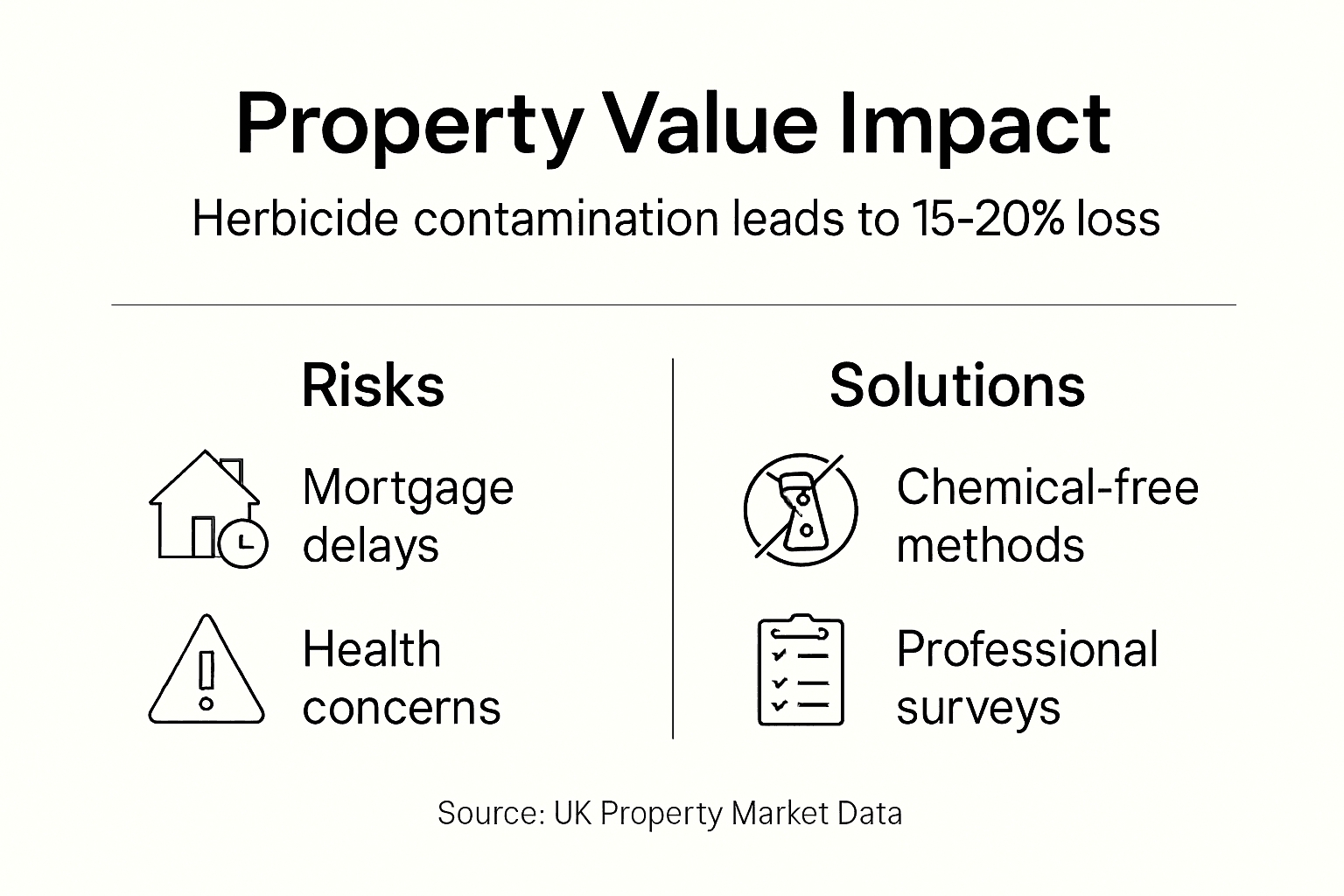
Residual herbicide contamination creates measurable concerns within property markets across England, Wales, and Ireland. Residues of herbicides correlate with a 15-20% decrease in property market value compared to uncontaminated comparable properties. Buyers increasingly request soil testing and treatment history documentation before proceeding with purchases.
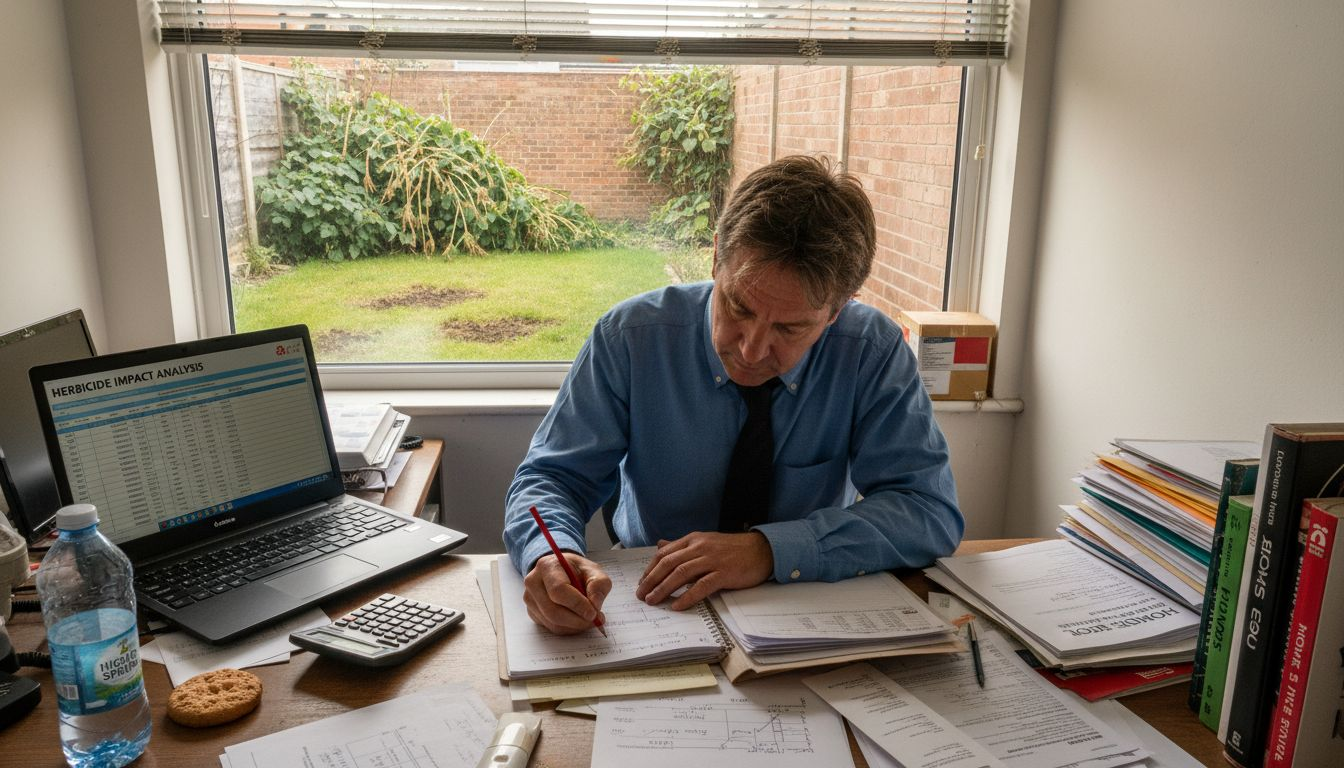
Mortgage lenders view herbicide-treated properties with heightened scrutiny, often requiring specialist surveys and indemnity insurance. These additional requirements extend transaction timescales and introduce uncertainty that can derail sales. Properties with documented chemical treatment histories face narrower buyer pools and reduced competitive bidding.
| Factor | Impact on Property Value | Timeframe |
|---|---|---|
| Herbicide residue presence | 15-20% valuation reduction | Immediate and ongoing |
| Required soil remediation | Additional 5-10% cost factor | Pre-sale requirement |
| Buyer perception concerns | Extended marketing periods | 3-6 months longer |
| Mortgage lending restrictions | Reduced buyer financing options | Transaction stage |
Solicitors now routinely include herbicide treatment disclosure requirements in property information forms. Failure to disclose chemical treatments can trigger legal disputes and financial penalties after completion. The property value impact of herbicide contamination extends beyond sale price to affect marketability and transaction success rates.
Chemical-free Knotweed treatments eliminate these valuation concerns entirely. Properties managed through non-chemical methods maintain full market value and face no disclosure complications, providing financial protection alongside effective eradication.
Common misconceptions about chemical herbicides
Many homeowners mistakenly believe herbicide application guarantees complete Japanese Knotweed removal. Reality demonstrates otherwise, with regrowth occurring in 40-60% of chemically-treated infestations within two years. Temporary suppression creates false confidence that often delays truly effective intervention.
The assumption that herbicides offer the quickest solution ignores treatment timelines typically spanning three to five growing seasons. Chemical-free alternatives often achieve comparable results within similar or shorter timeframes without associated health and environmental costs. Common misconceptions about herbicides persist despite mounting evidence of their limitations.
Widespread false beliefs include:
- Single herbicide applications suffice for Knotweed eradication
- Chemical treatments cost less than alternative methods over full treatment cycles
- Herbicides pose no risks when applied by professionals
- Glyphosate breaks down rapidly, leaving no lasting residues
- Chemical treatment avoids the need for ongoing monitoring
Some chemical treatments may inadvertently stress Knotweed into producing more vigorous rhizome growth as a survival response. This defensive mechanism can actually increase underground biomass whilst surface growth appears diminished, complicating future eradication efforts.
Chemical-free approaches eliminate guesswork through direct mechanical or energy-based intervention. These methods provide visible, measurable progress without the uncertainties and hidden costs associated with herbicide-dependent strategies.
Chemical-free alternatives: effective solutions without the risks
High-voltage energy treatments represent cutting-edge Japanese Knotweed control, delivering up to 5000 volts directly into rhizome systems. This approach causes immediate cellular damage and progressive energy depletion across extensive underground networks. Each treatment session weakens the plant’s capacity to regenerate without introducing any chemical contamination.
Root barrier installations provide mechanical containment, reducing rhizome spread by up to 90% when properly designed and installed. These physical barriers complement other treatment methods whilst protecting vulnerable areas like building foundations and neighbouring properties. The chemical-free knotweed eradication workflow integrates multiple techniques for comprehensive management.
Pro Tip: Combining high-voltage treatments with root barriers achieves faster eradication than single-method approaches, typically reducing total treatment time by 30-40%.
| Treatment Method | Effectiveness Rate | Environmental Impact | Typical Duration | Regulatory Compliance |
|---|---|---|---|---|
| Chemical herbicides | 60-70% success | High contamination risk | 3-5 years | Requires licensing |
| High-voltage energy | 85-95% success | Zero contamination | 2-3 years | Fully compliant |
| Root barriers | 90% containment | Minimal disturbance | Immediate protection | No restrictions |
| Combined approach | 95%+ success | Zero contamination | 18-30 months | Fully compliant |
Key advantages of chemical-free methods include:
- Immediate safety for children and pets following treatment
- Preservation of beneficial soil organisms and garden biodiversity
- No property value reduction from chemical contamination
- Simplified regulatory compliance without pesticide licensing
- Visible, measurable progress at each treatment stage
The chemical-free knotweed treatment process provides homeowners with transparent, predictable outcomes. These methods debunk herbicide misconceptions by demonstrating superior efficacy without associated risks.
Excavation works offer definitive removal for smaller infestations or pre-construction scenarios. Whilst more invasive than energy treatments, excavation provides immediate eradication when project timelines demand rapid resolution. Professional assessment determines which approach or combination best suits individual property circumstances.
Legal and regulatory framework governing herbicide use in the UK and Ireland
The UK Pesticides Regulations 2011 establish strict controls governing herbicide purchase, storage, and application. Homeowners attempting DIY Knotweed treatment with professional-grade herbicides may unknowingly breach these regulations, risking enforcement action and financial penalties. Commercial applicators must hold valid certificates of competence demonstrating proper training.
Control of Substances Hazardous to Health (COSHH) regulations impose additional obligations on anyone using herbicides in residential settings. Risk assessments, proper protective equipment, and safe storage requirements often prove impractical for typical homeowners. Professional chemical applicators carry liability insurance specifically covering herbicide-related incidents.
Key regulatory considerations include:
- Certificate of competence required for professional herbicide application
- Detailed record-keeping obligations for all pesticide use
- Restrictions on herbicide application near watercourses and sensitive habitats
- Notification requirements for neighbouring properties before treatment
- Potential criminal liability for improper herbicide disposal
Irish pesticide regulations mirror UK standards through the Sustainable Use of Pesticides Directive implementation. Both jurisdictions increasingly favour integrated pest management approaches that minimise chemical dependency. Regulatory trends consistently move towards stricter herbicide controls and enhanced protection for human health and environment.
Chemical-free Japanese Knotweed treatments face no regulatory restrictions beyond standard garden maintenance. This simplified compliance landscape removes legal complexity whilst delivering effective eradication aligned with evolving environmental protection standards.
Conclusion: making safe, effective Japanese Knotweed treatment decisions
The evidence overwhelmingly supports avoiding chemical herbicides for residential Japanese Knotweed management. Health risks to families, environmental degradation, property value reduction, and regulatory complexity create a compelling case for alternative approaches. Chemical-free treatments deliver superior outcomes across every meaningful metric.
Homeowners in England, Wales, and Ireland now access proven technologies that eradicate Japanese Knotweed without compromise. High-voltage energy systems and root barriers combine effectiveness with safety, protecting both immediate property interests and long-term investment value. Professional assessment ensures treatment strategies match specific infestation characteristics and site conditions.
UK and Irish regulations increasingly recognise chemical-free approaches as best practice for invasive species management. This regulatory alignment provides confidence that choosing non-chemical methods positions your property favourably for future compliance requirements. The financial, health, and environmental cases for avoiding herbicides strengthen yearly as research expands and regulatory standards evolve.
Protecting your family whilst achieving complete Knotweed eradication no longer requires accepting chemical contamination risks. Professional chemical-free services deliver results that preserve property value, comply with regulations, and maintain garden ecosystem health for years ahead.
Explore professional chemical-free knotweed solutions
Japanese Knotweed Agency pioneered chemical-free treatment and eradication across England, Wales, and Ireland, developing proven methods that protect your family and property value. Our high-voltage energy delivery system targets rhizome networks with up to 5000 volts, achieving cellular damage and energy depletion without any chemical residues.

Discover our comprehensive chemical-free knotweed treatment process designed specifically for residential properties. We combine cutting-edge technology with root barrier installations and excavation services when required. Our detailed chemical-free eradication workflow ensures transparent progress tracking throughout your treatment programme. Visit our common questions about knotweed treatment for immediate answers, or contact us directly for a professional property survey tailored to your specific circumstances.
Frequently asked questions about chemical herbicides and knotweed
Why is glyphosate considered hazardous to health?
Glyphosate received classification as a probable human carcinogen by the International Agency for Research on Cancer in 2015 based on accumulating evidence linking exposure to increased cancer risks. Research also documents neurodevelopmental concerns for children exposed during critical growth periods, prompting health agencies worldwide to recommend minimising residential use.
Are chemical herbicides guaranteed to remove Japanese Knotweed?
No treatment method provides absolute guarantees, but herbicides show particularly high failure rates with 40-60% of treated infestations experiencing regrowth within two years. Chemical treatments require multi-year programmes with repeated applications, creating prolonged exposure risks without assured eradication outcomes.
What chemical-free methods are effective for Knotweed control?
High-voltage energy treatments deliver direct cellular damage to rhizome systems, achieving 85-95% eradication success rates within 2-3 years. Root barriers provide 90% containment when properly installed, whilst excavation offers immediate removal for appropriate circumstances. Combined approaches typically exceed 95% success rates.
Can chemical herbicides lower my property’s value?
Yes, herbicide residues correlate with 15-20% property valuation reductions compared to uncontaminated comparable properties. Buyers increasingly request treatment history disclosure and soil testing, whilst mortgage lenders impose additional survey requirements that complicate transactions and narrow buyer pools.
What regulations govern herbicide use in UK homes?
The UK Pesticides Regulations 2011 and COSHH requirements establish strict controls on herbicide purchase, storage, application, and disposal. Professional applicators need valid certificates of competence, whilst homeowners face complex compliance obligations including risk assessments, protective equipment requirements, and detailed record-keeping that chemical-free methods avoid entirely.