

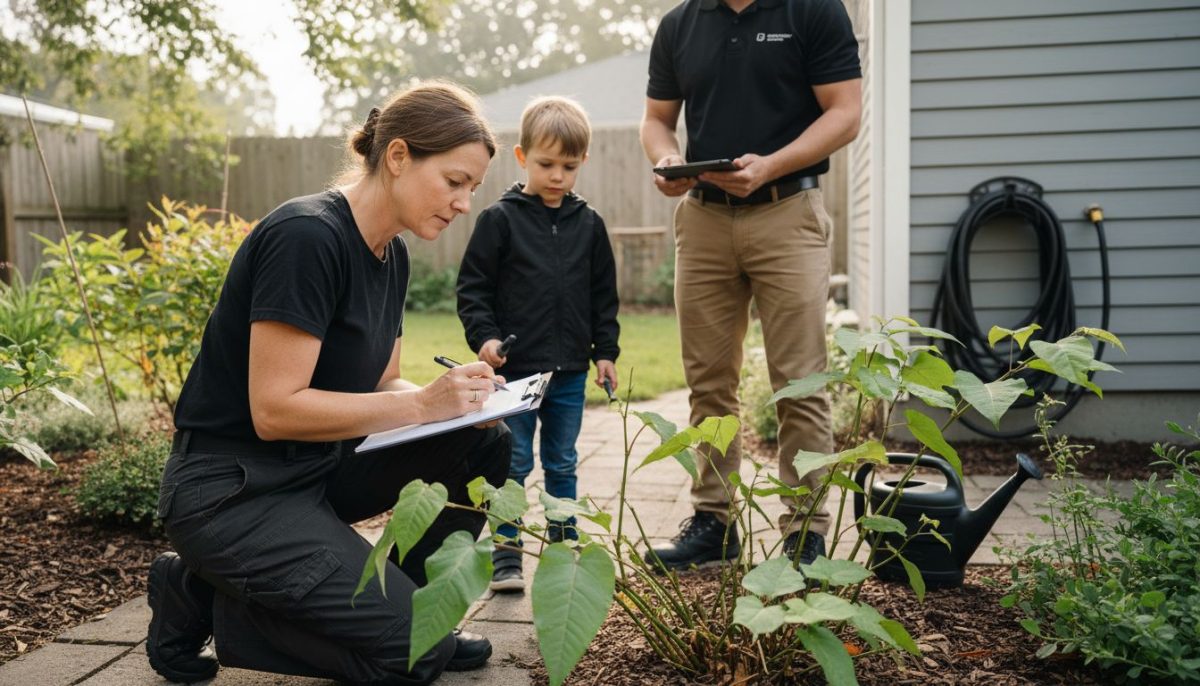
Japanese knotweed can reduce property values by as much as 20 percent, leaving many homeowners with unexpected repair bills. Its rapid underground spread and stubborn growth make it one of the most difficult invasive plants to tackle. Early identification, proactive management, and a clear understanding of your legal risks are vital for protecting both your home and investment. This guide breaks down practical steps for spotting, assessing, and controlling Japanese knotweed before it causes lasting damage.
Table of Contents
- Identify Japanese Knotweed Growth on Your Property
- Assess the Extent of Infestation Thoroughly
- Understand Legal Obligations for Homeowners
- Schedule a Professional Property Survey
- Explore Chemical-Free Eradication Methods
- Install Root Barriers for Future Protection
- Monitor and Document Ongoing Progress
Quick Summary
| Takeaway | Explanation |
|---|---|
| 1. Identify Japanese knotweed early. | Early detection can prevent significant property damage and removal expenses. |
| 2. Conduct a thorough infestation assessment. | Understanding the full extent helps in effective management and eradication planning. |
| 3. Understand legal responsibilities as a homeowner. | Failure to manage knotweed can result in legal liabilities and financial repercussions. |
| 4. Schedule a professional property survey. | Expert surveys provide insights into the knotweed’s presence and associated risks. |
| 5. Implement ongoing monitoring and documentation. | Regular checks and records protect property value and help manage future infestations. |
1. Identify Japanese Knotweed Growth on Your Property
Identifying Japanese knotweed early can save you thousands in potential property damage and removal costs. According to the Royal Horticultural Society, this invasive plant has distinct characteristics that set it apart from other garden vegetation.
Japanese knotweed presents a unique visual signature that makes it recognizable to the trained eye. Key identification markers include:
- Bamboo-like hollow stems with distinctive purple speckles
- Large shield-shaped green leaves positioned alternately along the stem
- Clustered white flower clusters appearing in late summer
- Rapid growth patterns that can reach up to 10 centimeters per day during peak season
The plant’s aggressive growth means it can penetrate concrete foundations, damage building structures, and spread rapidly through underground rhizome networks. A single fragment as small as 0.7 grams can regenerate into a completely new plant, making early detection critical.
To confirm identification, look for these telltale signs during growing seasons between May and October. If you suspect Japanese knotweed on your property, consider using our free Japanese knotweed identification service to get professional confirmation before the situation escalates.
2. Assess the Extent of Infestation Thoroughly
Understanding the true scope of Japanese knotweed on your property requires a systematic and thorough investigation. As the Royal Horticultural Society advises, evaluating the spread of this invasive plant involves carefully examining both visible growth and potential underground networks.
Key Assessment Strategies include:
- Measure the total area of visible plant growth
- Check surrounding landscape for potential spread
- Document locations of primary and secondary growth clusters
- Investigate potential underground rhizome networks
Japanese knotweed can spread incredibly quickly. What appears to be a small surface patch could represent a massive underground system extending several meters from the visible plants. This hidden growth means a seemingly minor infestation could potentially compromise building foundations, drainage systems, and landscape integrity.
Professional surveyors recommend creating a detailed map of the affected area. Take photographs from multiple angles, measure the dimensions of growth clusters, and note proximity to structures. By documenting everything meticulously, you create a crucial baseline for understanding the potential risks and planning effective eradication strategies.
If the task feels overwhelming, consider engaging a professional Japanese knotweed identification service to provide a comprehensive assessment and expert recommendations for your specific situation.
3. Understand Legal Obligations for Homeowners
Japanese knotweed is more than an environmental nuisance it represents a significant legal responsibility for property owners. According to Natural Resources Wales, while having Japanese knotweed on your property is not illegal, allowing it to spread can lead to serious legal consequences.
Critical Legal Considerations for homeowners include:
- Preventing spread to neighboring properties
- Proper disposal of plant material
- Compliance with environmental protection regulations
- Potential financial liabilities for damage caused
The House of Commons report highlights that property owners can be held legally responsible for damages resulting from unchecked Japanese knotweed growth. This means if the plant spreads to adjacent properties or causes structural damage, you could face significant financial and legal repercussions.
It is crucial to document any Japanese knotweed presence and take immediate professional action. Proper management involves working with specialized removal services that understand both environmental regulations and legal requirements. Failure to address the issue can result in potential lawsuits, reduced property value, and challenges with property sales or insurance.
To protect yourself legally, learn more about understanding the laws regarding Japanese knotweed and consult with professionals who can guide you through proper management and removal processes.
4. Schedule a Professional Property Survey
A professional property survey represents your first line of defense against potentially devastating Japanese knotweed damage. According to the Royal Horticultural Society, engaging qualified surveyors can provide critical insights into managing this invasive plant effectively.
Survey Objectives include:
- Comprehensive site assessment
- Precise identification of knotweed presence
- Evaluation of potential property damage risks
- Development of targeted removal strategies
Natural Resources Wales emphasizes the importance of professional consultation to control knotweed infestations. A thorough survey goes beyond simple plant identification it provides a roadmap for legal compliance and property protection.
Professional surveyors use specialized techniques to detect both visible and underground knotweed growth. They can identify potential risks that untrained eyes might miss, potentially saving you thousands in future repair costs. Many mortgage lenders and insurers now require a professional survey before property transactions.
Ready to take the next step? Book a survey with experts who understand the nuanced challenges of Japanese knotweed management and can provide a comprehensive assessment of your property.
5. Explore Chemical-Free Eradication Methods
Chemical-free Japanese knotweed eradication offers an environmentally responsible approach to managing this invasive plant. According to the Royal Horticultural Society, non-chemical control methods require careful planning and thorough execution.
Key Chemical-Free Eradication Strategies include:
- Systematic excavation of entire root systems
- Deep burial of plant material in controlled landfill sites
- Repeated physical removal of above ground growth
- Targeted energy treatment to disrupt rhizome networks
Natural Resources Wales emphasizes the critical importance of complete root removal. Even tiny fragments of rhizome can regenerate into entirely new plants, making precision essential in any eradication strategy.
Physical removal demands meticulous attention to detail. Professionals recommend removing soil to significant depths and implementing strict containment protocols to prevent accidental spread. Some advanced techniques involve using high voltage electrical treatments that disrupt the plant’s cellular structure without introducing chemical agents.
Want to learn more about innovative approaches? Check out our blog articles on Japanese knotweed management for the latest insights into chemical-free eradication techniques.
6. Install Root Barriers for Future Protection
Root barriers represent a strategic defense against the aggressive underground spread of Japanese knotweed. According to the Royal Horticultural Society, these specialized barriers provide a critical line of protection for your property’s infrastructure and landscape.
Root Barrier Installation Essentials include:
- Selecting high density polypropylene membranes
- Installing barriers to minimum depths of 2 meters
- Ensuring complete perimeter coverage
- Creating seamless connections between barrier sections
Natural Resources Wales emphasizes professional installation as crucial for preventing rhizome penetration. The barriers must be robust enough to withstand significant underground pressure while creating an impenetrable zone that prevents knotweed root systems from spreading.
Professional installation involves precise underground mapping and strategic barrier placement. Barriers must extend both vertically and horizontally to create a comprehensive containment system. Some advanced solutions involve combining physical barriers with electrical treatment technologies to provide multilayered protection.
Ready to protect your property? Explore our comprehensive root barrier installation services designed to safeguard your landscape from invasive plant spread.
7. Monitor and Document Ongoing Progress
Successful Japanese knotweed management requires persistent vigilance and meticulous documentation. According to the Royal Horticultural Society, regular monitoring is crucial for tracking treatment effectiveness and preventing potential regrowth.
Comprehensive Monitoring Strategies include:
- Conducting quarterly site inspections
- Photographing affected areas for visual comparison
- Tracking plant growth patterns and changes
- Maintaining detailed treatment and observation logs
Natural Resources Wales emphasizes that effective documentation serves multiple purposes beyond treatment tracking. These records can protect your property value, provide legal evidence if needed, and help refine future management approaches.
Your monitoring process should be systematic and thorough. Look for signs of new growth, measure the extent of any remaining vegetation, and note any changes in the treatment area. Digital tools can help you create consistent, timestamped records that provide a clear historical view of your Japanese knotweed management efforts.
Though the process might seem tedious, comprehensive documentation is your best defense against potential property damage and future infestations.
Below is a comprehensive table summarizing the key strategies and considerations for identifying, managing, and eradicating Japanese knotweed as discussed in the article.
| Aspect | Key Strategies & Considerations | Expected Outcomes |
|---|---|---|
| Identification | Look for bamboo-like stems, shield-shaped leaves, and white flowers; use professional services | Early detection prevents damage and high costs |
| Assessment | Measure growth, check landscape spread, document clusters, and investigate rhizomes | Understanding extent helps prevent structural damage |
| Legal Obligations | Prevent spread, ensure proper disposal, comply with regulations, be aware of financial liabilities | Avoid legal issues, maintain property value |
| Professional Survey | Conduct comprehensive assessments, identify risks, and develop removal strategies | Targeted management and legal compliance |
| Chemical-Free Eradication | Excavate roots, deep burial, repeat removals, energy treatments | Environmentally responsible plant control |
| Root Barrier Installation | Use high density membranes, ensure complete coverage, professional installation | Long-term protection against underground spread |
| Monitoring and Documentation | Regular inspections, photo tracking, growth pattern logging | Improved management and property value protection |
Take Control of Japanese Knotweed with Proven, Chemical-Free Solutions
Dealing with Japanese knotweed can feel overwhelming because of its rapid spread and potential legal issues. This article’s checklist highlights the importance of early identification, thorough assessment, and ongoing management. If you are worried about invasive roots damaging your home or legal responsibilities mounting, you are not alone. Many homeowners face these challenges, but there is an effective way forward.
At Japanese Knotweed Agency, we specialize in chemical-free eradication techniques that disrupt the plant’s extensive rhizome network safely and efficiently. Our energy-based treatments can save your property from costly damage while avoiding harmful chemicals. We also offer expert property surveys to accurately assess infestations and professional root barrier installation services that protect your landscape for the long term. Act now to safeguard your home and comply with legal duties by visiting Japanese Knotweed Agency for tailored solutions you can trust.
Frequently Asked Questions
How can I identify Japanese knotweed on my property?
Identifying Japanese knotweed involves looking for bamboo-like hollow stems, large shield-shaped leaves, and clustered white flowers appearing in late summer. Conduct a thorough visual inspection, especially between May and October, to spot these distinctive characteristics early.
What steps should I take to assess the extent of a Japanese knotweed infestation?
To assess the infestation, measure the total area of visible plant growth and document the locations of growth clusters. Create a detailed map and take photographs to understand the potential underground network, which can extend several meters from visible plants.
What legal obligations do I have if I find Japanese knotweed?
As a homeowner, you must prevent the spread of Japanese knotweed to neighboring properties and ensure proper disposal of plant material. Failing to manage it could result in financial liabilities, so it’s critical to document any presence and seek professional help as soon as you suspect an infestation.
How should I schedule a professional property survey for Japanese knotweed?
Book a professional survey by contacting a qualified surveyor who specializes in identifying Japanese knotweed. Aim to schedule this survey as soon as you find potential signs of the plant to address any risks early and effectively.
What are effective chemical-free methods for eradicating Japanese knotweed?
Effective chemical-free methods include systematically excavating the entire root system and physically removing all above-ground growth. Implement these methods as part of a comprehensive eradication plan to ensure complete removal, which is crucial for preventing regrowth.
How can I monitor the ongoing treatment progress of Japanese knotweed?
Regularly monitor your property by conducting quarterly inspections and maintaining detailed logs of treatment efforts and observed changes. Document the areas affected with photographs for visual comparison to track progress and catch any signs of regrowth early.