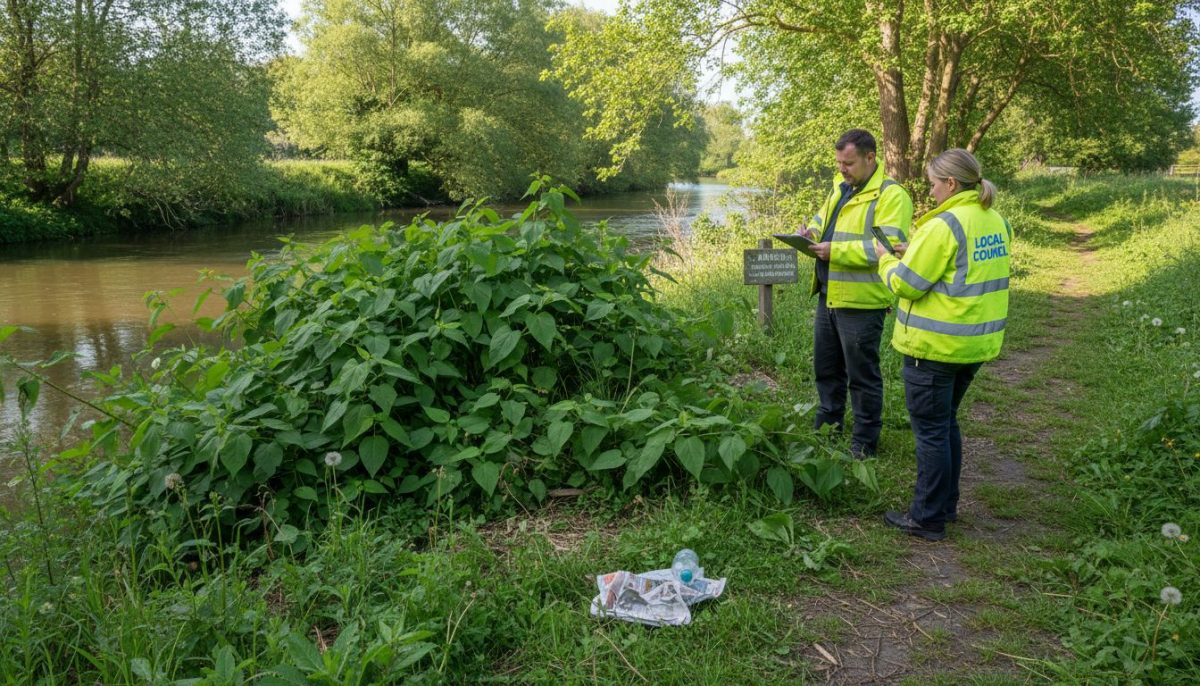
Finding Japanese Knotweed in your garden can quickly turn excitement about a new home into worry about legal obligations and property value. Across England, Wales, and Ireland, invasive weeds threaten both biodiversity and personal investments, often requiring immediate action. This guide explains non-native invasive species and the governmental strategies designed to protect homeowners, focusing on eco-friendly methods and practical guidance for anyone seeking a chemical-free solution or official property assessment.
Table of Contents
- Defining Invasive Weeds And Government Involvement
- Legal Responsibilities For Managing Japanese Knotweed
- How Authorities Monitor And Enforce Weed Control
- Approved Control Methods And Eco-Friendly Alternatives
- Financial Support And Penalties For Non-Compliance
Key Takeaways
| Point | Details |
|---|---|
| Understanding Invasive Weeds | Invasive weeds, particularly non-native species, threaten biodiversity and agricultural productivity, necessitating government intervention. |
| Legal Responsibilities | Property owners must adhere to strict legal obligations regarding the management of invasive species like Japanese Knotweed to prevent ecological damage and financial penalties. |
| Monitoring and Enforcement | Authorities employ integrated strategies to monitor invasive species, using advanced techniques and collaboration to ensure effective control and management. |
| Eco-Friendly Control Methods | Sustainable management approaches focus on non-chemical control methods, balancing environmental protection with effective invasive weed management. |
Defining Invasive Weeds and Government Involvement
Invasive weeds represent a significant ecological challenge in the United Kingdom, requiring strategic governmental intervention and comprehensive management approaches. Non-native invasive species pose substantial risks to native biodiversity, agricultural productivity, and economic stability. The UK government has developed robust frameworks to address these environmental threats through coordinated national strategies.
The Great Britain Invasive Non-Native Species Strategy defines invasive weeds as plant species introduced from outside their natural geographical range that demonstrate potential to spread aggressively and cause significant ecological disruption. These plants typically exhibit rapid growth, high reproductive capabilities, and minimal natural predation in their new environments. Common examples include Japanese Knotweed, Himalayan Balsam, and Giant Hogweed, which can rapidly colonise landscapes and outcompete native vegetation.
Governmental responses to invasive weeds involve multilayered strategies centred on prevention, early detection, and systematic management. The GB Non-native Species Information Portal plays a crucial role by providing comprehensive monitoring and surveillance data to support policy decisions. Key governmental approaches include:
The following table compares characteristics of three common invasive weeds in the UK:
| Invasive Weed | Notable Impact | Control Difficulty |
|---|---|---|
| Japanese Knotweed | Causes structural damage | Very challenging |
| Himalayan Balsam | Disrupts riverbanks | Moderately difficult |
| Giant Hogweed | Toxic to humans/animals | High, hazardous |
- Establishing legal frameworks restricting the introduction and spread of known invasive species
- Developing comprehensive mapping and tracking systems
- Funding research into ecological control methods
- Providing guidance and support for landowners and local authorities
- Implementing targeted eradication programmes
Pro tip: If you suspect invasive weeds on your property, contact local environmental authorities immediately to prevent potential spread and minimise ecological damage.
Legal Responsibilities for Managing Japanese Knotweed
Managing Japanese Knotweed involves complex legal obligations that extend far beyond simple garden maintenance. Property owners face significant legal responsibilities when dealing with this highly invasive plant, which can cause substantial structural damage and impact property values. Japanese Knotweed legal requirements are stringent and designed to prevent ecological and economic harm.

Under the Wildlife and Countryside Act legal provisions, property owners are legally obligated to prevent Japanese Knotweed from spreading to neighbouring lands. This means proactively managing the plant’s growth and implementing professional eradication strategies. Failure to control Japanese Knotweed can result in substantial financial penalties, potential civil litigation, and significant difficulties during property transactions.
The legal framework surrounding Japanese Knotweed management includes several critical responsibilities:
- Preventing plant dispersal to adjacent properties
- Reporting confirmed infestations to local authorities
- Implementing professional removal or treatment programmes
- Maintaining comprehensive documentation of control efforts
- Disclosing knotweed presence during property sales
Key legislative requirements mandate that property owners take responsible action, which typically involves:
- Conducting professional surveys to confirm infestation
- Developing a comprehensive management plan
- Engaging certified removal specialists
- Obtaining necessary treatment certifications
- Maintaining ongoing monitoring and control
Pro tip: Always secure professional documentation and treatment certificates when managing Japanese Knotweed to protect yourself legally and financially.
How Authorities Monitor and Enforce Weed Control
Local and national authorities in the United Kingdom employ sophisticated strategies to monitor and control invasive weed populations across public and private lands. Integrated Weed Management strategies represent a comprehensive approach that combines multiple techniques to identify, assess, and manage potentially harmful plant species.
The monitoring process involves systematic surveying of landscapes, recording invasive plant distributions, and assessing potential ecological risks. Government agencies collaborate with environmental organisations to develop detailed mapping systems that track the spread of invasive weeds like Japanese Knotweed, Himalayan Balsam, and Giant Hogweed. These efforts rely on a combination of technological tools, professional expertise, and community reporting to maintain accurate and up-to-date information.
Key enforcement mechanisms include:
- Conducting regular site inspections
- Issuing legal notices to property owners
- Implementing mandatory treatment programmes
- Levying financial penalties for non-compliance
- Developing collaborative removal strategies
Authorities utilise multiple control methods:
- Visual ground surveys
- Satellite and aerial imaging
- Volunteer reporting networks
- Professional ecological assessments
- Digital tracking and monitoring systems
Pro tip: Contact your local environmental health department if you suspect significant invasive weed presence, as early reporting can prevent widespread ecological damage.
Approved Control Methods and Eco-Friendly Alternatives
Invasive weed management in the United Kingdom requires a nuanced approach that balances environmental protection with effective control strategies. Non-chemical control methods have gained significant traction as environmentally responsible alternatives to traditional herbicide treatments, offering sustainable solutions for landowners and environmental managers.
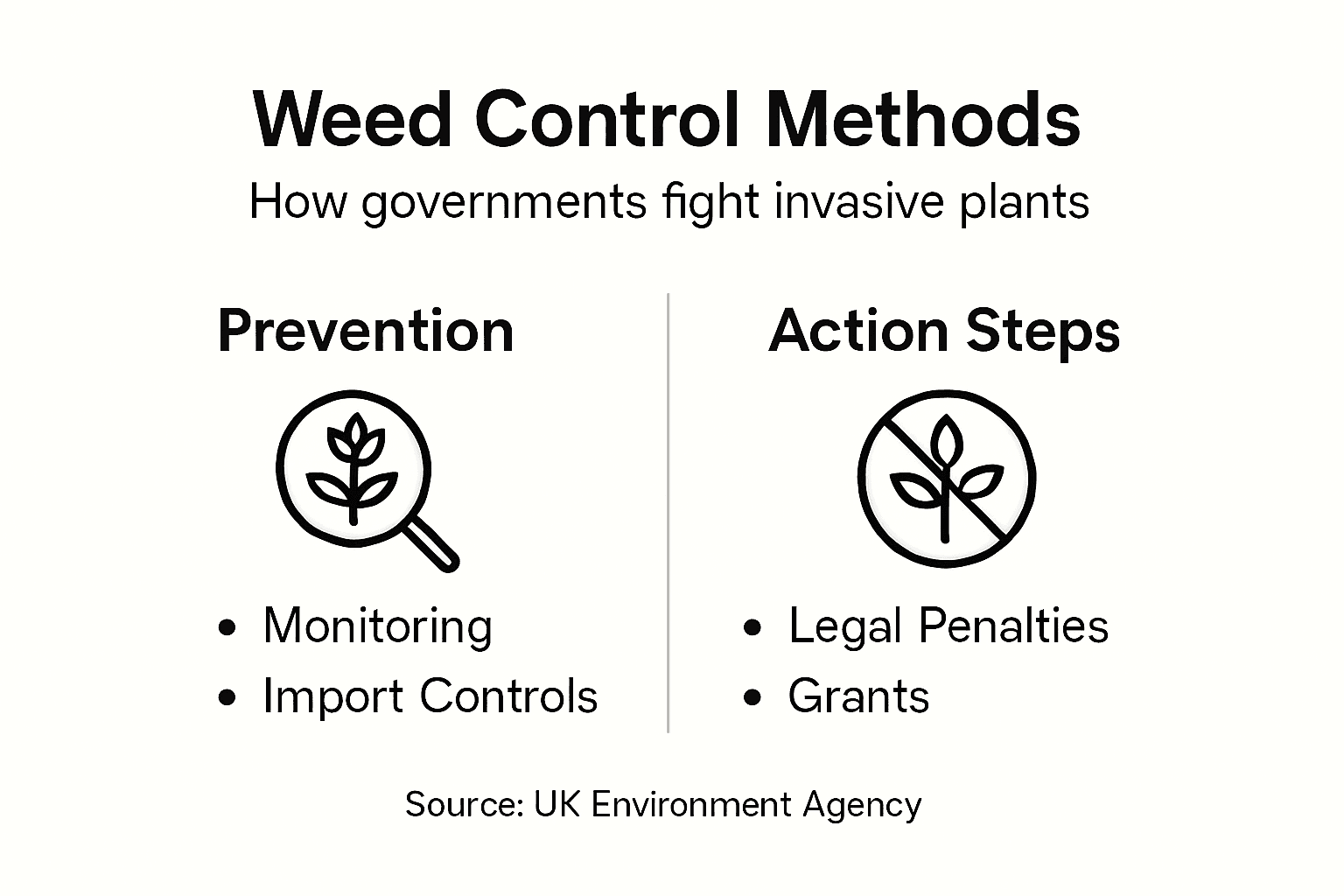
The approved control methods encompass a range of techniques designed to minimise ecological disruption while effectively managing invasive plant populations. These approaches include manual removal, which involves physically extracting plant systems, repeated cutting to deplete plant energy reserves, and strategic barriers that prevent plant spread. Biological control methods leverage natural predators or competitive plant species to limit invasive weed growth, providing a more holistic approach to ecosystem management.
Key eco-friendly control strategies include:
Here is a summary of eco-friendly weed control methods and their environmental benefit:
| Method | Environmental Advantage |
|---|---|
| Manual extraction | No chemical residues left on site |
| Repeated cutting/mowing | Preserves soil quality and local species |
| Biological controls | Supports ecosystem balance |
| Thermal techniques | Avoids herbicide contamination |
- Manual extraction and root system removal
- Repeated cutting and mowing
- Covering and smothering techniques
- Biological control through competitive planting
- Thermal treatment methods
- Prevention through landscape management
Professional approaches typically combine multiple techniques:
- Initial comprehensive site assessment
- Targeted removal strategies
- Ongoing monitoring and management
- Ecosystem rehabilitation
- Preventative landscape design
Pro tip: Consult professional ecological experts to develop a tailored, environmentally sensitive invasive weed management plan specific to your property’s unique characteristics.
Financial Support and Penalties for Non-Compliance
The United Kingdom’s approach to invasive species management combines robust legal frameworks with financial mechanisms designed to encourage compliance and environmental responsibility. Invasive Alien Species enforcement represents a comprehensive strategy that balances punitive measures with supportive interventions for property owners and land managers.
The legal landscape surrounding invasive weed management includes significant financial consequences for non-compliance. Penalties can range from substantial monetary fines to potential criminal prosecution, with maximum sentences of up to two years imprisonment for severe breaches. These strict measures reflect the government’s commitment to protecting ecological systems and preventing the spread of destructive invasive plant species.
Key financial implications include:
- Substantial on-the-spot fines for non-compliance
- Potential legal prosecution costs
- Mandatory remediation expenses
- Property value depreciation
- Environmental restoration charges
- Potential criminal record implications
Financial support and penalty structures typically involve:
- Initial warning and compliance notices
- Escalating financial penalties
- Mandatory professional intervention costs
- Potential legal proceedings
- Long-term environmental restoration requirements
Pro tip: Maintain comprehensive documentation of invasive species management efforts to protect yourself from potential financial penalties and demonstrate proactive environmental responsibility.
Take Control of Invasive Weeds with Expert, Chemical-Free Solutions
The growing role of government regulations in invasive weed management places a crucial responsibility on property owners to act swiftly and decisively. If you are facing the challenges of Japanese Knotweed or other invasive plant species, you understand the risks of structural damage, legal penalties, and environmental harm. The complexity of legal obligations such as prevention of spread and professional treatment requirements means that expert help is not optional but essential.

Japanese Knotweed Agency specialises in pioneering chemical-free eradication techniques designed to meet stringent government standards. Our advanced direct energy treatment delivers up to 5000 volts onsite, targeting the root rhizome network effectively while protecting your property and the environment. Beyond treatment, we provide comprehensive property surveys and install root barriers to prevent reinfestation. Don’t wait for enforcement action or financial penalties. Take proactive steps now by visiting Japanese Knotweed Agency to secure your property and comply confidently with UK invasive species legislation.
Frequently Asked Questions
What are invasive weeds and why are they a concern?
Invasive weeds are non-native plant species introduced from outside their natural range that can spread aggressively and disrupt local ecosystems. They threaten native biodiversity, agricultural productivity, and economic stability.
How does the government monitor invasive weed populations?
Governments employ systematic surveying, mapping systems, and collaboration with environmental organisations to monitor invasive weed distributions. They use a combination of technology, visual inspections, and community reporting to maintain accurate data.
What legal responsibilities do property owners have regarding Japanese Knotweed?
Property owners must prevent Japanese Knotweed from spreading to neighbouring properties, report infestations to local authorities, engage professional removal services, and maintain documentation of their control efforts.
What eco-friendly control methods are available for managing invasive weeds?
Eco-friendly methods include manual removal, repeated cutting, biological control through competitive planting, and thermal treatment techniques. These strategies aim to minimise ecological disruption while effectively managing invasive plant populations.