

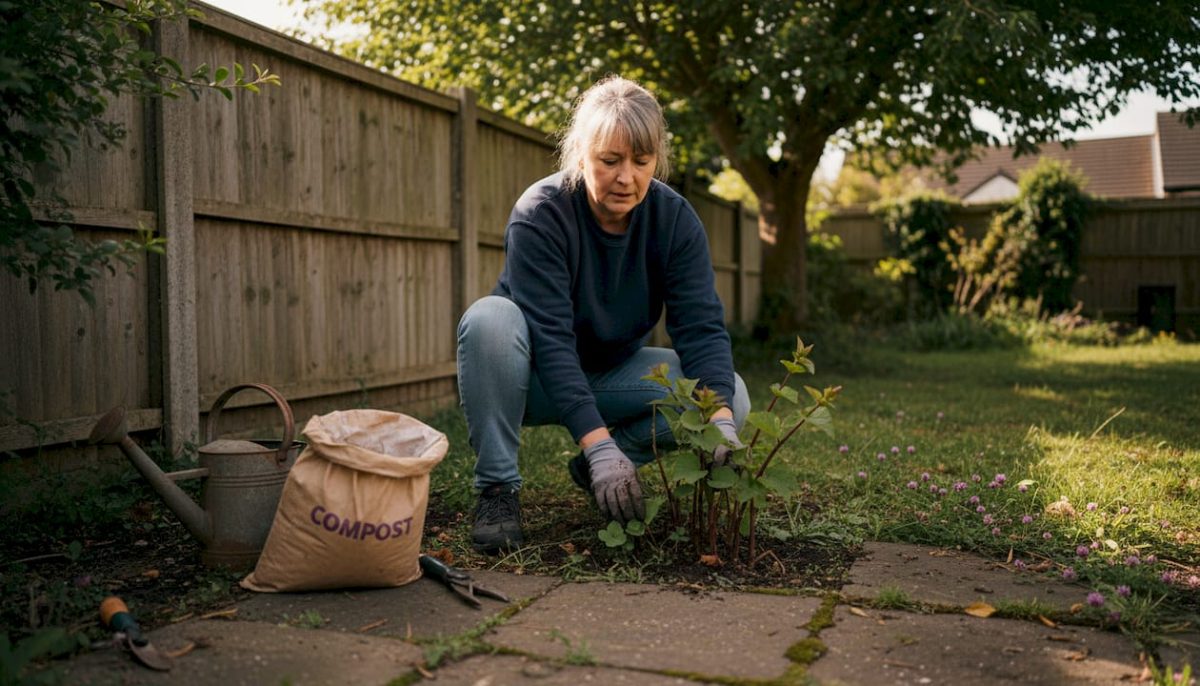
TL;DR:
- Japanese Knotweed has aggressive, indestructible underground rhizomes capable of pushing through concrete.
- Proper identification relies on seasonal signs and expert surveys due to similar lookalikes.
- Effective removal often requires professional treatment such as herbicide, excavation, or electro-thermal methods.
Most homeowners imagine plant roots as a gentle network quietly anchored beneath their garden. Japanese Knotweed’s rhizome system is the exact opposite. It is aggressive, practically indestructible when left untreated, and capable of pushing through tarmac, concrete foundations, and drainage systems. According to the Royal Horticultural Society, invasive root systems are the extensive underground rhizome networks of non-native plants that enable rapid spread, regeneration from tiny fragments, and serious structural damage to properties across England, Wales, and Ireland. If you have spotted an unfamiliar plant in your garden or received a survey flag, this guide will give you clarity on what you are dealing with.
Table of Contents
- What are invasive root systems and why do they matter?
- Identifying invasive root systems: Key signs and lookalikes
- How are invasive root systems treated?
- Surveying, legal obligations and when to act
- The uncomfortable truths about invasive root systems most guides miss
- Get expert help with invasive root systems
- Frequently asked questions
Key Takeaways
| Point | Details |
|---|---|
| Dormancy risk | Invasive root systems can remain dormant underground for decades and suddenly reactivate. |
| Lookalike mistakes | Homeowners often confuse Japanese Knotweed with harmless plants, delaying necessary action. |
| Treatment choices | Proper eradication requires understanding of options: chemical, excavation, or non-chemical solutions. |
| Survey importance | Accurate professional surveys are essential for legal compliance, property value, and effective control. |
What are invasive root systems and why do they matter?
The term “invasive root system” is not simply a gardening label. In a domestic property context, it describes an underground network that actively works against you. Japanese Knotweed (Fallopia japonica) is the most widely recognised offender in the UK, but other species including Giant Hogweed and Himalayan Balsam also cause significant problems on residential land.
What makes a root system invasive?
A standard garden shrub or tree has roots that spread predictably and remain manageable. An invasive root system behaves very differently. Japanese Knotweed grows through a network of rhizomes, which are horizontal underground stems capable of sending up new growth at multiple points simultaneously. The plant can extend its rhizome network up to three metres deep and seven metres laterally from the visible plant. This reach is what makes it so threatening to hard surfaces, boundary walls, and building foundations.
Rhizomes are also extraordinarily resilient. Fragments as small as 1cm are capable of regenerating an entirely new plant when disturbed and left in soil. This means that any digging, strimming, or removal work carried out without professional guidance can unintentionally spread the problem across your garden and potentially into neighbouring land.
The dormancy trap
One of the most underestimated aspects of invasive root systems is their capacity for dormancy. Rhizomes can sit entirely inactive beneath the soil surface for years, waiting for conditions to favour regrowth. Homeowners who believe they successfully cleared a Knotweed infestation years ago are sometimes confronted with renewed growth seasons later, often following ground disturbance during construction or landscaping work. This creates a false sense of security that frequently leads to inadequate management and greater long-term expense.
Economic and social consequences for homeowners
The financial implications of invasive root systems in the UK are considerable. Mortgage lenders routinely decline applications or require specialist management plans before agreeing to lend on properties with confirmed Knotweed. Property values can be significantly affected, and boundary disputes between neighbours over encroaching rhizomes are increasingly common. Review the common Knotweed misconceptions that lead homeowners to underestimate or mishandle the problem from the outset.
| Risk factor | Potential consequence |
|---|---|
| Unmanaged spread | Structural damage to walls, drains, and foundations |
| Rhizome fragments in soil | Regrowth after landscaping or construction |
| Undisclosed on property sale | Legal liability and mortgage complications |
| DIY removal attempts | Spread to neighbouring land, legal dispute |
Pro Tip: Never strim, rotavate, or chip away at suspected Knotweed growth without professional guidance. Each disturbed fragment becomes a potential new plant.
Identifying invasive root systems: Key signs and lookalikes
Once you understand the risks, accurate identification is your most important next step. Japanese Knotweed is frequently misidentified, and the consequences of a missed diagnosis or a false positive can both prove costly.
Seasonal characteristics to look for
Japanese Knotweed displays distinctly different appearances throughout the year, which can complicate identification if you are only looking at one season’s growth. The RHS notes these key features across its growth cycle:
- Spring: Asparagus-like shoots emerge from the crown buds at soil level, red or purple tinged and growing rapidly
- Summer: Heart-shaped or oval leaves with a flat, truncated base (not pointed), bamboo-like hollow stems with purple speckles, reaching two to four metres in height
- Late summer to early autumn: Creamy white or pale green flower clusters appear along the stems
- Winter: Stems die back to leave brittle, brown canes that persist above ground
One particularly reliable diagnostic feature is the rhizome itself. When snapped open, a fresh rhizome reveals a vivid orange or yellow interior. Crown buds, which look like dark red or purple knobbly clusters at ground level in early spring, are another strong indicator.
Japanese Knotweed versus common lookalikes
Many plants share visual characteristics with Japanese Knotweed, and misidentification is far more common than most homeowners realise. The following comparison should help you narrow down what you are dealing with:
| Feature | Japanese Knotweed | Bindweed | Russian Vine | Himalayan Balsam |
|---|---|---|---|---|
| Stem structure | Hollow, bamboo-like, speckled | Twining, slender | Twining, woody | Hollow, reddish, not bamboo-like |
| Leaf shape | Heart-shaped, flat base | Arrowhead-shaped | Heart-shaped, pointed | Oval, serrated edges |
| Root type | Deep orange rhizome | White fibrous roots | Woody rhizome | Shallow, fibrous |
| Height | 2 to 4 metres | Climbing | Climbing | 1 to 2 metres |
Step-by-step property check for homeowners
- Walk the boundary of your garden in early spring and look for clusters of dark red shoots pushing through the soil
- Check alongside fences, walls, drainage runs, and paved areas where rhizomes often emerge first
- In summer, look for the distinctive bamboo-like stems and flat-based leaves
- If you find canes from previous seasons, snap one open and check for the orange interior
- Photograph everything and consult a professional before disturbing any soil
You can consult our detailed Knotweed identification guide for additional photographic reference, and if you have any doubt about whether your property is affected, a Knotweed property survey will give you a definitive, documented answer.
Pro Tip: Photograph suspected plants in multiple seasons if possible. A single summer photograph is rarely enough for a confident professional assessment.
How are invasive root systems treated?
Accurate identification leads directly to the question every homeowner wants answered: how do you actually get rid of it? The answer depends on your site conditions, budget, timeline, and whether you are planning a property sale.
The three main treatment pathways
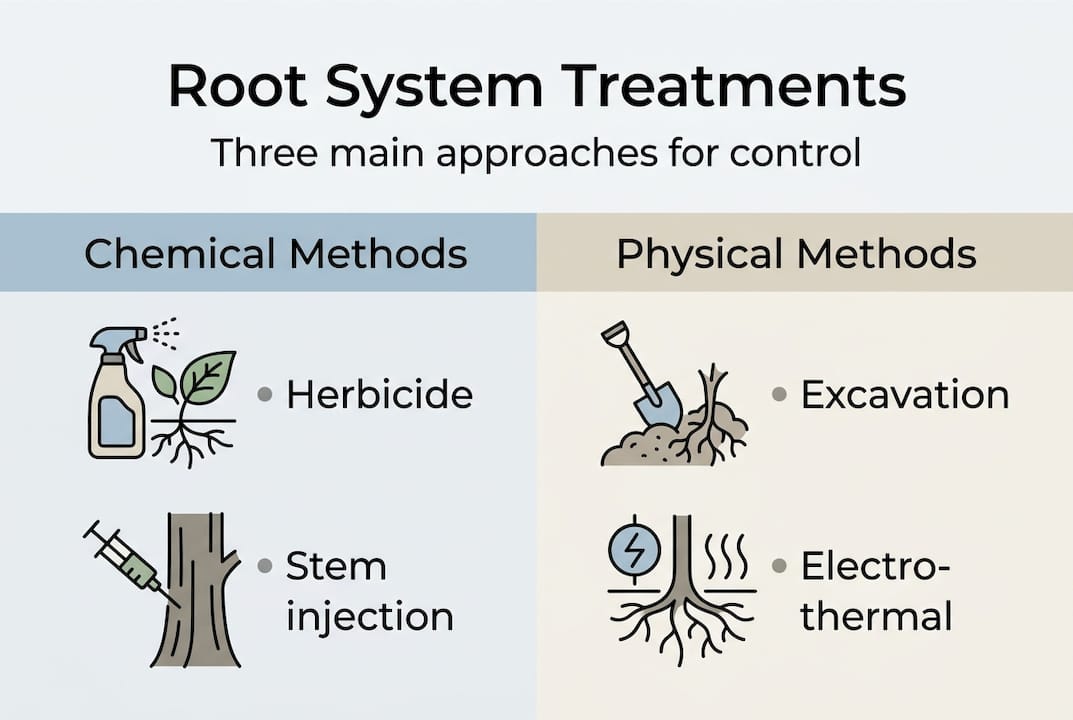
There is no single solution that fits every situation. Professional practitioners assess each site individually and recommend the most appropriate method based on the extent of infestation, proximity to buildings, and environmental sensitivity.
1. Herbicide treatment
Glyphosate-based herbicide, typically delivered by stem injection, is the most widely used method across the UK. The approach targets the plant during its most active translocation period in late summer and autumn, when it naturally moves energy downward into the rhizome network. This means the herbicide travels with that energy, reaching deeper into the root system than foliar spraying alone. The process generally takes three to five years and costs between £2,000 and £5,000 for a typical residential site. It is effective but carries implications for surrounding biodiversity and is inappropriate near watercourses without specific licensing.
2. Excavation
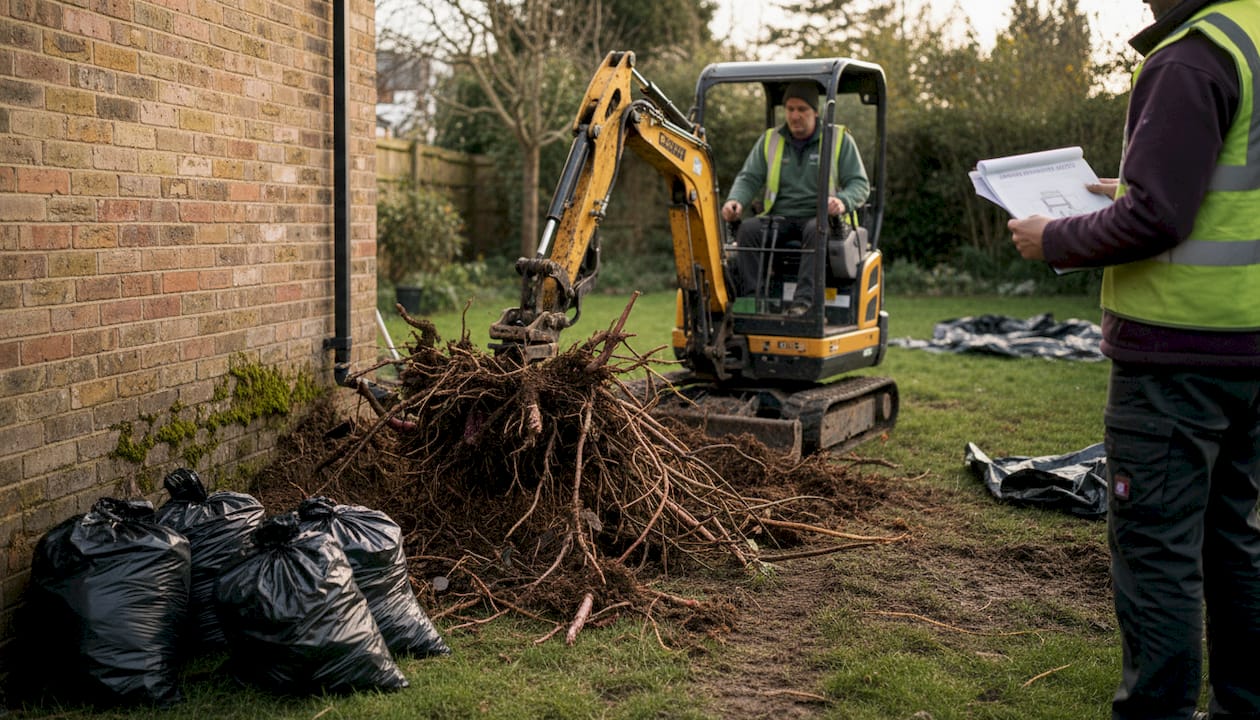
Root excavation involves the physical removal of contaminated soil to a depth of up to three metres. All excavated material must be disposed of at a licensed landfill site, as Knotweed-contaminated soil is classified as controlled waste under UK legislation. Excavation is significantly more disruptive and expensive, with costs ranging from £5,000 to £15,000 or more for residential properties, but it delivers faster results. Review the excavation vs treatment guide to understand which approach suits your circumstances.
3. Chemical-free electro-thermal treatment
This is the approach at the forefront of Japanese Knotweed Agency’s work. Rather than relying on herbicide, direct electrical energy of up to 5,000 volts is delivered into the rhizome network on site. This causes internal cell damage and depletes the energy resources stored within the extensive rhizome system with each treatment delivery. It is effective, ecologically responsible, and avoids the use of chemical agents, making it particularly suitable for sensitive environments, gardens near water, and homeowners who prefer a sustainable approach. Root barriers can also be installed alongside this method to prevent lateral rhizome migration.
| Method | Typical duration | Approximate cost | Environmental impact |
|---|---|---|---|
| Herbicide (glyphosate injection) | 3 to 5 years | £2,000 to £5,000 | Moderate |
| Excavation | Immediate to 3 months | £5,000 to £15,000+ | High (soil disturbance) |
| Electro-thermal treatment | 1 to 3 years | Variable by site | Low |
Key considerations when selecting a treatment provider include:
- Confirmation that the contractor is accredited by the Property Care Association (PCA)
- A 10-year insurance-backed guarantee provided upon completion
- A site-specific management plan documented in writing
- Clear confirmation of waste disposal procedures if excavation is involved
Review our removal best practices for a full checklist before appointing any contractor.
Pro Tip: Always request a written management plan and proof of PCA accreditation before signing any treatment contract. Without these, your guarantee may carry no legal weight with a mortgage lender.
Surveying, legal obligations and when to act
Effective treatment cannot be separated from proper risk assessment and understanding your legal position. Many homeowners only discover they have a legal obligation after an issue arises during a property sale. Acting earlier is always the better approach.
RICS survey grading explained
Professional surveys for invasive weeds in the UK follow the Royal Institution of Chartered Surveyors (RICS) 2022 framework. RICS categories run from A to D, with each grade indicating a different level of risk and recommended response:
- Category A: Knotweed is present and causing damage to structures or utilities; immediate professional management required
- Category B: Knotweed is present within seven metres of a habitable structure; professional management strongly recommended
- Category C: Knotweed is on site but further than seven metres from structures; monitoring and management plan recommended
- Category D: Knotweed is not on site but present on an adjoining property; boundary monitoring advised, typically no immediate action required
It is important to note that there is no fixed legal requirement to act based on a seven-metre boundary alone. Risk assessments are evidence-based and take site-specific factors into account. The category assigned informs your management decisions rather than dictating a mandatory course of action in all cases.
Legal duties every homeowner should understand
“It is not illegal to have Japanese Knotweed on your property. However, under Schedule 9 of the Wildlife and Countryside Act 1981, it is an offence to plant it or allow it to spread into the wild. Failing to control its spread to neighbouring land can result in legal action from neighbours or local authorities.”
Beyond the criminal provisions, homeowners face practical legal obligations around waste. Any soil or plant material contaminated with Knotweed is classified as controlled waste and must only be disposed of at a licensed site. Fly-tipping Knotweed material is a serious offence that carries significant penalties.
When selling your property, the TA6 Property Information Form requires you to disclose whether Japanese Knotweed is or has been present, or whether the property is within three metres of a neighbouring infestation. Failure to disclose this information accurately can result in misrepresentation claims and the collapse of a sale. Mortgage lenders routinely require an active management plan before agreeing to lend on affected properties.
Survey methods used by qualified practitioners include visual inspection, photographic documentation, and ground-penetrating radar (GPR) scanning to map rhizome extent below ground. For the most accurate picture, find out more about Knotweed survey accuracy and what modern survey technology can reveal about subsurface spread.
The uncomfortable truths about invasive root systems most guides miss
The technical facts about Japanese Knotweed are well documented. What receives far less attention are the practical realities that trip up homeowners who believe they have resolved the problem.
The single most overlooked risk is dormancy. Rhizomes can remain dormant for up to 20 years before conditions trigger renewed growth. This means a garden that appeared clear for a decade can suddenly show active regrowth following building works, new drainage installation, or even a particularly wet growing season. Assuming a problem is permanently resolved without ongoing annual monitoring is one of the most common and costly mistakes we see.
Misidentification also remains a persistent problem. Bindweed, Russian Vine, and Himalayan Balsam share enough visual characteristics with Knotweed to cause genuine confusion, even among experienced gardeners. Treating the wrong plant with the wrong method wastes time and money while the real infestation continues unchecked below ground.
DIY and partial treatment attempts frequently cause more harm than good. Strimming, rotavating, or cutting back Knotweed without fully addressing the rhizome simply distributes viable fragments throughout the soil. We regularly survey properties where previous DIY efforts have spread an infestation well beyond its original footprint.
Our recommendation is always to explore non-chemical Knotweed solutions as part of an annual, professionally supervised management programme. Vigilance after treatment is not optional. It is the difference between genuine eradication and a recurring problem.
Get expert help with invasive root systems
Understanding invasive root systems is genuinely complex, and the consequences of getting it wrong are significant for your property, your finances, and your legal standing.

Japanese Knotweed Agency provides professional surveys across England, Wales, and Ireland, backed by expertise in chemical-free electro-thermal treatment, root barrier installation, and full excavation works. If you are at any stage of this process, from initial suspicion through to active management, our team can provide documented, expert guidance. Explore our full Japanese Knotweed FAQs, review our chemical-free Knotweed solutions for environmentally responsible options, or learn exactly what to expect from our invasive weeds survey process before booking an assessment.
Frequently asked questions
Can invasive root systems really regrow after decades of dormancy?
Yes, rhizomes can regrow after lying dormant underground for up to 20 years, which is why ongoing annual monitoring remains essential even after successful treatment.
Is it illegal to have Japanese Knotweed on my property?
It is not illegal to have Knotweed on your property, but you must not allow it to spread into the wild or onto neighbouring land, as this constitutes a criminal offence under the Wildlife and Countryside Act 1981.
How can I distinguish Japanese Knotweed from other similar plants?
Look for asparagus-like spring shoots, heart-shaped leaves with flat truncated bases, bamboo-like stems with purple speckles, and a vivid orange interior when a rhizome is snapped open. A professional survey is the only way to be certain.
What should I disclose when selling my house if Knotweed is present?
You must declare Japanese Knotweed on the TA6 property form, and failure to disclose this information accurately can affect your mortgage offer and expose you to legal liability for misrepresentation.
Is professional treatment always necessary?
Professional treatment is strongly recommended because only PCA-accredited contractors can provide the 10-year insurance-backed guarantees that mortgage lenders and conveyancers require when a property is sold or re-mortgaged.