


TL;DR:
- Weed barriers often fail within a few years due to material degradation, debris buildup, and installation issues.
- Proper installation and integrated soil health approaches provide more reliable long-term weed suppression than barriers alone.
Weed barriers are one of the most widely purchased products in the gardening market, yet they are also one of the most reliably disappointing. Many homeowners install them expecting years of trouble-free weed suppression, only to find weeds returning within a single growing season. Understanding why weed barriers fail goes well beyond blaming a cheap product. The reasons are rooted in material science, soil biology, and installation practice, and recognising them is the first step towards making genuinely informed decisions about weed control on your property.
Table of Contents
- Key takeaways
- Why weed barriers fail: the core mechanisms
- Material types and their limitations
- Installation quality and ongoing maintenance
- Alternatives and complementary strategies
- My perspective on barriers and what really works
- Dealing with persistent weeds? Japaneseknotweedagency can help
- FAQ
Key takeaways
| Point | Details |
|---|---|
| Barriers degrade quickly | Most landscape fabrics lose effectiveness within two years as pores clog and material weakens. |
| Installation gaps cause failure | Seams need at least 15 cm overlap and edges must be buried to prevent weed ingress at margins. |
| Debris creates new growing medium | Organic matter accumulating on top of fabric gives weed seeds a perfect germination bed. |
| Material choice matters | Petroleum-based fabrics persist in soil as fragments, whilst natural alternatives biodegrade but offer shorter life spans. |
| Integrated approaches work better | Combining mulch, soil preparation, and fabric gives more reliable, longer-lasting weed suppression. |
Why weed barriers fail: the core mechanisms
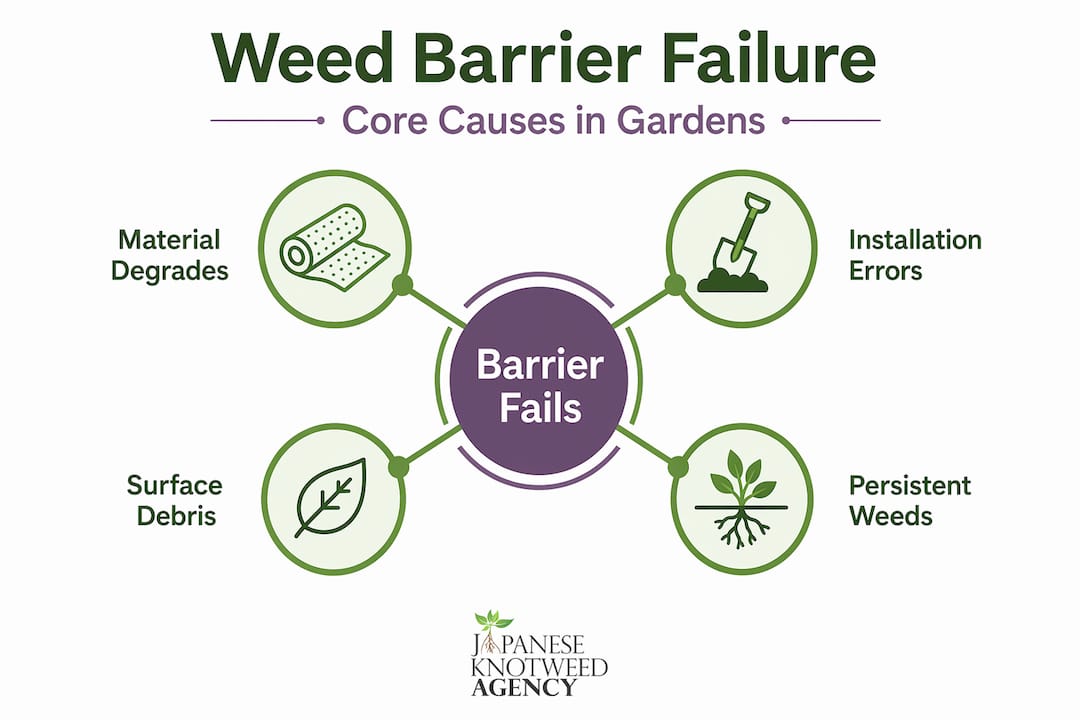
Weed barriers are designed to do two things: block sunlight from reaching weed seeds and create a physical layer that roots cannot penetrate. In the short term, they do both reasonably well. The problem is that neither function holds up under real garden conditions for long.
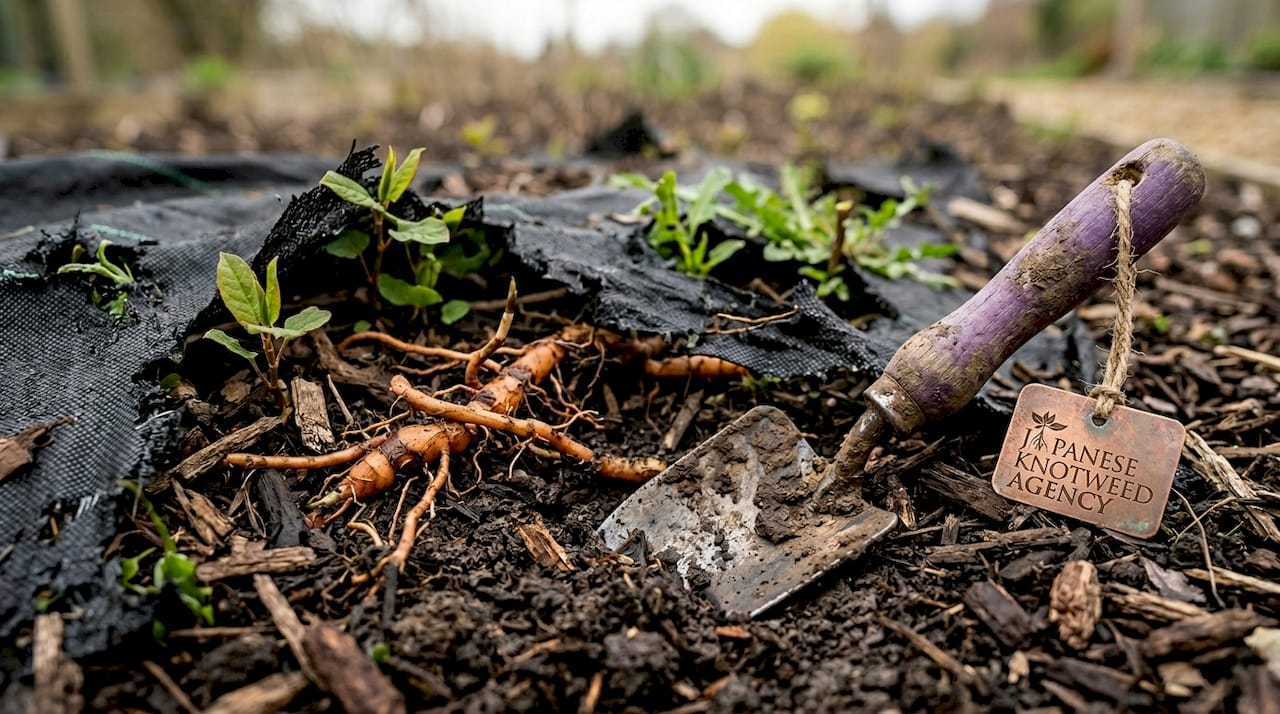
Landscape fabric suppresses weeds temporarily but tends to fail after a couple of years as the material degrades and begins to harm soil health. Soil particles, organic debris, and fragments of mulch progressively clog the fabric’s pores, reducing both drainage and the air exchange that plant roots depend upon. Over time, the barrier that was meant to protect your beds becomes a compacted, oxygen-starved layer that actively works against healthy plant growth.
The embedded-root problem is perhaps the most frustrating outcome. Once organic matter accumulates on the fabric surface, weed seeds germinate in that debris rather than in the soil below. Their roots grow down through the fabric, anchoring through the fabric layer and making removal almost impossible without tearing up the entire installation. What started as a labour-saving measure becomes an extraordinarily time-consuming remediation task.
There is also a soil biology dimension that is rarely discussed in product marketing. Landscape fabrics reduce CO₂ movement between the soil and atmosphere around 1,000 times more than wood chip mulches do. This level of disruption harms beneficial soil organisms, degrades soil structure, and undermines the long-term health of everything you are trying to grow.
- Pore clogging from sediment and decomposing mulch reduces both drainage and aeration
- Root penetration occurs through accumulated debris rather than through the fabric itself
- Soil gas exchange is severely restricted compared to organic mulch alternatives
- Exposed or lifted edges create ready entry points for weeds at the margins
- UV degradation makes many fabrics brittle and prone to tearing within two to three seasons
Pro Tip: Lift a corner of any weed fabric that has been in place for two or more seasons. If you find dark, compacted debris beneath it and fine roots threading through the material, the barrier has already failed. Early detection saves considerably more work later.
Material types and their limitations
Not all weed barriers are made equally, and understanding the differences helps explain why some fail faster than others. The two broad categories are synthetic fabrics, typically made from polypropylene, and natural barriers such as cardboard or hessian.
| Material | Durability | Soil impact | Environmental concern |
|---|---|---|---|
| Woven polypropylene | 3 to 5 years | Restricts gas exchange and moisture | Fragments but does not biodegrade |
| Non-woven polypropylene | 1 to 3 years | Clogs quickly with sediment | Same fragmentation issue |
| Cardboard | 6 to 12 months | Biodegrades and feeds soil organisms | Minimal, but inks may be a concern |
| Hessian or jute | 1 to 2 years | Adds organic matter as it breaks down | Biodegradable and low impact |
Most landscape fabrics are petroleum-based and break into small fragments rather than decomposing. This means that once a synthetic barrier starts failing, you are not simply removing a worn product. You are extracting plastic fragments from your soil, often mixed thoroughly into the top layer where they will persist indefinitely. Professional gardeners are increasingly removing these materials precisely because the long-term soil contamination outweighs the short-term suppression benefit.
Fabric thickness and pore size directly influence how quickly a barrier fails. Lightweight, highly porous fabrics allow fine-rooted weeds to push through within a single season. Heavier, UV-stabilised fabrics perform better under direct sunlight and mechanical pressure, but even premium products degrade given sufficient time and organic matter accumulation. No synthetic fabric currently offers a genuinely permanent solution.
Installation quality and ongoing maintenance
The majority of weed barrier failures are operational rather than a consequence of product defects. Correct installation makes a measurable difference to how long a barrier performs, and neglecting that preparation is where most homeowners come unstuck.
- Clear the area completely before laying fabric. Any existing weeds, particularly perennials with established root systems, will push through or around the barrier if left in place.
- Prepare and level the soil surface. Stones or clods of earth create pressure points that accelerate wear and create gaps.
- Overlap seams by at least 15 centimetres. Seam overlap of at least 6 inches reduces weed ingress at join points, which are otherwise the first places weeds exploit.
- Bury edges in a shallow perimeter trench. Lifted edges are an open invitation for weeds entering laterally.
- Inspect the surface every six months and clear accumulated organic debris before it forms a viable growing medium.
Failure to maintain surface debris and poor installation are the operational causes behind most reported problems with weed barriers. The fabric itself is rarely the sole culprit. A well-installed barrier with regular maintenance will always outperform a hastily laid product left untouched for years.
Pro Tip: When cutting holes for established plants, use the smallest aperture possible and press the edges firmly down. Large, unfinished cuts are among the most common entry points for opportunistic weeds, particularly in the first year after installation.
Alternatives and complementary strategies
Given the common weed barrier issues described above, many homeowners are now asking whether fabric is worth using at all. The honest answer depends on the setting. For permanent, low-maintenance beds, a combination of methods tends to outperform fabric alone.
- Organic mulch applied at a depth of 7 to 10 centimetres suppresses weeds effectively and, unlike synthetic fabric, wood chip mulches decompose and feed soil biota, improving soil structure year on year rather than degrading it
- Cardboard sheet mulching (sometimes called soil solarisation or the no-dig method) uses overlapping cardboard directly on soil, which biodegrades within a season, smothers existing weeds, and adds organic matter without the plastic fragmentation problem
- Pre-emergence herbicides form a chemical barrier in the soil that prevents seeds from germinating. Pre-emergence herbicides prevent seedling emergence during germination, complementing a physical barrier rather than replacing it. Where chemical-free management is a priority, these products are less appropriate, but they are part of the integrated toolkit for weed control
- Combining fabric with a deep mulch layer can extend suppression life, but only if the fabric is properly installed and the mulch is managed to prevent it becoming a seed bed in its own right
- Holistic weed control treats the garden as a system, addressing soil health, moisture levels, and plant density alongside any physical or chemical suppression. Dense planting that shades the soil surface is itself one of the most durable long-term weed control strategies available to homeowners
Weed control should be seen as a system involving mulch decomposition, soil moisture management, and barrier choice rather than relying on fabric alone. Treating any single product as a complete solution is where the expectation gap originates. You can read more about sustainable weed management to build a longer-term approach that works with your soil rather than against it.
My perspective on barriers and what really works
I have seen a great many gardens where the weed barrier was installed with the best of intentions and became the source of the most significant maintenance headache the homeowner had ever encountered. The “set and forget” mentality is the real driver of failure here, and no product label ever fully disabuses people of it.
What I have observed consistently is that soil harm compounds over time. A barrier that looks fine at the end of year one is often causing measurable damage to soil biology by year three. By the time weeds are visibly returning through it, the soil beneath may already be compacted, poorly aerated, and depleted of the microbial activity that supports healthy plant growth. Removing the fabric at that stage is only the beginning of the remediation work.
My honest view is that fabric has a narrow legitimate use case: short-term suppression in areas where you are establishing new planting and need a season or two of protection whilst root systems develop. Beyond that application, integrated approaches that prioritise soil health will give you a more productive garden over a five to ten year horizon. For persistent or invasive species, particularly those with deep rhizome systems like Japanese knotweed, no surface barrier is adequate. Those situations require specialist assessment and targeted treatment from the outset.
Informed, vigilant homeowners who treat weed management as an ongoing responsibility rather than a one-time installation will always achieve better results. That is not a complicated position, but it is one the gardening product market does not always encourage.
— Alan
Dealing with persistent weeds? Japaneseknotweedagency can help
If surface weed barriers have not resolved your problem, there is a reasonable chance the challenge runs deeper than a fabric solution can address. Japaneseknotweedagency specialises in chemical-free weed eradication for invasive and persistent plant species, including Japanese knotweed, across England, Wales, and Ireland.

The team delivers thermo-electric treatment on site, root barrier installations, and excavation works tailored to each property. Where fabric and mulch fall short, a professional survey gives you a clear picture of what you are actually dealing with and the most appropriate course of action. You can book a survey directly or explore plant eradication survey guidance to understand what the process involves before committing. For answers to common questions about invasive species and treatment options, the agency FAQ is a practical starting point.
FAQ
Why do weed barriers stop working after a few years?
Landscape fabric degrades as pores become clogged with sediment and organic debris, reducing its ability to block light and restrict root growth. Weed seeds then germinate in the accumulated surface layer rather than the soil below.
Does the type of fabric make a difference to how long it lasts?
Yes. Heavier, UV-stabilised fabrics resist mechanical damage and sun degradation better than lightweight porous materials, but all synthetic fabrics eventually degrade and none offer a permanent solution.
What is the best alternative to weed barrier fabric?
A 7 to 10 centimetre layer of organic mulch such as wood chips suppresses weeds effectively whilst improving soil structure. Cardboard sheet mulching is a practical, biodegradable option for beds being established from scratch.
Can installation errors alone cause weed barrier failure?
Absolutely. Installation geometry is critical. Insufficient seam overlap, lifted or unburied edges, and gaps around plants are among the most common reasons weed barriers fail, even when the product itself is of good quality.
Are synthetic weed barriers harmful to soil health?
Yes, over time. Petroleum-based fabrics fragment rather than biodegrade, introducing plastic particles into the soil. The fabric also restricts the gas exchange and moisture movement that beneficial soil organisms require to function properly.