

TL;DR:
- Alternatives to glyphosate in the UK include organic, mechanical, and biotech methods that aim to reduce herbicide reliance. Natural options like horticultural vinegar and pelargonic acid require repeated applications and are more costly compared to glyphosate’s broad-spectrum effectiveness. Mechanical methods such as rolling, crimping, and boiling water are site-specific and require precise timing for optimal results.
Alternatives to glyphosate in the UK are defined as organic, mechanical, and biotech-based weed control methods that reduce or eliminate reliance on glyphosate herbicide. UK gardeners and farmers are actively seeking these options as regulatory pressure on glyphosate grows and environmental awareness deepens. No single alternative currently matches glyphosate’s broad-spectrum effectiveness and low cost for large arable systems. That reality makes choosing the right glyphosate substitute a matter of matching method to context, scale, and ecological objective.
1. what are the best natural herbicide alternatives to glyphosate in the UK?
Natural herbicides are the most accessible glyphosate substitutes for UK gardeners. The two leading options are horticultural vinegar and pelargonic acid-based products.
Horticultural Vinegar (20% Acetic Acid)
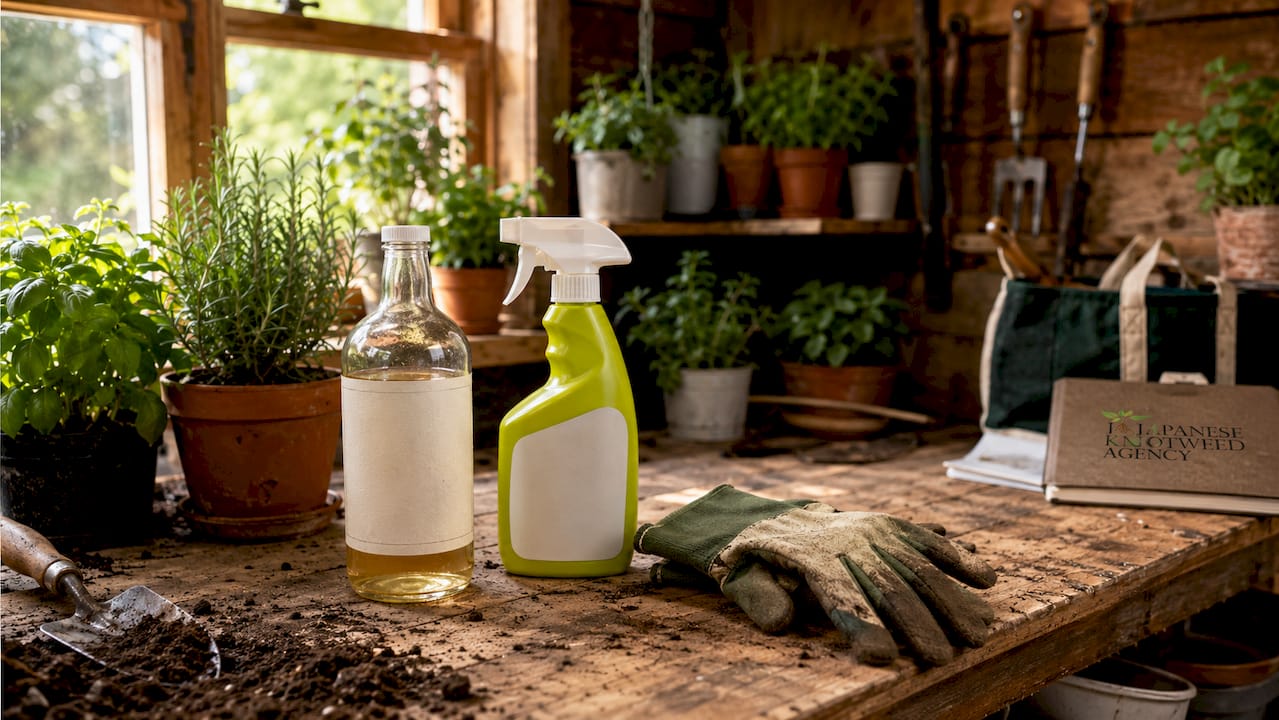
Horticultural vinegar is the strongest natural weed killer for hard surfaces in the UK, roughly four times more potent than kitchen vinegar. It kills most weeds within 24 hours and costs under £2 per treatment when mixed with washing-up liquid. That speed makes it practical for patios, paths, and driveways where quick results matter.
The limitation is contact action. Horticultural vinegar burns above-ground growth but does not travel to the root system. Perennial weeds like dock and bindweed will regrow from their roots, requiring repeated applications across the growing season.
Pelargonic Acid-Based Herbicides
Pelargonic acid products, sold under brands such as Natria and Weedol Natural, are approved for organic use in the UK. They work as contact killers, destroying cell membranes on contact. Like horticultural vinegar, pelargonic acid requires multiple applications to exhaust perennial weed root reserves, unlike glyphosate which is systemic and kills roots with a single treatment.
Cost Comparison
- Organic herbicides typically cost £5–£12 per litre in the UK
- Glyphosate-based products cost approximately £0.08–£0.15 per square metre
- Organic products cover 5–12 m² per litre, making them significantly more expensive per area treated
That cost gap is the primary barrier for larger-scale users considering organic farming solutions in the UK.
Pro Tip: Combine horticultural vinegar with repeated applications every two to three weeks during summer to progressively weaken perennial weed root systems. Persistence matters more than product strength with contact herbicides.
2. how do mechanical methods compare as glyphosate alternatives in UK agriculture?
Mechanical weed control is the oldest herbicide alternative and remains highly relevant for UK farmers and gardeners seeking chemical-free management. Each method carries distinct advantages and timing requirements.
Rolling and Crimping Cover Crops
Rolling or crimping cover crops creates a weed-suppressing mulch layer without chemicals. Mechanical rolling must be precisely timed with no-tillage drilling within two hours to prevent cover crop recovery or planting failures. If delayed, the cover crop becomes a moisture-trapping mulch that harms subsequent crop establishment. This narrow timing window is the most commonly overlooked challenge in regenerative UK farming practice.
Boiling Water
Boiling water kills weed cells instantly, including some root tissue, and is a free, chemical-free method suited for small areas such as patios and garden cracks. The drawback is limited heat retention and contact area. Perennial root systems often survive and require follow-up treatment. Boiling water is practical for home gardeners but entirely unsuitable at agricultural scale.
Mechanical Weeding, Flailing, and Mowing
- Inter-row mechanical weeding suits arable crops and market gardens
- Flailing controls vegetation on roadsides, field margins, and amenity land
- Regular mowing weakens perennial weeds by depleting root energy over time
- Thermal weeding with propane flamers or hot water systems suits urban settings
Pro Tip: Timing mechanical methods to coincide with the weed seedling stage, when roots are shallow and plants are most vulnerable, dramatically improves results. Waiting until weeds are established makes mechanical control far less effective.
3. what emerging glyphosate substitutes are being developed in the UK?
Biotech innovation is producing a new generation of herbicide alternatives that could reshape UK weed management within the next decade.
UK start-up Bindbridge raised $3.8 million in 2026 to develop AI-designed agricultural molecular glues. These compounds target specific weed proteins for degradation, offering a mode of action entirely distinct from existing herbicides. The technology aims to be safer for human health and the wider environment than current synthetic options.
Molecular glue herbicides are still in early development. Commercial availability for UK farmers is likely several years away. The regulatory pathway through the Health and Safety Executive and the UK Pesticides Approval process adds further time to market entry.
The broader significance is the direction of travel. AI-driven herbicide design signals that the next generation of glyphosate replacements will be precision tools rather than broad-spectrum chemicals. That shift aligns with the UK government’s commitment to reducing pesticide use under the Environmental Land Management scheme and the Sustainable Farming Incentive.
4. how to choose the right glyphosate alternative for your garden or farm
Selecting the right herbicide alternative in the UK depends on four factors: weed species, scale of application, budget, and environmental objectives.
Assess Your Weed Types First
Annual weeds such as chickweed, groundsel, and annual meadow grass respond well to contact herbicides and mechanical disturbance. Perennial weeds including Japanese Knotweed, bindweed, and horsetail require systemic action or sustained mechanical depletion over multiple seasons.
Match Method to Scale
- Home gardens: horticultural vinegar, boiling water, hand weeding, mulching
- Allotments and market gardens: pelargonic acid, mechanical weeding, cover cropping
- Commercial farms: rolling and crimping, inter-row cultivation, integrated weed management
Integrate Multiple Methods
The Innovate UK Hounslow trial demonstrated that glyphosate-free urban weed control requires integrated solutions, including improved monitoring and targeted mechanical tools adapted to specific ecological contexts. A single replacement product rarely delivers equivalent results. Combining methods consistently outperforms any one approach.
Garden Organic’s Emma O’Neill advocates tolerating some weeds for wildlife benefit, recommending hand weeding, cover crops as green manures, and mulching as the foundation of organic weed management. That perspective reflects a broader shift in UK gardening culture away from zero-tolerance weed control.
Pro Tip: Accepting a low level of weed cover in borders and field margins actively supports pollinators and beneficial insects. Ecological tolerance is not a compromise. It is a deliberate management choice with measurable biodiversity benefits.
For invasive species such as Japanese Knotweed, none of the above methods are sufficient without professional assessment. A property survey for invasive weeds is the correct first step before committing to any treatment programme.
5. glyphosate vs alternatives: UK comparison table
The table below compares glyphosate and its main alternatives across the criteria most relevant to UK users.
| Method | Effectiveness on Perennials | Cost per m² | Environmental Impact | Labour Requirement | UK Availability |
|---|---|---|---|---|---|
| Glyphosate | 70–90% (systemic) | £0.08–£0.15 | Moderate concern | Low | Widely available |
| Horticultural vinegar | Low (contact only) | Under £0.20 | Low | Medium | Widely available |
| Pelargonic acid | Low to medium (contact) | £0.50–£1.00 | Very low | Medium to high | Garden centres, online |
| Mechanical rolling/crimping | Medium (timing critical) | Variable | Very low | High | Farm machinery suppliers |
| Boiling water | Very low | Free | None | High | Home use only |
| AI molecular glues (Bindbridge) | Unknown (in development) | Unknown | Potentially very low | Low | Not yet available |
Key takeaways
Effective glyphosate-free weed control in the UK requires combining natural herbicides, mechanical methods, and site-specific monitoring rather than relying on any single product.
| Point | Details |
|---|---|
| No single replacement exists | Glyphosate’s broad-spectrum effectiveness and low cost remain unmatched for large-scale arable use. |
| Natural herbicides suit small areas | Horticultural vinegar and pelargonic acid work well in gardens but need repeated application on perennials. |
| Mechanical timing is critical | Rolling and crimping cover crops must be followed by drilling within two hours to succeed. |
| Integration outperforms single methods | The Hounslow trial confirmed that tailored, multi-method approaches deliver the best glyphosate-free results. |
| Invasive species need professional input | Japanese Knotweed and similar species require a professional survey before any treatment programme begins. |
The honest reality of going glyphosate-free
I have worked alongside land managers, farmers, and homeowners across England and Wales who have made the decision to move away from glyphosate. The honest observation is this: the transition is rarely as straightforward as the product labels suggest.
Natural weed killers work. Mechanical methods work. But they demand more time, more repeat visits, and a willingness to accept that weed control is a process rather than a single event. The gardeners who succeed are those who shift their expectation from elimination to management.
What I find most encouraging in 2026 is the direction of innovation. Bindbridge’s molecular glue technology and the growing body of evidence from trials like Hounslow show that the industry is taking this seriously. The chemical-free knotweed eradication work Japaneseknotweedagency has pioneered with thermo-electric treatment is part of that same movement. Delivering up to 5,000 volts directly to the rhizome network is not a compromise on effectiveness. It is a different and, in many cases, superior approach.
My advice is to stop searching for a like-for-like glyphosate replacement and start building a weed management strategy. Assess your site, identify your weed species, and combine methods accordingly. For invasive species, always get a professional survey first. The sustainable weed control approach that works long-term is one built on knowledge, not just product substitution.
— Alan
Professional chemical-free weed control from Japaneseknotweedagency
Japaneseknotweedagency are pioneers of chemical-free treatment for Japanese Knotweed and other invasive plant species across England, Wales, and Ireland. If you are managing a property where invasive weeds are present, the first step is always a professional survey.

Japaneseknotweedagency delivers thermo-electric treatment at up to 5,000 volts directly to the rhizome network, causing internal cell damage without chemicals. The team also installs root barriers and carries out full excavation works. With a 95% success rate on chemical-free solutions, professional intervention removes the guesswork from invasive weed management. Book a survey to get a clear picture of what you are dealing with before committing to any treatment programme.
FAQ
Is horticultural vinegar safe to use in UK gardens?
Horticultural vinegar at 20% acetic acid is effective and chemical-free, but it requires careful handling as it can irritate skin and eyes. It is not approved for agricultural use in the UK but is widely used by home gardeners on hard surfaces.
Can mechanical methods fully replace glyphosate on UK farms?
Mechanical methods can replace glyphosate in many situations but require precise timing and higher labour input. The Innovate UK Hounslow trial confirmed that integrated, site-specific approaches deliver the most consistent glyphosate-free results at scale.
When will ai-designed herbicides like bindbridge be available in the UK?
Bindbridge raised $3.8 million in 2026 to develop molecular glue herbicides, but commercial availability for UK farmers is likely several years away pending regulatory approval through the Health and Safety Executive.
Do i need a professional survey before treating japanese knotweed?
A professional survey is strongly recommended before treating Japanese Knotweed, as incorrect treatment can spread the rhizome network and worsen the problem. Japaneseknotweedagency carries out property surveys across England, Wales, and Ireland.
Are organic herbicides approved for use in UK organic farming?
Pelargonic acid-based products are approved for organic use in the UK and are available from garden centres and online retailers. They are contact killers and require multiple applications to manage perennial weed species effectively.