Knotweed Legislation – How It Affects Property Owners

Nearly one in ten British homeowners have confused Japanese knotweed with completely harmless plants, leading to costly mistakes and unnecessary stress. Understanding the difference goes far beyond simple gardening knowledge. The persistent spread of this invasive species not only threatens local ecosystems but also creates serious property and legal difficulties. Uncovering the real facts and dispelling common myths about Japanese knotweed can help every British property owner protect their investment and avoid unexpected penalties.

Table of Contents

Key Takeaways

Point Details
Identification is Crucial Misidentification of Japanese knotweed can lead to unnecessary panic and complications in property transactions; professional verification is recommended.
Legal Responsibilities Homeowners and sellers must disclose known knotweed infestations to avoid legal repercussions, including fines and mortgage complications.
Effective Management Chemical-free eradication methods and proper waste disposal are crucial to comply with legal requirements and prevent the spread of knotweed.
Documentation is Key Maintaining thorough records of management efforts and disposal can protect property owners from legal risks and complications in transactions.

Japanese Knotweed: Definition And Misconceptions

Japanese knotweed (Fallopia japonica) is an aggressive non-native invasive plant species originally introduced to the United Kingdom in the 19th century. Classified by the Royal Horticultural Society as a significant ecological threat, this perennial plant is renowned for its extraordinary capacity to grow rapidly and outcompete native vegetation.

Contrary to widespread misconceptions, Japanese knotweed is not simply another garden weed but a complex ecological challenge. Many homeowners mistakenly identify harmless plants like bindweed or dogwood as Japanese knotweed, creating unnecessary panic. Property professionals consistently report widespread misidentification issues, which can significantly complicate property transactions and valuations.

The plant’s distinctive characteristics include bamboo-like hollow stems, distinctive zigzag growth patterns, and heart-shaped leaves. Its underground rhizome network can extend several metres, enabling remarkable regenerative capabilities. A single fragment as small as 0.7 grams can potentially regenerate into an entirely new plant, making mechanical removal exceptionally challenging without professional intervention.

To clarify identification, here is a comparison of Japanese knotweed and commonly confused plants:

Feature Japanese Knotweed Bindweed Dogwood
Stem Structure Hollow, bamboo-like Thin, climbing vine Solid, woody stems
Leaf Shape Heart-shaped, flat base Arrow-shaped, pointed tip Rounded or oval
Growth Pattern Zigzag pattern, upright Twining, sprawling Upright, bushy
Rhizomes Extensive network underground Few, shallow roots Woody roots, not rhizomatous

Pro Tip: Verification is Key: Always consult a professional invasive plant specialist for definitive identification before making assumptions about potential Japanese knotweed infestations.

The legal framework surrounding Japanese knotweed in the United Kingdom is comprehensive and stringent. Under the Wildlife and Countryside Act 1981, deliberately planting or causing Japanese knotweed to grow in the wild constitutes a criminal offence, reflecting the serious environmental implications of this invasive species. The Environmental Protection Act 1990 further classifies Japanese knotweed as ‘controlled waste’, mandating specialised disposal protocols that prevent potential ecological contamination.

Local authorities have been empowered with significant legal mechanisms to address knotweed infestations. The Anti-social Behaviour, Crime and Policing Act 2014 enables councils to issue Community Protection Notices against property owners who fail to manage invasive plant species. These notices can compel individuals or organisations to control Japanese knotweed when its presence negatively impacts neighbouring properties or public spaces, with potential legal consequences for non-compliance.

Property transactions are particularly sensitive to Japanese knotweed’s legal status. Sellers are legally obligated to disclose the presence of knotweed during property searches, and mortgage lenders frequently require detailed management plans before approving loans. Failure to declare known knotweed infestations can result in potential legal proceedings, significant financial penalties, and potential property devaluation.

Pro Tip: Legal Documentation: Maintain comprehensive records of any knotweed treatment, removal, or management plans, as these documents can be crucial evidence in potential legal disputes or property transactions.

Below is a summary of how major UK legislation affects property owners dealing with Japanese knotweed:

Legislation Main Focus Property Owner Obligation Consequences of Breach
Wildlife and Countryside Act 1981 Prohibits spread in the wild Prevent knotweed escaping property Up to £3,000 fine or two years’ imprisonment
Environmental Protection Act 1990 Waste classification Dispose of material via licensed facility Fines and criminal prosecution
Anti-social Behaviour, Crime and Policing Act 2014 Local authority intervention Control infestations upon notice Legal notices, court action, remediation costs

Infographic comparing knotweed laws and penalties

Responsibilities For Homebuyers And Sellers

Property transactions involving land potentially impacted by Japanese knotweed require meticulous due diligence. Homeowners are not legally mandated to remove Japanese knotweed, but allowing its spread can trigger significant legal consequences, including potential private nuisance actions or Community Protection Notices under the Anti-social Behaviour, Crime and Policing Act 2014.

Mortgage lenders frequently demand specialist assessments when Japanese knotweed is suspected, which can substantially complicate property sales. Sellers are legally obligated to disclose known knotweed infestations during property searches, with potential financial and legal repercussions for non-disclosure. This requirement extends beyond mere presence, encompassing historical evidence of knotweed within the property’s boundaries.

Buyers must conduct comprehensive environmental searches and potentially commission specialist surveys to identify potential knotweed risks. Professional investigations can reveal historical infestations, underground rhizome networks, and potential future growth patterns that might not be immediately visible. These assessments are critical, as undetected knotweed can lead to substantial remediation costs, property devaluation, and potential legal disputes.

Pro Tip: Pre-Purchase Precautions: Always commission a professional invasive plant survey before finalising any property purchase, ensuring comprehensive understanding of potential Japanese knotweed risks and associated mitigation strategies.

Chemical-Free Eradication And Environmental Laws

Chemical-free eradication of Japanese knotweed represents a complex environmental challenge that intersects with stringent legal frameworks. Traditional methods like cutting and digging are explicitly discouraged, as they can potentially increase the plant’s spread and constitute a legal offence under the Wildlife and Countryside Act 1981. Property owners must exercise extreme caution to prevent inadvertent proliferation of this invasive species.

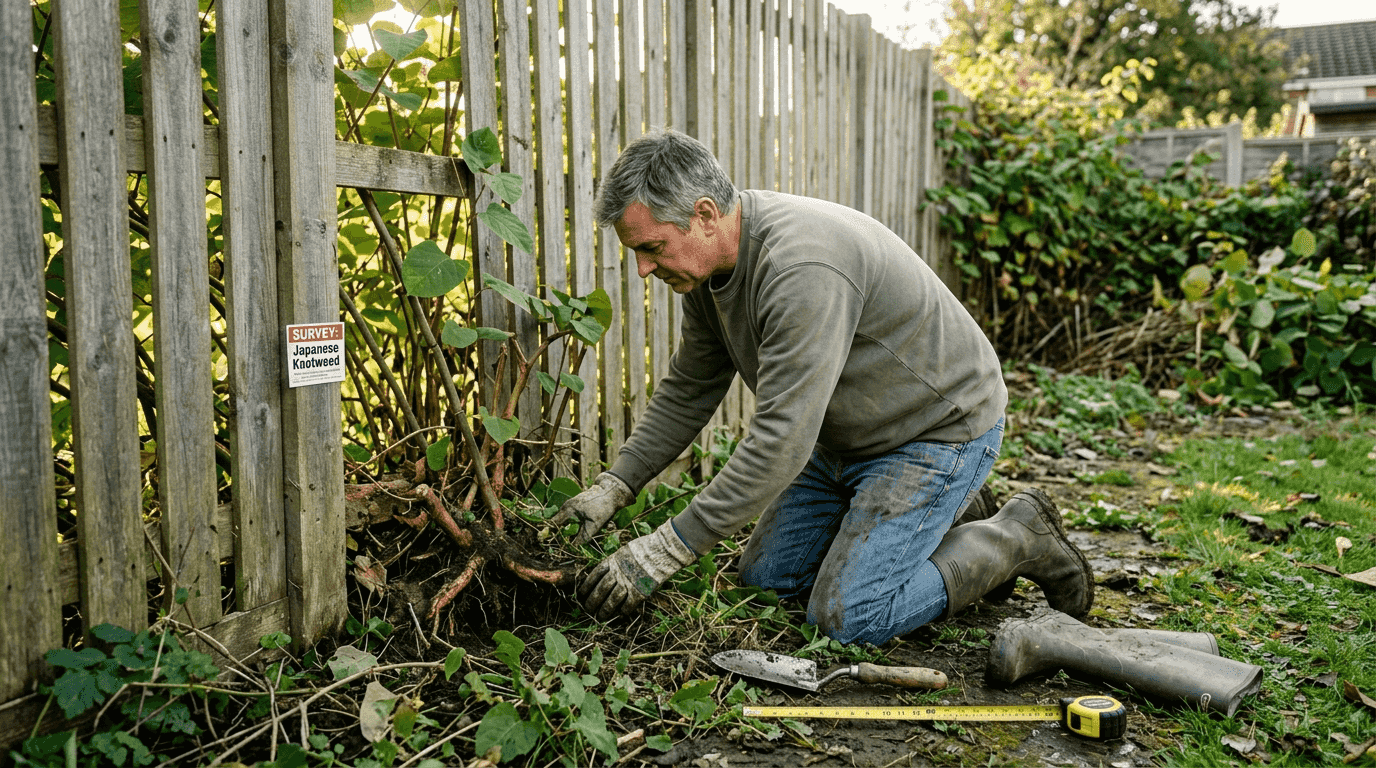
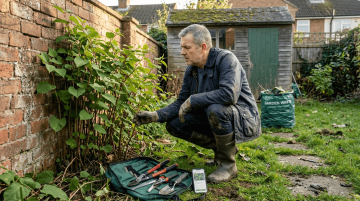
Gardener handling knotweed root disposal

Disposal of Japanese knotweed material is strictly regulated under the Environmental Protection Act 1990, which classifies contaminated soil and plant material as controlled waste. This legislative requirement mandates that all knotweed-related waste must be transported and disposed of exclusively at licensed waste management facilities. Failure to comply can result in substantial financial penalties and potential legal prosecution.

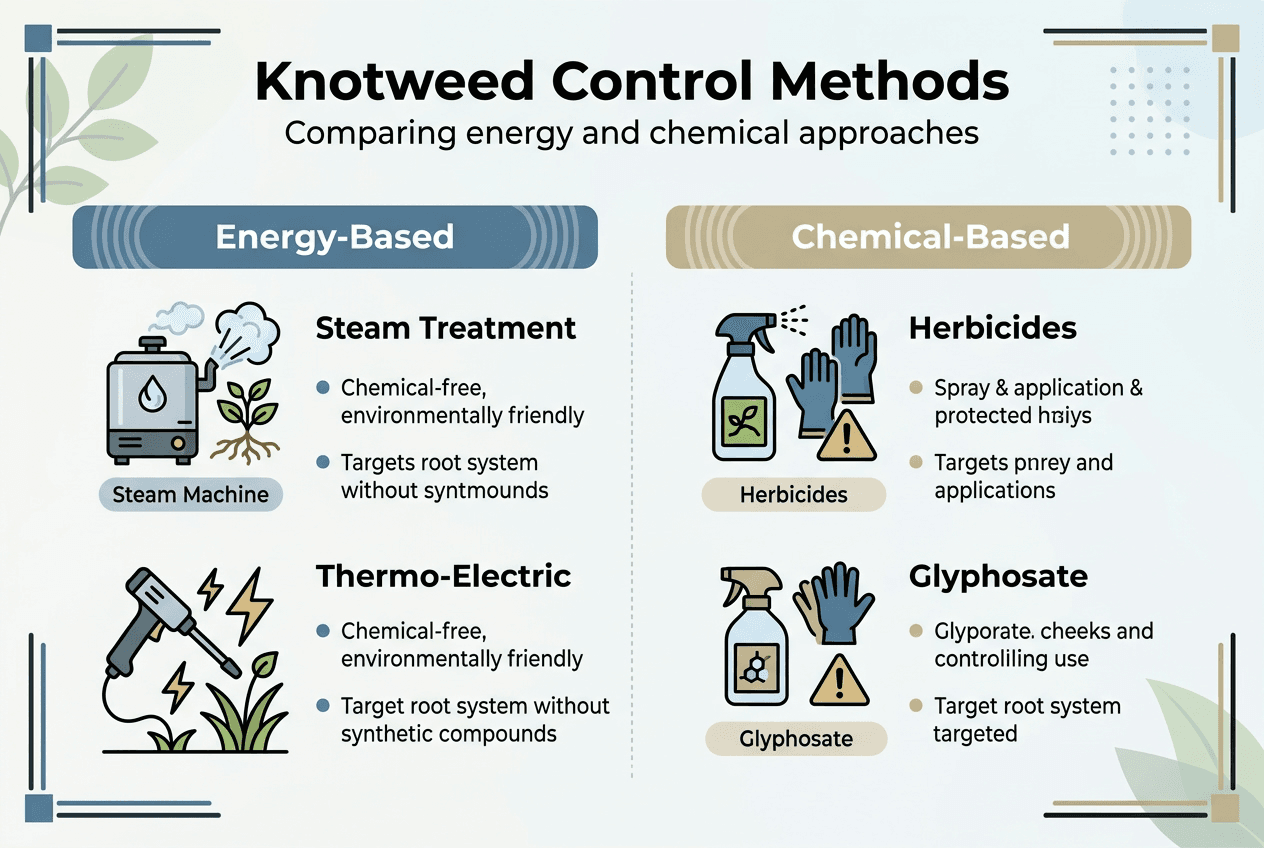
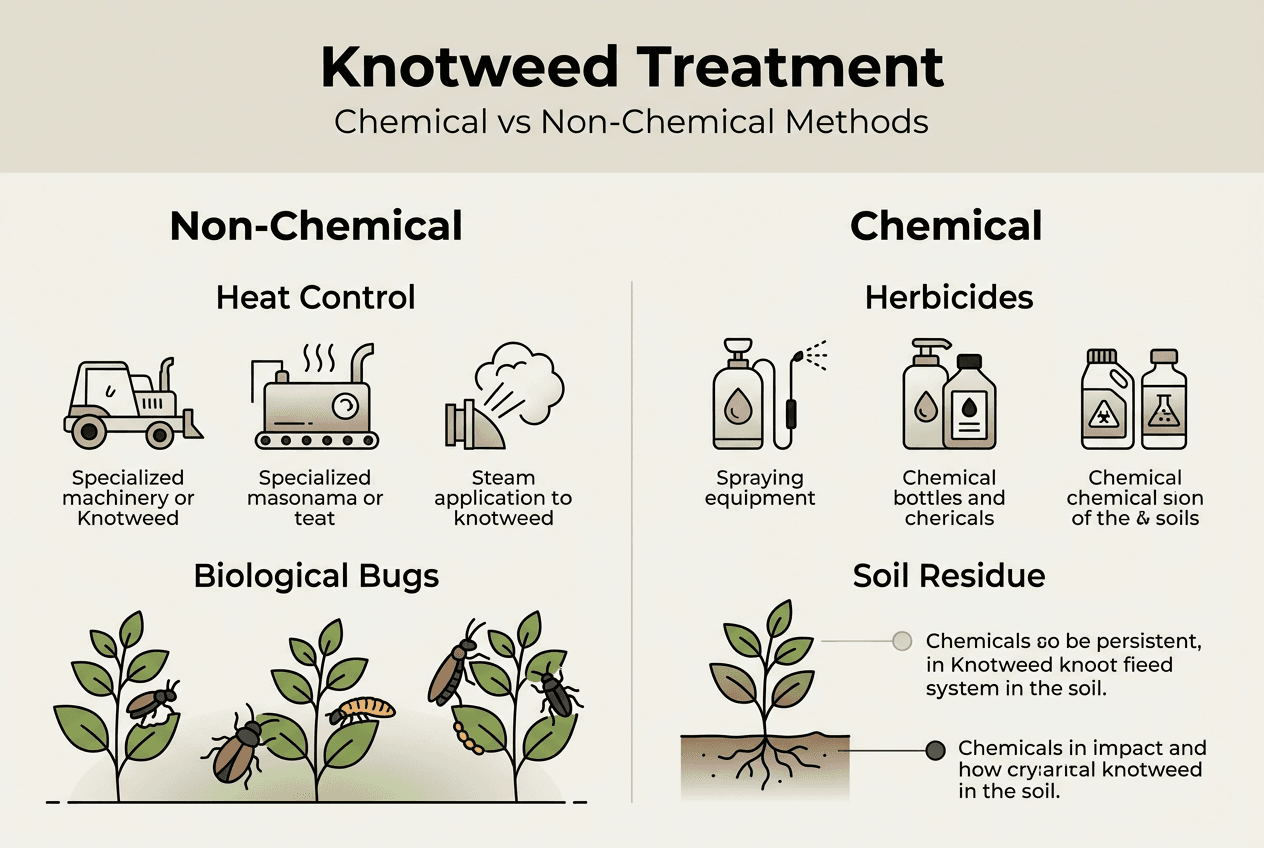
Emergent chemical-free eradication technologies offer promising alternatives to traditional chemical treatments. Innovative approaches such as thermal treatment, targeted electrical intervention, and biological control methods are gaining recognition as environmentally responsible solutions. These techniques aim to systematically deplete the plant’s underground rhizome network without introducing harmful chemical agents, addressing both ecological concerns and legal compliance requirements.

Pro Tip: Waste Management Strategy: Always document and retain receipts from licensed waste disposal facilities when removing Japanese knotweed, as these records can serve as crucial evidence of legal compliance during property transactions.

Property owners face significant legal consequences for mismanaging Japanese knotweed. Failing to prevent the plant’s spread can result in prosecution, with potential fines reaching up to £3,000 or imprisonment for two years under the Wildlife and Countryside Act 1981. These stringent penalties underscore the serious environmental and legal implications of Japanese knotweed proliferation.

Improper disposal of Japanese knotweed waste carries substantial legal risks, as the material is classified as controlled waste under the Environmental Protection Act 1990. Individuals found illegally disposing of knotweed materials can face significant financial penalties, potential criminal prosecution, and extensive legal proceedings that may impact property values and future transactions.

Beyond direct legal penalties, property owners may encounter additional financial repercussions. Mortgage lenders frequently refuse lending on properties with unmanaged knotweed infestations, effectively rendering properties unmortgageable. Neighbours can also initiate civil nuisance claims, potentially resulting in court-mandated remediation and substantial compensation payments for damages caused by uncontrolled knotweed spread.

Pro Tip: Legal Protection Strategy: Maintain comprehensive documentation of all knotweed management efforts, including professional survey reports, treatment plans, and disposal receipts to demonstrate proactive compliance and mitigate potential legal risks.

Take Control of Japanese Knotweed and Protect Your Property

The challenge of navigating knotweed legislation can be daunting for any property owner faced with this invasive species. The article highlights serious legal obligations and the risks of non-compliance that can lead to costly penalties or mortgage complications. If you are worried about managing knotweed responsibly and ensuring full compliance with UK laws such as the Wildlife and Countryside Act 1981 and the Environmental Protection Act 1990 then expert support is essential.

At Japanese Knotweed Agency we specialise in chemical-free treatment designed to penetrate the extensive rhizome network using advanced direct energy technology. We also provide thorough property surveys and environmentally sound options like root barrier installations and excavation works to prevent further spread and legally protect your asset.

https://japaneseknotweedagency.co.uk

Do not let Japanese knotweed put your property or peace of mind at risk. Act now to secure a professional assessment and tailored eradication plan to comply fully with legislation and avoid penalties. Discover more about our proven services and how we can help you stay ahead of invasive plant legislation by visiting Japanese Knotweed Agency. For peace of mind on property transfers and to safeguard your investment explore our property surveys today.

Frequently Asked Questions

Property owners are obligated to prevent Japanese knotweed from spreading beyond their property boundaries to avoid potential legal penalties under the Wildlife and Countryside Act 1981.

What are the consequences of failing to disclose a Japanese knotweed infestation during a property sale?

Failing to disclose a known Japanese knotweed infestation can lead to legal repercussions, financial penalties, and potential property devaluation, as mortgage lenders may refuse loans on affected properties.

How does Japanese knotweed legislation impact property transactions?

Japanese knotweed legislation requires sellers to disclose its presence, which can complicate property sales and lead buyers to conduct specialist surveys, causing additional costs and delays in the transaction process.

What actions can local authorities take against property owners who fail to manage Japanese knotweed?

Local authorities can issue Community Protection Notices that compel property owners to manage Japanese knotweed infestations when they negatively affect neighbours or public spaces, potentially leading to legal action if compliance is not met.

Invasive Plants: Impact on UK Homes and Land

Most advice about invasive plants misses a crucial point: over 2,000 non-native species now thrive within British borders, yet only a few actually threaten local ecosystems. For homeowners and gardeners alike, understanding which invaders pose real risks can make the difference between a healthy garden and costly property damage. Sorting fact from fiction can arm you with the knowledge to protect your British landscape, uncovering the true dangers and common misconceptions about these troublesome plants.

Table of Contents

Key Takeaways

Point Details
Invasive Species Characteristics Invasive plants grow rapidly, outcompete native species, and often lack natural predators, posing significant ecological and economic threats.
Legal Responsibilities Homeowners must manage invasive species on their properties to avoid legal repercussions, including potential prosecution and financial penalties.
Transmission Mechanisms Invasive plants spread through various means, including accidental human transportation and natural dispersal methods, making prevention challenging.
Chemical-Free Eradication Non-chemical removal strategies offer sustainable alternatives for managing invasive plants while protecting ecosystems and public health.

Invasive Plants Defined and Common Myths

Invasive species represent a complex ecological challenge with significant implications for UK landscapes and property owners. According to the Natural History Museum’s definition, invasive species are non-native organisms capable of spreading rapidly and causing substantial environmental, economic, or human health disruptions. These plants are not simply foreign botanical visitors, but aggressive colonisers that can dramatically transform ecosystems.

Contrary to popular misconceptions, not all non-native plants qualify as invasive. Many introduced species coexist harmoniously within existing ecosystems, while a small subset demonstrates extraordinary adaptability and destructive potential. Research from Cherwell District Council highlights that invasive plants are not limited to wilderness areas but can significantly impact urban environments, causing infrastructure damage and reducing local biodiversity.

Key characteristics of invasive plants include:

  • Rapid, uncontrolled growth patterns
  • Ability to outcompete native species
  • Limited natural predators or control mechanisms
  • Potential to cause substantial economic damage
  • Capacity to spread through multiple reproduction strategies

Understanding these plants requires dispelling several persistent myths. While some assume invasive species are always deliberately introduced, many arrive accidentally through international trade, shipping, or human movement. The ecological impact of these plants can be profound, transforming landscapes, disrupting native species interactions, and creating long-term environmental challenges for UK homeowners and local authorities.

Major Invasive Species Threatening the UK

According to the UK government’s official guidelines, several invasive plant species pose significant threats to the United Kingdom’s ecological balance and infrastructure. These botanical invaders include Japanese knotweed, giant hogweed, Himalayan balsam, rhododendron ponticum, and New Zealand pygmyweed, each presenting unique challenges to native ecosystems and property owners.

Close-up of invasive plant species in UK garden

Japanese Knotweed stands out as particularly problematic. The Natural History Museum highlights its extraordinary capacity to proliferate, having been originally introduced as an ornamental plant but now causing extensive damage across British landscapes. This invasive species can grow through concrete, compromise building foundations, and rapidly outcompete native vegetation, making it a significant concern for homeowners and property developers.

The most destructive invasive species in the UK include:

  • Japanese Knotweed: Capable of causing structural damage
  • Giant Hogweed: Produces toxic sap that can cause skin burns
  • Himalayan Balsam: Rapidly spreads and reduces biodiversity
  • Rhododendron Ponticum: Blocks light and carries plant diseases
  • New Zealand Pygmyweed: Chokes water systems and native aquatic life

These invasive plants share common characteristics that make them particularly challenging: rapid reproduction, limited natural predators, aggressive growth patterns, and the ability to survive in diverse environmental conditions. Property owners, landscapers, and environmental management professionals must remain vigilant in identifying and controlling these botanical invaders to protect both natural habitats and built environments.

How Invasive Plants Spread and Cause Harm

The UK Centre for Ecology & Hydrology reveals the complex mechanisms of invasive plant dispersal, highlighting how these botanical intruders can spread through seemingly innocuous means. Hitchhiking on clothing, tools, vehicles, and even animal fur, these plants possess remarkable adaptability that allows them to colonise new environments with alarming efficiency. Their ability to establish themselves quickly enables them to outcompete native species and transform entire ecological landscapes.

Transmission Mechanisms play a critical role in invasive plant propagation. Some species spread through root fragments, while others disperse through wind-borne seeds or underground rhizome networks. Bridgend County Borough Council emphasises the potential infrastructure and health risks associated with these plants, noting how species like giant hogweed can cause severe skin burns and compromise riverbank stability.

Key transmission pathways for invasive plants include:

  • Accidental human transportation
  • Animal fur and feather dispersal
  • Water and wind-based seed distribution
  • Root and rhizome fragment migration
  • Soil contamination through gardening activities

The ecological and economic consequences of invasive plant spread are profound. These botanical invaders can dramatically alter habitat structures, reduce biodiversity, increase flood risks, and cause significant damage to buildings, roads, and agricultural lands. Property owners, landscapers, and environmental managers must remain vigilant, implementing robust prevention and management strategies to mitigate the potentially devastating impacts of these resilient plant species.

Infographic showing invasive plant spread and property impact

The UK government mandates strict legal obligations regarding the management of invasive non-native plants, establishing clear responsibilities for landowners and authorities. These regulations are designed to prevent the uncontrolled spread of harmful botanical species that can cause significant environmental and infrastructural damage. Homeowners and property managers must proactively identify, control, and prevent the proliferation of invasive plant species on their land.

Under current legal frameworks, landowners face potential prosecution for failing to manage invasive plants effectively. Specific Legal Obligations include preventing non-native plants from growing in the wild, stopping their spread to neighbouring properties, and taking immediate action when invasive species are identified. Staffordshire Moorlands District Council emphasises the critical importance of correct identification and control measures to avoid potential legal repercussions and environmental damage.

Key legal responsibilities for property owners include:

  • Identifying invasive plant species on their property
  • Preventing plants from spreading to neighbouring lands
  • Implementing appropriate control and eradication methods
  • Maintaining accurate records of management efforts
  • Reporting significant infestations to local authorities

The consequences of non-compliance can be severe, ranging from substantial financial penalties to potential legal action. Local authorities have the power to serve enforcement notices, require specific remediation actions, and even pursue criminal prosecution in cases of persistent negligence. Property owners must therefore adopt a proactive approach, seeking professional advice and implementing comprehensive management strategies to mitigate the risks associated with invasive plant species.

Chemical-Free Eradication and Survey Options

The UK government provides comprehensive guidance on treating invasive non-native plants without chemical interventions, emphasising environmentally sensitive approaches that protect both human health and ecological systems. Chemical-free eradication strategies have emerged as a critical alternative to traditional herbicide treatments, offering property owners and environmental managers sustainable methods for managing invasive plant species. These techniques require careful planning, consistent implementation, and a deep understanding of plant biology and growth patterns.

Non-Chemical Removal Techniques encompass a range of sophisticated approaches designed to systematically eliminate invasive plants. West Lindsey District Council confirms that manual removal methods can be highly effective, though they often demand more time and persistent effort compared to chemical treatments. These strategies include:

  • Repeated cutting and mowing
  • Manual extraction of root systems
  • Systematic excavation of contaminated soil
  • Targeted thermal treatment techniques
  • Biological control through competitive native species

Successful chemical-free eradication requires a comprehensive survey and strategic approach. Property owners must conduct thorough initial assessments, documenting the extent of plant invasion, identifying specific species, and developing a tailored removal plan. Professional invasive plant specialists can provide detailed surveys that map out infestations, assess potential risks, and recommend the most appropriate non-chemical intervention strategies. By adopting a methodical, patient approach, landowners can effectively manage and ultimately eliminate invasive plant populations while preserving the surrounding ecosystem’s delicate balance.

Take Control of Invasive Plants Threatening Your Property Today

Invasive plants such as Japanese Knotweed are not only damaging to the environment but can also threaten the value and safety of your home. This article highlights the challenges invasive species present, including rapid growth that invades foundations and legal duties homeowners must face. If you are concerned about aggressive plants undermining your property or health risks like those posed by giant hogweed, it is vital to act before the problem worsens.

Japanese Knotweed Agency specialises in chemical-free eradication using advanced direct energy treatment designed to target invasive species at their root system. Our property surveys identify infestations early so you can meet your legal responsibilities and avoid costly damage.

Discover more about our eradication methods and book a comprehensive invasive weed survey with trusted experts who work across England, Wales, and Ireland.

https://japaneseknotweedagency.co.uk

Don’t let invasive plants continue to threaten your home and land. Contact Japanese Knotweed Agency now to get precise surveys and proven, environmentally safe treatment. Protect your property’s future today by taking the first step with a professional assessment and tailored removal plan.

Frequently Asked Questions

What are invasive plants and how do they affect homes?

Invasive plants are non-native species that spread rapidly, often outcompeting local flora. They can cause structural damage to homes, harm local ecosystems, and result in costly property repairs.

How can I identify invasive plant species on my property?

Look for rapid growth patterns, aggressive behaviour, and difficulty in controlling these plants. Common invasive species include Japanese knotweed and giant hogweed. Consulting local resources or experts can help with proper identification.

Homeowners must manage invasive plants on their property, preventing their spread to neighbouring lands and controlling their growth. Failure to do so can result in legal action and significant penalties.

What are some effective chemical-free methods to eradicate invasive plants?

Chemical-free methods include manual removal of roots, repeated cutting, thermal treatment, and using competitive native species to outgrow invasives. A thorough initial survey is necessary to implement a successful eradication plan.

Knotweed Monitoring: Protecting Properties Without Chemicals

Most British homeowners are surprised to learn that Japanese Knotweed causes over £170 million worth of damage every year in the United Kingdom. The relentless spread of this invasive plant not only threatens building foundations but also complicates home sales and legal responsibilities. Understanding knotweed monitoring matters more than ever for anyone impacted by property value and long-term stability. This guide uncovers what every British resident needs to know to protect their home and investments from this persistent threat.

Table of Contents

Key Takeaways

Point Details
Knotweed Monitoring is Essential Regular monitoring helps mitigate structural damage caused by Japanese Knotweed and supports the recovery of native vegetation.
Various Survey Methods Available A combination of visual inspections and advanced technology, such as AI, enhances the effectiveness of knotweed surveys and mapping.
Legal Obligations Exist for Owners Property owners must understand their legal responsibilities regarding Japanese Knotweed to avoid significant liabilities and protect property value.
Untreated Infestations Pose Risks Left unmanaged, Japanese Knotweed can severely compromise property integrity, lead to costly repairs, and threaten local biodiversity.

What Is Knotweed Monitoring and Why It Matters

Knotweed monitoring represents a comprehensive strategy designed to track, assess, and manage the potentially destructive spread of Japanese Knotweed across properties and landscapes. This systematic approach is crucial because Japanese Knotweed can cause significant structural damage if left unchecked, with its aggressive rhizome system capable of penetrating foundations, concrete, and building infrastructure.

The monitoring process involves carefully tracking plant distribution and density to understand the extent of potential infestation. Specialists conduct regular site assessments, examining both visible plant growth and underground rhizome networks. These assessments help determine the most effective intervention strategies, which might include non-chemical treatments like targeted thermal energy applications or precise root barrier installations.

Effective knotweed monitoring is essential because the plant’s regenerative capabilities are extraordinary. Even minute rhizome fragments can potentially regrow, making continuous observation critical. Professional monitoring programmes aim to permanently reduce knotweed abundance and enable recovery of native vegetation. By implementing a robust, long-term monitoring approach, property owners can mitigate potential structural risks and prevent extensive ecological disruption caused by this invasive species.

Types of Knotweed Surveys and Methods Used

Knotweed surveys are specialised investigations designed to identify, map, and assess the presence and extent of Japanese Knotweed across various landscapes. These comprehensive assessments involve multiple methodological approaches, ranging from visual inspections to advanced technological solutions that enable precise detection and monitoring of this invasive plant species.

Traditional survey methods include ground-level visual inspections, where trained specialists systematically examine properties for characteristic knotweed growth patterns. More recently, cutting-edge technologies have emerged, such as AI-powered surveying systems that can rapidly identify invasive species across large areas. These innovative approaches utilise high-speed cameras mounted on vehicles, capturing geo-tagged images that are instantly analysed to detect potential knotweed infestations.

Geographic mapping has also become a crucial component of modern knotweed surveys. Interactive mapping tools now allow property owners and researchers to track knotweed distribution with unprecedented precision. These advanced systems compile data from multiple environmental authorities, creating comprehensive databases that show live cases and potential risk zones. By combining ground-level expertise with technological innovation, knotweed surveys have evolved into sophisticated monitoring strategies that enable more effective management and containment of this challenging invasive species.

Consultant mapping knotweed locations outdoors

Chemical-Free Detection Techniques Explained

Chemical-free detection represents an innovative approach to identifying Japanese Knotweed without relying on harmful chemical interventions. This method focuses on non-invasive techniques that provide accurate assessment while preserving the environmental integrity of the surveyed landscape. Specialists use a combination of visual inspection, technological solutions, and advanced monitoring strategies to pinpoint knotweed presence with remarkable precision.

One of the most promising developments in chemical-free detection involves advanced artificial intelligence systems capable of rapidly surveying large areas for invasive plant species. These cutting-edge technologies employ high-speed cameras mounted on vehicles, capturing geo-tagged images that can be instantly analysed to detect potential knotweed infestations. Such techniques eliminate the need for ground-disturbing chemical treatments, offering a more environmentally sensitive approach to plant identification.

Geographic mapping and digital tracking have also emerged as powerful chemical-free detection methods. Interactive mapping tools now enable property owners and researchers to track knotweed distribution with unprecedented accuracy. These sophisticated systems compile data from multiple environmental authorities, creating comprehensive databases that showcase live cases and potential risk zones. By leveraging technology and expert visual assessment, chemical-free detection techniques provide a holistic, sustainable approach to identifying and managing Japanese Knotweed without compromising environmental health.

Legal obligations surrounding Japanese Knotweed represent a critical consideration for property owners and potential buyers. The presence of this invasive plant species carries significant legal implications that can dramatically impact property value, insurance, and potential liability. Homeowners must understand their responsibilities to prevent the spread of this destructive plant and comply with existing environmental regulations.

Japanese Knotweed is legally classified as a controlled plant under specific legislative frameworks, with strict regulations governing its management. The Wildlife and Countryside Act 1981 specifically prohibits allowing the plant to cross property boundaries or spread into wild areas. Property owners can face substantial legal consequences for negligence, including potential criminal charges for improper disposal or intentional spread of knotweed plant material.

The potential for structural damage makes knotweed a significant legal concern for homeowners and property buyers. The plant’s ability to penetrate concrete, tarmac, and infrastructure means that undisclosed knotweed presence can lead to complex legal disputes. Buyers are advised to conduct thorough property surveys, request comprehensive knotweed disclosure statements, and potentially seek legal guidance to understand the full implications of knotweed presence on a potential property purchase. Mortgage lenders may also impose additional requirements or restrictions when knotweed is identified, making early detection and professional management crucial for property transactions.

Risks of Untreated Knotweed Infestations

Untreated knotweed represents a significant threat to property integrity, environmental balance, and financial stability. This invasive plant species poses multifaceted risks that extend far beyond simple aesthetic concerns, potentially causing extensive structural damage and ecological disruption if left unchecked. Property owners must understand the profound consequences of neglecting knotweed management.

Infographic knotweed risk versus monitoring

Japanese Knotweed can seriously damage houses, buildings, and infrastructure by aggressively growing through concrete, tarmac, and other hard surfaces. The plant’s remarkable ability to exploit existing structural weaknesses means it can compromise foundations, drainage systems, and building structures with alarming efficiency. Its invasive root system can penetrate seemingly impenetrable surfaces, creating costly repair challenges that can dramatically reduce property value and potentially render buildings structurally unsound.

The persistent nature of knotweed rhizomes makes eradication an extended, complex process requiring long-term monitoring and strategic intervention. Beyond structural risks, untreated knotweed threatens local biodiversity by forming dense vegetative clusters that suppress native plant growth and disrupt ecological balance. The plant’s allelopathic properties allow it to release chemical substances that prevent other vegetation from establishing, creating monoculture zones that decimate local plant diversity and potentially impact wildlife habitats.

Secure Your Property with Expert Chemical-Free Knotweed Monitoring and Treatment

Japanese Knotweed monitoring requires vigilance, precision, and effective action to prevent costly structural damage and ecological harm. If you are facing the challenge of invasive knotweed spread, professional, non-chemical solutions can protect your property while safeguarding the environment. With advanced techniques like direct energy treatment delivering up to 5000 volts onsite, the Japanese Knotweed Agency targets and depletes the rhizome network, ensuring long-term eradication without harmful chemicals. We also provide root barrier installations and excavation works to contain and eliminate this persistent threat.

https://japaneseknotweedagency.co.uk

Don’t let untreated knotweed compromise your property and peace of mind. Discover how our chemical-free treatment and expert property surveys can offer you a safer, proven approach to invasive weed management. Act now to protect your home or land from escalating damage and legal risks with the Japanese Knotweed Agency’s specialised services.

Frequently Asked Questions

What is knotweed monitoring?

Knotweed monitoring is a systematic strategy to track, assess, and manage the spread of Japanese Knotweed. It involves regular site assessments to understand plant distribution and density, ensuring effective intervention strategies are employed to mitigate damage.

Why is knotweed monitoring important for property owners?

Knotweed monitoring is crucial for property owners as Japanese Knotweed can cause significant structural damage. Its extensive root system can penetrate foundations and infrastructures, leading to costly repairs and potential legal issues if left unmanaged.

How does chemical-free detection work for Japanese Knotweed?

Chemical-free detection uses non-invasive methods, including visual inspections and advanced AI technologies, to identify Japanese Knotweed without harmful chemicals. This approach ensures environmental integrity while accurately assessing knotweed presence.

Homeowners have legal obligations concerning the management of Japanese Knotweed. Failure to prevent its spread can lead to substantial legal consequences, including potential criminal charges and significant property value reduction.

Why Treat Knotweed Early – Impact on Property Value

Over £170 million is spent annually in the United Kingdom managing Japanese Knotweed, a problem that continues to frustrate British homeowners and environmental authorities. As this invasive species outcompetes native plants and spreads relentlessly, property values and biodiversity suffer real consequences. Understanding what makes Japanese Knotweed such a formidable threat provides vital insights for anyone facing its presence, from property buyers to conservationists.

Table of Contents

Key Takeaways

Point Details
Invasive Nature Japanese Knotweed is a highly aggressive species that disrupts native ecosystems and poses significant legal responsibilities for property owners.
Importance of Early Intervention Prompt professional treatment is crucial to prevent extensive ecological damage and ensure effective eradication of the plant.
Environmental Impact The plant significantly compromises biodiversity, riverbank stability, and water quality, necessitating comprehensive management strategies.
Management Techniques A balanced approach, combining traditional herbicide use and innovative chemical-free methods, is required for effective control of Japanese Knotweed.

Japanese Knotweed: Invasive Species Explained

Japanese Knotweed represents a significant ecological threat that has dramatically transformed landscapes across the United Kingdom since its introduction in the 19th century. Originally brought to Britain as an ornamental garden plant, this highly aggressive perennial has since become one of the most problematic invasive species in the country. Wildlife experts confirm it now extensively colonises riverbanks, waste grounds, and roadside verges, systematically preventing native plant species from establishing and thriving.

The plant’s extraordinary resilience stems from its complex root system, known as rhizomes, which can extend several metres underground and regenerate from tiny root fragments. These underground networks make Japanese Knotweed exceptionally challenging to eradicate, with even minuscule sections capable of producing entirely new plant colonies. Royal Horticultural Society researchers categorise it as a persistent, clump-forming herbaceous perennial subject to stringent legal control measures due to its invasive characteristics.

Key characteristics that distinguish Japanese Knotweed from native plant species include:

  • Rapid growth rates of up to 10 centimetres per day
  • Bamboo-like hollow stems with distinctive purple speckles
  • Large, heart-shaped green leaves arranged in a zigzag pattern
  • Ability to penetrate concrete, tarmac, and building foundations

Professional management and early intervention remain critical in preventing widespread ecological and structural damage caused by this formidable invasive species.

How Early Treatment Prevents Major Spread

Early intervention is the cornerstone of effective Japanese Knotweed management, preventing catastrophic ecological and structural damage that can emerge from unchecked plant growth. Government guidance emphasises the critical importance of immediate action, warning that improper handling like strimming or mowing can dramatically exacerbate the plant’s spread by enabling regeneration from even tiny root fragments.

The complex root system of Japanese Knotweed makes eradication particularly challenging, with underground rhizome networks capable of producing new plant colonies from minuscule sections. Professional treatment strategies typically involve systematic herbicide application designed to progressively weaken the plant’s extensive root network. Natural Resources Wales recommends targeted glyphosate-based herbicide treatments during late summer or autumn, with repeated applications over two to three years to ensure complete eradication.

Key strategies for early intervention include:

  • Immediate professional identification
  • Comprehensive root system mapping
  • Targeted herbicide treatment programmes
  • Strict monitoring and follow-up assessments
  • Preventing soil movement or disturbance

Property owners who delay treatment risk exponential spread, potential structural damage, and significant financial consequences from uncontrolled Japanese Knotweed proliferation.

Property owners face significant legal obligations regarding Japanese Knotweed management, with potential consequences extending far beyond ecological concerns. Government regulations clearly state that landowners are legally responsible for preventing the spread of this invasive species from their property, and failure to control it can trigger substantial legal actions and critically impact property transactions.

Solicitor discusses knotweed legal issues with couple

Recent academic research from Leeds University suggests that while the plant presents challenges, the structural damage risk might be somewhat overestimated compared to traditional perceptions. However, this does not diminish the legal and financial implications for property owners, as mortgage providers and insurers remain cautious about properties with confirmed Japanese Knotweed infestations.

Key legal and market impact considerations include:

  • Potential mortgage application rejections
  • Reduced property market value
  • Legal liability for spread to neighbouring properties
  • Mandatory disclosure requirements during property sales
  • Potential court-mandated treatment and compensation

Navigating these complex legal landscapes requires proactive management, professional assessment, and comprehensive documentation to mitigate potential financial and legal risks associated with Japanese Knotweed presence.

Environmental Concerns: Health and Water Quality

Japanese Knotweed poses significant ecological risks beyond its immediate visual impact, with profound implications for regional water systems and biodiversity. Broads Authority research highlights the plant’s destructive potential, demonstrating how its aggressive growth can contribute to riverbank erosion and substantially increase flood risks, directly compromising water quality and aquatic ecosystem stability.

The invasive nature of Japanese Knotweed creates a complex environmental challenge that extends far beyond surface-level concerns. Invasive species experts note that its dense growth patterns systematically smother native vegetation, dramatically reducing local biodiversity and fundamentally altering habitat structures. These transformations can create cascading environmental consequences, potentially disrupting delicate ecological balances and water management systems.

Key environmental impact considerations include:

  • Accelerated riverbank destabilisation
  • Reduction of native plant biodiversity
  • Disruption of aquatic ecosystem habitats
  • Increased soil erosion potential
  • Compromised water filtration mechanisms

Comprehensive environmental management requires understanding these intricate ecological interactions and implementing strategic interventions to mitigate Japanese Knotweed’s widespread environmental consequences.

Comparing Chemical-Free and Traditional Methods

Treatment strategies for Japanese Knotweed present complex challenges that demand sophisticated approaches balancing effectiveness and environmental responsibility. Natural Resources Wales research indicates that mechanical methods like cutting and digging are frequently ineffective due to the plant’s extraordinarily resilient underground rhizome network, which can regenerate from minuscule root fragments.

Infographic: early vs late knotweed treatment impact

Ecological management experts from Colne Valley Park highlight the nuanced landscape of control methods, emphasising that while traditional approaches such as herbicide treatments remain widely used, emerging chemical-free techniques are gaining prominence. These innovative methods focus on disrupting the plant’s energy systems without introducing potentially harmful chemical interventions.

Key comparative method considerations include:

  • Traditional chemical herbicide treatments
  • Mechanical extraction techniques
  • Thermal energy disruption
  • Biological control approaches
  • Root barrier installation strategies

Successful Japanese Knotweed management requires a comprehensive, scientifically informed approach that carefully evaluates the specific site conditions, ecological context, and long-term eradication objectives.

Secure Your Property Value With Early Japanese Knotweed Treatment

The article “Why Treat Knotweed Early – Impact on Property Value” highlights the urgent need for early intervention to avoid the financial and legal burdens caused by Japanese Knotweed infestations. Key concerns such as property market devaluation, mortgage complications, and costly structural damage are risks no homeowner or property investor should face. Tackling the invasive species before it spreads uncontrollably means protecting your investment and preventing further ecological harm.

At Japanese Knotweed Agency, we specialise in pioneering chemical-free treatments that target the plant’s extensive rhizome network with direct energy up to 5000 volts. This approach causes internal cell damage at the root to effectively weaken and eradicate the plant. Combined with our root barrier installations and thorough property surveys across England, Wales and Ireland, our solutions are tailored to safeguard your property and its value.

https://japaneseknotweedagency.co.uk

Act now to avoid the escalating legal and financial consequences of ignoring Japanese Knotweed. Discover how our innovative, non-chemical treatments can help you regain control. Start with a comprehensive property survey for invasive weeds or explore our full range of treatment services today and protect your investment for the future.

Frequently Asked Questions

What are the consequences of not treating Japanese Knotweed early?

Delaying treatment of Japanese Knotweed can lead to exponential spread, potential structural damage to properties, and significant financial consequences due to the plant’s aggressive growth and extensive root system.

How does Japanese Knotweed affect property value?

Japanese Knotweed can reduce property market value significantly, as mortgage providers and insurers view active infestations as a liability, potentially resulting in mortgage application rejections and mandatory disclosures during property sales.

Property owners are legally required to prevent the spread of Japanese Knotweed from their land. Failure to manage it can lead to legal actions and responsibilities for controlling its spread to neighbouring properties.

Early treatment typically involves professional identification, comprehensive root system mapping, and targeted herbicide treatments to weaken the plant, which should be administered during late summer or autumn, with repeated applications over two to three years.