

Invasive plant detection: essential guide for homeowners

Missing an invasive plant when purchasing a property can prove far more costly than most buyers anticipate. Property devaluation of up to 20% has been recorded where invasive species go undetected, and the financial and legal consequences can follow homeowners for years. The challenge is that detection is rarely as straightforward as spotting an unusual-looking weed in the garden. Invasive plants spread underground through extensive rhizome networks that remain entirely invisible to the naked eye. This guide explains what invasive plant detection involves, what professional surveys include, and why getting it right matters enormously for buyers and remortgagees across England, Wales, and Ireland.

Table of Contents

Key Takeaways

Point Details
Detection protects value Accurate detection prevents property devaluation, mortgage refusal, and legal headaches.
Professional surveys required Mortgage lenders typically insist on PCA-accredited surveys and formal management plans for at-risk homes.
Hidden risks underground Invisible rhizomes and dormant plants make detection tricky—certified experts are essential.
Early action pays off Prompt expert checks save homeowners time, money, and future disputes.

What is invasive plant detection?

Invasive plant detection is the systematic process of identifying, recording, and assessing non-native plant species that pose a risk to property, infrastructure, and biodiversity. In a residential context, detection goes well beyond a casual walk around the garden. Invasive plant detection involves systematic visual inspections, GPS mapping, photographic documentation, and identification of key features of species such as Japanese knotweed, Himalayan balsam, and giant hogweed.

The three species most frequently encountered during property surveys are:

  • Japanese knotweed: Bamboo-like hollow stems with purple flecks, heart-shaped leaves, and the capacity to push through tarmac and concrete foundations
  • Himalayan balsam: Tall pink-flowered annual that spreads aggressively along watercourses and damp ground
  • Giant hogweed: Extremely hazardous to human skin, capable of causing severe burns, and a notifiable species under the Wildlife and Countryside Act 1981

One of the most common misconceptions is that detection is purely a visual exercise. In reality, the rhizome network of Japanese knotweed can extend up to 7 metres horizontally and 3 metres deep, meaning the plant’s true footprint is almost always larger than what appears above ground. You can learn more about invasive plant identification to understand the full range of species that may affect your property.

Detection method What it reveals Limitations
Visual inspection Above-ground growth, stem and leaf features Misses dormant or underground spread
GPS mapping Precise location and boundary proximity Requires trained operator
Photographic documentation Evidence trail for lenders and solicitors Seasonal variation affects accuracy
Rhizome sampling Underground spread and root health Invasive; requires specialist equipment

Statistic: Only 27% of invasive plant identifications made without professional assistance are accurate, underscoring why untrained detection carries significant risk for property transactions.

Seasonal variation adds another layer of complexity. Japanese knotweed is easiest to identify between April and October when stems and leaves are visible. Outside this window, dead canes and site history become the primary indicators, and accuracy drops considerably without specialist knowledge.

Why professional detection matters for property buyers and mortgagees

Understanding the technical process is important, but why does professional detection matter so much when buying or remortgaging? The answer lies in lender requirements, legal protection, and the accuracy gap between professional and non-professional assessments.

Professional surveys by PCA-qualified specialists are required by lenders to confirm the absence of invasive species or to provide formal management plans, including mapping, photographs, and risk assessments. Without this documentation, many mortgage applications will stall or be declined entirely.

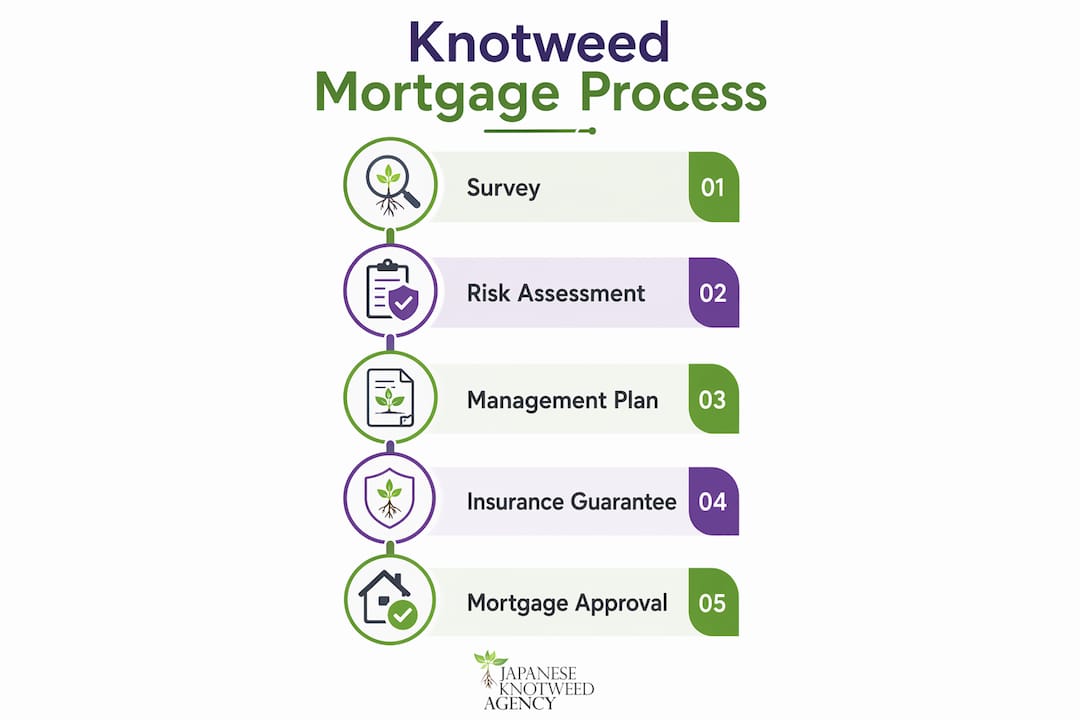
A PCA-accredited survey typically includes:

  1. A thorough site inspection by a qualified specialist
  2. GPS mapping of all identified species and their estimated rhizome extent
  3. Photographic evidence compiled into a formal report
  4. A risk assessment graded by proximity to structures and boundaries
  5. An insurance-backed guarantee where treatment is recommended

The difference between a professional survey and a non-accredited check is significant. Review the professional survey checklist to understand exactly what a compliant report should contain before you commission one.

Survey type Lender accepted Legal cover Accuracy
PCA-accredited professional Yes Yes High
Non-accredited specialist Rarely Limited Variable
DIY or phone assessment No None Low

Misidentification is one of the most significant risks in non-professional assessments. Professionals trained to PCA standards avoid the 73% of errors that occur in untrained identifications by cross-referencing seasonal characteristics, growth patterns, and site history. The impact on property value from a missed or incorrectly assessed invasive species can be severe and long-lasting.

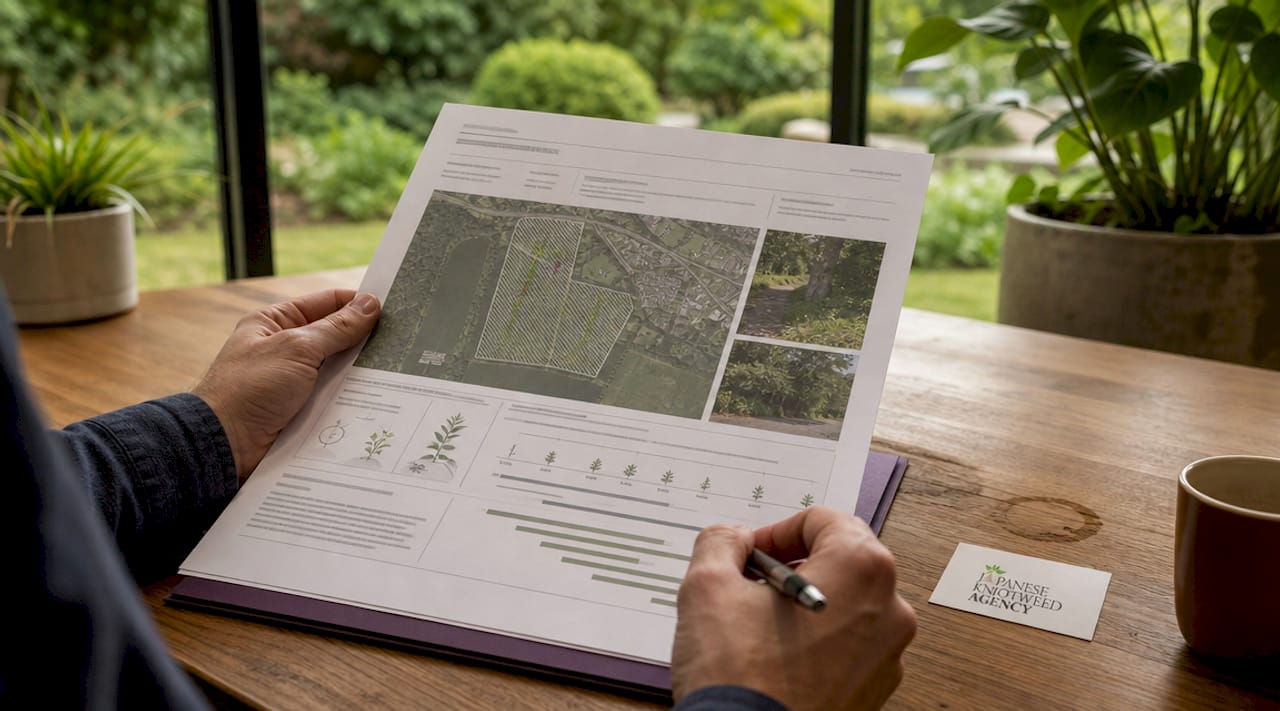
Hands reviewing invasive plant survey documents

Pro Tip: Always request a copy of the surveyor’s PCA accreditation certificate before instructing a survey. This single document confirms that the report will be accepted by your lender and provides a clear evidence trail for your solicitor.

Common pitfalls and edge cases in invasive plant detection

Even with professionals involved, invasive plant detection can be fraught with complications. The trickiest pitfalls arise from misidentification, seasonal limitations, and the hidden nature of rhizome spread.

Japanese knotweed is consistently mistaken for other species, with only 27% of identifications accurate in recent data. Common lookalikes include bindweed and dogwood, both of which share superficial visual similarities during certain growth stages. Rhizome spread of up to 7 metres horizontally and 3 metres deep remains entirely invisible above ground, making surface-level inspections dangerously incomplete.

The most frequent pitfalls include:

  • Winter dormancy: Dead canes can be overlooked or removed before a survey takes place, leaving no visible evidence
  • Lookalike species: Bindweed, dogwood, and even some ornamental bamboos are regularly confused with Japanese knotweed by untrained observers
  • Boundary spread: Rhizomes frequently extend beneath fences and walls from neighbouring properties, making the source difficult to trace
  • Fragment regrowth: Rhizome fragments as small as 0.7 grams can regenerate into a full plant, meaning disturbed soil carries its own risk

Review the data on knotweed misidentification rates to understand how frequently errors occur and what the consequences look like in practice.

Pro Tip: Photograph any suspected invasive growth throughout the year, including in winter when dead canes are still present. A dated photographic record is invaluable to surveyors and can significantly improve detection accuracy.

“Success in invasive plant management is defined as two consecutive growing seasons with no regrowth. Anything short of this standard does not constitute eradication.” — PCA industry guidance

For guidance on your obligations once a plant is identified, visit reporting knotweed to understand the legal steps required under current legislation.

Survey outcomes, management plans, and next steps

After challenges are identified or a plant is confirmed, homeowners must decide what to do next. Understanding what your survey results mean and which steps follow is essential for protecting your investment.

Following a positive identification, you will typically receive:

  1. A formal risk assessment document grading the severity and proximity to structures
  2. A species map showing the estimated extent of above and below-ground growth
  3. A management plan outlining recommended treatment options and timescales
  4. Documentation suitable for submission to your lender and solicitor

The choice of treatment has a direct bearing on both success rates and lender acceptance. Property devaluation of 5 to 20% is common where invasive plants are present, but treatment success rates vary considerably by method. Herbicide-based programmes achieve 85 to 95% success over 3 to 5 years, while thermo-electric treatment reaches 90 to 98% success over 2 to 4 years.

Treatment method Success rate Typical timescale Chemical use
Herbicide programme 85–95% 3–5 years Yes
Thermo-electric treatment 90–98% 2–4 years No
Excavation and removal High (site-dependent) Weeks to months No
Root barrier installation Preventative Immediate No

The RHS recommends non-chemical cultural methods such as digging and barriers as a first preference, acknowledging herbicides for severe or persistent cases. For homeowners seeking a fully chemical-free solution, thermo-electric treatment and root barrier installation offer credible, lender-accepted alternatives.

Infographic summarizing detection steps and pitfalls

Review the full invasive weed assessment steps to understand the complete process from initial survey through to treatment sign-off and lender notification.

Best practices and tips for successful invasive plant detection

Now that you know what is involved and expected, here is how to ensure your plant detection process is accurate, efficient, and accepted by lenders and estate agents.

Choosing the right surveyor is the single most important decision you will make. Look for the following:

  • PCA accreditation: Confirms the surveyor meets the Property Care Association’s professional standards
  • Insurance-backed guarantees: Essential for lender compliance and long-term legal protection
  • Documented site history: A thorough surveyor will review historical records, not just current growth
  • Seasonal awareness: Ask whether the surveyor adjusts their methodology for winter surveys
  • Written report format: Confirm the report format is accepted by your specific lender before instructing the survey

PCA-accredited surveys are the recognised standard for lender acceptance, with early professional intervention preventing both devaluation and potential legal issues under the Wildlife and Countryside Act 1981.

Pro Tip: Never rely on an over-the-phone assessment or a brief visual check from a non-specialist. These are almost universally rejected by lenders and provide no legal protection if invasive plants are later discovered.

Liaising with your solicitor early is equally important. Ensure all survey documentation is passed to your legal team promptly, as delays in submitting management plans can hold up exchange of contracts. Follow the assessment workflow guide to keep your transaction on track from survey to completion.

Why the biggest risk in plant detection is what you don’t see

Most guides focus on the visible: stem colour, leaf shape, growth rate. What they rarely address is the far greater risk that exists entirely below the surface. Standard inspections that concentrate on above-ground growth are, in our view, fundamentally incomplete.

Rhizome spread of up to 7 metres horizontally and 3 metres deep is invisible above ground, yet it represents the true extent of the problem. A property that appears clear of invasive plants at the surface may have an extensive rhizome network already undermining foundations or encroaching on neighbouring land.

Dormant plants and invisible spread account for the majority of failed remediation cases we encounter. Homeowners who accept a quick visual check as sufficient are taking a risk that no insurance policy or management plan can fully reverse after the fact. Insist on full GPS mapping, rhizome assessment, and a PCA-backed report. Anything less is not a survey; it is a glance. Explore free survey insights to understand what a thorough assessment should deliver before you commit to any property purchase.

Get expert help with your invasive plant survey

Armed with the right knowledge, it is time to secure your investment and peace of mind with professionals who understand the risks at every level, above and below ground.

https://japaneseknotweedagency.co.uk

Japanese Knotweed Agency carries out PCA-accredited invasive plant surveys across England, Wales, and Ireland, providing the formal documentation your lender and solicitor require. Whether you are facing a straightforward survey or dealing with dormant knotweed issues that are harder to detect, our specialists are equipped to assess and advise with authority. We also offer fully chemical-free knotweed solutions using thermo-electric treatment, root barrier installation, and excavation. For answers to the questions buyers and remortgagees ask most, visit our common survey questions page and take the first step towards a protected, compliant property transaction.

Frequently asked questions

What are the signs of Japanese knotweed on a property?

Look for bamboo-like stems with purple flecks, heart-shaped leaves, and rapid clumping growth, particularly near property boundaries and along drainage lines.

How important is a PCA-accredited survey for mortgage approval?

Most lenders require a PCA-accredited invasive plant survey and a formal management plan before approving a mortgage on a property where invasive species are present or suspected.

Can dormant invasive plants be detected in winter?

Yes, experienced surveyors can identify dormant knotweed via dead canes and site history, though identification is more challenging and requires specialist knowledge outside the main growing season.

What happens if invasive plants are discovered during a house survey?

You will need a formal management plan and, in most cases, a treatment programme, both of which are required for mortgage approval and compliance with current environmental legislation.

How successful are professional treatment options?

Herbicide treatments succeed 85 to 95% of the time over 3 to 5 years, while thermo-electric methods achieve 90 to 98% success within 2 to 4 years, making them the faster and chemical-free alternative.

揭示入侵植物如何影响饮水安全:日本葛藤风险与房产业主应对指南

许多房主在购房或再融资时,都会对饮水安全产生担忧,尤其当房产附近发现入侵植物时,恐慌情绪往往随之而来。日本葛藤(Kudzu)是其中最受关注的物种之一,但关于它是否会直接污染饮用水,社会上存在大量误解。事实上,科学研究对此有明确的区分,了解其真实影响机制,才能帮助房主做出理性决策,而不是陷入不必要的恐慌或忽视真正需要关注的风险。

目录

关键要点

要点 详情
日本葛藤不直接污染饮用水 权威研究证实日本葛藤不会分泌有害物质进入水体,仅间接影响水源地生态。
间接危害以水体混浊和营养流失为主 主要通过破坏河岸缓冲带、加剧水土流失来提升供水处理难度。
防控需联合治理与生态修复 房主应采用机械、化学等多手段,并优先恢复深根本地植被,加强饮水源保护。
购房及贷款需提前排查入侵植物 水体附近房产务必预查并治理日本葛藤,保障资产与首要生活用水安全。

入侵植物与饮水安全的关联:误区与科学真相

很多人认为,只要房产附近出现入侵植物,饮用水就一定不安全。这种想法虽然出于对家庭健康的保护本能,但在科学层面并不准确。绝大多数陆生入侵植物,包括日本葛藤,主要通过破坏本地生态系统来产生影响,而不是直接向水源中分泌对人体有害的毒素。

日本葛藤对饮水安全的影响,主要体现在以下几个方面:

  • 河岸缓冲带破坏:日本葛藤覆盖河岸后,会排挤本地深根植物,导致缓冲带功能丧失,使土壤更容易被雨水冲刷进入水体。
  • 水体混浊度上升:缓冲带丧失后,大量泥沙和养分随地表径流进入河流或湖泊,增加水体混浊度,加大净水处理难度。
  • 养分流失加剧:氮、磷等营养物质随土壤侵蚀进入水体,可能引发藻类大量繁殖,进一步影响水质。

与此同时,科学研究明确指出,没有证据表明日本葛藤直接导致饮用水污染,但可影响水源质量。这一区分至关重要,因为它决定了房主应该采取的应对策略。

日本葛藤不会向水中释放对人体有毒的化学物质,但其对河岸生态系统的破坏,会间接提升家庭饮用水的处理成本和安全风险。

与中国、日本等地相比,美国对日本葛藤的生态影响研究更为系统深入,但核心结论一致:其危害属于间接性生态破坏,而非直接毒性污染。了解这一点,有助于房主在入侵植物对家居影响方面做出更有依据的判断,并在必要时安排专业的房产入侵植物调查

日本葛藤扩散机制与主要危害

日本葛藤原产于亚洲,19世纪末作为观赏植物和水土保持植物引入美国,随后因其惊人的扩散速度而成为臭名昭著的入侵物种。在适宜条件下,它每天可生长超过30厘米,每年可覆盖大片土地,对本地植物和生物多样性构成严重威胁。

特征 日本葛藤 本地植物
年生长速度 可达18至30米 通常低于3米
根系深度 可达3米以上 因物种而异
遮蔽能力 极强,可完全覆盖树木 有限
对建筑影响 可侵入基础和供水接口 通常无直接威胁

对于房主而言,日本葛藤的危害不仅限于景观层面。日本葛藤可损害建筑基础并导致房产贬值,治理费用高昂,全美每年相关治理支出高达数亿美元。其根系可侵入建筑物基础、排水管道,甚至供水系统的接口处,造成结构性损坏。

专业提示: 如果您的房产靠近林地边缘或溪流,建议在购房前主动委托专业机构进行入侵植物治理科学评估,避免日后承担高额治理成本。

日本葛藤的扩散分布范围已覆盖美国东南部大部分地区,并在英国、爱尔兰等地也有记录。对于正在购房或申请再融资的业主,了解英国房产与入侵植物的相关政策和风险,是保护资产价值的必要步骤。治理难度大、复发率高,是日本葛藤区别于其他入侵植物的核心特点,这也是为什么早期发现和专业干预如此关键。

间接影响:日本葛藤如何威胁水源地与饮水安全

尽管日本葛藤不会直接毒化饮用水,但其对水源地的间接影响不容忽视,尤其对于房产靠近河流、湖泊或水库的业主而言。

以下是日本葛藤影响水源安全的主要间接机制,按优先级排列:

  1. 河岸缓冲带破坏:日本葛藤覆盖并压制本地深根植物,导致河岸土壤固定能力下降,水土流失加剧。
  2. 水体混浊度上升:大量泥沙进入水体后,净化处理成本随之增加,家庭饮用水的处理难度也相应提高。
  3. 营养物质流失:氮磷等养分随侵蚀土壤进入水体,可能引发藻华,进一步威胁水质安全。
  4. 生态服务功能下降:本地植被被替代后,整体生态系统的自净能力和水源涵养功能显著减弱。

科学研究证实,日本葛藤未检测到直接威胁饮水安全,间接危害主要通过水土流失和混浊加剧实现。这与部分水生入侵植物的影响有本质不同,后者可直接阻塞水道或释放有害物质。

生态学家正在河边采集水样,进行水质检测。

植物类型 对饮水的影响方式 直接毒性 优先治理级别
日本葛藤 间接,通过水土流失 高(靠近水源时)
水生入侵植物 直接阻塞水道 部分有 极高
一般陆生入侵植物 间接,生态破坏

越靠近河流或湖泊的日本葛藤,应优先纳入治理计划。了解入侵植物治理方法入侵植物危害案例,可以帮助房主制定更有针对性的防控策略。日本水域相关的入侵植物影响报道也印证了这一判断,水源地附近的入侵植物管理需要更高的优先级和更系统的方法。

葛藤的危害及防治方法一览图

房主如何识别与应对日本葛藤:实用方法与防控建议

对于正在购房、申请贷款或进行物业维护的房主,掌握日本葛藤的识别要点和科学应对方法,是保护房产价值和饮水安全的第一步。

日本葛藤的典型识别特征:

  • 叶片形态:叶片较大,通常为三出复叶,每片小叶呈卵形,边缘略带波浪状。
  • 藤蔓特征:藤蔓粗壮,木质化程度高,可攀爬树木、建筑物和电线杆。
  • 花朵颜色:夏末开紫色或紫红色花,具有葡萄般的香气。
  • 常见栖息地:路边、林地边缘、河岸、废弃地块,以及排水不良的低洼区域。

科学研究表明,针对成熟侵染需采用多管齐下的综合治理方法,并辅以恢复深根系本地植被,才能有效降低复发率和水源风险。单一的化学除草或机械清除往往效果有限,必须结合多种手段。

专业提示: 治理完成后,应立即种植本地深根性草本植物或灌木,以恢复河岸缓冲带功能,这是持续保护水源安全最具成本效益的长期策略。

了解完整的入侵植物清除流程入侵植物检测详解,可以帮助房主在专业团队介入前做好充分准备。如果房产靠近溪流或湖泊,建议参考水源生态修复建议,将生态修复纳入整体治理计划,而不仅仅是清除植物本身。

专家观点:为何正确治理日本葛藤重在预防与生态修复

根据美国和日本地区数十年的长期监测数据,至今未发现日本葛藤直接污染饮用水的确切案例。这一事实本身就说明,对日本葛藤的恐慌往往超出了其实际风险范围。然而,这并不意味着可以忽视它,恰恰相反,预防根区扩散和及时生态修复才是真正有效的应对策略。

我们在实际工作中观察到,单纯依赖化学除草剂的治理方案,往往会在消灭入侵植物的同时破坏周边生物多样性,反而削弱了生态系统的自我修复能力。恢复本地植被、采用多重策略治理后,水体混浊与污染风险显著降低,这一结论已得到多项研究的支持。

片面恐慌或一刀切治理,反而容易破坏生物多样性和生态服务功能。真正可持续的解决方案,是将机械清除、热电处理、根障安装与本地植被恢复相结合,并通过持续筛查和社区协作,建立长效的房产与水源安全保障机制。了解入侵植物治理政策,是制定科学防控计划的重要基础。

如果您的房产存在入侵植物疑虑,专业服务助您安心无忧

无论您正在购置新房、申请再融资,还是对现有物业进行维护,一旦发现日本葛藤或其他入侵植物的迹象,及时寻求专业帮助是保护房产价值和饮水安全的最直接途径。Japanese Knotweed Agency 提供覆盖 England、Wales 和 Ireland 的专业入侵植物调查与治理服务,采用无化学品的热电治理技术,最高可输出5000伏特直接能量,有效破坏根茎网络而不损害周边生态系统。

https://japaneseknotweedagency.co.uk

我们的服务涵盖房产购置侵害调查指南、根障安装、挖掘清除以及生态修复方案,帮助您从根本上化解风险。如需了解更多,欢迎查阅我们的常见问题解答,或直接访问更多防控方案获取专业支持,让您的房产和水源安全得到长期保障。

常见问题解答

日本葛藤会直接导致饮用水变质吗?

科学研究表明,日本葛藤不会直接污染饮用水,其主要风险在于破坏河岸缓冲带,间接增加水体混浊度和养分流失,从而提高净水处理成本。

水源地附近发现日本葛藤,房主应该怎么办?

建议立即联系专业团队进行现场评估,采用机械、热电等多手段联合治理,并在清除后尽快恢复本地深根植被以持续保护水源安全。

所有入侵植物都会影响饮水安全吗?

并非如此。水生入侵植物可直接阻塞水道或影响水质,而日本葛藤等陆生植物主要通过间接的生态破坏机制影响水源,风险性质和程度有本质区别。

日本葛藤治理后,如何持续保障饮水安全?

治理完成后,应持续种植和管理深根本地灌木,维持健康的河岸缓冲带,定期监测植被恢复情况,恢复本地植被是降低未来水源污染风险最有效的长期措施。

推荐

Manual Japanese Knotweed removal: safe steps in 5 stages

Japanese Knotweed is one of the most legally and financially consequential plants a homeowner in England, Wales, or Ireland can encounter. Manual removal is strongly discouraged due to the high risk of spreading the plant through rhizome fragments, strict controlled waste disposal requirements, and persistently low long-term success rates. Yet for genuinely tiny, isolated outbreaks, careful manual intervention may be the only immediate option available. This guide sets out the risks, legal obligations, correct procedures, and modern alternatives so you can make an informed decision and protect your property, your neighbours, and your legal standing.

Table of Contents

Key Takeaways

Point Details
DIY only for tiny patches Manual removal should be attempted only for very small, isolated outbreaks of Japanese Knotweed.
Legal compliance critical Always use licensed waste carriers and follow Environmental Protection Act regulations when disposing knotweed.
Monitoring prevents regrowth Regular monitoring for at least 12-24 months is needed to catch and address any recurrence.
Consider professional help Professional, chemical-free treatments offer higher success and safeguard property value and legal compliance.

Understanding the risks of manual removal

Japanese Knotweed spreads with alarming efficiency. A rhizome fragment as small as 0.7 grams can establish a new plant, which means a single careless cut or an improperly sealed bag can transform a contained problem into a widespread infestation across your garden or your neighbour’s boundary. This is not a plant that tolerates half-measures.

The legal risks of manual removal are equally serious. Under the Environmental Protection Act 1990, Japanese Knotweed is classified as controlled waste. Disposing of it incorrectly, whether in a green bin, a skip, or through composting, can result in significant fines. Causing the plant to spread to neighbouring land is an offence under the Wildlife and Countryside Act 1981, and civil disputes between neighbours over knotweed encroachment are increasingly common in UK courts.

The impact on property values is another critical concern. DIY mistakes risk fines, spread, and devalued property by as much as 5 to 15%, and mortgage lenders frequently decline applications on properties with unmanaged infestations.

“Japanese Knotweed is not simply a gardening nuisance. It is a legally regulated invasive species with the capacity to push through tarmac, damage foundations, and fundamentally affect a property’s saleability.”

Manual removal should only be considered when:

  • The infestation is genuinely small (under 1m²)
  • The area is not near watercourses or neighbouring boundaries
  • You have access to licensed waste disposal
  • You have sought RHS guidance on Japanese Knotweed and professional confirmation of the plant’s identity

Now that you understand why this is a challenging issue, let’s identify what you’ll need before even attempting any manual intervention.

With the risks and legal framework understood, it’s vital to gather the proper tools and prepare for safe, compliant action. Attempting removal without the correct equipment not only increases personal risk but can also compromise legal compliance.

Essential equipment checklist:

  • Full PPE: gloves, eye protection, disposable coveralls, and sturdy footwear
  • Sharp cutting tools (secateurs or loppers) cleaned before and after use
  • Heavy-duty, sealable bags rated for controlled waste
  • A dedicated container for soil contaminated with rhizome fragments
  • Contact details for a licensed waste carrier approved for controlled waste

Preparation steps before cutting any stems:

  • Map the full extent of the infestation with photographs and measurements
  • Document the date, location, and plant growth stage
  • Contact a professional to confirm identification via the property survey process
  • Notify your local authority if the infestation is near a watercourse
  • Confirm your waste carrier is licensed under the Environmental Protection Act
Method PPE required Licensed disposal Professional involvement Legal compliance
DIY manual removal Yes Yes Recommended High risk if done incorrectly
Professional manual removal Yes (by contractor) Yes Full Ensured
Thermo-electric treatment Yes (by contractor) Minimal waste Full Ensured

As RHS guidance confirms, a formal treatment plan should begin with a professional survey to map the infestation, followed by a bespoke management plan with monitoring over a minimum of 12 months, root barrier installation near structures or boundaries where appropriate, and strictly compliant disposal of all plant material.

Pro Tip: Only attempt manual removal for areas genuinely smaller than 1m². Anything larger requires professional intervention to remain legally compliant and to protect your property’s value and saleability.

Manual removal steps for tiny outbreaks

Once you’re properly equipped, here’s a breakdown of how to proceed safely if your infestation is truly minimal. These steps apply only to outbreaks under 1m² that are not near water or property boundaries.

  1. Photograph and record the full area before touching anything. Date-stamp every image.
  2. Put on all PPE before making any contact with the plant.
  3. Cut stems at the base using clean secateurs. Do not pull or dig at this stage.
  4. Place all cut material immediately into heavy-duty sealable bags. Never leave cuttings on the ground.
  5. Carefully remove any visible rhizome from the topsoil using a hand trowel. Bag all soil containing fragments separately.
  6. Seal all bags securely and label them as controlled waste.
  7. Arrange collection by a licensed carrier. Never place knotweed in a household bin, compost heap, or skip.
  8. Clean all tools thoroughly with disinfectant before storing or using elsewhere.

If the infestation is near a watercourse, do not disturb the soil at all. Avoid any disturbance near water and contact a professional who specialises in riparian invasive species management. Fragments entering a watercourse can spread the plant across entire catchment areas.

Homeowner inspecting ground for knotweed regrowth

For managing small outbreaks, repeat checks every four to six weeks are essential. Even after careful removal, regrowth from missed fragments is common. Following best practices on Japanese Knotweed means treating every subsequent check with the same rigour as the initial removal.

Pro Tip: Keep a written log of every check, noting whether regrowth is present. This record will be invaluable if you ever need to sell your property or satisfy a mortgage lender.

Modern alternatives: Thermo-electric and cultural methods

If manual removal isn’t appropriate or you’re interested in more robust, innovative solutions, here’s a look at chemical-free methods that professionals now offer. These approaches are increasingly preferred by lenders, surveyors, and environmental regulators.

Thermo-electric treatment delivers direct electrical energy of up to 5,000 volts into the plant’s tissue and rhizome network. This causes internal cell damage and progressively depletes the energy reserves stored within the root system. Unlike manual removal, it does not fragment the rhizome or generate large volumes of controlled waste. Eradication success rates of 95% are claimed for thermo-electric treatment, making it one of the most effective non-chemical options currently available.

Method Chemical use Typical duration Success rate Lender compliant
Manual removal (DIY) None Ongoing, 12+ months Low to moderate Rarely
Thermo-electric treatment None Multiple treatments Up to 95% (claimed) Yes
Cultural controls (cutting/smothering) None 3+ seasons Moderate Varies

RHS advice on cultural methods confirms that cultural approaches such as repeated cutting and light exclusion can suppress growth but rarely achieve full eradication. Monitoring remains essential regardless of method chosen, as rhizomes can remain dormant for several years before re-emerging.

For a closer look at how thermo-electric technology is applied in practice, the work carried out on thermo-electric solutions in Glastonbury illustrates the method’s effectiveness in a real-world residential setting.

Pro Tip: Always request verifiable credentials and case studies from any provider offering thermo-electric or other emerging non-chemical treatments. Established accreditation and documented outcomes are the clearest indicators of a trustworthy contractor.

Monitoring and maintenance steps after manual removal

After any form of removal, staying vigilant about regrowth is your best defence against costly setbacks. The rhizome network of Japanese Knotweed can extend up to three metres in depth and seven metres laterally, meaning that what appears to be a resolved problem may simply be a dormant one.

Infographic outlining five safe knotweed removal steps

Rhizomes can remain dormant for years before producing new growth, which is why ongoing monitoring over a minimum of 12 to 24 months is considered the professional standard. This is not optional if you intend to sell your property or satisfy a mortgage lender’s requirements.

Key monitoring and documentation steps:

  • Photograph the treated area every four to six weeks throughout the growing season (April to October)
  • Record dates, observations, and any signs of regrowth in a written log
  • Retain all disposal certificates from your licensed waste carrier
  • Note any changes to neighbouring land that could indicate cross-boundary spread
  • Revisit the area in early spring, when new shoots are easiest to identify

“Incomplete removal records are one of the most common reasons property sales stall or fall through when Japanese Knotweed is involved. Documentation is not bureaucracy; it is protection.”

Understanding your legal obligations after removal is equally important. If you plan to sell your property, you are legally required to disclose the presence of Japanese Knotweed on the TA6 property information form. A well-maintained treatment record and a formal management plan can make the difference between a successful sale and a collapsed transaction. For those seeking documentation for mortgage purposes, lenders typically require evidence of a professional management plan from an accredited contractor, not simply a record of DIY activity.

Why most homeowners should avoid true DIY removal

With ongoing diligence required, it’s worth reflecting on why professional help often outweighs attempted DIY. In our experience, manual homeowner removal almost never succeeds on established stands of Japanese Knotweed. The rhizome network is simply too extensive, too resilient, and too legally sensitive for unassisted intervention to be reliable.

Homeowners should prioritise professional accredited contractors for chemical-free plans to ensure lender compliance, legal safety, and genuine efficacy. True manual DIY should be limited to tiny, isolated patches approached with extreme caution and full legal compliance.

Accredited professionals bring more than equipment. They provide formal management plans that satisfy mortgage lenders, insurance companies, and solicitors. They carry liability insurance. They understand the nuances of riparian boundaries, party wall considerations, and cross-boundary spread. Thermo-electric treatment, in particular, is a promising and highly effective innovation, but only when delivered by verified providers with documented outcomes.

For homeowners seeking professional chemical-free plans, the investment in accredited expertise consistently outperforms the short-term appeal of DIY, both in eradication outcomes and in protecting long-term property value.

How we can help with safe, chemical-free Japanese Knotweed removal

If you’re considering next steps, here are expert-backed options that keep your property safe and compliant.

https://japaneseknotweedagency.co.uk

At Japanese Knotweed Agency, we specialise in chemical-free removal steps that protect your property, satisfy lenders, and meet all legal requirements across England, Wales, and Ireland. Our thermo-electric treatment delivers up to 5,000 volts directly into the rhizome network, causing cell damage without chemicals or excessive waste. We also install root barriers, carry out excavation works, and conduct formal property surveys for invasive weeds. Explore our eradication plan guide or visit our Japanese Knotweed FAQs to understand your options in full.

Frequently asked questions

Is it ever safe for homeowners to manually remove Japanese Knotweed?

Manual removal is only safe for genuinely tiny, isolated patches under 1m² and must be carried out with strict legal compliance, including licensed waste disposal and thorough monitoring.

All plant material must be treated as controlled waste under the Environmental Protection Act, meaning you must never compost it and must use only a licensed waste carrier for collection and disposal.

How long does monitoring need to continue after removal?

You should monitor your property for a minimum of 12 to 24 months, as rhizomes remain dormant for extended periods before any visible regrowth appears.

Are there faster chemical-free methods than manual removal?

Thermo-electric treatment claims 95% success and delivers results significantly faster than manual methods, though it must always be professionally delivered by a verified and accredited contractor.

Why Japanese knotweed thrives in UK gardens: 5 facts

Japanese knotweed is one of the most persistent invasive plants in Britain, capable of regrowing from rhizome fragments as small as 1cm. Many homeowners assume it only invades derelict sites or neglected land, yet well-maintained gardens across England, Wales, and Ireland face the same threat. This guide explains the biological and environmental factors that make knotweed so successful in domestic settings and outlines practical, chemical-free approaches to eradication and property protection.

Table of Contents

Key Takeaways

Point Details
Rhizome resilience Knotweed’s underground stems can regrow from tiny fragments, making it extremely persistent.
Rapid spread Shoots can grow up to 20 centimetres daily, quickly overtaking garden spaces.
Environmental toughness Knotweed thrives in most UK soils and climates and faces no natural garden predators.
Myth versus reality It is more likely to damage biodiversity and property value than solid foundations.
Professional approach PCA-accredited, chemical-free methods are safest and most effective for lasting control.

How knotweed took root in UK gardens

Japanese knotweed arrived in Britain during the Victorian era as an ornamental curiosity. Gardeners prized its rapid growth and attractive foliage, unaware of the ecological consequences. Introduced as an ornamental plant in the 1800s, knotweed quickly escaped cultivation and established itself across the country. Britain’s mild, wet climate and diverse soil types provided ideal conditions for the plant to flourish.

The absence of natural predators gave knotweed an overwhelming advantage. In its native Japan, insects and fungi keep populations in check. In the UK, knotweed lacks natural predators, allowing it to spread unchecked and outcompete native species. This disruption to garden biodiversity continues today, with knotweed displacing wildflowers, shrubs, and grasses that support pollinators and other wildlife.

Key factors in knotweed’s UK establishment include:

  • Mild, wet climate suited to rapid growth
  • Wide tolerance of soil types and pH levels
  • Complete absence of natural predators or diseases
  • Victorian-era introduction for ornamental purposes

“Japanese knotweed’s success in the UK is a textbook example of what happens when a plant escapes its ecological context. Without the checks and balances of its native habitat, it becomes a dominant force.”

Understanding your legal obligations of knotweed is essential for homeowners. Seeking expert knotweed advice early can prevent costly mistakes and legal complications.

Knotweed’s underground advantage: the power of rhizomes

The true strength of Japanese knotweed lies beneath the soil surface. Its rhizome network forms a dense, interconnected system that can extend 3m deep and 7m laterally. These underground stems store energy and nutrients, allowing the plant to survive harsh winters and regenerate year after year.

Exposed Japanese knotweed rhizome under garden soil

Rhizomes possess remarkable regenerative capacity. A single fragment measuring just one centimetre can develop into a full plant, making eradication extremely challenging. This characteristic explains why DIY removal attempts often fail. Digging up visible growth without addressing the entire rhizome network simply spreads the problem, as soil disturbance scatters viable fragments across a wider area.

Rhizomes can remain dormant for decades, then reactivate when conditions improve. This dormancy complicates treatment timelines and requires sustained monitoring even after visible growth disappears. Excavation projects that disturb contaminated soil risk unintentionally spreading knotweed to new locations, which is why professional expertise is critical.

Rhizome characteristic Impact on eradication
3m depth penetration Requires deep treatment or excavation
7m lateral spread Affects neighbouring properties
1cm fragment viability High risk of accidental spread
Decades-long dormancy Long-term monitoring essential

Pro Tip: Never attempt to dig out knotweed yourself. Even small rhizome fragments left in the soil will regenerate, and you may inadvertently spread the infestation to clean areas of your garden or neighbouring properties.

The rhizome network’s extent often surprises homeowners. What appears as a small patch above ground may conceal a vast underground system. This hidden threat affects knotweed and property damage assessments and creates knotweed mortgage problems during property transactions.

Why knotweed grows so fast and crowds out your plants

Above ground, Japanese knotweed demonstrates equally impressive growth rates. During peak growing season, shoots can grow 4-20cm per day, forming dense thickets that smother lawns, borders, and ornamental plantings. This rapid vertical growth allows knotweed to quickly dominate garden spaces and block sunlight from reaching other plants.

Infographic: five key facts about knotweed spread

The plant’s dense canopy creates deep shade that starves garden plants of light. Native wildflowers, grasses, and shrubs cannot compete for this essential resource. Knotweed’s extensive root system also monopolises water and soil nutrients, further disadvantaging neighbouring vegetation. The result is a monoculture that offers little value to pollinators, birds, or beneficial insects.

Biodiversity loss represents one of knotweed’s most significant impacts on domestic gardens. Where knotweed establishes, plant diversity plummets. This simplification of the garden ecosystem reduces habitat quality for wildlife and diminishes the aesthetic and ecological value of outdoor spaces.

Growth metric Knotweed Typical garden plants
Daily growth rate 4-20cm 0.5-2cm
Canopy density Very dense Moderate to sparse
Light penetration Minimal Good
Nutrient uptake Aggressive Moderate

Statistic: Japanese knotweed can grow up to 20cm in a single day during optimal conditions, allowing it to overtake garden borders in just weeks.

The impact on property values extends beyond the garden itself. Lenders view knotweed as a significant risk factor, and managing value risks requires professional intervention and documentation.

Knotweed’s resilience: soil, climate, and lack of predators

Japanese knotweed thrives across Britain because it tolerates an extraordinary range of environmental conditions. The plant grows successfully in clay, sand, loam, and even nutrient-poor soils. It flourishes in full sun and partial shade, and tolerates drought conditions that would stress many garden plants.

This environmental flexibility makes virtually every UK garden vulnerable to knotweed establishment. Coastal properties, urban gardens, rural estates, and suburban plots all provide suitable habitat. The plant’s tolerance of pollution and disturbed ground means it colonises brownfield sites, roadside verges, and railway embankments with equal ease.

The absence of natural enemies remains knotweed’s greatest advantage in the UK. No native insects feed on it, no fungi attack it, and no grazing animals find it palatable. This ecological isolation allows knotweed populations to expand without the natural regulation that occurs in Japan.

Environmental factors favouring knotweed:

  • Tolerance of pH 3.5 to 8.5 (acidic to alkaline soils)
  • Growth in waterlogged and well-drained conditions
  • Survival in temperatures from freezing to 35°C
  • Resistance to air pollution and salt spray
  • Ability to colonise disturbed and compacted soils

Pro Tip: Knotweed often appears first along boundaries, near water features, or in areas where soil has been disturbed. Regular inspection of these vulnerable zones helps catch infestations early, when treatment is most effective and least costly.

Homeowners must understand knotweed and UK law to avoid legal liability. Allowing knotweed to spread from your property can result in prosecution and civil claims from neighbours.

How knotweed really threatens your home and garden

Popular media often portrays Japanese knotweed as a plant that demolishes house foundations and renders properties worthless. This narrative, whilst attention-grabbing, misrepresents the actual risks. Knotweed rarely damages sound, modern foundations. The major risk is to biodiversity and property values, with affected properties experiencing value reductions of 5-20%.

The genuine threats knotweed poses include:

  • Severe reduction in garden biodiversity and wildlife habitat
  • Property value depreciation of 5-20% in affected homes
  • Mortgage application rejections without management plans
  • Legal liability if knotweed spreads to neighbouring land
  • Treatment costs ranging from £2,000 to £20,000 depending on severity

Mortgage lenders treat knotweed as a significant risk factor. Most require a professional management plan and evidence of ongoing treatment before approving loans. This requirement reflects lenders’ concerns about property values and the potential for future complications, not structural damage fears.

“The knotweed crisis is primarily one of perception and property value, not structural engineering. Sound foundations resist knotweed pressure, but the plant’s presence creates financial and legal complications that affect marketability and mortgage availability.”

Garden biodiversity suffers most from knotweed establishment. Native plants that support pollinators, birds, and beneficial insects disappear beneath dense knotweed growth. This ecological simplification reduces your garden’s environmental value and diminishes the pleasure of outdoor spaces.

Understanding property value threats and addressing mortgage issues with knotweed requires professional guidance and documented treatment programmes.

Chemical-free eradication: what actually works

UK homeowners increasingly seek chemical-free alternatives to traditional herbicide treatments. Professional-grade thermo-electric methods deliver 5000V to destroy cells, achieving eradication within one to two years. This approach causes internal cell damage and depletes energy reserves in the rhizome network without introducing chemicals into the soil.

Mechanical removal remains an option for small, contained infestations, but carries significant risks for DIY attempts. Professional excavation removes contaminated soil to licensed disposal facilities, eliminating the rhizome network entirely. However, this method proves costly and impractical for large infestations or sites with limited access.

Root barriers prevent lateral rhizome spread, protecting structures and neighbouring properties. These engineered membranes require expert installation to ensure proper depth and continuity. When correctly installed, barriers contain existing infestations whilst treatment progresses, preventing further expansion.

PCA-accredited professionals ensure treatments comply with UK regulations and industry standards. Accreditation demonstrates technical competence, insurance coverage, and adherence to best practices. Working with accredited specialists protects homeowners from ineffective treatments and potential legal complications.

Effective chemical-free methods:

  1. Thermo-electric treatment: Delivers high-voltage energy to destroy rhizome cells, achieving eradication in 1-2 years
  2. Professional excavation: Removes entire rhizome network and contaminated soil to licensed facilities
  3. Root barrier installation: Contains spread whilst treatment progresses, protecting structures and boundaries
  4. Integrated monitoring: Combines treatment with regular inspections to confirm eradication and prevent regrowth

Pro Tip: Chemical-free eradication requires patience and professional expertise. Thermo-electric treatment typically needs multiple sessions over 12-24 months, but eliminates concerns about herbicide residues in soil and groundwater.

Explore chemical-free knotweed control options and learn how to install root barriers. Understanding the step-by-step chemical-free process helps homeowners make informed decisions.

Why property surveys are crucial for knotweed control

Mortgage lenders typically demand management plans and professional surveys before approving loans on properties with knotweed. These surveys identify infestations, map affected areas, assess spread risk, and provide legal-compliant documentation. Property surveys by PCA-qualified experts cost from £260 upwards, depending on property size and infestation complexity.

Accredited surveys include detailed site mapping, photographic evidence, risk assessment, and treatment recommendations. This documentation satisfies lender requirements and provides a baseline for monitoring treatment progress. Surveys also identify potential spread to neighbouring properties, helping homeowners address legal obligations proactively.

Professional surveys deliver several critical benefits:

  • Accurate identification and mapping of knotweed extent
  • Risk assessment for structures, boundaries, and neighbouring land
  • Legal-compliant documentation for mortgage applications
  • Treatment recommendations tailored to site conditions
  • Baseline data for monitoring eradication progress
Survey component Purpose Typical cost
Site inspection Identify and map infestation £260-£400
Risk assessment Evaluate threats to property Included
Management plan Treatment recommendations £150-£300
Monitoring visits Confirm eradication progress £100-£200 per visit

Choosing PCA-accredited professionals ensures surveys meet industry standards and lender requirements. Accreditation provides assurance of technical competence, professional indemnity insurance, and adherence to best practices. This credibility proves essential when negotiating property transactions or addressing neighbour disputes.

Homeowners purchasing properties should commission weed survey for property buyers before exchange. Access specialist knotweed survey advice to understand what surveys should include and how to interpret results.

Find expert help and effective knotweed solutions

Japanese Knotweed Agency pioneered chemical-free eradication methods in the UK, delivering thermo-electric treatment that destroys rhizome networks without herbicides. Our PCA-accredited surveys provide the documentation lenders require, whilst our treatment programmes offer guaranteed eradication within defined timescales. We serve homeowners across England, Wales, and Ireland with proven, sustainable solutions.

https://japaneseknotweedagency.co.uk

Our chemical-free options combine innovation with environmental responsibility. We also provide step-by-step knotweed management guidance and maintain a comprehensive full FAQ on knotweed addressing common homeowner concerns. Professional advice and tailored eradication plans represent the next step towards confident, chemical-free knotweed control.

Frequently asked questions

Can Japanese knotweed grow back after removal?

Yes, even 1cm rhizome fragments left in soil can regenerate into full plants, which is why professional eradication with guaranteed monitoring is essential for permanent removal.

How long does it take to eradicate knotweed using chemical-free methods?

Thermo-electric treatment typically achieves complete eradication in 1-2 years for UK gardens, with multiple treatment sessions required to deplete rhizome energy reserves fully.

Will knotweed always destroy house foundations?

No, the real threat is biodiversity loss and property value reduction of 5-20%, not structural collapse. Sound foundations resist knotweed pressure effectively.

What should I look for in a knotweed property survey?

Choose PCA-accredited surveys that include detailed site mapping, photographic evidence, risk assessment, and a compliant management plan satisfying lender requirements.