入侵性植物定义——英国房产风险与防控责任

购房时发现院子里冒出的顽固杂草总让人头疼,尤其是像日本结缕草这类入侵性植物。它们不仅能破坏英国房产的地基,还会威胁本地生态平衡,治理难度极高。面对政府严格的管控法规和潜在的高额清理费用,房主、买家及抵押申请者越来越重视入侵性植物调查与无化学治理方案,特别是那些期待免费处理服务的家庭,本篇内容将为您梳理核心误区、识别要点和合规安全的解决策略。

目录

关键要点

要点 详情
入侵性植物定义 入侵性植物是指在非本土环境中具有高度扩散能力的外来物种,能对生态系统造成严重威胁。
英国法律与责任 房主有法律义务防控入侵性植物的蔓延,违反者可能面临高额罚款和法律责任。
治理方法 推荐采用非化学的方法治理入侵性植物,包括物理挖除、遮光覆盖和生物防治等。
专业调查必要性 在房地产购买或租赁前,需进行专业的入侵性植物调查,以了解潜在的生态风险。

入侵性植物:核心定义与常见误区

入侵性植物是一种在非本土环境中具有高度扩散能力的外来物种,能够迅速占据并破坏原生生态系统。英国政府对这类物种有明确的法律定义和管控规范,尤其关注那些可能对本地生物多样性造成严重威胁的植物种类。

根据官方定义,入侵性植物具有以下关键特征:

  • 非本地原产地引入
  • 具备快速繁殖和扩散能力
  • 能够压制本地植物生长
  • 对生态系统造成显著负面影响

在英国,入侵性植物的法律管控非常严格。政府禁止进口、种植和传播这些具有潜在破坏性的植物物种,以保护本土生态环境。例如,日本结缕草就是最典型的入侵性植物代表,其强大的根系和扩散能力使其成为房地产开发商和房主最为担心的植物之一。

常见的入侵性植物误区包括:

  1. 认为所有非本地植物都是入侵性的
  2. 低估入侵性植物对生态系统的破坏力
  3. 相信简单的修剪就能有效控制其蔓延
  4. 忽视专业防控的必要性

从生态学角度看,入侵性植物不仅仅是园艺或农业问题,更是一个重大的环境保护挑战。这些植物往往具有极强的生存能力,能够迅速取代本地植物,造成生态系统的长期失衡。

专业贴士: 在购买或租赁房产时,务必进行专业的入侵性植物调查,提前了解潜在生态风险。

英国主要入侵性植物种类与区别

英国存在多种危害生态系统的入侵性植物,其中最为突出的包括日本结缕草、巨型豚草和喜马拉雅攀枝花等。英国政府明确列出了36种主要入侵性植物,这些植物不仅威胁本地生态平衡,还可能对房地产和环境造成长期损害。

这些入侵性植物主要可以分为以下几类:

  • 水生入侵植物:如漂浮钱叶水草
  • 陆生入侵植物:如日本结缕草和巨型豚草
  • 草本类入侵植物:如喜马拉雅攀枝花

不同入侵性植物的特征和危害程度各不相同。例如:

  1. 日本结缕草:根系极其发达,能穿透混凝土和建筑地基
  2. 巨型豚草:生长迅速,形成密集植被,对人体皮肤有极大伤害
  3. 喜马拉雅攀枝花:主要分布在河岸湿地,迅速蔓延并压制本地植物

从生态学角度看,这些植物之所以如此危险,在于它们具有极强的繁殖和适应能力。它们能快速占据生态空间,破坏原生植被的生态平衡,对本地生态系统构成严重威胁。

下表对比了英国三种常见入侵性植物的生态影响和治理难度:

植物名称 生态影响 对房产影响 治理难度
日本结缕草 严重破坏生态平衡 可破坏建筑地基 极高
巨型豚草 挤压本土植物空间 引起皮肤过敏威胁
喜马拉雅攀枝花 影响湿地和河岸多样性 对基础设施影响较小 中等

专业贴士: 在购买房产前,务必进行专业的入侵性植物调查,了解潜在的生态风险和可能的处理成本。

识别入侵性植物的关键特征

准确识别入侵性植物对于及时控制其蔓延至关重要。英国政府提供了详细的植物识别指南,帮助房主和相关专业人士快速判断潜在的生态风险。入侵性植物通常具有显著的形态特征和生长习性,可通过仔细观察其外部特征进行初步鉴别。

入侵性植物的关键识别特征主要包括:

  • 生长速度:极快,常超过本地植物生长速率
  • 繁殖能力:强大的根系和种子传播机制
  • 适应性:能迅速在不同环境中生存和扩散
  • 侵略性:能压制周围原生植被的生长

针对不同入侵性植物,还需要注意以下具体识别细节:

  1. 日本结缕草:紫红色竹节状茎,心形叶片密集排列
  2. 巨型豚草:高达数米,深裂叶片,带有圆锥形花序
  3. 漂浮钱叶水草:水生植物,易碎且快速蔓延

专业识别需要综合考虑植物的形态特征、生长环境和传播方式。入侵性植物往往具有极强的生存能力,能快速占据生态空间,对本地生态系统造成严重破坏。房主和地产开发商需要保持高度警惕,及时发现并控制这些潜在的生态威胁。

专家现场讲解如何辨认外来入侵植物的特点

专业贴士: 请定期邀请专业生态调查团队对房产进行入侵性植物检查,早期发现可以大大降低处理成本和生态风险。

入侵性植物对房产和生态的影响

入侵性植物对英国房产和生态系统构成多层次、长期的严重威胁。政府环境部门警告这些植物会严重破坏基础设施和生态平衡,其影响远远超出简单的植被问题。

对房产的具体危害包括:

  • 地基破坏:强大根系可穿透混凝土和建筑基础
  • 结构安全:导致墙体裂缝和地面下沉
  • 维护成本:清理和修复费用极高
  • 房产贬值:存在入侵性植物可显著降低物业价值

生态系统方面的影响更为深远:

  1. 破坏生物多样性
  2. 挤压本土植物生存空间
  3. 改变自然生态平衡
  4. 影响野生动物栖息环境
  5. 传播植物病害

入侵性植物不仅是环境问题,更是严重的经济和法律风险。它们能迅速蔓延,对周边环境造成不可逆的破坏。房主和开发商必须高度重视这一潜在威胁,及时采取专业的防控和清理措施。

专业贴士: 购买房产前,务必进行专业的入侵性植物调查,并将调查结果纳入房屋估值和谈判环节。

英国法律、房主责任与合规要求

在英国,处理入侵性植物并非仅仅是环境问题,更是严格的法律要求。《野生动物与乡村法案1981》明确规定了房主对入侵性植物的法律责任,要求所有房产所有者积极防控这些潜在的生态威胁。

房主的主要法律合规责任包括:

  • 预防传播:阻止入侵性植物在自有土地上蔓延
  • 及时清理:发现后立即采取专业处置措施
  • 信息披露:在房产交易时如实告知入侵植物情况
  • 避免违法:不得故意种植或帮助传播受控植物

违反这些规定可能面临的法律后果:

  1. 高额罚款(最高可达数万英镑)
  2. 刑事责任追究
  3. 被责令强制清理和修复
  4. 房产交易受阻
  5. 可能面临邻居的民事诉讼

对于房主而言,了解并严格遵守相关法规不仅是法律义务,更是保护自身房产价值和承担社会责任的体现。专业的入侵性植物调查和及时处理,可以有效降低法律风险和潜在经济损失。

入侵植物带来的风险与防控责任一览图

专业贴士: 建议每年委托专业机构进行一次入侵性植物全面检查,及早发现并控制潜在风险。

无化学方法治理及房产调查流程

入侵性植物的治理需要专业、系统的方法。政府指南详细阐述了非化学治理的关键流程,强调通过物理和生态方式控制植物蔓延,而非简单依赖化学除草。

非化学治理的主要方法包括:

  • 物理挖除:彻底清除植物根系
  • 遮光覆盖:阻断光合作用
  • 机械切割:定期控制生长
  • 生物防治:引入天敌植物
  • 根系隔离:安装物理屏障

房产调查流程通常包括:

  1. 初步现场勘察
  2. 详细植被分布评估
  3. 历史记录调查
  4. 风险等级划分
  5. 制定定制治理方案
  6. 长期监控与复查

对于日本结缕草等顽固性入侵植物,治理是一个漫长而复杂的过程。成功的治理不仅需要专业技术,还需要持续的关注和专业的系统性管理方案。房主应当将入侵性植物控制视为长期系统工程,而非一次性处理。

以下表格总结了无化学治理方法的优势与适用场景,助您选择最合适的植被控制策略:

方法类型 优势 适用场景
物理挖除 快速见效,彻底清除 小规模土地、顽固根系
遮光覆盖 无环境污染 草本、早期扩散区域
机械切割 操作简单 大面积、频繁蔓延区域
生物防治 长期生态平衡 河岸、湿地生态系统
根系隔离 防止再次入侵 房产周边、建筑基础附近

专业贴士: 选择具有专业资质和丰富经验的生态治理团队,确保入侵性植物得到彻底且合规的处理。

破解入侵性植物难题 保障英国房产安全

面对入侵性植物如日本结缕草对房产地基和生态环境的严重威胁,专业检测与治理成为房主不可忽视的首要任务。文章中提到的严格法律责任和高昂清理成本给房产所有者带来沉重压力。选择科学无化学的治理方法和权威的入侵植物调查服务,可以有效降低风险并保护您的投资。

https://japaneseknotweedagency.co.uk

立即访问Japanese Knotweed Agency获取专业的植物调查和根系隔离方案。我们凭借创新的5000伏高压能量处理技术彻底击破根系,配合根障安装和挖掘服务,助您安全清除顽固入侵植物。别让入侵性植物成为房产的隐形杀手,行动越早,损失越少,未来更有保障。了解专业检测服务详情请点击这里植物调查服务。确保房产安全从专业评估开始,更多治理方案请访问无化学治理技术。

常见问题

什么是入侵性植物?

入侵性植物是一种在非本土环境中具有高度扩散能力的外来物种,能够迅速占据并破坏原生生态系统。它们通常具有快速繁殖和压制本地植物生长的能力。

入侵性植物对房产可能造成哪些风险?

入侵性植物可能导致地基破坏、结构安全隐患、维护成本增加以及房产贬值等风险。强大的根系能够穿透混凝土,严重影响建筑物的稳定性。

如何识别入侵性植物?

识别入侵性植物可关注其生长速度、繁殖能力和适应性等特征。入侵性植物通常生长极快,根系强大,能够在多种环境中存活并迅速扩散。

房主在防控入侵性植物方面有哪些法律责任?

房主有预防传播、及时清理、信息披露和避免违法种植的法律责任。违反相关法规可能导致高额罚款和其他法律后果。

推荐

爱尔兰杂草问题:日本葛藤对房产的影响及应对

每位打算在爱尔兰置业或再融资的房主,都会特别担心房产遭遇日本葛藤等入侵杂草。现实是,这类入侵植物不仅威胁生态系统,还直接导致养分循环失衡、栖息地丧失,甚至带来房产价值下跌等现实问题。合理判断杂草风险,选择无化学检测与治理方案,既能保护投资安全,又有助于实现可持续的物业管理。

目录

关键要点

要点 详情
入侵杂草问题严重 爱尔兰的入侵杂草对生态系统和经济安全构成重大威胁。
法律责任明确 房产所有者需遵守法律,及时报告和控制入侵植物。
生态治理技术发展 无化学杂草治理方案正成为可持续发展的趋势,需考虑具体场景选择合适技术。
房地产价值影响 入侵杂草直接影响房产价值,购房时需进行详细调查。

爱尔兰主要入侵杂草种类解析

爱尔兰的入侵杂草问题已成为生态系统和经济安全的重大挑战。根据环境保护署的研究,这些外来植物不仅破坏本地生态平衡,还会对农业和房地产造成显著影响。

爱尔兰最常见的入侵杂草主要包括以下几种:

  • 日本葛藤:生长速度极快,能穿透混凝土和建筑基础
  • 黄色松树:迅速占据原生植被生长区域
  • 喜马拉雅凤仙花:极具侵略性,能快速蔓延
  • 大黄蓟:对农业生产构成严重威胁
  • 大型复合植物:严重影响本地生态系统平衡

这些入侵杂草的传播机制各不相同,但都具有极强的生存和扩张能力。研究表明这些植物对生态系统的影响巨大,它们不仅破坏本地生物多样性,还会导致养分循环失衡和栖息地丧失。

不同入侵杂草对生态系统的破坏程度存在显著差异。例如,日本葛藤因其强大的根系网络,可以迅速穿透建筑结构,对房地产价值造成直接威胁。而一些草本植物虽然生长迅速,但对建筑的直接破坏相对较小。

对于房主和土地管理者而言,及时识别和控制这些入侵杂草至关重要。专业的入侵植物调查和针对性治理方案可以有效减少潜在的生态和经济损失。

以下表格汇总了常见入侵杂草对生态系统和房地产的多重影响,便于快速掌握风险重点:

杂草种类 生态影响表现 对房地产的潜在威胁
日本葛藤 破坏生态平衡,减少本地物种 根系可穿透地基,导致房价下降
黄色松树 取代原生植被,改变土壤结构 妨碍土地开发,影响景观环境
喜马拉雅凤仙花 扰乱养分循环,易蔓延洪水岸 提高维护成本,影响交易效率
大黄蓟 压制农作物,影响多样性 增加农地修复支出
大型复合植物 严重损害生物多样性 增加环境管理难度

专业提示: 在购买房产前,务必进行专业的入侵植物调查,特别关注日本葛藤等具有破坏性的植物species。

日本葛藤的生物特性与传播机制

日本葛藤是一种极具破坏性的入侵植物,其独特的生物学特性使其成为爱尔兰生态系统的重大威胁。日本葛藤的传播机制复杂而顽强,能够在极其恶劣的环境条件下生存和繁衍。

这种植物的主要生物特性包括:

  • 快速生长:每年可生长高达10厘米
  • 极强的繁殖能力:通过地下根茎和茎段快速扩散
  • 强大的适应性:能在多种土壤和气候条件下生存
  • 高度重生能力:即使只剩下0.7克根茎也能重新生长
  • 穿透性根系:能穿透混凝土和建筑基础

日本葛藤的传播机制主要有以下几种途径:

  1. 人类活动传播:通过土壤移动和建筑工程inadvertently传播
  2. 水流传播:河流和排水系统助长其扩散
  3. 根茎断裂繁殖:植物根茎轻微破损就可产生新的生长点

根据环境保护署的研究,日本葛藤的生长周期和季节性变化对其繁殖速率有显著影响。在春夏季节,其生长速度和扩散能力尤其强劲,可在极短时间内覆盖大面积区域。

对于房地产所有者来说,了解日本葛藤的这些生物特性至关重要。其强大的根系不仅可能破坏建筑地基,还会显著降低房产价值。专业的入侵植物调查和及时的防控措施可以有效减轻潜在的经济损失。

工程师正在房屋下方检查日本虎杖的根部情况。

专业提示: 在购买或开发房地产时,务必进行专业的日本葛藤调查,特别关注其可能存在的根系网络和潜在扩散风险。

现行法律框架与房产相关责任

爱尔兰针对入侵植物的法律框架为房产所有者设定了明确的法律责任和义务。针对入侵物种的政策建议旨在有效控制和管理日本葛藤等高风险入侵物种的传播。

房产相关方的主要法律责任包括:

  • 发现报告义务:及时向相关部门报告入侵物种
  • 防控责任:采取积极措施阻止入侵物种蔓延
  • 环境修复义务:对已造成的生态损害承担修复责任
  • 交易披露要求:在房产交易中必须披露入侵物种信息
  • 预防措施:在开发和建设过程中防止入侵物种传播

房产开发商和业主的具体法律义务主要体现在以下几个方面:

  1. 在住宅和商业地产交易前必须进行入侵植物调查
  2. 发现入侵物种后24小时内向主管部门报告
  3. 采取专业的清除和控制措施
  4. 承担因未履行法律义务可能产生的经济赔偿

对于违反相关规定的业主,爱尔兰法律可能处以严重的经济处罚。这些罚款不仅针对入侵物种本身,还包括因未及时控制可能造成的生态和财产损失。违规者可能面临从数千到数万欧元不等的罚款,甚至在严重情况下面临法律诉讼。

专业提示: 在购买或出售房产时,务必进行专业的入侵植物调查,并详细了解相关法律责任,以避免潜在的法律风险和经济损失。

杂草对房产价值与交易的具体影响

入侵杂草对房产市场的影响已成为爱尔兰房地产领域的重大关切。入侵植物对房产价值的负面影响不容忽视,可能导致房产价值显著下降。

入侵杂草对房产价值的具体影响主要体现在:

  • 建筑结构破坏:根系可穿透混凝土,造成长期损害
  • 维护成本增加:清理和控制入侵植物需投入大量资金
  • 贷款审批难度:银行可能拒绝或限制受影响房产的贷款
  • 交易周期延长:需要额外调查和清理,影响房产交易效率
  • 保险成本上升:保险公司可能提高相关房产的保费

入侵杂草严重影响土地使用价值,主要体现在以下几个方面:

  1. 限制土地开发和使用功能
  2. 降低土地市场吸引力
  3. 增加后续生态修复成本
  4. 影响周边房产价值

对于潜在买家来说,发现入侵杂草可能直接导致房产估值下降10%-30%。一些严重受侵的房产甚至可能完全失去市场价值,因为清理成本可能超过房产本身的价值。金融机构和房地产中介越来越重视这一问题,并在房产交易中增加了专门的入侵植物调查环节。

专业提示: 在购买房产前,务必进行专业的入侵植物全面调查,并将调查结果纳入谈判和估价的重要考量因素。

无化学杂草治理方案与技术应用

面对日本葛藤等入侵植物,爱尔兰正逐步发展更加环保和可持续的无化学治理技术。利用天然生态控制方法成为近年来生态治理的重要趋势。

目前最有效的无化学杂草治理方案包括:

  • 物理遮盖法:使用特殊纺织物完全覆盖入侵区域
  • 热能处理技术:通过高温电流破坏植物细胞结构
  • 生物防治:引入特定天敌生物控制入侵植物
  • 机械清除:精确挖掘根系网络
  • 持续监测:定期追踪植被恢复情况

无化学治理技术的具体应用流程如下:

  1. 进行详细的植被调查和评估
  2. 选择最适合的生态治理方案
  3. 实施针对性干预措施
  4. 长期监测和追踪植被恢复情况
  5. 必要时调整治理策略

这些技术不仅能有效控制入侵植物,还能最大程度地保护本地生态系统。与传统化学除草相比,无化学治理方案能够显著降低对环境的额外破坏,同时提供更加持久和可持续的解决方案。对于房地产所有者而言,这意味着更加安全、环保的植被管理方式。

非化学除草方法对比一览图

下表对比了主流无化学杂草治理技术的优势与局限,为选择治理方案提供参考:

治理技术 主要优势 主要局限
物理遮盖法 有效抑制新生,简易实施 对大面积区域适用性有限
热能处理 快速杀灭根茎,无残留 设备成本较高,连续性差
生物防治 环保可持续,维护生物多样性 见效慢,需生物引进监管
机械清除 适合精准治理,直接移除根系 人工成本高,根系残留风险

专业提示: 选择无化学杂草治理方案时,务必咨询专业生态治理机构,确保采用最适合具体场景的技术路线。

面对爱尔兰日本葛藤入侵杂草的有效解决方案

如果您正因日本葛藤对房产基础设施的破坏和价值影响而感到忧虑,了解其强大根系和极强繁殖能力后更感觉无助,解决方案就在眼前。文章中提到的无化学控制方法虽环保但操作复杂,需要专业技术团队进行精准治理。Japanese Knotweed Agency作为业界先驱,专业提供高压电能技术治疗日本葛藤,通过直接传递高达5000伏特的能量摧毁其根茎细胞,确保彻底根除且无化学残留。

https://japaneseknotweedagency.co.uk

立刻访问我们的官方网站了解更多专业解决方案。我们的服务覆盖英国、威尔士和爱尔兰,提供全面的入侵植物物业调查和根系隔离安装服务,帮助房主和开发商有效防控风险。不要让日本葛藤威胁您的财产价值和环境安全,马上采取行动,保证投资无忧。点击查看详细服务信息,开始专业治理之路。

常见问题解答

入侵杂草对房产价值的影响有哪些?

入侵杂草,如日本葛藤,会导致建筑结构破坏、维护成本增加、贷款审批难度加大、交易周期延长以及保险成本上升,从而显著降低房产价值。

如何有效控制和管理日本葛藤的传播?

及时进行入侵植物调查和专业清除、控制措施是有效的方法,还可以采用无化学治理方案,如物理遮盖和生物防治等措施。

在购买房产时,为什么要进行入侵植物调查?

进行入侵植物调查可以及时发现潜在的日本葛藤问题,避免因其对房产的影响而导致的经济损失和法律责任。

日本葛藤的生长特性有哪些?

日本葛藤具有快速生长、强大繁殖能力和穿透性根系等特点,这使得它能够在各种土壤和气候条件下生存并快速扩散。

推荐

Why Weeds Threaten Infrastructure in the UK

Buying a property in the United Kingdom often brings surprise discoveries, and few are as daunting as uncovering invasive weeds like Japanese Knotweed. These persistent plants can disrupt ground stability, prompt legal headaches, and complicate mortgages, making informed decisions absolutely vital for homeowners. By understanding the reality of invasive species risks and exploring chemical-free weed control methods, you can protect both your investment and the local environment while navigating property surveys with confidence.

Table of Contents

Key Takeaways

Point Details
Weeds Can Compromise Infrastructure Invasive weeds like Japanese Knotweed can damage building foundations and utilities, necessitating proactive management to mitigate risks.
Legal Obligations for Homeowners Property owners must disclose known infestations and are liable for any spread to neighbouring properties, impacting property value and sale status.
Effective Control Without Chemicals Chemical-free methods, such as thermal intervention and mechanical removal, are sustainable alternatives for managing invasive plant species.
Professional Consultation is Essential Engaging specialists for identification and removal ensures proper management, minimising the risk of further spread or legal repercussions.

Defining Weeds And Their Invasive Behaviour

Weeds represent complex botanical entities that transcend simple plant classifications. These opportunistic organisms possess remarkable adaptive capabilities that enable them to proliferate rapidly across diverse environments, particularly threatening infrastructure stability in the United Kingdom.

The most problematic weeds exhibit several distinctive characteristics that distinguish them from typical vegetation:

  • Extraordinary resilience to environmental challenges
  • Rapid reproductive mechanisms
  • Aggressive root systems capable of penetrating hard surfaces
  • Minimal nutritional requirements for survival
  • Ability to outcompete native plant species

Invasive plant species like Japanese Knotweed represent extreme examples of destructive botanical behaviour. Invasive Plants: Impact on UK Homes and Land demonstrates how these plants can literally push through concrete, tarmac, and building foundations, causing significant structural damage.

Weeds’ invasive behaviour stems from evolutionary adaptations that prioritise survival and territorial expansion. Their root networks can extend metres underground, seeking water and nutrients while destabilising surrounding ground structures. Some species produce allelopathic chemicals that suppress other plant growth, creating biological monopolies in their immediate environment.

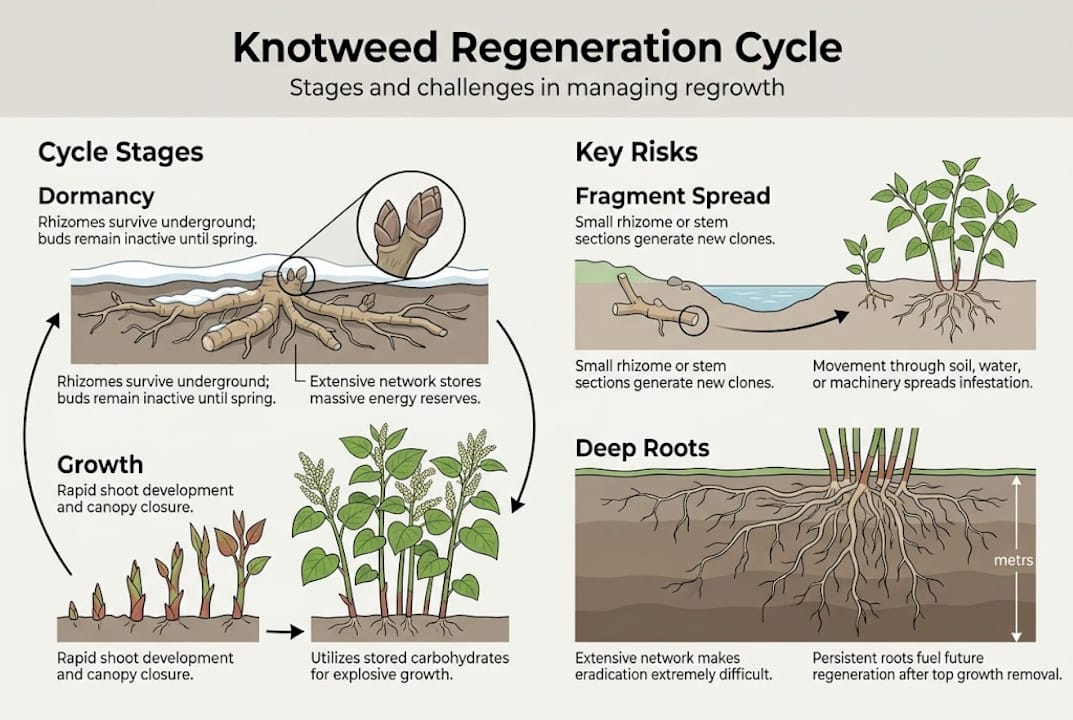
Rhizome networks represent particularly dangerous weed characteristics, allowing underground stem systems to regenerate entire plant colonies from microscopic fragment segments. This regenerative capacity makes complete eradication extraordinarily challenging for property owners and landscaping professionals.

Pro tip: Always consult invasive plant specialists before attempting independent weed removal, as improper techniques can inadvertently spread problematic species further across your property.

How Invasive Weeds Damage Infrastructure

Invasive weeds pose a significant threat to infrastructure across the United Kingdom, causing extensive economic and structural challenges. Non-native species impact infrastructure through multiple destructive mechanisms that can compromise buildings, transportation networks, and utility systems.

The primary infrastructure damage mechanisms include:

  • Exploitation of existing structural weaknesses
  • Penetration of foundation and pavement cracks
  • Disruption of underground utility networks
  • Destabilisation of ground surfaces
  • Erosion of structural integrity over time

While popular perception often exaggerates the damage potential, scientific research provides nuanced insights. Ecologists’ infrastructure research suggests that some invasive plant impacts might be less severe than traditionally believed. However, the economic consequences remain substantial, with estimated annual costs reaching £310 million for Great Britain.

Root systems represent the most critical mechanism of infrastructure damage. These underground networks can extend metres beneath surface structures, seeking water and nutrients while systematically weakening surrounding ground stability. Certain invasive species produce extraordinarily persistent rhizomes that regenerate rapidly, making complete eradication extremely challenging.

Knotweed roots damaging old house foundation

Infrastructure vulnerability varies depending on existing structural conditions. Older buildings with pre-existing foundation cracks or compromised masonry provide particularly attractive entry points for aggressive weed species. Transportation infrastructure like roadways and railway embankments are especially susceptible to invasive plant colonisation.

Pro tip: Conduct regular professional surveys to identify potential invasive plant risks before they cause significant structural damage to your property.

Japanese Knotweed Versus Other Invasives

Japanese Knotweed stands distinctly apart from other invasive plant species in the United Kingdom, representing a uniquely challenging ecological threat. Japanese knotweed’s invasive characteristics demonstrate remarkable adaptability and destructive potential that surpasses many competing invasive plants.

Key differences between Japanese Knotweed and other invasive species include:

  • Extraordinarily resilient rhizome network
  • Ability to regenerate from microscopic root fragments
  • Rapid horizontal and vertical growth patterns
  • Superior structural penetration capabilities
  • Minimal vulnerability to traditional eradication methods

While other invasive species like Giant Hogweed and Himalayan Balsam pose significant environmental challenges, Japanese Knotweed represents a more complex and persistent threat. Its underground rhizome system can extend metres from the original plant, creating vast interconnected networks that make complete removal extremely difficult.

The economic and structural implications of Japanese Knotweed differentiate it from other invasive plants. Unlike many competitors that primarily impact biodiversity, this species can directly compromise building foundations, underground utilities, and infrastructure integrity. Its growth can generate substantial repair and management costs that far exceed those associated with other invasive plant species.

Here is a comparison of common invasive plants impacting the UK, highlighting their unique threats to infrastructure and biodiversity:

Species Main Threat to Infrastructure Impact on Biodiversity Ease of Eradication
Japanese Knotweed Compromises foundations, utilities Reduces native plant cover Extremely difficult
Giant Hogweed Damages riverbanks, walkways Causes native species loss Challenging, spreads easily
Himalayan Balsam Destabilises soils along waterways Rapidly outcompetes natives Manageable with effort
Buddleia Weathers masonry, invades walls Minimal effect Moderate effort required

Pro tip: Always engage professional specialists when managing Japanese Knotweed, as standard removal techniques are typically ineffective against this uniquely persistent invasive plant.

Property transactions involving invasive plants create complex legal landscapes that can significantly impact homeowners and potential buyers. Invasive species property transaction challenges reveal substantial legal obligations that extend far beyond simple property disclosure.

Key legal responsibilities for property owners include:

  • Mandatory disclosure of known invasive plant infestations
  • Legal liability for plant spread to neighbouring properties
  • Potential financial responsibility for removal and remediation
  • Potential reduction in property market value
  • Risk of legal action from neighbouring landowners

The TA6 Property Information Form represents a critical legal document where sellers must transparently report any Japanese Knotweed or other invasive species present on the property. Non-disclosure can result in serious legal consequences, including potential claims for misrepresentation and substantial financial penalties.

Mortgage lenders have become increasingly stringent about invasive plant risks, often requiring comprehensive professional treatment plans with insurance-backed guarantees before approving property financing. These requirements reflect the significant structural and economic risks associated with invasive species like Japanese Knotweed, which can compromise building foundations and infrastructure.

Mortgage lending restrictions can dramatically impact property transactions, with many financial institutions refusing to lend on properties with untreated invasive plant infestations. Buyers must conduct thorough due diligence, including professional surveys and comprehensive risk assessments, to navigate these complex legal and financial challenges.

The table below summarises the main legal consequences for property owners failing to manage invasive plants in the UK:

Legal Issue Outcome for Owners Impact on Property Sale
Non-disclosure of infestation Potential for legal action Sale may be delayed or void
Infestation spreads to neighbours Risk of compensation claims Financial liabilities arise
Absence of treatment plan Mortgage refusal is likely Sale price reduction likely

Pro tip: Always commission a professional invasive plant survey before purchasing a property to understand potential legal and financial risks associated with existing infestations.

Effective Chemical-Free Control Solutions

Chemical-free weed control strategies represent an innovative approach to managing invasive plant species while protecting environmental health. Chemical-free weed control methods have evolved significantly, offering sustainable alternatives to traditional herbicide treatments that prioritise ecosystem preservation.

Key chemical-free control techniques include:

  • Hot water treatment with precise temperature targeting
  • High-voltage electrical plant destruction
  • Mechanical removal and surface sweeping
  • Thermal intervention using directed heat
  • Physical barrier installation

Advanced technological interventions are transforming invasive plant management. Emerging control solutions integrate sophisticated approaches like drone-based detection, artificial intelligence mapping, and targeted biological control mechanisms that minimise environmental disruption.

Physical removal techniques require strategic implementation to prevent plant regeneration. Precise mechanical extraction, combined with thorough root system assessment, can effectively interrupt invasive species’ reproductive cycles. Thermal methods like steam and hot air treatments offer promising alternatives by destroying plant cellular structures without chemical contamination.

Biological control strategies represent another frontier in chemical-free management. Researchers are investigating specialist insects and targeted pathogens that can selectively manage invasive populations without broader ecological interference. These approaches demonstrate a nuanced understanding of ecosystem dynamics and sustainable intervention.

Infographic showing main ways weeds threaten UK infrastructure

Pro tip: Combine multiple chemical-free control techniques for comprehensive and long-term invasive plant management, ensuring a multi-layered approach to ecological restoration.

Protect Your Property from the Threat of Invasive Weeds

The article highlights how invasive weeds like Japanese Knotweed cause severe damage to UK infrastructure through their aggressive root systems and persistent rhizomes. If you are worried about compromised building foundations or hidden underground infestations, you are not alone. Infrastructure vulnerabilities and legal liabilities require expert action to prevent costly repairs and property devaluation.

At Japanese Knotweed Agency, we specialise in chemical-free treatment options that target the extensive rhizome networks responsible for structural damage. Our unique energy delivery system disrupts invasive plants from within, providing a safe and environmentally responsible solution. We also offer comprehensive property surveys across England, Wales, and Ireland to help you identify and manage invasive species risks early.

https://japaneseknotweedagency.co.uk

Do not wait until weeds threaten your property value or safety. Visit our Japanese Knotweed treatment page and book a professional survey today. Act now for peace of mind and effective invasive plant eradication.

Frequently Asked Questions

What are the main ways invasive weeds can damage infrastructure?

Invasive weeds can damage infrastructure through mechanisms such as exploiting existing structural weaknesses, penetrating foundation and pavement cracks, disrupting underground utility networks, and destabilising ground surfaces, leading to erosion of structural integrity over time.

How does Japanese Knotweed differ from other invasive plants?

Japanese Knotweed is particularly challenging due to its extraordinarily resilient rhizome network, ability to regenerate from microscopic root fragments, rapid growth patterns, and superior structural penetration capabilities, making complete eradication extremely difficult compared to other invasive species.

Homeowners must disclose known invasive plant infestations, bear legal liability for spreading plants to neighbouring properties, and may face financial responsibilities for removal and remediation, all of which can impact property market value and transaction processes.

What are some effective chemical-free methods to control invasive weeds?

Effective chemical-free control methods include hot water treatments, high-voltage electrical plant destruction, mechanical removal, thermal interventions, and the installation of physical barriers, all aimed at sustainably managing invasive plant species while protecting environmental health.

Chemical Free Invasive Plant Solutions for Homeowners

Securing a mortgage in England or Wales can quickly become stressful when a property survey uncovers Japanese Knotweed. Left unchecked, this invasive plant threatens not just your garden but your investment and peace of mind. Homeowners now seek chemical-free eradication solutions that protect the environment while satisfying lender requirements. This guide breaks down each essential step for safely identifying, preparing, treating, and monitoring Japanese Knotweed using proven methods that avoid herbicides and keep your home loan on track.

Table of Contents

Quick Summary

Essential Insight Explanation
1. Identify Invasive Plants Early Conduct a thorough visual inspection to spot invasive species before they spread and cause damage.
2. Prepare the Site Effectively Create a 2-metre buffer zone, mark boundaries, and ensure protective measures before removal begins.
3. Use Direct Energy Methods Apply eco-friendly techniques like controlled electrical pulses to eliminate invasive plants safely.
4. Install Root Barriers Properly Dig and place root barriers deep and seal adequately to prevent regrowth of invasive plants.
5. Monitor Regularly for Success Conduct quarterly inspections for two years, documenting any regrowth and checking barrier effectiveness.

Step 1: Assess invasive plant presence on your property

Identifying invasive plants early can save you significant time and expense in property maintenance. In this crucial first step, you’ll learn how to systematically survey your property for potential invasive species that might compromise your garden’s health and structural integrity.

To effectively assess your property, begin with a comprehensive visual inspection, paying close attention to areas with dense vegetation or ground cover. Gardeners can help identify potentially invasive plants through careful observation and documentation. Look for these key warning signs:

  • Plants growing unusually quickly or spreading beyond their original planting area
  • Stems or roots that appear to push through hard surfaces like concrete or tarmac
  • Unusual leaf patterns or growth structures different from typical garden plants
  • Dense clusters of vegetation that seem to crowd out other plant species

Documenting your findings is critical. Take clear, close-up photographs of any suspicious plants, capturing details of leaves, stems, and root systems. Measure the spread and note precise locations on your property.

Accurate documentation can help professionals rapidly assess potential invasive species risks.

Pro tip: Conduct your initial survey during growing season when plants are most visible, and consider using a smartphone app to help identify unfamiliar vegetation.

Step 2: Prepare your site for chemical free treatment

Before commencing any invasive plant removal, thorough site preparation is essential to ensure safe and effective eradication. Your goal is to create a controlled environment that minimises potential spread and protects surrounding vegetation and structures.

Safety guidance for managing invasive plants emphasises the importance of creating a comprehensive preparation strategy. Begin by establishing clear work zones and implementing protective measures:

  • Mark out the entire affected area with temporary fencing or visible boundary markers
  • Clear surrounding vegetation to create a minimum 2-metre buffer zone
  • Prepare protective equipment including robust gloves, long-sleeved clothing, and sturdy footwear
  • Set up designated waste containment areas for plant material
  • Ensure all equipment is clean and sanitised before entering the work zone

Documenting your site conditions is crucial. Take detailed photographs of the area, noting precise measurements, plant spread, and any potential access challenges. This documentation will support subsequent treatment efforts and provide a clear baseline for tracking progress.

Proper site preparation is the foundation of successful chemical-free invasive plant management.

Consider the potential soil contamination and transportation risks. Disposing of invasive plants safely requires careful planning to prevent unintentional spread during removal.

Garden site marked for invasive plant removal

Pro tip: Photograph the site from multiple angles and create a scaled sketch of the affected area to help professionals assess the most effective treatment approach.

Step 3: Apply direct energy and eco-friendly methods

Now that you’ve prepared your site, it’s time to implement targeted treatment strategies that eliminate invasive plants without relying on harmful chemical interventions. Direct energy treatment offers a precise and environmentally responsible approach to plant eradication.

Innovative invasive species control techniques demonstrate multiple non-chemical approaches for managing problematic vegetation. The key is applying targeted energy that disrupts the plant’s internal systems:

  • Deliver controlled electrical pulses directly to the plant’s root system
  • Target specific areas to minimise damage to surrounding vegetation
  • Use precise voltage levels that cause cellular disruption
  • Repeat treatments to ensure complete rhizome network destruction
  • Monitor treatment sites for regrowth and effectiveness

The process involves creating microscopic damage within the plant’s cellular structure, essentially starving the invasive species of its ability to regenerate. Thermo-electric treatment works by introducing electrical currents that deplete the plant’s energy resources, causing systematic breakdown of the entire root network.

Precision is paramount when applying direct energy treatments to invasive plant species.

Non-chemical strategies for plant control emphasise the importance of integrated management approaches. This means combining direct energy methods with careful monitoring and potential follow-up treatments to ensure complete eradication.

Pro tip: Document each treatment session with photographs and detailed notes to track the progressive breakdown of the invasive plant system and inform future management strategies.

The following table compares traditional chemical methods with direct energy approaches for invasive plant treatment:

Factor Chemical Methods Direct Energy Methods
Environmental Impact High, risk to non-target life Minimal, highly targeted
Persistence May require repeated use Offers long-term control
Regulatory Constraints Extensive, often restricted Fewer regulations if properly used
Effectiveness on Roots Variable, roots may survive High, targets entire root system

Step 4: Install root barriers and perform excavations

After targeting invasive plants with direct energy treatments, the next critical phase involves physically containing and removing the root system to prevent future spread. Root barrier installation provides a strategic defence against potential regrowth and migration of invasive plant species.

Physical containment methods for invasive plants offer homeowners robust strategies to restrict root expansion. The process involves several precise steps:

  • Dig a trench around the entire affected area
  • Install high-density polyethylene root barrier membrane
  • Ensure barrier extends minimum 3 metres deep
  • Overlap barrier sections by at least 300 millimetres
  • Seal all joining points to prevent root penetration
  • Backfill trench carefully to maintain barrier integrity

Excavation requires meticulous planning and execution. Contaminated soil removal demands careful handling to prevent unintentional spread of invasive plant material. Professional techniques ensure complete root network extraction while minimising environmental disruption.

Precise excavation and root barrier installation are fundamental to preventing invasive plant re-establishment.

Invasive plant management procedures emphasise the importance of adhering to legal requirements during soil management and plant removal processes.

Pro tip: Consult local environmental regulations and consider professional survey services to ensure comprehensive root barrier installation and excavation comply with regional guidelines.

Step 5: Verify eradication and monitor regrowth

Successful invasive plant management requires ongoing vigilance and strategic monitoring to confirm complete eradication and prevent potential reestablishment. Verification processes are critical to ensuring the long-term success of your chemical-free treatment approach.

Invasive species eradication monitoring demands a systematic and thorough approach. Implement a comprehensive monitoring strategy that includes:

  • Conduct quarterly site inspections for at least two years
  • Photograph the entire treatment area from consistent angles
  • Measure and document any potential new growth
  • Check root barrier integrity during each inspection
  • Maintain detailed written records of observations
  • Look for subtle signs of potential regrowth, including small shoots

Each inspection should be meticulously documented, recording precise location, date, and any observable changes. Root system assessment requires careful examination of the entire treated area, paying special attention to historical growth zones and potential migration routes.

Persistent monitoring is the key to preventing invasive plant reestablishment.

Annual invasive plant management surveys are essential for verifying the effectiveness of your eradication efforts and maintaining long-term control.

Pro tip: Create a dedicated monitoring spreadsheet with GPS coordinates, photographic evidence, and detailed notes to track your site’s progress and provide comprehensive documentation for potential future professional consultations.

Here’s a summary of the major steps and their primary focus:

Step Main Action Key Objective
Assess Identify invasive plants Early detection to reduce risk
Prepare Site readiness Prevent spread, safeguard surroundings
Treat Apply direct energy methods Eco-friendly eradication
Contain Install root barriers, excavate Block regrowth and migration
Monitor Verify and track results Ensure long-term eradication

Take Control of Invasive Plants with Trusted Chemical Free Solutions

The challenge of managing invasive plants without harmful chemicals demands precision and care. If you are worried about the spread of Japanese Knotweed or other invasive species compromising your property, our specialised approach offers effective, eco-friendly treatment that aligns perfectly with the direct energy methods described. At Japanese Knotweed Agency, we use up to 5000 volts of direct energy on-site to disrupt invasive plant cell systems safely and completely, combined with root barrier installation and expert excavation to prevent regrowth.

https://japaneseknotweedagency.co.uk

Do not let invasive weeds take over your land or cause costly damage. Act now to schedule a detailed invasive plant survey and explore our chemical free eradication strategies designed specifically for properties across England, Wales and Ireland. Discover how Japanese Knotweed Agency can help you regain control with proven, sustainable methods. Begin your journey with a comprehensive property survey and see the difference targeted energy treatment with professional root barriers makes to your environment.

Frequently Asked Questions

How can I identify invasive plants on my property?

Identifying invasive plants involves conducting a thorough visual inspection of your garden and property. Look for signs like rapid growth, unusual leaf patterns, or dense clusters of vegetation. Document your findings by taking photographs and noting the specific locations of suspicious plants.

What are the key steps for preparing my site before invasive plant removal?

Preparing your site includes creating clear work zones, marking the affected area, and establishing a buffer zone of cleared vegetation. Ensure you have protective equipment like sturdy gloves and long-sleeved clothing, and take photographs of site conditions to support your removal efforts.

What methods can I use for eco-friendly treatment of invasive plants?

You can use direct energy methods, such as delivering controlled electrical pulses to disrupt the root system of invasive plants. This precise technique minimises harm to surrounding vegetation and requires repeated applications for effective eradication.

How do I install root barriers after treating invasive plants?

Installing root barriers involves digging a trench around the affected area and placing a high-density polyethylene membrane that extends at least three metres deep. Overlap sections of the barrier and seal all joins to prevent roots from penetrating, ensuring effective containment of any remaining roots.

What should I do to monitor regrowth after invasive plants have been treated?

To monitor regrowth, conduct site inspections at least quarterly for two years, documenting any new growth and checking the integrity of root barriers. Take consistent angles of photographs and maintain detailed written records of your observations to ensure long-term control over invasive species.

How can I ensure the complete eradication of invasive plants?

To ensure complete eradication, combine your treatment methods with thorough monitoring and documentation. Evaluate the treatment areas for signs of regrowth regularly, and adapt your management strategy as necessary to prevent any re-establishment of invasive species.

Step by Step Invasive Weed Management for Homes

Spotting an unfamiliar plant creeping near your Bristol patio or London garden border can quickly raise concern for any homeowner. Japanese Knotweed is notorious across England and Wales for threatening property sales, mortgages, and even structural safety. This guide lays out a clear, step-by-step approach built around systematic weed assessment and safe, chemical-free treatments, giving you confidence as you protect your home and investment at every stage.

Table of Contents

Quick Summary

Key Insight Explanation
1. Early detection is essential Conduct a thorough visual inspection to identify invasive weeds before they cause damage to your property.
2. Prepare for specialist intervention Clear the treatment area and mark desirable plants to facilitate effective and safe treatment by professionals.
3. Use direct energy for effective elimination Employ controlled electrical pulses to target invasive plants, minimising damage to surrounding vegetation.
4. Install physical barriers to stop regrowth Implement root barriers to prevent rhizome spread and reduce the risk of future infestations successfully.
5. Consistent monitoring ensures success Conduct follow-up inspections to verify eradication, tracking any signs of regrowth over a 12-24 month period.

Step 1: Assess invasive weed presence thoroughly

Identifying invasive weeds early is crucial for effective property management and preventing potential structural damage. During this assessment phase, you will systematically examine your property to detect any potentially problematic plant species that could compromise your home’s integrity.

To thoroughly assess invasive weed presence, start by conducting a comprehensive visual inspection of your entire property. This involves carefully examining both landscaped and undeveloped areas, paying special attention to foundation edges, garden borders, and any neglected zones where invasive plants might establish themselves. Systematic survey techniques recommend the following detailed approach:

  • Walk the entire property perimeter, looking for unusual plant growth
  • Check areas with disturbed soil or recent landscaping work
  • Inspect gaps in paving, wall bases, and drainage areas
  • Look for plants with distinctive characteristics like rapid spreading or unusual root structures

Documenting your findings is essential. Create a detailed map or sketch of your property, marking specific locations where potential invasive species are spotted. Take clear photographs from multiple angles, ensuring you capture distinctive features that can help with later identification. Consider using a measurement reference point in your photos to provide scale and precise location tracking.

Careful and systematic documentation can be the difference between early intervention and costly remediation.

Pro tip: Consider consulting a professional invasive plant surveyor if you notice any plants with unusual growth patterns or suspect you might have a serious infestation.

Step 2: Prepare property for specialist treatment

Preparing your property for specialist invasive weed treatment involves creating an optimal environment for targeted intervention and minimising potential risks to surrounding vegetation. This critical stage ensures that treatment professionals can access and address the invasive plant problem effectively.

Integrated weed management strategies recommend several key preparation steps to facilitate a successful treatment process:

  • Clear all debris and unnecessary objects from the treatment area
  • Mark and protect desirable plants or landscaping features
  • Ensure clear access paths for treatment personnel
  • Remove any loose items that might interfere with specialist equipment
  • Create a temporary exclusion zone around the treatment site

Your preparation should also involve communication with the treatment specialists. Provide them with a detailed property map, highlight specific problem areas, and discuss any potential access challenges. Advance planning reduces treatment time and increases overall effectiveness.

Proper site preparation can significantly improve treatment outcomes and reduce potential property damage.

Additionally, consider protective measures for yourself and others. If the treatment involves potentially hazardous procedures, ensure that family members, pets, and neighbours are informed and can maintain a safe distance during the intervention.

Preparing protective gear before weed treatment

Pro tip: Take photographs of the affected areas before treatment to document the initial condition and assist with post-treatment comparison.

Step 3: Deliver direct energy treatment safely

Delivering direct energy treatment for invasive weeds requires precision, expertise, and strict adherence to safety protocols. This critical stage involves using targeted electrical energy to eliminate invasive plant species without causing widespread environmental damage.

Invasive species control techniques emphasise the importance of professional handling and specific operational procedures. The treatment process involves several key steps:

  • Confirm precise location of invasive plant clusters
  • Set up protective perimeter around treatment zone
  • Calibrate specialist electrical treatment equipment
  • Implement targeted energy delivery at specified voltage
  • Monitor plant cellular response during treatment

The direct energy approach requires delivering controlled electrical pulses directly into the plant’s root system. These pulses are designed to disrupt the plant’s internal cellular structure, effectively destroying its ability to regenerate and spread. Professionals typically use specialised equipment capable of delivering up to 5000 volts with microscopic precision.

Precise energy application can eliminate invasive species without harming surrounding vegetation or soil ecosystem.

During treatment, it’s crucial to maintain a safe distance and use appropriate personal protective equipment. The electrical energy must be carefully modulated to ensure maximum effectiveness while minimising potential environmental impact.

Pro tip: Always ensure treatment personnel are professionally trained and use calibrated equipment to guarantee safe and effective invasive weed elimination.

Step 4: Install root barriers to prevent regrowth

Root barriers provide a critical defence against invasive weed regrowth, creating a physical underground shield that prevents rhizomes from spreading and reestablishing themselves across your property. By strategically installing these barriers, you can dramatically reduce the risk of future plant reinfestation.

Invasive plant containment techniques recommend precise installation methods to ensure maximum effectiveness. The root barrier installation process involves several crucial steps:

  • Select an appropriate high-density polyethylene barrier material
  • Excavate a trench to the recommended depth (typically 2-3 metres)
  • Ensure barrier extends at least 50 centimetres above ground level
  • Create a smooth, continuous barrier without punctures or gaps
  • Compact soil carefully around the installed barrier

The underground barrier system works by creating an impenetrable membrane that blocks rhizome expansion. Professional installation requires precision and careful planning, with barriers typically made from specialised materials designed to resist root penetration and degradation.

A properly installed root barrier acts as a permanent underground defence against invasive plant spread.

Before installation, it’s critical to assess the specific invasive species and soil conditions. Different plants require different barrier depths and materials, so professional evaluation ensures the most effective long-term protection for your property.

For quick reference, here’s a comparison of root barrier materials suitable for invasive weed containment:

Material Type Durability Resistance to Root Penetration Suitable Depth
HDPE (polyethylene) 20+ years outdoors Highly resistant 2-3 metres
Metal sheet 30+ years, rust-prone Excellent, but heavy 1-2 metres
Geotextile fabric 10-15 years Moderate protection 1-1.5 metres

Pro tip: Always consult with a specialist who can determine the exact barrier specifications needed for your specific invasive weed challenge.

Step 5: Verify eradication and monitor results

Verifying the complete eradication of invasive weeds is a critical final stage in your management strategy, ensuring that your treatment efforts have been successful and preventing potential future reinfestation. This process requires systematic observation, documentation, and professional assessment to confirm the long-term effectiveness of your intervention.

Invasive species monitoring techniques recommend a comprehensive approach to result verification. The monitoring process should include several key elements:

  • Conduct periodic site inspections at regular intervals
  • Document any signs of potential plant regrowth
  • Photograph and record the treatment area
  • Compare current site conditions with pre-treatment documentation
  • Track seasonal changes and potential new growth patterns

The verification process involves multiple follow-up assessments, typically spanning 12-24 months after initial treatment. Professional surveyors will look for subtle indicators of potential rhizome survival, including minor vegetation changes, soil disturbances, or microscopic root development that might signal incomplete eradication.

Consistent monitoring is the key to confirming complete invasive weed elimination and preventing future spread.

Maintaining detailed records of each inspection helps create a comprehensive history of the treatment intervention. These documents can be crucial for property sales, mortgage applications, and future land management decisions.

Infographic shows weed management stages overview

To help clarify how integrated management works across different stages, here’s a summary of each step’s focus and professional involvement:

Stage Main Focus Professional Services Needed Expected Property Impact
Assessment Early detection and mapping Surveyor advice if uncertain Prevents major damage
Preparation Site readiness for treatment Specialist guidance recommended Reduces collateral risks
Energy Treatment Targeted weed elimination Qualified operators essential Protects surrounding plants
Barrier Installation Physical containment Installation by specialists advised Long-term reinfestation prevention
Monitoring Regular inspections Periodic surveys strongly suggested Ensures eradication, supports property value

Pro tip: Schedule professional follow-up surveys at 3, 6, and 12-month intervals to ensure comprehensive monitoring and early detection of any potential regrowth.

Take Control of Invasive Weed Management with Expert Support

Dealing with invasive weeds like Japanese Knotweed can feel overwhelming as the article shows through each careful step: from thorough assessment to energy treatment and root barrier installation. If you want to prevent costly property damage and regain peace of mind, you need a specialist who understands the complex nature of invasive rhizomes and applies proven, chemical free methods effectively.

Japanese Knotweed Agency are pioneers in delivering direct energy treatment up to 5000 volts to safely destroy invasive plant root systems and stop regrowth. We also provide precise root barrier installation and expert property surveys across England, Wales, and Ireland. Trust us to handle your invasive weed challenge with advanced technology and careful site preparation.

https://japaneseknotweedagency.co.uk

Don’t wait for weeds to spread further and threaten your home’s foundation or value. Contact the Japanese Knotweed Agency today to arrange a detailed invasive weed survey and discuss tailored treatment solutions. Take the first step towards a safer, weed-free property by visiting our website now.

Frequently Asked Questions

How can I assess the presence of invasive weeds on my property?

To assess invasive weed presence, conduct a thorough visual inspection of your entire property, focusing on landscaped and neglected areas. Document your findings by creating a map and taking photographs from various angles to aid in identification.

What steps should I take to prepare my property for invasive weed treatment?

To prepare your property, clear all debris from the treatment area, mark desirable plants, and ensure clear access paths for specialists. Additionally, communicate any specific problem areas on your property to the treatment professionals for more effective intervention.

What is the process for delivering direct energy treatment to invasive weeds?

Delivering direct energy treatment involves pinpointing invasive plant clusters, setting up a protective perimeter, and using specialist equipment to apply controlled electrical pulses to the plants’ root systems. Ensure that treatment personnel are properly trained to minimise environmental impact and maximise effectiveness.

How do I install root barriers to prevent invasive weed regrowth?

To install root barriers, select high-density polyethylene material and excavate a trench that is 2-3 metres deep. Make sure the barrier extends at least 50 centimetres above ground and is installed without any punctures to prevent rhizome spreading.

How can I verify the eradication of invasive weeds on my property?

To verify eradication, conduct periodic inspections over 12-24 months after treatment, documenting any signs of regrowth. Maintain detailed records and photographs to compare the current condition of treated areas with pre-treatment documentation.

When should I schedule follow-up surveys after invasive weed treatment?

Schedule follow-up surveys at 3, 6, and 12-month intervals to ensure comprehensive monitoring for any potential regrowth. Regular inspections help confirm the effectiveness of your treatment strategy and protect your property from future infestations.

7个常见入侵植物危害示例及无化学治理建议

当你在英国购买或管理房产时,外来入侵植物往往隐藏在花园角落或房屋周边,给生态环境和物业安全带来无形威胁。日本葛藤、鬼针草和香冠木等物种,凭借强大的繁殖力和适应力,能够迅速扩散,压制本地植被,还可能破坏土地结构,甚至影响房屋价值。许多房主发现时已错过最佳控制时机,后续清理难度巨大。

了解这些植物的特征和识别方法,是你有效预防和应对风险的关键。本篇内容将为你梳理出早期识别入侵植物的实用技巧和治理建议,帮助你守护家园安全与生态环境。

继续阅读,你将掌握便于操作的发现与防控要点,提前化解外来入侵植物带来的各种麻烦。

目录

快速总结

关键要点 说明
1. 日本葛藤需早期识别 识别日本葛藤的特征,如复叶、紫色花簇和强韧根系,能有效避免其扩散。
2. 鬼针草威胁需及时处理 定期检查花园,清除鬼针草,以防其抑制其他植物生长和破坏生态环境。
3. 香冠木入侵影响大 持续监测香冠木生长,及时清除以维护本地植物的生存空间和生态平衡。
4. 巨人豕草需谨慎处理 遇到巨人豕草要保护自己,避免直接接触并联系专业团队进行处理。
5. 紫茎泽兰控制至关重要 与专业团队协作,及时识别并处理紫茎泽兰,保护土地和周边生态环境。

1. 日本葛藤的危害及早期鉴别要点

日本葛藤是一种极具侵略性的外来藤蔓植物,对英国生态系统构成严重威胁。这种植物不仅迅速蔓延,还能严重破坏本地植被的生存空间。

日本葛藤的主要危害包括:

  • 快速侵占生态环境
  • 压制原生植物生长
  • 严重改变森林生态系统结构

早期识别非常关键。根据研究数据显示的生物特征,识别日本葛藤需要关注以下几个特征:

  1. 叶片特征:由三个大叶片组成的复叶
  2. 花朵特点:紫色芳香花簇,呈悬垂状聚集
  3. 根系特征:极其强韧的根系网络

仅仅一小段根系碎片就可能导致植物重新生长,这使得日本葛藤成为极其顽固的入侵物种。

对房主而言,及时发现和处理至关重要。通过专业的植物调查,可以有效控制日本葛藤的蔓延风险,保护房产价值和周边生态环境。

专业建议在购买房产前务必进行专业的入侵植物调查,及早发现并控制潜在风险。

2. 防范鬼针草对花园和建筑结构的影响

鬼针草是一种极具破坏性的入侵植物,对花园和建筑结构构成严重威胁。这种植物不仅生命力顽强,还具有极强的繁殖和扩散能力。

鬼针草的主要危害包括:

  • 迅速占领生存空间
  • 抑制其他植物生长
  • 破坏土壤生态平衡

生态破坏机制非常独特。根据研究显示的生物特征,鬼针草通过以下方式影响生态环境:

  1. 化感作用抑制其他植物种子萌发
  2. 破坏周边植物细胞结构
  3. 改变土壤微生物环境

一株鬼针草可能会严重影响整个花园的生态平衡。

对于房主来说,及早发现和控制至关重要。建议采取以下防范措施:

  • 定期检查花园和建筑周边植被
  • 及时清除可疑植物
  • 保持土壤和植被的多样性

专业建议在发现鬼针草早期阶段,立即采取机械清除方式,避免使用有害化学除草剂。

3. 了解香冠木入侵对本地生态的冲击

香冠木是一种极具破坏性的外来入侵植物,正在严重威胁英国的生态系统。这种植物通过其非凡的繁殖能力和生存策略,正迅速改变本地生物多样性格局。

香冠木的生态破坏主要体现在:

  • 快速占领原生植物生存空间
  • 改变土壤微生物结构
  • 排挤本地植物群落

生态入侵机制非常复杂。根据研究显示的入侵特征,香冠木具有以下惊人特点:

  1. 极高的繁殖能力
  2. 强大的环境适应性
  3. 显著的生态竞争优势

一株香冠木可能会导致周边生态系统的平衡被彻底破坏。

对于房主和园艺爱好者来说,及早识别和控制至关重要。建议采取以下防范措施:

  • 定期检查花园和周边植被
  • 学习识别香冠木特征
  • 及时清除可疑植物
  • 保持生态环境多样性

专业建议在发现可疑植物时,务必咨询专业生态防治专家,避免单独采取可能造成二次污染的处理方式。

4. 识别巨人豕草危害及其扩散途径

巨人豕草是一种极其危险的入侵植物,对英国生态系统和人类健康构成严重威胁。这种植物不仅体型巨大,其毒性汁液更是令人闻风丧胆。

巨人豕草的主要危害包括:

  • 极强的生存和扩散能力
  • 严重的皮肤灼伤风险
  • 可能导致永久性失明

生物特征和扩散机制非常独特。根据研究显示的植物特征,巨人豕草具有以下惊人特点:

  1. 高度可达7米
  2. 每株可产生8万以上种子
  3. 种子可通过风水传播
  4. 具有多年持续的种子库

一株巨人豕草可能会对周边环境造成长期且严重的生态破坏。

对于房主和园艺爱好者来说,及早识别和预防极其关键。建议采取以下防护措施:

  • 穿戴全面的防护装备
  • 定期检查花园和周边区域
  • 学习识别巨人豕草特征
  • 及时清除可疑植物
  • 避免直接接触可疑植物

专业建议发现巨人豕草时,切勿徒手处理。务必联系专业生态防治团队进行安全处置。

5. 有效应对紫茎泽兰带来的物业风险

紫茎泽兰是一种极具侵略性的国际级入侵植物,对物业和生态系统构成严重威胁。这种植物不仅蔓延迅速,还会严重破坏原生态环境和农业生产。

紫茎泽兰的主要危害包括:

  • 快速侵占生存空间
  • 抑制本地植物生长
  • 降低土壤肥力
  • 对牲畜和农作物产生毒害

生态破坏机制非常复杂。根据研究显示的入侵特征,紫茎泽兰具有以下惊人特点:

  1. 多种传播途径
  2. 强烈的化感作用
  3. 极高的繁殖能力
  4. 显著的生态竞争优势

一株紫茎泽兰可能会导致周边生态系统的平衡被彻底破坏。

对于房主和土地管理者来说,及早识别和控制至关重要。建议采取以下防范措施:

  • 定期检查土地和周边植被
  • 学习识别紫茎泽兰特征
  • 及时清除可疑植物
  • 保持生态环境多样性
  • 咨询专业生态防治团队

专业建议在发现紫茎泽兰时,不要贸然处理。务必联系专业团队进行安全和有效的生态治理。

6. 无化学电能治理入侵植物的实用方法

电能治理是现代生态防控入侵植物的创新方法,为环保型植被管理提供了全新解决思路。这种技术通过精准的电能处理,可以有效抑制入侵植物生长,同时保护周边生态环境。

无化学电能治理的主要优势包括:

  • 环境零污染
  • 对本地生态系统无破坏
  • 精准控制入侵植物生长
  • 可持续的生态管理方案

生态控制机制非常独特。根据研究显示的生态控制策略,电能治理具有以下关键特点:

  1. 利用电能直接破坏植物细胞结构
  2. 抑制入侵植物生长和繁殖
  3. 避免使用化学药剂
  4. 促进生态系统平衡

电能治理是现代生态防控的前沿技术,为环境保护提供了创新解决方案。

对于寻求生态友好型植被管理的房主来说,选择电能治理是明智之选。建议:

  • 咨询专业生态防治团队
  • 了解电能治理的具体操作方法
  • 评估土地和植被情况
  • 制定个性化治理方案

专业建议电能治理需要专业团队操作,切勿盲目尝试。务必联系具有丰富经验的生态防治专家。

7. 房主自查与专业调查入侵植物建议

入侵植物对房产构成严重威胁,及时发现和控制至关重要。作为房主,了解如何有效自查和寻求专业帮助可以显著降低潜在风险。

入侵植物调查的关键环节包括:

  • 定期检查庭院和周边环境
  • 识别可疑植物特征
  • 咨询专业调查机构
  • 及时采取防控措施

调查方法非常重要。根据研究显示的调查建议,房主可以采取以下步骤:

  1. 学习常见入侵植物特征
  2. 拍摄可疑植物照片
  3. 对比本地植物资料库
  4. 联系专业调查团队

早期识别入侵植物可以有效阻止其蔓延和破坏。

专业调查的主要优势:

  • 精准识别入侵植物
  • 评估潜在生态风险
  • 提供专业治理建议
  • 保护房产价值

专业建议在进行自查时,务必保持客观谨慎,不要轻易触碰可疑植物。专业调查是最安全和有效的选择。

以下是一张全面概述的表格,总结了文章中关于外来入侵植物对生态影响及其有效管理的主要内容。

入侵植物 主要危害 识别特征 建议应对措施
日本葛藤 快速侵占生态环境,压制原生植物 复叶组成,紫色芳香花簇,强韧根系 专业调查避免蔓延
鬼针草 抑制其他植物生长,破坏土壤生态 化感作用,破坏细胞结构 及时清除,保护多样性
香冠木 排挤本地植物群落 高繁殖能力,环境适应性 定期检查植被并处理
巨人豕草 扩散迅速,汁液具毒性 高度达7米,产生大量种子 穿戴防护装备处理
紫茎泽兰 减低土壤肥力,对农作物有害 强化感作用,高竞争性 咨询专业治理团队

通过以上信息,可以更好地了解和管理入侵植物带来的风险,保护生态环境和房产价值。

有效防治入侵植物 保护您的生态环境与房产价值

本文深入解析了日本葛藤、鬼针草、巨人豕草等七大常见入侵植物带来的严重危害及无化学治理建议。面对这些植物强大的繁殖能力和生态威胁,房主和土地管理者不仅需要尽早识别,还必须采取安全且环保的治理措施。文章特别提到电能治理技术的前沿优势,这为避免化学药剂带来的副作用提供了创新解决方案。

作为入侵植物无化学治理领域的先锋,Japanese Knotweed Agency采用高达5000伏特的定向电能技术,实现入侵根系细胞的精准破坏,无污染且高效安全。我们覆盖英格兰、威尔士及爱尔兰区域,提供全面的入侵植物检测、根障安装及挖掘处理服务,助您守护庭院和财产免受像日本葛藤这样顽固入侵植物的威胁。

了解更多关于电能治理技术 预约专业入侵植物调查 联系我们立即获得个性化防控方案

https://japaneseknotweedagency.co.uk

现在正是采取行动的最佳时机 选择Japanese Knotweed Agency让专业团队带您走进无化学 高效安全的入侵植物治理新纪元 访问我们的官网 https://japaneseknotweedagency.co.uk 了解详情并预约现场评估 切勿让入侵植物损害您的环境和投资价值

常见问题解答

如何识别入侵植物的特征?

识别入侵植物的特征包括观察叶片形状、花朵颜色和生长方式。定期查看庭院和周围环境,拍摄可疑植物照片并记录特征,以便更好地判断。

面对入侵植物,使用无化学治理方法的步骤有哪些?

无化学治理方法可以通过机械清除或电能治理等手段进行。首先,定期检查受影响区域,然后选择合适的方法实施治理,通常在数周内能见成效。

入侵植物会对生态环境造成哪些具体影响?

入侵植物会迅速占领生存空间、抑制本地植物生长,并破坏土壤生态平衡。及时识别和控制这些植物可以保护本地生态和农业生产。

作为房主,我应该如何自查入侵植物?

作为房主,您应定期检查庭院,了解常见入侵植物的特征。对照本地植物资料,发现可疑植物后及时咨询专业团队以评估风险。

如果自己无法处理入侵植物,该如何寻求专业帮助?

如果无法自行处理入侵植物,您可以联系专业生态防治团队进行评估和治理。提供详细的植物特征信息,以便专业人员快速制定解决方案。

采用电能治理入侵植物时,有什么注意事项?

电能治理需要专业团队进行操作,确保安全有效,避免对周边环境造成影响。在选择电能治理时,提前咨询专业团队了解其操作流程及相关注意事项。

推荐

Role of Surveys in Weed Control for Homebuyers

Spotting a cluster of unusual plants near your prospective property can spark genuine worry about hidden environmental risks. For buyers in England and Wales, questions about Japanese Knotweed and the need for reliable, chemical-free eradication strategies have become central to informed decision-making. This guide highlights the reality behind professional weed surveys, common misconceptions, and practical steps for managing invasive species, giving you clarity and confidence as you move forward.

Table of Contents

Key Takeaways

Point Details
Importance of Weed Surveys Weed surveys are essential for identifying invasive species that can cause ecological and structural damage, particularly critical during property transactions.
Common Misconceptions Many buyers incorrectly assume all non-native plants are harmful and that weed surveys are unnecessary, underestimating professional assessments.
Legal Responsibilities Property owners must understand their legal obligations regarding invasive species, including identification, reporting, and controlled removal processes.
Control Methods Comparison There is a growing recognition of chemical-free control methods, which provide sustainable alternatives to traditional herbicide applications.

Defining Weed Surveys and Common Misconceptions

Weed surveys represent specialised ecological assessments designed to identify and evaluate invasive plant species within property boundaries. These professional examinations play a crucial role in property transactions, particularly when potential buyers need comprehensive understanding of environmental risks associated with specific land areas.

The primary purpose of a weed survey involves systematically identifying and documenting non-native plant species that could potentially cause significant ecological or structural damage. Invasive species monitoring techniques help distinguish between harmless non-native plants and genuinely problematic invasive species.

Common misconceptions about weed surveys often stem from limited ecological understanding. Many property buyers mistakenly believe that:

  • All non-native plants are automatically destructive
  • Weed surveys are unnecessary for most property transactions
  • Invasive species can be easily removed without professional intervention
  • Visual identification is sufficient for understanding ecological risks

Professional weed surveys go far beyond simple plant identification. They provide comprehensive assessments that include:

  1. Detailed plant species documentation
  2. Risk evaluation for potential structural damage
  3. Recommendations for management and potential eradication
  4. Mapping of invasive plant distribution

Japanese Knotweed represents a particularly challenging invasive species that demands expert survey techniques. This plant can cause significant structural damage, penetrating concrete and compromising building foundations, making thorough professional surveys critically important.

Close-up survey of Japanese Knotweed

Pro tip: Always request a comprehensive written report from professional surveyors detailing specific invasive plant species, their potential risks, and recommended mitigation strategies.

Types of Invasive Weed Surveys Explained

Invasive weed surveys are sophisticated ecological assessments designed to identify and manage potentially destructive plant species across different environments. These professional investigations range from preliminary visual inspections to comprehensive scientific evaluations that map out potential ecological risks and structural threats.

Systematic survey methods help professionals categorise different types of invasive weed surveys based on their specific objectives and methodological approaches. These survey types can be broadly classified into several distinct categories:

  • Desktop Surveys: Initial research using existing ecological databases and land registry information
  • Visual Reconnaissance Surveys: On-site preliminary inspections identifying potential invasive plant species
  • Detailed Botanical Surveys: Comprehensive scientific assessments involving precise species identification
  • Geospatial Mapping Surveys: Advanced techniques documenting precise invasive plant distribution
  • Risk Impact Surveys: Evaluating potential ecological and structural damage potential

Professional invasive weed surveys typically involve multiple strategic approaches:

  1. Initial site research and historical land use analysis
  2. Comprehensive ground-level visual inspections
  3. Sample collection and laboratory species verification
  4. Detailed mapping and risk assessment
  5. Recommendations for management and potential eradication

Understanding the nuanced differences between survey types is crucial for property buyers and land managers. Professional Surveyors employ specialised techniques that go beyond simple plant identification, providing comprehensive environmental risk assessments that can prevent potential structural and ecological complications.

Here’s a concise summary comparing the main types of invasive weed surveys:

Survey Type Typical Method Level of Detail Primary Purpose
Desktop Survey Database research Low to moderate Preliminary site risk evaluation
Visual Reconnaissance On-site inspection Moderate Initial invasive plant detection
Detailed Botanical Scientific identification High Species confirmation and analysis
Geospatial Mapping GPS mapping tools Very high Spatial distribution and mapping
Risk Impact Survey Ecological assessment High Evaluating structural and ecological threats

Pro tip: Request a detailed written survey report that includes photographic evidence, precise species identification, and potential risk mitigation strategies to ensure comprehensive environmental protection.

Core Steps in the Survey Process

Invasive weed surveys represent a systematic approach to identifying and managing potential ecological threats within specific land areas. These professional investigations require meticulous planning and execution to ensure comprehensive and accurate environmental assessment.

Comprehensive survey protocols outline a structured methodology that professionals follow to guarantee thorough and reliable invasive plant species detection. The core survey process typically involves several critical stages that work together to provide a complete ecological evaluation.

The fundamental steps in conducting an effective invasive weed survey include:

  • Pre-Survey Research: Gathering historical land use information and ecological background
  • Site Preparation: Identifying survey boundaries and potential access challenges
  • Field Reconnaissance: Conducting initial visual inspections and mapping potential areas of concern
  • Detailed Species Identification: Collecting samples and performing scientific verification
  • Risk Assessment: Evaluating potential ecological and structural impact

A typical professional invasive weed survey follows these systematic stages:

  1. Initial desktop research and preliminary site analysis
  2. Scheduling appropriate survey timing based on seasonal vegetation patterns
  3. Deploying trained ecological specialists with specialised identification equipment
  4. Collecting and documenting precise botanical samples
  5. Laboratory verification and species confirmation
  6. Comprehensive risk mapping and impact assessment
  7. Generating detailed written survey reports

Professional surveys require more than simple plant identification – they provide a comprehensive environmental risk assessment that can prevent significant future complications.

Professional surveyors utilise advanced techniques that combine scientific methodology with detailed environmental expertise. Specialised Equipment such as GPS mapping tools, high-resolution cameras, and botanical identification kits play a crucial role in ensuring survey accuracy and comprehensiveness.

Pro tip: Request multiple photographic documentations and precise GPS coordinates with your survey report to ensure comprehensive and legally defensible environmental evidence.

Navigating the complex landscape of legal responsibilities surrounding invasive plant species requires a thorough understanding of statutory obligations and potential consequences for property owners and land managers. The presence of certain invasive plants can trigger significant legal requirements that extend far beyond simple botanical management.

Invasive species legal frameworks mandate specific actions and responsibilities for property owners, environmental agencies, and local authorities. These regulations are designed to prevent the spread of destructive plant species and mitigate potential ecological and structural damage.

Legal duties for property owners and managers typically encompass several critical areas:

  • Identification and Reporting: Mandatory disclosure of known invasive plant presence
  • Prevention of Spread: Legal obligation to prevent plant migration to neighbouring properties
  • Controlled Removal: Compliance with regulated removal and disposal procedures
  • Documentation: Maintaining comprehensive records of survey and treatment activities
  • Risk Mitigation: Implementing approved management strategies

Specific legal obligations include:

  1. Immediate notification of relevant authorities upon invasive species discovery
  2. Obtaining necessary permits for controlled plant removal
  3. Implementing approved treatment methodologies
  4. Preventing unintentional plant dispersal during removal processes
  5. Ensuring professional and environmentally compliant disposal

Failure to address invasive plant infestations can result in substantial financial penalties and potential legal action against property owners.

The Wildlife and Countryside Act 1981 provides the primary legislative framework for managing invasive non-native species in the United Kingdom. This legislation establishes clear guidelines for preventing the spread of potentially destructive plant species and outlines specific offences related to their introduction and proliferation.

Pro tip: Consult a professional ecological surveyor immediately upon discovering potential invasive plants to ensure full legal compliance and develop a comprehensive management strategy.

Comparing Chemical-Free and Traditional Control Methods

Addressing invasive plant species requires a nuanced understanding of control methods that balance effectiveness, environmental impact, and long-term sustainability. Property owners and land managers increasingly seek alternatives to traditional chemical-based approaches that minimise ecological disruption and potential health risks.

Infographic showing survey types and control methods

Non-chemical weed control strategies offer innovative solutions that challenge conventional herbicide-dependent management techniques. These approaches focus on holistic environmental protection while effectively managing invasive plant populations.

Traditional chemical and modern chemical-free control methods differ significantly across several key dimensions:

  • Chemical Herbicides:

    • Rapid initial plant elimination
    • Potential environmental contamination
    • Lower labour-intensive application
    • Potential long-term ecosystem disruption
  • Chemical-Free Methods:

    • Environmentally sustainable approaches
    • Minimal ecosystem interference
    • Higher initial labour requirements
    • Gradual but comprehensive plant management

The primary control methodologies include:

  1. Thermal treatment techniques
  2. Mechanical removal strategies
  3. Biological control mechanisms
  4. Physical barrier implementations
  5. Integrated management approaches

Effective invasive plant management requires a comprehensive strategy that adapts to specific ecological contexts and plant species characteristics.

Modern Integrated Weed Management approaches combine multiple techniques, recognising that no single method provides a universal solution. Professional surveyors increasingly recommend multi-faceted strategies that leverage both technological innovations and ecological understanding.

To help property owners choose the best management strategy, here’s a comparison of chemical-free and traditional weed control methods:

Control Approach Environmental Impact Labour Requirements Long-term Outcome
Chemical Herbicides Potential contamination Lower (quick application) Possible ecosystem disruption
Chemical-Free Sustainable, minimal harm Higher (manual efforts) Improved ecological health
Integrated Management Balanced, adaptive Variable Lasting invasive species control

Pro tip: Consult ecological specialists to develop a tailored, site-specific invasive plant management plan that considers your unique environmental conditions and control objectives.

Protect Your Property with Expert Invasive Weed Surveys and Chemical-Free Solutions

Buying a home can be daunting when invasive plants like Japanese Knotweed threaten your investment and the safety of your property. This article highlights how professional invasive weed surveys provide essential identification and risk assessment, helping you avoid costly structural damage and legal complications. Understanding the importance of detailed botanical surveys and risk impact evaluations can empower you to make informed decisions and take control of your property’s future.

https://japaneseknotweedagency.co.uk

Take the next step with Japanese Knotweed Agency, leaders in chemical-free invasive weed treatment and eradication across England, Wales, and Ireland. Our cutting-edge electrotherapy method safely disrupts Japanese Knotweed at the root level while preserving the local environment. We also provide comprehensive property surveys that cover all invasive species, giving you the peace of mind you deserve. Contact us today to secure a detailed survey and start protecting your home with expert root barriers and eco-friendly eradication strategies.

Frequently Asked Questions

What is the purpose of a weed survey for homebuyers?

A weed survey identifies and evaluates invasive plant species that could pose ecological or structural risks to a property, helping buyers understand potential environmental concerns before making a purchase.

How do invasive weed surveys differ from standard property inspections?

Invasive weed surveys focus specifically on identifying non-native plant species and assessing their potential impact, whereas standard property inspections cover general property condition and safety aspects.

Why are professional weed surveys necessary?

Professional weed surveys provide detailed documentation, risk evaluations, and management recommendations that go beyond visual identification, ensuring thorough understanding and strategies for dealing with invasive plants.

What types of invasive weed surveys are commonly conducted?

Common types of invasive weed surveys include desktop surveys, visual reconnaissance surveys, detailed botanical surveys, geospatial mapping surveys, and risk impact surveys, each serving a specific purpose in assessing invasive species presence.

2026日本结缕草防控策略:英国无化学方案影响房产

面对房产购买或再抵押时,许多业主最头疼的事情之一,是如何在不使用化学药品的前提下有效防控结缕草这种极具竞争力的入侵草种。英国生态研究显示,结缕草凭借其极快的繁殖速度和强大根系扩散能力,正逐步威胁英格兰、威尔士和爱尔兰的本地草地环境。本文将帮助您识别风险,了解无化学防控对房产安全和生态保护的重要意义。

目录

关键要点

关键点 详细信息
结缕草的生态威胁 结缕草对英国生态系统构成严重威胁,可能导致生物多样性减少和生态结构改变。
变种识别的重要性 准确识别结缕草的不同变种是制定针对性防控策略的关键。
无化学防控方法 采用机械拔除、热力灭除等无化学方法,可有效控制结缕草生长。
法律责任意识 房产交易中,需如实披露结缕草情况,以避免法律纠纷和经济损失。

结缕草定义与英国生态威胁

结缕草(Cynodon dactylon)是一种极具侵略性的入侵草种,在英国生态系统中构成了显著威胁。这种暖季型C4草种以其惊人的生长速率和强大的竞争能力,正逐渐改变本地植物生态平衡。

根据植物研究数据,结缕草具有以下关键生态特征:

  • 极快的繁殖速度
  • 强大的根系网络扩散能力
  • 显著的生长竞争优势
  • 能迅速占据并改变原生草地生态环境

英国入侵草种生态研究表明,结缕草通过其独特的生长机制,能够快速在新环境中建立种群。其C4光合作用机制使其在温和气候中具有显著竞争优势,能够显著抑制本地冷季草种的生长。

这种入侵草种对英国生态系统的威胁主要体现在以下几个方面:生物多样性减少、本地植物种群遭到挤压、生态系统结构被改变。科学家们警告,如不及时控制,结缕草可能会造成不可逆的生态损害。

专业建议: 房主和土地管理者应及时进行专业的草种入侵风险评估,防止结缕草对私人土地和周边生态环境造成长期破坏。

结缕草变种及辨识误区

结缕草(Cynodon dactylon)存在多个复杂的变种,这使得其识别变得极具挑战性。不同变种之间的细微差异常常导致专业人士和普通观察者的误判,进而影响后续的防治策略。

入侵物种变种识别指南揭示了结缕草变种的复杂性,主要包括以下几个关键变种:

  • var. dactylon:最常见的原始变种
  • var. densus:密集生长型变种
  • var. genuinus:典型形态变种
  • var. africanus:非洲地区特有变种

辨识结缕草变种需要关注以下特征细节:

  1. 叶片形态和宽度
  2. 穗状花序的长度和排列
  3. 根系分布和扩散特征
  4. 生长环境适应性

这些变种间的识别误区主要源于其惊人的形态相似性。普通观察者很容易将结缕草误认为其他常见草种,尤其是在生长初期阶段。

科学研究表明,准确识别变种对于制定针对性的防治方案至关重要。不同变种可能具有不同的生长特性和生态适应能力,这直接影响后续的防控策略。

植物学家在乡村田野中细致辨认各种草类,探索它们的不同特性与分类。

专业建议: 建议寻求专业植物学家的鉴定,或使用专业识别工具和参考图谱,以准确区分结缕草的不同变种。

以下表格对比了结缕草不同变种在关键辨识特征上的具体差异:

变种 叶片宽度特征 穗状花序长度 根系扩散能力
var. dactylon 中宽,柔软 5-10厘米 中强
var. densus 较宽,排列密集 3-6厘米 极强
var. genuinus 常规宽度,绿色鲜明 6-12厘米 中等
var. africanus 较窄,质地坚韧 6-8厘米 强,适应力强

无化学防控方法详解及原理

针对结缕草的无化学防控方法是一个综合性的生态管理策略,旨在通过物理和生态手段有效抑制其生长和扩散。这种方法不仅环保,而且能够长期有效地控制入侵草种的蔓延。

系统性非化学防控策略研究揭示了多种创新的防控技术,主要包括:

  • 机械拔除:彻底清除地上和地下根系
  • 热力灭除:利用高温破坏草种细胞结构
  • 根障阻隔:安装物理屏障阻断根系扩散
  • 生物拮抗:引入抑制性作物和天敌生物

无化学防控的核心原理包括:

  1. 阻断营养来源
  2. 破坏生长环境
  3. 限制根系扩散
  4. 降低繁殖能力

通过综合运用这些技术,可以显著减少对环境的化学污染,同时有效控制结缕草的生长和蔓延。每种方法都有其独特的作用机制,需要根据具体环境和草种生长特征灵活选择。

科学研究表明,长期和系统的生态管理是控制结缕草最有效的策略。专业人士建议采用多种方法联合使用,以达到最佳防控效果。

下表总结了结缕草主要防控方法的适用场景及核心优势:

方法类型 适用场景 环境影响 核心优势
机械拔除 小面积集中爆发 快速清除显著见效
热力/热电灭除 深层根系和顽固草种 极低 破坏力强,无残留毒性
根障阻隔 新绿地或边界管理 无负生态影响 长效阻断根系扩展
生物拮抗 农田及生态恢复场地 促进生态平衡 持续抑制、绿色环保

专业建议: 在选择无化学防控方法时,建议先进行详细的现场调查,根据具体环境条件制定个性化的综合防治方案。

热电灭除、根障及挖掘流程

结缕草根系防控是一个复杂且系统的过程,需要精准的技术和专业的操作。面对这种顽固的入侵植物,仅依靠单一方法是远远不够的,必须采用综合性的根系管理策略。

根系管理技术研究揭示了根系防控的关键流程:

  • 热电处理:高温电击破坏根系细胞结构
  • 根障安装:物理屏障阻断根系扩散
  • 精确挖掘:彻底清除地下根系网络
  • 生态修复:重建被破坏区域的植被环境

根系防控的具体操作步骤:

  1. 前期勘察:详细测绘根系分布范围
  2. 热电处理:使用专业设备定点电击
  3. 根障安装:选择合适的防根屏障材料
  4. 精确挖掘:分层、分区域清除根系
  5. 生态修复:重新种植适应性植被

热电灭除技术的核心在于利用高压电流精准破坏结缕草的根系细胞,阻断其生长和再生能力。这种方法不仅环保,而且能够在不使用化学药品的情况下有效控制入侵草种。

专业研究强调,根系防控是一个动态和持续的过程,需要定期监测和及时干预,以确保彻底根除结缕草的生存空间。

专业建议: 建议聘请专业的入侵植物防控团队,使用先进的热电和根障技术,确保根系防控的精准性和长期有效性。

房产交易相关法律与责任

在英国房产交易中,入侵植物(尤其是结缕草)的法律责任是一个极其复杂且关键的法律议题。房产所有者必须全面了解其在植物防控方面的法律义务,以避免可能的法律纠纷和经济损失。

野生动物与乡村法案明确规定了房产所有者在入侵植物管理方面的核心法律责任:

  • 披露义务:在房产交易过程中必须如实披露结缕草情况
  • 防控责任:主动采取措施控制和限制入侵植物蔓延
  • 赔偿风险:未履行法定义务可能面临法律诉讼
  • 价值影响:入侵植物可能显著降低房产市场价值

房产交易中的具体法律风险包括:

  1. 未披露入侵植物将构成欺诈
  2. 可能导致房产交易被撤销
  3. 需承担邻近房产的潜在损害赔偿
  4. 面临严重的经济赔偿风险

法律专家强调,房主不仅要关注当前的植物状况,还要评估潜在的蔓延风险。一旦发现结缕草,必须立即采取专业的防控措施,并在房产交易中完整披露相关信息。

司法实践表明,房产买卖中对入侵植物的态度已经从传统的隐瞒转向主动管理和透明披露。这种转变意味着房主需要更加负责任和主动地应对植物入侵问题。

专业建议: 在房产交易前,建议聘请专业的环境调查机构进行详细的植被调查,全面评估结缕草风险,并获取正式的检测报告。

风险、成本及常见处理误区

结缕草防控是一个复杂的系统工程,不仅需要专业知识,还涉及极其严峻的经济和生态风险。不正确的处理方式不仅无法根本解决问题,反而可能造成更严重的环境和经济损失。

入侵植物防控研究揭示了结缕草防控的主要风险和常见误区:

  • 风险评估不足:忽视土壤深层根茎分布
  • 经济成本高昂:非化学防控投入巨大
  • 处理不彻底:易导致草种反弹生长
  • 方法单一:缺乏综合治理策略

结缕草防控的典型误区:

  1. 低估根系复杂性
  2. 忽略季节性生长变异
  3. 仅依赖单一防控方法
  4. 未进行专业风险评估
  5. 缺乏持续性管理

专业研究表明,结缕草防控成本可能高达数千英镑,且处理不当将导致更严重的经济损失。房主需要全面评估风险,采取系统性的综合防控策略,而不是临时或片面的应对措施。

结缕草种植风险及防控投入一览图

经济学分析显示,早期专业干预比后期大规模修复更具成本效益。及时且全面的防控不仅能降低直接经济损失,还能避免潜在的法律风险和房产贬值。

专业建议: 在进行结缕草防控时,务必聘请专业团队进行全面评估,制定个性化的综合防控方案,避免盲目和片面的处理。

结缕草防控的最佳无化学解决方案就在这里

结缕草作为一种极具侵略性的入侵草种,其根系扩散能力和生长速度给英国房产业主带来了极大挑战。文章中强调的无化学根系防控方法和热电灭除技术正是当前控制结缕草的关键所在。面对结缕草对房产价值和生态环境的双重威胁,及时专业的防控措施刻不容缓。

Japanese Knotweed Agency 专注于无化学草种侵害控制,采用高达5000伏特的定点热电处理,有效破坏结缕草根系细胞,切断其能量供给,最大限度阻止草种复生。我们还提供专业的根障安装和精确挖掘服务,确保从根源上抑制结缕草扩散。同时,针对房产交易中的入侵植物法律风险,我们为您提供全面的植被检测和专业报告,保障您的财产安全。

了解更多防控技术

深入房产植被调查服务

https://japaneseknotweedagency.co.uk

立即行动,避免结缕草对您的房产价值和生态环境造成无法挽回的损害。访问Japanese Knotweed Agency官网获取专业咨询和定制防控方案,迈出保障未来的第一步。

常见问题

结缕草是什么?

结缕草(Cynodon dactylon)是一种入侵性强的草种,在生态系统中可以显著影响本地植物的生长。

为什么需要无化学防控策略?

无化学防控策略环保,不会对生态环境造成长期损害,能够有效控制入侵植物的蔓延。

结缕草的主要变种有哪些,如何辨识?

结缕草的主要变种包括var. dactylon、var. densus、var. genuinus和var. africanus。辨识时需关注叶片形态、花序长度和根系分布等特征。

如何评估结缕草对房产交易的影响?

房产所有者应如实披露结缕草情况,未披露可能面临法律责任,且入侵植物可能降低房产的市场价值。

推荐