

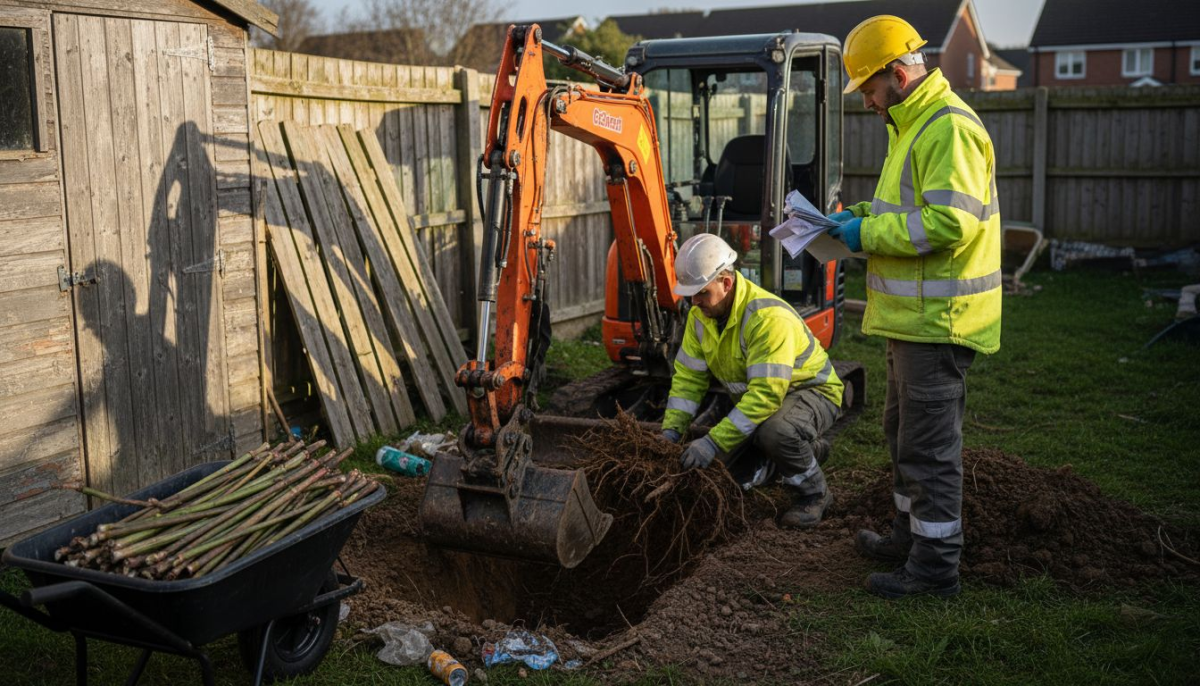
Many homeowners mistakenly believe cutting down Japanese Knotweed resolves the problem. The real threat lies underground in extensive rhizome networks extending up to 7 metres. These invasive roots spread silently beneath your garden, capable of damaging foundations and property value. Excavation removal offers a chemical-free, legally compliant solution that physically eliminates knotweed at its source, preventing costly regrowth and protecting your home for years to come.
Table of Contents
- Understanding Excavation Removal: Definition And Process
- Why Choose Chemical-Free Excavation Removal?
- Legal And Environmental Compliance In The UK
- Common Misconceptions About Excavation Removal
- Comparing Excavation To Chemical Treatments
- Formal Treatment Planning And Execution
- Maintaining And Preventing Recurrence Post-Excavation
- Protect Your Property With Expert Excavation Removal Solutions
- Frequently Asked Questions
Key takeaways
| Point | Details |
|---|---|
| Excavation removal | Deep soil excavation and root barrier installation provide chemical-free knotweed eradication |
| Legal compliance | UK law requires licensed soil disposal and adherence to invasive species regulations |
| Chemical-free effectiveness | Direct electrical energy treatments kill knotweed rhizomes without harmful herbicides |
| Long-term monitoring | Post-treatment inspections for 3-5 years prevent regrowth and confirm eradication success |
| Common myths | Misconceptions about cutting plants or treatment costs undermine proper eradication efforts |
Understanding excavation removal: definition and process
Excavation removal is a specialised physical method that eliminates Japanese Knotweed by removing contaminated soil and underground rhizomes entirely. Unlike standard garden excavation, this process addresses the biological and legal complexity of invasive species management. Homeowners seeking chemical-free knotweed treatment benefit from a method that avoids herbicide residues whilst delivering reliable results.
The typical excavation process involves several critical steps. Excavation typically involves removing soil to a depth of 2-3 metres to capture the extensive underground root system. Mechanical equipment removes affected soil, which must be disposed of through licensed contractors to meet UK environmental regulations. Following soil removal, specialists install root barriers to prevent lateral rhizome spread, creating a physical defence against future encroachment.
Key differences distinguish knotweed excavation from ordinary soil removal:
- Biological expertise required to map rhizome spread accurately
- Legal obligations for contaminated soil handling and disposal
- Depth requirements exceeding standard construction excavation
- Integration with chemical-free energy treatments for complete eradication
- Post-excavation monitoring protocols spanning multiple years
This comprehensive approach forms part of a broader knotweed eradication workflow that prioritises safety, compliance, and long-term effectiveness. The combination of physical removal and modern energy treatments delivers root excavation success rates that rival or exceed traditional chemical methods, without introducing persistent herbicides into residential environments.
Why choose chemical-free excavation removal?
Chemical-free treatments offer significant advantages for homeowners concerned about environmental impact and family safety. Direct electrical energy treatments cause lethal internal rhizome cell damage without harmful chemicals, using up to 5000 volts to disrupt cellular functions deep within the root network. This innovative approach depletes energy reserves in rhizomes, preventing regrowth whilst avoiding soil and water contamination.
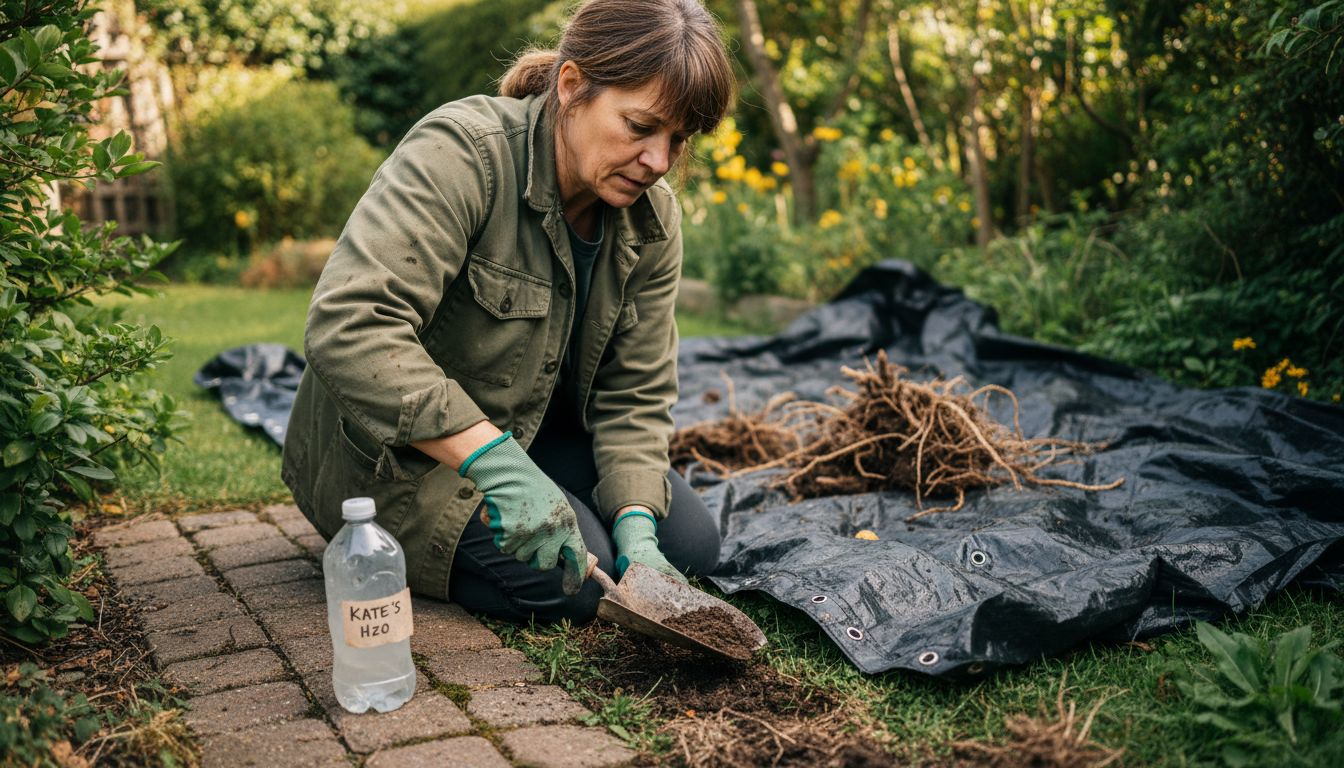
Traditional chemical herbicides like glyphosate carry environmental and health risks. Persistent residues can affect garden plants, soil microorganisms, and groundwater quality. Families with children and pets face additional concerns about herbicide exposure during and after application. Chemical treatments often require multiple applications over several years, extending the period of potential chemical contact in residential spaces.
The benefits of chemical-free excavation removal include:
- Immediate physical elimination of contaminated soil and rhizomes
- Zero herbicide residues protecting family health and garden ecosystems
- Higher short-term success rates compared to prolonged chemical programmes
- Suitability for properties with sensitive environmental features like ponds or wells
- Reduced regulatory restrictions compared to chemical herbicide applications
Pro Tip: Chemical-free treatment delivers optimal results when performed by qualified specialists who understand rhizome biology and electrical treatment parameters. Incomplete removal or improper energy delivery can leave viable rhizome fragments that regenerate new growth.
Homeowners prioritising environmental stewardship find chemical versus eco-friendly weed treatments increasingly favour non-chemical approaches. The combination of excavation with direct energy treatment provides a robust, scientifically validated alternative to traditional herbicide programmes, protecting both property value and ecological health.
Legal and environmental compliance in the UK
UK law imposes strict obligations on property owners managing Japanese Knotweed. UK law under the Wildlife and Countryside Act 1981 prohibits spreading invasive species like Japanese Knotweed to neighbouring land or public areas. The Environmental Protection Act 1990 classifies knotweed-contaminated soil as controlled waste, requiring licensed disposal through authorised facilities.
Homeowners must understand their legal responsibilities:
- Prevent knotweed spreading beyond property boundaries through proper containment
- Engage licensed waste carriers for excavated knotweed soil disposal
- Maintain detailed treatment records demonstrating compliance efforts
- Respond to neighbour complaints or local authority enforcement notices promptly
- Declare knotweed presence during property sales under transparency requirements
Failure to comply with these obligations carries significant penalties. Courts can impose fines up to £5,000 for illegal disposal or allowing knotweed spread. Neighbours affected by knotweed encroachment may seek injunctions requiring costly remediation at the property owner’s expense. Some mortgage lenders refuse financing for properties with untreated knotweed infestations, directly impacting property marketability.
Responsible excavation and disposal reduce wider ecosystem harm. Licensed facilities use approved methods to prevent knotweed fragments escaping into surrounding environments. This controlled approach protects native plant communities and prevents establishment of new infestations across the UK landscape. Progressive knotweed excavation planning ensures legal compliance whilst maximising treatment effectiveness.
Formal documentation throughout the excavation process provides essential legal protection. Survey reports, soil disposal certificates, and treatment completion statements demonstrate due diligence to future property buyers, mortgage lenders, and enforcement authorities. These records establish proof of responsible management and compliance with UK invasive species legislation.
Common misconceptions about excavation removal
Widespread myths about Japanese Knotweed undermine effective management and waste homeowner resources. Understanding the reality behind these misconceptions enables better treatment decisions and more realistic expectations about eradication timelines and costs.
The most damaging myth suggests cutting down visible knotweed plants eliminates the infestation. Knotweed rhizomes extend up to 7 metres from visible plants, making surface removal completely ineffective. A single rhizome fragment as small as 0.7 grams can regenerate an entire plant, meaning cutting stems merely encourages more vigorous underground growth.
Other prevalent misconceptions include:
- Believing visible shoots indicate full infestation extent when rhizomes spread far beyond
- Assuming excavation costs always exceed chemical treatment without comparing long-term expenses
- Thinking chemical-free methods lack effectiveness compared to herbicide programmes
- Expecting instant results without recognising the need for monitoring and follow-up
- Underestimating the legal and financial consequences of improper treatment
Cost comparisons deserve particular scrutiny. Excavation appears expensive upfront but achieves reliable eradication within months when properly executed. Chemical treatments cost less initially but require multiple years of repeated applications, professional monitoring, and potential retreatment for resistant growth. Total costs often converge when homeowners factor in time, property use restrictions, and final eradication certainty.
Pro Tip: Base treatment decisions on total cost over the full eradication timeline, not just initial estimates. Chemical-free excavation paired with energy treatments often delivers better value through faster, more reliable results and immediate property use restoration.
Addressing these knotweed misconceptions enables homeowners to plan effective treatment strategies aligned with biological reality and legal requirements. Thorough excavation supported by professional expertise offers the most direct path to permanent knotweed elimination.
Comparing excavation to chemical treatments
Homeowners face two primary treatment pathways for Japanese Knotweed management. Understanding the practical differences between excavation and chemical approaches helps inform decisions based on budget, timeline, and property-specific factors.
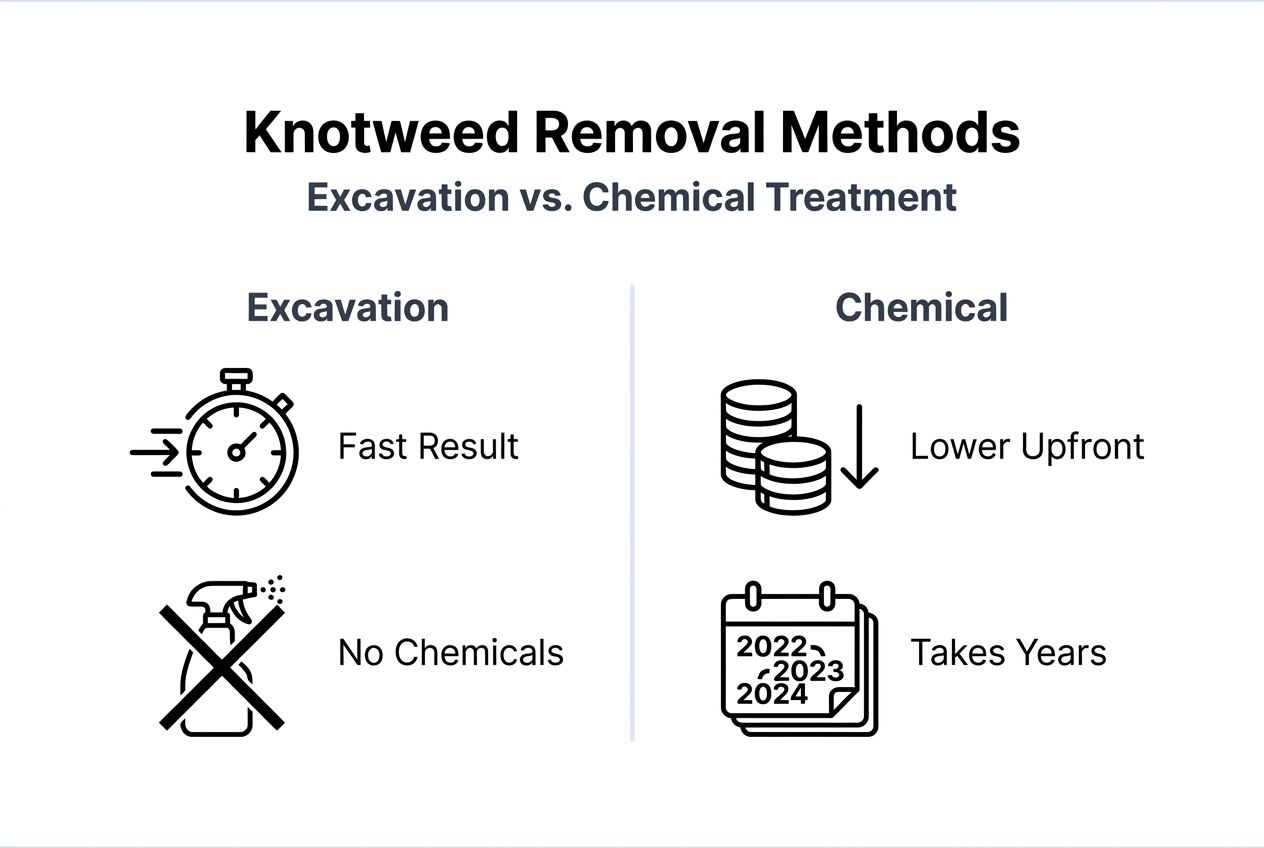
Excavation removal generally costs £4,000-£10,000 upfront depending on infestation extent and site accessibility. Chemical herbicide programmes typically cost 30-50% less initially but extend over three to five years with multiple treatment sessions. Total lifetime costs often align more closely than upfront figures suggest.
| Factor | Excavation removal | Chemical treatment |
|---|---|---|
| Upfront cost | £4,000-£10,000 | £2,500-£6,000 |
| Timeline | Immediate removal, 3-5 year monitoring | 3-5 years active treatment |
| Effectiveness | Physical elimination with energy treatment | Variable success, resistance issues |
| Environmental impact | Zero herbicide residues | Glyphosate soil/water exposure |
| Property use | Immediate restoration | Restricted during treatment period |
Timeline differences significantly affect property planning. Excavation achieves effective removal within weeks, allowing immediate garden restoration and property transactions. Chemical programmes require years of restricted property use, repeated herbicide applications, and uncertain completion dates. Homeowners planning sales or renovations benefit from excavation’s predictable timeline.
Effectiveness comparisons favour well-executed excavation. Physical removal eliminates the primary rhizome mass immediately, whilst chemical-free energy treatments address residual fragments. Chemical treatments face challenges including herbicide resistance, incomplete rhizome penetration, and weather-dependent application windows. Some knotweed populations show reduced herbicide sensitivity after repeated chemical exposure.
Key advantages of each method:
- Excavation: Immediate results, chemical-free, predictable costs, legal compliance ease
- Chemical: Lower upfront cost, less site disruption, suitable for constrained access areas
Environmental and legal considerations increasingly favour excavation. Modern chemical versus eco-friendly treatments reflect growing awareness of herbicide impacts on pollinators, soil health, and water quality. Licensed disposal of excavated soil provides documented compliance, whilst chemical treatment records require detailed application logs and environmental risk assessments.
Formal treatment planning and execution
Successful excavation removal requires methodical planning and professional execution. A structured approach ensures regulatory compliance, cost control, and reliable long-term eradication.
-
Conduct detailed property surveys: Comprehensive property surveys and mapping are foundational for successful excavation plans. Specialists use ground-penetrating radar and physical excavation to map rhizome extent accurately, identifying boundaries that extend well beyond visible shoots.
-
Design excavation parameters: Plan excavation depth of 2-3 metres based on survey findings. Extend lateral boundaries at least 2 metres beyond mapped rhizomes to capture spreading fragments. Calculate soil volumes for disposal cost estimation and contractor scheduling.
-
Engage licensed specialists: Select contractors with proven knotweed expertise, licensed waste carrier status, and insurance coverage for invasive species work. Verify their knowledge of chemical-free energy treatments and root barrier installation techniques.
-
Execute mechanical excavation: Remove contaminated soil using appropriate equipment for site conditions. Transport excavated material directly to licensed disposal facilities with proper documentation. Prevent fragment dispersal through careful handling protocols.
-
Apply chemical-free treatments: Deliver direct electrical energy treatments to exposed soil and remaining roots. Multiple treatment passes ensure thorough rhizome destruction through cellular disruption and energy depletion.
-
Install physical barriers: Place root barriers along excavation perimeters to prevent lateral rhizome migration. These barriers provide long-term protection against regrowth from residual fragments.
-
Establish monitoring protocols: Schedule quarterly inspections for the first year, then biannual checks through year five. Document all inspections with photographs and written reports for legal compliance proof.
Pro Tip: Involve licensed soil contractors during initial planning to ensure disposal logistics integrate smoothly with excavation scheduling. Early coordination prevents costly delays and compliance issues during active work phases.
Knotweed excavation preparation steps include notifying neighbours, arranging site access for heavy equipment, and protecting nearby structures from excavation impacts. Proper planning minimises disruption whilst maximising treatment success rates.
Maintaining and preventing recurrence post-excavation
Successful excavation removal requires ongoing vigilance to confirm eradication and prevent reinfestation. Post-treatment maintenance protects your investment and provides legal documentation of responsible management.
Regular site inspections detect early regrowth signs when intervention remains simple. Monthly visual checks during the first growing season identify emerging shoots before rhizome networks re-establish. Professional quarterly inspections provide expert assessment and formal documentation for compliance records. These inspections examine excavation boundaries, barrier integrity, and surrounding areas for new growth.
Soil management practices reduce conditions favouring knotweed regeneration:
- Maintain healthy ground cover preventing bare soil where knotweed fragments may establish
- Monitor drainage patterns avoiding waterlogged conditions that encourage rhizome survival
- Inspect imported soil and plants for knotweed fragments before introducing to treated areas
- Address soil compaction or nutrient depletion that weakens competing vegetation
Root barriers are highly effective in preventing lateral rhizome spread after excavation. Professional installation ensures barriers extend to adequate depth and maintain integrity without gaps. Annual barrier inspections verify continued effectiveness and identify any breaches requiring repair.
The recommended monitoring period spans 3-5 years post-treatment for reliable eradication confirmation. This timeline accounts for dormant rhizome fragments that may require multiple growing seasons to exhaust stored energy reserves. Formal treatment plans incorporate this monitoring commitment, establishing clear responsibilities and documentation requirements.
Practical maintenance guidelines for homeowners include:
- Document all inspections with dated photographs and written observations
- Remove any regrowth immediately through proper disposal methods
- Maintain barrier zones free from deep-rooted plants that might compromise integrity
- Keep treatment records organised for property sale disclosure requirements
Integrating natural knotweed spread prevention tips into routine garden maintenance sustains eradication success. Simple practices like careful disposal of garden waste, preventing soil transfer between properties, and monitoring boundary areas create effective defences against reinfestation.
Consistent post-excavation management confirms treatment success whilst protecting property value and marketability. Documented monitoring provides essential proof of due diligence for mortgage lenders and future property buyers.
Protect your property with expert excavation removal solutions
Proper Japanese Knotweed management requires specialised knowledge and professional equipment to achieve lasting results. Attempting excavation removal without expert guidance risks incomplete eradication, legal non-compliance, and costly retreatment.

Japanese Knotweed Agency specialises in chemical-free knotweed treatment using pioneering direct energy technology and comprehensive excavation services. Our approach combines physical removal with up to 5000-volt energy treatments that eliminate rhizomes without harmful herbicides. We handle every aspect from initial surveys through licensed soil disposal and root barrier installation, ensuring full compliance with UK invasive species regulations.
Our comprehensive service package includes detailed property mapping, excavation planning, mechanical soil removal, chemical-free energy treatments, and structured monitoring programmes spanning 3-5 years. Every project receives formal documentation meeting legal requirements for property sales and mortgage applications. Visit our Japanese Knotweed FAQ for answers to common questions or learn how to prepare for knotweed excavation on your property. Contact us today for expert assessment and tailored treatment solutions protecting your home’s value.
Frequently asked questions
What is excavation removal and how does it work?
Excavation removal physically eliminates Japanese Knotweed by removing contaminated soil and underground rhizomes to depths of 2-3 metres. Specialists use mechanical equipment to extract affected soil, which licensed contractors dispose of at authorised facilities meeting UK environmental regulations. Following soil removal, professionals install root barriers preventing lateral rhizome spread and apply chemical-free energy treatments to remaining root fragments. This comprehensive approach achieves immediate physical eradication whilst avoiding herbicide residues. Post-treatment monitoring over 3-5 years confirms complete elimination and provides legal documentation of responsible management. The method suits homeowners seeking rapid, environmentally safe solutions that restore property use immediately whilst meeting strict UK compliance requirements.
How deep do you need to excavate to remove Japanese Knotweed?
Excavation typically requires digging 2 to 3 metres deep to safely remove knotweed rhizomes. This depth captures the majority of underground root systems that spread far beyond visible shoots. Combining this excavation depth with root barriers and chemical-free energy treatments significantly reduces regrowth risk, providing reliable long-term eradication.
Can excavation removal be done without chemicals?
Yes, chemical-free treatment uses techniques like direct electrical energy to kill knotweed rhizomes effectively. Physical excavation removes the primary rhizome mass whilst energy treatments up to 5000 volts eliminate remaining fragments through cellular disruption. This approach avoids herbicide residues entirely, making it safer for homes, gardens, pets, and local ecosystems.
What are the legal requirements for Japanese Knotweed excavation in the UK?
UK law requires licensed soil disposal and prohibits allowing knotweed to spread under the Wildlife and Countryside Act 1981. Licensed contractors must handle excavated knotweed soil to comply with Environmental Protection Act 1990 controlled waste provisions. Homeowners must prevent knotweed spreading to neighbouring properties or public areas through proper containment and treatment. Failure to comply can result in fines up to £5,000 or court injunctions requiring costly remediation.