
Selling a home in England, Wales, or Ireland brings enough stress without the extra hurdle of invasive plants like Japanese Knotweed delaying your plans. As property transactions now demand stricter scrutiny, lenders and legal teams want more than a quick look around—they expect a professional survey that proves your property is free from damaging species. Understanding what counts as a proper invasive plant survey, and how to meet these requirements using chemical-free treatment options, helps protect your investment and keeps your sale on track.
Table of Contents
- Defining Invasive Plant Surveys in the UK
- Key Invasive Species and Identification Methods
- Legal Responsibilities and Survey Requirements
- The Survey Process: What Homeowners Can Expect
- Chemical-Free Treatment Options Explained
- Risks of Non-Compliance During Property Sales
Key Takeaways
| Point | Details |
|---|---|
| Invasive Plant Surveys are Essential | Conducting a professional invasive plant survey is crucial for property transactions to comply with legal obligations and avoid financial penalties. |
| Legal Responsibilities Exist | Property owners must manage invasive species like Japanese Knotweed under UK law, or they risk significant legal and financial repercussions. |
| Identification is Key | Accurate identification of invasive species prevents further infestations and allows for effective management strategies. |
| Chemical-Free Options Available | Homeowners should consider chemical-free treatment methods, such as thermo-electric treatment, to protect soil health while managing invasive plants. |
Defining Invasive Plant Surveys in the UK
An invasive plant survey is a systematic process of identifying, recording, and monitoring non-native plant species that have become established and are spreading across British landscapes. Unlike general botanical surveys, invasive plant surveys focus specifically on species that pose genuine threats to native ecosystems, property infrastructure, and sometimes human health. These surveys form a critical component of property protection, particularly when you’re buying or selling a home, as mortgage lenders increasingly require documentation of invasive species presence before approving lending.
The UK recognises that invasive non-native plants threaten biodiversity, the economy, and in some cases human wellbeing. A professional invasive plant survey determines whether problematic species exist on your property, identifies their extent and severity, and establishes the groundwork for effective management or eradication. This is fundamentally different from casually spotting weeds in your garden. Professional surveys employ trained botanists and ecologists who understand species identification, can assess root systems you cannot see, and recognise early-stage infestations before they become catastrophic problems.
What makes these surveys legally and financially significant is their role in property transactions. When Japanese Knotweed or other Schedule Nine species are present on a property, UK law and lending practices create specific requirements. Mortgage lenders will not advance funds without evidence that a qualified surveyor has assessed the situation. The survey establishes baseline conditions, documents the location and density of invasion, and provides crucial data for creating a treatment and management plan. Without this documentation, you face severe complications: delayed property sales, reduced valuations, mortgage refusal, and potential liability for spread onto neighbouring land.
Invasive plant surveys in the UK operate within a framework established by environmental legislation and practical property requirements. Professional surveyors follow standardised methodologies to ensure consistency and legal admissibility. They document findings in formats that satisfy mortgage lender requirements and provide the foundation for treatment decisions. Whether you’re concerned about a single suspicious plant or suspect widespread infestation, understanding what constitutes a proper invasive plant survey helps you take appropriate action before problems escalate into expensive, time-consuming crises.
Professional tip Contact a qualified surveyor at the earliest sign of potential invasive plants on your property, particularly before listing for sale, to avoid costly delays or survey requirements appearing during the conveyancing process.
Key Invasive Species and Identification Methods
The United Kingdom faces threats from numerous invasive plant species, but several have become particularly problematic for homeowners and land managers. Japanese Knotweed stands out as the most notorious offender, capable of pushing through tarmac, damaging building foundations, and spreading aggressively through tiny rhizome fragments. Himalayan Balsam grows with alarming vigour along waterways and can reach two metres in height within a single season, outcompeting native wildflowers and destabilising riverbanks. Giant Hogweed poses direct health risks alongside ecological damage, capable of causing severe chemical burns through contact with its sap on sunny days. Rhododendron ponticum spreads relentlessly through woodland, creating dense undergrowth that chokes out native species and transforms entire ecosystems. New Zealand Flatworm, whilst technically an animal rather than a plant, destroys native earthworm populations and threatens soil health across affected regions. These species share a common trait: they grow vigorously, spread rapidly, and outcompete native flora with alarming efficiency.
Identifying these invasive species requires attention to specific morphological characteristics and growth patterns that distinguish them from harmless native plants. Survey methods for invasive species rely on careful observation of leaf shape, stem structure, flowering patterns, and habitat preferences. Japanese Knotweed displays distinctive reddish stems with heart-shaped leaves arranged alternately along branches, producing cream-coloured flowers in late summer. Himalayan Balsam shows soft, succulent stems with oval leaves and delicate pink or purple flowers that appear from July onwards. Giant Hogweed produces massive umbel flower heads and enormous lobed leaves that can reach one metre across, whilst its distinctive purple blotches on green stems provide a reliable identifying feature. Learning to spot signs of invasive plants during different seasons proves essential, as appearance changes dramatically throughout the year. Early detection often means catching infestations at a manageable stage rather than facing years of intensive treatment.
Professional identification combines visual assessment with habitat evaluation and often photographic documentation to ensure accuracy and create records acceptable to mortgage lenders and environmental authorities. Surveyors examine not just individual plants but their distribution patterns, soil conditions, proximity to water sources, and potential routes for spread. They understand that Japanese Knotweed can remain dormant underground for years, emerging explosively when conditions favour growth, and that Himalayan Balsam seeds can travel metres downstream to establish new colonies far from the parent plant. Citizen science initiatives now encourage homeowners to participate in monitoring and reporting distributions, creating valuable datasets that support professional efforts to track these species and predict spread patterns. This collaborative approach transforms individual property concerns into broader understanding of invasive species movement across regions, helping authorities target intervention resources more effectively.
When you suspect invasive plants on your property, accurate identification becomes the foundation for appropriate action. Misidentification as harmless native plants wastes time and allows infestations to expand unchecked. Conversely, false alarms about common garden plants create unnecessary anxiety. Professional surveyors eliminate this guesswork through trained expertise, detailed knowledge of seasonal variations, and access to specialised identification resources. They document findings with photographs and precise location data, creating evidence that satisfies legal requirements and provides the baseline for treatment planning. Whether you spot suspicious plants during routine garden maintenance or receive survey results from a surveyor, understanding what makes these species invasive rather than simply common helps you appreciate the significance of professional assessment.
Professional tip Take clear photographs of any suspicious plants showing leaf arrangement, stem structure, flowers, and overall growth habit from multiple angles, then submit these images to a qualified surveyor for preliminary assessment before committing to full survey costs.
Here is a quick reference to the most problematic invasive species and how to distinguish them:
| Species | Key Identification Features | Common Habitats | Sample Risk |
|---|---|---|---|
| Japanese Knotweed | Reddish stems, heart-shaped leaves | Urban gardens, riverbanks | Foundation and paving damage |
| Himalayan Balsam | Succulent stems, pink/purple flowers | Riversides, wetlands | Outcompetes native wildflowers, bank erosion |
| Giant Hogweed | Massive umbel flowers, purple-streaked stems | Woodland edges, open ground | Severe skin burns from sap |
| Rhododendron ponticum | Dense, evergreen shrub, leathery leaves | Woodlands, moorlands | Suppresses biodiversity, dense undergrowth |
| New Zealand Flatworm | Flattened, slimy body, dark margins | Lawns, gardens | Reduces earthworm populations, poor soil |
Legal Responsibilities and Survey Requirements
Invasive plant management in the United Kingdom operates within a strict legal framework that creates genuine responsibilities for property owners. The Wildlife and Countryside Act 1981 forms the foundation of this regulatory landscape, establishing that certain invasive species cannot be released, transported, planted in the wild, or allowed to spread from your property onto neighbouring land. This legislation applies regardless of how the invasive plants arrived on your property. You cannot claim ignorance or blame previous owners as a defence. Once you become aware that invasive species exist on your land, you bear legal responsibility for preventing their spread. This is not merely a suggestion or best practice recommendation. It is a legal obligation with real consequences for non-compliance.
Schedule 9 of the Wildlife and Countryside Act specifically identifies which plant species trigger these legal requirements. Japanese Knotweed stands at the top of this list, but numerous other species including Himalayan Balsam, Giant Hogweed, and Rhododendron ponticum all carry legal weight. When Schedule 9 species are present on your property and you fail to prevent their spread, you can face enforcement action from local authorities, prosecution under environmental legislation, and substantial fines. More practically, if invasive plants spread from your property onto a neighbour’s land, you become liable for the costs of their eradication. One homeowner discovered this harsh reality when Japanese Knotweed from their garden spread underground into their neighbour’s foundation, resulting in a bill exceeding £100,000 for excavation and treatment.
For property transactions specifically, legal responsibilities crystallise around survey requirements and disclosure obligations. When selling a property where invasive species are present, you must declare this to potential buyers. Mortgage lenders increasingly demand evidence of professional surveys before advancing funds, treating invasive species presence as a material defect affecting property value and mortgageability. Your conveyancing solicitor will request invasive plant survey results, and failure to provide them can trigger survey conditions that delay or derail sales. The survey itself has become mandatory in practice rather than optional, even though no single law explicitly mandates it for residential properties. Banking industry standards and conveyancing practices have created this de facto requirement. If you discover invasive plants after purchasing a property where the seller failed to disclose them, you may have grounds for legal action against the seller and their surveyor.
Organisations involved in land and water management face additional legal duties including conducting surveys to identify invasive species presence and implementing biosecurity measures to prevent spreading. This applies to local councils, water companies, environmental charities, and farmers managing larger estates. For residential homeowners, the practical implication is clear: if you suspect invasive plants on your property, obtaining a professional survey moves from being prudent to being legally prudent. The survey creates a documented baseline showing what existed at a specific time, protecting you legally if spread occurs later and demonstrating that you took reasonable steps to address the problem. Conversely, ignoring suspected invasive plants whilst hoping they disappear represents negligence rather than a viable strategy.
Professional tip Obtain a professional survey as soon as you suspect invasive plants exist on your property, ensuring the surveyor documents findings thoroughly with photographs and location mapping, creating legal evidence of your due diligence and establishing a baseline for any required treatment plans.
The Survey Process: What Homeowners Can Expect
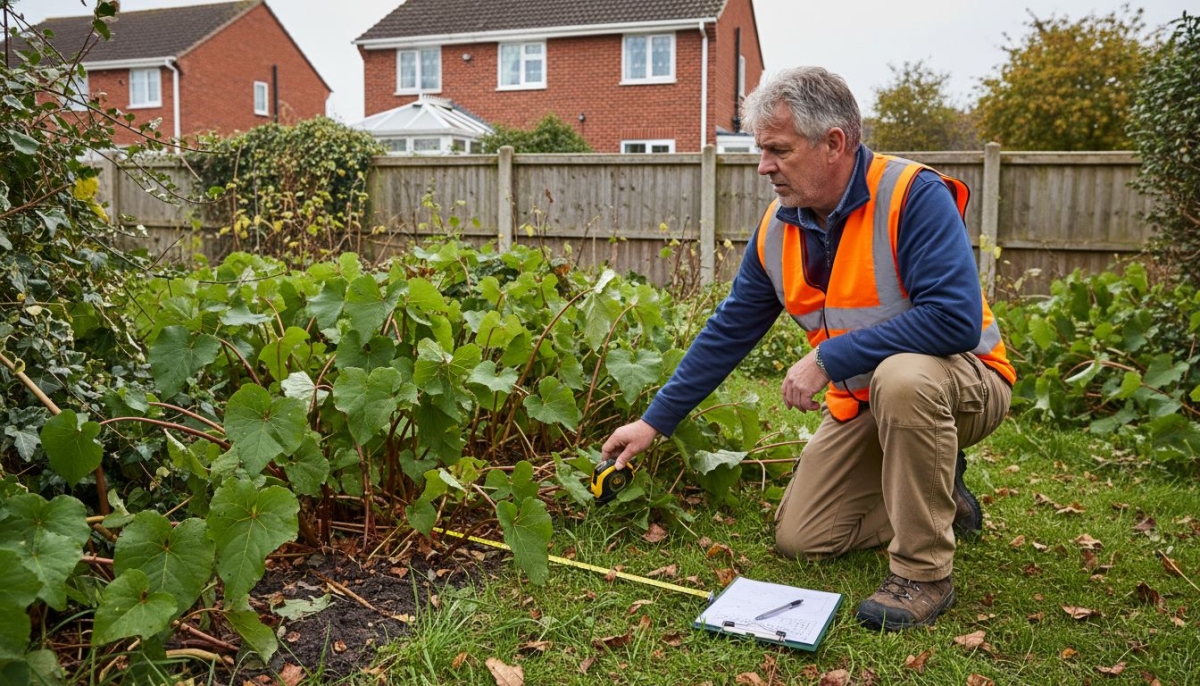
When you contact a professional surveyor about invasive plants on your property, understanding what happens during the assessment process removes uncertainty and helps you prepare appropriately. A typical invasive plant survey begins with a detailed site visit where the surveyor walks your property systematically, examining gardens, boundaries, water features, outbuildings, and surrounding areas. They are not simply looking for visible plants but searching for signs of infestation including fresh shoots, rhizome fragments, dead stems from previous years, and areas of soil disturbance that suggest underground activity. This visual inspection often reveals problems you have missed entirely, particularly where invasive species hide beneath other vegetation or emerge from cracks in concrete and paving. The surveyor documents everything using detailed notes, photographs from multiple angles, GPS coordinates, and sometimes aerial imagery to establish precise locations and calculate infestation extent.
The surveyor uses standardised identification methods to confirm species presence beyond simple observation. This means they examine leaf arrangement, stem structure, root systems where accessible, and flowering characteristics to eliminate doubt about species identification. They assess habitat factors including soil type, moisture levels, proximity to water sources, and sunlight exposure, as these conditions influence how aggressively invasive plants spread and which treatment approaches prove most effective. The surveyor also evaluates your property’s specific characteristics: building proximity, underground utilities, neighbouring properties, and access routes that will affect treatment logistics. This thorough assessment creates a comprehensive baseline document that satisfies mortgage lender requirements, provides evidence of your due diligence, and establishes the foundation for any subsequent treatment plans. Unlike casual garden inspections, professional surveys generate detailed reports with maps showing infestation distribution, photographic evidence, and expert analysis.

Many homeowners can now contribute to broader invasive species monitoring through initiatives like reporting invasive species sightings, which supports coordinated management across regions. Whilst professional residential surveys differ from citizen science monitoring programmes, both approaches share common identification principles and contribute to understanding invasive species distribution. Your professional survey feeds into these broader datasets, helping authorities track species movement and predict future spread patterns. Some surveyors offer digital tools that streamline reporting and allow you to track treatment progress over time. The survey report itself becomes a key document for your property records, with copies retained by your conveyancer, mortgage lender, and any treatment providers you engage subsequently. This documentation proves invaluable if property disputes arise later, as it establishes what conditions existed at a specific date.
The survey process culminates in a detailed written report that outlines findings, identifies risks, recommends management approaches, and often includes a cost estimate for treatment. This report addresses specific questions that matter to mortgage lenders: Is invasive species present? What species? How extensive? What risks does it pose to property structures? What treatment options exist? How long will treatment take? What is the cost? A quality survey report answers these questions comprehensively, providing the certainty that lenders demand before releasing funds. You should expect the surveyor to explain their findings clearly, answer your questions, and discuss realistic treatment timelines. Some infestations require months of treatment and monitoring before eradication can be confirmed, so understanding this reality upfront prevents disappointment later. The survey transforms an abstract worry about “invasive plants” into a concrete understanding of what exists, where it exists, and what steps you must take to address it.
Professional tip Request that your surveyor provides findings in a format specifically designed for mortgage lender submission, ensuring the report addresses all standard banking requirements and accelerates the property transaction process without requiring additional assessment.
Chemical-Free Treatment Options Explained
Chemical-free treatment represents a fundamental shift away from herbicide-dependent approaches towards methods that eliminate invasive plants whilst protecting soil health, beneficial organisms, and water systems. Traditional herbicide treatments leave residual chemicals in soil that can persist for months or years, potentially affecting non-target plants and contaminating groundwater. Chemical-free alternatives work differently. They target the plant’s internal systems directly, causing cellular damage that prevents regrowth without introducing synthetic compounds into your garden ecosystem. For homeowners seeking environmentally responsible solutions, understanding these chemical-free options clarifies why they represent superior long-term property management.
Thermo-electric treatment represents one of the most innovative chemical-free approaches available. This technology delivers high-voltage electrical energy directly into the plant’s rhizome network, causing internal cell damage and depleting energy reserves throughout the root system. The process works by disrupting cellular function at the molecular level, effectively rendering the plant unable to regenerate new growth. Unlike mechanical removal that leaves fragmented rhizomes capable of sprouting, or herbicides that require repeated applications, thermo-electric treatment delivers lasting damage in a single treatment cycle. The technology proves particularly effective against Japanese Knotweed, where underground rhizomes can extend metres from visible stems. Multiple treatments spaced strategically throughout the growing season ensure complete eradication as new shoots emerge. This approach eliminates the waiting period associated with herbicides, which often require weeks or months to show visible effects.
Mechanical removal and excavation provide direct physical elimination where property circumstances permit. This involves carefully extracting affected soil containing the entire rhizome network, preventing any fragmentation that could trigger regrowth. Excavation proves particularly valuable where invasive plants threaten building structures or where other treatments cannot reach. However, excavation creates significant disruption to landscaping and requires specialised equipment, making it costly and impractical for extensive infestations. Non-chemical management strategies emphasise combining mechanical approaches with biosecurity measures to prevent spread during removal operations. This means careful handling of contaminated soil, proper disposal protocols, and preventing rhizome fragments from reaching new locations. Professional excavation teams understand these risks and implement protocols that residential property owners cannot safely manage alone.
Root barrier installation offers preventative protection when complete removal proves impractical or where invasive plants exist on neighbouring properties. A properly installed root barrier creates a physical obstacle that blocks rhizome expansion into vulnerable areas like building foundations or neighbouring land. The barrier must extend deep enough to intercept root systems before they reach critical structures, typically requiring depths of one to two metres. This approach does not eradicate existing plants but prevents them from causing further damage. Combined with thermo-electric treatment, root barriers create a comprehensive strategy: treatment eliminates the existing threat whilst barriers prevent future problems from regrowth or neighbouring infestation. This two-pronged approach proves particularly valuable in urban settings where multiple properties share boundaries and infestations can spread laterally across property lines.
Integrated management combining multiple approaches often proves most effective for severe infestations. A comprehensive strategy might include initial thermo-electric treatment to damage the rhizome network, followed by root barrier installation to prevent regrowth, with excavation of affected soil where feasible and where access permits. This multi-layered approach minimises risks of regrowth and addresses infestation from multiple angles simultaneously. The specific combination depends on your property’s characteristics, infestation extent, budget constraints, and timeline requirements. Chemical-free treatment methods share a common advantage: they work with your property’s biological systems rather than against them, protecting soil microorganisms and beneficial insects whilst eliminating the invasive threat. This aligns with broader environmental responsibility and protects long-term soil fertility that determines your garden’s health for decades after treatment completes.
Professional tip Discuss thermo-electric treatment options specifically with your surveyor during the assessment phase, as this technology often provides superior outcomes to traditional approaches for Japanese Knotweed whilst avoiding chemical residues that could affect future planting plans.
Compare common chemical-free treatment options for invasive plant management:
| Method | Main Mechanism | Best Use Case | Potential Limitations |
|---|---|---|---|
| Thermo-electric | Electrical damage to rhizomes | Japanese Knotweed infestation | Specialist equipment required |
| Excavation | Physical soil/rhizome removal | Severe foundation risk | Disruptive, costly, requires access |
| Root Barrier | Physical root containment | Border protection, prevention | Does not kill established plants |
| Integrated Approach | Combined techniques | Large, multi-species invasion | More expensive, complex coordination |
Risks of Non-Compliance During Property Sales
Failing to address invasive plant infestations before selling your property exposes you to substantial financial, legal, and reputational consequences that extend far beyond a simple transaction delay. When invasive species like Japanese Knotweed exist on your property and you attempt to sell without disclosure or proper survey documentation, you create a cascade of problems that affect every party involved. Mortgage lenders will not advance funds without evidence that invasive plants have been assessed and managed appropriately. Conveyancing solicitors will request survey results as standard procedure, and their absence triggers escalating concerns. Buyers become rightfully suspicious when surveys are missing, leading them to demand price reductions, require treatment completion before completion, or withdraw entirely from the transaction. What began as a straightforward sale becomes a complex negotiation where your credibility deteriorates with each missing document.
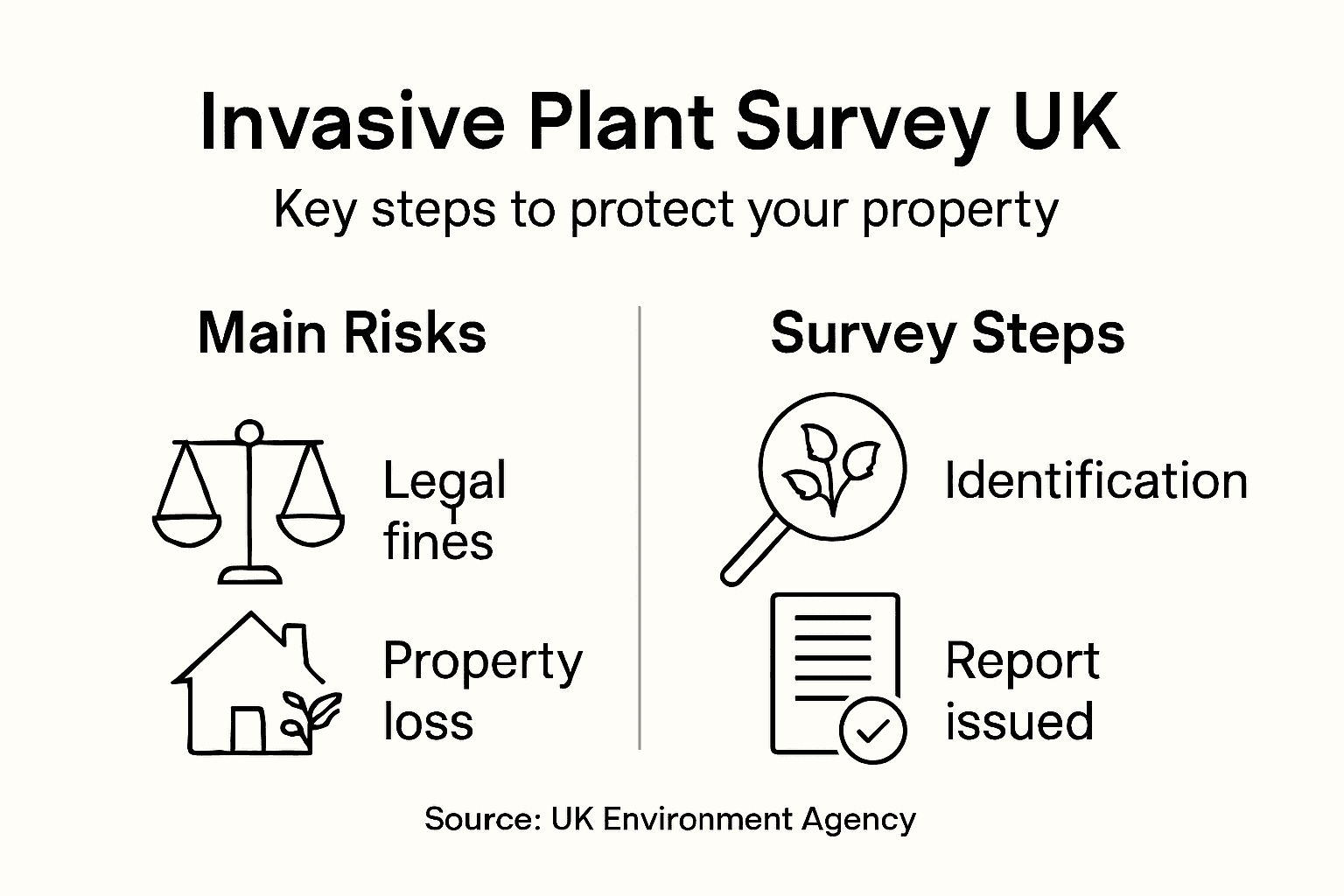
Financial penalties and liability exposure represent the most immediate consequences of non-compliance. Prosecution under invasive plant legislation can result in substantial fines and orders requiring you to undertake remediation at your own expense. More significantly, if invasive plants spread from your property onto neighbouring land after you sell, you remain legally liable for eradication costs incurred by the new owners. Japanese Knotweed has caused disputes where original sellers faced bills exceeding £150,000 for damage caused by spread they failed to disclose or manage. These are not theoretical risks. They are real outcomes documented in property disputes and court cases across England and Wales. Your home insurance will not cover invasive plant liability, as most policies explicitly exclude claims arising from failure to disclose known infestations. The burden falls entirely on you, creating open-ended financial exposure that can persist for years after you sell.
Property value reduction represents another significant financial consequence. Properties known to harbour invasive species command substantially lower sale prices, typically 5 to 15 per cent below comparable unaffected properties, depending on infestation severity and location. A property valued at £500,000 could face a £25,000 to £75,000 reduction purely because invasive plants exist on the land. Buyers factor in treatment costs, remediation risks, and mortgage lending complications when calculating what they will pay. Attempting to conceal the problem does not solve this reality; it simply triggers the same price reduction after disclosure occurs during the survey phase, whilst damaging your reputation and creating legal exposure. A straightforward sale with proper surveys and transparent documentation often attracts fewer complications than a concealed infestation that emerges later through buyer diligence.
Legal complications during conveyancing create delays that transform weeks of waiting into months of frustration. Buyers’ solicitors conduct heightened due diligence when invasive plants are identified, requesting detailed treatment plans, eradication timelines, and financial guarantees. Mortgage lenders may require treatment completion before advancing funds, meaning you cannot complete the sale until invasive plants are eradicated. Lenders may also impose financial charges or require specialist insurance policies before lending on affected properties, driving up buyer costs and reducing their willingness to proceed. Some properties with serious invasive infestations fail to sell entirely because lenders refuse to advance funds under any circumstances. The consequence is not simply a delayed sale but potentially an unsellable property that traps you as an owner responsible for ongoing management and liability.
Disclosure failures create the most serious legal jeopardy. When you knowingly conceal invasive plant presence from buyers, you expose yourself to fraud claims, misrepresentation lawsuits, and potential criminal charges depending on the severity and circumstances. Your conveyancing solicitor should guide you through proper disclosure procedures, but ultimately you bear responsibility for providing accurate information in the Property Information Form that sellers complete. Deliberately omitting known infestations constitutes fraud, regardless of whether the buyer eventually discovers the problem themselves. Buyers who uncover concealed infestations have successfully pursued sellers through courts, recovering treatment costs, diminution in value, and legal costs. The risk becomes infinitely greater than the temporary inconvenience of properly addressing the problem upfront.
Professional tip Obtain your invasive plant survey at least three months before listing your property for sale, allowing time for treatment completion before marketing begins, ensuring buyers encounter a transparent situation and lenders encounter documented remediation rather than undisclosed problems.
Secure Your Property with Expert Invasive Plant Surveys and Chemical-Free Treatments
Invasive plant infestations such as Japanese Knotweed present serious challenges for property owners in the United Kingdom. The article highlights critical pain points including legal responsibilities, risks during property sales, and the need for detailed and professional invasive plant surveys that satisfy mortgage lender requirements. Understanding these concerns, Japanese Knotweed Agency offers expert property surveys across England, Wales and Ireland, delivering precise identification of invasive species and clear documentation to protect your property’s value and your peace of mind.

Take control of your invasive plant problem today with our pioneering chemical-free treatment technology. By delivering up to 5000 volts of direct energy onsite, we target and eradicate Japanese Knotweed and other invasive species without harmful herbicides. Combined with professional root barrier installations and excavation works, our comprehensive approach ensures lasting protection against rhizome spread and structural damage. Don’t let invasive plants threaten your home sale or legal compliance. Visit Japanese Knotweed Agency now to arrange your professional survey and discover effective, eco-friendly treatment solutions that meet all legal and mortgage lending standards. Act early to avoid costly delays and secure your property’s future.
Frequently Asked Questions
What is an invasive plant survey?
An invasive plant survey is a systematic process to identify, record, and monitor non-native plant species that threaten native ecosystems, property infrastructure, and human health. It helps in determining the presence and extent of invasive plants, and aids in developing management or eradication strategies.
Why are invasive plant surveys important when buying or selling a property?
Invasive plant surveys are critical during property transactions as mortgage lenders often require proof of survey results before advancing funds. They provide essential documentation that outlines the presence of invasive species, their severity, and management plans, thus protecting buyers and sellers legally and financially.
How can I identify invasive plant species on my property?
You can identify invasive species by looking for specific characteristics such as leaf shape, stem structure, and flowering patterns. For example, Japanese Knotweed has reddish stems and heart-shaped leaves, while Himalayan Balsam features succulent stems and pink flowers. Yet, professional identification is recommended for accuracy.
What are the potential risks of not addressing invasive plant infestations?
Failing to address invasive plant infestations can lead to legal penalties, financial liabilities, and reduced property value. If invasive species spread to neighbouring properties, you could be held liable for eradication costs. Additionally, properties with known infestations can sell for significantly less than comparable unaffected homes.