

Invasive weeds like Japanese Knotweed pose serious threats to property integrity and value across England, Wales, and Ireland. These aggressive plants can damage foundations, disrupt drainage systems, and complicate property transactions. Homeowners increasingly seek chemical-free treatment options that protect their gardens and the environment whilst effectively managing these persistent invaders. Understanding proper identification, treatment methods, and the importance of professional property surveys empowers you to protect your home and make informed decisions about invasive weed management.
Table of Contents
- Key takeaways
- Identifying invasive weeds in your garden
- Chemical-free treatment options for invasive weeds
- Property survey process for invasive weeds
- Best practices for ongoing management and prevention
- Learn more and get professional support
- Frequently asked questions
Key Takeaways
| Point | Details |
|---|---|
| Knotweed identification | Recognising invasive weeds early gives homeowners the best chance to control growth before serious damage occurs. |
| Chemical free methods | Chemical free methods provide effective control while protecting the garden ecosystem and surrounding wildlife, though they require patience and consistent application. |
| Underground rhizome extent | The plant’s extensive rhizomes can spread up to seven metres horizontally and three metres deep, exploiting tiny cracks in concrete, which heightens property damage risk. |
| Legal and surveying considerations | Professional surveys and understanding legal implications help protect property value, support compliant management of infestations, and address mortgage implications that can arise during sale. |
Identifying invasive weeds in your garden
Recognising invasive weeds early gives you the best chance of controlling them before they cause significant damage. Japanese Knotweed remains the most notorious invasive plant in the UK, but several other species also threaten properties.
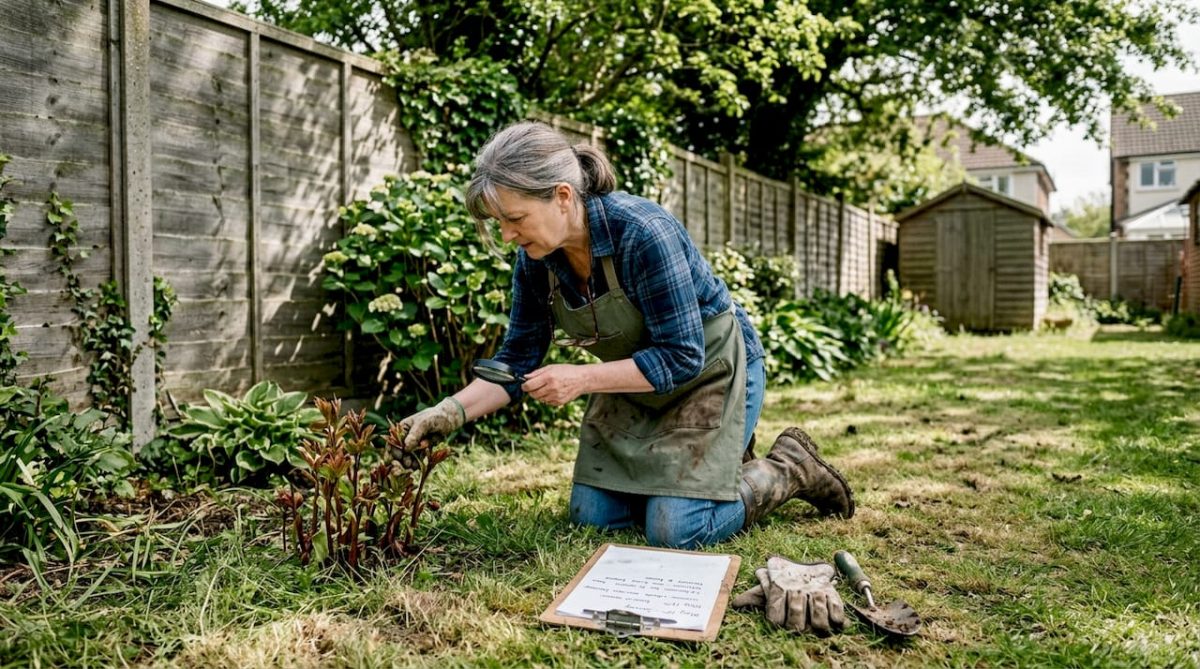
Japanese Knotweed appears in spring with distinctive red or purple shoots that resemble asparagus spears. These rapidly develop into hollow, bamboo-like stems with a purple speckled pattern, reaching heights of two to three metres by summer. The leaves are heart or shield-shaped, arranged in a zigzag pattern along the stems. Small, creamy-white flowers appear in late summer, forming clusters that can extend up to ten centimetres. The plant dies back completely in winter, leaving behind brittle brown canes.
Proper identification is critical for effective management of invasive plants such as Japanese Knotweed. Many homeowners confuse it with bindweed, Russian Vine, or ornamental bamboo. Unlike these similar plants, Japanese Knotweed has distinctive purple-speckled stems and shield-shaped leaves with a flat base.
Other common invasive weeds include:
- Giant Hogweed, which causes severe skin burns and grows up to five metres tall with white umbrella-shaped flower clusters
- Himalayan Balsam, recognisable by pink helmet-shaped flowers and explosive seed pods that spread rapidly along waterways
- Rhododendron ponticum, an evergreen shrub that forms dense thickets and releases toxins preventing other plants from growing
- Floating Pennywort, an aquatic weed that creates thick mats on ponds and waterways, blocking light and oxygen
The extensive underground rhizome network of Japanese Knotweed poses the greatest risk to properties. These roots spread up to seven metres horizontally and three metres deep, exploiting tiny cracks in concrete, tarmac, and building foundations. Even a fragment smaller than your fingernail can regenerate into a new plant. This aggressive growth damages drainage systems, undermines patios and driveways, and can penetrate cavity walls. Properties with unmanaged Japanese Knotweed infestations often face mortgage rejection, reduced valuations, and expensive remediation requirements before sale.
Chemical-free treatment options for invasive weeds
Chemical-free methods provide effective invasive weed control whilst protecting your garden ecosystem, beneficial insects, and surrounding wildlife. These approaches require patience and consistent application but deliver lasting results without environmental harm.
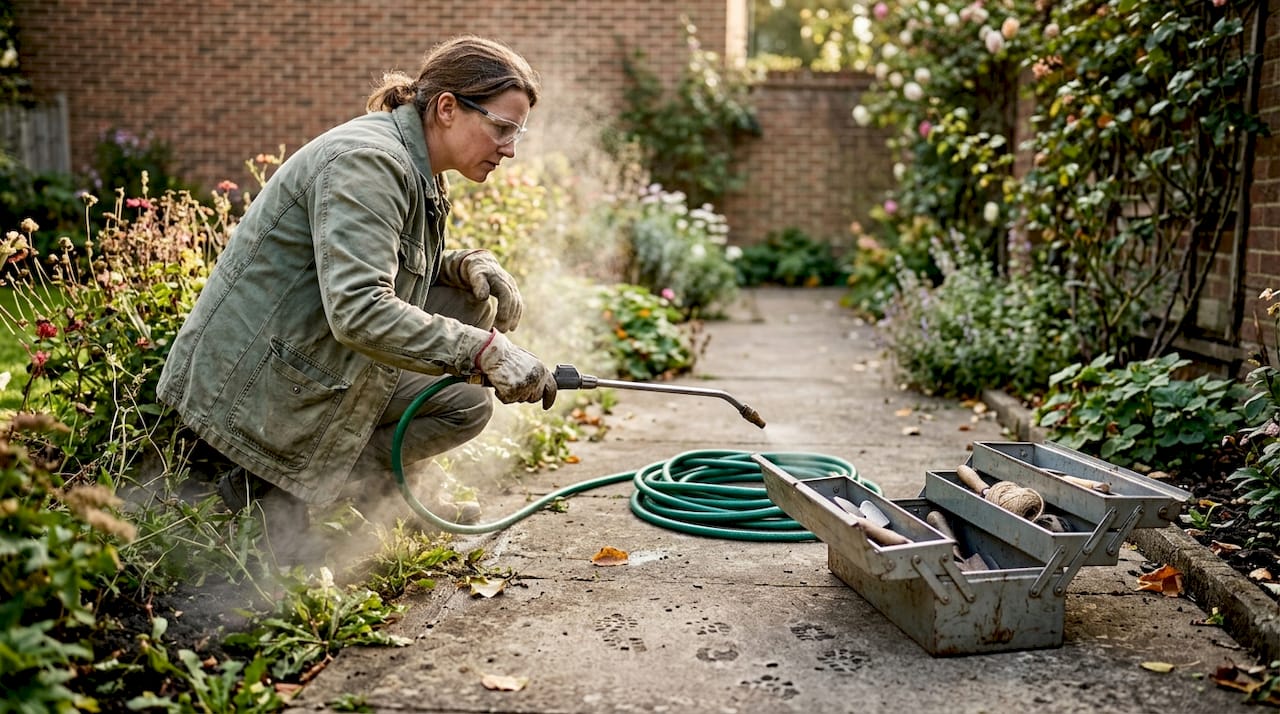
Thermal treatment represents one of the most innovative chemical-free solutions. Specialised equipment delivers controlled energy directly to the plant, causing internal cell damage and depleting the rhizome network’s energy reserves. Japanese Knotweed Agency’s pioneering approach uses up to 5000 volts delivered onsite, targeting the extensive underground system with each treatment. This method requires multiple sessions over a growing season as the plant attempts to regenerate, progressively weakening its ability to recover.
Mechanical removal involves cutting stems repeatedly throughout the growing season to exhaust the plant’s energy stores. For Japanese Knotweed, you must cut stems close to ground level every two to four weeks from April through October. This prevents photosynthesis and forces the rhizome to use stored energy for regrowth. Removed material requires careful disposal at licensed facilities, as composting or burning at home risks spreading viable fragments.
Biological control uses natural predators to manage invasive species. The psyllid insect Aphalara itadori, which feeds exclusively on Japanese Knotweed in its native Japan, has been approved for controlled release in the UK. Whilst promising for large infestations, this method works slowly and suits long-term management rather than rapid eradication.
A step-by-step chemical-free treatment workflow is effective for Japanese Knotweed control and preferred by many homeowners:
- Mark the infestation boundary clearly, extending at least seven metres from visible growth to account for underground rhizomes
- Document the site with photographs and measurements before treatment begins
- Apply your chosen treatment method consistently according to the schedule, typically every three to four weeks during growing season
- Monitor regrowth patterns and adjust treatment intensity in areas showing persistent recovery
- Continue treatments for a minimum of three growing seasons, even after visible growth disappears
- Arrange professional verification surveys to confirm successful eradication before ceasing treatment
Benefits of chemical-free weed control include environmental safety and property-friendly management. You avoid introducing herbicides into soil and groundwater, protect beneficial insects and pollinators, and maintain organic gardening standards. Children and pets can safely use treated areas immediately after application, unlike chemical treatments requiring extended exclusion periods.
Pro Tip: Never attempt to dig out Japanese Knotweed yourself. Disturbing the rhizome network without proper containment spreads the infestation and can trigger legal action if fragments migrate to neighbouring properties. Professional excavation with licensed waste disposal remains the only safe approach for physical removal.
Common pitfalls include inconsistent treatment schedules, stopping too early when visible growth disappears, and failing to treat the full infestation area including the seven-metre rhizome zone. Success requires commitment to multi-year programmes and realistic expectations about timeframes.
Property survey process for invasive weeds
Professional property surveys detect invasive weeds before they compromise your investment and ensure compliance with mortgage lender requirements. Understanding the survey process helps you make informed decisions about property purchases and treatment planning.
A thorough property survey is crucial for identifying invasive weeds and informing treatment plans to protect property value and mortgage eligibility. Qualified surveyors conduct detailed site inspections, examining gardens, boundaries, and neighbouring land for signs of invasive species. They assess current growth, estimate rhizome extent, and evaluate risks to structures and hardstanding.
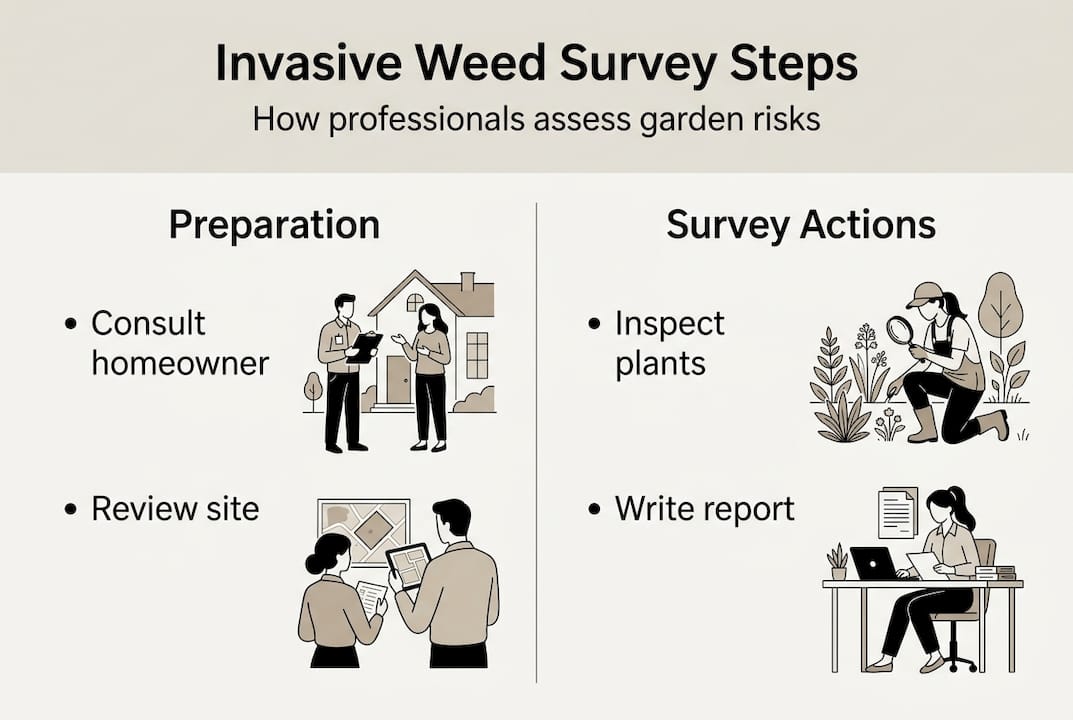
The typical survey process involves several stages:
| Stage | Activities | Timeline |
|---|---|---|
| Initial consultation | Discuss concerns, review property details, schedule site visit | 1-2 days |
| Site inspection | Visual assessment, photography, boundary mapping, neighbouring land review | 2-4 hours |
| Laboratory analysis | Soil sampling and testing if identification uncertain | 5-7 days |
| Report preparation | Detailed findings, risk assessment, treatment recommendations, cost estimates | 3-5 days |
| Follow-up advice | Discuss options, answer questions, provide contractor recommendations | Ongoing |
Surveyors produce comprehensive reports categorising infestations using the Royal Institution of Chartered Surveyors (RICS) classification system. Category 1 indicates Japanese Knotweed within the property boundary or within seven metres, posing immediate risk. Category 2 covers infestations between seven and fifteen metres, presenting moderate risk. Category 3 identifies growth beyond fifteen metres with minimal current threat. Category 4 confirms no Japanese Knotweed detected within survey scope.
Survey results directly affect property transactions and mortgage approvals. Most lenders require Category 1 and 2 properties to have professional management plans with insurance-backed guarantees before approving loans. Treatment costs and timescales influence property valuations, with severe infestations potentially reducing values by ten to fifteen percent. Sellers must disclose known invasive weed presence on the TA6 property information form, with non-disclosure risking legal action and transaction collapse.
Choosing a qualified surveyor ensures accurate identification and reliable advice:
- Verify membership of professional bodies like RICS or the Property Care Association
- Check experience specifically with invasive weed surveys, not just general property inspection
- Request sample reports and client references for similar properties
- Confirm professional indemnity insurance coverage for survey work
- Ask about follow-up support and treatment plan development services
Pro Tip: Schedule surveys during the growing season from April to October when Japanese Knotweed is actively growing and most visible. Winter surveys can miss infestations entirely, as dead canes blend with other vegetation and provide limited identification features.
Survey costs typically range from £150 to £500 depending on property size and complexity. This investment protects against far greater expenses from undetected infestations, failed mortgage applications, and legal disputes. Surveys also provide baseline documentation for treatment monitoring and future property sales.
Best practices for ongoing management and prevention
Sustaining control over invasive weeds requires consistent monitoring, preventive measures, and prompt intervention when regrowth appears. Long-term management protects your property investment and prevents costly reinfestations.
Routine inspection schedules help catch regrowth early:
- Walk property boundaries monthly during growing season, checking for new shoots or suspicious growth patterns
- Inspect previously treated areas weekly for the first year, then fortnightly in subsequent years
- Monitor neighbouring properties for invasive weed signs that might spread to your land
- Document findings with dated photographs to track changes over time
- Maintain detailed records of all treatments, inspections, and professional consultations
Root barrier installation provides physical containment for persistent infestations or prevents spread from neighbouring properties. These high-density polyethylene membranes extend at least two metres deep and form impenetrable barriers to rhizome growth. Professional installation ensures proper depth, overlap joints, and integration with existing structures. Barriers require annual inspection for damage or displacement, particularly after severe weather or ground disturbance.
Best practices include continuous monitoring, root barrier installation, and early intervention to prevent invasive weed return. Garden design choices also influence prevention success. Maintaining healthy, dense ground cover leaves fewer opportunities for invasive weed establishment. Mulching bare soil areas and promptly addressing drainage issues that create favourable conditions for invasive species reduces vulnerability.
Legal responsibilities accompany invasive weed management. The Wildlife and Countryside Act 1981 makes it an offence to plant or cause Japanese Knotweed to grow in the wild. You must take reasonable steps to prevent spread to neighbouring properties, with failure potentially resulting in community protection notices, prosecution, and unlimited fines. The Anti-social Behaviour, Crime and Policing Act 2014 empowers local authorities to issue community protection notices requiring invasive weed treatment.
Property owners must disclose Japanese Knotweed presence on the TA6 form during sales. Deliberately concealing infestations constitutes misrepresentation, exposing you to legal claims from buyers and potential rescission of the sale contract. Mortgage fraud charges may apply if non-disclosure affects lending decisions.
Seek professional help when:
- Infestations exceed ten square metres or involve multiple plants
- Growth appears within seven metres of buildings, boundaries, or utilities
- DIY treatment attempts show no progress after one full growing season
- You need insurance-backed guarantees for mortgage compliance or property sales
- Neighbouring properties have unmanaged infestations threatening your land
- Legal disputes arise regarding responsibility or treatment costs
Professional contractors provide treatment plans, regular monitoring, and guarantees typically spanning ten years. Insurance-backed warranties remain valid even if the contractor ceases trading, protecting your investment and satisfying lender requirements.
Learn more and get professional support
Managing invasive weeds effectively requires expertise, specialised equipment, and long-term commitment. Professional support ensures you protect your property whilst meeting legal obligations and mortgage lender requirements.
Japanese Knotweed Agency pioneered chemical-free knotweed treatment using innovative thermal technology that delivers up to 5000 volts directly to plants. This approach causes internal cell damage and depletes rhizome energy reserves without introducing chemicals into your garden. Our services extend across England, Wales, and Ireland, with experienced teams providing root barrier installation and excavation works when required.
Comprehensive property surveys identify invasive weeds early and inform treatment decisions. Our qualified surveyors produce detailed reports meeting RICS standards and lender requirements, giving you confidence in property transactions and management planning. Visit our frequently asked questions for answers to common homeowner concerns, or contact our specialists for personalised advice tailored to your property’s specific needs.
Frequently asked questions
What is Japanese Knotweed and why is it a problem?
Japanese Knotweed is a fast-growing invasive plant from East Asia with bamboo-like stems and heart-shaped leaves. Its extensive underground rhizome network damages building foundations, drainage systems, and hardstanding whilst spreading up to seven metres from visible growth. Properties with infestations often face mortgage rejection and reduced valuations.
How does chemical-free treatment differ from traditional methods?
Chemical-free methods like thermal treatment and mechanical cutting avoid introducing herbicides into soil and groundwater. These approaches protect beneficial insects, wildlife, and garden ecosystems whilst allowing immediate access to treated areas. They require longer treatment periods but deliver effective results without environmental harm.
When should I get a property survey for invasive weeds?
Schedule surveys before purchasing property, when you suspect invasive weed presence, or if neighbours have confirmed infestations. Growing season surveys from April to October provide most accurate identification. Early detection through professional surveys prevents costly treatment delays and protects property transactions.
Can I install a root barrier myself, and is it effective?
Root barriers effectively contain Japanese Knotweed rhizomes when installed at least two metres deep with properly sealed joints. DIY installation is technically possible but professional expertise ensures correct depth, positioning, and integration with existing structures. Improper installation creates gaps allowing rhizome penetration and wasted investment.