


Most British homebuyers do not realise that Japanese Knotweed can threaten property values and mortgage approvals in England and Wales. The presence of this rapid-growing plant at even 1 percent of UK properties has caused lenders to tighten requirements and insurers to deny coverage. If you want to keep your investment safe, understanding how chemical-free knotweed surveys work gives you the confidence to meet legal obligations and secure a future free from costly surprises.
Table of Contents
- Understanding Knotweed Surveys And Their Purpose
- Types Of Knotweed Surveys And Methods Used
- Legal Obligations During Property Transactions
- Risks Of Undetected Knotweed For Homebuyers
- Non-Chemical Approaches To Knotweed Management
Key Takeaways
| Point | Details |
|---|---|
| Importance of Knotweed Surveys | Professional surveys are crucial for identifying Japanese Knotweed infestations, protecting property value and legal compliance. |
| Advanced Survey Techniques | Utilising innovative methods such as ground-penetrating radar enhances detection and risk assessment for property owners. |
| Legal Responsibilities | Buyers and sellers must disclose knotweed presence to avoid legal repercussions and ensure mortgage approvals. |
| Non-Chemical Management Strategies | Emerging electrical eradication technologies offer effective, environmentally responsible alternatives to traditional herbicides. |
Understanding Knotweed Surveys And Their Purpose
Knotweed surveys represent a critical safeguard for homeowners and property buyers across the United Kingdom. These specialised ecological assessments provide essential insights into potential Japanese Knotweed infestations that could significantly impact property value, structural integrity, and legal compliance. Comprehensive surveys help identify the precise location, extent, and potential risks associated with this invasive plant species.
A professional knotweed survey serves multiple strategic purposes beyond simple plant identification. Surveyors meticulously map the plant’s growth, assess potential damage to foundations, evaluate underground rhizome networks, and determine the most appropriate treatment strategies. These detailed investigations are particularly crucial during property transactions, as mortgage lenders and insurance providers increasingly require comprehensive documentation about potential knotweed risks.
The survey process typically involves thorough site inspections by trained ecological specialists who understand the complex growth patterns of Japanese Knotweed. Experts examine both visible above-ground vegetation and potential underground rhizome systems, using specialised techniques to accurately assess infestation levels. Professional surveys will produce detailed reports that outline exact plant locations, estimated spread, potential structural impacts, and recommended management strategies for property owners.
Pro tip: Always request a professional survey report that includes a comprehensive management plan and potential treatment options before purchasing a property with suspected knotweed presence.
Types Of Knotweed Surveys And Methods Used
Professional knotweed surveys in the United Kingdom encompass multiple sophisticated methodologies designed to comprehensively assess and document potential Japanese Knotweed infestations. Visual identification techniques remain the foundational approach, involving trained ecological specialists who meticulously examine site conditions during different seasonal growth stages to determine precise plant presence and extent.
The survey methodologies typically incorporate advanced diagnostic approaches, including physical site inspections, historical land use research, and detailed mapping of both visible vegetation and potential underground rhizome networks. Advanced survey techniques now include innovative technologies such as ground-penetrating radar and thermal imaging, which enable experts to detect knotweed growth beyond surface-level observations. These comprehensive assessments help property owners and developers understand potential structural risks, environmental impacts, and legal compliance requirements associated with knotweed presence.
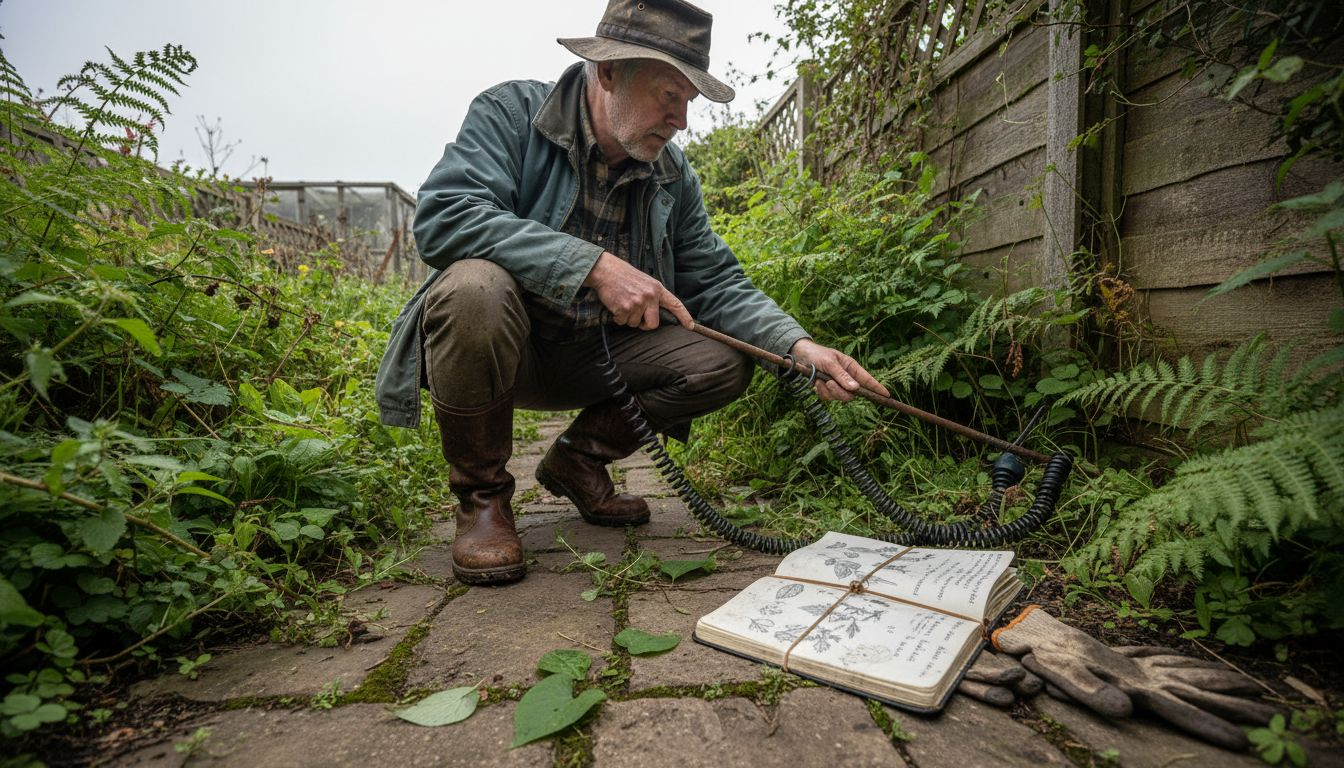
Recent developments in survey methods have introduced groundbreaking alternatives to traditional approaches. Innovative eradication trials by organisations like the North Wales Wildlife Trust demonstrate chemical-free treatment strategies, including electric pulse technologies that can safely eliminate knotweed within a single year. These emerging survey techniques not only identify knotweed presence but also provide environmentally responsible management strategies that minimise ecological disruption and support sustainable property development practices.
Pro tip: Request a comprehensive survey report that includes both surface and underground mapping, treatment recommendations, and long-term management strategies to protect your property investment.
Here is a summary comparing traditional and advanced Japanese Knotweed survey techniques:
| Method Type | Key Tools Used | Detection Capability | Common Application |
|---|---|---|---|
| Traditional Survey | Visual inspection, site visits | Above-ground plant matter | Initial site assessment |
| Advanced Diagnostic | Ground-penetrating radar, thermal imaging | Subsurface rhizome detection | Detailed risk validation |
| Historical Records Check | Land use history review | Previous infestations | Long-term monitoring |
| Chemical-free Innovation | Electric pulse, mechanical barriers | Non-chemical eradication | Sustainable management |
Legal Obligations During Property Transactions
Property transactions involving Japanese Knotweed in the United Kingdom are governed by a complex set of legal requirements that demand transparency and proactive management. Legal frameworks established by legislation like the Wildlife and Countryside Act 1981 impose significant obligations on property sellers and buyers, making full disclosure of knotweed presence a critical legal responsibility.
The legal obligations surrounding Japanese Knotweed extend beyond simple disclosure, encompassing comprehensive responsibilities for preventing environmental spread and potential structural damage. Mortgage lenders have become increasingly stringent, often requiring detailed survey reports and comprehensive management plans before approving property transactions. Sellers are legally required to declare any known knotweed presence, with potential legal consequences for intentional concealment or misrepresentation of site conditions.
Mortgage providers and legal professionals now treat Japanese Knotweed as a significant risk factor, implementing rigorous assessment protocols that can directly impact property value and transaction viability. Potential buyers must conduct thorough due diligence, including professional surveys and risk assessments, to understand the full implications of knotweed presence. Failure to address these legal requirements can result in substantial financial penalties, mortgage rejections, and potential legal disputes between property buyers and sellers.
Pro tip: Always obtain a professional Japanese Knotweed survey and management plan before finalising any property transaction to protect your legal and financial interests.
Risks Of Undetected Knotweed For Homebuyers
Property valuation risks associated with undetected Japanese Knotweed can be catastrophic for unsuspecting homebuyers in the United Kingdom. Studies indicate approximately 1% of UK properties harbour knotweed infestations, with potential consequences ranging from substantial financial losses to significant structural damage. The presence of this invasive plant can dramatically reduce property market value and create long-term complications for homeowners.
The financial implications of undetected knotweed extend far beyond initial purchase price considerations. Mortgage lenders have become increasingly cautious, often refusing to provide financing for properties with known or suspected knotweed infestations. Potential buyers may face unexpected remediation costs, which can range from thousands to tens of thousands of pounds, depending on the extent of the infestation and required treatment strategies. Ecological research demonstrates that knotweed can cause significant structural damage, compromising foundations, driveways, and building infrastructure.
Legal and insurance complications further compound the risks for homebuyers. Many property insurance policies do not cover knotweed-related damages, leaving homeowners personally responsible for extensive and expensive eradication efforts. The stigma associated with knotweed can create additional challenges, potentially making properties difficult to sell in the future and reducing overall market attractiveness. Professional surveyors and conveyancers now routinely incorporate specialized knotweed detection protocols to protect buyers from these substantial risks.
Pro tip: Always commission a comprehensive Japanese Knotweed survey before completing any property purchase to uncover potential hidden risks and protect your financial investment.
The following table highlights the main risks of undetected Japanese Knotweed during property purchase:
| Risk Category | Description | Typical Impact |
|---|---|---|
| Financial Cost | High treatment and remediation expenses | Can exceed £10,000 |
| Mortgage Approval | Lender reluctance to fund affected property | Purchase delays or refusal |
| Structural Damage | Damage to foundations and driveways | Long-term repairs needed |
| Insurance Coverage | Many policies exclude knotweed damage | Owner bears all costs |
| Resale Value | Market stigma reduces property attractiveness | Difficult to resell |
Non-Chemical Approaches To Knotweed Management
Innovative non-chemical knotweed management strategies are transforming invasive plant control across the United Kingdom. Traditional herbicide treatments are increasingly being replaced by advanced technological approaches that offer more environmentally responsible and targeted solutions. These emerging techniques focus on precise plant eradication while minimising ecological disruption and protecting surrounding vegetation.
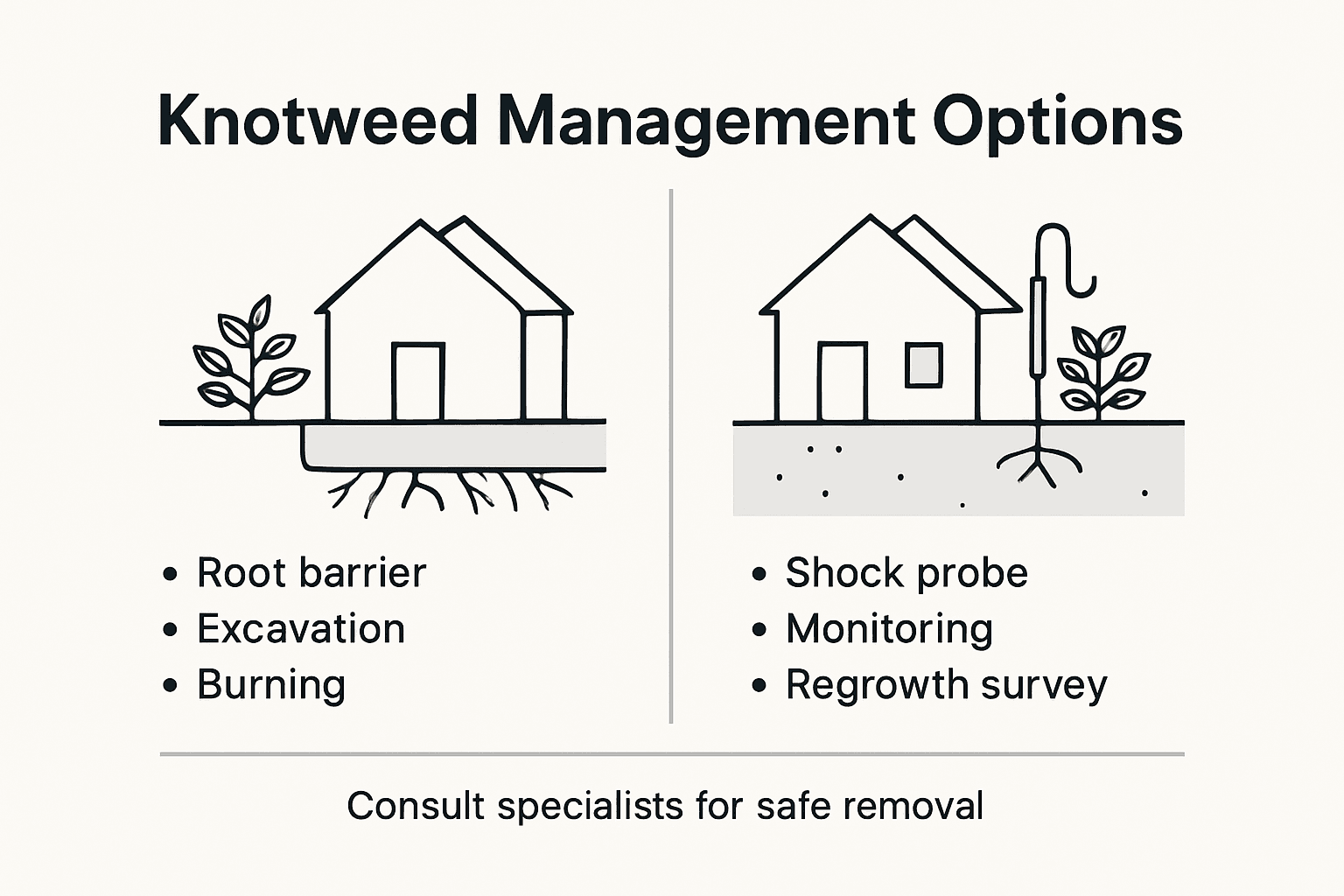
The electrical eradication technologies represent a groundbreaking advancement in knotweed management. Pioneering methods like thermo-electric treatment deliver targeted electrical pulses directly into the plant’s root system, causing cellular destruction without introducing harmful chemicals into the environment. Experimental trials by conservation organisations demonstrate that these techniques can effectively eliminate knotweed within a single year, offering a faster and more sustainable alternative to traditional chemical interventions.
Non-chemical approaches also encompass mechanical removal techniques such as root barrier installations, extensive excavation, and targeted land management strategies. These methods involve physically removing contaminated soil, implementing robust root barriers, and creating controlled environments that prevent knotweed re-establishment. By combining technological innovations with strategic landscape management, property owners can achieve comprehensive knotweed control while supporting broader environmental conservation objectives.
Pro tip: Consult ecological specialists who can design a tailored, chemical-free knotweed management plan specific to your property’s unique environmental conditions.
Protect Your Property with Expert Knotweed Surveys and Chemical-Free Solutions
Navigating the risks of Japanese Knotweed can be stressful and costly for homebuyers across the United Kingdom. This article highlights the critical need for thorough knotweed surveys to uncover hidden infestations and protect your financial investment and legal interests. If you are seeking a comprehensive, reliable, and eco-friendly approach to invasive weed management consider the services provided by Japanese Knotweed Agency. They specialise in detailed property surveys combined with pioneering chemical-free treatments designed to eradicate knotweed safely and effectively.

Take control of your property’s future today by opting for a professional survey and sustained management plan. The Japanese Knotweed Agency delivers advanced electrical eradication treatments that target the invasive rhizome system without harmful chemicals. Alongside expert surveys, they offer root barrier installations and excavation works across England, Wales, and Ireland, ensuring long-term protection against knotweed damage. Don’t risk costly structural damage or financing issues. Start with a professional survey and experience peace of mind knowing your property is in the right hands.
Frequently Asked Questions
What is the purpose of a knotweed survey?
A knotweed survey assesses potential Japanese Knotweed infestations to identify their location, extent, and risks that may affect property value and structural integrity.
Why are knotweed surveys important for homebuyers?
Knotweed surveys are crucial for homebuyers because they provide the necessary documentation to understand potential knotweed risks, ensuring legal compliance and protecting financial interests in property transactions.
What methods are used in knotweed surveys?
Knotweed surveys utilise a range of methods, including visual inspections, historical land use research, and advanced technologies like ground-penetrating radar to detect both surface and subsurface knotweed growth.
What are the risks of not conducting a knotweed survey?
Failing to conduct a knotweed survey can lead to substantial financial costs from treatment and remediation, potential mortgage denial, structural damage, and difficulties in reselling the property due to market stigma.