

TL;DR:
- Japanese knotweed’s extensive underground rhizome network makes surface removal ineffective for long-term control. Subsurface methods like barriers, thermo-electric treatment, and excavation require professional planning, accurate surveying, and ongoing monitoring to succeed. Proper identification, expert advice, and evidence-based strategies are essential to prevent spread and protect property value.
Japanese knotweed is one of the most deceptive invasive plants you can encounter on your property. Above ground, cutting it back may seem like progress. Below ground, however, an extensive rhizome network continues to grow undisturbed, storing energy and spreading laterally across your land. Rhizomes grow several metres deep, which is why surface methods consistently fail to achieve lasting results. This guide explains what subsurface weed control is, how it works for knotweed specifically, and the practical steps you can take to manage it properly using chemical-free solutions.
Table of Contents
- What is subsurface weed control?
- How subsurface control works: methods and mechanisms
- Japanese knotweed: why subsurface methods are different
- Practical steps for homeowners: integrating subsurface control
- Why experts urge combining subsurface and survey solutions
- Get help with subsurface and chemical-free knotweed control
- Frequently asked questions
Key Takeaways
| Point | Details |
|---|---|
| Surface removal isn’t enough | Underground rhizomes mean weeds like Japanese knotweed regrow if only the top is cut. |
| Subsurface barriers help, but aren’t final | Root barriers reduce spread but must be paired with other expert strategies for knotweed. |
| DIY is rarely decisive for knotweed | Persistent rhizome networks demand professional assessment and ongoing monitoring. |
| Non-chemical control works for most weeds | Many garden weeds respond to barriers and mulching, but knotweed is an exception. |
| Surveys enable long-term success | Property surveys map hidden risks so you can target subsurface control where it counts. |
What is subsurface weed control?
Most homeowners begin their weed management journey with the obvious approach: remove what they can see. They pull stems, cut canes, and clear surface growth. For common garden weeds, this works reasonably well. For Japanese knotweed, it barely scratches the surface of the actual problem.
Subsurface weed control refers to any method that specifically targets the underground organs of a plant, including its roots, rhizomes (underground stems that store energy and spread the plant), tubers, and bulbs. Rather than addressing visible shoots, subsurface control goes directly after the biological engine driving regrowth.
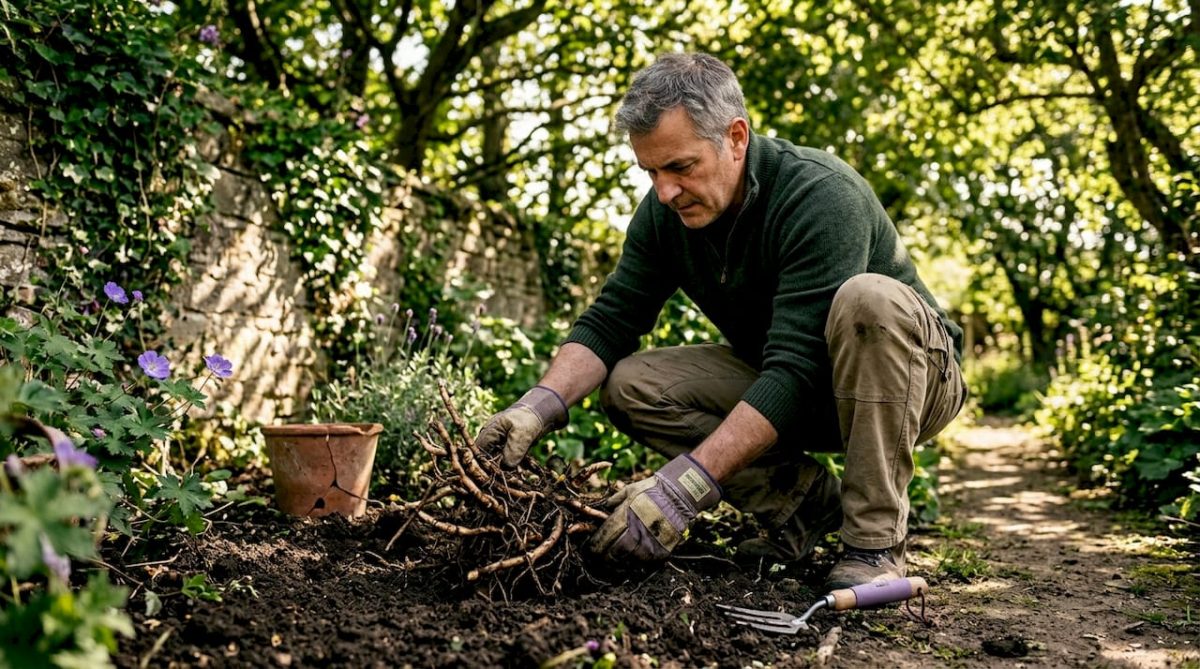
The distinction matters enormously. When you cut Japanese knotweed above ground, the rhizome network below remains entirely intact. It simply redirects its stored energy to produce new shoots, often with renewed vigour. Left untreated underground, the plant is not in retreat; it is merely pausing.
| Method type | Target area | Effective for knotweed? |
|---|---|---|
| Cutting or strimming | Above-ground shoots | No |
| Surface mulching | Shallow roots only | Limited |
| Deep excavation | Underground rhizomes | Partial |
| Root barriers | Lateral rhizome spread | Yes, with professional install |
| Thermo-electric treatment | Internal rhizome tissue | Yes, chemical-free option |
Japanese knotweed rhizomes can be several metres deep underground, forming a dense, interlocking network that extends well beyond the visible plant. Understanding dormant knotweed risks during winter months is equally important, as the plant appears dead above ground while its underground network remains entirely active.
“Japanese knotweed does not behave like an ordinary garden weed. Its underground architecture is its true form, and any control strategy that ignores this will ultimately fail.”
Subsurface control is therefore not an advanced or optional step. For knotweed specifically, it is the only legitimate starting point. Familiarising yourself with knotweed containment methods gives you a clearer picture of how these strategies are structured in practice.
How subsurface control works: methods and mechanisms
There is a range of subsurface weed control methods available, and they vary significantly in their suitability depending on the species you are dealing with. Understanding the difference between approaches is essential before making any decisions about your property.
Root barriers and physical membranes are installed underground to prevent rhizomes from spreading laterally into adjacent areas. A professional-grade weed barrier must be robust enough to withstand significant pressure, as knotweed can push through inadequate membranes over time. When correctly installed at sufficient depth and with properly sealed joins, barriers serve as a containment tool within a broader management plan.
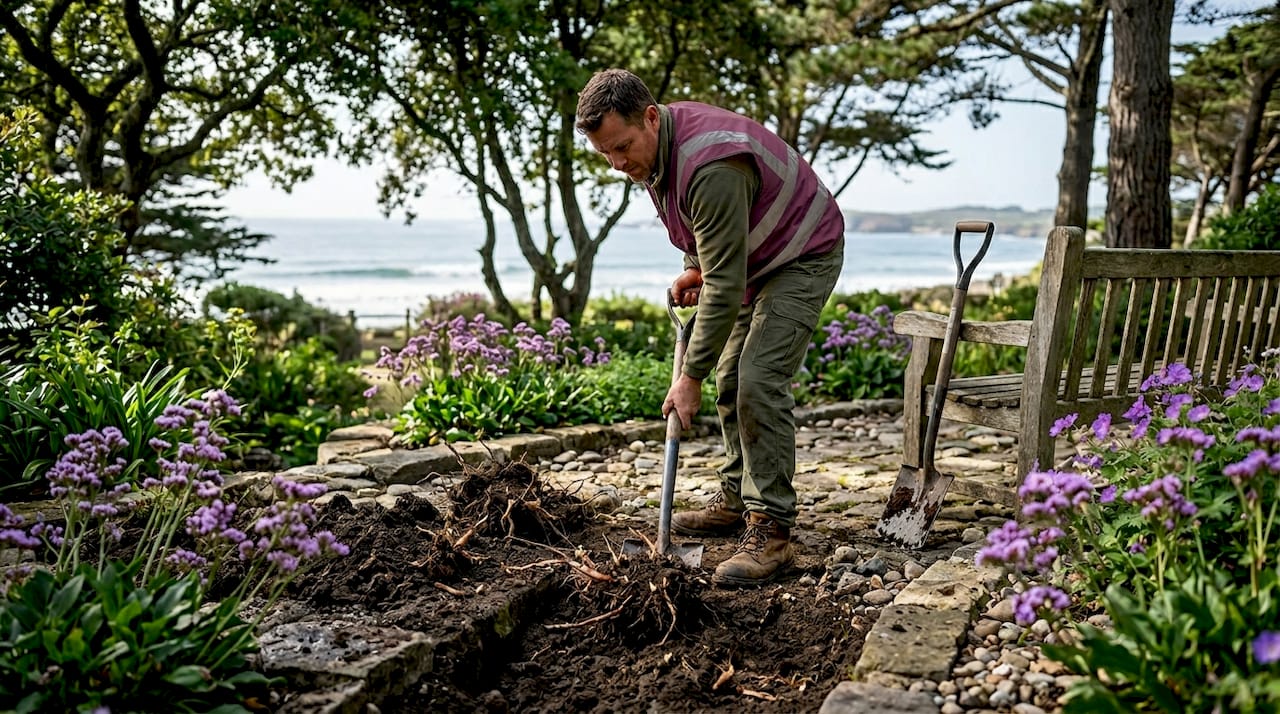
Deep excavation involves physically removing the soil mass containing rhizomes. In theory, this removes the problem entirely. In practice, it is rarely decisive on its own for knotweed, because even a small fragment of rhizome left in the ground can regenerate into a new plant. Excavation works best when combined with expert verification of rhizome removal and careful disposal of contaminated soil, which is classified as controlled waste in England and Wales.
Soil solarisation uses heat from the sun trapped beneath plastic sheeting to kill plant material. It is an effective, chemical-free option for shallow-rooted annual weeds and some perennials. However, for knotweed, the rhizome depth renders solarisation ineffective at reaching the source of the problem.
Thermo-electric treatment delivers direct electrical energy at up to 5,000 volts into the plant and its rhizome network, causing internal cell damage and progressively depleting the energy reserves stored underground. This approach is entirely chemical-free, making it suitable for properties near watercourses, in sensitive ecological zones, or where residents prefer to avoid herbicides entirely.
Non-chemical weed control methods such as barriers and mulching are generally effective for many garden weeds, though knotweed demands a more strategic and layered approach.
- Assess the extent of underground spread before choosing any method.
- Rule out surface-only techniques as a primary strategy for knotweed.
- Consult a specialist to determine whether barriers, thermo-electric treatment, or excavation is most suitable.
- Confirm correct installation depth and specification for any barrier system.
- Establish a monitoring schedule to detect any signs of rhizome re-emergence.
Pro Tip: If you are installing a root barrier as part of a management plan, ensure all joins and edges are sealed precisely. A gap of just a few centimetres is sufficient for knotweed rhizomes to exploit and breach the barrier over time.
Understanding the principles behind preventing knotweed spread is a valuable complement to any subsurface strategy, and a sustainable knotweed control approach ensures that your management plan remains environmentally responsible throughout.
Japanese knotweed: why subsurface methods are different
Even within the category of subsurface weed control, Japanese knotweed occupies a uniquely challenging position. This is not simply a resilient weed. It is a highly adaptive, structurally complex invasive species with biological traits that make standard eradication protocols consistently unreliable.
Consider the biology. A single rhizome fragment as small as one centimetre, buried deep in soil, is capable of producing an entirely new plant. This means that even well-executed excavation can leave viable material behind. Cutting or digging alone cannot reliably achieve knotweed control due to this rhizome regrowth potential. Any disturbance that moves contaminated soil across a site or into adjacent land risks spreading the infestation further.
Key reasons why Japanese knotweed demands a specialist approach:
- Rhizomes extend laterally up to seven metres from the visible plant crown.
- Root depth frequently exceeds two metres, placing viable material well below standard digging depth.
- Dormant rhizome material can remain viable in soil for extended periods.
- Soil disturbance during DIY removal commonly spreads fragments to previously unaffected areas.
- Standard garden membranes are not rated for the pressure knotweed rhizomes can exert.
Statistic callout: Japanese knotweed can reduce a property’s value and may affect mortgage lending decisions, making early, effective intervention a financial priority as well as an environmental one.
Containment and barrier installation must always be integrated within a broader eradication plan rather than treated as a standalone solution. A barrier without monitoring is a temporary measure. Without follow-up assessment, you may not detect when and where the plant has found a way through.
Pro Tip: Never attempt to compost knotweed material removed from your garden. Stem, leaf, and root fragments remain viable and will spread the plant further. All removed material must be disposed of as controlled waste at a licensed facility.
Understanding the full property risks of knotweed is essential context for any homeowner weighing up their options. The plant’s impact extends beyond the garden and into mortgage valuations, sale negotiations, and neighbour disputes. Reviewing removal best practices will give you a clear understanding of what responsible treatment involves at each stage.
Practical steps for homeowners: integrating subsurface control
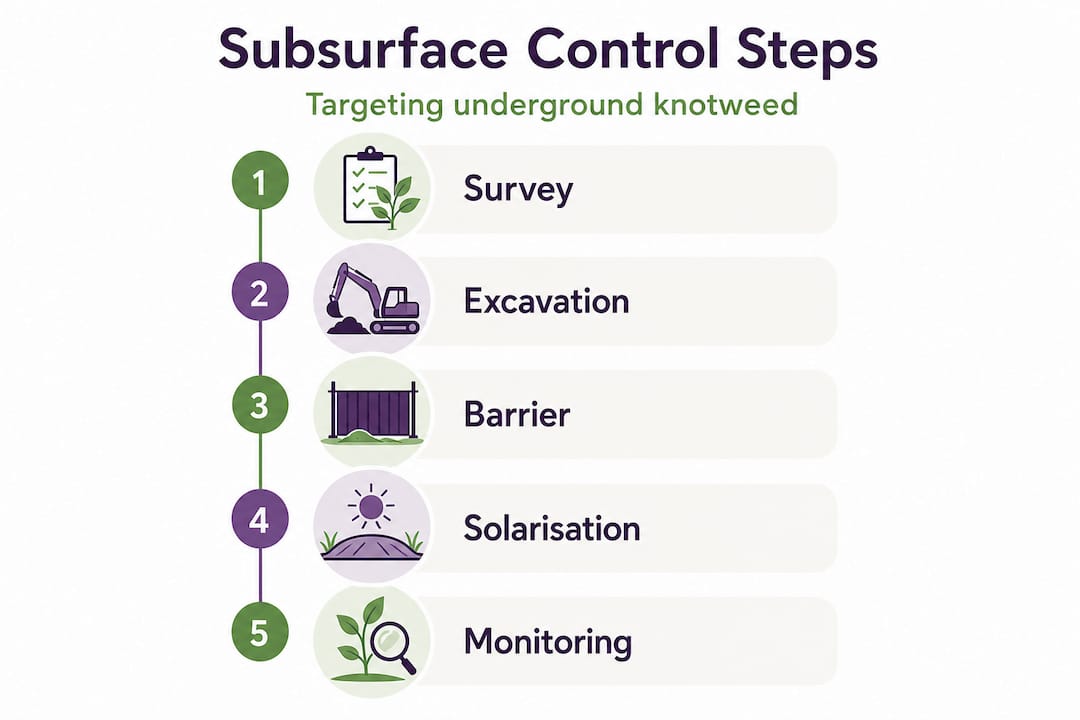
Knowing that subsurface control is necessary is one thing. Knowing how to integrate it safely and effectively into your specific situation is another. The following sequence sets out the practical steps homeowners in England, Wales, and Ireland should follow before committing to any treatment approach.
-
Identify the species with certainty. Before investing in any subsurface control, confirm that you are dealing with Japanese knotweed and not a similar-looking plant such as bindweed or Russian vine. Misidentification leads to wasted effort and missed intervention windows.
-
Commission a professional property survey. A thorough survey will map the visible infestation, estimate underground spread, identify proximity to structures or boundaries, and determine whether the rhizome network has already extended into neighbouring land. Expert intervention and monitoring are essential precisely because rhizome networks are invisible and often larger than homeowners expect.
-
Evaluate subsurface options based on survey findings. Root barriers may be appropriate to protect a boundary or structure. Thermo-electric treatment may be selected for its chemical-free credentials and its ability to target rhizome tissue directly. Excavation may be recommended where a site is to be built upon.
-
Implement treatment with professional oversight. Whether the chosen method involves barrier installation, thermo-electric treatment, or excavation, professional delivery ensures that the work is carried out to the specification required and that documentation is produced. This documentation can be critical for mortgage and insurance purposes.
-
Establish a long-term monitoring programme. Subsurface control is not a single event. Knotweed management requires follow-up visits to assess treatment response, detect any regrowth, and adapt the plan accordingly. Without monitoring, even well-executed initial work can be undermined.
-
Review and adjust the plan annually. Treatment seasons matter. Knotweed responds differently in spring growth phases versus late summer when the plant is transporting energy back into rhizomes. A well-structured plan accounts for seasonal timing to maximise the effectiveness of each treatment delivery.
Pro Tip: Review the answers to common homeowner questions in the knotweed FAQ before your first consultation. Arriving prepared with an understanding of your site, property boundaries, and any previous treatment history will make the survey process significantly more efficient. You can also explore our chemical-free survey guide for a detailed overview of what to expect.
Why experts urge combining subsurface and survey solutions
There is a persistent belief among homeowners that installing a root barrier is a definitive solution. Lay it deep enough, seal it well, and the problem is contained. This view, whilst understandable, significantly underestimates what Japanese knotweed is capable of over time.
In our experience, homeowners routinely discover that barriers installed without prior survey work are placed incorrectly, sealed inadequately, or positioned in the wrong location relative to the actual rhizome mass. The survey is not a bureaucratic formality. It is the diagnostic step that makes every subsequent action meaningful.
Non-chemical approaches, including thermo-electric treatment and root barriers, are genuinely effective tools. But their effectiveness is entirely conditional on accurate deployment. A barrier installed five metres from the centre of an infestation that extends seven metres does not contain the problem. It divides it. And divided knotweed does not become less vigorous.
The most reliable long-term outcomes we see consistently share one characteristic: they are built around evidence. Survey findings drive treatment selection. Treatment responses drive plan adjustment. Monitoring data confirms whether the rhizome network is genuinely depleting or simply pausing. Without that feedback loop, you are managing an invasive species in the dark.
Containment explained in detail reveals how even well-intentioned containment strategies require precise specification and professional review to achieve lasting results. The homeowners who achieve the best outcomes are those who commit to ongoing, evidence-driven management rather than assuming a single intervention will resolve the matter permanently.
Get help with subsurface and chemical-free knotweed control
If you recognise the signs of Japanese knotweed on your property, or you have already attempted surface removal without success, the next step is expert assessment and a properly structured treatment plan.
Japanese Knotweed Agency specialises in chemical-free knotweed solutions for homeowners across England, Wales, and Ireland, delivering thermo-electric treatment, root barrier installation, and excavation works. Our knotweed root barriers guide provides a thorough overview of specification options and what professional installation involves. For homeowners at the beginning of the process, a professional property survey gives you the accurate picture you need before committing to any treatment approach. Contact us to arrange a survey and take confident, informed action.
Frequently asked questions
Can subsurface barriers alone remove Japanese knotweed?
No. Whilst barriers limit lateral spread, barriers alone are insufficient for knotweed eradication and must be combined with complementary methods and professional monitoring.
How deep can Japanese knotweed roots grow underground?
Knotweed rhizomes extend metres deep into the soil, which is why shallow digging consistently fails to remove the plant fully.
Do subsurface methods work on all invasive weeds?
Most garden weeds respond well to non-chemical subsurface controls, but Japanese knotweed is a recognised exception that requires expert planning and a structured management strategy.
Is a professional survey necessary before installing barriers?
A survey is strongly advised because managing knotweed’s rhizome networks requires accurate mapping of underground spread before any barrier placement can be effective.