


TL;DR:
- PFAS are highly persistent chemicals called “forever chemicals” that require certified filtration and proactive testing.
- Regulatory limits for PFAS in drinking water are set at 4 parts per trillion for PFOA and PFOS, with others at 10 ppt, by 2025.
- Effective removal technologies include reverse osmosis and granular activated carbon, both requiring proper maintenance and testing.
PFAS, or per- and polyfluoroalkyl substances, are a group of over 12,000 synthetic chemicals defined by their near-indestructible carbon-fluorine bonds, which is precisely why scientists call them “forever chemicals.” This pfas reduction guide 2025 covers everything you need to act: the enforceable regulatory limits now in force, the certified filtration technologies that genuinely work, and the practical lifestyle changes that reduce your exposure at home. The good news is that effective PFAS removal solutions exist today, and you do not need to wait for public water systems to catch up before protecting your household.
What are the current PFAS regulatory limits in 2025?
Regulatory limits for PFAS in drinking water are now enforceable, and every homeowner on a public supply needs to understand what they mean. The U.S. EPA’s final drinking water rule sets MCLs at 4.0 ppt for PFOA and PFOS, the two most studied and widely detected PFAS compounds. For other compounds including PFHxS, PFNA, and HFPO-DA, the limit is 10 parts per trillion. Parts per trillion sounds vanishingly small, and it is. One part per trillion is equivalent to one drop of water in 20 Olympic-sized swimming pools. That scale reflects how potent these compounds are at very low concentrations.
These 2025 environmental guidelines carry real deadlines. Public water systems must comply by 2029, with some extensions possible to 2031. That compliance gap matters to you directly. Your tap water may currently exceed these limits without any legal obligation on your supplier to act for several more years. Regulations guide which filtration technology you should choose, because different systems perform differently against different PFAS compounds.
The key regulatory thresholds to know are:
- PFOA and PFOS: 4.0 ppt maximum contaminant level
- PFHxS, PFNA, HFPO-DA: 10 ppt each
- Compliance deadline for public water systems: 2029, with possible extension to 2031
- Private well owners: No federal MCL applies, making independent testing and filtration your sole protection
Which water treatment technologies actually remove PFAS?
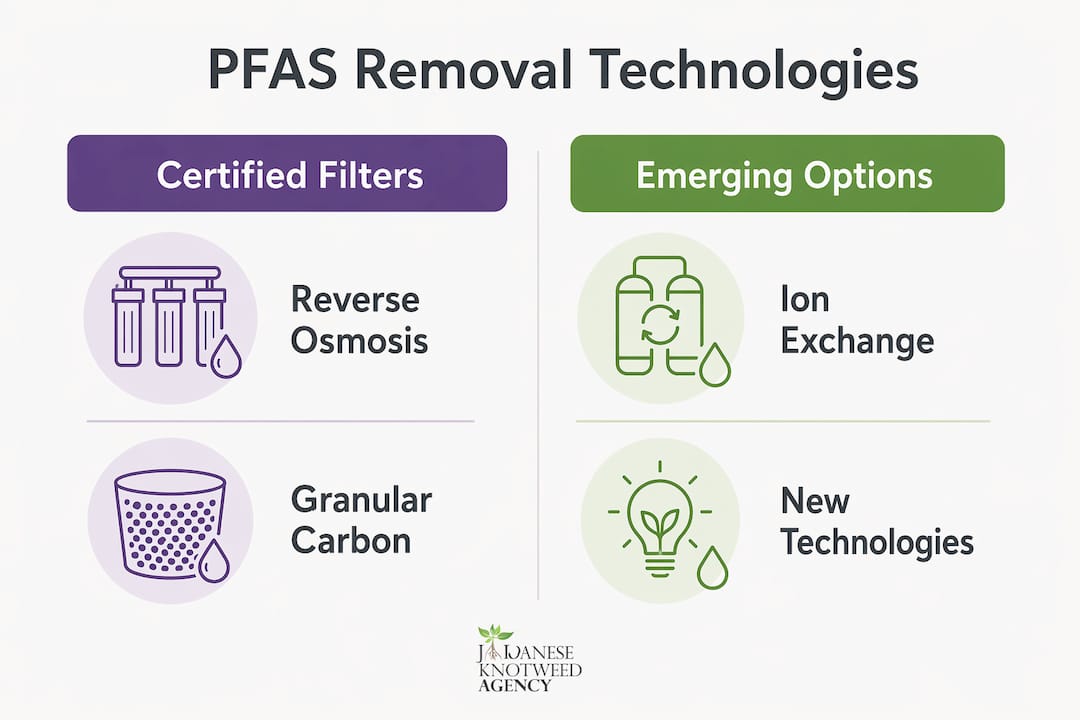
Reverse osmosis and granular activated carbon are the two certified technologies with the strongest evidence base for PFAS removal solutions at home. Understanding how they compare helps you spend your money wisely.
Reverse osmosis: the most thorough option
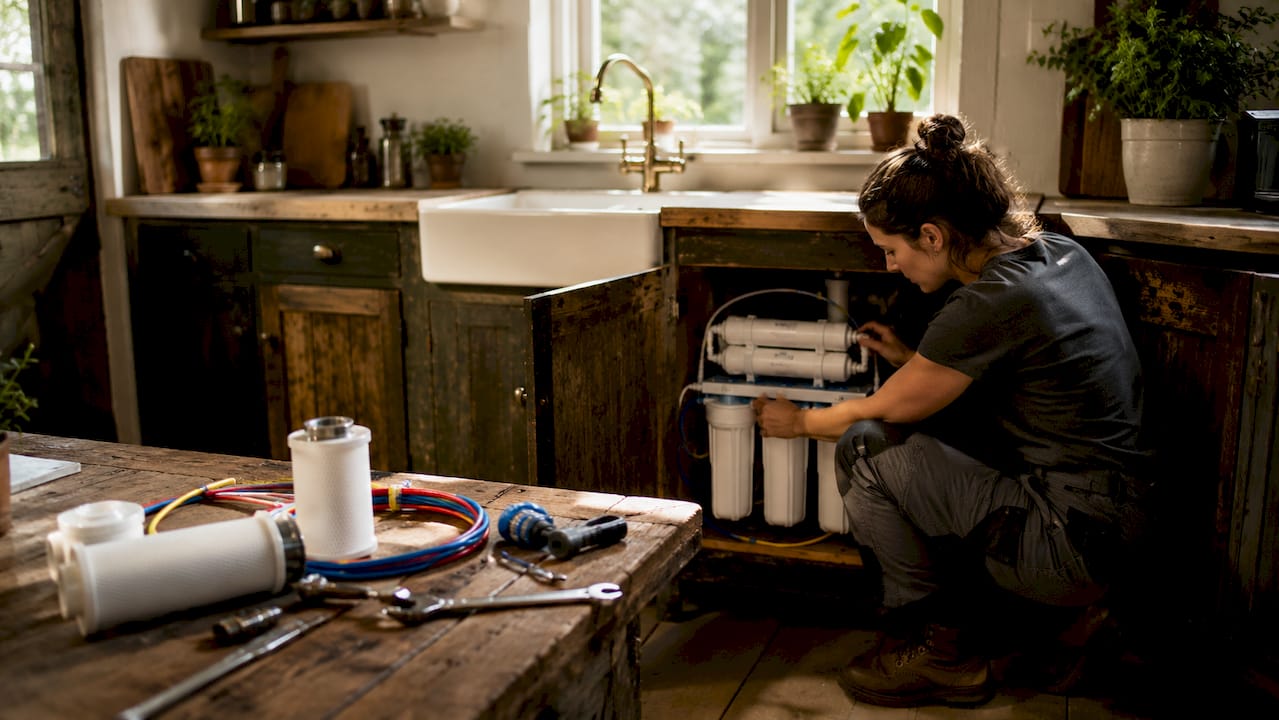
Reverse osmosis systems certified to NSF/ANSI Standard 58 remove 94–99.9% of PFAS compounds, including short-chain variants that many other technologies struggle to capture. RO forces water through a semi-permeable membrane at pressure, physically blocking PFAS molecules regardless of their chain length. That makes it uniquely effective against newer short-chain PFAS compounds, which are increasingly common in recent contamination cases. The trade-off is cost: a quality under-sink RO unit typically costs £150–£400, plus annual membrane and filter replacements.
Granular activated carbon: a reliable secondary layer
Granular activated carbon filters certified to NSF P473 reduce PFAS by 73–96%, depending on contact time, water chemistry, and the specific PFAS compounds present. GAC works through adsorption, binding PFAS molecules to the carbon surface as water passes through. Performance degrades as the carbon saturates, so timely replacement is not optional. A saturated GAC filter can release previously captured PFAS back into your water, which is worse than no filter at all.
Ion exchange resins represent an emerging third option, particularly effective for certain long-chain PFAS. Emerging destruction technologies such as UV photocatalysis offer future potential to mineralise PFAS entirely rather than simply concentrating them in a waste stream, though these are not yet widely available for domestic use.
Pro Tip: Only purchase filters carrying third-party NSF/ANSI certification (Standards 53, 58, or P473). Uncertified filters make unsubstantiated claims. The certification number should appear on the product packaging or the manufacturer’s website.
| Technology | PFAS Removal Rate | Certification | Approximate Cost | Key Limitation |
|---|---|---|---|---|
| Reverse osmosis | 94–99.9% | NSF/ANSI 58 | £150–£400 unit | Membrane replacement needed annually |
| Granular activated carbon | 73–96% | NSF P473 | £50–£200 unit | Saturation reduces performance over time |
| Ion exchange resin | Variable | NSF/ANSI 53 | £200–£500 unit | Less data on short-chain PFAS |
How to test your water for PFAS before buying a filter
Testing your water first is the single most important step before purchasing any filtration system. PFAS levels vary enormously by location, water source, and local industrial history. Buying an expensive RO system when your water tests below 1 ppt may be unnecessary. Equally, relying on a basic GAC filter when your water tests at 15 ppt for PFOA would leave you underprotected.
Follow these steps to test your water reliably:
- Contact your local water supplier. Request their most recent PFAS monitoring data. Suppliers in England and Wales are required to monitor for PFAS under the Drinking Water Inspectorate’s guidance. Ask specifically for PFOA, PFOS, PFHxS, and PFNA results.
- Commission an independent certified laboratory test. Suppliers test at the treatment works, not at your tap. Pipe age and condition can affect results. Laboratories such as ALS Environmental and Eurofins offer residential PFAS water testing kits for £100–£250.
- Interpret your results against the MCLs. If your results show PFOA or PFOS above 4 ppt, or other listed compounds above 10 ppt, you are above the new regulatory threshold. Act accordingly.
- Select your filtration technology based on results. Results above 10 ppt for any compound warrant an RO system. Results between 4–10 ppt may be adequately addressed by a certified GAC filter, provided you maintain it rigorously.
- Retest annually. Contamination levels change. Industrial activity, agricultural runoff, and changes to your water source can all alter PFAS concentrations over time. Annual testing confirms your filter is still performing.
Practical steps to reduce PFAS exposure beyond your tap
Water filtration addresses ingestion, but PFAS enter the body through multiple routes. A thorough approach to how to reduce PFAS exposure covers cookware, packaging, personal care products, and diet.
The most practical changes to make at home include:
- Replace old nonstick cookware. Nonstick pans older than five years should be discarded. Degraded coatings increase PFAS leaching during cooking, particularly at high temperatures. Replace with cast iron, stainless steel, or ceramic alternatives.
- Avoid PFAS-treated food packaging. Microwave popcorn bags, fast food wrappers, and some pizza boxes are commonly treated with PFAS to resist grease. Transfer food to ceramic or glass containers where possible.
- Check personal care products. Waterproof mascara, long-wear foundation, and certain sunscreens contain PFAS for durability. Look for products labelled PFAS-free or check the Environmental Working Group’s Skin Deep database for verified alternatives.
- Increase dietary fibre intake. Dietary fibre may accelerate PFAS elimination from the body by interrupting enterohepatic recirculation, the process by which the liver reabsorbs PFAS from bile. Foods high in soluble fibre including oats, lentils, and apples support this process.
- Maintain your filtration system. Regular professional maintenance of RO membranes and pre-filters prevents fouling and maintains water quality. Set calendar reminders for filter changes rather than relying on taste or appearance to signal saturation.
Pro Tip: When choosing safer alternatives to PFAS in cookware, look for the PFOA-free label as a minimum. For full confidence, choose brands that explicitly certify their products as free from all PFAS compounds, not just PFOA.
Choosing PFAS-free products is not about perfection. It is about reducing the cumulative load from multiple sources simultaneously. Each substitution compounds the benefit.
Key takeaways
Effective PFAS contamination strategies require certified filtration, disciplined maintenance, and product substitution working together to reduce cumulative exposure.
| Point | Details |
|---|---|
| Know your regulatory limits | PFOA and PFOS are limited to 4 ppt; other PFAS to 10 ppt under 2025 standards. |
| Test before you treat | Commission an independent certified lab test before purchasing any filtration system. |
| Choose certified filtration | Only NSF/ANSI 58, 53, or P473 certified filters provide reliable PFAS removal. |
| Replace PFAS sources at home | Discard nonstick cookware older than five years and avoid PFAS-treated packaging. |
| Maintain systems rigorously | Saturated or fouled filters can release PFAS back into water; replace on schedule. |
What i have learned working at the intersection of environmental contamination and property health
The conversation around PFAS contamination strategies tends to focus almost entirely on water filtration, and that focus is understandable. Drinking water is the primary exposure route for most people. But in my experience, the homeowners who achieve the most meaningful reductions are those who treat PFAS as a whole-property concern rather than a tap water problem.
What strikes me most is the maintenance gap. People invest in a quality RO system, feel reassured, and then forget to replace the membrane. A fouled membrane does not just underperform. It can become a liability. The same principle applies to chemical-free environmental management more broadly: the technology is only as good as the discipline behind it.
The emerging destruction technologies are genuinely exciting. UV photocatalysis and electrochemical oxidation are moving from laboratory to field application faster than most people realise. These methods do not just remove PFAS from water. They break the carbon-fluorine bond entirely, addressing the secondary waste problem that conventional filtration creates. That matters because the concentrated PFAS waste from RO systems still requires careful disposal, as outlined in responsible environmental remediation guidance.
My honest recommendation is this: do not wait for your water supplier to act. Test your water now, choose a certified system appropriate to your results, and build maintenance into your household routine. Community engagement matters too. Attending local water quality meetings and requesting PFAS monitoring data from your supplier creates accountability that benefits your entire neighbourhood, not just your household.
— Alan
How Japaneseknotweedagency supports your property’s environmental health
Environmental contamination rarely arrives in isolation. Properties affected by PFAS concerns often face other environmental risk factors, including invasive plant species that can compromise drainage, soil integrity, and property value simultaneously.

Japaneseknotweedagency carries out professional property surveys for invasive weeds across England, Wales, and Ireland, helping homeowners identify and address environmental risks before they escalate. Our chemical-free treatment approach aligns with the same principles that underpin responsible PFAS management: reduce chemical inputs, protect biodiversity, and deliver lasting results without creating secondary contamination. If you are concerned about your property’s environmental health, a professional survey is the logical first step. Visit our environmental FAQs to understand what a survey covers and how it can protect your investment.
FAQ
What is the safest home filter for PFAS removal?
Reverse osmosis systems certified to NSF/ANSI Standard 58 are the most effective option, removing 94–99.9% of PFAS compounds including short-chain variants. They represent the strongest available domestic PFAS removal solution.
How often should i replace my PFAS water filter?
RO membranes typically require replacement every 12–24 months, while pre-filters need changing every 6–12 months. Granular activated carbon filters certified to NSF P473 degrade as media saturates, so follow the manufacturer’s schedule strictly.
Do PFAS regulations apply to private wells in the UK?
No enforceable MCLs currently apply to private well owners in England and Wales. Private well users are solely responsible for their own testing and treatment, making independent certified laboratory testing particularly important.
Can dietary changes genuinely help reduce PFAS in the body?
Increasing soluble dietary fibre intake may assist PFAS elimination by interrupting enterohepatic recirculation. Foods such as oats, lentils, and apples support this process, though dietary changes work best alongside certified water filtration rather than as a standalone strategy.
Is PFAS contamination a concern for UK homeowners specifically?
Yes. The Drinking Water Inspectorate monitors PFAS in public supplies across England and Wales, and detectable levels have been found in multiple regions. Homeowners near industrial sites, military bases, or agricultural areas using PFAS-containing products face elevated risk and should prioritise independent testing.