
Many homeowners discover Japanese Knotweed on their property and immediately worry about complex, chemical-laden removal processes. The term site remediation often conjures images of heavy machinery, toxic treatments, and months of disruption. However, modern approaches to managing this invasive plant have evolved significantly. Chemical-free methods now offer effective, environmentally responsible solutions that restore land usability without compromising soil health or family safety. This guide demystifies site remediation for homeowners across England, Wales, and Ireland, showing you practical pathways to reclaim your property whilst protecting its value and your peace of mind.
Table of Contents
- Understanding Site Remediation: What It Means For Your Property
- Chemical-Free Site Remediation Methods For Japanese Knotweed Control
- The Role Of Property Survey Assessments In Effective Site Remediation
- How Professional Remediation Affects Land Usability And Property Value
- Explore Chemical-Free Knotweed Solutions And Surveys Tailored For You
Key takeaways
| Point | Details |
|---|---|
| Site remediation restores contaminated land safely | A structured process removes or contains contaminants through assessment, planning, implementation, and monitoring stages |
| Chemical-free methods effectively manage Japanese Knotweed | Excavation, root barriers, and energy-based treatments control Knotweed without harming soil or introducing toxins |
| Professional surveys inform successful remediation plans | Property assessments identify contamination extent, guide treatment selection, and ensure regulatory compliance |
| Proper remediation protects property value | Untreated Knotweed devalues homes and blocks mortgages, whilst professional treatment restores buyer and lender confidence |
| Long-term monitoring ensures lasting results | Ongoing observation confirms treatment effectiveness and prevents reinfestation, securing land usability for years |
Understanding site remediation: what it means for your property
Site remediation might sound technical, but for homeowners facing Japanese Knotweed, it simply means restoring your land to a safe, usable state. Site remediation involves removing, reducing, or containing contaminants in soil to restore safe use through assessment, planning, implementation, verification, and monitoring. When Knotweed invades your garden, its aggressive rhizome network damages foundations, patios, and drainage systems whilst rendering your property difficult to sell or mortgage.
The remediation process follows five essential stages. First, professionals assess the extent of contamination, mapping where Knotweed has spread and identifying affected structures. Second, soil and plant samples undergo testing to confirm species identification and infestation severity. Third, specialists develop a tailored treatment plan considering your property layout, budget, and timeline. Fourth, the chosen method gets implemented, whether excavation, barrier installation, or energy-based treatment. Finally, ongoing monitoring verifies success and catches any regrowth early.
Chemical-free remediation focuses on physical removal or containment rather than herbicide application. This approach particularly suits residential settings where children play, pets roam, and families grow vegetables. You avoid introducing persistent chemicals into your soil whilst achieving effective Knotweed control. Professional assessments before treatment ensure you understand the full scope of work needed.
Following structured invasive weed management steps gives you confidence throughout the process. Each stage builds on the previous one, creating a comprehensive solution rather than a quick fix that fails within months. Understanding these fundamentals helps you ask the right questions when consulting remediation specialists and recognise quality service when you see it.
Chemical-free site remediation methods for Japanese Knotweed control
Homeowners across England, Wales, and Ireland increasingly prefer chemical-free approaches for several compelling reasons. You protect your family’s health, preserve beneficial soil organisms, and avoid the lengthy waiting periods herbicides require before land becomes usable again. Chemical-free treatments provide safe, effective control of invasive plants whilst preserving soil health and avoiding property value loss associated with chemical use.
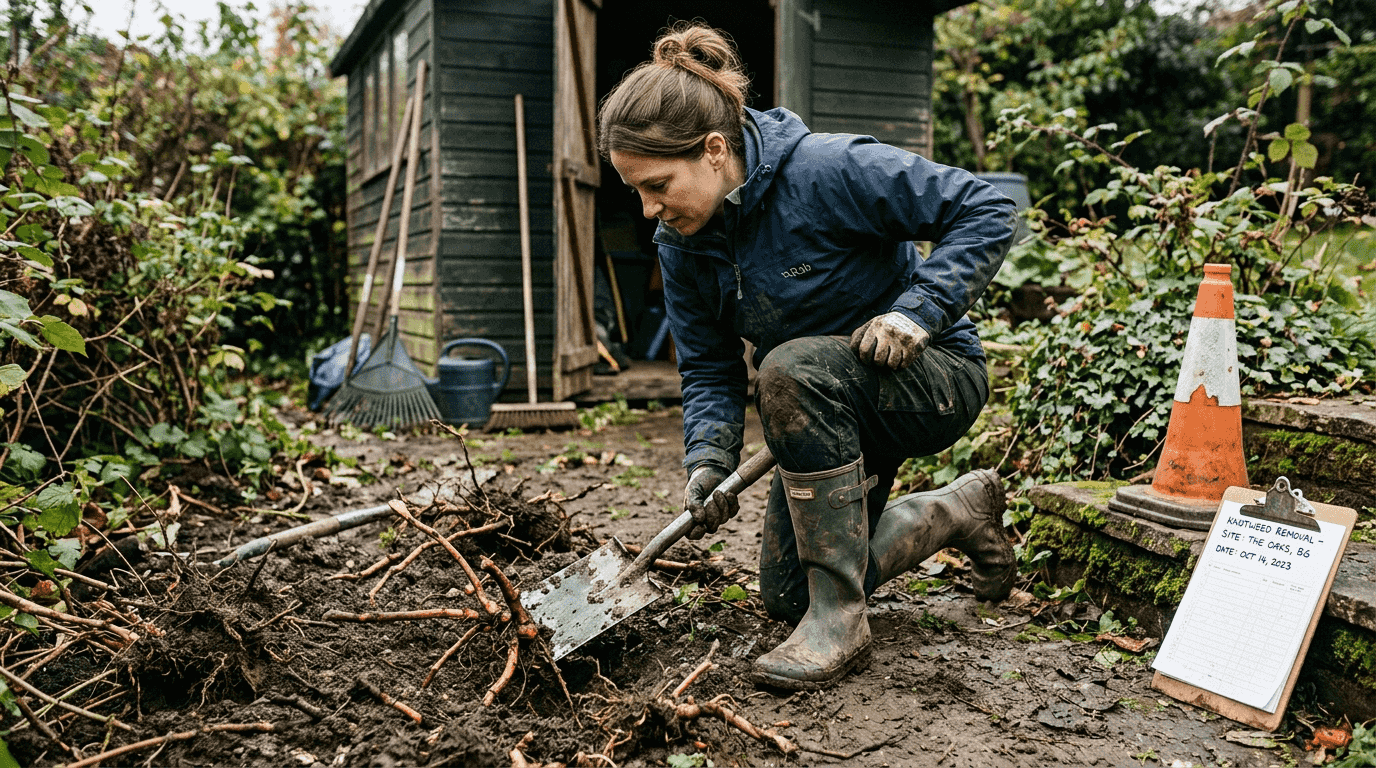
Excavation removal involves physically digging out Knotweed rhizomes and transporting them to licensed disposal facilities. This method offers immediate results, completely removing the plant material from your property. Excavation works best for localised infestations or when you need quick clearance for construction projects. The process requires careful depth control, typically removing soil to 3 metres, ensuring no rhizome fragments remain to regenerate.
Root barrier installation creates physical boundaries that contain Knotweed growth, preventing spread to neighbouring properties or sensitive areas. High-density polyethylene barriers extend deep into the soil, redirecting rhizome growth upwards where it can be managed more easily. This approach suits properties where complete excavation proves impractical due to space constraints or proximity to structures. Barriers provide long-term protection when combined with surface treatments.
Energy-based treatments deliver controlled electrical current directly to Knotweed plants, causing internal cell damage and depleting the rhizome network’s energy reserves. This innovative method avoids soil disturbance, requires no chemicals, and allows immediate land use after treatment. Multiple sessions over a growing season systematically weaken the plant until it can no longer regenerate. The approach particularly suits railway embankments, gardens near watercourses, and properties where excavation risks structural damage.
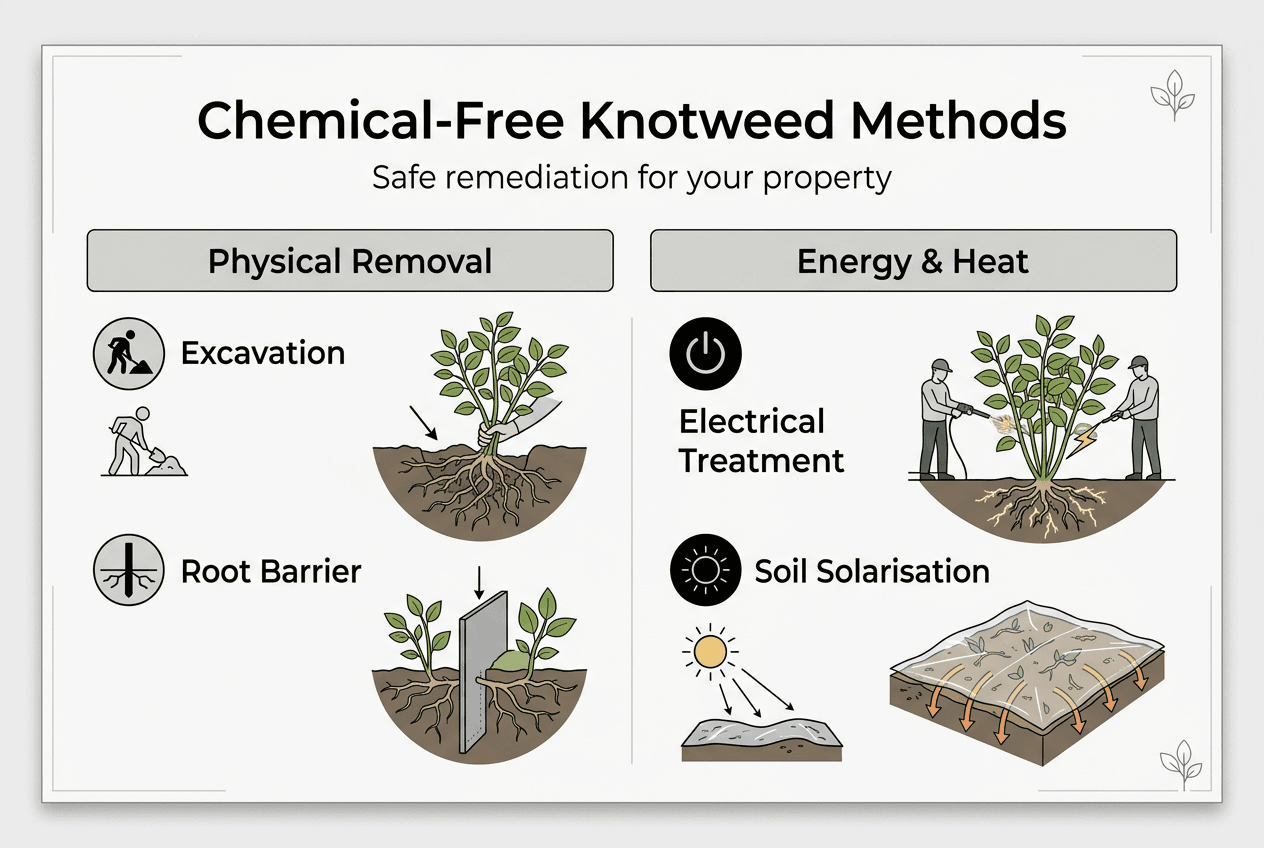
Soil solarisation uses transparent sheeting to trap solar heat, raising soil temperatures to levels that kill Knotweed rhizomes. This passive method works well in sunny locations during summer months, though it requires several weeks of consistent heat exposure. You combine solarisation with other methods for comprehensive control.
Pro Tip: Before committing to any treatment provider, verify their accreditation with recognised industry bodies and request case studies demonstrating successful chemical-free Knotweed eradication on properties similar to yours. Experience with chemical-free invasive plant solutions matters enormously, as techniques require precise execution to succeed. Check whether the provider offers guarantees and ongoing monitoring as part of their service package.
The environmental benefits extend beyond your property boundaries. Chemical-free methods protect waterways from herbicide runoff, preserve insect populations that support local ecosystems, and maintain soil fertility for future planting. Legal considerations also favour these approaches, as some regions restrict herbicide use near sensitive habitats or residential areas. Understanding the full chemical-free knotweed eradication workflow helps you appreciate why these methods, whilst sometimes requiring higher initial investment, deliver superior long-term outcomes.
The role of property survey assessments in effective site remediation
Professional property surveys form the foundation of successful Japanese Knotweed remediation. Without accurate assessment, treatment plans become guesswork, potentially wasting money on inadequate solutions or excessive interventions. Proper site assessment and testing guide successful remediation plans and ensure property safety and long-term monitoring.
A comprehensive survey follows a systematic process:
- Survey booking begins with an initial consultation where you describe visible Knotweed signs and any concerns about property damage or mortgage complications.
- Site inspection involves trained surveyors walking your entire property, examining gardens, boundaries, outbuildings, and adjacent land for Knotweed presence and spread patterns.
- Sample collection includes taking plant specimens for laboratory confirmation and soil cores to assess rhizome depth and density beneath the surface.
- Lab analysis confirms species identification, rules out lookalike plants, and provides detailed contamination mapping showing exactly where treatment must focus.
- Report and recommendations deliver a written document detailing findings, treatment options, cost estimates, and timelines, which you can share with mortgage lenders or solicitors during property transactions.
Surveys protect your property value by providing documented evidence of the Knotweed situation. When selling your home, you must disclose Knotweed presence on the TA6 property information form. A professional survey report demonstrates you’ve taken the issue seriously and have a management plan in place. This transparency reassures potential buyers and their lenders, preventing sale collapse at the last minute.
Mortgage approval often depends on survey findings. Many lenders refuse mortgages on properties with untreated Knotweed or require retention of funds until treatment completes. A detailed survey showing limited spread and a credible eradication plan can satisfy lender concerns, allowing the transaction to proceed. The property survey process invasive weeds provides essential documentation for these financial discussions.
Legal compliance represents another critical benefit. If Knotweed from your property spreads to neighbouring land, you could face legal action for nuisance or damages. Survey reports establish baseline conditions, showing exactly what existed when you took ownership and demonstrating your proactive approach to management. This documentation proves invaluable if disputes arise.
Pro Tip: Select licensed surveyors with specific experience in Japanese Knotweed identification across UK regions, as growth patterns and treatment challenges vary between England, Wales, and Ireland due to climate and soil differences. Request references from homeowners they’ve previously assisted and confirm their reports meet Royal Institution of Chartered Surveyors standards. Understanding invasive plant surveys guide requirements ensures you receive comprehensive, legally robust documentation that protects your interests throughout remediation and beyond.
How professional remediation affects land usability and property value
Untreated Japanese Knotweed creates severe consequences for homeowners. Mortgage lenders view it as a significant risk, often refusing finance entirely or offering reduced loan amounts that make purchases unviable. Buyers understandably hesitate when surveys reveal Knotweed presence, either withdrawing offers or demanding substantial price reductions to cover future treatment costs. Your property effectively becomes unsellable without addressing the infestation.
Professional remediation, particularly chemical-free, helps restore land usability and prevents significant property value loss caused by untreated Knotweed. The contrast between remediation approaches reveals important differences in outcomes, costs, and long-term implications for your property.
| Aspect | Chemical-free remediation | Chemical herbicide treatment | No treatment |
| — | — | — |
| Land usability timeline | Immediate after excavation, within weeks for energy treatments | 3-5 years waiting period for chemical breakdown | Land remains compromised indefinitely |
| Environmental impact | Zero soil contamination, safe for wildlife and pets | Herbicide residues persist, affecting soil organisms | Knotweed spreads, damaging structures and ecosystems |
| Property value effect | Full value restoration once treatment verified | Partial recovery after lengthy treatment period | Severe devaluation, often 5-10% loss or complete unmarketability |
| Mortgage availability | Lenders approve with completed treatment documentation | Conditional approval requiring ongoing monitoring reports | Mortgage refused by most mainstream lenders |
| Treatment duration | Single season to 18 months for severe cases | 3-5 years of repeated applications | Problem worsens annually |
| Ongoing obligations | Minimal monitoring, typically annual inspections | Frequent reapplication, strict timing requirements | Legal liability if spread occurs |
The knotweed impact property values extends beyond simple price reduction. Untreated infestations create legal liabilities if plants spread to neighbouring properties, potentially resulting in costly court cases and damages awards. Your home insurance may not cover Knotweed damage, leaving you personally liable for repairs to foundations, drainage systems, or boundary structures.
Chemical-free remediation offers particular advantages for land usability. After excavation and verification, you can immediately landscape, build extensions, or install garden features without waiting years for herbicides to degrade. Energy-based treatments allow continuous property use throughout the eradication process, avoiding the access restrictions and safety concerns herbicide application creates.
Long-term monitoring provides essential assurance that remediation succeeded. Professional programmes typically include annual inspections for three to five years post-treatment, catching any regrowth whilst it remains manageable. This ongoing vigilance protects your investment and provides documentation for future property sales. Understanding root systems removal importance helps you appreciate why thorough initial treatment and subsequent monitoring deliver far better outcomes than rushed, incomplete interventions.
Buyers and lenders increasingly recognise that properly remediated properties pose no greater risk than Knotweed-free ones. Your documentation package, including survey reports, treatment records, and monitoring results, demonstrates professional management and provides the confidence needed for transactions to proceed smoothly. This transparency transforms Knotweed from a deal-breaker into a resolved historical issue.
Explore chemical-free knotweed solutions and surveys tailored for you
Now that you understand how site remediation works and why chemical-free approaches offer superior outcomes, you can take confident next steps towards reclaiming your property. Specialised treatments designed specifically for homeowners provide effective Knotweed control without the environmental concerns or lengthy timelines associated with traditional herbicides.

Professional chemical-free invasive plant solutions combine innovative technology with proven physical methods, delivering results you can see within a single growing season. Whether you need excavation services, root barrier installation, or energy-based treatments, experienced specialists tailor approaches to your property’s unique layout and your family’s needs. These solutions protect your soil health, allow immediate land use, and provide the documentation mortgage lenders require.
Comprehensive property assessments form the starting point for successful remediation. The property survey process invasive weeds walks you through professional inspection, laboratory analysis, and detailed reporting that satisfies legal disclosure requirements whilst informing treatment decisions. You gain clarity about infestation extent, realistic cost estimates, and timelines that fit your circumstances.
Common questions about remediation, costs, and legal obligations find answers in the Japanese Knotweed FAQ listing, where homeowners across England, Wales, and Ireland share concerns similar to yours. These resources help you make informed decisions, understand your options, and approach remediation with confidence rather than confusion.
FAQ
What is the typical duration of site remediation for Japanese Knotweed?
Remediation timelines vary considerably depending on infestation severity and the method you choose. Excavation projects typically complete within days to weeks, offering the fastest route to Knotweed-free land. Energy-based treatments require multiple sessions across one to two growing seasons, systematically weakening the rhizome network until it can no longer regenerate. Chemical herbicide programmes, by contrast, often extend three to five years with repeated applications.
Ongoing monitoring continues after active treatment ends, typically involving annual inspections for three to five years. This verification period ensures no viable rhizomes remain and provides documentation for property transactions. Your remediation provider should include monitoring in their service package, giving you long-term peace of mind without additional surprise costs.
Can I manage Japanese Knotweed remediation myself without professional help?
DIY Knotweed removal rarely succeeds and often makes problems worse. The plant’s rhizome network extends up to 3 metres deep and 7 metres horizontally, far beyond what surface digging can address. Disturbing Knotweed without proper disposal creates new infestations, as tiny rhizome fragments regenerate into full plants. Legal restrictions govern Knotweed disposal, requiring licensed waste carriers and designated landfill sites.
Professional survey and remediation services provide essential expertise, specialist equipment, and legal compliance that DIY approaches cannot match. Attempting removal yourself risks spreading the infestation, damaging property structures through improper excavation, and creating legal liability if fragments reach neighbouring land. The costs of professional service prove far lower than rectifying failed DIY attempts or defending legal action from affected neighbours.
How does site remediation protect my property value?
Successful knotweed impact property values remediation directly addresses the contamination that causes property devaluation and mortgage refusal. Once treatment completes and verification documentation exists, lenders regain confidence in your property as suitable security for loans. Buyers no longer demand price reductions to cover future treatment costs, as the problem has been professionally resolved.
Comprehensive documentation proving successful eradication transforms Knotweed from an active threat into a historical issue. Your property returns to full market value, competing on equal terms with Knotweed-free homes. Estate agents can market your property without disclosure concerns undermining buyer confidence. The investment in professional remediation protects and often enhances your property’s value by demonstrating responsible ownership and proactive land management.
What are the benefits of a chemical-free remediation approach?
Chemical-free methods prioritise safety for your family, pets, and the broader environment. You avoid introducing persistent herbicides into soil where children play and vegetables grow. Beneficial soil organisms, earthworms, and insects that support garden health remain unharmed. Groundwater stays free from contamination, particularly important if your property has wells or sits near streams.
Benefits of chemical-free solutions extend to immediate land usability. After excavation or energy treatments, you can landscape, build, or plant without waiting years for chemicals to degrade. Sensitive settings like schools, care homes, and properties near watercourses particularly benefit from approaches that eliminate toxicity concerns. The absence of harmful residues means no restrictions on land use, no safety warnings for contractors, and no environmental liability extending into future decades.