

TL;DR:
- Energy-based weed removal employs high-voltage electrical pulses that target plant vascular systems, destroying roots without soil disturbance. It uses significantly less energy than thermal methods and preserves soil health, making it an environmentally friendly alternative. Proper application involves dry conditions, pre-treatment mowing, and multiple passes for invasive species, with advanced AI technology improving targeting precision.
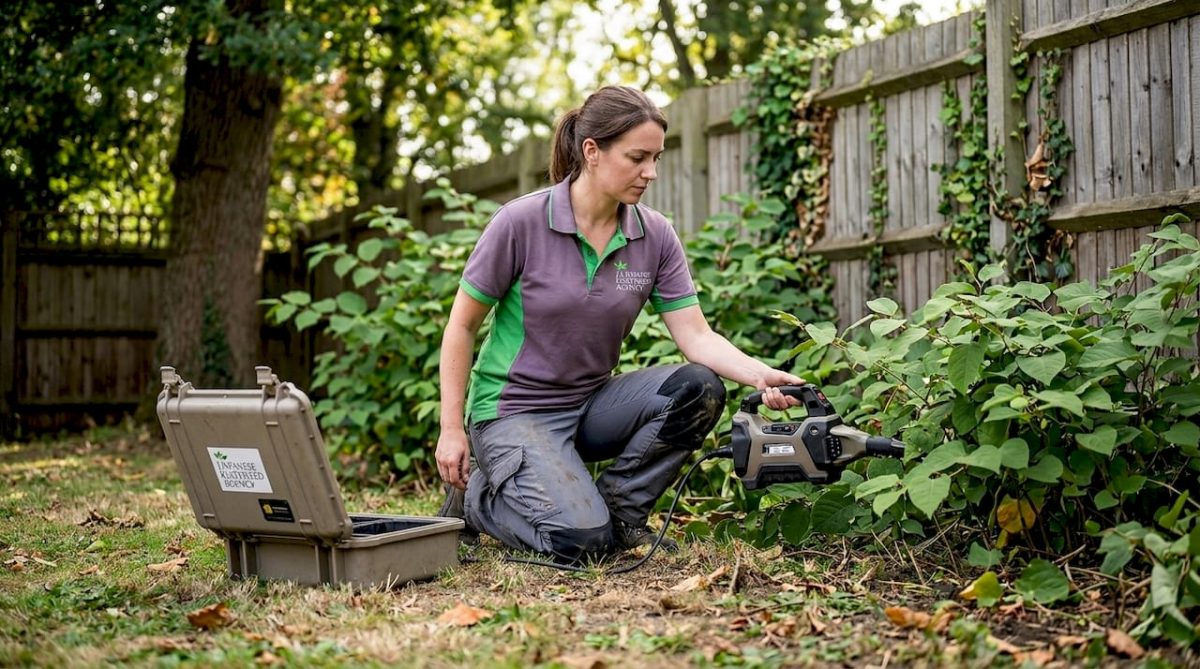
When chemical herbicides carry increasing regulatory scrutiny and thermal flaming struggles with fuel costs, understanding energy-based weed removal becomes a genuinely useful skill for homeowners and landscapers alike. Electrical weed control works by driving high-voltage current through a plant’s vascular system, causing internal cell damage that kills both foliage and root structures without disturbing a single gram of soil. This guide covers how energy pulses affect plant physiology, why this method outperforms traditional approaches on several measurable fronts, how to apply it correctly, and what the latest technology advances mean for invasive species management.
Table of Contents
- Key takeaways
- Understanding energy-based weed removal: how pulses affect plants
- Energy use and environmental impact compared
- Best practices for effective application
- Advanced technology: AI, pulsed power, and what is next
- My perspective on energy-based weed control
- How Japaneseknotweedagency can help
- FAQ
Key takeaways
| Point | Details |
|---|---|
| Energy efficiency advantage | Electrical weed control uses 10 to 20 times less energy than thermal methods such as flaming or steaming. |
| Soil biology is preserved | Unlike mechanical or chemical control, electrical treatment leaves soil microbiology intact, protecting nematodes, fungi, and beneficial bacteria. |
| Dry conditions are non-negotiable | Surface moisture causes current to short-circuit across the plant exterior, so weeds must be dry for electrical treatment to be lethal. |
| Pre-treatment mowing matters | Mowing before treatment improves weed kill efficacy by approximately 72% by improving electrode contact and energy penetration. |
| AI is reshaping precision | AI-driven pulsed power systems now achieve up to 95% targeting accuracy, making energy weed control viable for high-value and sensitive sites. |
Understanding energy-based weed removal: how pulses affect plants
The core principle is straightforward. When a high-voltage electrical current is applied to a weed through direct electrode contact, it travels down through the plant’s stem and into the vascular system, following the path of least resistance toward the root network. The current disrupts cellular membranes, causes protein denaturation, and collapses internal fluid pressure at a cellular level. The result is systemic damage that kills both above-ground growth and the root structure beneath.
This is what separates energy-based weed control from surface treatments. Most thermal and chemical methods address the canopy but leave root systems largely intact, which is precisely why perennial weeds and invasive species like Japanese Knotweed regenerate so aggressively. Electrical treatment aims to deplete the energy reserves held within the root and rhizome network, not merely scorch what is visible above ground.
Several factors govern how effectively energy pulses affect weeds:
- Voltage and pulse frequency: Higher voltages increase the depth of current penetration. Pulse frequency determines how rapidly cell damage accumulates across successive treatment passes.
- Electrode contact quality: The current must enter the plant through physical contact. Poor contact reduces efficacy significantly, which is why mowing dense or tall weed growth prior to treatment is so beneficial.
- Moisture conditions: Surface moisture reduces lethality by causing current to travel over the plant exterior rather than through its vascular tissue. Weeds must be dry to allow internal current flow.
- Travel speed: Slower speeds of 0.3 to 0.6 mph allow sufficient electrode contact time to transfer lethal energy into the root zone.
Pro Tip: Treat weeds during a dry spell of at least 24 hours, ideally in the morning before dew has had chance to settle on foliage. This single preparation step can be the difference between superficial damage and genuine root kill.
Compared to thermal methods, electrical control offers a far more targeted pathway into the plant. Flaming heats surface cells but rarely penetrates deep enough to kill established roots. Steaming requires substantial water and energy input, and mechanical removal risks both soil disturbance and rhizome fragmentation, which can spread invasive species further.
Energy use and environmental impact compared
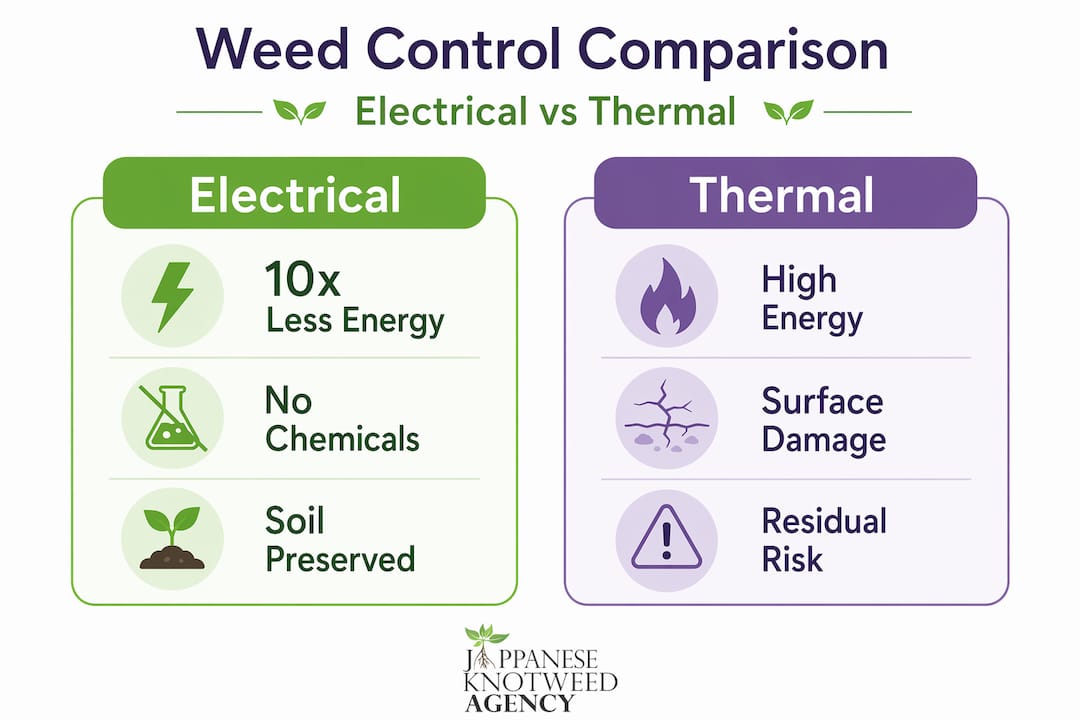
One of the most striking findings in recent research is the sheer difference in energy consumption between electrical and thermal weed control. Electrical methods use 10 to 20 times less energy than flaming or steaming to achieve comparable weed mortality. For a landscaper treating a large site repeatedly across a growing season, that difference is not marginal. It translates directly into operating costs, carbon output, and fuel logistics.
The table below places the main weed control approaches side by side across three dimensions that matter most to environmentally aware practitioners:
| Method | Energy consumption | Soil impact | Chemical residue risk |
|---|---|---|---|
| Electrical treatment | Very low | None. No soil disturbance | None |
| Thermal flaming | High (10 to 20x electrical) | Low. Minor surface heating | None |
| Steam treatment | Very high | Low to moderate | None |
| Mechanical removal | Moderate | High. Tillage and compaction | None |
| Chemical herbicide | Very low | Low directly, but cumulative | High. Leaching and residue risk |
Electrical treatment preserves the soil ecosystem in a way that no other method fully replicates. Research confirms that soil biology including nematodes, bacteria, and fungi remains undisturbed because the current targets only the weed without chemical leaching or physical ground disruption. For homeowners focused on garden biodiversity or landscapers working on organic certification, this is a genuinely significant distinction.
It is worth acknowledging one limitation. Electrical weed control is non-selective by nature, meaning it will damage any plant the electrode contacts. Proper equipment configuration, including booms, shields, and appropriate electrode spacing, is the standard approach to protecting desirable plants on mixed sites.
Best practices for effective application
Getting the most from energy weed control techniques depends on preparation, conditions, and operational discipline. The method is effective when applied correctly and markedly less so when shortcuts are taken. Follow this sequence for consistent results:
- Assess weed density and height. Dense or tall weed growth requires pre-treatment mowing. Mowing prior to electrical treatment reduces above-ground biomass and dramatically improves electrode-to-stem contact, producing approximately 72% greater weed kill than treating unmowed growth.
- Confirm dry conditions. Check that weeds and soil surface are genuinely dry. Waterlogged or saturated soil diverts current laterally rather than into the plant. Avoid treatment within 24 hours of significant rainfall.
- Set electrode height and spacing correctly. Electrodes should make firm, consistent contact with weed stems. Incorrect height creates missed contact points and partial energy delivery, leaving roots viable.
- Operate at the correct speed. Forward speed critically affects mortality. Work at 0.3 to 0.6 mph to pass sufficient electrical energy through the plant. Faster operation is tempting on large sites but produces poor root-level results.
- Plan for multiple passes on perennial species. Two passes at moderate speed can match the efficacy of a single slow pass and are often more practical on larger areas. Perennial and invasive species with deep rhizome networks benefit from repeated treatment cycles to deplete stored energy reserves.
- Configure equipment for site-specific protection. Where desirable plants are nearby, use equipment shields and spacing settings to minimise off-target contact.
Pro Tip: Treat young, actively growing weeds where possible. Younger plants have higher water content within their vascular tissue, which supports better electrical conductance and deeper root penetration. Treating mature, woody-stemmed weeds with thicker bark requires higher voltage settings to achieve the same internal effect.
For a detailed operational walkthrough, Japaneseknotweedagency has published practical guidance on chemical-free invasive weed management that covers both field preparation and treatment sequencing.
Advanced technology: AI, pulsed power, and what is next
The most significant recent development in energy weed control techniques is the integration of artificial intelligence with high-voltage pulsed power delivery. In early 2026, I-Pulse launched the iTerra system, which uses AI-driven camera detection to identify individual weed plants and deliver precisely timed electrical pulses of approximately five milliseconds to each target. The system achieves up to 95% targeting accuracy without disturbing soil or leaving herbicide residues.
This matters beyond the headline figure. The integration of AI with pulsed power addresses several persistent limitations of earlier electrical systems:
- Herbicide-resistant species: AI-targeted pulsing sidesteps resistance entirely, as electrical damage is a physical process not susceptible to biological adaptation.
- Energy waste reduction: Rather than energising a full boom continuously, the system fires only when a weed is detected, cutting unnecessary energy expenditure on clear ground.
- Precision in mixed plantings: AI detection allows treatment within crop rows or alongside desirable garden plants where a continuous electrical boom would cause collateral damage.
- Data and mapping: Detection systems log weed location and density across passes, supporting longer-term management planning and treatment scheduling.
The challenge for widespread commercial adoption remains cost and the operational training required to maintain sophisticated pulsed power equipment. For professional invasive species contractors and larger landscaping operations, the technology is already commercially viable. For individual homeowners, the more immediate relevance lies in the chemical-free knotweed eradication services now offered by specialist contractors equipped with high-voltage delivery systems.
My perspective on energy-based weed control
I have worked in invasive species management long enough to recognise the pattern. A new control method generates genuine interest, and the first question is always whether it will hold up in practice on difficult species. With energy-based electrical treatment, the honest answer is: yes, when applied correctly, and with clear-eyed expectations about what repeated treatment means for deep rhizome networks.
What I find compelling about this approach is not only the environmental credentials, though the absence of chemical residue and the preservation of soil biology are genuinely significant. It is the fact that electrical treatment attacks the energy reserves within the rhizome directly. Japanese Knotweed’s ability to push through tarmac and concrete reflects the extraordinary energy reserves stored underground. Depleting those reserves systematically, treatment by treatment, is a fundamentally sound strategy.
Where I see homeowners and landscapers underestimate the method is in expecting single-treatment results on established invasive species. This is not a reflection of the technology’s limits. It reflects the biology of the target. Multiple treatment cycles across growing seasons are standard, not exceptional. In my view, the best practices for chemical-free eradication all share one characteristic: they work with the plant’s biology rather than expecting a one-time solution to override years of root establishment.
The regulatory and mortgage context also matters increasingly. Lenders and surveyors now scrutinise invasive weed management plans closely, and a documented, repeatable, chemical-free treatment programme carries real weight in property transactions across England, Wales, and Ireland.
— Alan
How Japaneseknotweedagency can help
If you have identified invasive weeds on your property or surrounding land, the first step is always a professional survey to assess extent, risk, and the most appropriate management route.

Japaneseknotweedagency delivers direct energy of up to 5,000 volts on site, targeting the rhizome network of Japanese Knotweed and other invasive species without chemicals or soil disruption. Their chemical-free knotweed removal service achieves a 95% success rate and is designed to meet the documentation requirements of lenders and surveyors. Root barrier installation and excavation services are also available for complex or high-risk sites. To explore your options, book a property survey and receive a professional assessment of your invasive weed risk. For common homeowner questions, the Japaneseknotweedagency FAQ page covers treatment options, timescales, and mortgage considerations in plain terms.
FAQ
What is energy-based weed removal?
Energy-based weed removal uses high-voltage electrical current delivered through direct electrode contact to cause internal cell damage within a plant’s vascular system, killing both foliage and root structures without soil disturbance or chemical application.
Why do energy pulses affect weeds differently from surface treatments?
Electrical pulses travel through the plant’s vascular tissue into the root and rhizome network, depleting stored energy reserves. Surface methods such as flaming treat only above-ground growth, leaving roots intact and allowing regrowth.
Does electrical weed control damage soil?
No. Research confirms that soil microbiology including nematodes, bacteria, and fungi remains undisturbed because electrical treatment does not involve soil tillage or chemical leaching.
How many treatments does Japanese Knotweed require?
Japanese Knotweed typically requires multiple treatment cycles across consecutive growing seasons. Each electrical treatment depletes rhizome energy reserves progressively, and the number of treatments needed depends on the extent and maturity of the root network.
Is electrical weed control safe near garden plants?
Electrical weed control is non-selective, meaning any plant the electrode contacts may be affected. Using equipment shields, correct electrode spacing, and targeted application protects desirable plants when the system is properly configured.