
TL;DR:
- A weed biosecurity strategy is a risk-based framework that integrates prevention, detection, surveillance, management, and control efforts to protect environmental and economic assets from invasive plants.
- Effective strategies translate broad goals into specific, measurable actions with clear responsibilities, often supported by legislative backing at various levels.
- Biocontrol plays a long-term, integrated role by utilizing natural enemies to sustainably suppress widespread weeds, but requires ongoing monitoring and policy support for success.
A weed biosecurity strategy is defined as a risk-based framework that integrates prevention, early detection, surveillance, management, and control of invasive plant species to protect environmental, agricultural, and economic assets. Understanding what a weed biosecurity strategy involves is no longer optional for environmental managers and policymakers. Invasive plants such as Japanese Knotweed, Himalayan Balsam, and Giant Hogweed cause measurable damage to biodiversity, infrastructure, and land value across England, Wales, and Ireland. Governing instruments including the Biosecurity Act 2015 in New South Wales and Ireland’s Plant Health and Biosecurity Strategy 2026–2030 demonstrate that effective frameworks operate across multiple scales, from national legislation to individual landholder duty.
What is weed biosecurity strategy and what does it set out to achieve?
A weed biosecurity strategy is a structured, multi-level programme that translates broad risk management goals into specific, measurable objectives and on-the-ground actions. The framework does not simply describe what weeds to control. It defines who is responsible, at what scale, with what resources, and to what measurable standard.
Ireland’s 2026–2030 strategy illustrates this architecture precisely. The strategy outlines three strategic goals with 15 objectives and 45 priority actions, spanning risk anticipation, surveillance, and communication. That level of specificity matters because vague commitments to “manage invasive weeds” produce no accountability and no measurable outcome.
The three core strategic goals common to most national frameworks are:
- Risk anticipation: Identifying new and emerging weed threats before they establish, using horizon-scanning, pathway analysis, and risk modelling.
- Risk surveillance and management: Deploying systematic monitoring, early detection protocols, and coordinated control programmes for priority species.
- Risk communication: Sharing intelligence across government agencies, landholders, and the public to support compliance and rapid response.
Effective biosecurity strategies integrate governance and communication systems alongside control actions, not merely reactive measures. This distinction separates a functioning programme from a document that sits on a shelf.
Pro Tip: When reviewing or drafting a biosecurity strategy, test each objective against a simple question: can its success be measured within a defined timeframe? If not, the objective needs rewriting before it can drive resource allocation.
How is weed biosecurity strategy operationalised at regional and local levels?
National strategy sets direction. Regional and local structures deliver it. The gap between the two is where most programmes succeed or fail.
In New South Wales, the Biosecurity Act 2015 creates the legal architecture for delivery. Local Land Services facilitates 11 Regional Weed Committees managing five-year strategic plans that focus on state and regional priority weeds, enforcing landholder duties across public and private land. This model demonstrates that effective weed management techniques require statutory backing, not voluntary participation alone.
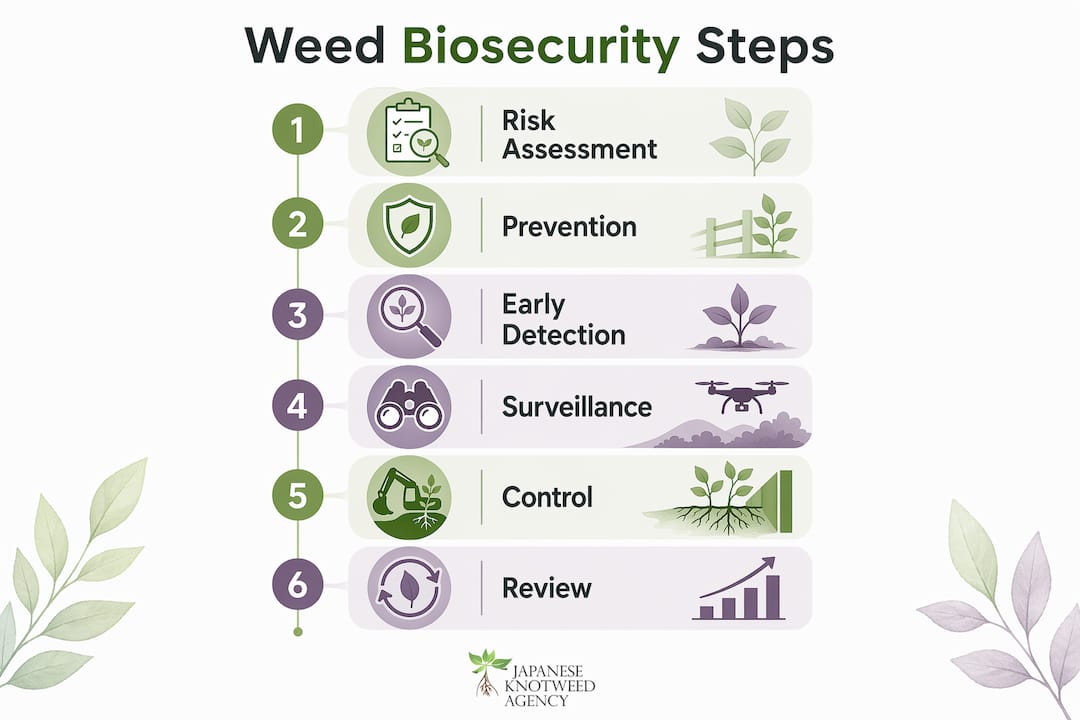
The operational cycle in NSW follows a clear sequence:
- Strategic plan: Regional Weed Committees produce a five-year plan identifying priority species and risk areas.
- Prioritisation: Weed species are ranked by threat level, feasibility of control, and economic or ecological impact.
- Annual delivery plan: Local Control Authorities translate the five-year plan into funded, time-bound actions for each year.
- Control and compliance: Landholders fulfil statutory duties; officers enforce reporting and treatment requirements.
- Review and update: Outcomes are assessed annually, and plans are revised to reflect new data or changed conditions.
Funding is a critical enabler at every stage. The NSW Weeds Action Program provides multi-year funding to 97 Local Control Authorities, with a recent $10 million investment targeting early detection and rapid response. That investment signals a deliberate shift from reactive control to prevention-led biosecurity measures for crops and public land alike.
| Operational level | Key function | Example instrument |
|---|---|---|
| National | Policy, legislation, priority species lists | Biosecurity Act 2015 (NSW) |
| Regional | Five-year strategic weed management plans | NSW Regional Weed Committees |
| Local | Annual delivery plans, compliance, control | Local Control Authorities |
| Landholder | Reporting duties, on-property treatment | Statutory general biosecurity duty |
Pro Tip: Annual delivery plans are more powerful than five-year strategies for day-to-day management. Insist that every regional plan produces a funded annual delivery document with named responsible officers and defined monitoring checkpoints.
What role does biocontrol play in integrated weed management approaches?
Biocontrol is the deliberate use of a weed’s natural enemies, typically insects or pathogens, to suppress its growth and spread within a managed ecological framework. It is not a standalone solution. It functions as one component within integrated weed management approaches that also include physical removal, chemical treatment where appropriate, and surveillance.
Australia’s national investment in this area is substantial. A $38 million five-year plan targets 18 projects covering 20 weed species, with CSIRO’s NSW Stage 4 biocontrol project serving as the operational model for safety testing, efficacy assessment, and stakeholder partnership. The return on investment from biocontrol programmes consistently outperforms conventional control methods over a ten-year horizon, particularly for widespread environmental weeds where repeated herbicide application is neither cost-effective nor ecologically sound.
CSIRO’s Stage 4 project relies on monitoring platforms such as the Atlas of Living Australia and standardised protocols to track agent establishment, weed suppression, and ecosystem recovery. This data infrastructure is what separates a credible biocontrol programme from an unmonitored release.
The comparative position of biocontrol within a broader strategy is worth understanding clearly:
- Advantages: Long-term suppression without repeated intervention; no chemical residues; self-sustaining once agents establish; high cost-effectiveness at scale.
- Challenges: Regulatory approval timelines are lengthy; agents require years of safety testing; results are not immediate; monitoring demands sustained resource commitment.
- Best fit: Widespread environmental weeds where mechanical or chemical control is impractical at the scale of infestation.
Biocontrol requires long-term monitoring and integration into broader management frameworks to deliver ecological and economic benefits. Programmes that release agents without follow-up monitoring produce unreliable outcomes and undermine the evidence base for future investment.
Which best practices should managers follow when implementing biosecurity measures?
Early detection combined with regular surveillance dramatically increases the potential for effective weed control. Addressing an incipient infestation costs a fraction of managing an established one. This principle underpins every credible weed biosecurity framework, yet surveillance is consistently the first activity cut when budgets are under pressure.
Practical best practices for environmental managers and policymakers include:
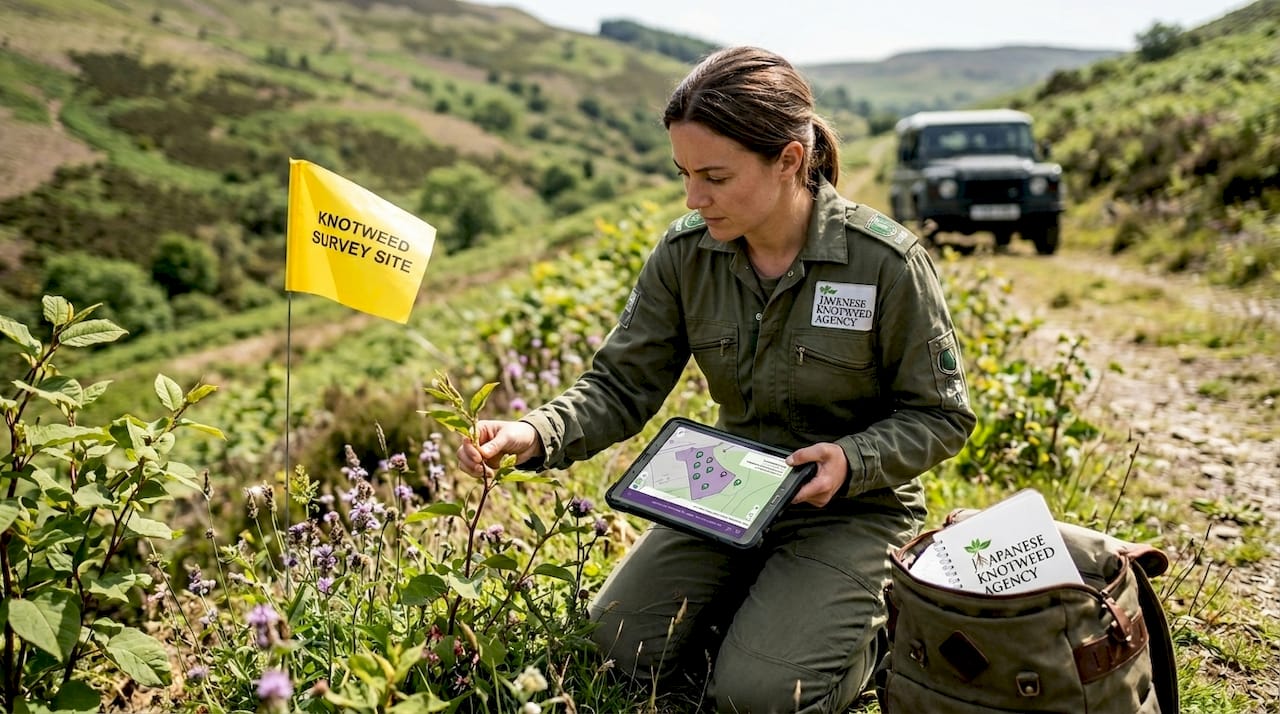
- Conduct baseline surveys before drafting any strategic plan. You cannot prioritise what you have not mapped. Japaneseknotweedagency’s invasive weed survey standards provide a recognised methodology for establishing that baseline.
- Treat the strategy document as an input, not a product. NSW guidance is explicit: the cycle of strategic plan, prioritisation, control plan, delivery, and review must be continuous, not linear.
- Budget for compliance and monitoring as distinct cost centres, separate from physical control activities. Jurisdictions like NSW implement weed biosecurity through duty, reporting, and enforcement systems that require dedicated staffing beyond the control workforce.
- Engage landholders and community groups early. Multi-jurisdictional weed problems, such as those involving Japanese Knotweed spreading across property boundaries, require coordinated responses that no single authority can deliver alone.
Pro Tip: Map your weed species against a feasibility-of-control matrix before committing resources. Species with low feasibility and high spread rate need containment strategies, not eradication targets. Misaligned objectives waste funding and demoralise field teams.
Key takeaways
A weed biosecurity strategy succeeds only when national goals are translated into funded, measurable, and regularly reviewed actions at regional and local levels.
| Point | Details |
|---|---|
| Strategy is a framework, not a document | Use the plan as an input to annual delivery cycles, not as a finished product. |
| Early detection is the highest-value activity | Surveillance at incipient stages reduces control costs and improves success rates significantly. |
| Biocontrol requires long-term commitment | Agent release without sustained monitoring produces unreliable outcomes and weak evidence for future investment. |
| Legal duties underpin delivery | Statutory frameworks such as the Biosecurity Act 2015 convert voluntary intent into enforceable landholder obligations. |
| Governance and communication are non-negotiable | Strategies that lack defined governance structures and communication systems fail to coordinate multi-agency responses. |
Where weed biosecurity strategy needs to go next
Having worked in invasive species management across England, Wales, and Ireland, I find the gap between strategic ambition and operational delivery is the defining challenge of this field. Most frameworks are well-constructed on paper. The problems emerge when annual delivery plans are underfunded, when surveillance is treated as optional, or when strategy documents are filed and forgotten between five-year review cycles.
The integration of technology is genuinely changing what is possible. Remote sensing, drone-based mapping, and AI-assisted species identification are compressing the time between detection and response in ways that manual surveillance never could. But technology does not replace the governance architecture. A drone survey that identifies a new Japanese Knotweed infestation is only useful if the legal duty, the reporting pathway, and the funded control response are already in place.
I am also concerned about the regulatory clarity surrounding biocontrol in the UK context. The evidence from CSIRO and Australian frameworks is compelling, but the approval pathway for releasing biocontrol agents in England and Wales remains slow and resource-intensive. Policymakers who want to see biocontrol integrated into national weed control strategies need to engage with the regulatory process now, not after the science is complete.
Cross-sector collaboration is the area where I see the most untapped potential. Landholders, local authorities, environmental NGOs, and infrastructure managers are all dealing with the same invasive species, often on adjacent land, with no shared data and no coordinated response. The frameworks exist to fix this. The political will to resource them properly is what remains inconsistent.
— Alan
How Japaneseknotweedagency supports your biosecurity programme
Japaneseknotweedagency delivers professional invasive weed surveys and chemical-free treatment across England, Wales, and Ireland, directly supporting the early detection and rapid response principles at the core of any effective biosecurity programme. The agency’s thermo-electric treatment delivers up to 5,000 volts directly to the rhizome network, causing internal cell damage and depleting energy reserves without the use of herbicides. Root barrier installation and excavation works complete the integrated management toolkit. For environmental managers and policymakers seeking to fulfil statutory duties and protect land from invasive species, booking a professional survey is the most direct first step. The agency’s knotweed management FAQs also provide detailed guidance on species identification, legal obligations, and treatment options.
FAQ
What is a weed biosecurity strategy in simple terms?
A weed biosecurity strategy is a risk-based framework that coordinates prevention, surveillance, management, and control of invasive plant species across national, regional, and local levels. It translates broad policy goals into funded, measurable actions with defined responsibilities.
How does the Biosecurity Act 2015 affect landholders?
The Biosecurity Act 2015 in NSW imposes a general biosecurity duty on all landholders to prevent, eliminate, or minimise biosecurity risks from weeds on their land. This creates enforceable obligations that go beyond voluntary best practice.
Why is early detection so critical in weed management?
Early detection at incipient stages improves control success rates considerably compared to addressing established infestations. The cost and complexity of control increase exponentially once a weed species spreads beyond its initial point of establishment.
What is biocontrol and how does it fit into weed management?
Biocontrol uses a weed’s natural enemies, such as insects or pathogens, to suppress its growth as part of an integrated management programme. It is most effective for widespread environmental weeds where repeated physical or chemical intervention is not feasible at scale.
How do regional weed committees translate strategy into action?
Regional weed committees produce five-year strategic plans that are broken down into annual delivery plans with funded, time-bound actions. In NSW, 11 Regional Weed Committees coordinate this process across Local Control Authorities, ensuring that national priorities are addressed through locally resourced programmes.