

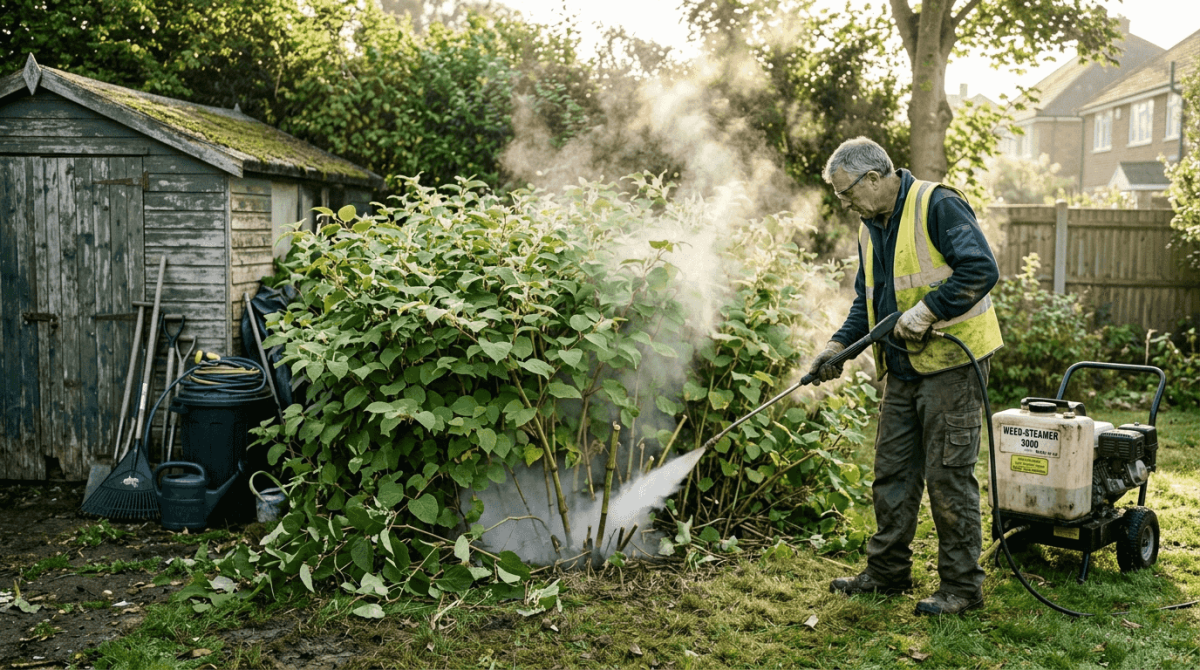
Choosing the right Japanese knotweed treatment is challenging for homeowners seeking chemical-free solutions that protect both property and environment. Energy-based weed control methods offer effective eradication without harmful chemicals, addressing health concerns whilst meeting legal obligations. This guide explores how these innovative treatments deliver superior results, enabling soil recovery and supporting sustainable land management across England, Wales, and Ireland.
Table of Contents
- Choosing Chemical-Free Weed Control: Key Criteria For Homeowners
- How Superheated Steam Treats Japanese Knotweed Effectively
- Comparing Energy-Based Weed Control Methods For Homeowners
- Deciding On Energy-Based Weed Control: Recommendations For UK Homeowners
- Explore Expert Chemical-Free Knotweed Services For Your Home
Key takeaways
| Point | Details |
|---|---|
| Chemical-free benefits | Energy-based methods eliminate knotweed whilst preserving soil health and enabling immediate reuse for habitat restoration. |
| Legal compliance | Effective control prevents civil and criminal penalties for failing to manage invasive species. |
| Property protection | Untreated infestations cause up to 10% reduction in property values, making swift action essential. |
| Sustainability advantage | Treatment supports climate action by recovering contaminated soil and reducing waste sent to landfill. |
Choosing chemical-free weed control: key criteria for homeowners
Homeowners face mounting pressure to address Japanese knotweed infestations effectively whilst prioritising environmental responsibility. Understanding your evaluation criteria ensures you select treatments that deliver lasting results without compromising safety.
Legal requirements make effective control non-negotiable. The legal duty to manage invasive species carries strict enforcement with substantial penalties for non-compliance. Property owners risk fines, legal action from neighbours, and difficulty securing mortgages if infestations remain unaddressed.
Chemical-free methods appeal to health-conscious homeowners worried about pesticide exposure near living spaces. Traditional herbicide treatments require multiple applications over years, leaving residues that concern families with children and pets.
Effectiveness against deep rhizome networks determines long-term success. Knotweed roots extend up to 3 metres deep and 7 metres horizontally, regenerating from fragments as small as 0.7 grams. Your chosen method must penetrate these extensive underground systems completely.
Soil recovery capability distinguishes superior treatments from basic alternatives. Methods enabling immediate soil reuse support habitat restoration and reduce disposal costs significantly. This advantage aligns with circular economy principles whilst delivering tangible financial benefits.
Key selection factors include:
- Total eradication guarantee covering roots, rhizomes, and seed banks
- Safety profile for families, pets, and surrounding vegetation
- Treatment duration and frequency requirements
- Soil remediation and reuse potential
- Cost relative to property value protection
- Professional expertise and regional knowledge
How superheated steam treats Japanese knotweed effectively
Superheated steam technology represents a breakthrough in chemical-free knotweed treatment, delivering temperatures exceeding 100°C directly to plant tissues and contaminated soil. This method destroys cellular structures throughout the entire root system without introducing toxins.
The steam treatment process eliminates pathogens, roots, and seed banks in a single comprehensive application. Heat penetrates deep into rhizome networks, causing irreversible protein denaturation and cell membrane rupture. Unlike herbicides requiring repeated seasonal applications, superheated steam achieves complete kill through thermal shock.

Environmental disruption remains minimal compared to excavation or chemical methods. Surrounding vegetation outside treatment zones suffers no collateral damage. Native plant species can colonise treated areas immediately, accelerating ecosystem recovery.
Soil treated with superheated steam becomes safe for immediate reuse in landscaping and habitat restoration projects. This capability transforms contaminated earth from expensive waste requiring landfill disposal into valuable growing medium. Homeowners save substantially on soil removal costs whilst supporting sustainability goals.
The circular economy benefits extend beyond individual properties. Recovered soil reduces demand for virgin topsoil extraction, lowering carbon emissions from transportation and processing. Your treatment choice directly contributes to regional climate action targets.
Dense infestations posing structural threats to buildings respond particularly well to steam treatment. The method reaches growth under foundations, driveways, and walls that herbicides struggle to penetrate. Property damage risks diminish rapidly once rhizome networks die completely.
Pro Tip: Schedule steam treatments during active growing seasons when knotweed draws maximum moisture into roots, enhancing thermal conductivity and treatment effectiveness throughout the rhizome system.
Comparing energy-based weed control methods for homeowners
Energy-based treatments vary significantly in effectiveness, cost, and environmental impact. Understanding each method’s strengths and limitations enables informed decisions matching your specific circumstances.
| Method | Effectiveness | Safety | Cost | Environmental Impact |
|---|---|---|---|---|
| Superheated Steam | Excellent root and seed elimination | Very high, no chemicals | Moderate to high | Minimal, enables soil reuse |
| Hot Water | Good surface control, limited depth | High, no chemicals | Low to moderate | Low, some runoff concerns |
| Flame Treatment | Variable, less precise targeting | Moderate, fire risks | Low | Moderate, carbon emissions |
| Electrical Energy | Excellent rhizome depletion | Very high when properly applied | Moderate | Very low, no residues |
Superheated steam offers the most comprehensive eradication by penetrating deep soil layers where knotweed rhizomes thrive. The extreme temperatures ensure complete cellular destruction throughout root networks. This thoroughness justifies higher upfront costs through guaranteed long-term results.
Hot water treatments provide budget-friendly options for smaller infestations but lack the penetrating power needed for established colonies. Surface foliage dies back quickly whilst underground rhizomes often survive, requiring repeated seasonal applications. This approach extends treatment timelines considerably.
Flame treatments appeal through low equipment costs but deliver inconsistent results. Targeting precision suffers compared to steam or electrical methods. Fire risks near buildings and dry vegetation make this approach unsuitable for many residential settings. Property damage from untreated knotweed far exceeds flame treatment costs, making thorough initial eradication economically sensible.
Electrical energy methods deliver voltage directly into rhizome networks, causing internal cellular damage and depleting energy reserves with each treatment. This innovative approach combines high effectiveness with minimal environmental footprint. Multiple sessions ensure complete root system exhaustion.
Selection depends on several property-specific factors:
- Infestation size and density
- Proximity to structures and utilities
- Budget and timeline constraints
- Soil condition and reuse intentions
- Local environmental regulations
- Access for treatment equipment
Pro Tip: Combine methods strategically for large properties, using high-intensity treatments near buildings whilst employing cost-effective approaches for peripheral areas, optimising both budget and outcomes.
Deciding on energy-based weed control: recommendations for UK homeowners
Making informed treatment decisions requires systematic evaluation of your specific circumstances. Follow this practical framework to select non-chemical knotweed controls that deliver lasting results whilst protecting your investment.
-
Commission a professional invasive weed survey identifying infestation extent, root depth, and proximity to structures. Accurate assessment prevents underestimating treatment requirements and associated costs.
-
Request detailed treatment plans from specialists experienced with UK regional challenges. Plans should specify method selection rationale, session frequency, and guaranteed outcomes with contingency provisions.
-
Verify legal compliance throughout the treatment process, ensuring methods meet environmental regulations and neighbour notification requirements. Documentation protects against future liability claims.
-
Evaluate soil recovery potential when comparing quotes, calculating disposal savings and landscaping benefits from reusable treated earth. This often tips cost-benefit analyses toward comprehensive energy-based methods.
-
Confirm specialist credentials, insurance coverage, and performance guarantees before committing. Reputable providers offer multi-year warranties demonstrating confidence in their eradication effectiveness.
-
Plan treatment timing to coincide with active growth periods when energy reserves concentrate in rhizomes, maximising thermal or electrical treatment impact on root systems.
-
Monitor treated areas systematically post-treatment, documenting recovery and reporting any regrowth immediately for rapid intervention under warranty provisions.
The economic cost of invasive species exceeds £1.8 billion annually across the UK. Your individual property faces proportional risks through devaluation, remediation costs, and potential legal liability. Swift action using proven energy-based methods protects this investment whilst supporting broader environmental goals.
Regional considerations matter significantly. Welsh properties often face different moisture conditions than English sites, affecting treatment approaches. Irish homeowners navigate distinct regulatory frameworks requiring specialist knowledge.
Engaging professionals who understand invasive plant management ensures treatments address local ecological conditions effectively. Their expertise prevents costly mistakes and accelerates successful eradication.
Explore expert chemical-free knotweed services for your home
Transitioning from knowledge to action protects your property investment and environmental health. Professional guidance ensures treatment selection matches your specific circumstances whilst delivering guaranteed long-term results.

Our chemical-free invasive plant solutions combine cutting-edge energy-based treatments with comprehensive site assessment and ongoing monitoring. We pioneer electrical energy delivery systems applying up to 5000 volts directly to rhizome networks, causing internal cellular damage that depletes energy reserves systematically. This approach eliminates knotweed without chemicals whilst enabling immediate soil reuse.
Comprehensive property surveys identify infestation extent and structural risks before treatment begins. Our detailed reports support mortgage applications and legal compliance whilst informing optimal treatment strategies. We serve homeowners across England, Wales, and Ireland with regional expertise addressing local challenges.
Begin your invasive weed management journey with specialists who prioritise environmental responsibility alongside treatment effectiveness. Protect your property value whilst contributing to sustainable land management practices.
FAQ
Is energy-based weed control safe for children and pets?
Energy-based control methods use heat or electrical energy without chemicals, making them generally safe when applied by trained professionals following proper protocols. Treatment areas require temporary access restrictions during application but become safe immediately after cooling. Always follow specialist guidelines regarding supervised access to ensure family and pet safety throughout the treatment process.
How long does energy-based Japanese knotweed treatment take?
Treatment duration depends on infestation size, root depth, and chosen method but typically ranges from several weeks to months for complete eradication. Multiple treatment sessions spaced throughout growing seasons ensure thorough rhizome network destruction and prevent regeneration from surviving fragments. Your specialist provides specific timelines based on site assessment findings.
Can treated soil be reused safely in my garden?
Yes, soil treated with energy-based methods becomes safe for immediate reuse in landscaping, gardening, and habitat restoration projects. The chemical-free process eliminates pathogens and plant material without introducing toxins or residues. This capability reduces waste disposal costs substantially whilst supporting circular economy principles and climate action goals through reduced landfill demand.
What legal penalties apply if Japanese knotweed is not controlled?
Failing to control invasive species risks civil and criminal penalties including substantial fines, legal action from affected neighbours, and potential criminal charges under environmental legislation. Property owners face strict legal obligations to prevent knotweed spread to adjacent land. Compliance protects property values, maintains neighbourhood relationships, and avoids costly enforcement actions that far exceed treatment investments.