

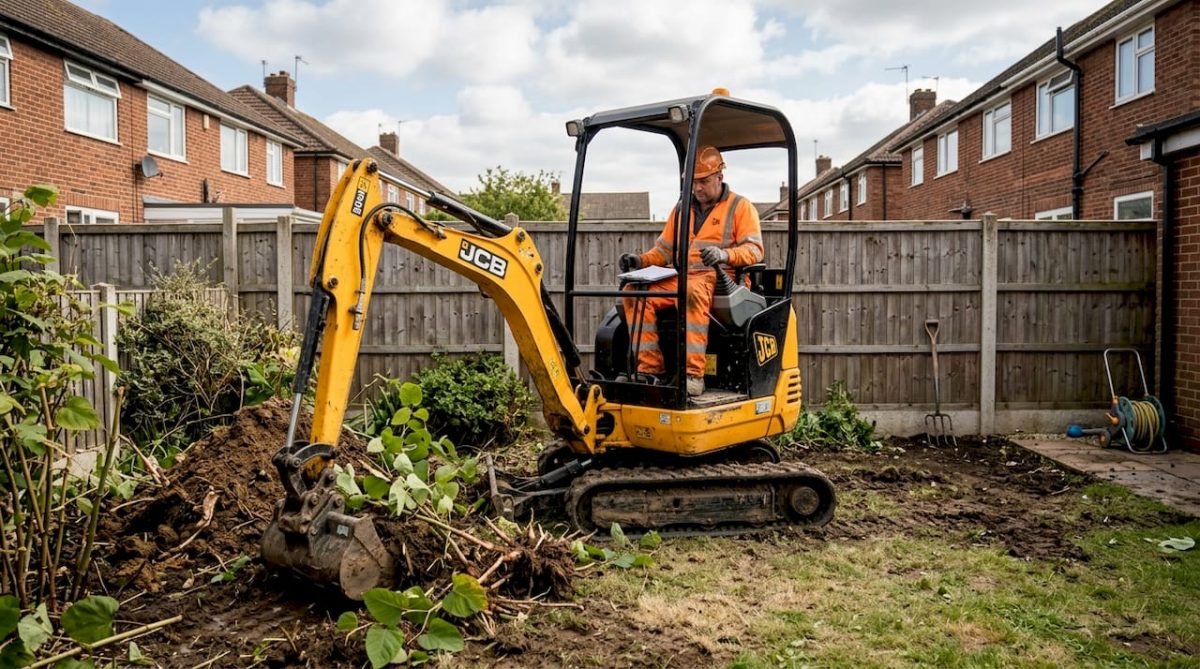
Many homeowners discover Japanese knotweed on their property and immediately face a critical decision: excavation or treatment? These two approaches differ fundamentally in cost, timeline, and impact on your garden. Excavation physically removes the problem within weeks but requires heavy machinery and substantial investment. Treatment depletes the plant’s energy over several years through targeted applications, offering a less disruptive path. Understanding these differences ensures you choose the method that aligns with your property goals, budget, and urgency whilst maintaining legal compliance across England, Wales, and Ireland.
Table of Contents
- Key takeaways
- What is excavation and how does it work?
- Understanding treatment: chemical and non-chemical approaches
- Comparing excavation and treatment: costs, timelines, success rates, and risks
- Legal considerations and best practices for homeowners in England, Wales, and Ireland
- Protect your property with expert Japanese knotweed services
- Frequently asked questions
Key Takeaways
| Point | Details |
|---|---|
| Cost and disruption | Excavation provides rapid removal but involves heavy machinery, higher costs and noticeable disruption. |
| Treatment duration longer | Treatment reduces knotweed energy over several years with less site disruption. |
| Legal compliance critical | Professional management is essential to ensure compliance with environmental laws across England, Wales and Ireland. |
| Professional management advised | Hiring PCA accredited professionals helps ensure legal compliance and effective removal. |
| Outcomes vary by method | Success rates and risks differ between excavation and treatment depending on infestation size and execution. |
What is excavation and how does it work?
Excavation represents the most direct approach to Japanese knotweed removal. Excavation involves physically removing contaminated soil and rhizomes to a depth of 2-3 metres using mechanical equipment, followed by licensed disposal, on-site relocation, or root barriers. Heavy machinery digs out the entire infected zone, creating significant ground disturbance but achieving rapid results.
The process begins with site assessment to map the extent of rhizome spread underground. Contractors then deploy excavators to remove all contaminated soil, often extending several metres beyond visible growth. This material must be transported to licensed facilities or buried on-site under strict Environment Agency protocols. The excavated area receives fresh soil and often a protective root barrier to prevent any remaining fragments from regenerating.
Timelines for excavation typically span weeks to a few months, making it ideal for property sales or development projects requiring immediate clearance. However, costs reflect this speed and intensity. Homeowners should expect expenditure between £5,000 and £50,000 depending on infestation size, site accessibility, and disposal requirements. Small garden patches cost considerably less than extensive commercial sites.
Pro Tip: Always hire PCA-accredited professionals to ensure legal compliance and effective removal, as improper excavation can spread fragments and violate environmental regulations.
Common follow-up methods include on-site burial at depths exceeding three metres with impermeable membranes, or installation of high-density polyethylene root barriers that block regrowth. These measures address the primary risk: incomplete removal leaving viable rhizome fragments that regenerate. Even tiny pieces measuring just a few centimetres can establish new colonies if conditions permit.
The physical nature of excavation creates unavoidable property disruption. Gardens, driveways, and landscaping features may require reconstruction. Noise, dust, and restricted access affect daily life during works. Yet for urgent situations like mortgage requirements or planning permissions, this trade-off delivers certainty that treatment timelines cannot match. Root excavation success rates demonstrate effectiveness when properly executed, but amateur attempts frequently worsen infestations by dispersing fragments.
Risks extend beyond spread potential. Excavation near buildings requires structural assessments to prevent foundation damage. Proximity to utilities demands careful planning and often additional costs for service diversions. Licensed waste carriers must handle all contaminated soil, with documentation proving compliant disposal. These requirements explain why professional management remains non-negotiable for excavation projects.
Understanding treatment: chemical and non-chemical approaches
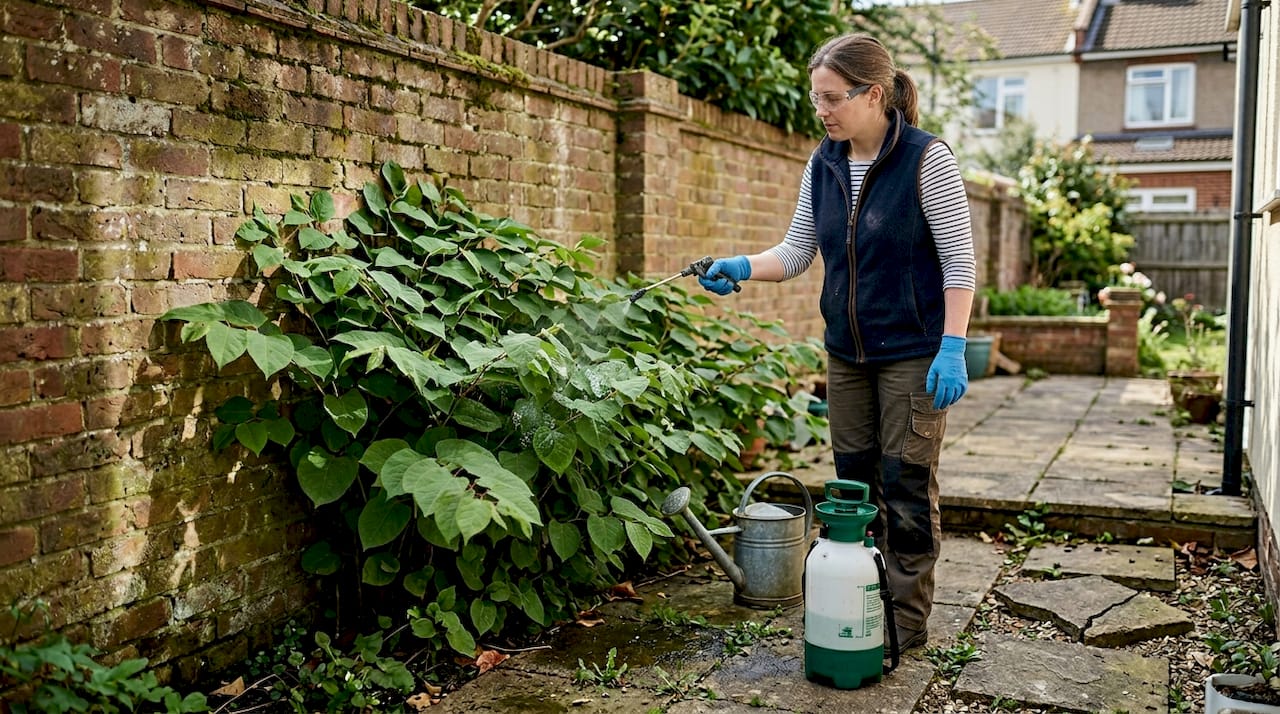
Treatment offers a contrasting philosophy: systematic depletion rather than immediate removal. Treatment primarily refers to herbicide application over 3-5 growing seasons to deplete rhizome energy reserves, often with 10-year insurance-backed guarantees. Glyphosate-based products applied via foliar spray or stem injection target the plant’s vascular system, transporting toxins to underground rhizomes where energy stores gradually diminish.
The treatment cycle begins in late summer when plants actively transport nutrients downward for winter storage. Contractors apply herbicide to foliage or inject directly into stems, ensuring maximum translocation to rhizomes. Visible die-back occurs within weeks, but underground reserves remain viable. Subsequent growing seasons require repeated applications as weakened rhizomes produce new shoots, each treatment further reducing their capacity to regenerate.
Timelines extend significantly compared to excavation. Most programmes span three to five years before achieving control, with some cases requiring up to a decade for complete eradication. This duration reflects the rhizome network’s remarkable resilience and ability to survive on stored energy. However, industry standards favour managed herbicide for most residential applications due to established protocols and predictable outcomes.
Costs for treatment programmes typically range from £1,500 to £5,000 initially, substantially lower than excavation. Yet homeowners must factor ongoing monitoring expenses and potential top-up treatments beyond the primary programme. Insurance-backed guarantees provide 10-year coverage, offering mortgage lenders the assurance they require whilst protecting homeowners from regrowth liability.
Chemical-free treatment alternatives exist, though adoption remains limited. Energy-based methods deliver high-voltage electricity to rhizomes, causing cellular damage without herbicide residues. These approaches claim faster results and environmental benefits, yet lack the extensive empirical validation that decades of herbicide use have established. Homeowners considering chemical free knotweed control benefits should verify credentials and guarantee terms carefully.
Pro Tip: For gardens and sensitive sites, choose PCA-certified herbicide treatments to ensure environmental safety and compliance with water protection regulations.
Treatment’s less invasive nature preserves garden aesthetics and function during management. No heavy machinery disrupts soil structure or damages surrounding plants. Neighbours experience minimal impact from brief contractor visits rather than weeks of excavation noise. This subtlety makes treatment ideal for established gardens where homeowners prioritise maintaining landscape integrity whilst addressing the infestation.
The chemical free knotweed treatment process demonstrates how alternative technologies adapt traditional principles. Rather than systemic herbicides, these methods apply physical energy to achieve similar rhizome depletion. Success requires precise application and multiple sessions, mirroring the repeated-treatment model of chemical programmes but substituting electrical or thermal energy for chemical action.
Risks centre on incomplete eradication and extended timelines. Herbicide-resistant populations can develop with improper application, though this remains rare under professional management. Environmental concerns about glyphosate persist despite regulatory approval, driving interest in non-chemical alternatives. Homeowners must weigh these considerations against treatment’s proven track record and lower initial investment compared to excavation.
Comparing excavation and treatment: costs, timelines, success rates, and risks
Direct comparison reveals how fundamentally these methods diverge. Excavation is mechanical and fast with high upfront costs suited for development, whilst treatment is systemic and slower with lower initial costs requiring ongoing monitoring. Each approach carries distinct advantages depending on property circumstances and homeowner priorities.
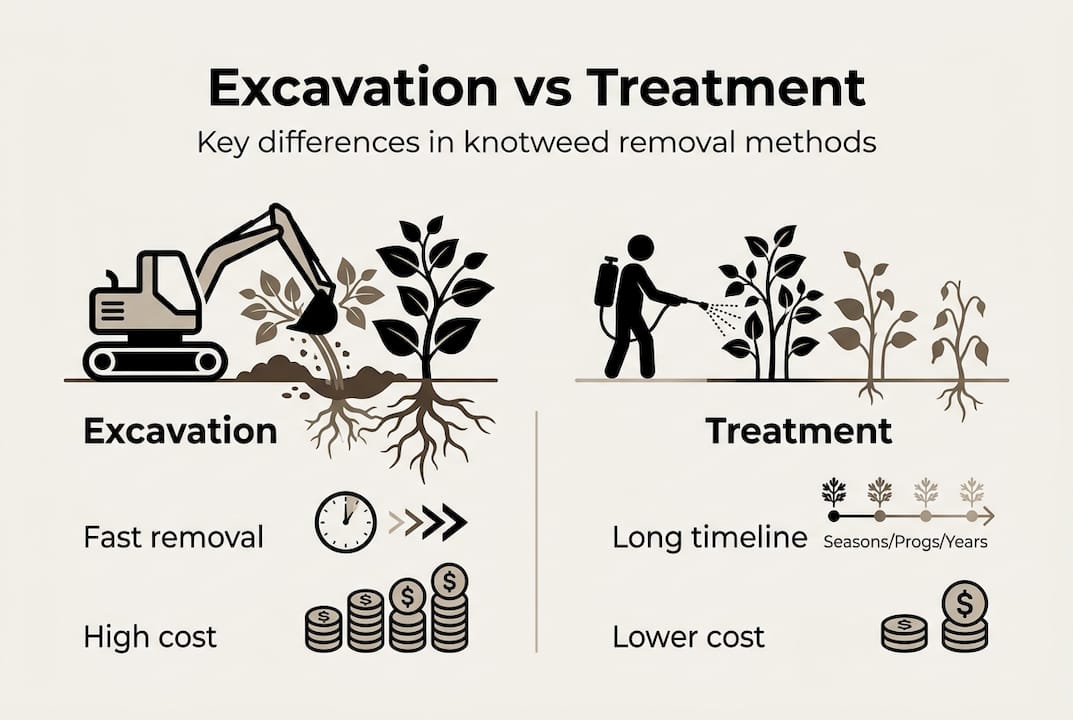
Timeline differences prove most striking. Excavation completes within weeks to months, delivering immediate site clearance that satisfies mortgage lenders and planning authorities. Treatment extends across multiple growing seasons, requiring patience but avoiding the disruption excavation creates. Homeowners facing urgent property sales typically choose excavation despite higher costs, whilst those managing established gardens often prefer treatment’s gradual approach.
| Comparison factor | Excavation | Treatment |
|---|---|---|
| Typical duration | Weeks to 3 months | 3-5 years (up to 10) |
| Cost range | £5,000-£50,000 | £1,500-£5,000 |
| Property disruption | Severe (machinery, soil removal) | Minimal (periodic applications) |
| Success rate | 95% with follow-up measures | 60-75% over extended period |
| Regrowth risk | Low if complete removal achieved | Moderate without proper monitoring |
| Best applications | Sales, development, urgent clearance | Gardens, long-term residential management |
| Environmental impact | High (soil disturbance, transport) | Low to moderate (herbicide use) |
Cost analysis extends beyond initial expenditure. Excavation’s £5,000-£50,000 range reflects site-specific factors: infestation extent, soil volume, disposal requirements, and site accessibility. A small garden patch might cost £8,000 whilst extensive commercial infestations exceed £40,000. Treatment’s £1,500-£5,000 initial cost appears more accessible, but multi-year monitoring and potential additional applications increase total investment over time.
Empirical benchmarks show excavation plus follow-up achieves 95% eradication in 2-3 years, whilst herbicide alone achieves 60-75% in 5-10 years. These statistics highlight excavation’s superior success rate when properly executed with root barriers or deep burial protocols. Treatment’s lower percentage reflects the challenge of completely depleting extensive rhizome networks through chemical means alone.
Excavation plus follow-up achieves 95% eradication in 2-3 years; herbicide alone achieves 60-75% in 5-10 years.
Risk profiles differ substantially. Excavation’s primary danger involves spreading viable fragments during soil movement, particularly in DIY attempts lacking proper protocols. Professional contractors mitigate this through careful handling, immediate disposal, and site containment. Treatment risks centre on incomplete rhizome kill, allowing regrowth after programme completion. Herbicide residues near watercourses raise environmental concerns, though approved products meet regulatory standards when properly applied.
Pro Tip: A combined approach of excavation followed by herbicide treatment can yield better long-term outcomes, reducing regrowth risk to under 5% whilst managing costs more effectively than excavation alone.
Suitability varies by property conditions and homeowner circumstances. Excavation suits development sites requiring immediate clearance, properties near sale, or situations where planning permissions demand rapid resolution. Treatment fits established gardens, sites near sensitive watercourses where excavation risks pollution, and homeowners prioritising minimal disruption over speed. Properties with structural concerns may find treatment safer than excavation’s ground disturbance.
Location factors heavily influence method selection. Urban properties with restricted access struggle to accommodate excavation machinery, making treatment more practical. Rural sites with ample space and fewer neighbours tolerate excavation’s disruption more easily. Proximity to buildings, utilities, or protected habitats often tips the balance toward treatment’s less invasive profile, despite extended timelines.
Exploring top non-chemical knotweed controls reveals emerging alternatives that blend excavation’s immediacy with treatment’s lower environmental impact. Energy-based methods and thermal treatments occupy this middle ground, though adoption remains limited pending broader validation. Homeowners should also consider herbicide resistance guidance when evaluating long-term treatment programmes to ensure protocols prevent resistance development.
Legal considerations and best practices for homeowners in England, Wales, and Ireland
Legal frameworks governing Japanese knotweed create strict obligations for homeowners across all three jurisdictions. UK Wildlife & Countryside Act Schedule 9 prohibits causing knotweed to grow in the wild, with Ireland maintaining similar prohibitions on spread and disposal. These laws make homeowners liable for any fragments that escape their property, whether through improper disposal, soil movement, or neglect.
Property transactions demand full disclosure. The TA6 form, standard in England and Wales conveyancing, explicitly asks about Japanese knotweed presence. Failure to disclose known infestations constitutes misrepresentation, exposing sellers to legal action and financial penalties. Buyers increasingly commission specialist surveys before exchange, making concealment both unethical and impractical. Irish property transactions follow similar disclosure principles under local conveyancing standards.
Insurance-backed guarantees have become essential for mortgage approval. Lenders require IBG coverage spanning 5-10 years, protecting against regrowth and providing the financial security they demand before approving loans. These guarantees must come from recognised insurers and accompany professional management plans demonstrating compliant treatment or excavation protocols. Without IBG documentation, property sales often collapse or require substantial price reductions.
Waste management regulations govern excavation disposal strictly. All contaminated soil qualifies as controlled waste requiring licensed carriers and approved facilities. Environment Agency permits document the disposal chain, creating an audit trail proving compliance. On-site burial requires specific depths, membrane installation, and long-term monitoring plans. Homeowners attempting DIY disposal face prosecution and substantial fines for environmental violations.
Professional accreditation matters significantly. PCA membership indicates contractors follow industry standards, maintain proper insurance, and understand current regulations. These professionals design management plans satisfying legal requirements whilst achieving effective control. Their involvement protects homeowners from liability and ensures methods meet the standards mortgage lenders and planning authorities expect.
Key legal obligations include:
- Never allow knotweed material to leave your property except via licensed waste carriers
- Disclose presence truthfully in property transactions using TA6 or equivalent forms
- Obtain insurance-backed guarantees covering minimum 5 years for mortgage compliance
- Use only PCA-accredited contractors for excavation or treatment programmes
- Maintain documentation proving compliant disposal or on-site burial protocols
- Monitor treated areas and respond promptly to any regrowth
- Avoid DIY excavation due to high spread risk and regulatory complexity
Environment Agency guidelines in England and Wales, alongside EPA protocols in Ireland, establish specific standards for knotweed management. These frameworks require risk assessments before work begins, particularly for sites near watercourses or protected habitats. Herbicide applications near water demand specialist products and buffer zones. Excavation adjacent to streams requires pollution prevention measures and often advance notification to environmental authorities.
Understanding Japanese knotweed legal obligations prevents costly mistakes and legal exposure. Homeowners who engage professionals early avoid the common pitfalls that lead to spread, regulatory violations, and failed property transactions. The complexity of laws regarding Japanese knotweed justifies professional guidance rather than attempting self-management of this regulated invasive species.
Best practices extend beyond legal minimums. Proactive monitoring detects regrowth early when treatment proves most effective. Maintaining detailed records of all management activities creates evidence of responsible stewardship. Communicating with neighbours about your management programme builds goodwill and prevents disputes. These practices protect property values whilst demonstrating the diligence mortgage lenders and buyers expect.
Protect your property with expert Japanese knotweed services
Navigating Japanese knotweed management requires specialist knowledge and proven methods. Professional services deliver the compliance, effectiveness, and guarantees that protect your property investment and satisfy legal requirements. Whether you choose excavation for rapid clearance or treatment for long-term control, expert guidance ensures optimal outcomes.
Japanese Knotweed Agency combines PCA accreditation with innovative approaches including chemical-free excavation services and energy-based treatments. Our programmes include insurance-backed guarantees meeting mortgage lender standards across England, Wales, and Ireland. Comprehensive site surveys identify the full extent of infestation, enabling accurate cost estimates and realistic timelines tailored to your property needs.
Explore our knotweed removal FAQs for detailed answers to common questions about methods, costs, and timelines. Understanding your legal obligations for knotweed ensures compliant management that protects you from liability whilst maintaining property value. Our team provides the expertise and support homeowners need to resolve knotweed problems confidently and effectively.
Frequently asked questions
What is the typical duration for total Japanese knotweed eradication using treatment?
Treatment generally requires 3-5 growing seasons to significantly reduce rhizomes, with some cases taking up to 10 years for full control depending on infestation severity and site conditions. Professional monitoring and follow-up applications prove critical for success, as skipped treatments allow rhizomes to recover strength. Insurance-backed programmes typically span five years with guarantees extending to ten years, providing the long-term assurance mortgage lenders require.
Is excavation suitable for every property affected by Japanese knotweed?
Excavation suits urgent redevelopment or sale situations due to rapid removal but involves high cost and significant property disruption. Properties near watercourses face restrictions due to pollution risks during soil movement. Sites with limited access for heavy machinery or proximity to sensitive structures often prove unsuitable for excavation, making treatment the more practical option despite longer timelines.
What legal responsibilities do homeowners have when treating Japanese knotweed?
Homeowners must prevent knotweed spread beyond their property boundaries and follow strict disposal regulations for any removed material. Disclosure in property transactions via TA6 forms is mandatory, with failure to disclose constituting legal misrepresentation. Insurance-backed guarantees help meet mortgage requirements whilst protecting against regrowth liability. Using PCA-accredited contractors ensures compliance with Environment Agency protocols and maintains the documentation lenders expect.
Can combining excavation and treatment improve knotweed eradication success?
Combining excavation with follow-up herbicide treatment reduces regrowth risk to under 5%, offering superior outcomes compared to either method alone. This hybrid approach suits large or difficult sites where excavation removes the bulk of contaminated soil whilst treatment addresses any remaining fragments. The strategy balances excavation’s speed with treatment’s thoroughness, though costs increase compared to single-method programmes. Professional assessment determines whether combined approaches justify the additional investment for your specific infestation.