

TL;DR:
- Invasive riverbank weeds threaten property stability, reduce value, and pose legal liabilities.
- Early, chemical-free control methods prevent spread, reduce costs, and protect ecosystems.
- Professional support ensures compliance, effective treatment, and long-term property protection.
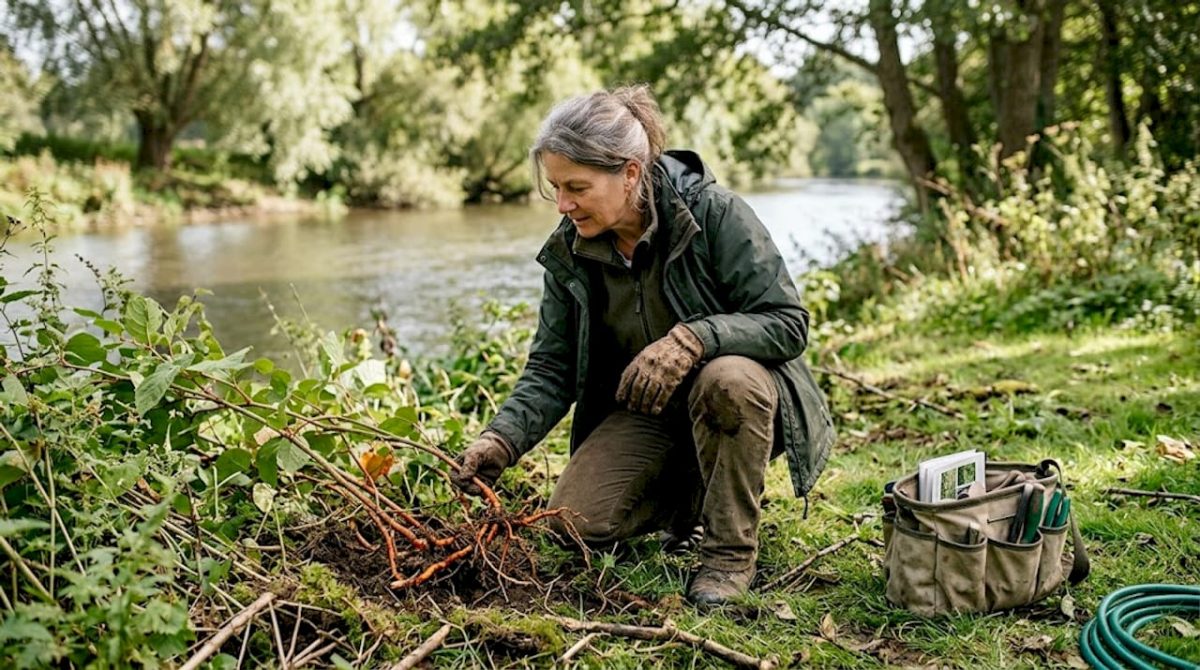
Invasive riverbank weeds are far more than a visual nuisance. They pose a genuine, measurable threat to your home, your finances, and your legal standing as a property owner. Invasive species cost the UK economy up to £1.7 billion annually, with the Canal & River Trust alone spending £700,000 each year on treatment. If your property borders a watercourse, river, or canal, the weeds growing along that bank could be quietly undermining your foundations, reducing your property value, and exposing you to legal liability. This guide explains the real risks, why early action matters, and how you can take effective, chemical-free control.
Table of Contents
- The impact of invasive riverbank weeds
- Why early control is crucial for homeowners
- Chemical-free methods for riverbank weed control
- Expert advice: Professional support and compliance
- Our take: What most guides miss about riverbank weed control
- Next steps: Reliable chemical-free help for riverbank weed control
- Frequently asked questions
Key Takeaways
| Point | Details |
|---|---|
| Riverbank weeds harm homes | Invasive plants like Japanese Knotweed destabilise riverbanks and directly threaten property safety and value. |
| Early action prevents spread | Quick intervention stops weeds from multiplying and helps preserve biodiversity, flood defences, and property value. |
| Chemical-free options work | Manual removal, mulching, and native planting can effectively control riverbank weeds without introducing harmful chemicals. |
| Legal duty for UK homeowners | Controlling invasive weeds is a responsibility under UK law, and non-compliance may result in legal or financial consequences. |
The impact of invasive riverbank weeds
Not all waterside plants are equal. Native species such as yellow flag iris and water mint stabilise riverbanks with deep, fibrous root systems that bind soil effectively. Invasive species work in the opposite direction. Japanese Knotweed, Himalayan Balsam, and Floating Pennywort are the three most damaging offenders on UK riverbanks, and each causes harm in a distinct way.
Japanese Knotweed and Himalayan Balsam erode banks, destabilise structures, and significantly increase flood risk. Japanese Knotweed grows up to 10 centimetres per day during peak season, pushing through tarmac, concrete, and even building foundations. Its hollow stems die back each winter, leaving bare soil exposed to erosion throughout the colder months. Himalayan Balsam grows in dense stands that crowd out native vegetation, and when it dies back in autumn, it leaves large sections of bank completely unprotected against water flow.
Floating Pennywort presents a different but equally serious problem. It spreads across the water surface, blocking light and oxygen, which kills aquatic life and slows water movement. Slower water flow means sediment builds up, raising the riverbed and increasing the likelihood of flooding upstream.
The financial and legal consequences are significant:
- Japanese Knotweed can reduce property value by up to 20%, according to the Royal Horticultural Society
- Mortgage lenders routinely refuse applications on affected properties
- Under the Wildlife and Countryside Act 1981, homeowners have a legal duty to prevent spread of listed invasive species
- Allowing Japanese Knotweed to spread onto neighbouring land or a watercourse can result in prosecution
| Plant | Primary threat | Bank impact |
|---|---|---|
| Japanese Knotweed | Root damage, erosion | Severe |
| Himalayan Balsam | Seasonal die-back, bare soil | Moderate to severe |
| Floating Pennywort | Water blockage, flooding | Severe |
| Native riparian plants | Stabilisation, biodiversity | Positive |
The contrast between native and invasive species is stark. Where native plants protect and support the bank, invasive species accelerate its breakdown. Understanding this distinction is the first step towards effective property value management and long-term protection of your home.
Why early control is crucial for homeowners
Many homeowners assume that leaving riverbank weeds alone is a neutral decision. It is not. Every season without action allows invasive species to extend their root systems deeper, spread further along the bank, and become significantly harder and more expensive to treat.
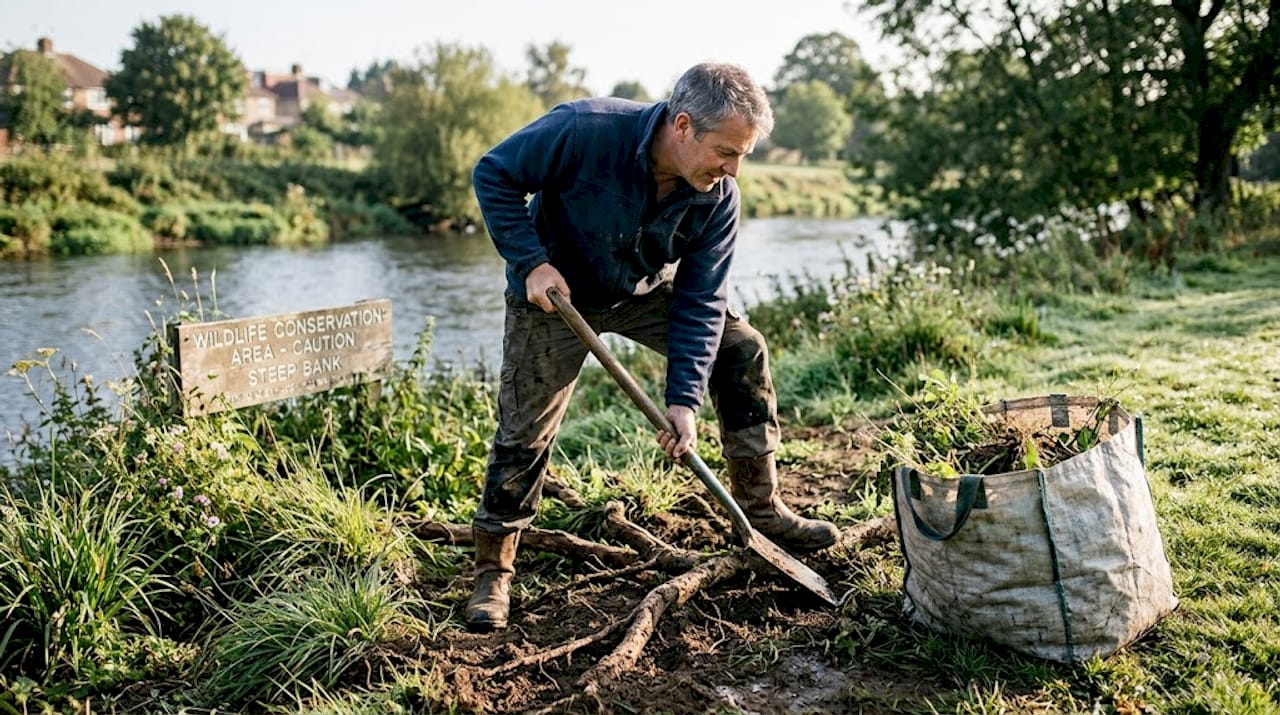
Japanese Knotweed spreads not just through its roots but through tiny fragments. A piece of rhizome (the underground stem network) as small as a fingernail can generate a new plant. This means that poorly managed cutting or disturbance without a proper control plan can actively accelerate the problem. Letting knotweed spread unchecked compounds both the physical damage and the legal risk you face as a property owner.
Key reasons to act early:
- Early treatment is faster, less disruptive, and more cost-effective than treating a mature infestation
- Smaller infestations are far less likely to have spread to neighbouring properties or watercourses
- Compliance with the Wildlife and Countryside Act is easier to demonstrate when action is taken promptly
- Biodiversity recovers more quickly when invasive species are controlled before they dominate the habitat
- Property valuations and mortgage applications are far less complicated when a treatment plan is already in place
“Control is essential for flood defence, biodiversity, and property value. Early action prevents spread via tiny fragments.” — Canal & River Trust
The legal duty for weed control under UK law is clear. Homeowners are responsible for preventing the spread of invasive species from their land. Ignorance is not a defence, and the consequences of inaction can include enforcement notices, civil claims from neighbours, and complications when selling your property.
Pro Tip: If you have recently purchased a property near a watercourse, commission a professional invasive weed survey before the growing season begins. Identifying a problem in early spring gives you the maximum window to act before the plant reaches full vigour.
The misconception that riverbank weeds are a “natural” part of the landscape is understandable but dangerous. These species are not native to the UK. They have no natural predators here, which is precisely why they spread so aggressively and cause such disproportionate damage.
Chemical-free methods for riverbank weed control
Controlling invasive weeds near watercourses without chemicals is not only possible, it is strongly preferable. Chemical runoff into rivers and streams causes serious harm to aquatic ecosystems, and near watercourses, the use of herbicides is heavily regulated. Chemical-free approaches protect water quality, wildlife, and the long-term health of the riverbank.
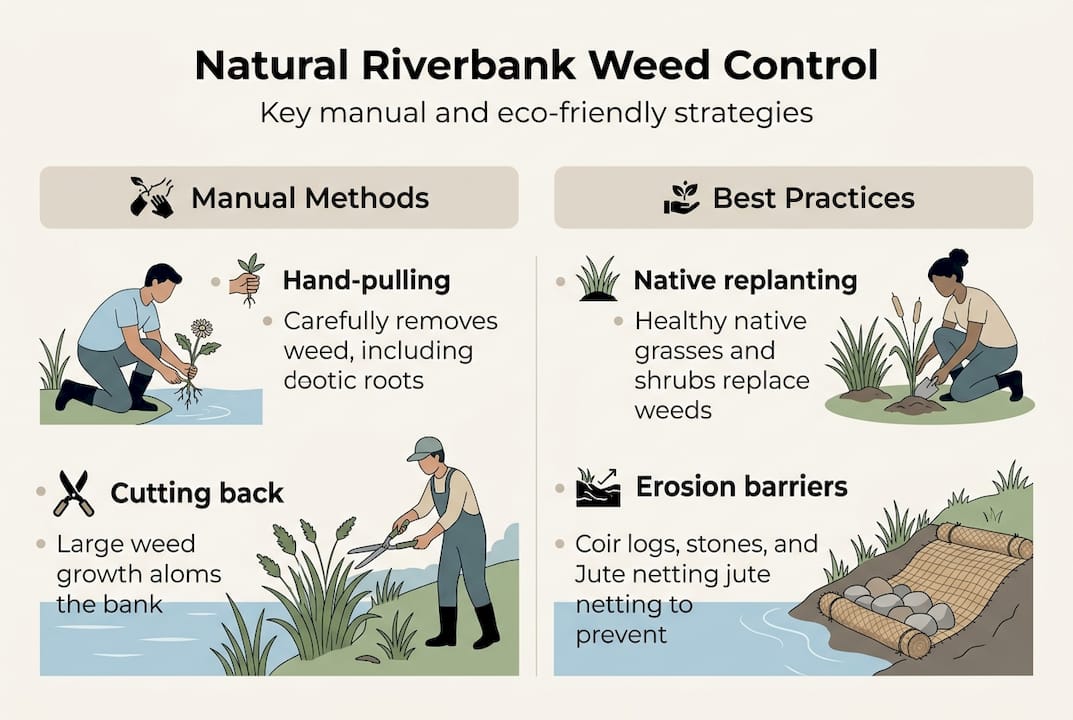
Natural weed control methods for riverbanks include manual removal, repeated cutting, smothering with mulch, and native replanting. Each method suits different species and situations.
Effective chemical-free approaches:
- Hand-pulling Himalayan Balsam: Best carried out in late spring before flowering. Pull the plant at the base, ensuring the root comes free. Bag and dispose of all material carefully, never compost it.
- Repeated cutting of Japanese Knotweed: Cut stems back to ground level several times throughout the growing season. This depletes the energy stored in the rhizome network over time. Consistency across multiple seasons is essential.
- Smothering and mulching: Cover treated areas with thick, light-excluding membrane or deep mulch to prevent regrowth and protect bare soil from erosion.
- Native replanting: Once invasive species are reduced, introduce native riparian plants such as purple loosestrife, meadowsweet, or water avens. These outcompete remaining weed seedlings and restore bank stability.
- Biological control for Floating Pennywort: Research into weevil-based biocontrol is advancing, offering a promising long-term solution for watercourse management.
| Method | Best for | Effort level |
|---|---|---|
| Hand-pulling | Himalayan Balsam | Low to moderate |
| Repeated cutting | Japanese Knotweed | High, multi-season |
| Smothering/mulching | All species | Moderate |
| Native replanting | Post-treatment stabilisation | Moderate |
| Biological control | Floating Pennywort | Specialist only |
Near watercourses, avoid disturbance without permission from the relevant authority. The Environment Agency may require consent for works that could affect the flow or structure of a watercourse. Always check before beginning any significant physical intervention.
Pro Tip: Never strim Japanese Knotweed without a containment plan. Fragments scatter easily and can establish new plants downstream. Always bag and dispose of all cut material at a licensed facility.
Our chemical-free knotweed treatment process uses direct electrical energy delivered at up to 5,000 volts, targeting the rhizome network without any chemical runoff risk. For chemical-free eradication tips tailored to your situation, our team is available to advise.
Expert advice: Professional support and compliance
For many homeowners, particularly those with large infestations or properties directly adjacent to watercourses, professional support is not just helpful, it is necessary. DIY approaches carry real risks when applied incorrectly. Fragments of Japanese Knotweed rhizome disturbed without proper containment can spread the problem further, and poorly documented work can leave you legally exposed.
When to seek professional help:
- The infestation covers a significant area or has spread beyond your boundary
- Your property is adjacent to a watercourse, requiring Environment Agency compliance
- You are buying or selling a property and need a formal survey and management plan
- Previous DIY attempts have not produced lasting results
- You need a treatment guarantee for mortgage or insurance purposes
A professional provider should offer a thorough invasive weed survey as a starting point, followed by a clear management plan with defined treatment stages and timelines. Guarantees matter. Lenders and insurers increasingly require documented evidence that invasive weeds are being managed by a qualified specialist.
The impact on mortgage applications from Japanese Knotweed is well documented. Many lenders will not proceed without a professional management plan in place, and some require the plan to be backed by a guarantee of ten years or more.
Emerging biocontrol for Floating Pennywort using specialist weevils is showing genuine promise in controlled trials. This approach targets the plant specifically without harming other species, representing the kind of ecological precision that chemical treatments cannot offer.
Near watercourses, chemical-free methods are preferred to prevent runoff, and professional providers with experience in riparian environments understand the regulatory requirements that apply. Compliance is not optional, and choosing a provider who understands both the ecology and the law protects you from future complications.
Pro Tip: Ask any professional provider for evidence of their compliance procedures and whether their management plans are accepted by major mortgage lenders. This protects your investment and your legal position.
Our take: What most guides miss about riverbank weed control
Most guides present chemical-free control as straightforward. Cut it back, pull it out, replant with natives. In practice, the reality is more demanding, and homeowners who approach it without adequate planning often find themselves back at the start after a season or two.
The legal duty to prevent spread under the Wildlife and Countryside Act is not a background consideration. It is the framework within which every decision about treatment must be made. We have seen cases where well-intentioned DIY work actually worsened the spread, simply because the homeowner did not know how easily fragments travel.
What genuinely makes a difference is combining consistent physical treatment with local knowledge of how the specific infestation behaves on your land. Riverbank infestations are shaped by water flow, soil type, and seasonal conditions that vary significantly from site to site. A plan that works on a chalk stream bank may be wholly inadequate on a clay-heavy urban riverbank.
Community awareness also matters. If your neighbours are not controlling their infestations, yours will return. Professional input, combined with effective long-term management, is the most reliable path to lasting results. Patience and vigilance are not optional extras. They are the foundation of success.
Next steps: Reliable chemical-free help for riverbank weed control
Taking action against invasive riverbank weeds is one of the most important steps you can take to protect your home, your finances, and your local environment. The guidance in this article gives you a strong foundation, but every property is different, and the right approach depends on the specific species, the extent of the infestation, and your proximity to a watercourse.

At Japanese Knotweed Agency, we specialise in chemical-free treatment and eradication using direct electrical energy, root barrier installation, and excavation. Our chemical-free treatment process is designed for precision and environmental responsibility. For a clear, practical starting point, our step-by-step chemical-free eradication guide walks you through the process. You can also access our full eradication plan guide to understand what a professional management programme involves from start to finish.
Frequently asked questions
Are riverbank weeds really a threat to my home?
Yes. Invasive riverbank weeds destabilise banks and threaten property foundations, increasing the risk of flooding and structural damage that can be both costly and difficult to reverse.
Do I have a legal responsibility to control riverbank weeds?
Yes. UK homeowners have a legal duty to prevent spread of invasive species such as Japanese Knotweed under the Wildlife and Countryside Act 1981, and failure to act can result in enforcement action or civil liability.
What is the safest way to control riverbank weeds without chemicals?
Manual removal, repeated cutting, mulching, and native replanting are proven chemical-free control methods for riverbank weeds, and they are particularly important near watercourses where chemical runoff poses a serious environmental risk.
Is professional help necessary for riverbank weed control?
For large infestations or properties adjacent to watercourses, professional help ensures compliance, documented guarantees, and safe control. DIY risks spread and legal complications that can be far more costly than the original treatment.