TL;DR:
- Energy-based plant removal, also known as thermo-electric treatment, involves applying electrical or thermal energy directly to invasive plant tissue to damage roots and deplete energy reserves. This method requires multiple treatments over one to two years, targeting rhizome deep within the soil to ensure effective eradication. Proper professional management, documentation, and patience are essential for successful, environmentally friendly removal that satisfies legal and mortgage requirements.
If you have searched for “energy-based plant removal explained” and found yourself wading through articles about waste-to-energy facilities or biomass combustion, you are not alone. The term causes genuine confusion, and that confusion matters if you are a homeowner or property buyer dealing with Japanese knotweed or another invasive species. Energy-based plant removal, also called thermo-electric treatment in specialist practice, refers to the direct application of electrical or thermal energy to invasive plant tissue, targeting root systems and depleting the stored energy reserves that allow these plants to regenerate. This article explains precisely how it works, what it can realistically achieve, and how to use it responsibly.
Table of Contents
- Key takeaways
- Why invasive plants are so hard to remove
- How energy removes plants: the science in practice
- What to realistically expect from treatment
- Choosing the right service as a homeowner or buyer
- My perspective on energy-based removal
- How Japaneseknotweedagency can help
- FAQ
Key takeaways
| Point | Details |
|---|---|
| Terminology clarity | Energy-based removal refers to thermo-electric treatment, not waste-to-energy or biomass processes. |
| Root depletion is the goal | Effective treatment must reach and damage the rhizome network, not just scorch surface growth. |
| Repeated treatment is standard | Most programmes require multiple visits across one to two seasons to exhaust root energy reserves. |
| Eco-friendly advantage | Chemical-free energy methods suit homeowners concerned about soil health, water courses, and biodiversity. |
| Professional surveys matter | Accurate identification and a documented management plan are both required for mortgage and lending purposes. |
Why invasive plants are so hard to remove
Japanese knotweed is the most well-known invasive plant problem facing UK homeowners, but it is far from the only one. Giant hogweed, Himalayan balsam, and rhododendron all present serious challenges to property owners and land managers. What these species share is an extraordinary capacity to store energy in their root systems, which allows them to regenerate aggressively after surface removal.
Japanese knotweed is a particularly striking example. Its rhizome network can extend three metres deep and seven metres laterally from the visible stem, and the plant can push through tarmac, concrete, and cavity walls. Even a fragment as small as a fingernail is capable of generating a new plant under the right conditions. This biological resilience is the core reason that standard cutting or pulling is ineffective as a standalone solution. Cutting and mowing requires multiple seasonal interventions to begin depleting root energy, and without professional management, regrowth is virtually guaranteed.
The consequences of leaving an infestation untreated extend well beyond the garden. Mortgage lenders frequently decline applications or withhold offers on properties where knotweed is present without a documented management plan. Solicitors are now routinely required to flag knotweed as part of property searches. There are also legal obligations around preventing spread to neighbouring land. The financial and legal exposure can be considerable, which is why understanding your removal options clearly matters so much.
Key challenges posed by Japanese knotweed and similar invasive plants include:
- Rhizome networks that extend well beyond the visible above-ground growth
- Rapid regrowth from the smallest root fragments if disturbed without containment
- Potential structural damage to buildings, drainage systems, and hard surfaces
- Mortgage and property sale complications without specialist documentation
- Controlled waste regulations that govern how excavated rhizome material must be disposed of
How energy removes plants: the science in practice
The phrase “energy-based plant removal” covers two primary techniques in professional invasive species management: electrical treatment and thermal treatment. Both approaches work on the same biological principle. They deliver energy directly into plant tissue to cause internal cell damage and deplete the stored carbohydrate reserves that fuel regeneration.
Electrical treatment involves delivering high-voltage current through the plant stem and into the root system. Commercial agricultural devices such as the Weed Zapper deliver up to 15,000 volts to target plants, causing moisture within plant cells to expand rapidly and rupture cell walls. This kills the plant at a cellular level rather than simply removing visible growth. In controlled conditions, high-voltage electrical methods have demonstrated over 95% weed control and significantly reduced seed viability in subsequent seasons.
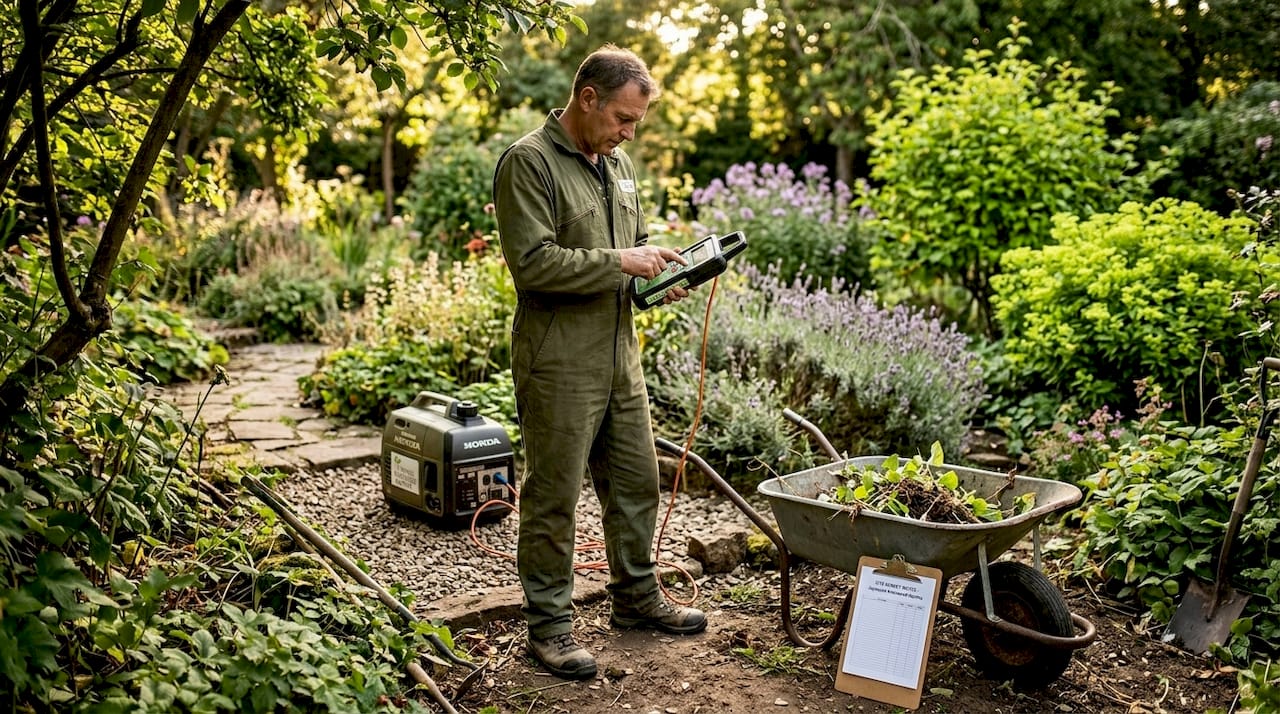
Japaneseknotweedagency delivers direct electrical energy of up to 5,000 volts on site, applied to knotweed and other invasive species in a controlled, repeatable programme. Each treatment delivery causes progressive internal cell damage throughout the rhizome network, reducing the plant’s capacity to draw on stored energy reserves with every subsequent visit. This is not a one-off procedure. It is a measured, seasonal programme designed to exhaust the plant’s regenerative capability over time.
Thermal treatment operates through a different mechanism, using superheated steam or directed heat to penetrate soil and root tissue. Both electrical and thermal approaches are chemical-free solutions that appeal to homeowners concerned about herbicide residues in soil, contamination of nearby water courses, or harm to non-target species and pollinators.
| Treatment method | Mechanism | Suitable for knotweed rhizomes | Chemical use |
|---|---|---|---|
| Electrical (thermo-electric) | Cell rupture via voltage | Yes, with repeated application | None |
| Thermal (steam/heat) | Heat penetration of root tissue | Partial, surface-focused | None |
| Herbicide (e.g. glyphosate) | Systemic absorption via leaves | Yes, over 3 to 5 years | Yes |
| Excavation | Physical extraction | Yes, immediate but costly | None |
| Cutting or mowing | Surface depletion over time | Partial, slow process | None |
Pro Tip: Surface scorch or single-visit electrical treatment is not sufficient for established knotweed. Confirm with your contractor that energy delivery is calibrated to reach rhizome depth, not just the above-ground stem.
What to realistically expect from treatment
One of the most common misconceptions about energy-based vegetation control is that it delivers rapid, visible results after a single application. For surface annual weeds in agricultural settings, that may sometimes be true. For Japanese knotweed with a mature rhizome network, the reality is different and understanding that difference protects you from disappointment and from wasting money.
Effective eradication programmes using energy-based methods typically span one to two years, with documented results and scheduled follow-up visits. Each treatment visit progressively weakens the rhizome network, but the plant will often attempt to re-sprout between treatments as it draws on remaining stored energy. This is expected behaviour, not treatment failure.
Key considerations when managing expectations include:
- Multiple treatment cycles across two or more growing seasons are standard practice
- Re-sprouting between visits is a normal part of the depletion process, not a sign that treatment is failing
- Monitoring for re-sprouts and containment of any disturbed material is required throughout the programme
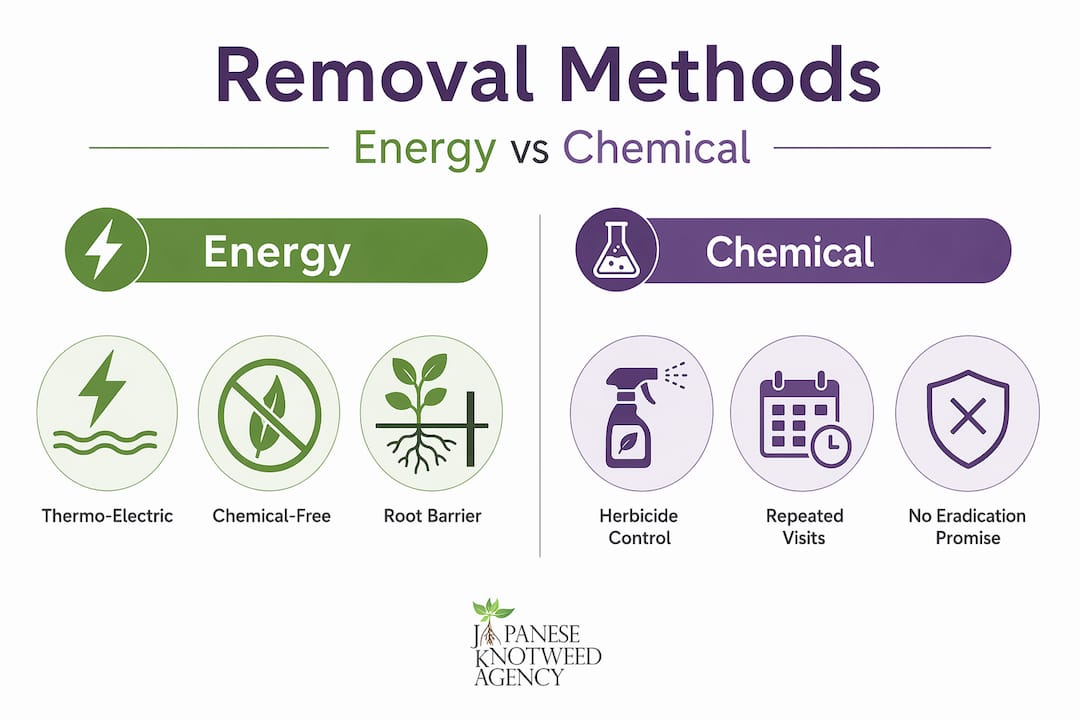
- Combining energy-based treatment with root barrier installation can prevent lateral spread during the programme
- Final success should be confirmed by a specialist survey, not simply the absence of visible growth
“Depleting energy reserves in invasive plant roots is the fundamental biological principle underpinning removal success. Repeated mechanical or energy intervention is necessary to exhaust the root system, and there are no shortcuts to that process.”
The practical implication for homeowners is this: budget for a multi-season programme, not a single treatment day. Contractors who promise complete eradication after one visit are not providing an accurate assessment of what is involved.
Choosing the right service as a homeowner or buyer
If you are a property buyer or homeowner seeking energy plant removal techniques for knotweed or another invasive species, the quality of the contractor you choose directly determines whether your investment produces a result that satisfies mortgage lenders, protects your property value, and genuinely clears the infestation.
Here is a structured approach to making the right decision:
-
Commission a professional survey first. Do not proceed to treatment without accurate identification and a mapped assessment of the affected area. A professional invasive species survey provides the baseline documentation that mortgage lenders require and allows treatment to be correctly scoped.
-
Request a documented management plan. A credible contractor will provide a written plan covering treatment schedule, expected outcomes, monitoring protocols, and the number of visits included. A 3 to 5 year treatment commitment with monitoring and documentation is the standard for mortgage-related cases.
-
Confirm the treatment is chemical-free if that is your priority. Ask specifically whether the energy delivery method is electrical, thermal, or a combination, and at what voltage or temperature it operates. Confirm that rhizome depth is addressed, not just surface growth.
-
Check for insurance-backed guarantees. Lenders may require evidence that treatment is covered by an insurance-backed guarantee. Confirm this is available before signing any agreement.
-
Ask about post-treatment management. Root barrier installation and appropriate replacement planting help prevent reinfestation and restore ecological balance once the invasive plant is under control.
Pro Tip: Avoid any contractor who is unable to provide a written management plan, cannot confirm their energy delivery specifications, or discourages you from booking a specialist survey before treatment begins. These are not signs of confidence. They are warning signs.
Understanding the advantages of energy plant removal also extends to the broader environmental picture. Chemical-free treatment eliminates the risk of glyphosate entering soil or nearby water courses, which matters particularly on plots adjacent to rivers, streams, or gardens with established native planting. For homeowners who value biodiversity and soil health, this is a significant consideration.
My perspective on energy-based removal
I have worked alongside property owners who arrived at us frustrated, often having already spent money on treatments that produced no lasting result. What I have observed consistently is that the expectation of a quick fix is the single biggest obstacle to successful knotweed management.
Energy-based thermo-electric treatment is genuinely effective. I have seen programmes that reached 95% success within two seasons, with properly documented outcomes that satisfied mortgage lenders and allowed property transactions to proceed. But those results came from programmes that were planned correctly, executed consistently, and monitored throughout. The combination of physical, energy-based, and containment methods produces the best long-term outcomes. No single approach works in isolation for an established infestation.
My honest view is that chemical-free energy methods represent the most responsible option available to most homeowners today. They protect the surrounding ecology, they do not introduce systemic herbicides to the soil, and they are documentable in a way that satisfies lenders. But they require patience and professional management. If you approach this as a long-term programme rather than a one-time fix, you will achieve results you can rely on.
— Alan
How Japaneseknotweedagency can help
Japaneseknotweedagency is a recognised pioneer in chemical-free invasive plant eradication, delivering thermo-electric treatment programmes across England, Wales, and Ireland. Their approach uses direct electrical energy of up to 5,000 volts to target knotweed rhizome networks, progressively depleting the plant’s stored energy reserves across a structured treatment programme.
Their services include professional invasive species surveys, energy-based treatment programmes, root barrier installation, and excavation works. Every programme is supported by documentation suitable for mortgage lenders, insurance-backed guarantees, and a monitoring plan covering the full treatment period. For homeowners and property buyers seeking chemical-free invasive plant solutions, Japaneseknotweedagency offers a transparent, specialist-led route from survey to confirmed eradication. The first step is always a professional assessment. Book a survey to receive an accurate diagnosis and a treatment plan you can act on with confidence.
FAQ
What does energy-based plant removal actually mean?
Energy-based plant removal, also called thermo-electric treatment, refers to the direct application of electrical or thermal energy to invasive plant tissue to cause cell damage and deplete the root system’s stored energy reserves. It is distinct from waste-to-energy or biomass processes, which are unrelated energy recovery methods.
How many treatments does Japanese knotweed require?
Effective eradication programmes typically require multiple treatment visits across one to two years, with monitoring between visits. A single application is rarely sufficient to exhaust the root energy reserves of an established infestation.
Will energy-based treatment satisfy my mortgage lender?
It can, provided the treatment is delivered by a specialist contractor who supplies a written management plan, documented outcomes, and an insurance-backed guarantee. A multi-year treatment and monitoring plan with professional survey documentation is what most lenders require.
Is energy-based removal safer than herbicide treatment?
For homeowners concerned about soil health, water courses, or biodiversity, chemical-free energy methods eliminate the risks associated with herbicide residues. Chemical-free treatment with a documented 95% success rate is now a credible and environmentally responsible alternative to glyphosate-based programmes.
Can I carry out energy-based knotweed treatment myself?
DIY removal of Japanese knotweed is strongly discouraged. Disturbing the rhizome network without professional containment risks fragmentation and spread, and DIY removal without licensed disposal of excavated material can breach controlled waste regulations. Professional management is both legally safer and more effective.