
TL;DR:
- Japanese Knotweed must be legally disclosed during property transactions to avoid legal penalties.
- Thermo-electric treatment offers a chemical-free, rapid, and effective method with a 95% success rate.
- Ongoing monitoring and proper waste disposal are essential for long-term eradication and legal compliance.
Japanese Knotweed is one of the most legally and financially consequential plants a homeowner in England, Wales, or Ireland can encounter. Classified as invasive under the Wildlife and Countryside Act 1981, it must be disclosed during property transactions and managed responsibly to avoid criminal liability. Whether you are preparing for a sale, planning a renovation, or simply trying to reclaim your garden, knowing the right eradication methods, legal obligations, and documentation requirements is essential. This checklist-driven guide covers everything from survey standards and thermo-electric treatment to physical excavation, root barriers, and compliant waste disposal, giving you a clear, actionable path forward.
Table of Contents
- Legal criteria and survey essentials for garden protection
- Thermo-electric treatment: Innovative, low-waste solution
- Physical excavation and root barriers: Comparison and checklist
- Monitoring, waste disposal, and documentation for lasting protection
- Beyond checklists: What experts wish homeowners knew
- Discover professional help for garden protection
- Frequently asked questions
Key Takeaways
| Point | Details |
|---|---|
| Legal survey essentials | Professional surveys and clear disclosure protect against legal issues and ensure property value. |
| Thermo-electric innovation | Thermo-electric treatments offer high success, low waste, and are ideal for complex gardens. |
| Physical vs root barriers | Excavation clears quickly but root barriers prevent re-infestation with minimal disruption. |
| Monitoring and compliance | Annual checks and strict waste disposal are vital to prevent spread and retain compliance. |
| Professional support | Expert help reduces risks, ensures chemical-free eradication and unlocks insurance guarantees. |
Legal criteria and survey essentials for garden protection
Before any eradication work begins, understanding your legal standing is non-negotiable. Japanese Knotweed must be disclosed on the TA6 property information form when selling, and mortgage lenders routinely reject applications where infestations are unmanaged or undocumented. The consequences of non-disclosure can include legal action from buyers, so getting a professional survey in place early protects you on every front.
The Royal Institution of Chartered Surveyors (RICS) uses a four-category grading system to assess proximity and risk:
- Category 1: Knotweed present on neighbouring land more than 7 metres from the boundary, with no visible impact on the property.
- Category 2: Knotweed within 7 metres of the property boundary or within the garden but not causing structural damage.
- Category 3: Knotweed within 7 metres of habitable spaces or outbuildings, with evidence of damage or encroachment.
- Category 4: Knotweed within or causing direct damage to structures, foundations, or drainage systems.
Higher categories demand more urgent and documented professional intervention. A knotweed survey checklist provides a clear framework for what needs to be recorded, mapped, and verified before any treatment begins.
Pro Tip: Always request an insurance-backed guarantee from your treatment provider. Mortgage lenders and solicitors increasingly require this documentation, and it significantly improves your position when selling property with knotweed present.
Sites adjacent to water courses, or large infestations exceeding 10 square metres, require specialist survey methodology. The RHS knotweed guidance recommends professional involvement for any situation involving sensitive ecological boundaries.
Mapping the rhizome network is as important as the visual survey. Rhizomes can extend far beyond the visible shoot growth, and incomplete mapping leads to incomplete treatment. Accurate records also strengthen your legal compliance position and directly support knotweed’s impact on property values by demonstrating a proactive management programme to prospective buyers and lenders.
With legal compliance established, the next step is evaluating eradication methods that avoid chemicals entirely.
Thermo-electric treatment: Innovative, low-waste solution
Thermo-electric treatment is the most technically advanced chemical-free option currently available, and it is the method at the core of what we do at Japanese Knotweed Agency. The process involves delivering direct electrical energy of up to 5,000 volts into the plant tissue and root network, causing irreversible internal cell damage and progressively depleting the energy reserves stored within the rhizome system. Each treatment visit compounds the effect, weakening the plant further with every application.
The practical advantages for homeowners are significant:
- No chemicals introduced into the soil, water table, or surrounding ecology.
- Minimal surface disruption, making it ideal for gardens near walls, patios, or foundations.
- Suitable for use near water courses, where herbicide treatments are prohibited or restricted.
- Faster results than many traditional approaches, typically delivering measurable progress within one to two treatment seasons.
- Low waste generation, reducing licensed disposal requirements compared to full excavation.
A 95% eradication success rate makes thermo-electric treatment particularly well-suited to situations where time is critical, such as an imminent property sale or a planned construction project. Speed of resolution matters enormously when mortgage approvals and exchange dates depend on documented progress.
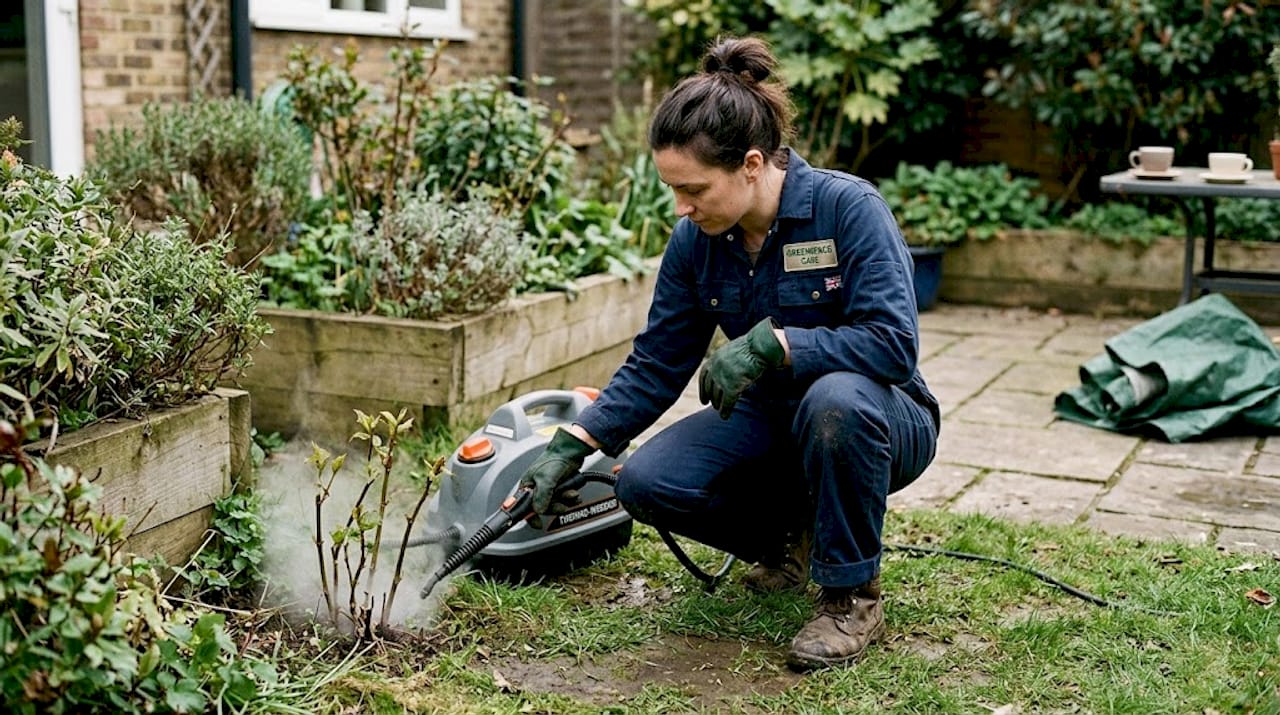
Pro Tip: If your garden has complex boundaries adjoining neighbouring properties or public land, thermo-electric treatment allows precise targeting without the collateral disruption that excavation causes. This precision matters for maintaining positive relations with neighbours and avoiding accidental spread during treatment.
The RHS professional treatment preference for expert-led management is well-established, particularly for sites with ecological sensitivity. Our thermo-electric solutions have been deployed across diverse sites, from urban rear gardens to rural riverside properties, with consistent results. For large-scale or particularly deep infestations, combining thermo-electric treatment with other physical strategies delivers the most thorough outcome, and the future of weed control increasingly points towards layered, non-chemical programmes exactly like this.
Whilst thermo-electric treatment is arguably the most innovative approach, traditional physical methods still play a meaningful role where urgency or scale dictates a different strategy.
Physical excavation and root barriers: Comparison and checklist
For some garden situations, physical removal or containment is the most practical route. Understanding the differences between these two approaches helps you make an informed decision based on your site conditions, budget, and timeline.
| Method | Speed of effect | Disruption level | Waste generated | Best suited for |
|---|---|---|---|---|
| Physical excavation | Immediate | High | Significant | Isolated, small infestations |
| Root barrier installation | Gradual (2 to 4 years) | Low to moderate | Minimal | Boundary containment, renovations |
Physical excavation provides immediate clearance of visible growth and accessible rhizomes, making it attractive when speed is the priority. However, it generates substantial volumes of contaminated soil that must be removed via licensed waste contractors, which adds cost and logistical complexity. Excavation works best for clearly isolated, smaller infestations where the full rhizome extent can be confidently traced and removed.
Root barriers, by contrast, offer a containment and redirection strategy. Installing a high-density polyethylene barrier beneath the soil line prevents rhizome spread into adjacent areas while the plant is managed above ground. Our root barrier tips highlight the importance of correct depth and overlap to prevent rhizome bypass. Done properly, barriers provide long-term knotweed protection without major soil disturbance.
Practical checklist for either approach:
- Assess the full extent of the infestation before committing to a method.
- Confirm soil conditions and proximity to structures, utilities, or water.
- For infestations exceeding 10 square metres, instruct a professional rather than attempting DIY clearance.
- When installing root barriers, ensure minimum 600mm depth and proper sealing at joins.
- Monitor treated areas at regular intervals and document each inspection.
Attempting excavation without professional guidance on larger sites risks fragmenting the rhizome network, which can accelerate spread rather than reduce it. Refer to our invasive species eradication plan guide for site-specific decision frameworks.
After selecting and combining your preferred method, follow-up and documentation ensure both success and ongoing legal compliance.
Monitoring, waste disposal, and documentation for lasting protection
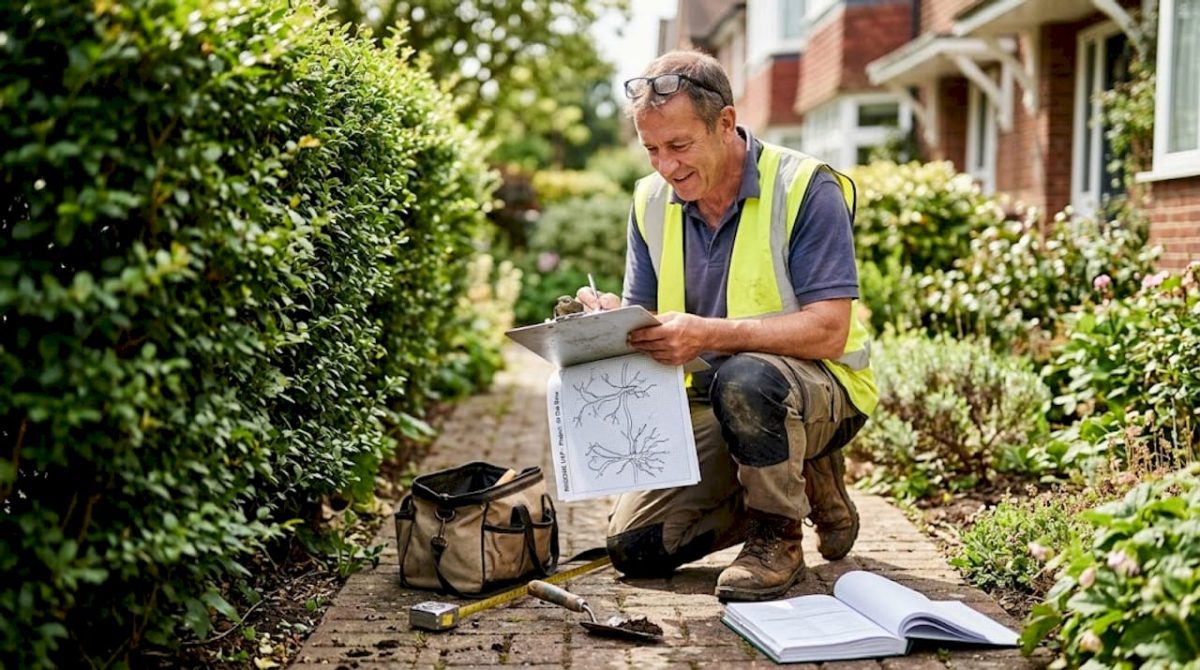
Eradication does not end with a single treatment visit. Japanese Knotweed rhizomes reach up to 7 metres horizontally and 3 metres deep, meaning dormant fragments can regenerate months or even years after initial treatment. Sustained monitoring is what separates a managed situation from a recurring legal and financial liability.
Follow this step-by-step monitoring and compliance process:
- Schedule post-treatment visits at three-month intervals during the growing season (April to October).
- Photograph all monitored zones at each visit, logging date, location, and any visible regrowth.
- Test soil in excavated areas annually to confirm rhizome absence before any landscaping or construction begins.
- Update your site map after each visit to reflect current conditions and treatment progress.
- Retain all documentation including survey reports, treatment records, and waste transfer notes for at least ten years.
Waste disposal is a critical and often overlooked compliance point. It is a criminal offence to spread Japanese Knotweed material, whether intentionally or through careless handling. All excavated material must travel via a licensed waste carrier to an approved facility. Never compost knotweed on site or include it in domestic green waste collections.
| Documentation type | Purpose | Retention period |
|---|---|---|
| Survey reports | Legal compliance and mortgage support | Minimum 10 years |
| Treatment logs | Proof of ongoing management | Duration of programme |
| Waste transfer notes | Criminal liability protection | Minimum 2 years (legal minimum) |
| Site maps and photographs | Evidence of extent and progress | Minimum 10 years |
For ongoing assurance, use our property survey workflow to align your documentation with what lenders and solicitors expect. And for a complete eradication step-by-step reference, our resource library covers every stage from initial identification through to final sign-off.
With the full checklist covered, here are some overlooked lessons from hands-on eradication and garden protection work.
Beyond checklists: What experts wish homeowners knew
Checklists make eradication manageable, but persistence is what actually wins the battle. In our experience across hundreds of sites in England, Wales, and Ireland, the homeowners who achieve lasting results are those who treat knotweed management as an ongoing commitment rather than a one-off project. No single treatment suffices; repeat visits and combined methods are what produce reliable, documented eradication.
Thermo-electric treatment shines particularly well for gardens with complex or constrained boundaries, but large infestations near structures or in clay-heavy soils still benefit from a layered strategy that may include barriers or targeted excavation alongside electrical treatment.
The paperwork is not just administrative. Survey records and treatment logs are what protect your property value and your peace of mind when a buyer’s solicitor asks difficult questions. Every year without an inspection is a year of potential liability accumulating silently. The property industry impact of undisclosed or poorly managed knotweed is well-documented, and prevention through annual documentation consistently costs far less than reactive legal defence. The RHS reinforces the case for professional-led management, and we would encourage every homeowner to treat that advice seriously.
Discover professional help for garden protection
Managing Japanese Knotweed effectively requires the right combination of expertise, technology, and legal awareness. At Japanese Knotweed Agency, we pioneer chemical-free solutions that deliver real, documented results without introducing harmful substances to your garden or the wider environment.
Our step-by-step treatment process walks you through exactly what to expect from your first survey to final sign-off, with insurance-backed guarantees included. If you have questions about your specific situation, our Japanese Knotweed FAQs cover the most common concerns from homeowners across England, Wales, and Ireland. For a broader look at what we offer, explore our full range of invasive plant solutions and find the right programme for your property.
Frequently asked questions
Do I need to disclose Japanese Knotweed during property sales?
Yes, UK law requires disclosure of Japanese Knotweed infestations on the TA6 property information form when selling. Failure to disclose can result in legal action from buyers after completion.
Are thermo-electric treatments effective and safe for gardens?
Thermo-electric treatments deliver a 95% eradication success rate and are safe for use near structures and water courses, making them one of the most reliable chemical-free options available to homeowners.
What are the best practices for disposing of Japanese Knotweed waste?
Always use a licensed waste carrier and an approved disposal facility, as spreading knotweed is a criminal offence under UK law. Never compost it on site or include it in domestic green waste collections.
How often should gardens be monitored for Japanese Knotweed?
Annual inspections are the minimum recommended standard, with repeat monitoring visits during the growing season essential in the years immediately following active treatment to prevent re-emergence.
Can DIY eradication increase the risk of spreading Knotweed?
Yes. Disturbing rhizomes without professional knowledge frequently fragments them, and even a small fragment can regenerate into a new plant. DIY attempts risk both accidental spread and criminal liability, which is why professional intervention is strongly advised for any site beyond the most minor surface growth.