

TL;DR:
- High voltage weed control uses electrical currents between 3,000 and 15,000 volts to kill invasive plants without chemicals. It causes systemic cell damage by heating plant tissues from the inside out, effectively destroying roots and rhizomes over multiple treatment passes. This method offers a chemical-free, environmentally friendly solution ideal for sensitive sites and organic properties.
High voltage weed control is defined as the application of powerful electrical currents, typically between 3,000 and 15,000 volts, directly to invasive plants to cause systemic cell death without the use of any chemical herbicide. The industry term for this technology is electrical weed control, sometimes called thermo-electric treatment when applied in specialist invasive species management. Brands and systems including Garford, Weed Zapper, and RootWave have brought this method from agricultural research into practical field use. For property owners dealing with Japanese Knotweed or other persistent invasive species, it represents one of the most significant advances in chemical-free weed management available today.
How does high voltage weed control work to kill invasive plants?
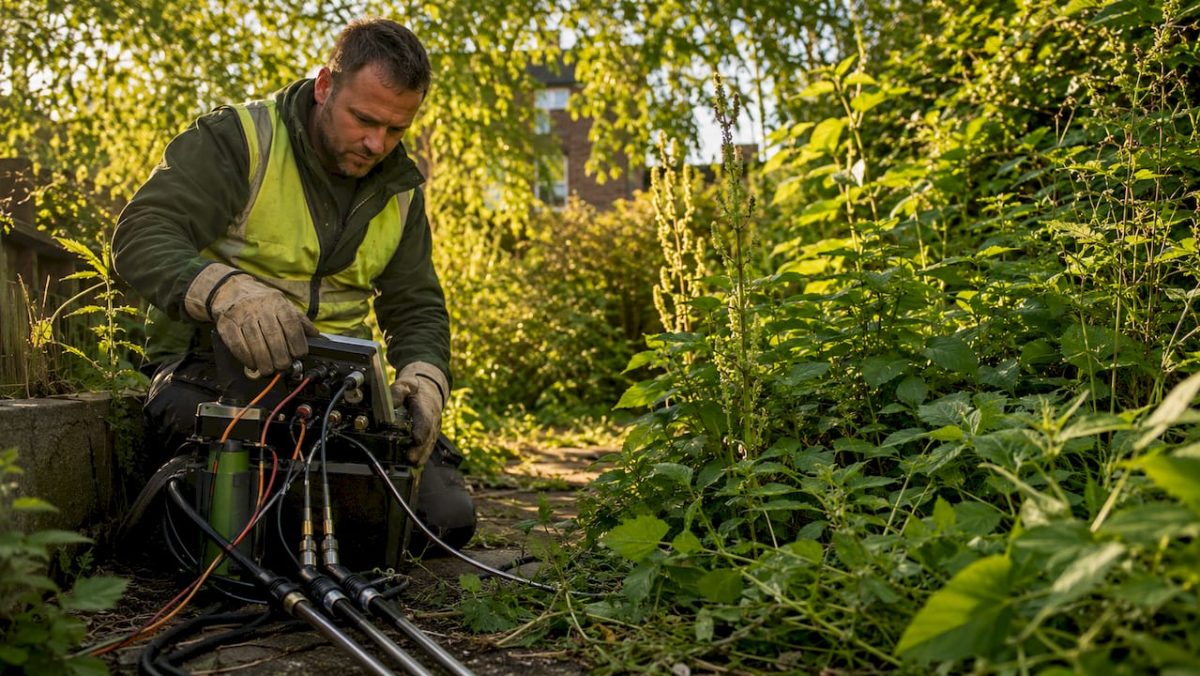
Electrical weed control works by passing a high-voltage current through plant tissue, from an electrode in contact with the weed down through the stem and into the root system. Systems generally operate in the 3kV to 15kV range, with 10kV being the most common working voltage for field applications. The current generates intense internal heat within the plant’s cells. That heat causes cell membranes to rupture and the cellular fluid to effectively boil, destroying the plant from the inside out.
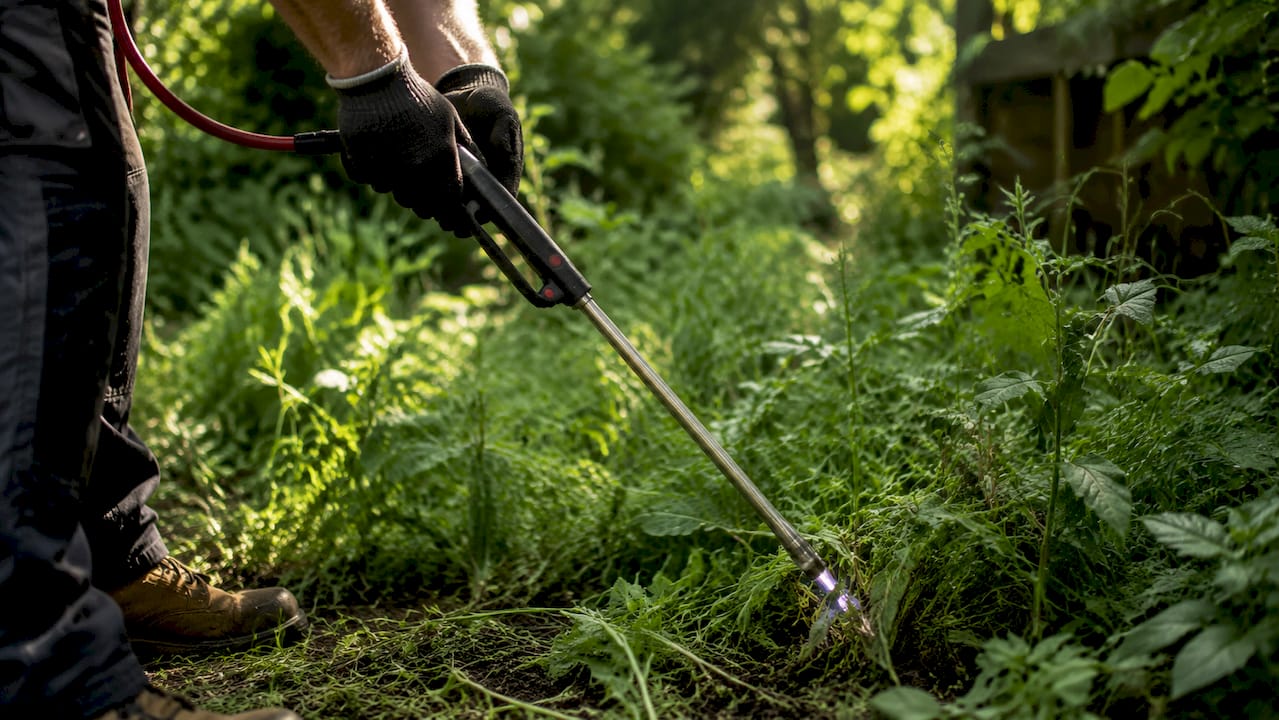
This systemic action is what sets electrical treatment apart from surface-level methods. Electricity kills plants by heating cells internally, which means the damage travels down into the root network rather than simply scorching the visible foliage. For deeply rooted invasive species like Japanese Knotweed, this root-level disruption is critical to any long-term management strategy.
Compared with thermal methods such as flaming or steam treatment, electrical weed control uses significantly less energy to achieve a comparable kill rate. That efficiency matters both environmentally and operationally. Equipment typically moves at a slow walking pace to allow sufficient energy transfer into the plant tissue.
Pro Tip: Operational speed is not a shortcut. Slower speeds of 0.5–1 km/h produce more than 80% weed mortality and up to 73% biomass reduction. Rushing the pass significantly reduces efficacy.
What are the benefits of high voltage weed control?
The advantages of high voltage weed management are most clearly felt in situations where chemical herbicides are either restricted, inappropriate, or simply undesirable. For UK property owners, those situations are increasingly common.
“Electricity’s systemic effect leaves no chemical residues in soil or water, making it critical for organic growers and environmentally sensitive sites facing herbicide resistance.” — Garford field demonstration findings
The core benefits include:
- No herbicide residues. Soil and groundwater remain unaffected, which is particularly relevant near watercourses, gardens, or areas with ecological sensitivity.
- Systemic root damage. Unlike mechanical cutting, which removes visible growth but leaves the root system intact, electrical treatment disrupts energy reserves deep within the rhizome network.
- Weather-independent operation. Electric treatments are unaffected by wind, unlike chemical sprays that require calm, dry conditions to prevent drift and meet label requirements.
- Reduced herbicide resistance risk. With no active chemical ingredient, there is no selection pressure that drives weed populations to develop resistance over time.
- Wider operational window. Because there are no rainfast intervals or wind restrictions, electrical weed control expands the number of viable treatment days across the season.
- Lower energy demand. Compared with flaming or steam, the energy input per treated area is substantially lower, reducing both cost and carbon footprint.
For properties where chemical treatment is not an option, whether due to proximity to water, organic land status, or personal preference, high voltage weed treatment offers a credible and effective alternative. You can read more about the benefits of chemical-free treatment for invasive plants on the Japaneseknotweedagency website.
What practical considerations should property owners know?
Understanding how high voltage weed treatment performs in practice is as important as understanding the science behind it. There are several operational factors that determine whether a treatment programme delivers lasting results.
-
Multiple passes are not optional. A single treatment pass is rarely sufficient for established invasive weeds. Two sequential applications maintain control efficacy above 40% at 56 days post-treatment, whereas a single pass drops below 20%. For species like Japanese Knotweed with extensive rhizome networks, sequential treatment is the standard approach.
-
Mow before treatment, not after. Pre-treatment mowing improves electrode-to-plant contact and forces the plant to redirect energy reserves, increasing the effectiveness of each electrical pass. Mowing after treatment provides no additional benefit.
-
Dry conditions improve results. Wet plant tissue can reduce the efficiency of electrical conduction through the stem. Scheduling treatments during dry periods, when the plant surface is not saturated, produces more consistent outcomes.
-
Non-selectivity requires care. Electrical weed control can damage desired plants if electrodes make contact with them. In mixed vegetation areas, shielding or precision targeting is necessary to protect surrounding planting.
-
Equipment setup matters. Tractor-mounted and self-propelled units each suit different site conditions. Larger properties may benefit from tractor-mounted systems, while confined or access-restricted sites often require self-propelled or handheld equipment.
-
Professional survey first. Before any treatment programme begins, a professional invasive weed property survey is the responsible starting point. It establishes the extent of the infestation, identifies species, and informs the most appropriate treatment strategy.
Pro Tip: For Japanese Knotweed specifically, treatment without a prior survey risks underestimating the rhizome network. The visible growth above ground is rarely the full picture.
How does high voltage weed control compare with other non-chemical methods?
Property owners considering chemical-free weed management have several options. The table below compares electrical weed control with the most common alternatives across the criteria that matter most in practice.
| Method | Effectiveness on roots | Environmental impact | Weather dependency | Typical cost | Best use case |
|---|---|---|---|---|---|
| High voltage electrical | High (systemic) | Very low, no residues | Low (wind tolerant) | Moderate to high | Invasive species, organic sites |
| Mechanical cutting | Low (regrowth likely) | Low | Low | Low | Maintenance, not eradication |
| Thermal flaming | Moderate (surface) | Low to moderate | Low | Moderate | Annual weeds, hard surfaces |
| Steam treatment | Moderate (surface) | Low | Low | Moderate to high | Sensitive areas, paths |
| Manual removal | Variable | Very low | Low | High (labour) | Small areas, precision work |
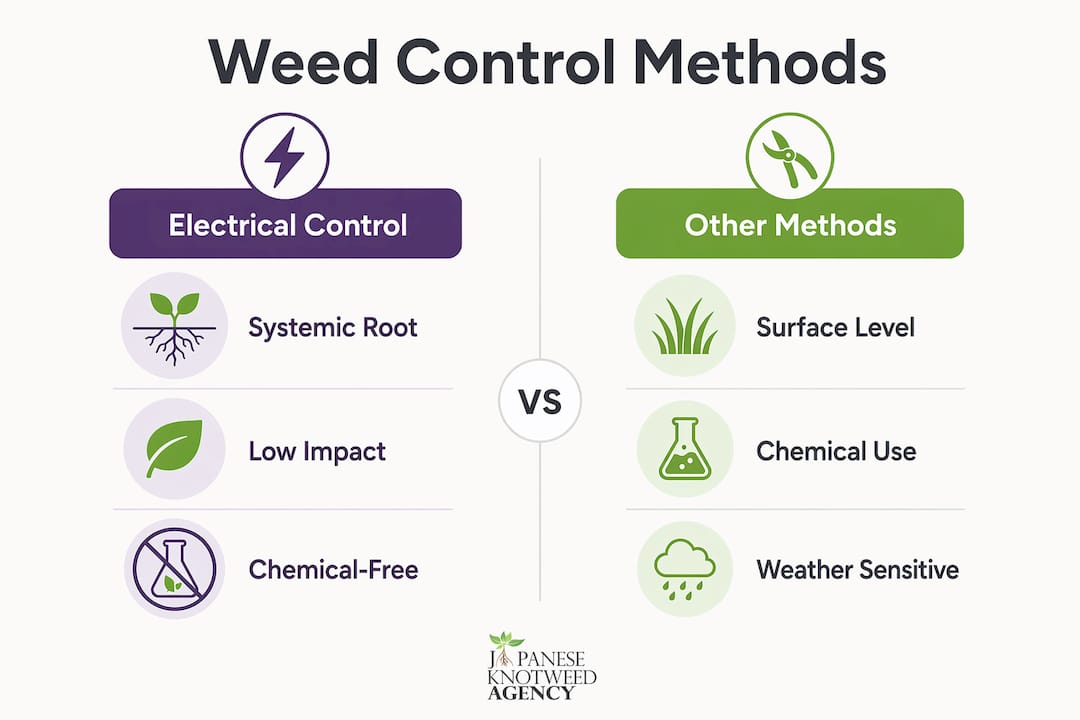
Electrical weed control sits at the top of this comparison for systemic root damage and environmental credentials. It is the only method in this group that combines root-level action with zero chemical residue. The trade-off is operational speed and the need for precision to avoid non-target plant damage.
For invasive species management, electrical treatment is increasingly used alongside root barrier installation as part of an integrated long-term strategy. The electrical treatment depletes the rhizome network over successive passes, while root barriers prevent lateral spread during the treatment period. Japaneseknotweedagency applies this combined approach on sites across England, Wales, and Ireland, delivering thermo-electric treatment for knotweed at up to 5,000 volts directly to the plant and rhizome network.
Key takeaways
High voltage weed control is the most effective chemical-free method for achieving systemic root damage in invasive weeds, but it requires sequential treatment passes, dry conditions, and professional planning to deliver lasting results.
| Point | Details |
|---|---|
| Systemic root action | Electrical current travels into the rhizome network, depleting energy reserves beyond what cutting or surface heat achieves. |
| Sequential treatment is critical | Two or more passes maintain control above 40% at 56 days; a single pass drops below 20% efficacy. |
| No chemical residues | Soil, water, and surrounding ecology remain unaffected, making it suitable for sensitive and organic sites. |
| Weather-independent operation | Unlike herbicide sprays, electrical treatment is unaffected by wind and requires no rainfast interval. |
| Professional survey first | A property survey establishes rhizome extent and informs the correct treatment programme before any work begins. |
Why I think electrical weed control changes the conversation for UK property owners
Having worked with invasive species across England, Wales, and Ireland, I have seen the frustration that comes with treatments that address the visible problem but leave the root system intact. Cutting back Japanese Knotweed without treating the rhizome is the equivalent of trimming the top off an iceberg and calling it resolved.
What I find genuinely significant about high voltage weed management is the systemic nature of the damage it causes. The electrical current does not stop at the stem. It follows the path of least resistance down into the root network, which is precisely where invasive species like Japanese Knotweed store the energy reserves that drive regrowth season after season.
That said, I would caution against treating this as a simple solution. The non-selective nature of electrical treatment means that poorly planned application can damage surrounding planting. Operational speed, pre-treatment preparation, and sequential passes are not optional refinements. They are the difference between a treatment that works and one that does not.
The environmental case is also compelling. For properties near watercourses, in areas with planning restrictions on herbicide use, or where owners simply prefer to avoid chemicals, this method removes the compromise entirely. No residues, no drift risk, no waiting for calm weather.
My honest view is that electrical weed control, when applied professionally and as part of a planned programme, is the most responsible and effective chemical-free option currently available for UK property owners dealing with established invasive species.
— Alan
Professional chemical-free weed treatment from Japaneseknotweedagency
If you are dealing with Japanese Knotweed or another invasive species on your property, the right starting point is a professional survey, not a treatment.

Japaneseknotweedagency are specialists in chemical-free invasive plant solutions across England, Wales, and Ireland. The team delivers thermo-electric treatment at up to 5,000 volts directly to the plant and rhizome network, causing internal cell damage and depleting energy reserves with each treatment pass. Root barrier installation and excavation works are also available where the situation requires a combined approach. A professional survey is the first step. Book your survey to receive tailored advice and a clear treatment plan for your property.
FAQ
What is high voltage weed control in simple terms?
High voltage weed control is a method that uses electrical currents of up to 15,000 volts to kill weeds by destroying their cells from the inside, with no chemicals involved. The current travels through the plant into the root system, causing systemic damage and preventing regrowth.
Is high voltage weed control effective on Japanese Knotweed?
Electrical weed treatment is effective at depleting the rhizome energy reserves that drive Japanese Knotweed regrowth, particularly when applied in sequential passes. Japaneseknotweedagency delivers this treatment at up to 5,000 volts directly to the plant and root network as part of a structured management programme.
How many treatment passes are needed?
Two sequential applications are the minimum recommended for sustained control, maintaining efficacy above 40% at 56 days post-treatment. A single pass alone drops below 20% efficacy at the same interval.
Can high voltage weed treatment damage other plants?
Yes. Electrical weed control is non-selective and will damage any plant the electrode contacts. Professional application with precision targeting or shielding is necessary to protect surrounding vegetation.
Do I need a survey before electrical weed treatment?
A professional invasive weed survey is strongly recommended before any treatment begins. It identifies the species, maps the extent of the infestation, and ensures the treatment programme is appropriate for the site conditions.