TL;DR:
- Invasive plant compliance is a legal and financial requirement during property transactions.
- Japanese Knotweed poses significant risks including structural damage and mortgage refusals.
- Professional surveys and effective treatment plans are essential for ongoing compliance and property value.
Buying or remortgaging a property feels straightforward until an invasive plant survey reveals something unexpected beneath the surface. Japanese Knotweed and other invasive species affect far more homes than most people realise, and the consequences for property transactions can be severe. Mortgage lenders, solicitors, and conveyancers across England, Wales, and Ireland increasingly require formal compliance evidence before proceeding. This guide explains exactly what invasive plant compliance means, which species to watch for, how surveys work, and what treatment options are available to protect your property and your peace of mind.
Table of Contents
- What is invasive plant compliance and why does it matter?
- Common invasive plants threatening UK homes
- Understanding the compliance survey process
- Treatment plans and ongoing compliance: what homeowners must do
- A fresh perspective: what most guides miss about compliance
- How professional support can simplify compliance
- Frequently asked questions
Key Takeaways
| Point | Details |
|---|---|
| Compliance is crucial | Meeting invasive plant compliance is essential for property transactions and long-term value. |
| Professional surveys matter | Lender-approved surveys identify and document issues, helping to secure sales and remortgages. |
| Prompt treatment saves money | Early intervention and certified plans prevent costly legal or financial complications. |
| Ongoing vigilance needed | Staying compliant means regular monitoring, not just a one-off survey or treatment. |
What is invasive plant compliance and why does it matter?
Invasive plant compliance refers to the process of identifying, documenting, and managing invasive plant species on a property in accordance with legal obligations and lender requirements. For homeowners buying or remortgaging, it is not simply a precaution; it is often a condition of the transaction itself.
In England and Wales, the knotweed legal requirements are rooted in the Wildlife and Countryside Act 1981, which makes it an offence to cause or allow Japanese Knotweed to spread into the wild. The Environment Agency advice reinforces that landowners carry a duty of care to prevent the spread of listed invasive species. In Ireland, similar obligations exist under the European Communities (Birds and Natural Habitats) Regulations.
Japanese Knotweed is classified as a controlled plant in the UK, with significant implications for property sales. The practical consequences of non-compliance are serious:
- Property sales falling through at the final stage
- Mortgage applications refused or withdrawn
- Legal liability if the plant spreads to neighbouring land
- Significant remediation costs if left unmanaged
- Reduced property value and difficulty obtaining future finance
Lenders and solicitors require documented proof of compliance because untreated invasive plants represent a tangible financial risk to the property and its long-term value.
Understanding this from the outset protects you from costly surprises. Compliance is not bureaucracy for its own sake; it is a structured way of demonstrating that a known risk has been assessed and is being managed responsibly.
Common invasive plants threatening UK homes
Now that you understand why compliance is important, let us look at the main invasive plants homeowners need to be aware of.
While several species appear on the invasive weeds list, three are most commonly encountered during property surveys across England, Wales, and Ireland.
| Species | Key features | Primary risk | Control method |
|---|---|---|---|
| Japanese Knotweed | Bamboo-like stems, heart-shaped leaves | Structural damage, mortgage refusal | Thermo-electric treatment, excavation, root barrier |
| Giant Hogweed | Tall white flower heads, large leaves | Severe skin burns, legal liability | Professional removal only |
| Himalayan Balsam | Pink flowers, explosive seed pods | Rapid spread, riverbank erosion | Cutting and herbicide |
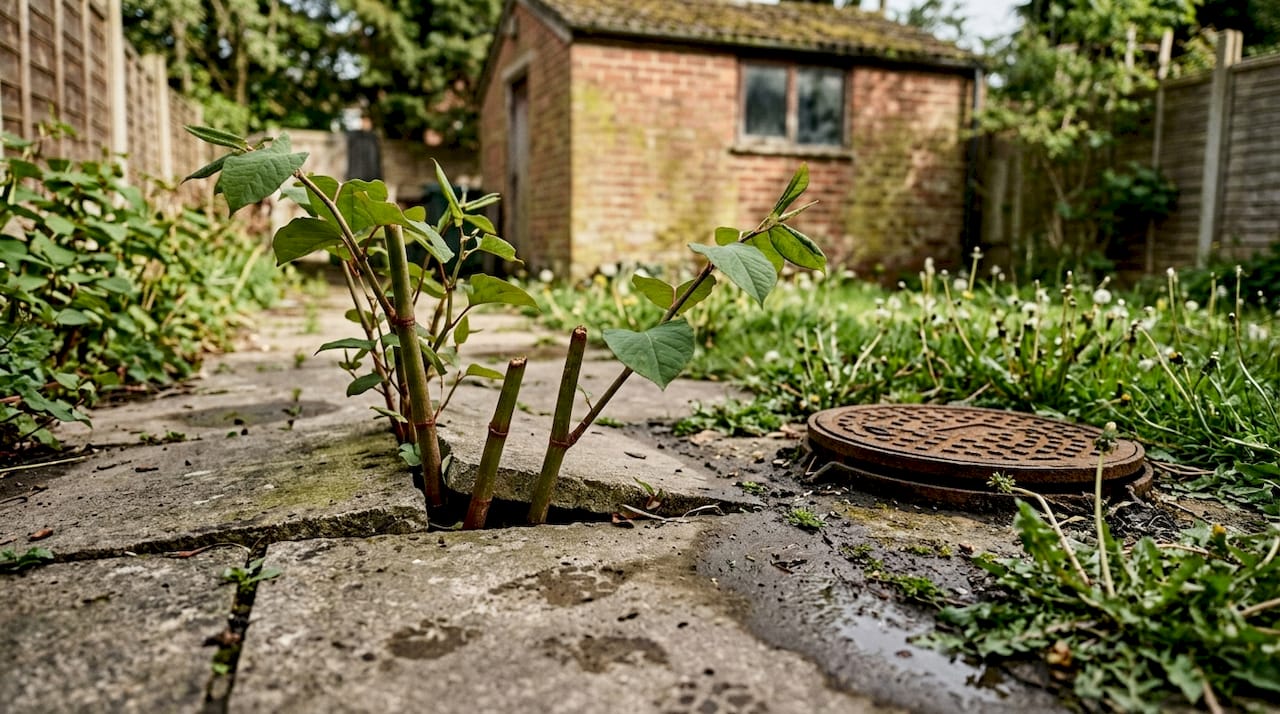
Japanese Knotweed remains the primary concern for surveyors and lenders. It can grow up to 10cm per day during peak season, damaging building foundations with considerable force. Its rhizome network, which is the underground root system, can extend up to three metres deep and seven metres laterally from the visible plant.
Knowing the visible signs is essential. Look out for:
- Hollow, bamboo-like canes with purple speckles
- Shovel-shaped leaves arranged in a zigzag pattern along the stem
- Creamy white flower clusters appearing in late summer
- Dense thickets of reddish-brown dead canes persisting through winter
- Distinctive orange-tinged rhizomes just below the soil surface
The property impacts of knotweed extend well beyond the garden boundary, affecting drainage systems, outbuildings, and boundary walls.
Pro Tip: Early detection dramatically reduces treatment costs. A small infestation identified before a property transaction is far simpler and less expensive to manage than one discovered mid-sale under time pressure.
Understanding the compliance survey process
Recognising these plants is only the first step; a professional survey is essential for compliance. Here is how the process works.
A compliance survey is a formal, documented assessment carried out by a qualified invasive plant specialist. It is not the same as a general building survey. The purpose is specifically to identify, map, and categorise any invasive species present, then produce a report that satisfies lender and solicitor requirements.
The process typically follows these stages:
- Booking — Contact a specialist surveyor and provide property details, including any known history of invasive plants.
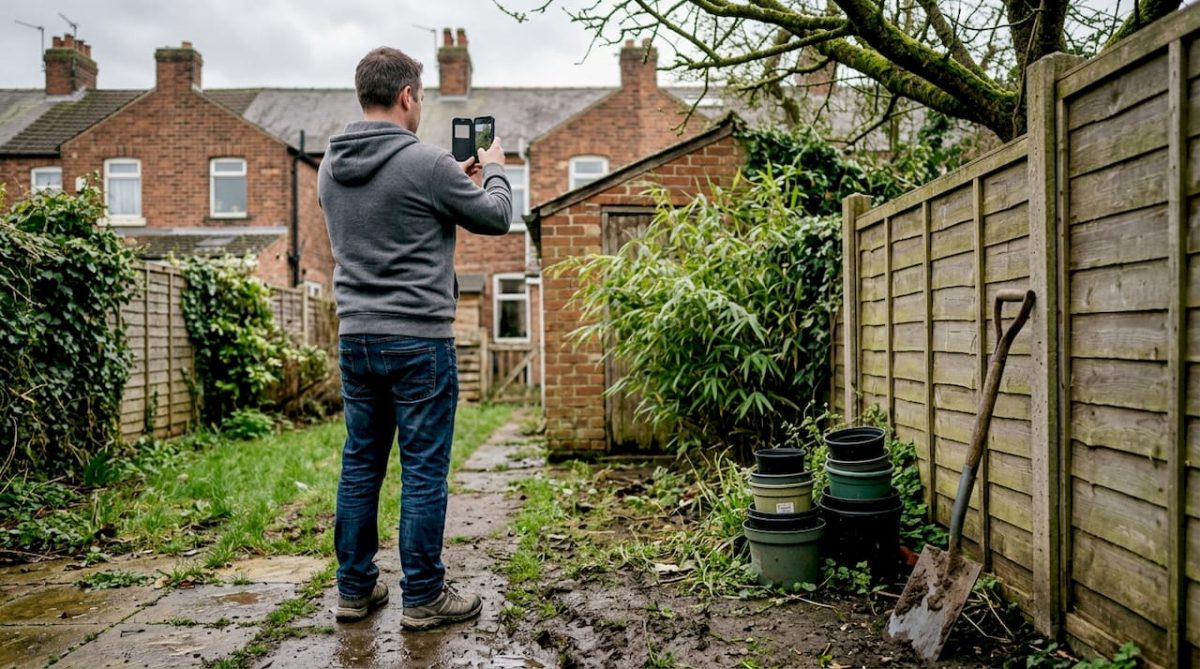
- Site inspection — The surveyor visits the property and examines all accessible areas, including boundaries, outbuildings, and drainage routes.
- Identification and mapping — Any invasive species found are identified, photographed, and mapped relative to structures.
- Risk categorisation — The infestation is assessed against the RICS (Royal Institution of Chartered Surveyors) four-category rating system, which guides lender decisions.
- Written report — A formal report is produced, detailing findings, risk level, and recommended treatment or management plan.
- Recommendations — The surveyor outlines next steps, which may include a management plan, treatment programme, or insurance-backed guarantee.
Mortgage lenders typically require invasive plant surveys before approving loans for affected properties. The survey report directly influences whether a mortgage offer is issued, retained, or withdrawn.
For a detailed overview of what to expect, the survey steps for invasive plants guide covers the full process. If you are purchasing a property, the buying property with knotweed resource provides specific guidance for buyers.
For additional context on spotting knotweed before commissioning a survey, Propertymark offers useful visual guidance.
Pro Tip: Always request a written report that explicitly states it meets lender requirements. A verbal assessment or informal email will not satisfy your solicitor or mortgage provider.
Treatment plans and ongoing compliance: what homeowners must do
After a survey, the next challenge is acting on its findings. Here is what you need to know about treatment and ongoing compliance.
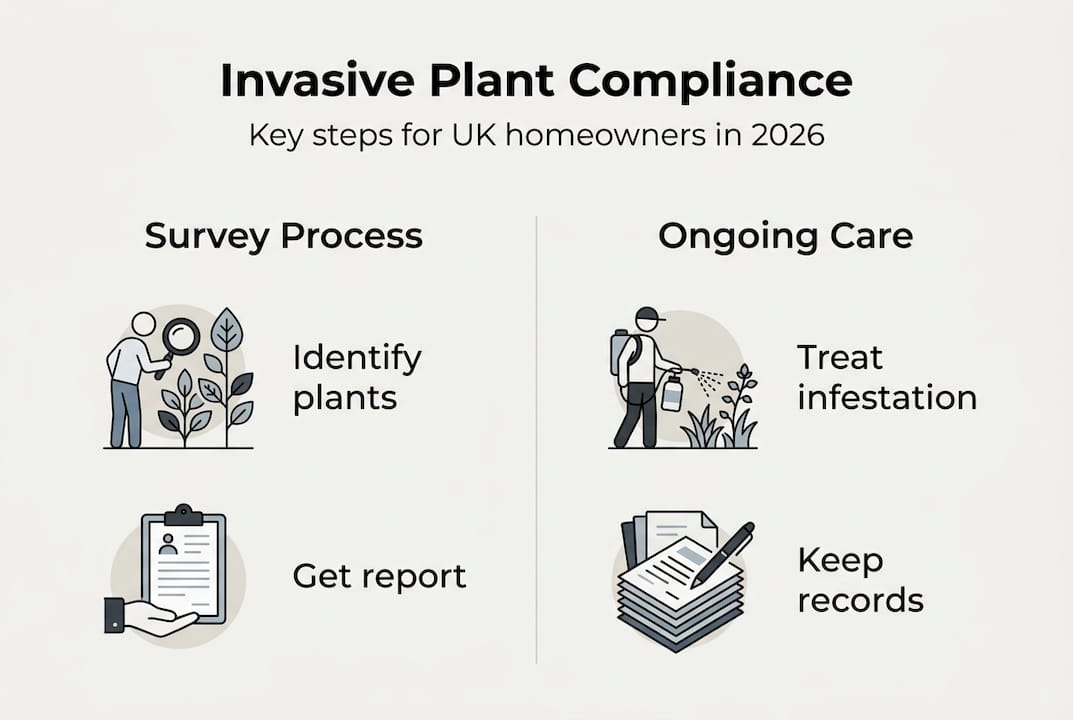
Effective management, including herbicide treatments and root barriers, is key for ongoing compliance and property resale. However, not all treatment approaches are equal, and choosing the wrong one can cost you both time and money.
| Treatment method | Typical timeframe | Relative cost | Key consideration |
|---|---|---|---|
| Thermo-electric treatment | 1 to 3 seasons | Moderate | Chemical-free, targets rhizome network directly |
| Root barrier installation | Immediate containment | Moderate | Prevents spread, does not eradicate |
| Excavation and removal | Single operation | Higher | Fastest resolution, requires licensed disposal |
| Herbicide programme | 3 to 5 years | Lower upfront | Requires annual access, chemical use |
For homeowners who prefer an eco-friendly approach, thermo-electric treatment delivers up to 5,000 volts directly into the plant, causing internal cell damage and depleting the energy reserves within the rhizome network without the use of chemicals.
The weed management steps resource outlines how to approach treatment systematically. It is also worth understanding dealing with dormant knotweed, as infestations can appear inactive during winter and be overlooked.
Common pitfalls homeowners must avoid:
- Attempting DIY removal without understanding rhizome depth and spread
- Disposing of knotweed material in general waste, which is illegal
- Failing to obtain a written treatment guarantee acceptable to lenders
- Assuming a single treatment session resolves the infestation entirely
- Not retaining paperwork for future sales or remortgage applications
Ongoing compliance means maintaining records of every treatment visit, keeping your management plan current, and ensuring any guarantee is transferable to future buyers. This documentation becomes a material asset when you next sell or refinance.
A fresh perspective: what most guides miss about compliance
While the steps above are vital, there is often more to compliance than meets the eye. Most guides present invasive plant compliance as a linear process: survey, treat, done. The reality is considerably more nuanced.
One of the most important lessons we have learnt is that compliance is not a single event but an ongoing commitment. Homeowners who treat it as a box-ticking exercise frequently encounter problems years later, particularly when containment explained reveals that rhizome fragments left in the ground can regenerate long after visible growth has ceased.
Shortcuts are consistently the most expensive option. Engaging an unaccredited contractor to produce a cheap report may satisfy an immediate requirement but creates significant legal and financial exposure later. Lenders are becoming increasingly sophisticated in their assessment of survey quality.
The cases that concern us most are dormant infestations discovered years after a property purchase, where inadequate initial surveys missed subsurface rhizome networks. These situations result in disputes, remediation costs, and genuine distress for homeowners who believed the matter was resolved. Choosing properly accredited professionals from the outset is not a premium; it is fundamental risk management.
How professional support can simplify compliance
For many homeowners, professional help turns a daunting process into a straightforward solution. Here is where to start.
Navigating invasive plant compliance alone is genuinely challenging, particularly when a property transaction is already under time pressure. Expert support removes the uncertainty, ensures your survey and treatment plan meet lender standards, and provides the documented guarantees that solicitors require.

At Japanese Knotweed Agency, we carry out professional invasive plant surveys across England, Wales, and Ireland, and we deliver innovative chemical-free treatment using thermo-electric technology. Whether you need answers quickly, explore our knotweed FAQs for immediate guidance, review our eradication plan guide for a full overview of your options, or learn more about our chemical-free treatment process to understand what makes our approach different. Contact us today to arrange a survey and take control of your compliance requirements with confidence.
Frequently asked questions
Can I sell my property if it has Japanese Knotweed?
Yes, but you generally need an approved survey and treatment plan to satisfy mortgage lenders and buyers. A management plan backed by an insurance-backed guarantee is typically required.
Am I legally required to remove Japanese Knotweed?
You are not required to remove it from your own land, but you must prevent it from spreading to neighbouring properties. Legal obligations focus specifically on preventing spread rather than mandating full eradication.
What happens if an infestation is missed on a survey?
Missed infestations can result in future legal disputes, reduced property value, and loan refusals. Unreported knotweed discovered after completion can also expose the seller to misrepresentation claims.
Are chemical-free treatment options effective?
Chemical-free treatments, particularly thermo-electric methods, can be highly effective when delivered by experienced professionals. Non-chemical control options are well suited to certain infestation levels and are increasingly preferred by environmentally conscious homeowners.
How soon should I act after discovering Japanese Knotweed?
You should arrange a professional assessment as soon as possible to prevent further spread and avoid complications with any planned property transaction. Early action consistently reduces both treatment costs and legal risk.