

TL;DR:
- Japanese knotweed reduces property values by about 5%, with a total UK loss of £21.4 billion affecting over 1.58 million homes. Its physical spread and market stigma, reinforced by legal disclosure obligations, significantly impact saleability, mortgage approval, and price discounts. Professional management plans with insurance-backed guarantees are the most effective strategy to protect property value and reassure buyers and lenders.
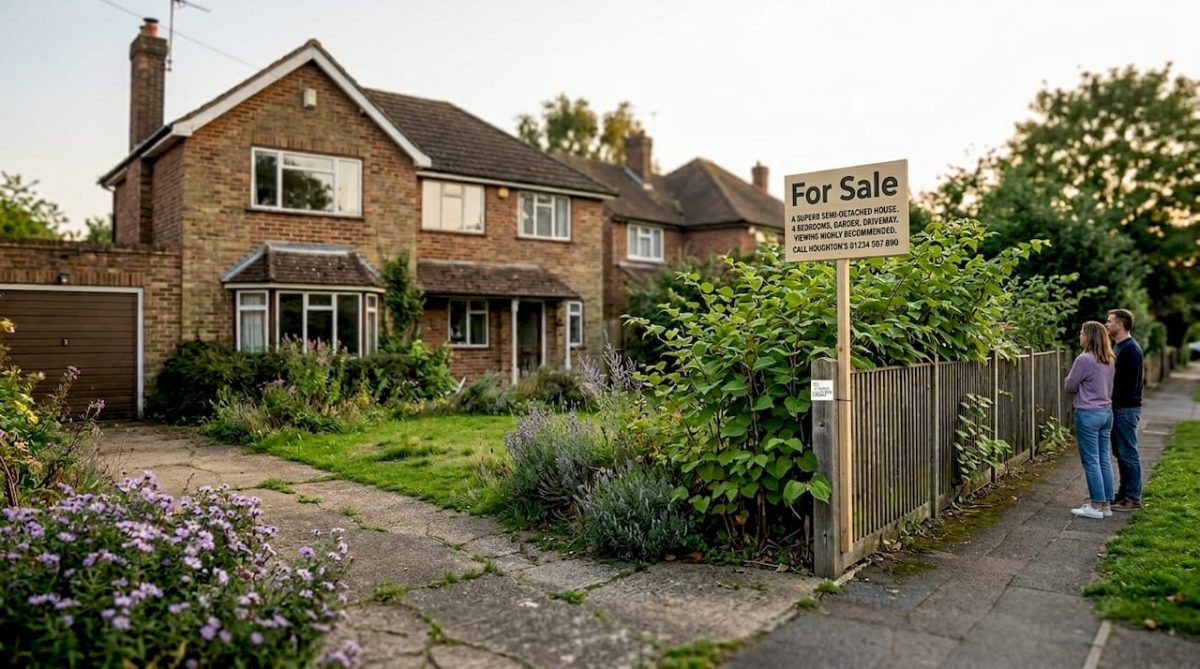
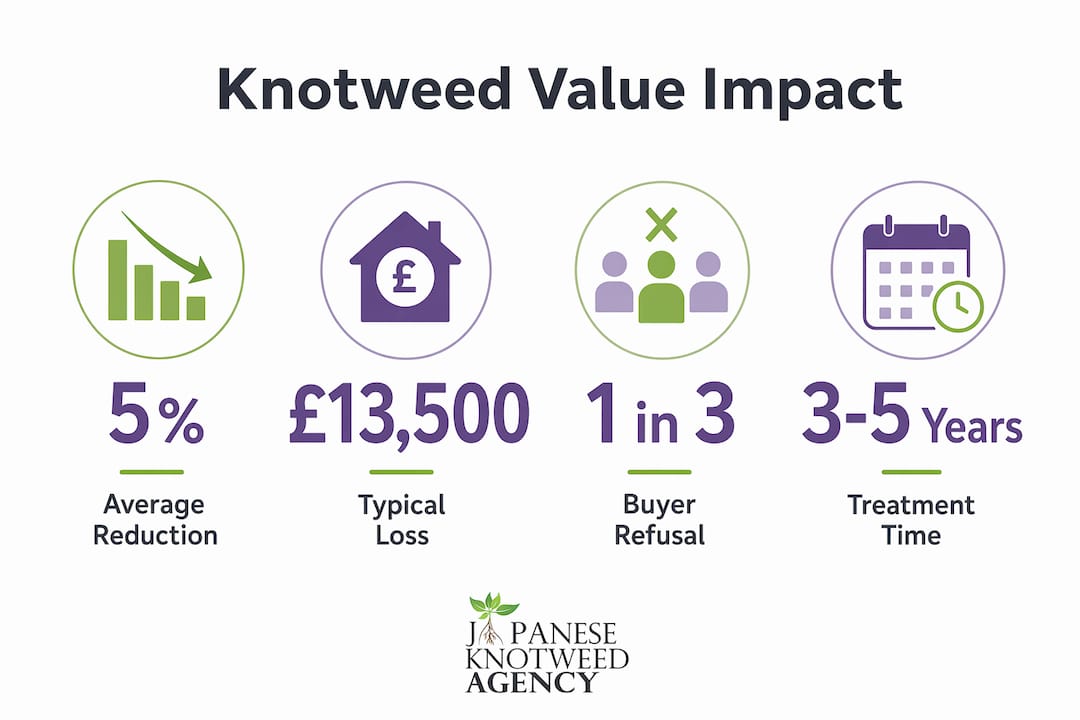
Japanese knotweed reduces property values by around 5% on average, equating to roughly £13,500 per affected home based on current UK house prices. Across the country, over 1.58 million homes are estimated to be affected, with a combined market value loss of £21.4 billion. For buyers, sellers, and mortgage lenders, knotweed affecting house value is no longer a fringe concern. It sits squarely in the mainstream of UK property risk, and understanding how it works, and what can be done about it, is the difference between a stalled sale and a successful one.
How does knotweed affect house value and why?
Japanese knotweed (Fallopia japonica) is a non-native invasive species capable of pushing through tarmac, concrete, and drainage systems. Its rhizome network extends up to three metres deep and seven metres laterally from visible growth, meaning the plant you see above ground represents only a fraction of the problem below it. This physical reach creates genuine structural risk to outbuildings, boundary walls, and drainage infrastructure, particularly on older properties.
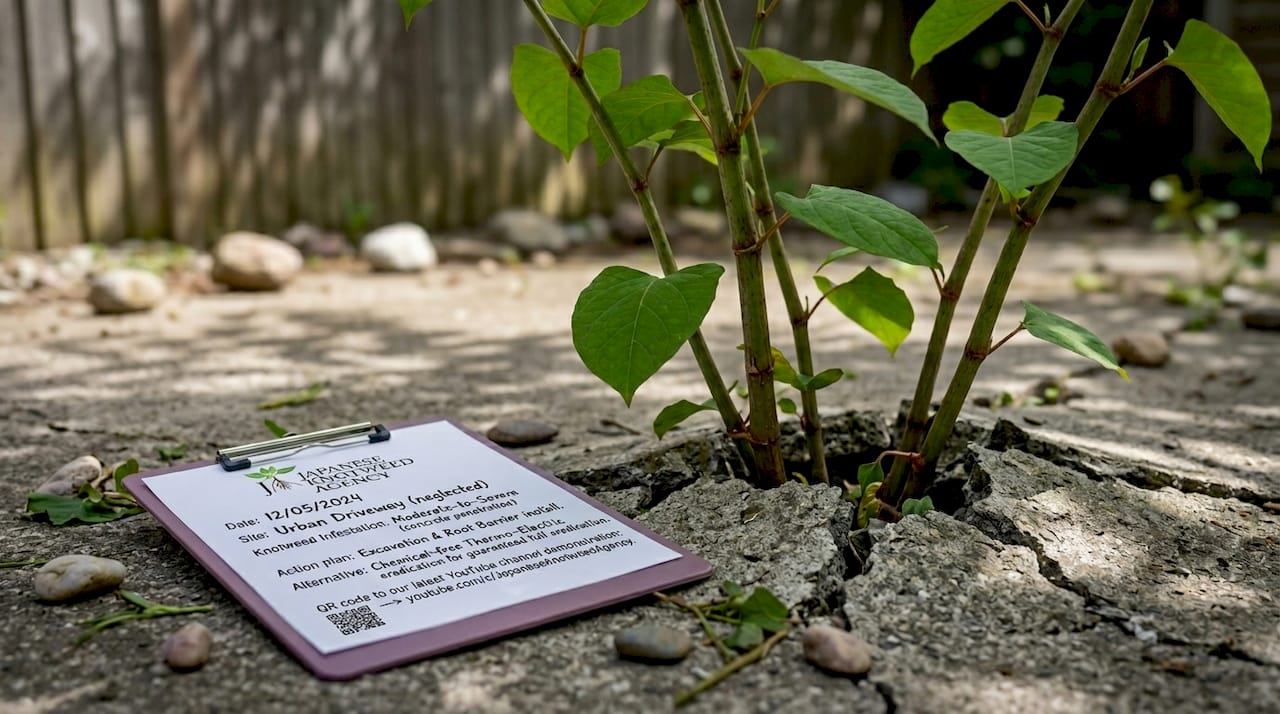
Beyond physical damage, the knotweed impact on property is heavily driven by market perception. Lenders, surveyors, and buyers have all become more alert to its presence, and that heightened awareness creates a stigma effect that depresses value even when the plant is being actively managed. The Royal Institution of Chartered Surveyors (RICS) introduced a formal management category framework in 2022 precisely because the market needed a consistent way to assess and communicate risk.
Sellers carry a legal obligation to disclose knotweed presence on the TA6 property information form. Failure to disclose can result in legal action from buyers post-completion, including claims for misrepresentation. This legal exposure adds another layer of complexity to any transaction where knotweed is present, whether on the property itself or on a neighbouring plot.
Pro Tip: If you are unsure whether a plant in your garden is Japanese knotweed, book a professional survey before instructing an estate agent. Identifying the issue early gives you time to act, rather than reacting under the pressure of a live sale.
How much does knotweed typically reduce property value?
The average reduction of 5% is a useful starting point, but the actual knotweed property damage to value varies considerably depending on three factors: the severity of the infestation, the proximity to the main structure, and whether a professional management plan is in place.
| Scenario | Typical value impact |
|---|---|
| Knotweed on boundary, no treatment | 5–10% reduction |
| Knotweed near structure, no treatment | 10–20% reduction |
| Active professional treatment plan in place | 5% or less, often recoverable |
| Insurance-backed guarantee provided | Minimal residual impact on sale |
Around 1 in 3 UK adults would refuse to buy a property affected by knotweed outright. That statistic reflects buyer aversion at its most absolute, and it translates directly into reduced demand, longer time on market, and downward pressure on asking prices. Approximately 30% of buyers would consider purchasing if a professional treatment plan and a price reduction are both in place, which confirms that documented management genuinely shifts buyer behaviour.
Residual stigma persists even after treatment is complete. This is one of the more counterintuitive aspects of knotweed and real estate: a property that has been fully remediated can still attract a discount simply because of its history. Insurance-backed guarantees, issued by accredited contractors, are the most effective tool for reducing this residual stigma because they provide lenders and buyers with transferable documentary evidence that the risk has been professionally managed.
How does knotweed affect mortgage availability and property sales?
Mortgage lenders assess knotweed risk using the RICS 2022 management categories, which run from A through to D. Categories A and B, representing the most severe infestations or those closest to the main structure, are most likely to trigger a mortgage retention or outright refusal until remediation is underway. Category C, where knotweed is present but poses lower immediate risk, typically does not result in a mortgage hold. Category D requires specialist advice before a lending decision is made.
For buyers, this framework has direct consequences:
- A mortgage retention means funds are withheld at completion until the lender receives evidence of a compliant management plan.
- Some lenders will not lend at all on properties in categories A or B without a fully costed, insurance-backed remediation programme already in place.
- Buyers purchasing with cash are not subject to lender restrictions, but they carry the full financial risk of remediation themselves.
- Sellers who have already commissioned a professional management plan are in a significantly stronger negotiating position.
The TA6 disclosure form requires sellers to confirm whether knotweed is present, has been present, or is present on a neighbouring property. This means knotweed mortgage issues can arise even when the infestation is on a neighbour’s land rather than the property being sold. Buyers and their solicitors are increasingly scrutinising this section of the form, and any ambiguity tends to slow transactions.
Pro Tip: If you are selling a house with knotweed, commission a specialist management plan before listing. Presenting a lender-ready remediation document at the point of sale removes the most common cause of buyer withdrawal and mortgage delays.
What are the best practices for managing knotweed to protect property value?
Early professional intervention is the single most cost-effective approach to protecting property value. Severe treatment costs can exceed £10,000 when infestations are left to establish over multiple growing seasons. Acting at the first sign of growth keeps both the remediation cost and the value impact significantly lower.
The following management options are available to property owners, each suited to different site conditions and timescales:
-
Professional survey. A formal knotweed survey produces a written report that identifies the extent of the rhizome network, assigns an RICS management category, and recommends an appropriate treatment pathway. This report is the foundation of any lender or buyer negotiation. Book a professional knotweed survey before any other step.
-
Thermo-electric treatment. Japaneseknotweedagency delivers direct electrical energy of up to 5,000 volts into the plant’s rhizome network, causing internal cell damage and depleting the energy reserves that allow regrowth. This is a chemical-free method with no soil contamination risk, making it suitable for properties near watercourses, gardens with food growing areas, or sites where herbicide use is restricted.
-
Excavation. Full or partial excavation removes rhizome material from the ground and is the fastest route to clearance. It is particularly appropriate where construction or development is planned, or where the infestation is concentrated and accessible. Excavated material must be disposed of as controlled waste under the Environmental Protection Act 1990.
-
Root barrier installation. Physical root barriers, typically high-density polyethylene membranes, prevent rhizome spread into adjacent areas. They are most effective as a containment measure alongside active treatment, particularly on boundary infestations where knotweed is encroaching from a neighbouring property.
-
Insurance-backed guarantee. Any professional management plan should be accompanied by an insurance-backed guarantee transferable to future owners. This is the document that lenders and buyers require to proceed with confidence.
Avoid DIY removal attempts. Cutting, strimming, or digging without professional guidance spreads rhizome fragments and can make the infestation significantly worse. Under the Wildlife and Countryside Act 1981, causing knotweed to spread is a criminal offence.
Pro Tip: Treating knotweed early in the growing season, typically between April and June, maximises the effectiveness of both thermo-electric and herbicide treatments because the plant is actively transporting energy through its rhizome network at this time.
Key takeaways
Japanese knotweed reduces property value by an average of 5%, but documented professional management with an insurance-backed guarantee is the most reliable way to protect that value and maintain lender confidence.
| Point | Details |
|---|---|
| Average value reduction | Knotweed typically reduces property value by around 5%, equating to roughly £13,500 on an average UK home. |
| Stigma outweighs physical damage | Market perception and lender caution often drive value reduction more than structural damage alone. |
| RICS categories determine lending | Categories A and B are most likely to trigger mortgage retentions; Category C typically does not. |
| Disclosure is a legal requirement | Sellers must declare knotweed on the TA6 form; failure to do so can result in post-completion legal claims. |
| Early treatment protects value | Professional intervention before an infestation establishes keeps remediation costs and value discounts significantly lower. |
What I have learned about knotweed and property value after years in this field
The conversation about knotweed affecting house value tends to focus on the plant itself. In my experience, the more significant issue is the paper trail, or the absence of one. Properties with a well-documented, professionally managed treatment programme sell. Properties where the owner has attempted DIY control, or simply ignored the problem, stall. Lenders and buyers are not necessarily afraid of knotweed. They are afraid of uncertainty.
The stigma effect is real, and it persists longer than most sellers expect. I have seen properties with fully remediated infestations still attract offers 5% below asking price simply because the buyer’s solicitor flagged the history. The antidote is documentation: a survey report, a management plan, and an insurance-backed guarantee. These three documents transform knotweed from a deal-breaker into a managed risk.
One thing the market is beginning to recognise is that lender attitudes are gradually becoming more nuanced. The RICS 2022 framework gave surveyors and lenders a shared language for assessing risk, and that has reduced the blanket refusals that were common five years ago. If you are selling a property with knotweed, the market is more navigable than it once was, provided you approach it with professional support from the outset.
— Alan
How Japaneseknotweedagency can help protect your property value

Japaneseknotweedagency provides professional knotweed surveys across England, Wales, and Ireland, producing detailed written reports that satisfy mortgage lender and legal requirements. Where treatment is needed, the team delivers chemical-free thermo-electric treatment, root barrier installation, and full excavation works, all tailored to the specific conditions of your site. Every management plan is supported by an insurance-backed guarantee, giving buyers and lenders the documentary confidence they need to proceed. For a clear picture of your property’s knotweed status, book a survey and receive a report that protects your position throughout the sale process. You can also explore the full range of chemical-free eradication options available for your property type.
FAQ
Does knotweed always lower home value?
Not always by the same amount. Japanese knotweed reduces property value by around 5% on average, but the actual impact depends on infestation severity, proximity to the main structure, and whether a professional management plan with an insurance-backed guarantee is in place.
Can you get a mortgage on a property with knotweed?
Yes, in many cases. Mortgage availability depends on the RICS management category assigned to the infestation. Category C infestations typically do not trigger a mortgage hold, while categories A and B usually require a remediation plan before funds are released.
Do sellers have to declare knotweed?
Sellers are legally required to disclose knotweed on the TA6 property information form. Failure to disclose can result in legal claims for misrepresentation after completion.
How long does knotweed treatment take?
Treatment timescales vary by method and infestation size. Herbicide programmes typically run for three to five growing seasons. Thermo-electric treatment and excavation can achieve clearance more quickly, with excavation offering the fastest resolution for concentrated infestations.
Does treating knotweed restore property value?
Professional treatment with a documented management plan and insurance-backed guarantee significantly reduces the value discount. Residual stigma can persist, but lender-ready documentation is the most effective way to recover market confidence and support a full asking price.