


TL;DR:
- Japanese knotweed disputes involve legal obligations for landowners to prevent and control invasive spread, with consequences under criminal and civil law. Effective resolution requires documented communication, professional surveys, and managed remediation plans backed by guarantees to safeguard property and legal rights. Mediation and coordinated efforts often produce better long-term outcomes than urgent litigation or neglect.
A knotweed neighbour dispute arises when Japanese knotweed encroaches from one property onto another, triggering legal obligations, potential compensation claims, and practical management responsibilities for both parties. Japanese knotweed (Fallopia japonica) is classified as a controlled invasive species under the Wildlife and Countryside Act 1981, and landowners who allow it to spread face serious civil and criminal consequences. Resolving a knotweed neighbour dispute requires understanding your legal rights, communicating effectively, and engaging professional expertise before the situation escalates into costly litigation. This guide provides UK homeowners with a clear, structured path through every stage of the process.
What legal rights do homeowners have in a knotweed neighbour dispute?
The legal framework governing disputes over knotweed is grounded in both criminal statute and civil law. Under the Wildlife and Countryside Act 1981, causing knotweed to spread in the wild is a criminal offence carrying unlimited fines and potential imprisonment. This means a neighbour who knowingly neglects an established infestation and allows it to cross a boundary is not simply being inconsiderate. They may be committing a criminal act.
Civil liability operates separately through the law of private nuisance. Court of Appeal rulings confirm that landowners can be held liable for treatment costs and property value losses even when knotweed has been present for many years. This is a significant point: the duration of the infestation does not diminish your right to claim. What matters is whether encroachment has occurred and whether the affected party has suffered measurable harm.
There is an important legal threshold that homeowners often misunderstand. You cannot compel a neighbour to remove knotweed simply because it exists on their land. As Stephensons Solicitors LLP clarifies, claims focus on actual spread and the prevention of further nuisance, not mere presence. The distinction between presence and encroachment is the foundation of any viable legal claim.
Key legal considerations in a neighbour knotweed dispute include:
- Notification matters. Liability is strengthened considerably once a neighbour has been formally notified of the encroachment and fails to act.
- Evidence of origin. You must be able to demonstrate that the knotweed originated from the neighbouring property, not your own land.
- Documented negligence. Courts look for evidence that the responsible party was aware of the problem and took no reasonable steps to control it.
- Property value impact. Claims can include compensation for knotweed and property value loss, not just treatment costs.
- Mortgage implications. Unmanaged knotweed can prevent mortgage approval, creating financial harm that courts recognise as compensable loss.
How should homeowners communicate with neighbours to resolve disputes informally?
The most effective first step in any knotweed neighbour dispute is written communication. 2026 guidance stresses that written notifications and direct dialogue should precede any legal action, and many landowners remain genuinely unaware of their liabilities until formally informed. A calm, factual letter outlining the encroachment, its potential legal consequences, and a proposed course of joint action is far more productive than an immediate threat of litigation.
When approaching a neighbour, follow this sequence:
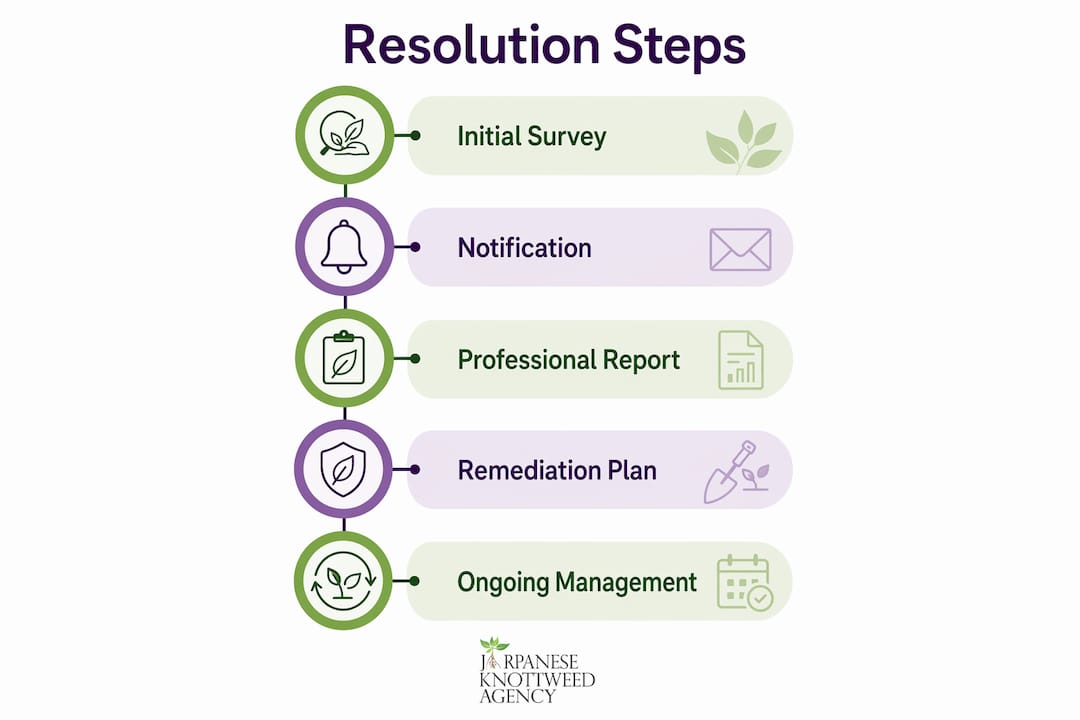
- Send a written notification. Document the date, describe the encroachment clearly, and include photographs. Keep a copy of everything you send.
- Propose a joint management approach. Offer to share information about treatment options and costs. Neighbours who understand the shared benefit of resolution are more likely to cooperate.
- Allow reasonable response time. Give the neighbour at least 14 days to respond before escalating. This demonstrates good faith and strengthens your legal position if the matter proceeds to court.
- Contact your local authority if the neighbour is unresponsive. Some councils have environmental enforcement powers that can compel action on invasive species.
- Consider professional mediation. Mediation is advised over litigation as it tends to be less costly, quicker, and preserves the neighbourly relationship where possible.
Pro Tip: Keep a chronological log of every communication, including dates, methods, and summaries of any verbal conversations. This paper trail is not optional. It is the foundation of any future legal claim.
The neighbours with knotweed guide from Japaneseknotweedagency provides practical frameworks for initiating this dialogue without inflaming the situation. Early, structured communication consistently produces better outcomes than reactive legal action.
What professional evidence and methods are needed to resolve knotweed disputes?
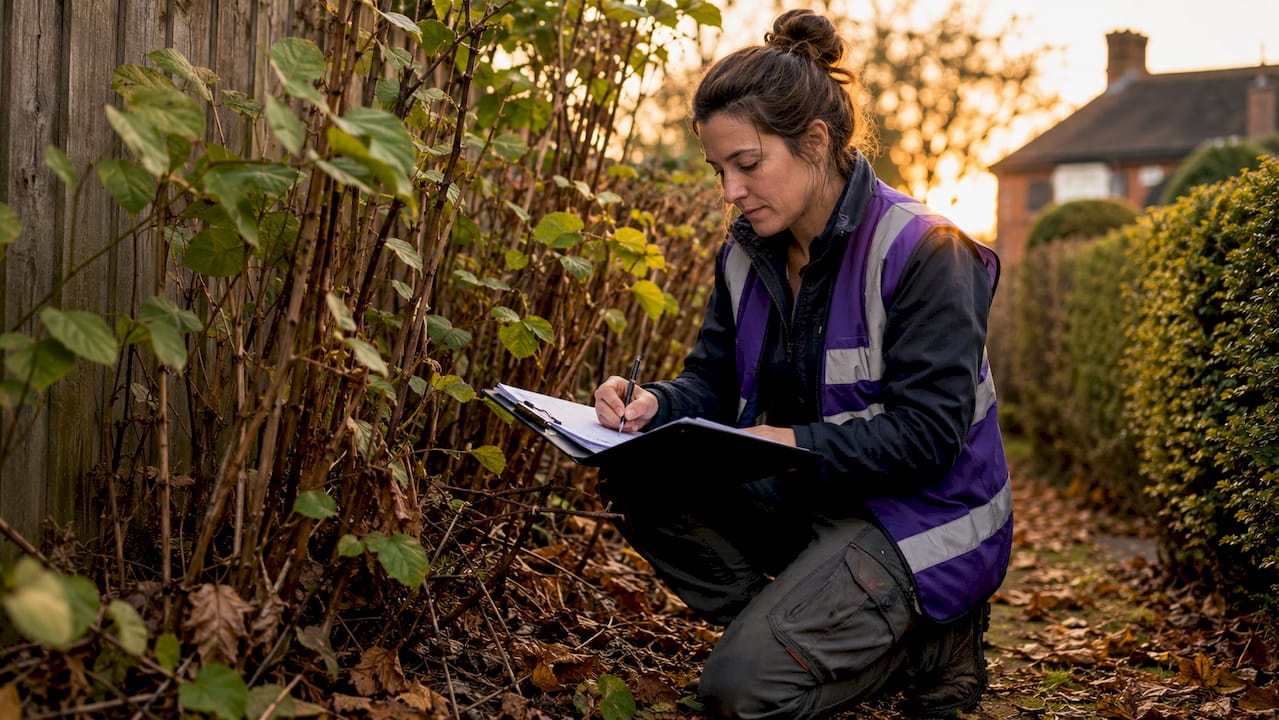
Professional expertise is not a luxury in a knotweed dispute. It is a practical and legal necessity. Surveys by invasive plant experts and CPR 35 compliant reports are required to prove damage and support compensation claims in court. A CPR 35 report is prepared by an independent expert and carries significant weight in civil proceedings. Without one, your claim rests on photographs and personal testimony alone, which courts treat as insufficient for establishing causation and quantum of loss.
| Evidence type | Purpose in dispute |
|---|---|
| CPR 35 expert witness report | Establishes origin, extent, and damage caused by encroachment |
| Photographic survey with mapping | Provides visual chronology of spread across the boundary |
| Professional property valuation | Quantifies financial loss attributable to knotweed presence |
| Knotweed Management Plan (KMP) | Demonstrates active remediation and satisfies mortgage lenders |
| Insurance-backed guarantee (IBG) | Protects treatment investment over multi-year programmes |
Knotweed Management Plans with insurance-backed guarantees protect homeowners throughout multi-year treatment processes and are frequently required by mortgage lenders before approving a sale or remortgage. Firms registered with the Property Care Association (PCA) provide warranties of up to 10 years, which lenders recognise as credible assurance that the problem is being professionally managed. The knotweed certification guide explains precisely what documentation lenders expect and how to obtain it.
Pro Tip: Commission an independent plant eradication survey before engaging a solicitor. The survey report will define the scope of the problem, establish the boundary of encroachment, and give your legal adviser the factual foundation needed to advise you accurately.
What are the likely outcomes and best practices for long-term management?
Disputes over knotweed resolve in one of several ways, and understanding the range of outcomes helps you approach the process with realistic expectations.
The most common outcomes include:
- Voluntary cooperation. The neighbour agrees to fund or jointly manage a treatment programme, often the fastest and least expensive resolution.
- Compensation for damages. A successful private nuisance claim results in the responsible party covering treatment costs and any proven reduction in property value.
- Injunctions. Courts can order a neighbour to carry out remediation and prevent further spread, particularly where documented negligence is clear.
- Court-ordered management plans. In complex cases, a judge may specify the treatment standard and timeline the responsible party must follow.
Sustained remedial action is the single most effective way to preserve property value and reduce future dispute risk. Root barriers and chemical-free treatments are recognised in 2026 as recommended sustainable options for long-term knotweed control, particularly for homeowners who wish to avoid herbicide use near watercourses, gardens, or sensitive ecological areas. Japaneseknotweedagency delivers thermo-electric treatment at up to 5,000 volts directly to the rhizome network, depleting the plant’s energy reserves without chemical intervention.
Documenting every step of your remediation programme is as important as the treatment itself. Courts and mortgage lenders both look for evidence of reasonable steps taken to address the problem. A homeowner who has commissioned surveys, maintained a paper trail, and engaged a PCA-registered specialist is in a far stronger legal and commercial position than one who has acted informally or inconsistently.
Key takeaways
Resolving a knotweed neighbour dispute requires legal awareness, documented communication, and professional remediation working together from the outset.
| Point | Details |
|---|---|
| Legal liability is real | Landowners can face criminal and civil consequences for allowing knotweed to spread across boundaries. |
| Written communication comes first | Formal notification to your neighbour establishes liability and demonstrates good faith before any legal action. |
| Professional surveys are non-negotiable | CPR 35 compliant expert reports are required to substantiate compensation claims in court. |
| Mediation saves time and money | Professional mediation resolves disputes faster and at lower cost than litigation in most cases. |
| Sustained treatment protects value | A documented Knotweed Management Plan with an insurance-backed guarantee satisfies lenders and reduces long-term risk. |
Why I believe most knotweed disputes are resolved badly
Having worked across hundreds of knotweed cases, the pattern I see most consistently is homeowners who act too quickly in the wrong direction. They either send an aggressive letter before gathering any evidence, or they wait too long hoping the problem resolves itself. Neither approach works.
The biggest mistake is treating a knotweed dispute as purely a legal problem or purely a treatment problem. It is both simultaneously. Engaging a solicitor without a professional survey report means your legal adviser is working blind. Commissioning treatment without legal documentation means you may absorb costs that your neighbour should be funding. The two workstreams must run in parallel from day one.
Mediation, in my experience, is consistently underused. Most neighbours are not acting in bad faith. They are unaware of the scale of the problem or their liability. A structured conversation facilitated by a professional mediator, supported by a clear survey report, resolves the majority of disputes without court involvement. Litigation should be the last resort, not the first instinct.
The homeowners who achieve the best outcomes are those who keep meticulous records, work with specialists who understand both the ecological and legal dimensions, and approach the process with patience and precision rather than urgency and emotion.
— Alan
How Japaneseknotweedagency supports homeowners in knotweed disputes
Japaneseknotweedagency provides specialist support to homeowners across England, Wales, and Ireland who are managing knotweed disputes with neighbours.
From the initial property survey through to full remediation, the agency delivers surveys compliant with 2026 professional standards, thermo-electric treatment, root barrier installation, and excavation works. All treatment programmes are documented to support legal claims and satisfy mortgage lender requirements. The agency’s chemical-free treatment options achieve a 95% success rate and carry insurance-backed guarantees, giving homeowners and their legal advisers the evidence base needed to resolve disputes with confidence. Visit the knotweed FAQ resource for detailed answers on treatment, surveys, and dispute preparation.
FAQ
Can I sue my neighbour for Japanese knotweed?
Yes. You can pursue a private nuisance claim if knotweed has encroached from a neighbouring property and caused measurable harm, including treatment costs and property value loss. Court of Appeal rulings confirm this right applies even when the infestation has been present for many years.
What is the first step in a knotweed neighbour dispute?
Send a formal written notification to your neighbour documenting the encroachment, supported by photographs and a date record. Written communication is the recommended first step and establishes the legal foundation for any future claim.
Does knotweed affect my ability to sell or remortgage?
Yes. Unmanaged knotweed can prevent mortgage approval. Lenders typically require a Knotweed Management Plan with an insurance-backed guarantee from a Property Care Association registered firm before proceeding with a sale or remortgage.
Is it a criminal offence to let knotweed spread?
Under the Wildlife and Countryside Act 1981, causing Japanese knotweed to grow in the wild is a criminal offence carrying unlimited fines and possible imprisonment. Allowing it to spread from your land onto a neighbour’s property or into the wider environment falls within this provision.
How long does it take to resolve a knotweed dispute?
Timescales vary considerably. Informal resolution through mediation can take weeks. Litigation, where necessary, can take one to two years. The treatment programme itself typically runs over three to five years depending on the severity of the infestation and the method used.