

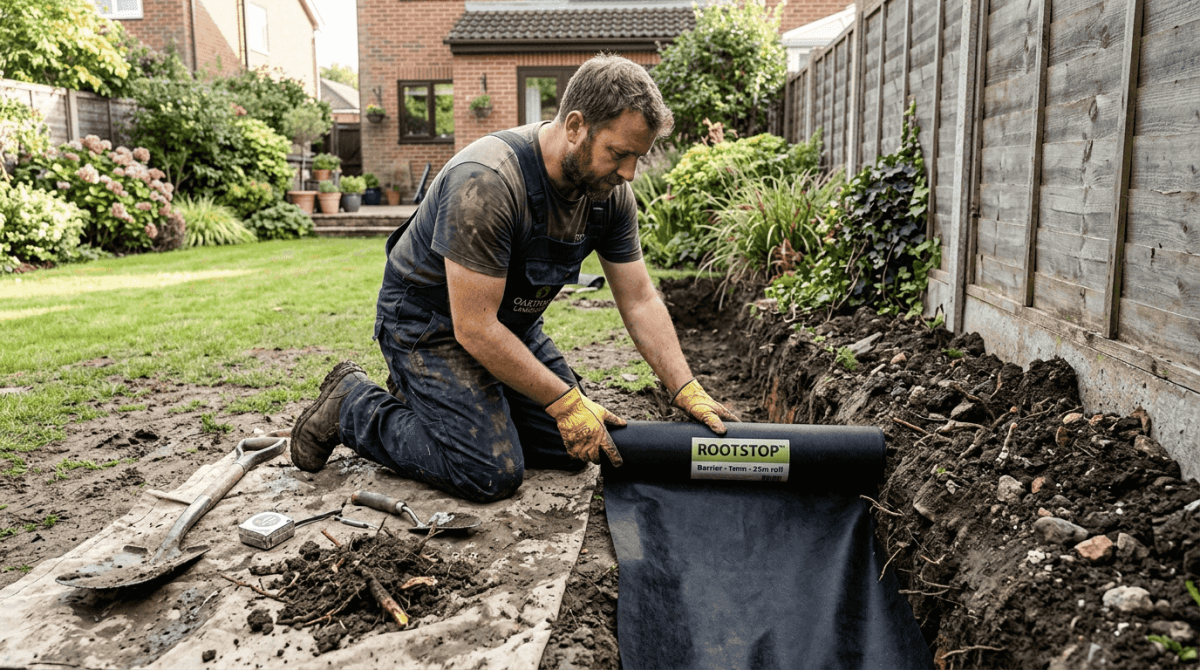
Properly installing a root barrier against Japanese Knotweed can feel overwhelming for UK homeowners. Many struggle with depth requirements, material choices, and integration with chemical-free treatments. This article shares professional insights to help you protect your property effectively. You’ll learn evidence-backed practices that combine physical barriers with sustainable eradication methods for lasting results.
Table of Contents
- Criteria For Choosing Effective Root Barriers
- Popular Root Barrier Materials And Their Pros And Cons
- Common Misconceptions And Installation Errors To Avoid
- How To Combine Root Barriers With Chemical-Free Eradication Methods
- Find Professional Root Barrier Solutions And Chemical-Free Treatments
- Frequently Asked Questions
Key takeaways
| Point | Details |
|---|---|
| Minimum depth | Root barriers must reach at least 2 metres depth with 30cm overlap at joints to block underground rhizomes effectively. |
| Cutting fails | Cutting knotweed alone won’t eradicate it; rhizomes regenerate from tiny fragments left in soil. |
| Soil matters | Clay, sandy, or loamy soil affects barrier stability and long-term effectiveness against ground movement. |
| Combined approach | Physical barriers paired with chemical-free methods deliver the most reliable, sustainable knotweed control. |
| Professional install | Expert installation ensures proper depth, overlap, and compliance with best practices for lasting protection. |
Criteria for choosing effective root barriers
Selecting the right root barrier requires understanding several critical factors that determine long-term success. Barrier depth must reach at least 2 metres to effectively block Japanese Knotweed’s extensive underground rhizome network. Shallow installations simply redirect growth rather than stopping it.
Joint overlaps are equally vital. You need to overlap joints by 30cm minimum to prevent gaps where opportunistic rhizomes can squeeze through. Even small openings become highways for regrowth.
Soil type significantly impacts barrier performance. Clay soils provide natural resistance but can shift during wet seasons. Sandy soils drain well but offer less structural support for barrier edges. Loamy soils present moderate conditions but still require proper anchoring.
Ground movement poses another challenge. Frost heave in winter, settling in summer, and root pressure from nearby trees can all compromise barrier integrity over time. Your installation must account for these dynamic forces.
Pro Tip: Always conduct a soil analysis before installation to identify potential movement issues and choose materials that can flex without breaking.
When you understand why install root barriers, you can make informed decisions about depth, material, and placement. Proper planning reduces the risk of breakthrough and costly repairs later. Every criterion works together to create an impenetrable defence against this aggressive invader.
Popular root barrier materials and their pros and cons
Choosing the right material balances durability, cost, and installation complexity for your specific site conditions. Each option offers distinct advantages and limitations worth examining closely.
High-density polyethylene (HDPE) dominates UK installations. This plastic material combines strength with flexibility, resisting punctures whilst accommodating minor ground shifts. HDPE barriers last decades without degrading and install relatively easily compared to rigid alternatives.

| Material | Advantages | Disadvantages | Best for |
|---|---|---|---|
| HDPE | Flexible, durable, cost-effective | Requires careful joint sealing | Most residential sites |
| Metal sheets | Extremely robust physical block | Corrosion risk, higher cost | Commercial properties |
| Concrete slabs | Impermeable, permanent | Complex install, inflexible | Large-scale projects |
| Geotextile fabric | Lightweight, easy handling | Must combine with other materials | Supplementary protection |
Metal root barriers provide exceptional physical blocking. Steel or aluminium sheets create formidable walls against rhizomes. However, corrosion remains a persistent concern in damp British soil. Galvanised or coated metals address this but increase costs substantially.
Concrete slabs offer the most impermeable option. Once installed, knotweed cannot penetrate solid concrete barriers. The trade-off is installation difficulty and lack of flexibility. Soil type and ground movement can crack rigid concrete over time, creating new pathways for growth.
Geotextile fabrics rarely work alone but excel as supplementary layers. They provide separation between soil and primary barriers whilst adding an extra blocking dimension. Combined systems using geotextiles with HDPE or metal deliver superior protection.
Pro Tip: Match your material choice to local soil conditions; clay-heavy sites benefit from flexible HDPE, whilst stable ground supports rigid options better.
For comprehensive guidance on material selection and installation standards, explore our knotweed root barriers guide. The right material choice sets the foundation for successful long-term control.
Common misconceptions and installation errors to avoid
Homeowners frequently fall into predictable traps that undermine their knotweed control efforts. Understanding these mistakes helps you avoid wasted time, money, and frustration.
The most damaging myth suggests cutting alone eliminates Japanese Knotweed. Repeated cutting weakens but doesn’t kill the plant because its rhizome system stores immense energy reserves underground. Even tiny fragments left in soil regenerate into new growth.
Shallow barrier installation ranks as the second most common error. Many homeowners underestimate rhizome depth and install barriers at 1 metre or less. Knotweed simply grows beneath these inadequate barriers and emerges on the other side.
- Insufficient joint overlap creates gaps where rhizomes penetrate barriers with ease
- Ignoring soil analysis leads to material choices unsuited for site conditions
- Skipping ground movement assessment results in barrier displacement over seasons
- Failing to combine physical barriers with other treatments reduces overall effectiveness
- Attempting DIY installation without professional guidance often misses critical details
Joint overlap failures happen when installers rush or lack proper training. A 30cm overlap seems excessive until you witness how aggressively rhizomes exploit any weakness. Every centimetre matters in preventing breakthrough.
“The rhizome network can extend 3 metres deep and 7 metres laterally from visible growth, making comprehensive barrier coverage essential for control.”
Ground movement catches many by surprise. Seasonal frost heave, soil settling after rain, and pressure from tree roots all shift barriers over time. Without accounting for these forces, even properly installed barriers develop breaches within a few years.
Neglecting integrated treatment approaches limits success rates dramatically. Barriers contain but don’t eliminate existing rhizomes. You need combined strategies addressing both physical containment and rhizome depletion. Learn more about frequent errors at our knotweed misconceptions resource.
How to combine root barriers with chemical-free eradication methods
Integrating physical barriers with environmentally safe treatments creates the most effective long-term knotweed management strategy. This combined approach addresses both containment and elimination simultaneously.
Start with careful excavation of visible rhizomes and contaminated soil before barrier installation. Remove as much root material as possible whilst avoiding fragment dispersal that spreads the problem. Proper excavation reduces the underground biomass your other treatments must tackle.
- Excavate affected soil carefully, collecting all rhizome fragments for proper disposal
- Install root barrier following expert depth and overlap guidelines at minimum 2 metres deep
- Apply solarisation by covering treated areas with black plastic sheeting for several growing seasons
- Monitor the site fortnightly during growing season, removing any breakthrough shoots immediately
- Maintain healthy soil ecology through composting and native planting to discourage re-establishment
- Schedule professional inspections annually to verify barrier integrity and treatment effectiveness
Chemical-free methods work by exhausting the rhizome’s energy reserves over time. Solarisation uses solar heat to cook underground rhizomes whilst preventing photosynthesis. Covering with thick barriers starves the plant of light and nutrients.
Electrical treatments offer an innovative alternative. Direct energy delivery up to 5000 volts causes internal cell damage within rhizomes, depleting their stored energy with each treatment cycle. This approach avoids chemicals entirely whilst targeting the underground network effectively.
Pro Tip: Coordinate barrier installation with the beginning of growing season when rhizomes are most active and vulnerable to depletion strategies.
Regular monitoring remains crucial for long-term success. Even small shoots emerging near barriers signal potential breaches requiring immediate attention. Swift action prevents minor issues from becoming major problems.
Soil health plays a surprising role in prevention. Healthy, diverse soil ecosystems naturally resist knotweed colonisation better than degraded ground. After eradication, rebuild soil vitality through organic matter addition and native species planting.
For detailed guidance on sustainable treatment approaches, visit our guide on prevent knotweed regrowth naturally. Combined strategies deliver results that neither barriers nor treatments achieve alone.
Find professional root barrier solutions and chemical-free treatments
Professional installation removes the guesswork and risk from Japanese Knotweed management. Expert teams ensure your root barriers meet depth requirements, joint overlaps, and material specifications that DIY attempts often miss.
Japanese Knotweed Agency pioneered chemical-free eradication using direct electrical energy delivery up to 5000 volts. This approach causes internal rhizome damage whilst avoiding environmental contamination from herbicides. Combined with properly installed root barriers, it delivers comprehensive protection for your property.
Our services include thorough site surveys across England, Wales, and Ireland to assess your specific situation. We design bespoke management plans integrating chemical free invasive plant solutions for homeowners with proven barrier installations. Every project receives ongoing monitoring to verify treatment success.
Access detailed technical guidance through our guide to knotweed root barriers and explore common questions at Japanese Knotweed FAQs. Professional expertise ensures lasting results whilst protecting your investment and the environment.
Frequently asked questions
What depth should a root barrier be installed to effectively stop Japanese Knotweed?
Root barriers must reach at least 2 metres depth to block the extensive underground rhizome network effectively. Joint overlaps need 30cm minimum to prevent rhizomes from exploiting gaps. Shallow installations simply redirect growth rather than containing it.
Can cutting Japanese Knotweed kill it or replace root barrier installation?
Cutting alone never eradicates Japanese Knotweed because rhizomes regenerate from tiny fragments left underground. Repeated cutting weakens the plant temporarily but cannot replace proper root barriers. Physical containment remains essential for effective control alongside depletion strategies.
What are the benefits of chemical-free knotweed eradication methods combined with root barriers?
Chemical-free treatments protect the environment whilst avoiding health risks associated with herbicides. When paired with properly installed root barriers, they deliver sustainable eradication by depleting rhizome energy reserves over time. This combination suits homeowners seeking eco-conscious, lasting solutions that safeguard property values and local ecosystems.
How long do root barriers last against Japanese Knotweed?
High-quality HDPE barriers typically last 20 to 30 years when properly installed with correct depth and overlaps. Metal barriers may corrode sooner in damp conditions unless galvanised or coated. Regular inspections every few years help identify potential breaches before knotweed exploits them.
What soil conditions affect root barrier effectiveness most?
Clay soils provide natural resistance but shift during seasonal wet periods, potentially displacing barriers. Sandy soils drain well but offer less structural support for barrier edges. Ground movement from frost heave, settling, or nearby tree roots can compromise any installation over time regardless of soil type.